seamus dubhghaill

Promoting Irish Culture and History from Little Rock, Arkansas, USA


Leave a comment

The Good Friday Agreement Comes Into Operation

good-friday-agreement-signing

The Good Friday Agreement, a major political development in the Northern Ireland peace process, comes into operation on December 2, 1999, as the British and Irish governments formally notify each other that all the necessary arrangements are in place.

The notification ceremony takes place at Iveagh House, St. Stephen’s Green, headquarters of the Department of Foreign Affairs and Trade, at a joint signing by Minister for Foreign Affairs and Trade David Andrews and Secretary of State for Northern Ireland Peter Mandelson.

Northern Ireland‘s present devolved system of government is based on the agreement. The agreement also creates a number of institutions between Northern Ireland and the Republic of Ireland, and between the Republic of Ireland and the United Kingdom.

The agreement is made up of two inter-related documents, both agreed upon in Belfast on Good Friday, April 10, 1998. The first is a multi-party agreement by most of Northern Ireland’s political parties. The second is an international agreement between the British and Irish governments, known as the British-Irish Agreement.

The agreement sets out a complex series of provisions, or strands, relating to a number of areas:

Strand 1 addresses the status and system of government of Northern Ireland within the United Kingdom and establishes two major institutions – the Northern Ireland Assembly and the Northern Ireland Executive.

Strand 2 addresses the relationship between Northern Ireland and the Republic of Ireland and the institutions to be created between them – the North/South Ministerial Council, the North/South Inter-Parliamentary Association, and the North/South Consultative Forum.

Strand 3 addresses the relationship between the Republic of Ireland and the United Kingdom and institutions to be created between Ireland and Great Britain – the British/Irish Intergovernmental Conference, the British-Irish Council, and an expanded British-Irish Parliamentary Assembly.

Issues relating to sovereignty, civil and cultural rights, decommissioning of weapons, justice, and policing are central to the agreement.

The agreement is approved by voters across the island of Ireland in two referendums held on May 22, 1998. In Northern Ireland, voters are asked whether they support the multi-party agreement. In the Republic of Ireland, voters are asked whether they will allow the state to sign the agreement and allow necessary constitutional changes to facilitate it. The people of both jurisdictions need to approve the agreement in order to give effect to it.

The Good Friday Agreement comes into force on December 2, 1999. The Democratic Unionist Party (DUP) is the only major political group in Northern Ireland to oppose the Good Friday Agreement.

(Pictured: British Prime Minister Tony Blair and Irish Taoiseach Bertie Ahern sign the Good Friday Agreement)


Leave a comment

Birth of Margaret Dobbs, Irish Scholar & Playwright

feis-na-ngleann

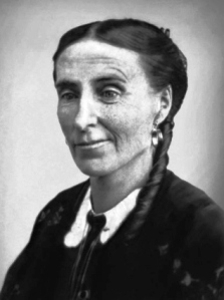
Margaret Emmeline Dobbs, Irish scholar and playwright best known for her work to preserve the Irish Language, is born in Dublin on November 19, 1871.

Dobbs’ father, Conway Edward Dobbs, is Justice of the Peace for County Antrim, High Sheriff for Carrickfergus in 1875, and High Sheriff for County Louth in 1882. The family spends time living in Dublin which is where Dobbs is born. She attempts to learn Irish. However, when her father dies in 1898 her mother, Sarah Mulholland, daughter of St. Clair Kelvin Mulholland Eglantine, moves the family back to Glenariff.

Dobbs’ interest in learning Irish continues and she finds it easier to learn in Donegal where the language is still spoken. Her first teacher is Hugh Flaitile. She attends the Irish College at Cloughaneely in the Donegal Gaeltacht. She brings the idea of promoting the language to the Glens of Antrim and her circle of friends. Dobbs is one of the small numbers of Protestant women interested in the Gaelic revival.

The “Great Feis” takes place in Antrim in 1904. Dobbs is a founding member of the Feis na nGleann committee and later a tireless literary secretary. In 1946, the Feis committee decides to honour her by presenting her with an illuminated address. It can be seen today at Portnagolan House with its stained-glass windows commemorating a great Irishwoman. During her speech she says, “Ireland is a closed book to those who do not know her language. No one can know Ireland properly until one knows the language. Her treasures are hidden as a book unopened. Open the book and learn to love your language.”

Dobbs writes seven plays, published by Dundalgan Press in 1920, though only three are ever performed. The Doctor and Mrs. McAuley wins the Warden trophy for one-act plays at the Belfast festival in 1913. However, her plays are generally not a success and after 1920 she never writes another. She continues to work on historical and archaeological studies and her articles are published in the Ulster Journal of Archaeology, in a German magazine for Celtic studies, in the French Revue Celtique, and in the Irish magazine Eriu.

Roger Casement is a good friend and, although Dobbs never makes her political opinions known, she contributes to his defence costs when he is accused of treason. She also is a member of the Gaelic League and in the executive of Cumann na mBan.

She dies in Portnagalon, County Antrim, on January 2, 1962.


Leave a comment

Death of Open Champion Fred Daly

fred-daly

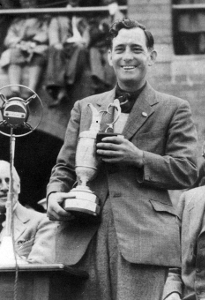
Frederick J. Daly, Northern Irish professional golfer best known for winning The Open Championship in 1947 at the Royal Liverpool Golf Club, Hoylake, dies on November 18, 1990.

Born in Portrush, County Antrim, Daly is the only Irishman from either side of the border to have won The Open until Pádraig Harrington wins it in 2007 and the only Northern Irish major winner until Graeme McDowell wins the U.S. Open in 2010. Daly wins the Open in 1947 while professional to the Balmoral Club in Belfast. He wins with a score of 293, a single stroke ahead of runners-up Reg Horne and amateur Frank Stranahan.

During his acceptance speech at Royal Liverpool, Daly says he is very honoured to receive the Claret Jug and take it back to Northern Ireland. He goes on to say that the trophy has never been to Ireland and that he is hoping that the change of air will help it. There is much applause and laughter at his humorous comments.

In addition, he adds the News of the World Match Play tournament, which is the main British Match Play Championship, becoming the first since James Braid (1905) to win both the Open and the Match Play title in the same year.

Daly is the only Ulsterman to win the Irish Open until 2016, when Rory McIlroy wins at The K Club. Daly wins in 1946 at Portmarnock, and plays on four Ryder Cup teams, in 1947, 1949, 1951, and 1953. Daly is awarded the MBE in the 1984 New Year Honours “for services to golf.”

Fred Daly, age 79, dies in Belfast on November 18, 1990, of a heart attack.


Leave a comment

Ernest Walton Awarded Nobel Prize for Physics

ernest-walton

Ernest Thomas Sinton Walton, Irish physicist, is awarded the Nobel Prize in Physics on November 15, 1951, for his work with John Cockcroft with “atom-smashing” experiments done at Cambridge University in the early 1930s, and so becomes the first person in history to artificially split the atom.

Walton is born on October 6, 1903, in Abbeyside, Dungarvan, County Waterford to a Methodist minister father, Rev John Walton and Anna Sinton. In those days a general clergyman’s family moves once every three years, and this practice carries Ernest and his family to Rathkeale, County Limerick, and to County Monaghan. He attends day schools in counties Down and Tyrone, and at Wesley College Dublin before becoming a boarder at Methodist College Belfast in 1915, where he excels in science and mathematics.

In 1922, Walton wins scholarships to Trinity College, Dublin for the study of mathematics and science. He is awarded bachelor’s and master’s degrees from Trinity in 1926 and 1927, respectively. Walton receives seven prizes for excellence in physics and mathematics, including the Foundation Scholarship in 1924. Following graduation he is awarded an 1851 Research Fellowship from the Royal Commission for the Exhibition of 1851 and is accepted as a research student at Trinity College, Cambridge, under the supervision of Sir Ernest Rutherford, Director of Cambridge University’s Cavendish Laboratory. At the time there are four Nobel Prize laureates on the staff at the Cavendish lab and a further five are to emerge, including Walton and John Cockcroft. Walton is awarded his PhD in 1931 and remains at Cambridge as a researcher until 1934.

During the early 1930s, Walton and John Cockcroft collaborate to build an apparatus that splits the nuclei of lithium atoms by bombarding them with a stream of protons accelerated inside a high-voltage tube. The splitting of the lithium nuclei produces helium nuclei. This is experimental verification of theories about atomic structure that have been proposed earlier by Rutherford, George Gamow, and others. The successful apparatus, a type of particle accelerator now called the Cockcroft-Walton generator, helps to usher in an era of particle-accelerator-based experimental nuclear physics. It is this research at Cambridge in the early 1930s that wins Walton and Cockcroft the Nobel Prize in physics in 1951.

Walton is associated with the Dublin Institute for Advanced Studies for over 40 years, serving long periods on the board of the School of Cosmic Physics and on the Council of the Institute. Following the 1952 death of John J. Nolan, the inaugural chairman of the School of Cosmic Physics, Walton assumes the role, and serves in that position until 1960, when he is succeeded by John H. Poole.

Although he retires from Trinity College Dublin in 1974, he retains his association with the Physics Department at Trinity up to his final illness. His is a familiar face in the tea-room. Shortly before his death he marks his lifelong devotion to Trinity by presenting his Nobel medal and citation to the college. Ernest Walton dies in Belfast on June 25, 1995, aged 91. He is buried in Dean’s Grange Cemetery, Dún Laoghaire–Rathdown.


Leave a comment

The Remembrance Day Bombing

remembrance-day-bombing

The Remembrance Day bombing, also known as the Enniskillen bombing or Poppy Day massacre, takes place on November 8, 1987, in Enniskillen, County Fermanagh, Northern Ireland. A Provisional Irish Republican Army (IRA) bomb explodes near the town’s war memorial during a Remembrance Sunday ceremony, which is being held to commemorate British military war dead. Eleven people, many of them old age pensioners, are killed and 63 are injured.

The bomb explodes as a parade of Ulster Defence Regiment (UDR) soldiers is making its way to the memorial and as people wait for the ceremony to begin. It blows out the wall of the Reading Rooms, where many of the victims are standing, burying them under rubble and hurling masonry towards the gathered crowd. Bystanders rush to free those trapped in the rubble.

Eleven people, all Protestant, are killed by the Provisional IRA that day, including three married couples. The dead are Wesley and Bertha Armstrong, Kitchener and Jessie Johnston, William and Agnes Mullan, John Megaw, Georgina Quinton, Marie Wilson, Samuel Gault, and Edward Armstrong. Armstrong is a serving Royal Ulster Constabulary (RUC) officer and Gault has recently left the force. Gordon Wilson, whose daughter Marie dies in the blast and who is himself injured, goes on to become a peace campaigner and member of Seanad Éireann. The twelfth fatality, Ronnie Hill, dies after spending 13 years in a coma. Sixty-three people are injured, including thirteen children. Ulster Unionist politicians Sam Foster and Jim Dixon are among the crowd. Dixon receives extensive head injuries but recovers. A local businessman captures the immediate aftermath of the bombing on video camera. His footage, showing the effects of the bombing, is broadcast on international television.

A few hours after the blast, the IRA calls a radio station and says it has abandoned a 150-pound bomb in Tullyhommon, twenty miles away, after it failed to detonate. That morning, a Remembrance Sunday parade, which includes many members of the Boys’ and Girls’ Brigades, has unwittingly gathered near the Tullyhommon bomb. Soldiers and RUC officers were also there, and the IRA says it attempted to trigger the bomb when soldiers were standing beside it. The bomb is defused by security forces and is found to have a command wire leading to a “firing point” across the border.

The IRA apologises, saying it had made a mistake and that the target had been the UDR soldiers who were parading to the memorial. The bombing leads to an outcry among politicians in the Republic of Ireland and the United Kingdom. British Prime Minister Margaret Thatcher says, “It’s really desecrating the dead and a blot on mankind.” The Secretary of State for Northern Ireland, Tom King, denounces the “outrage” in the House of Commons, as does the Irish Minister for Foreign Affairs, Brian Lenihan, in Dáil Éireann. Seanad Éireann Senator Maurice Manning speaks of people’s “total revulsion.” It also facilitates the passing of the Extradition Act, which makes it easier to extradite IRA suspects from the Republic of Ireland to the United Kingdom.

The bombing is seen by many Northern Irish Protestants as an attack on them, and loyalist paramilitaries ″retaliate″ with attacks on Catholic civilians. The day after the bombing, five Catholic teenagers are wounded in a shooting in Belfast, and a Protestant teenager is killed by the Ulster Defence Association after being mistaken for a Catholic. In the week after the bombing, there are fourteen gun and bomb attacks on Catholics in Belfast.

The Remembrance Day bombing has been described as a turning point in the Troubles and an incident that shook the IRA “to its core.”


Leave a comment

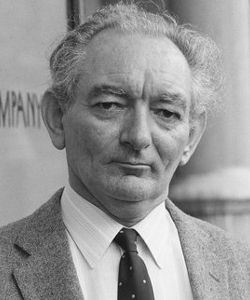
Birth of Sir Charles Brett, Solicitor & Journalist

long-shadows-cast-before

Sir Charles Edward Bainbridge Brett, Northern Irish solicitor, journalist, author and founding member, and first chairman, of the Ulster Architectural Heritage Society (UAHS), is born in Holywood, County Down, on October 30, 1928. He is known to many simply as Charlie Brett.

Brett is born into a long line of solicitors, the family firm being L’Estrange and Brett, based in Belfast. He is a partner there from 1954 until 1994. He is educated at Rugby School and New College, Oxford, where he is President of the Poetry Society and a friend of Dylan Thomas and attends lectures by Lord Clark.

Between 1949 and 1950 he works in France as a journalist with the Continental Daily Mail, where he is said to have mixed in anarchist and Trotskyite circles.

In 1956, the Earl of Antrim invites Brett to join the Northern Ireland Committee of the National Trust. On finding there are no books written to prepare himself for this, he resolves to write the necessary volumes. In 1957 he becomes the first chairman of the Ulster Architectural Heritage Society, founded alongside, amongst others Lady Dunleath. Brett serves as chairman for ten years and then as President from 1979 until his death.

With the National Trust he puts his legal skill to use in order to establish a public footpath along the cliffs of the North Coast of Ulster. He also sits on the board of the Irish Architectural Archive in Dublin.

In 1971, he is appointed to the board of the newly created Northern Ireland Housing Executive. He serves as Chairman for five years from 1979, during which time 50,000 dwellings are built. He is asked to compile a list of historic buildings in Jersey in 1975. In 1986, Brett becomes the first chairman of the International Fund for Ireland, established to encourage investment in Ireland.

Brett is also involved in Northern Irish politics, being chairman of the Northern Ireland Labour Party for a time. In 1981 he receives a CBE, this is followed by a Knighthood in 1990.

Brett dies on December 19, 2005. His church memorial is located along those of his family in the Comber Church of Ireland Parish Church of St. Mary, in Comber, North County Down.


Leave a comment

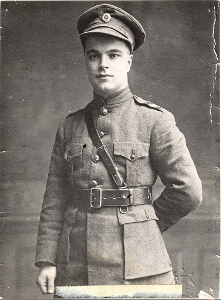
Assassination of Máire Drumm, VP of Sinn Féin

maire-drumm

Máire Drumm, vice president of Sinn Féin and a commander in Cumann na mBan, is shot dead on October 28, 1976, by Ulster loyalists dressed as doctors while recovering from an eye operation in Belfast‘s Mater Hospital.

Drumm is born in Newry, County Down to a staunchly Irish republican family. Drumm’s mother has been active in the Irish War of Independence and the Irish Civil War. Drumm grows up in the village of Killean, County Armagh, where she plays camogie. She is active in the republican movement after meeting her husband, a republican prisoner. She begins to speak at many rallies and protest meetings and is soon elected as Vice President of Sinn Fein. She becomes involved in the Northern Ireland Civil Rights Association in the 1960s and works to rehouse Catholics forced from their homes by loyalist intimidation.

Drumm is jailed twice for seditious speeches. After she is released from HM Prison Armagh, raids on her house by the security forces escalate. She is widely demonised in the British media and is already a target for assassination when she is admitted to Belfast’s Mater Hospital for eye treatment in October 1976.

While recovering from the operation, Drumm is shot at point blank range in a joint operation by the Ulster Volunteer Force and the Ulster Defence Association who are able to enter and leave the hospital undisturbed. No one has ever been convicted of her murder.

Drumm’s speeches and quotations can be found on murals across Northern Ireland, including:

“The only people worthy of freedom are those who are prepared to go out and fight for it every day, and die if necessary.”

“We must take no steps backward, our steps must be onward, for if we don’t, the martyrs that died for you, for me, for this country will haunt us forever.”


Leave a comment

Founding of the Society of United Irishmen

society-of-united-irishmen

The Society of United Irishmen, a liberal political organisation that initially seeks Parliamentary reform, is founded in Belfast on October 14, 1791. It evolves into a revolutionary republican organisation, inspired by the American Revolution and allied with Revolutionary France. It launches the Irish Rebellion of 1798 with the objective of ending British monarchical rule over Ireland and founding a sovereign, independent Irish republic.

The enthusiasm for the French Revolution sees great Irish interest in Thomas Paine‘s The Rights of Man released in May 1791. A couple of months later the Belfast Volunteer company gathers to celebrate the second anniversary of the fall of the Bastille. It is intended that a new radical society is to be announced during the celebrations which William Drennan, who is to give a declaration, asks to add in resolutions. Drennan refuses due to the short notice of the request and suggests that Theobald Wolfe Tone be asked.

Tone’s reformist radicalism has advanced beyond that of the Whigs, and he proposes three resolutions for the new society, which he names the Society of United Irishmen. The first resolution is for the denouncing of the continuing interference of the British establishment in Irish affairs. The second is for the full reform of the Irish parliament and its representation. The last resolution calls for a union of religious faiths in Ireland to “abolish the differences that had long divided Irishmen” and seeks to give Catholics political rights. This last proposal, however, is quietly dropped by the Belfast Volunteers to ensure unanimity for the proposals amongst the people.

This seems to delay the launch of the new society and by August 1791 Tone, in response to the rebuff of his third resolution, publishes the popular and robust An Argument on Behalf of the Catholics of Ireland, which argues why they should be included in attempts at reform. That October, Tone is invited to a debate on the creation of a new society by a group of people including Samuel Neilson. Here he finds that his resolutions are now found a few months later to be “too tame.” A new set of resolutions is drafted and agreed upon on October 14, which the Belfast branch of the Society of United Irishmen adopts on October 18, and the Dublin branch on November 9. The main problem they identify for Ireland is the issue of national sovereignty.

All attendees at the first meeting of the Belfast branch are Protestant. Two, Theobald Wolfe Tone and Thomas Russell, are Anglicans and the remainder are Presbyterian, most of whom are involved in the linen trade in Belfast. Along with Tone and Russell, the men involved are William Sinclair, Henry Joy McCracken, Samuel Neilson, Henry Haslett, Gilbert McIlveen, William Simms, Robert Simms, Thomas McCabe, and Thomas Pearce. After forming, the Society names chandler Samuel McTier as its first President.


Leave a comment

Harland & Wolff Cranes Listed as Historic Monuments

samson-and-goliathSamson and Goliath, the twin shipbuilding gantry cranes situated in the shipyard of Harland & Wolff at Queen’s Island, Belfast, are listed on October 9, 2003, as historic monuments to ensure their preservation. The cranes, which are named after the Biblical figures Samson and Goliath, dominate the Belfast skyline and are landmark structures of the city.

The cranes are constructed by the German engineering firm Krupp, with Goliath being completed in 1969 and Samson in 1974. Goliath, the smaller of the cranes, stands 315 feet tall, while Samson stands 348 feet in height. Goliath sits slightly further inland closer to Belfast City. At the time Harland & Wolff is one of the largest shipbuilders in the world. The announcement that they are to be built is an important event at the time.

Each crane has a span of 459 feet and can lift loads of up to 840 tonnes to a height of 230 feet, making a combined lifting capacity of over 1,600 tonnes, one of the largest in the world. Prior to commissioning, the cranes are tested up to 1,000 tonnes, which bends the gantry downwards by over 12 inches. The dry dock at the base of the cranes is the largest in the world measuring 1,824 feet × 305 feet.

At its height, Harland & Wolff boasts 35,000 employees and a healthy order book, but in the years following the construction of the cranes, the workforce and business declines. The last ship to be launched at the yard to date is a roll-on/roll-off ferry in March 2003. Since then the yard has restructured itself to focus less on shipbuilding and more on design and structural engineering, as well as ship repair, offshore construction projects and competing for other projects to do with metal engineering and construction. Initially there is concern that the now largely redundant cranes would be demolished. However, on October 9, 2003 they are scheduled as historic monuments under Article 3 of the Historic Monuments and Archaeological Objects (Northern Ireland) Order 1995.

Northern Ireland Office Minister of the time Angela Smith states, “These cranes are an essential part of our city, our roots and our culture.” The cranes are not, technically, “listed buildings,” but are recognised by the Northern Ireland Environment Agency as buildings of “architectural or historic interest.”

Shipbuilding has ceased in Belfast, but the cranes are retained as part of the existing dry dock facility within the restructured shipyard, situated adjacent to the Titanic Quarter, a business, light industrial, leisure, and residential development on land now surplus to the heavy industrial requirements of the shipyard on Queen’s Island. They are kept in working order and used for heavy lifting by Harland & Wolff in its other activities.


Leave a comment

Birth of Professor James Francis “Frank” Pantridge

frank-pantridge

Professor James Francis “Frank” Pantridge, physician and cardiologist from Northern Ireland, is born in Hillsborough, County Down, on October 3, 1916. Pantridge transforms emergency medicine and paramedic services with the invention of the portable defibrillator.

Pantridge is educated at Friends’ School Lisburn and Queen’s University Belfast, graduating in medicine in 1939. During World War II he serves in the British Army and is commissioned into the Royal Army Medical Corps as a lieutenant on April 12, 1940. He is awarded the Military Cross during the Fall of Singapore, when he becomes a POW. He serves much of his captivity as a slave labourer on the Burma Railway. When he is freed at the end of the war, Pantridge is emaciated and has contracted cardiac beriberi. He suffers from ill-health related to the disease for the remainder of his life.

After Pantridge’s liberation he works as a lecturer in the pathology department at Queen’s University, and then wins a scholarship to the University of Michigan, where he studies under Dr. F.N. Wilson, a cardiologist and authority on electrocardiography.

Pantridge returns to Northern Ireland in 1950 and is appointed as cardiac consultant to the Royal Victoria Hospital, Belfast and professor at Queen’s University, where he remains until his retirement in 1982. There he establishes a specialist cardiology unit whose work becomes well known.

By 1957, Pantridge and his colleague, Dr. John Geddes, introduce the modern system of cardiopulmonary resuscitation (CPR) for the early treatment of cardiac arrest. Further study leads Pantridge to the realization that many deaths result from ventricular fibrillation which needs to be treated before the patient is admitted to hospital. This leads to his introduction of the mobile coronary care unit (MCCU), an ambulance with specialist equipment and staff to provide pre-hospital care.

To extend the usefulness of early treatment, Pantridge goes on to develop the portable defibrillator, and in 1965 installs his first version in a Belfast ambulance. It weighs 70 kg and operates from car batteries. By 1968 he has designed an instrument weighing only 3 kg, incorporating a miniature capacitor manufactured for NASA.

His work is backed up by clinical investigations and epidemiological studies in scientific papers, including an influential 1967 The Lancet article. With these developments, the Belfast treatment system, often known as the “Pantridge Plan”, becomes adopted throughout the world by emergency medical services. The portable defibrillator becomes recognised as a key tool in first aid, and Pantridge’s refinement of the automated external defibrillator (AED) allows it to be used safely by members of the public.

Although he is known worldwide as the “Father of Emergency Medicine,” Frank Pantridge is less acclaimed in his own country, and is saddened that it takes until 1990 for all front-line ambulances in the United Kingdom to be fitted with defibrillators.

He died in Hillsborough at the age of 88 on Boxing Day, December 26, 2004. He never married.