seamus dubhghaill

Promoting Irish Culture and History from Little Rock, Arkansas, USA


Leave a comment

Birth of General Sir Abraham Roberts

abraham-roberts

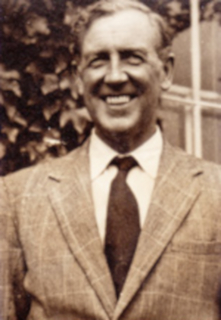
General Sir Abraham Roberts GCB, British East India Company Army general who serves nearly 50 years in India, is born in Waterford, County Waterford on April 11, 1784.

Abraham Roberts is a member of a famous Waterford city family. He is the son of Anne Sandys and The Reverend John Roberts, a magistrate in County Waterford and a rector of Passage East. He marries Frances Isabella Ricketts, daughter of George Poyntz Ricketts, on July 20, 1820. On the death of his first wife he marries Isabella Bunbury, daughter of Abraham Bunbury, on August 2, 1830.

Roberts gains the rank of colonel in the service of the Honourable East India Company and is the commander of the 1st Bengal European Regiment and the Lahore Division. He also fights in the First Anglo-Afghan War.

Roberts is invested as a Knight Grand Cross of the Order of the Bath (GCB). He leaves India in 1853 to live in Ireland with his second wife, who outlives him. He also has a house at 25 Royal York Crescent, Bristol, Somerset, England.

From 1862 until his death on December 28, 1873, Roberts is Colonel of the 101st Regiment of Foot (Royal Bengal Fusiliers).

Roberts had two sons, Major General George Ricketts Roberts by Frances Isabella and Field Marshal Frederick Sleigh Roberts, 1st Earl Roberts (1832-1914) by Isabella Bunbury, who both obtain the highest ranks in the British Army. Frederick and a grandson, Frederick Hugh Sherston Roberts (1872-1899), receive the Victoria Cross, the highest decoration for bravery in the face of the enemy in the British Army.


Leave a comment

Birth of Major General Patrick Ronayne Cleburne

patrick-ronayne-cleburne

Patrick Ronayne Cleburne, called the “Stonewall of the West” and one of the finest generals produced by either side during the American Civil War is born on March 17, 1828 at Bride Park Cottage in Ovens, County Cork, just outside Cork City.

Born on St. Patrick’s Day, this native Irishman is nevertheless extremely loyal to his adopted country, saying, “if this [Confederacy] that is so dear to my heart is doomed to fail, I pray heaven may let me fall with it, while my face is toward the enemy and my arm battling for that which I know to be right.” Sadly, Cleburne ultimately receives his wish.

Cleburne begins his military career in an unlikely manner. When he fails the entrance exam at Trinity College, Dublin, he cannot face his family. He enlists in the 41st Regiment of Foot in the British Army. In 1849 he purchases his discharge and leaves for the United States, eventually settling in Helena, Arkansas in June 1850 and earning his citizenship in 1855. He loves his new country, taking part in many community projects, and even being one of the few volunteers to care for the sick during a yellow fever outbreak.

In January 1861 Cleburne joins the local militia company, the Yell Rifles.  He leads the company in the seizure of the U.S. Arsenal in Little Rock in January 1861. When Arkansas left the Union, the Yell Rifles became part of the 1st Arkansas Infantry Regiment. By fall of 1861 he has risen to command the 2nd Brigade, Hardee’s Division, in the Army of Central Kentucky. His first major battle is at the Battle of Shiloh, April 6-7, 1862. At the Battle of Richmond (Kentucky) in August 1862, he is wounded in the mouth and loses several of his teeth. Still, he earns the thanks of the Confederate States Congress for his actions there. During the October 1862 Battle of Perryville he is wounded again – twice, yet stays in command during the battle. In December 1862 he is promoted to Major General.

At the December 1862 Battle of Stones River, Cleburne and his division earn the praise of General Braxton Bragg for their incredible skill and valor. Cleburne’s actions and character play a large role in his men’s determination during battle.

In 1863 Cleburne faces off against Union General George Henry Thomas at the Battle of Chickamauga. His and General John C. Breckinridge’s assaults force General Thomas to call repeatedly for reinforcements. In November 1863 the Confederate army is forced to retreat after the Chattanooga Campaign. However, Cleburne has defeated every assault against his men eventually charging his attackers. After the battle, he and his men are charged with covering the retreat.

On January 2, 1864, Cleburne makes his most controversial decision ever. He gathers the corps and division commanders in the Army of Tennessee to present his proposal. The Confederacy is unable to fill its ranks due to a lack of manpower. He states that slavery is their “most vulnerable point, a continued embarrassment, and in some respects an insidious weakness.” His proposed solution is for the Confederacy to arm slaves to fight in the army. In time, these soldiers would receive their freedom. The proposal is not well received at all. In fact, Jefferson Davis, President of the Confederate States of America, directs that the proposal be suppressed.

In the spring of 1864 the Army of Tennessee moves towards Atlanta, Georgia. Cleburne and his men fight at Dalton, Tunnel Hill, Resaca, Pickett’s Mill, Ringgold and Kennesaw. The Atlanta Campaign begins in the summer and lasts until September, when General John Bell Hood evacuates Atlanta. Hood had taken command from General Joseph E. Johnston, which Cleburne felt to be a disaster for the Confederacy.

General Hood hopes to stop Union General John Schofield and his men before they can reach Nashville to reinforce General Thomas. Due to poor communications and nightfall, Schofield slips past the Army of Tennessee into Franklin.

The November 30, 1864 Battle of Franklin is a tragic loss for the Confederacy. Hood throws his men into well-fortified Union troops. The results are disastrous. About 6,000 men are killed or wounded including six generals who are killed or mortally wounded. Cleburne is one of these six, killed while attacking Union breastworks. He is last seen advancing on foot toward the Union line with his sword raised, after his horse had been shot out from under him. Accounts later say that he is found just inside the Federal line and his body is carried back to an aid station along the Columbia Turnpike. Confederate war records indicate he died of a shot to the abdomen, or possibly a bullet that went through his heart. When Confederates find his body, he has been picked clean of any valuable items, including his sword, boots and pocket watch.

Cleburne’s remains are first laid to rest at Rose Hill Cemetery in Columbia, Tennessee. At the urging of Army Chaplain Biship Quintard, Judge Mangum, staff officer to Cleburne and his law partner in Helena, his remains are moved to St. John’s Episcopal Church near Mount Pleasant, Tennessee, where they remain for six years. In 1870, he is disinterred and returned to his adopted hometown of Helena, Arkansas, with much fanfare, and buried in the Helena Confederate Cemetery located in the southwest corner of the Maple Hill Cemetery, overlooking the Mississippi River.

Several geographic features are named after Patrick Cleburne, including Cleburne County in Alabama and Arkansas, and the city of Cleburne, Texas. The Patrick R. Cleburne Confederate Cemetery is a memorial cemetery in Jonesboro, Georgia that is named in honor of General Patrick Cleburne.


Leave a comment

The Milltown Cemetery Attack

milltown-cemetery-attack

The Milltown Cemetery attack, also known as the Milltown Cemetery killings or the Milltown Massacre, takes place on March 16, 1988 at Milltown Cemetery in Belfast, Northern Ireland.

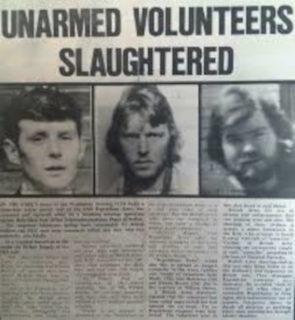
On March 6, 1988, Provisional Irish Republican Army members Daniel McCann, Seán Savage and Mairéad Farrell are shot dead by the Special Air Service (SAS) in Gibraltar, in Operation Flavius. The three were allegedly preparing a bomb attack on British military personnel there, but their deaths outrage republicans as the three are unarmed and shot without warning. Their bodies arrive in Belfast on March 14 and are taken to their family homes.

The “Gilbraltar Three” are scheduled to be buried in the republican plot at Milltown Cemetery on March 16. For years, republicans had complained about heavy-handed policing of IRA funerals, which had led to violence. In a change from normal procedure, the security forces agree to stay away from the funeral in exchange for guarantees that there will be no three-volley salute by IRA gunmen. The British Army and Royal Ulster Constabulary (RUC) would instead keep watch from the sidelines. This decision is not made public.

Present at the funeral are thousands of mourners and top members of the IRA and Sinn Féin, including Sinn Féin leader Gerry Adams and Martin McGuinness. Two RUC helicopters hover overhead.

Michael Stone, a loyalist and member of the Ulster Defence Association (UDA), learns there are to be no police or armed IRA members at the cemetery. As the third coffin is about to be lowered into the ground, Stone throws two grenades, which have a seven-second delay, toward the republican plot and begins shooting. The first grenade explodes near the crowd and about 20 yards from the grave. There is panic and confusion, and people dive for cover behind gravestones.

As Stone runs towards the nearby motorway, a large crowd begins chasing him and he continues shooting and throwing grenades. Some of the crowd catches Stone and begin beating him, but he is rescued by the police and arrested. Three people are killed and more than 60 wounded in the attack. The “unprecedented, one-man attack” is filmed by television news crews and causes shock around the world.

Three days later, two British Army corporals drive into the funeral procession of one of the Milltown victims. The non-uniformed soldiers are dragged from their car by an angry crowd, beaten and then shot dead by the IRA, in what becomes known as the corporals killings.

In March 1989, Stone is convicted for the three murders at Milltown, for three paramilitary murders before, and for other offences, receiving sentences totaling 682 years. He is released after serving 13 years as a result of the Good Friday Agreement.

(Pictured: The funeral at Milltown Cemetery in Belfast moments before the attack by Michael Stone)


Leave a comment

Killing of PSNI Officer Stephen Carroll

stephen-carroll

Stephen Carroll, a Police Service of Northern Ireland (PSNI) officer, is killed by the Continuity Irish Republican Army on March 9, 2009 in Craigavon, County Armagh, Northern Ireland. Carroll’s killing marks the first time a serving police officer has been killed since the Good Friday Agreement in 1998.

Two days prior to the attack the Real Irish Republican Army shoots dead two British soldiers outside the Massereene Barracks in Antrim, County Antrim. This period marks a significant escalation in the campaign by dissident republicans.

The Continuity IRA smashes a window with a brick knowing the PSNI would respond. At about 9:45 PM two police vehicles arrive at the scene. The officers are fired upon as they attempt to exit their vehicles. A gunman shoots Carroll from 50 metres away with an AK-47 while in his patrol car. Carroll is shot in the head.

The Continuity IRA claims responsibility saying their North Armagh Battalion is responsible for the attack and that “As long as there is British involvement in Ireland, these attacks will continue.”

On March 10 there is a one-minute silence in the Northern Ireland Assembly. Prime Minister Gordon Brown states that “These are murderers who are trying to distort, disrupt and destroy a political process that is working for the people of Northern Ireland.” Chief Constable Sir Hugh Orde calls it a “sad day” and says the gunmen are “criminal psychopaths.”

Richard Walsh, the spokesman for Republican Sinn Féin, a party linked to the Continuity IRA, says the killings are “an act of war” rather than murder. “We have always upheld the right of the Irish people to use any level of controlled and disciplined force to drive the British out of Ireland. We make no apology for that.” He also describes the PSNI as “an armed adjunct of the British Army.”

Deputy First Minister of Northern Ireland Martin McGuinness says those responsible are “traitors to the island of Ireland” and that “they have betrayed the political desires, hopes and aspirations of all of the people who live on this island.”


Leave a comment

The Clonbanin Ambush

*

The Irish Republican Army (IRA) ambush a British Army convoy near the townland of Clonbanin, County Cork on March 5, 1921, during the Irish War of Independence.

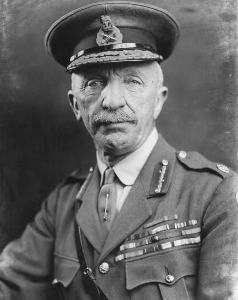
The IRA force is comprised of almost 100 volunteers from counties Cork and Kerry, armed with rifles, hand grenades and a machine gun. Their target is a British Army convoy of three lorries, an armoured car and a touring car carrying Brigadier General Hanway Robert Cumming. The convoy is travelling from Killarney to Buttevant and comprises almost 40 soldiers of the East Lancashire Regiment.

When the convoy enters the ambush position, IRA volunteers open fire from elevated positions on both sides of the road. The three lorries and touring car are disabled, and the armoured car becomes stuck in the roadside ditch, although those inside continue to fire its machine guns. As Cumming jumps from his car, he is shot in the head and dies instantly. He is one of the highest ranked British officers to die in the Irish War of Independence.

The battle lasts slightly over an hour. As the IRA forces withdraw from one side of the road, a British officer and six soldiers attempted to flank the IRA on the other side. After a brief exchange of fire, they retreat.

The IRA are not believed to have sustained any casualties.

(Pictured: Two British officers surnamed Lawson and Adams with Brigadier General H. R. Cumming in Kenmare County Kerry shortly before their deaths at the hands of the IRA in 1921)


Leave a comment

First Clash of the Tithe War

battle-at-carrickshock

The first clash of the Tithe War takes place on March 3, 1831, in Graiguenamanagh, County Kilkenny, when a force of 120 yeomanry attempts to enforce seizure orders on cattle belonging to a Roman Catholic priest. Encouraged by his bishop, he has organised people to resist tithe collection by placing their stock under his ownership prior to sale.

The Tithe War is a campaign of mainly nonviolent civil disobedience, punctuated by sporadic violent episodes, in Ireland between 1830 and 1836 in reaction to the enforcement of tithes on the Roman Catholic majority for the upkeep of the established state church – the Church of Ireland. Tithes are payable in cash or kind and payment is compulsory, irrespective of an individual’s religious adherence.

After Emancipation in 1829, an organized campaign of resistance to collection begins. It is sufficiently successful to have a serious financial effect on the welfare of established church clergy. In 1831, the government compiles lists of defaulters and issues collection orders for the seizure of goods and chattels. Spasmodic violence breaks out in various parts of Ireland, particularly in counties Kilkenny, Tipperary and Wexford. The Royal Irish Constabulary, which had been established in 1822, attempts to enforce the orders of seizures. At markets and fairs, the constabulary often seize stock and produce, which often results in violent resistance.

A campaign of passive resistance is proposed by Patrick “Patt” Lalor, a farmer of Tenakill, Queen’s County (now County Laois), who later serves as a repeal MP. He declares at a public meeting in February 1831 in Maryborough that he would never again pay tithes and, although the tithe men might take his property and offer it for sale, his countrymen would not buy or bid for it if offered for sale. Lalor holds true to his word and does not resist the confiscation of 20 sheep from his farm but is able to ensure no buyers appear at subsequent auctions.

Following the clash at Graiguenamanagh, the revolt soon spreads. On June 18, 1831, in Bunclody, County Wexford, people resisting the seizure of cattle are fired upon by the Royal Irish Constabulary, who kill twelve and wound twenty. One yeoman is shot dead in retaliation. This massacre causes objectors to organise and use warnings such as church bells to signal the community to round up the cattle and stock. On December 14, 1831, resisters use such warnings to ambush a detachment of 40 Constabulary at Carrickshock, County Kilkenny. Twelve constables, including the Chief Constable, are killed and more wounded.

Regular clashes causing fatalities continue over the next two years. On December 18, 1834, the conflict comes to a head at Rathcormac, County Cork, when armed Constabulary reinforced by the regular British Army kill twelve and wound forty-two during several hours of fighting when trying to enforce a tithe order reputedly to the value of 40 shillings.

Finding and collecting livestock chattels and the associated mayhem creates public outrage and proves an increasing strain on police relations. The government suspends collections. In 1838, parliament introduces a Tithe Commutation Act. This reduces the amount payable directly by about a quarter and makes the remainder payable in rent to landlords. They in turn are to pass payment to the authorities. Tithes are thus effectively added to a tenant’s rent payment. This partial relief and elimination of the confrontational collections ends the violent aspect of the Tithe War.

Full relief from the tax is not achieved until the Irish Church Act 1869, which disestablishes the Church of Ireland, by the William Ewart Gladstone government.

(Pictured: The battle at Carrickshock, from Cassell’s Illustrated History of England’, volume VII – 1895.)


Leave a comment

Execution of James Joseph Daly

james-joseph-daly

James Joseph Daly, a member of a mutiny of the Connaught Rangers in India in 1920, is executed by a British firing squad in India on November 2, 1920. He is the last British solider to be executed for mutiny.

On June 28, 1920, Joseph Hawes leads a company of the Connaught Rangers stationed at Jalandhar on the plains of the Punjab lay down their arms and refuse to perform their military duties as a protest against the activities of the Black and Tans, officially the Royal Irish Constabulary Special Reserve in Ireland. On the following day, the mutineers send two emissaries to a company of Connaught Rangers stationed at Salon, about twenty miles away in the foothills of the Himalayas. The soldiers there take up the protest as well and, like their counterparts at Jalandhar, fly the Irish tricolour, wear Sinn Féin rosettes on their British Army uniforms and sing rebel songs.

The protests are initially peaceful, but on the evening of July 1 around thirty members of the company at Salon, armed with bayonets, attempt to recapture their rifles from the company magazine. The soldiers on guard open fire, killing two men and wounding another. The incident effectively brings the mutiny to an end and the mutineers at both Jalandhar and Salon are placed under armed guard.

Sixty-one men are convicted by court-martial for their role in the mutiny. Fourteen are sentenced to death by firing squad, but the only soldier whose capital sentence is carried out is Private James Joseph Daly of Tyrellspass, County Westmeath. Daly is considered the leader of the mutiny at Salon and the man responsible for the failed attack on the magazine. On the morning of November 2, 1920, at the age of 22, he is executed in Dagshai prison in northern India.

The Connaught Rangers do not survive much longer than Daly. In 1922 the regiment is disbanded after the signing of the Anglo-Irish Treaty that creates the Irish Free State. In 1970, James Daly’s body is brought home and buried at Tyrellspass. Among those in the guard of honor at the reinterment ceremony are five of Daley’s fellow mutineers – Joseph Hawes, James Gorman, Eugene Egan, Patrick Hynes, and William Coote.


Leave a comment

Death of Dan Keating, Last Survivor of the Irish War of Independence

dan-keating

Daniel “Dan” Keating, lifelong Irish republican and patron of Republican Sinn Féin, dies in Knockbrack, County Kerry on October 2, 2007. At the time of his death, he is Ireland’s oldest man and the last surviving veteran of the Irish War of Independence.

Keating is born on January 2, 1902, in Castlemaine, County Kerry. He receives his education in local schools, including the Christian Brothers’ School in Tralee. Tralee is also the place where Keating does his apprenticeship. During this time, he becomes a skillful Gaelic football player in his native Kerry.

Keating joins Fianna Éireann in 1918. In 1920, during the Irish War of Independence, he joins the Boherbee B Company, 3rd Battalion, 1st Kerry Brigade, Irish Republican Army (IRA). He first brings a firearm of a Liverpool Irish soldier of the British Army into a public house in which he works. On April 21, 1921, Royal Irish Constabulary (RIC) Constable Denis O’Loughlin is shot dead in Knightly’s public house in Tralee. Keating, Jimmy O’Connor and Percy Hanafin are suspected of the killing and are forced to go on the run. On June 1, Keating is involved in an ambush between Castlemaine and Milltown which claims the lives of five RIC men. On July 10, a day before the truce between the IRA and British forces, his unit is involved in a gun battle with the British Army near Castleisland. This confrontation results in the deaths of four British soldiers and five IRA volunteers.

Keating opposes the 1921 Anglo-Irish Treaty and fights on the anti-treaty side in the Irish Civil War. He is involved in operations in counties Kerry, Limerick, and Tipperary, before his flying column is arrested by Free State Forces. Keating spends seven months in Portlaoise Prison and the Curragh prison before being released in March 1923.

Keating remains an IRA member for a long time after the Civil War. He is arrested several times during the 1930s on various charges. He is active in London during the 1939/1940 IRA bombing campaign.

In 1933, Keating is involved in an attempt to assassinate the leader of the Irish Blueshirts, Eoin O’Duffy, during a visit to County Kerry. The attack is to happen at Ballyseedy, where Free State forces had carried out the Ballyseedy Massacre during the Irish Civil War. However, the plot fails when the person travelling with O’Duffy refuses to divulge in which car O’Duffy would be riding.

Keating subsequently returns to Dublin and works as a barman in several public houses. He retires and returns to his native Kerry in 1978, living out the rest of his life with relatives in Knockbrack. Until his death he refuses to accept a state pension because he considers the 26-county Republic of Ireland an illegitimate state which usurps the 1916 Irish Republic.

“All the talk you hear these days is of peace. But there will never be peace until the people of the 32 counties elect one parliament without British interference.”

In 2002, Keating refuses the state’s standard €2,500 award to centenarians from President Mary McAleese. After former IRA volunteer George Harrison dies in November 2004, Keating becomes patron of Republican Sinn Féin until his own death. At the time of his death at the age of 105 on October 2, 2007, he is the oldest man in Ireland. He is buried in Kiltallagh Cemetery, Castlemaine.


Leave a comment

Death of Maurice Dease, Victoria Cross Recipient

maurice-dease

Maurice James Dease, British Army officer during World War I, dies in Mons, Belgium on August 23, 1914. He is one of the first British officer battle casualties of the war and the first posthumous recipient of the Victoria Cross in the war.

Dease is born on September 28, 1889 in Gaulstown, Coole, County Westmeath to Edmund Fitzlaurence and Katherine Murray Dease. He is educated at Stonyhurst College and the Army Department of Wimbledon College before attending the Royal Military College, Sandhurst. He is 24 years old, and a lieutenant in the 4th Battalion, the Royal Fusiliers, and is awarded the Victoria Cross for his actions on 23 August 1914, at Mons, Belgium.

Nimy Bridge is being defended by a single company of the 4th Royal Fusiliers and a machine-gun section with Dease in command. The gunfire is intense and the casualties very heavy, but the lieutenant continues to fire in spite of his wounds, until he is hit for the fifth time and is carried away.

Dease wins the first Victoria Cross to be awarded in the Great War and he receives it on the first day of the first significant British encounter in that war.

When Lieutenant Dease has been mortally wounded, Private Sidney Godley offers to defend the Railway Bridge while the rest of the section retreats and is also awarded the Victoria Cross. He is taken prisoner of war.

Dease is buried at St. Symphorien Military Cemetery, 2 kilometres east of Mons, Belgium. He is remembered with a plaque under the Nimy Railway Bridge, Mons and in Westminster Cathedral. His name is on the wayside cross in Woodchester, Stroud, Gloucestershire, on a cross at Exton, Rutland and on a plaque installed in St. Martin’s Church, Culmullen, County Meath. His Victoria Cross is displayed at the Royal Fusiliers Museum in the Tower of London. Victoria Cross holders are being honoured with commemorative paving stones. Dease’s is the first to be unveiled on August 23, 2014 at Glasnevin Cemetery, Dublin.

Dease is portrayed in the BBC Three series Our World War (2014) by Dominic Thorburn.


Leave a comment

First Use of Rubber Bullets in Northern Ireland

rubber-bullet

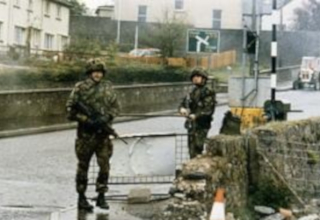
Rubber bullets are used for the first time in Northern Ireland on August 2, 1970. Rubber bullets are invented by the British Ministry of Defence for use against rioters in Northern Ireland during The Troubles.

Rubber bullets (also called rubber baton rounds) are rubber or rubber-coated projectiles that can be fired from either standard firearms or dedicated riot guns. They are intended to be a non-lethal alternative to metal projectiles. Like other similar projectiles made from plastic, wax and wood, rubber bullets may be used for short range practice and animal control but are most commonly associated with use in riot control and to disperse protests.

The British developed rubber rounds – the “Round, Anti-Riot, 1.5in Baton” – in 1970 for use against rioters in Northern Ireland. A low-power propelling charge gives them a muzzle velocity of about 200 feet per second and maximum range of about 110 yards. The intended use is to fire at the ground so that the round bounces up and hits the target on the legs, causing pain but not injury.

From 1970 to 1975, about 55,000 rubber bullets are fired by the British Army in Northern Ireland. Often, they are fired directly at people from close range, which results in three people being killed and many more badly injured. In 1975, they are replaced by plastic bullets. In Northern Ireland over 35 years (1970–2005), about 125,000 rubber and plastic bullets are fired – an average of ten per day – causing 17 deaths.

The baton round is made available to British police forces outside Northern Ireland from 2001. In 2013 however, Ministry of Defence papers declassified from 1977 reveal it is aware rubber bullets are more dangerous than was publicly disclosed. The documents contain legal advice for the Ministry of Defence to seek a settlement over a child who had been blinded in 1972, rather than go to court which would expose problems with the bullets and make it harder to fight future related cases. The papers state that further tests would reveal serious problems with the bullets, including that they were tested “in a shorter time than was ideal”, that they “could be lethal” and that they “could and did cause serious injuries.”

(Pictured: 37 mm British Army rubber bullet, as used in Northern Ireland)