seamus dubhghaill

Promoting Irish Culture and History from Little Rock, Arkansas, USA


Leave a comment

Death of Martin McCaughey, Sinn Féin Councillor & IRA Volunteer

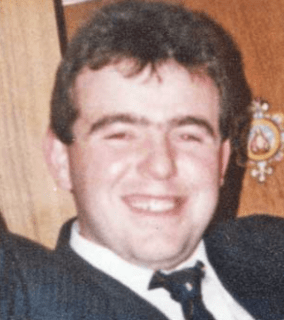
Gerard Patrick Martin McCaughey, Sinn Féin councillor and volunteer in the East Tyrone Brigade of the Provisional Irish Republican Army (IRA), is killed by undercover British Army soldiers in County Armagh on October 9, 1990, along with fellow IRA volunteer Dessie Grew.

McCaughey, from Aughnagar, Galbally, County Tyrone, Northern Ireland, is born on February 24, 1967, the oldest son of Owen and Bridget McCaughey. He is a boyhood friend of several of the “Loughgall Martyrs” including Declan Arthurs, Seamus Donnelly, Tony Gormley and Eugene Kelly, with whom he travels to local discos and football matches when they are growing up.

McCaughey is a talented Gaelic football player who plays for local side Galbally Pearses and is also selected for the Tyrone minor Gaelic team.

McCaughey is elected as a Sinn Féin councillor for Dungannon and South Tyrone Borough Council and at the time is the youngest elected representative on the island of Ireland.

Two months prior to his shooting, McCaughey is disqualified from holding his office on the council as he had failed to appear for a monthly council meeting. After his death, the Royal Ulster Constabulary (RUC) reveals the explanation behind his disappearance. He had been shot and wounded in a shoot-out with undercover British Army security forces near Cappagh, County Tyrone. He is then taken south across the Irish border into the Republic of Ireland where he is given hospital treatment and therefore unable to attend the meetings.

Ulster Unionist MP and fellow Dungannon councillor Ken Maginnis alleges that McCaughey had conspired to kill him while both sat as councillors.

McCaughey is shot dead on October 9, 1990, along with Dessie Grew, in an operation by undercover British soldiers. A secret undercover intelligence unit named 14 Intelligence Company, also known as the DET, are monitoring three AK-47s at a farm building in a rural part of County Armagh and are aware that the pair are due to remove the guns.

As McCaughey and Grew are approaching an agricultural shed which is being used to grow mushrooms and also thought to be an IRA arms dump, as many as 200 shots are fired at the two men. British Army reports of the shooting state that the two men left the shed holding two rifles. Republican sources state the men were unarmed.

McCaughey is buried at Galbally Cemetery in October 1990.

The family of McCaughey claims that he and Grew were ambushed after a stakeout by the Special Air Service (SAS). In January 2002, Justice Weatherup, a Northern Ireland High Court judge, orders that official military documents relating to the shooting should be disclosed. However, Police Service of Northern Ireland (PSNI) Chief Constable Hugh Orde has the ruling overturned on appeal in January 2005.

Fellow Sinn Féin representative, Francie Molloy, replaces McCaughey on Dungannon Council after a by-election is held following McCaughey’s death.

In January 2007, the lawyers representing McCaughey and another volunteer, Pearse Jordan, apply to the House of Lords to challenge the details of how the inquests into their deaths are to proceed.

McCaughey’s father, Owen, seeks to compel Chief Constable Hugh Orde to produce key documents including intelligence reports relevant to the shooting and the report of the RUC’s investigating officer.

In 2010, a commemorative portrait of McCaughey is unveiled in the mayor’s parlour at Dungannon council.


Leave a comment

Birth of Tom Barry, Prominent Irish Republican Army Leader

Thomas Bernadine Barry, prominent guerrilla leader in the Irish Republican Army (IRA) during the Irish War of Independence and the Irish Civil War, is born on July 1, 1897, in Killorglin, County Kerry.

Barry is the second child and son among eleven children of Thomas Barry, small farmer, Royal Irish Constabulary (RIC) member and shopkeeper, and his wife, Margaret Donovan, daughter of a Liscarroll businessman. Educated at Ardagh Boys’ National School and Mungret College, near Limerick, he leaves school at 17, is employed as a clerk for a Protestant merchant in Bandon, County Cork, and joins the British Army in 1915 after falsifying his age. More committed, it appears, to the British Army than he is later to admit, he is mentioned in dispatches and serves in Mesopotamia, Asiatic Russia (where he is wounded), Egypt, Italy, and France.

Barry returns to Bandon in early 1919. He describes in his guerilla days in Ireland a Damascus-like conversion to Irish nationalism on hearing of the Easter Rising while with the Mesopotamian expeditionary force, but he is only accepted into the IRA with considerable caution. Initially tested in intelligence and training work, in mid-1920 he takes charge of the new brigade flying column, which is used both to train officers and to stage offensive actions.

Barry adapts his military experience successfully to the demands of guerrilla warfare, becoming the most famed of column leaders during the Irish War of Independence. In his memoirs, he pours scorn on the obsession of many with military titles and orthodox procedure, complaining of a “paper army.” He stresses the need for spontaneity, initiative, and knowledge of local conditions. “The reality,” he writes, “was a group of fellows, mostly in caps and not-too-expensive clothing, wondering how to tackle their job and where they would sleep that night or get their supper.” (The Reality of the Anglo–Irish War (1974)). He well realises that the war’s character does not permit any close control from the IRA’s GHQ in Dublin, hence increasing the importance of local leaders. His tactics put strong emphasis on speed of movement and on the need to attack the enemy at his weakest point. The column’s ambush successes are small in number but among the best-remembered of the war. He admits, however, that his own and his column’s lack of experience with mines frequently weakened their offensives.

The column’s first successful ambush is at Tooreen on October 22, 1920, followed on November 28 by the dramatic ambushing of a patrol of auxiliaries at Kilmichael while travelling from their Macroom base. A column of thirty-six men, divided into three sections, kill sixteen auxiliaries, with one captured and later shot, suffering two fatalities of their own. Controversy has raged since over whether a false surrender by the British force caused the brutality of some of the deaths. Together with the Bloody Sunday killings of a week earlier in Dublin, Kilmichael has a profound effect on the British military and political establishment, with the declaration in December of martial law for much of Munster and the implementation of wide-ranging internment, together with the authorisation of official reprisals.

After a short period in hospital with a heart condition, in early 1921 Barry leads unsuccessful attacks on Kilbrittain, Innishannon, Drimoleague, and Bandon barracks. The seizure of Burgatia House, outside Rosscarbery, in early February, and the successful resistance made there to British troops, wins much publicity but has little military significance. He is a leading figure in the brutal final stage of the war in the first six months of 1921, which sees widespread shooting of suspected spies and destruction of loyalist property. By March 1921, his flying column, with 104 men, is easily the largest in Ireland, and an explosives expert, Capt. McCarthy, has joined them.

The protracted engagement between Barry’s column and encircling British forces at Crossbarry on March 19, 1921, comes at a time when large-scale sweeps are making life increasingly difficult for the IRA. It consists of a daring and courageous breakout. Crossbarry is the largest action of the war, and Barry is to regard it as even more important than Kilmichael. Soon afterwards, Rosscarbery barracks is successfully attacked by a Barry-led party, representing one of the few successful such initiatives in 1921. Isolated triumphs, however, cannot hide the fact that pressure is increasing on the column, and he becomes increasingly critical of inactive regions. He is later to say that all County Kerry does during the war is to shoot one decent police inspector at Listowel Racecourse and a colleague of his. He is strongly critical also of the lack of assistance from GHQ and of the divisionalisation policy. He visits Dublin in May, travels around with Michael Collins, and is present when two American officers demonstrate the Thompson submachine gun. He is more aware than most of his 1st Southern Division colleagues of the scarcity of arms and ammunition at the war’s end.

During the truce, Barry becomes liaison officer for Munster, riling the British by insisting on his military rank, and criticising the IRA liaison men in Dublin for being overly deferential. He joins the overwhelming majority of the Cork IRA in opposing the Anglo–Irish Treaty but plays a characteristically maverick role throughout the treaty split. His independent attitude is heightened by his dislike of Liam Lynch, the republican IRA’s Chief of Staff, and his continuing respect for Michael Collins. He shows impatience at the long-drawn-out peace initiatives. In March 1922, therefore, he advocates armed confrontation with pro-treaty units over the occupation of barracks in Limerick, and on June 18 he submits a resolution, which only narrowly fails, at the army convention, giving British troops seventy-two hours to leave Dublin.

At the beginning of the Irish Civil War, Barry is arrested entering the Four Courts disguised as a woman. He escapes from an internment camp at Gormanston in early September 1922. For the rest of the war his actions mirror its confused nature. In late October 1922, he leads successful raids on the small towns of Ballineen and Enniskean, and later on Inchigeelagh and Ballyvourney. In December his column takes Carrick-on-Suir, demonstrating the weakness of the Free State army, but his talk of advancing on the Curragh and of large-scale actions does not materialise. There is no evidence that he is acting in accordance with any coordinated plan. By February 1923, he realises that the Republican IRA cause is hopeless and he is involved with Fr. Tom Duggan in efforts to get 1st Southern Division to declare a ceasefire. He journeys to Dublin to put pressure on the intransigent Lynch in this connection, telling Lynch, “I did more fighting in one week than you did in your whole life.”

Barry avoids capture in roundups after the war, remaining on the run until 1924. Unlike many republicans, he does not turn to constitutionalism, remaining strongly militaristic. He is always an unreconstructed republican, though by no means a naive one. In 1924 he becomes attached to Cleeves Milk Co., based in Limerick and Clonmel, and from 1927 to retirement in 1965 is general superintendent with the Cork harbour commissioners. He strongly advocates preserving the independence of the IRA army executive during the republican split of 1925–27. He is instrumental in continuing the drilling of IRA members and is a strong supporter of armed opposition to the Blueshirts.

During the 1930s Barry is arrested at various times for possession of arms and seditious utterances. He promotes an attack against a Freemasons’ meeting in Cork in 1936 and gives the orders for the killing on March 4 of that year of Vice-Admiral Henry Boyle Somerville. He is opposed to the use by Frank Ryan of IRA volunteers to support the republican cause in the Spanish Civil War and to the proposals of Seán Russell for a bombing campaign in England. To maintain the link with traditional republicanism, he is elected IRA chief of staff in 1937. His plan, however, for the seizure of Armagh city, as part of a direct northern offensive, quickly collapses due to a leak of information, and he soon resigns his position. He forcefully attacks the bombing of English cities in 1938, regarding attacks on innocent civilians as immoral and counterproductive. He enlists in the National Army on July 12, 1940, only to be demobilised a month later. In 1946, he stands as an independent candidate in a by-election in the Cork Borough constituency, finishing at the bottom of the poll. He is more comfortable the following year touring the United States on an anti-partition platform.

In 1949 his Guerilla Days in Ireland is published. It proves a best-seller and has frequently been reprinted. It is well written in a forceful and direct style, one memoir needing no assistance from a ghost writer. Age does not mellow him: lawyers and bank managers are threatened by him over matters relating to his own column, and in 1974 he publishes a fierce pamphlet, angry at perceived slights in the Irish War of Independence memoir of Liam Deasy. He does strive to achieve a public reconciliation with Collins’s memory by unveiling the memorial to Collins at Sam’s Cross in 1966. On the outbreak of the Northern Ireland crisis in the late 1960s, he takes a militant line, castigating the argument that the Six Counties can be brought into the Republic by peaceful means, and asking when had peaceful means existed there. At the memorial meeting in Carrowkennedy, County Mayo, in 1971, he claims that there is a perfect right at the opportune time to take the Six Counties by force. He remains opposed to IRA bombing of civilian targets.

Barry dies in Cork on July 2, 1980. He is buried in St. Finbarr’s Cemetery, Cork. Early in the truce of 1921 he marries Leslie Price, one of the most active of Cumann na mBan members during and after the rising. They have no children.

While Barry always remains an influential figure in republican circles, he will be remembered best as the pioneer of guerrilla warfare, the hero of Kilmichael and Crossbarry. His military flair, individualism, and ruthlessness are well suited to the 1919–21 conflict. After that, his strained relations with colleagues and his lack of flexibility reduce his importance. While his life after the revolutionary era appears anti-climactic, he retains much of his charisma. In later years, he is ever willing to remind politicians and historians how far Ireland has retreated from republican ideals. He is often prickly and autocratic yet could be generous to old colleagues of either side of the treaty split. He is arguably the most intelligent but also the most intolerant of the revolutionary leaders.

(From: “Barry, Thomas Bernadine (‘Tom’)” by M. A. Hopkinson, Dictionary of Irish Biography, http://www.dib.ie, October 2009)


Leave a comment

Death of Alexander McCabe, Teacher, Revolutionary & Politician

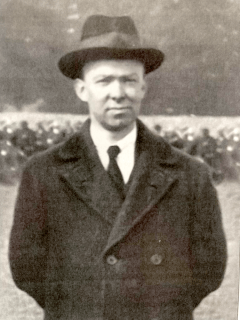
Alexander McCabe (Irish: Alasdar Mac Cába), teacher, revolutionary, Sinn Féin politician, and founder of the Educational Building Society (EBS), dies in Dublin on May 31, 1972.

McCabe is born in Keash, County Sligo, on June 5, 1886. He is educated at Summerhill College, Sligo. He wins a scholarship to St. Patrick’s College of Education, Drumcondra, Dublin, and later obtains a diploma from University College Dublin (UCD). He is appointed headmaster of Drumnagranchy national school, County Sligo, in 1907. He joins the Irish Republican Brotherhood (IRB) in 1913.

McCabe is elected as a Sinn Féin MP for the South Sligo constituency at the 1918 Irish general election. In January 1919, Sinn Féin MPs refuse to recognise the Parliament of the United Kingdom and instead assemble at the Mansion House in Dublin as a revolutionary parliament called Dáil Éireann, though McCabe does not attend as he is in prison in Lincoln Gaol.

At the 1921 Irish elections, McCabe is re-elected for Sligo–Mayo East. He supports the Anglo-Irish Treaty and votes in favour of it. He is again re-elected for Sligo–Mayo East at the 1922 Irish general election, this time as pro-Treaty Sinn Féin Teachta Dála (TD). During the Treaty debate, he asserts that the counties of Ulster which comprise “Northern Ireland” can never be incorporated into an Irish Republic while the British Empire is what it is.

At the 1923 Irish general election, McCabe is elected as a Cumann na nGaedheal TD for Leitrim–Sligo. He resigns from Cumann na nGaedheal in 1924 because of dissatisfaction with government attitude to certain army officers and joins the National Party led by Joseph McGrath.

McCabe resigns his Dáil seat on October 30, 1924, along with several other TDs, and the resulting by-election on March 11, 1925, is won by the Cumann na nGaedheal candidate Martin Roddy. He does not stand for public office again and returns to his post as a schoolteacher.

In the 1930s McCabe is involved with the short-lived but widely followed Irish Christian Front (ICF), serving as the organisation’s secretary and announcing its creation to the public on August 22, 1936. He is also a member of the Blueshirts during this period and later the Irish Friends of Germany (later known as the “National Club”) during World War II, a would-be Nazi Collaborator group in the event Germany were to invade Ireland. He chairs their meetings, denies the group is a fifth column and expresses the belief that a German victory will lead to a United Ireland. He is interned in 1940–41 because of his pro-German sympathies, which he claims resulted from the desire to “see the very lifeblood squeezed out of England.”

In 1935, McCabe co-founds the Educational Building Society with Thomas J. O’Connell. He retires from teaching in the 1940s and becomes the full-time managing director of the EBS.

McCabe dies in Dublin on May 31, 1972, leaving his wife, son, and three daughters. There is a bronze bust of him in the headquarters of the Educational Building Society, Westmoreland Street, Dublin.


Leave a comment

Birth of William Brownlow, MP and Landowner

William Brownlow, MP and landowner, is born on April 10, 1726, the son of William Brownlow (1683–1739), landowner and MP for County Armagh (1711–27), and Lady Elizabeth Brownlow of County Armagh, and grandson of Arthur Brownlow. His mother is a daughter of James Hamilton, 6th Earl of Abercorn. He inherits the family estates around Lurgan in 1739 and spends some of his youth in France and Italy with his mother.

Brownlow’s father, grandfather, and great-grandfather had been MPs, and in 1753 he wins a hotly contested by-election in which his opponents accuse him of papist and Jacobite sympathies. The unsuccessful candidate is Francis Caulfeild, brother of James, 1st Earl of Charlemont, his petition to parliament causing a furor and is defeated by only one vote in one of the most celebrated electoral struggles of the day. Brownlow represents the county for over forty years, from 1753 until his death. In 1753, he supports the government on the controversial money bill.

Brownlow marries Judith, daughter of the Rev. Charles Meredyth, Dean of Ardfert, of County Meath, on May 25, 1754. They have two sons. After her death in Lyon, France, in October 1763, he marries Catherine, daughter of Roger Hall of Newry, County Down, on November 25, 1765. They have two sons and five daughters, three who marry into the nobility. In 1758, he is one of the Wide Streets commissioners in Dublin and owns an imposing house in Merrion Square. He is a trustee of the linen board in Ulster, and makes many improvements to his estate, castle, and demesne, the local church, and the town of Lurgan. However, it is alleged that private roads in his demesne were built with public money. He is one of a few landowners in County Armagh who are believed to have misappropriated the unusually high county cess levied by the grand jury, of which he is a member. In 1758, he suggests that salaries be paid to government officials, and one official, Henry Meredyth, his first wife’s uncle, subsequently receives an annual salary of £500.

In June 1763, large numbers of Presbyterian farmers and weavers, calling themselves the Hearts of Oak, in a notable show of dissatisfaction with the privileges of landlords, march on the homes of the gentry to demand redress. Brownlow is in England and avoids a confrontation. Despite the allegations of abuse of public money, he is generally recognised as one of the more independent and reform-minded MPs of the day. He captains a Volunteer troop of dragoons which march from Lurgan to assist Belfast after the French commander François Thurot lands at Carrickfergus in 1760. As one of the supporters of Henry Grattan, he is prominent in the Volunteer movement of the 1780s. He is captain of the Lurgan Volunteer company and lieutenant-colonel of the northern battalion and backs the movement in parliament until displeased by the Volunteer national convention (November 10 – December 2, 1783), which seeks franchise reform and seems to challenge the authority of the existing parliament.

Brownlow subscribes £9,000 to help found the Bank of Ireland in 1783, and in parliament on February 7, 1785, vigorously opposes William Pitt‘s proposals on Ireland’s commercial relations with England, seeing in them the danger that Ireland would become a “tributary nation.” He is appointed a privy councilor in 1765. He organises horse races in his locality and is a talented harpsichord player. After his death on October 28, 1794, the Belfast News Letter prints an unusually long and glowing tribute, expressing admiration for his “incorruptible integrity” and patriotism, as well as two poetic elegies. He is succeeded by his son William Brownlow.

(From: “Brownlow, William” by Linde Lunney, Dictionary of Irish Biography, http://www.dib.ie, October 2009 | Pictured: Portrait of the Right Honorable William Brownlow, oil on canvas by Gilbert Stuart, circa 1790)


Leave a comment

The Founding of Córas na Poblachta

Córas na Poblachta (English: Republican System), a minor Irish republican political party, is founded on February 21, 1940.

The idea for a new party is discussed at a meeting in Dublin on February 21, 1940, attended by 104 former officers of the pro- and anti-Treaty wings of the Irish Republican Army (IRA). The inaugural meeting of the new party takes place on March 2, 1940. Simon Donnelly, who had fought in Boland’s Mill under Éamon de Valera in the 1916 Easter Rising, the former leader of the Dublin section of the IRA, and former chief of the Irish Republican Police (IRP), is elected as president of a central committee of fifteen members. Other leaders are Seán Fitzpatrick, another Irish War of Independence veteran; Con Lehane, who had recently left the IRA; Séamus Gibbons; Tom O’Rourke; Seán Dowling, one of Rory O’Connor‘s principal lieutenants in the Irish Civil War; Colonel Roger McCorley, one of the principal IRA leaders in Belfast during the Irish War of Independence who had taken the Irish Free State side in the Irish Civil War; Frank Thornton, one of Michael Collins‘ top intelligence officers; Roger McHugh, a lecturer in English at University College Dublin (UCD) and later professor; Captain Martin Bell and Peter O’Connor.

Also in attendance at the first meeting is Seamus O’Donovan, Director of Chemicals on IRA Headquarters Staff in 1921 and architect of the IRA Sabotage Campaign in England by the IRA in 1939–40. Indeed, O’Donovan proposes several of the basic resolutions. Additionally, the meeting is attended by Eoin O’Duffy and several former leaders of the Irish Christian Front.

Many members of the Irish far-right join Córas na Poblachta including Gearóid Ó Cuinneagáin, who becomes the leader of the party’s youth wing Aicéin and goes on to found Ailtirí na hAiséirghe, Alexander McCabe, Maurice O’Connor and Reginald Eager from the Irish Friends of Germany, George Griffin, Patrick Moylett, his brother John and Joseph Andrews of the People’s National Party, Dermot Brennan of Saoirse Gaedheal, and Hugh O’Neill and Alexander Carey of Córas Gaedhealach. As a result, the party assumes a pro-German and antisemitic attitude which is frequently expressed in party functions, and Gardaí suspects Córas na Poblachta members of daubing the walls of Trinity College Dublin in antisemitic slogans following the visit of British politician Leslie Hore-Belisha to Ireland in 1941.

Socialist republicans Nora Connolly O’Brien and Helena Molony take an interest in the group. Reflecting divisions within the IRA, a minority of the party’s leaders sympathise with communism rather than fascism.

The main aim of Córas na Poblachta is the formal declaration of a Republic. It also demands that the Irish language be given greater prominence in street names, shop signs, and government documents and bank notes. It proposes to introduce national service in order that male citizens understand their responsibilities. The party’s economic policy is the statutory right to employment and a living wage. It proposes breaking the link with the British pound, the nationalisation of banks and the making of bank officials into civil servants. In the area of education, the party espouses free education for all children over primary age as a right, and university education when feasible. It also calls for the introduction of children’s allowances. In addition, Córas na Poblachta advocates for “the destruction of the Masonic Order in Ireland” and during its founding meeting reporters are told that the party will be ready to take over the government of Ireland “on either a corporate or fascist basis.”

The party has close ties with the Irish nationalist and pro-fascist party Ailtirí na hAiséirghe, whose leader, Gearóid Ó Cuinneagáin, had led Córas na Poblachta’s youth wing Aicéin until its independence is terminated in 1942. There is talk of a merger, however, while the majority of the party’s executive committee, noted by G2 to be made up of “four ex-Army men, old IRA, ex-Blueshirts and a number of IRA who had been active up until comparatively recently”, desires a combination of Ireland’s extreme nationalist movements, the three most prominent leaders, Simon Donnelly, Sean Dowling and Roger McCorley, oppose one due to the fear that the party will be submerged in a joint organisation. Ó Cuinneagáin is dismissive of Córas na Poblachta’s prospects and discussions between him and the party’s leaders reinforce their fears that Ó Cuinneagáin seeks an outright takeover by Ailtirí na hAiséirghe. Proposals for a merging of the two parties are dropped though they continue to maintain cordial relations and co-operate in the 1943 Irish general election.

The party is not successful and fails to take a seat in a by-election held shortly after the party’s foundation. The party slowly falls apart, and Tim Pat Coogan notes that: “Dissolution occurred because people tended to discuss the party rather than join it.” Importantly, the party is not supported by the hardcore of republican legitimatists, such as Brian O’Higgins, who views the IRA Army Council as the legitimate government of an existing Irish Republic. Indeed, in March 1940, O’Higgins publishes a pamphlet entitled Declare the Republic lambasting the new party as making what he regards as false promises that will be compromised on following the party’s election to the Oireachtas.

Córas na Poblachta fields candidates in the 1943 Irish General Election but none are elected, receiving a total of 3,892 votes between them.

Although a failure, Tim Pat Coogan argues Córas na Poblachta was the “nucleus” of the Clann na Poblachta party which emerges to help take power from Fianna Fáil in 1948.

(Pictured: IRA veteran Simon Donnelly who serves as President of Córas na Poblachta)


Leave a comment

Birth of Noel Thomas Lemass, Fianna Fáil Politician

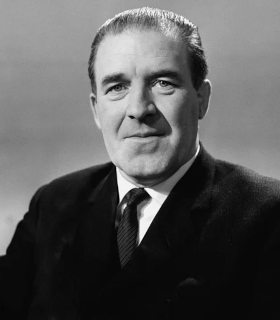
Noel Thomas Lemass, Irish Fianna Fáil politician, is born in Dublin on February 14, 1929. He serves as a Teachta Dála (TD) for Dublin South-West from 1956 to 1976 and Parliamentary Secretary to the Minister for Finance from 1969 to 1973.

Lemass is the son of Seán Lemass, a Fianna Fáil TD and fourth Taoiseach of Ireland, and Kathleen Lemass (née Hughes). He is named after his uncle, a victim of the Irish Civil War in the early 1920s. He is educated at Catholic University School, Leeson Street in Dublin and later at Newbridge College in Newbridge, County Kildare. Against his father’s wishes, rather than attend university, he undertakes business training and later becomes an executive member and branch secretary of the Irish Commercial Travellers’ Association.

Lemass marries Eileen Delaney, who is a member of Dublin Corporation, in 1950. The couple has four children.

Lemass follows his father into politics in 1955, when he is elected to Dublin City Council. He is elected to Dáil Éireann in a by-election in Dublin South-West the following year. The by-election is a loss for Fine Gael, who is in government at the time, and whose TD had held the seat for a number of years.

Lemass is active in a number of political councils and other groupings. From 1966 to 1968, he is a member of the Consultative Assembly of the Council of Europe. He is also a member of the Irish-British Parliamentary Group and the Irish-French Parliamentary Group.

In 1969, Lemass is appointed as Parliamentary Secretary to the Minister for Finance, with responsibility for the Office of Public Works. In his first year at the Department, he serves under his brother-in-law, Charles Haughey, and later under George Colley.

When Fianna Fáil loses office in 1973, Lemass is named spokesperson for physical planning and the environment. He holds that position until January 1975, when he is dropped from the front bench.

Lemass’s political career, a career in which he is invariably judged in comparison to his father, is cut short when he dies suddenly in Dublin on April 13, 1976. He is buried at Dean’s Grange Cemetery, Deansgrange, County Dublin. His widow enters the Dáil following his death.


Leave a comment

Birth of Desmond “Des” O’Malley, Irish Politician

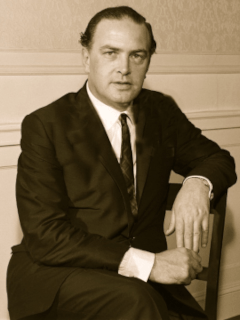
Desmond Joseph “Des” O’Malley, Fianna Fáil and Progressive Democrats politician, is born on February 2, 1939, in Limerick, County Limerick.

O’Malley is born into a storied Limerick political family. His maternal grandfather, Denis O’Donovan, is killed during the Irish War of Independence by the Black and Tans, two of his uncles and his father hold the office of Mayor of Limerick, and his uncle Donogh O’Malley is a Minister for Education. He is educated at the Jesuit Crescent College and at University College Dublin (UCD), from which he graduates with a degree in law in 1962.

In 1968, O’Malley enters politics upon the sudden death of his uncle Donogh who, at that the time, is the sitting Minister for Education. He is chosen after Donogh’s widow, Hilda, still in shock at the sudden death of her husband, turns down the opportunity to contest the by-election necessitated by his death.

O’Malley is subsequently elected as a Fianna Fáil TD for the Limerick East constituency in the by-election. Perhaps the first sign of the defiance that would define his career materialises during the 1969 Irish general election when Hilda asks her nephew to step aside and allow her to contest in the Limerick East constituency as the main Fianna Fáil candidate. He refuses and places third in the four-seat constituency, with his aunt, running as an independent, coming in fifth.

Following the general election, O’Malley is appointed Parliamentary Secretary to both Minister for Defence Jim Gibbons and Taoiseach Jack Lynch and serves as Government Chief Whip. In his role as a confidante of Lynch, the political lines within Fianna Fáil that put him on a collision course of over twenty years with Charles Haughey, are drawn. He plays a central role in the Arms Crisis prosecutions of Haughey and Neil Blaney in 1970. After their acquittals, the stage is set within Fianna Fáil for a long-term power struggle that eventually results in O’Malley’s expulsion from the party in 1984.

In the meantime, O’Malley’s next position within Lynch’s government comes when he is made Minister for Justice after Mícheál Ó Móráin is forced to resign due to ill-health. One of the most significant aspects of his legacy transpires during his tenure as Minister for Justice from 1970 to 1973. In response to the ongoing conflict in Northern Ireland, he tries and fails to introduce internment without trial for republicans within the State. He is, however, successful in reintroducing the Offences Against the State Act, which enables convictions for Irish Republican Amy (IRA) membership on the word of a Garda Superintendent, and the Special Criminal Court, a non-jury court presided over by three judges which tries cases of terrorism and serious organised crime.

When Lynch resigns the Fianna Fáil leadership following electoral defeat in 1979, O’Malley and Martin O’Donoghue manage the leadership campaign of George Colley, who subsequently loses to Haughey. Following Haughey’s ascent to leadership, O’Malley retains the industry and commerce ministerial portfolio he had been appointed to following the 1977 Irish general election.

In 1982, after Fianna Fáil loses its majority but stays in government by virtue of a confidence and supply agreement with Sinn Féin – The Workers Party and two independents, O’Malley is appointed Minister for Trade, Commerce and Tourism, but with the death of Colley and the loss of O’Donoghue’s seat, he becomes increasingly isolated within Fianna Fáil.

After the party whip is removed from him in 1984, amidst inter-party wrangling over the New Ireland Forum, O’Malley is expelled from the party the following year, the final straw being his famous “I stand by the Republic” speech in which he announces his intention to abstain on a vote regarding the liberalisation of the sales of contraceptives, which Fianna Fáil opposes.

O’Malley goes on to establish the Progressive Democrats, joined by Mary Harney (who had also been expelled by Fianna Fáil), and later by Fianna Fáil TDs Bobby Molloy and Pearse Wyse, as well as Fine Gael TD Michael Keating. In the 1987 Irish general election, the Progressive Democrats win fourteen seats, making them the third biggest party in the Dáil. Among those elected are O’Malley, his cousin Patrick O’Malley, Anne Colley, daughter of George Colley, Martin Gibbons, son of Jim Gibbons, Michael McDowell and Martin Cullen.

O’Malley’s animus for Haughey does not stop him from entering coalition with Fianna Fáil after the 1989 Irish general election, with him once again appointed Minister for Industry and Commerce. While in government, he finally witnesses the downfall of Haughey in 1992, when he is forced to resign over the emergence of new evidence concerning his tapping of journalists’ phones in the 1980s. The coalition with Fianna Fáil does not last long under new Taoiseach Albert Reynolds, with the Government collapsing after Reynolds accuses O’Malley of dishonesty during the Beef Tribunal.

O’Malley retires as leader of the Progressive Democrats in 1993, and the party moves into opposition, only to re-enter government with Fianna Fáil in 1997, where it remains upon O’Malley’s retirement from politics in 2002.

While the Progressive Democrats no longer exist, they are generally credited with the breaking up of the Fianna Fáil versus Fine Gael dichotomy of Irish politics that had dominated since the founding of the Free State. Since 1922, Irish governments have tended to be either single-party Fianna Fáil cabinets, be they minority or majority, or Fine Gael-led coalitions, typically involving the Labour Party. A Fine Gael-Labour coalition is in power at the time of the founding of the Progressive Democrats, and a single-party government or clear majority has not been won in Ireland since.

O’Malley dies in Dublin on July 21, 2021, at the age of 82, having been in poor health for some time. He is predeceased by his wife, Pat, and survived by their six children, four daughters including the former TD Fiona O’Malley, and two sons.

Perhaps O’Malley’s greatest legacy is the political reality of Ireland today: the low-tax, pro-business economic policies of the Progressive Democrats have been the dominant ideology in the State since the 1990s. Sinn Féin, the party most affected by his measures as Minister for Justice, no longer vote against the retention of the Offences Against the State Act and Special Criminal Court.

(From: “Desmond O’Malley: 1939-2021,” eolas Magazine, http://www.eolasmagazine.ie, August 2021)


Leave a comment

The 1918 Irish General Election & Rise of Sinn Féin

The 1918 Irish general election is the part of the 1918 United Kingdom general election which takes place in Ireland on December 14, 1918. It is a key moment in modern Irish history because it sees the overwhelming defeat of the moderate nationalist Irish Parliamentary Party (IPP), which had dominated the Irish political landscape since the 1880s, and a landslide victory for Sinn Féin. Sinn Féin had never previously stood in a general election but had won six seats in by-elections in 1917–18. The party vows in its manifesto to establish an independent Irish Republic. In Ulster, however, the Irish Unionist Alliance (IUA) is the most successful party.

In 1918, a system called plural voting is in place in both Britain and Ireland. Plural voting is a practice whereby one person might be able to vote multiple times in an election. Property and business owners can vote both in the constituency where their property lay and that in which they live, if the two are different. In the newly formed Irish Free State this system is ended by the Electoral Act 1923 and is abolished in the United Kingdom by the Representation of the People Act 1948. Plural voting remains in effect in Northern Ireland until 1969.

The 1918 election is held in the aftermath of World War I, the Easter Rising and the Conscription Crisis. It is the first general election to be held after the Representation of the People Act 1918. It is thus the first election in which women over the age of 30, and all men over the age of 21, can vote.

Sinn Féin is founded by Arthur Griffith in 1905. He believes that Irish nationalists should emulate the Ausgleich of Hungarian nationalists who, in the 19th century under Ferenc Deák, had chosen to boycott the imperial parliament in Vienna and unilaterally establish their own legislature in Budapest.

Griffith initially favours a peaceful solution based on “dual monarchy” with Britain, that is two separate states with a single head of state and a limited central government to control matters of common concern only. However, by 1918, under its new leader, Éamon de Valera, Sinn Féin has come to favour achieving separation from Britain by means of an armed uprising if necessary and the establishment of an independent republic.

In the aftermath of the 1916 Easter Rising, the party’s ranks are swelled by participants and supporters of the rebellion as they are freed from British gaols and internment camps. At its 1917 Ardfheis (annual conference) de Valera is elected leader, and the new, more radical policy is adopted.

Prior to 1916, Sinn Féin had been a fringe movement having a limited cooperative alliance with William O’Brien‘s All-for-Ireland League and enjoyed little electoral success. However, between the Easter Rising of that year and the 1918 general election, the party’s popularity increases dramatically. This is due to the failure to have the Home Rule Bill implemented when the IPP resists the partition of Ireland demanded by Ulster Unionists in 1914, 1916 and 1917, but also popular antagonism towards the British authorities created by the execution of most of the leaders of the 1916 rebels and by their botched attempt to introduce Home Rule on the conclusion of the Irish Convention linked with military conscription in Ireland (see Conscription Crisis of 1918).

Sinn Féin demonstrates its new electoral capability in four by-election successes in 1917 in which George Noble Plunkett, Joseph McGuinness, de Valera and W. T. Cosgrave are each elected, although it loses three by-elections in early 1918 before winning two more with Patrick McCartan and Arthur Griffith. In one case there are unproven allegations of electoral fraud. The party benefits from a number of factors in the 1918 elections, including demographic changes and political factors.

In the aftermath of the elections, Sinn Féin’s elected members refuse to attend the British Parliament in Westminster, and instead form a parliament in Dublin, Dáil Éireann (“Assembly of Ireland”), which declares Irish independence as a republic. The Irish War of Independence is conducted under this revolutionary government which seeks international recognition and sets about the process of state-building. The next election is part of 1921 Irish elections.

(Pictured: L to R, Éamon de Valera of Sinn Féin, Sir Edward Carson on the Irish Unionist Alliance, and John Dillon of the Irish Parliamentary Party)


Leave a comment

Birth of Dehra Parker, MP in the House of Commons of Northern Ireland

The Rt Hon. Dame Dehra S. Parker, GBE, PC (NI), the longest serving female MP in the House of Commons of Northern Ireland, is born in a military hospital in Dehradun, north of Delhi, India, on August 13, 1882.

Parker is born Dehra Kerr-Fisher, the only child of James Kerr-Fisher and his wife Annie. Her father, a native of Kilrea, County Londonderry, is a successful financier. She is educated in the United States, where her father holds extensive property holdings, and in Germany. The surname has been spelled, alternatively, as Ker-Fisher or Ker Fisher.

Parker is married twice. Her first husband is Lieutenant Colonel Robert Peel Dawson Spencer Chichester, MP, with whom she has one son and one daughter, Robert James Spencer Chichester (1902–1920) and Marion Caroline Dehra Chichester (1904–1976). She is predeceased by her son. On June 4, 1928, she marries her second husband, Admiral Henry Wise Parker (CB, CMG).

Parker is first elected as a Member of Parliament (MP) for Londonderry, as Dehra Chichester, as she is known prior to her second marriage in 1928, in the 1921 Northern Ireland general election. She stands down at the 1929 election just before her second marriage but is elected unopposed as Dehra Parker in the March 15, 1933 by-election for the South Londonderry constituency following the death of her son-in-law James Lenox-Conyngham Chichester-Clark. She serves until her resignation on June 15, 1960. Her grandson, James Chichester-Clark, is elected unopposed at the subsequent by-election. He later serves as the fifth Prime Minister of Northern Ireland from 1969 to 1971.

From her re-election in 1933 until her retirement in 1960, Parker faces opposition only once. During the 1949 Northern Ireland general election, with anti-partition agitation a common theme across the region, she is opposed in South Londonderry by a Nationalist Party candidate, T. B. Agnew, whom she defeats. She is a Parliamentary Secretary to the Ministry of Education from December 1, 1937, to March 15, 1944. She is also Chair of the Northern Ireland General Health Services Board from 1948 to 1949. She serves as Minister of Health and Local Government from August 26, 1949, to March 13, 1957, and becomes a member of the Privy Council of Northern Ireland in 1949. She is elevated to Dame Commander of the Order of the British Empire in the 1949 Birthday Honours “for public services,” having previously been appointed as an OBE, and is advanced to be a Dame Grand Cross of the Order of the British Empire (GBE) in 1957.

Parker’s promotion to the Cabinet at the age of 67 under Sir Basil Brooke (later created the 1st Viscount Brookeborough) is part of his so-called “reforming” premiership, his predecessor, J. M. Andrews, having been criticised for appointing elderly members to Cabinet. She is the first woman to serve in the Northern Ireland Cabinet.

Outside of parliamentary activities, Parker is a long-serving local councilor on Magherafelt District Council, president of both the Northern Ireland Physical Training Association and the Girls’ Training Corps, and chairman of the Ancient Monuments Advisory Committee. In 1944, she is appointed senior vice-chairman of the Council for the Encouragement of Music and the Arts (CEMA NI), and in 1949 she succeeds Sir David Lindsay Keir as President for CEMA, a position she holds until 1960. She is made an honorary member of the Ulster Society of Women Artists in 1958.

Parker dies at her home, Shanemullagh House, Castledawson, in the south of County Londonderry, on November 28, 1963, at age 81. She is interred two days later in the grounds of Christ Church, Castledawson.


1 Comment

Birth of Brendan Halligan, Economist & Politician

Brendan Halligan, economist and politician, is born in Dublin on July 5, 1936. He is founder and president of the Institute of International and European Affairs (IIEA), a think tank on European and international issues. He is president of the Ireland China Institute, an independent think tank based in Dublin which is officially launched in October 2019. His career spans Irish public sector bodies and work in the private sector. At various times he is General Secretary of the Labour Party, a Teachta Dála (TD), a Senator, and a Member of the European Parliament (MEP).

Halligan grows up in Rialto, Dublin, and is educated at St. James’s Christian Brothers School, Dublin. He studies at Dublin Institute of Technology (DIT) and becomes a chemical analyst in the CIÉ depot in Inchicore. He and three friends decided to go to university and form a co-operative and work at various jobs in London to fund their studies. In 1959, he begins an economics and law degree at University College Dublin (UCD). There he is influenced by lecturers including George O’Brien, Patrick Lynch and Garret FitzGerald. He receives a master’s degree in economics from UCD in 1964.

Following an early career as an economist, working with the Irish Sugar Company until 1967, Halligan becomes involved in politics. In that year, he becomes General Secretary of the Labour Party.

The party leader, Brendan Corish, relies on Halligan’s intellectual and political skills in his new role. Under Halligan, the party undergoes an energetic reorganisation. New structures and policies are put in place, coinciding with the party’s leftward policy shift and an acute anti-coalition stance. He strongly supports both approaches, but is instrumental in securing the party’s eventual, somewhat unwilling, reversal of its anti-coalition stance after its disappointing result in the 1969 Irish general election. The 1973 Irish general election results in a Fine Gael-Labour Party coalition government coming to power.

Halligan is appointed to Seanad Éireann in 1973. Three years later, he wins a by-election in Dublin South-West, and thus becomes a TD. After boundary changes, he stands in the new Dublin Finglas at the 1977 Irish general election but is not elected. He stands again in the revived Dublin North-West constituency at the 1981 and November 1982 Irish general elections, but again is not elected.

Halligan continues to serve as General Secretary of the party until 1980, and is appointed a Member of the European Parliament (MEP) from 1983 until 1984, replacing Frank Cluskey, where he specialises in economic affairs and energy policy.

In 1980, Halligan sets up CIPA, his own public affairs consultancy based in Dublin, and becomes a lecturer in Economics at the University of Limerick. He is also chairman of European Movement Ireland during the late 1980s. In 1985, he is appointed as Chairman of Bord na Móna, the Irish Peat Development Authority, a position he holds for ten years. In 1989 he founds the Institute of European Affairs (IEA), which later becomes the IIEA. He is Director of CIPA until 2014.

Resulting from his keen interest and experience in energy policy and renewable energy, Halligan serves as Chair of the Sustainable Energy Authority of Ireland from 2007 until 2014. He is President of the IIEA, and he is also a Board Member of Mainstream Renewable Energy.

In later years Halligan also works on the foundation and development of the Ireland China Institute (ICI), which, with its maxim bridging the gap between knowledge and understanding, seeks to strengthen Irish-Chinese diplomatic relations, developing cultural links and fostering a deeper understanding of the respective cultural norms and values between the two nations. He is also President of ICI.

Halligan dies on August 9, 2020, after a long illness. On his death, Taoiseach Micheál Martin describes him as “a man who gave his life to politics and the public service with a deep commitment to the institutions of the state.” European Commissioner for Trade Phil Hogan states that “Brendan was a committed European to his fingertips. He was a pragmatic European intellectual, in the tradition of Spinelli, Monnet and Schuman.”