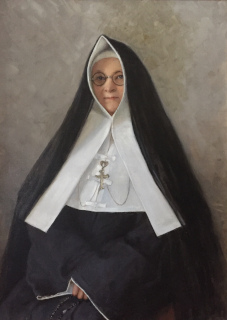
Butler is the seventh child of John Butler, gentleman farmer, and Ellen (née Forrestal). She attends the Sisters of Mercy school in New Ross, County Wexford, entering the Congregation of the Sacred Heart of Mary in Béziers, France in 1876. She takes the name Marie Joseph when she is sent to Porto, Portugal in 1879, professing in 1880. From 1880 to 1903 she teaches in Porto and Braga, becoming superior of the school in 1893.
In 1903 Butler is appointed head of the congregation’s school at Sag Harbor, Long Island, New York, with the responsibility to extend the influence of the order in there. Her cousin, James Butler, gives her a site in Tarrytown, New York in 1907 where she founds the first Marymount school that year, and then the first Marymount college in 1918. She acts as president of the college, with the institution being granted a charter from the University of the State of New York to award bachelor’s degrees in 1924. She is elected Mother General of her order in 1926 and serves until her death, being the first American superior elected to the international congregation of the Catholic Church. She introduces a unique educational system incorporating high religious and academic standards with the aim of preparing young women for a changing society. She becomes a citizen of the United States in 1927.
Under her influence, the order founds fourteen schools, including a novitiate in New York, three Marymount schools and three colleges, and 23 foundations internationally with Marymount schools in Rome, Paris, and Quebec, and a novitiate in Ferrybank, Waterford, County Waterford.
Butler dies on April 23, 1940, in Tarrytown and is buried there. In 1954 her spiritual writings are published as As an eagle: the spiritual writings of Mother Butler R.S.H.M. by J.K. Leahy. She is put forward as a candidate for canonisation in 1948.
O’Donovan moves to London but failing to find work as a priest, he leaves the Catholic priesthood in May 1908. He becomes a subwarden at Toynbee Hall in the East End in March 1910. In October that year, he marries Florence Emily Beryl Verschoyle (1886–1968), the daughter of an Irish Protestant colonel fifteen years his junior. They have three children, two daughters and a son.
In 1913, O’Donovan publishes his first and best-known novel, Father Ralph, which draws in large part on his own life. Around this time, he changes his first name from Jeremiah to Gerald. Another novel titled Waiting is published in 1914. He joins the war effort in 1915 and rises to become head of the Italian section at the Ministry of Information in 1918. There he meets his secretary and future lover, English novelistRose Macaulay.
O’Donovan publishes a few more novels after the war: How They Did It (1920), Conquest (1920), Vocations (1921), and The Holy Tree (1922). The clandestine affair with Macaulay continues for nearly two decades. In 1939, the pair are on holiday in the Lake District when they meet with a motoring accident, which damages O’Donovan’s health. He dies of cancer in Albury, Surrey three years later, on July 26, 1942. His letters to Macaulay had been destroyed the previous year when her flat in Central London was bombed during the Blitz.
In her novel The Towers of Trebizond, Macaulay features a woman character (Laurie) torn between her attraction to Christianity and her adulterous love for a married man. This is considered to reflect the author’s relationship with O’Donovan.
Clann na Poblachta, a radical new republican party, is founded in Barry’s Hotel, Dublin, on July 6, 1946, by former members of the Irish Republican Army (IRA) who are very unhappy at the treatment of IRA prisoners during “The Emergency” and who are prepared to try and engage in parliamentary politics. The party lasts 19 years but fails in its objectives due to internal feuds and lack of unity.
Clann na Poblachta realises that it has to place an emphasis on practical improvements to living standards and welfare issues such as public health. These policies attract a number of younger members such as Noël Browne and Jack McQuillan. One potential problem for the future is that almost the entire Provisional Executive is resident in Dublin and the party has no organisation in the six counties of Northern Ireland.
In 1948, Éamon de Valera dissolves the Dáil and calls an election for February. Clann na Poblachta wins only ten seats in the 1948 Irish general election, fewer than the breakthrough expected, caused in part by the error of running multiple candidates in many constituencies. The party believes there will be a landslide in their favour like the 1918 Westminster election but 48 of their 93 candidates lose their deposits. The party wins 13.3% of the vote but only 6.8% of the seats. Of their ten Teachtaí Dála (TD), six are elected in Dublin constituencies, two in Tipperary and one each in Cavan and Roscommon.
The party is the driving force behind the 26 counties exiting the Commonwealth of Nations and the all-party Anti-Partition Campaign.
The controversy of the “Mother and Child Scheme,” a progressive healthcare programme opposed by the Catholic Church, helps bring down the government and leads to the disintegration of the party. Many of the party’s TDs resign in solidarity with Noël Browne and his scheme, so the official party wins only two seats in the 1951 Irish general election.
In 1954, Clann na Poblachta agrees to give outside support to the Fine Gael-led government. In this election, three TDs are returned – MacBride, John Tully and John Connor. Controversy dogs the party as Liam Kelly, a Northern-based Clann na Poblachta senator, is also active in Saor Uladh and leads a number of military raids in County Fermanagh and County Tyrone against the Royal Ulster Constabulary (RUC).
Clann na Poblachta withdraws its support from the Government in late 1956 due to its anti-IRA stance. The party wins only one seat at the 1957 Irish general election with MacBride being defeated by Fianna Fáil. John Tully remains the only Clann TD until his retirement in 1961, after he loses his seat. However, Joseph Barron is elected in Dublin South-Central on his fourth attempt.
In 1965, Tully wins back his seat, but he is in effect an Independent as the party only stands four candidates. There had been negotiations between MacBride and Brendan Corish, the new Labour Party leader about forming a political alliance but this does not come to fruition.
A special Ardfheis, held on July 10, 1965, agrees to dissolve Clan na Poblachta.
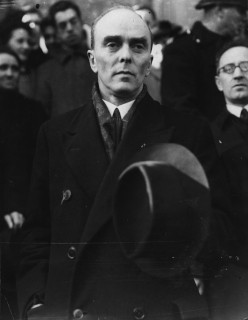
(Pictured: Sean MacBride, former Chief of staff of the Irish Republican Army and founder of Clann na Poblachta)
Kenealy suffers from diabetes and an erratic temperament is sometimes attributed to poor control of the symptoms. In 1850 he is sentenced to one month imprisonment for punishing his six-year-old illegitimate son with undue severity. He marries Elizabeth Nicklin of Tipton, Staffordshire in 1851 and they have eleven children, including novelist Arabella Kenealy (1864–1938). They live in Portslade, East Sussex, from 1852 until 1874. He commutes to London and Oxford for his law practice but returns at weekends and other times to be with his family.
In 1866, Kenealy writes The Book of God: the Apocalypse of Adam-Oannes, an unorthodox theological work in which he claims that he is the “twelfth messenger of God,” descended from Jesus Christ and Genghis Khan. He also publishes a more conventional biography of Edward Wortley Montagu in 1869.
During the Tichborne trial, Kenealy abuses witnesses, makes scurrilous allegations against various Roman Catholic institutions, treats the judges with disrespect, and protracts the trial until it becomes the longest in English legal history. His violent conduct of the case becomes a public scandal and, after rejecting his client’s claim, the jury censures his behaviour.
Kenealy starts a newspaper, The Englishman, to plead his cause and to attack the judges. His behaviour is so extreme that in 1874 he is disbenched and disbarred by his Inn. He forms the Magna Charta Association and goes on a nationwide tour to protest his cause.
At a by-election in 1875, Kenealy is elected to Parliament for Stoke-upon-Trent with a majority of 2,000 votes. However, no other Member of Parliament will introduce him when he takes his seat. Benjamin Disraeli forces a motion to dispense with this convention.
In Parliament, Kenealy calls for a Royal commission into his conduct in the Tichborne case, but loses a vote on this by 433–3. One vote is Kenealy’s, another that of his teller, George Hammond Whalley. The third “aye” is by Purcell O’Gorman of Waterford City. During this period, he also writes a nine-volume account of the case.
Kenealy gradually ceases to attract attention, loses his seat at the 1880 general election and dies in London on April 16, 1880. He is buried in the churchyard of St. Helen’s Church, Hangleton, East Sussex.
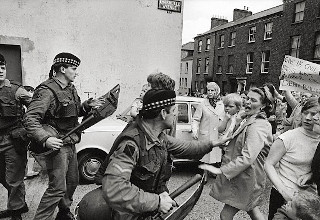
Intense riots between Protestants and Roman Catholics erupt in Derry and Belfast on June 27, 1970. During the evening, loyalist paramilitaries make incursions into republican areas of Belfast. This leads to a prolonged gun battle between republicans and loyalists. The rioting in both Belfast and Derry takes place despite the presence of more than 8,000 British soldiers, backed up by armored vehicles and helicopters.
The rioting follows the June 26 jailing of Bernadette Devlin, the 23‐year‐old Roman Catholic leader, who had recently been reelected to Parliament in London. She had been convicted of riotous behavior during violence in Derry in August 1969 and sentenced to six months in prison.
The rioting in Belfast begins after Catholic youths hurl stones and disrupt a parade by the militantly Protestant Orange Order. About 100 persons are injured badly enough to be treated in hospitals. A bakery and a butcher shop in a shopping center are set afire and a police station is wrecked with iron bars and clubs. The scene of the rioting is at the intersection of Mayo Street and Springfield Road in a mixed Protestant‐Catholic area.
Armed British soldiers, in visors and helmets and carrying riot shields, separate ugly, shouting mobs of Catholics and Protestants. The troops use tear gas in an effort to break up the crowd and at one point send 1,000 people, including women and children, fleeing with tears streaming down their faces.
There is civilian sniping and firing by British troops in two riot areas — the Springfield Road area and the Crumlin Road area – where rival crowds from segregated slum streets clash later in the afternoon.
At night British soldiers seal off the riot areas to all but military vehicles. Armored cars with machine guns ready stand in the streets, which are littered with glass and stones. Hundreds of soldiers in full battle dress stand against the seedy red‐brick shops and houses.
However, the crowds continue to gather. Buses are set afire, and late at night the army uses tear gas again to drive the mobs away. As rioting erupts in other parts of Belfast, 4,000 British soldiers are said to have been sent into the riot areas. The police are harassed by a half dozen fires around the city. Some of the fires are started with battery devices according to the police.
In Derry, Catholic youths attack soldiers and policemen with stones, bottles and gasoline bombs. The youths begin re‐erecting the barricades that had shielded the Catholic Bogside slum area during rioting the previous year. Ninety-two soldiers are injured and a paint shop near Bogside is set ablaze after looting by children who appear to be no more that 11 or 12 years old.
The wave of agitation begins in October 1968, when a largely Catholic civil rights movement takes to the streets to demand an end to anti‐Catholic discrimination in voting rights, jobs and housing. The Unionist Government in Belfast, which considers itself aligned with the Conservative Party in London, responds reluctantly to the street violence. However, under intense prodding by the Labor Government, it enacts many of the demanded reforms.
However, a Protestant backlash ensues, encouraged by the fiery evangelical preacher, the Rev. Ian Paisley. Paisley fans the latent fear that Northern Ireland‘s Catholics seek to unite Ireland into a Catholic state under Dublin. In the view of many observers, the Protestants have never shared power nor prestige with the Catholic minority, while the Catholics have taken an ambiguous view on whether they wanted to be British or Irish.
(From: “New Rioting Flares in Northern Ireland; 4 Dead and 100 Hurt” by John M. Lee, The New York Times, June 28, 1970)
Ireland is then home to 3,171,697 Catholics. It is selected to host the congress as 1932 is the 1500th anniversary of Saint Patrick‘s arrival. The chosen theme is “The Propagation of the Sainted Eucharist by Irish Missionaries.”
The city of Dublin is decorated with banners, bunting, garlands, and replica round towers. Seven ocean liners moor in the port basins and along Sir John Rogerson’s Quay. Five others anchor around Scotsmans Bay. The liners act as floating hotels and can accommodate from 130 to 1,500 people on each. The Blue Hussars, a ceremonial cavalry unit of the Irish Army formed to escort the President of Ireland on state occasions, first appears in public as an honor guard for the visiting Papal Legate representing Pope Pius XI.
John Charles McQuaid, President of Blackrock College, hosts a large garden party on the grounds of the college to welcome the papal legate, where the hundreds of bishops assembled for the Congress have the opportunity to mingle with a huge gathering of distinguished guests and others who have paid a modest subscription fee.
The final public mass of the congress is held at 1:00 PM on Sunday, June 26 in Phoenix Park at an altar designed by the eminent Irish architect John J. Robinson of Robinson & Keefe Architects, and is celebrated by Michael Joseph Curley, Archbishop of Baltimore. A radio station, known as Radio Athlone, is set up in Athlone to coincide with the Congress. In 1938 it becomes Radio Éireann. The ceremonies include a live radio broadcast by Pope Pius XI from the Vatican. John McCormack, the world-famous Irish tenor, sings César Franck‘s Panis Angelicus at the mass.
Approximately 25% of the population of Ireland attend the mass and afterwards four processions leave the Park to O’Connell Street where approximately 500,000 people gather on O’Connell Bridge for the concluding Benediction given by the Papal Legate, CardinalLorenzo Lauri.
The English Catholic writer G. K. Chesterton is also present, and observes, “I confess I was myself enough of an outsider to feel flash through my mind, as the illimitable multitude began to melt away towards the gates and roads and bridges, the instantaneous thought ‘This is Democracy; and everyone is saying there is no such thing.'”
On the other hand, such an overwhelming display of Catholicity only confirms to Protestants in the North the necessity of the border.
(Pictured: the closing ceremony of the Eucharistic Congress that was held in Dublin in June 1932)
Pro-choice activists sail into Dublin docks aboard the controversial pro-abortion Dutch ship Aurora on June 14, 2001. Although the trawler is equipped to carry out abortions, the purpose of its visit to Ireland is to fuel debate on the need for Irish legislation to provide women with choice.
Abortion is perhaps the last taboo in Irish society. The question of abortion still has the power to unleash emotive arguments among both pro-life and pro-choice camps. The arrival of the Aurora thrusts the issue back into the frontline of public debate.
The 1990s are a time of spectacular change in the Republic of Ireland, where the will of the Roman Catholic church traditionally has had a direct influence on family life. Contraception became widely available and a referendum overturned the constitutional bar on divorce. But abortion on Irish soil remains outlawed in all but the most extreme circumstances. As it stands, a woman is only entitled to have her pregnancy terminated if otherwise she is likely to commit suicide. Pro-choice campaigners call the law hypocritical and point to the fact that every year an estimated 6,300 women travel across the Irish Sea to Great Britain, where they pay up to £1,000 to have the procedure done privately.
The 35-metre ship, a cannibalised Dutch deep-sea fishing boat, is chartered by the feminist action group Women on Waves, with the aim of carrying out abortions on board. A shipping container which has been converted into an abortion clinic, complete with gynaecological chair, has been welded to the deck of the Aurora. The mobile clinic is capable of carrying out 20 operations a day.
Originally, the ship had planned to sail 12 miles out into international waters, where it would carry out the terminations. Once there, doctors on board would also be able to distribute the RU486 abortion pill. But a question mark hangs over the mission after it is revealed that Dutch authorities did not issue the floating clinic with the appropriate paperwork that would allow it to carry out abortions.
While the Aurora‘s voyage makes news beyond Irish shores, reaction among pro-life campaigners in Ireland is mostly muted. Many feel that by keeping quiet they will starve the mission of publicity. But some organisations, such as Human Life International Ireland (HLII), do speak out. HLII has plans to launch what it calls a “Life” boat to shadow the Aurora. Spokesman for the group, David Walshe, says the aim is not to protest but to act as “a non-confrontational witness to the sanctity of human life.”
Until 1983, abortion is outlawed in Ireland under a 19th Century act instituted during British rule. In 1983 a constitutional amendment is enacted that outlaws abortion in all circumstances. But in 1992 the Supreme Court of Ireland pronounces that if a woman were suicidal she would be entitled to a termination. The law has remained largely unchanged since then and the Irish government shows no appetite for tackling the issue head-on.
(From: “Abortion ship in stormy waters,” BBC News Online, June 14, 2001)
St. Patrick’s Cathedral is dedicated on March 17, 1191. With its 141-foot spire, it is the tallest church (not cathedral) in Ireland and the largest.
St. Patrick’s Cathedral is founded on the spot where St. Patrick himself is believed to have baptized the first Irish believers into the Christian faith. The sacred well which St. Patrick used has been lost, but the Cathedral is built in the area where the conversions are believed to have taken place.
The first church is constructed here in the 5th century but St. Patrick’s as it stands now is built between 1191 and 1270. In 1311, the Medieval University of Dublin is founded here, and the church begins a place of higher education as well as a place of worship.
Repairs to the cathedral begin in the 1660s and continued in phases over the following decades to save it from falling into complete ruin.
As its status grows, St. Patrick’s begins to rival Christ Church Cathedral in importance. This is where the history of St. Patrick’s Cathedral takes a bit of a complicated turn in term of church definitions. The current cathedral building is often hailed as one of the best examples of medieval architecture in Dublin, however, it is only fair to point out that the structure went through a massive rebuild in the 1860s, mainly financed by money from Benjamin Guinness.
As one of Dublin’s two Church of Ireland cathedrals, St. Patrick’s is actually designated as the “National Cathedral of Ireland.” However, it lacks the one thing that usually makes a church a cathedral – a bishop. The Archbishop of Dublin actually has his seat at Christ Church Cathedral, which is designated as the local cathedral of the Diocese of Dublin and Glendalough. St. Patrick’s is instead headed by a dean who is the ordinary for the cathedral. This office has existed since 1219 with its most famous office holder being Jonathan Swift.
Today St. Patrick’s Cathedral plays host to a number of public national ceremonies. Ireland’s Remembrance Day ceremonies, hosted by the Royal British Legion and attended by the President of Ireland, take place there every November. Its carol service (the Service of Nine Lessons and Carols), celebrated twice in December, including every December 24, is a colourful feature of Dublin life. On Saturdays in autumn the cathedral hosts the graduation ceremonies of Technological University Dublin.
The funerals of two Irish presidents, Douglas Hyde and Erskine Childers, take place in St. Patrick’s Cathedral in 1949 and 1974 respectively. In 2006, the cathedral’s national prominence is used by a group of 18 Afghan migrants seeking asylum, who occupied it for several days before being persuaded to leave without trouble.
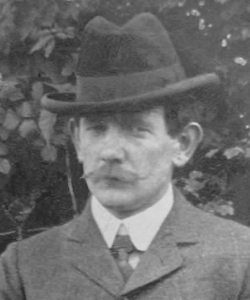
Noonan is the illegitimate son of Samuel Croker, a senior member of the Royal Irish Constabulary. He is baptised and raised a Roman Catholic by his mother Mary Noonan. His father, who is not Catholic, has his own family, but attempts to provide for Robert until his death in 1875.
By 1875 Noonan is living in London. When he is sixteen, he shows signs of a radical political consciousness. He leaves his family declaring he “would not live on the family income derived largely from absentee landlordism.” It is around this time he changes his surname to his mother’s maiden name.
In 1890, Noonan is a sign writer living in Queen’s Road, Everton, Liverpool. On June 10, 1890, he appears at Liverpool County Intermediate Sessions court at County Sessions House, Islington, Liverpool on charges of housebreaking and larceny. He is found guilty and given a six-month prison sentence.
By 1891, Noonan has moved to Cape Town, South Africa, where he is a painter and decorator. He marries in 1891, but the marriage is an unhappy one, with his wife having numerous affairs after the birth of their daughter, Kathleen. They divorce in 1895, and Noonan acquires all the property, including their house in an affluent suburb of Cape Town.
Noonan and his daughter move to Johannesburg, where he secures a well-paying job with a construction company. It is here that he learns the ways of the industry he would later write about in his novel, although Noonan’s actual circumstances vary greatly from the proletarian characters of the book. After becoming Secretary of the Transvaal Federated Building Trades Council, he is able to send his daughter to an exclusive convent school and also to employ a black manservant called Sixpence.
In 1897, Noonan leads a successful protest against the employment of black skilled labour. During 1898, he becomes a member of the Transvaal Executive Committee of the Centennial of 1798 Association, which commemorates the revolutionary nationalistSociety of United Irishmen. As a 1798 Association member, he helps form the Irish Brigades, an anti-British force that fights alongside the Boers in the Second Boer War. At this point, accounts of his life differ. Some assert he takes up arms and is interned by the British until the end of the war, when he returns to Britain. Others say he leaves South Africa just before hostilities began in October 1899.
In any event, around the turn of the century, Noonan ends up in Hastings, Sussex. Here, he finds work as a sign writer, but at much lower wages and in far poorer conditions than he had experienced in South Africa. He has to take part-time jobs in addition to his full-time position.
Influenced by the Marxist-influenced ideas of designer and socialist William Morris, he joins the Social Democratic Federation in 1906. The next year, after a dispute with his employer, he loses his job. Despite the demand for his skills, his health begins to deteriorate, and he eventually develops tuberculosis. Unemployed and unable to remain politically active, he starts writing, something he hopes will earn enough money to keep him from the workhouse.
He writes under the pen name Robert Tressell as he fears the socialist views expressed in the book will have him blacklisted. He completes The Ragged-Trousered Philanthropists in 1910, but the 1,600-page hand-written manuscript is rejected by three publishing houses. The rejections severely depress him, and his daughter has to save the manuscript from being burned.
Unhappy with his life in Britain, Noonan decides that he and Kathleen should emigrate to Canada. However, he only reaches Liverpool when he is admitted to the Royal Liverpool Infirmary, where he dies of pulmonary tuberculosis on February 3, 1911, at the age of 40. He is buried in a pauper’s grave at Liverpool Parochial Cemetery, later known as Walton Park Cemetery. The location of the grave is not rediscovered until 1970. Twelve other people are buried in the same plot. The plot is now marked although the land is no longer used as a cemetery and is now used by Rice Lane City Farm.
Kathleen mentions her father’s novel to a friend, writer Jessie Pope, who recommends it to her publisher. In April 1914, the publisher purchases the rights to the book for £25, and it appears in Britain, Canada and the United States later that year, in the Soviet Union in 1920, and in Germany in 1925. The version as originally published is heavily abridged by Pope, with much of the socialist ideology removed.
The original manuscript is subsequently located by F. C. Ball and, after he raises funds to acquire and reassemble the original version, an unabridged edition is published in 1955.
Charles is the eldest son of James Francis Edward Stuart, the exiled Stuart claimant to the British throne. Believing there is support for a Stuart restoration in both Scotland and England, he lands in Scotland in July 1745. The Jacobite Army is often assumed to have been largely composed of Gaelic-speaking Catholic Highlanders. In reality nearly a quarter of the rank and file are recruited in Aberdeenshire, Forfarshire and Banffshire, with another 20% from Perthshire. Although the army is predominantly Scots it contains a few English recruits plus significant numbers of Irish, Scottish and French professionals in French service with the Irish Brigade and Garde Écossaise.
After amassing his army of Scots Jacobite supporters, Charles takes Edinburgh by September and defeats a British government force at Prestonpans. The government recalls 12,000 troops from the Continent to deal with the rising. A Jacobite invasion of England reaches as far as Derby before turning back, having attracted relatively few English recruits.
The Jacobites, with limited French military support, attempt to consolidate their control of Scotland, whereby early 1746 they are opposed by a substantial government army. A scrambled Jacobite victory at Falkirk fails to change the strategic situation. With supplies and pay running short and with the government troops resupplied and reorganised under the Duke of Cumberland, son of British monarch George II, the Jacobite leadership has few options left other than to stand and fight. The two armies eventually meet at Culloden, on terrain that gives Cumberland’s larger, well-rested force the advantage.
The battle lasts only an hour, with the Jacobites suffering a bloody defeat with between 1,500 and 2,000 killed or wounded. Approximately 300 government soldiers are killed or wounded. While perhaps as many as 6,000 Jacobites remain in arms in Scotland, the leadership takes the decision to disperse, effectively ending the rising. The men of the combined Irish regiments, under the command of Brigadier Walter Stapleton, are the last off the field, covering the retreat of Prince Charles and the remnants of his army. The Irish had given their blood to the cause of a Stuart King for the last time. Most of the surviving Irish surrender at Inverness. The prince himself eventually manages to make his escape to France.
Culloden and its aftermath continue to arouse strong feelings. The University of Glasgow awards the Duke of Cumberland an honorary doctorate, but many modern commentators allege that the aftermath of the battle and subsequent crackdown on Jacobite sympathisers were brutal, earning Cumberland the sobriquet “Butcher.” Efforts are subsequently made to further integrate the comparatively undeveloped Scottish Highlands into the Kingdom of Great Britain. Civil penalties are introduced to undermine the Scottish clan system, which had provided the Jacobites with the means to rapidly mobilise an army.
Today, a visitor centre is located near the site of the battle. This centre is first opened in December 2007, with the intention of preserving the battlefield in a condition similar to how it was on April 16, 1746. One difference is that it currently is covered in shrubs and heather. During the 18th century, however, the area was used as common grazing ground, mainly for tenants of the Culloden estate. Those visiting can walk the site by way of footpaths on the ground and can also enjoy a view from above on a raised platform. Possibly the most recognisable feature of the battlefield today is the 20-foot-tall memorial cairn, erected by Duncan Forbes in 1881. In the same year Forbes also erects headstones to mark the mass graves of the clans.






 seamus dubhghaill