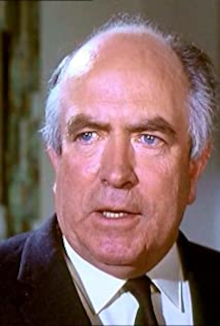
Liam Redmond, Irish character actor known for his stage, film and television roles, dies in Dublin on October 28, 1989, following a lengthy illness.
Redmond is born in Limerick, County Limerick, on July 27, 1913, one of four children born to cabinet-maker Thomas and Eileen Redmond. Educated at the Christian Brothers schools in Dublin, he later attends University College Dublin (UCD) and initially reads medicine before moving into drama.
While Director of the Dramatic Society, Redmond meets and marries the society’s secretary, Barbara MacDonagh, sister of Donagh MacDonagh and daughter of 1916 Easter Rising leader Thomas MacDonagh and Muriel Gifford. They have four children.
Redmond is invited to join the Abbey Theatre in 1935 as a producer by William Butler Yeats, the Irish poet. Yeats writes his play Death of Cú Chulainn for Redmond to star as Cú Chulainn, hero of one of Ireland’s foundational myths.
Redmond makes his acting debut at the Abbey Theatre in 1935 in Seán O’Casey‘s The Silver Tassie. His first stage appearance is in 1939 in New York City in The White Steed. After returning to Britain at the outbreak of World War II he is a regular on the London stage. He is one of the founders of the Writers’, Artists’, Actors’ and Musicians’ Association (WAAMA), a precursor of the Irish Actors’ Equity Association. His insistence that “part-time professionals” – usually civil servants who act on the side – should be paid a higher rate than professional actors for both rehearsal time and performance, effectively wiping out this class, raising the wages and fees of working actors.
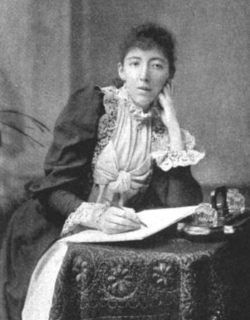
Abraham is born on April 5, 1869, in Rathgar, County Dublin. She works to improve conditions for industrial workers and is also involved in women’s health and education. She is one of the first people to be appointed to the Order of the Companions of Honour in 1917.
Abraham is educated at home. Following her father’s death in 1887, she decides to move to London in search of employment. In London she becomes secretary to Emilia, Lady Dilke, who is a leader of the Women’s Trade Union League, an organisation of which she becomes treasurer. She supports the London Dock Strike of 1889 and helps organise laundresses.
In 1891, Abraham is appointed to the Royal Commission on Labour, set up to investigate the poor conditions faced by industrial workers, as one of four women assistant commissioners.
H. H. Asquith decides to appoint women factory inspectors in 1893, and Abraham is one of his first choices, soon superintending a team of five women inspectors. In this position, she is known for her good humour which helps relations with factory managers. In 1895, she joins the Departmental Committee on Dangerous Trades. She writes a book on factory legislation in 1896, The Laws Relating to Factories and Workshops, Including Laundries and Docks.
In 1896, Abraham marries Harold Tennant, brother-in-law of and parliamentary secretary to Asquith, and chairman of the Departmental Committee on Dangerous Trades. She resigns in 1897 shortly before the birth of her first son, to devote herself to her family. She goes on to have five children. Her eldest son, Henry, is killed in battle in 1917 during World War I.
Despite her new family life, Tennant does not give up her work entirely, remaining on the Committee on Dangerous Trades. In 1899, she becomes chairman of the Industrial Law Indemnity Fund, which provides compensation to victimised workers. She is on the Royal Commission on Divorce in 1909 and is a founder and treasurer of the Central Committee for Women’s Employment.
During World War I, Tennant takes on more work. She works initially for the War Office as welfare advisor, then briefly in the Women’s Department of the National Service Department, before moving to the Ministry of Munitions. After the war, she reduces her workload, but still serves on committees on maternal mortality and maternal health. She is also a governor of Bedford College in London, an institution founded for the education of women that is part of the University of London. From 1941 she is closely involved in campaigning for the Royal Air Force Benevolent Fund.
Tennant and her husband purchase and rebuild a country house, Great Maytham, at Rolvenden, Kent, a property whose old walled garden had earlier been the inspiration for The Secret Garden by Frances Hodgson Burnett. She develops expertise as a gardener, becoming prominent in the Royal Horticultural Society. After her husband’s death in 1935, she moves to a smaller house named Cornhill at Great Maytham, where she dies July 11, 1946. Some of her correspondence is in the British Library, London.
Gibney works as a civil servant in the Irish tax office for seven years and then joins the Bank of Ireland. She studies for a drama degree while at the bank and joins the company’s amateur dramatics group. She trains to be an actress at Dublin Oscar Theatre School.
Gibney’s first professional acting role comes in 1996, with a minor part in Some Mother’s Son, a film starring Helen Mirren. In 1999, she appears in the film Agnes Browne as Winnie the Mackerel. In 2007, she appears in Prosperity as Linda.
Gibney’s most prominent role is her portrayal of Cathy Brown, the daughter of Agnes Brown, played by her real-life husband, Brendan O’Carroll, a part she begins playing in the 1990’s in the original Mrs. Browne, and subsequently the BBC sitcom Mrs. Brown’s Boys since 2011. She also appears as Cathy in the film adaption Mrs. Brown’s Boys D’Movie and the talk show All Round to Mrs. Brown’s between 2017 and 2020. She and O’Carroll reprise their roles as the characters in the Netflix film A Madea Homecoming (2022).
In 2014, Gibney takes part in the twelfth series of Strictly Come Dancing. She is partnered with Irish professional Tristan MacManus. She and MacManus are the second couple to be eliminated in week three of the competition after dancing to ABBA‘s “Mamma Mia” on Movie Week. She competes in the bottom two against Blue star Simon Webbe and his partner Kristina Rihanoff.
Gibney has been married to Brendan O’Carroll since 2005 and has three stepchildren, Fiona and Danny, who also appear in Mrs. Brown’s Boys, and Eric.
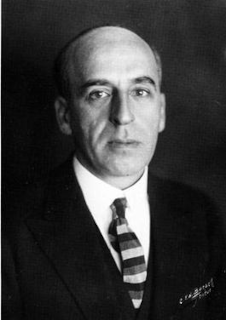
Lester is born on September 28, 1888, in Carrickfergus, County Antrim, as John Ernest Lester, the son of a Protestant grocer Robert Lester and his wife, the former Henrietta Ritchie. Although the town of Carrickfergus is strongly Unionist, he joins the Gaelic League as a youth and is won over to the cause of Irish nationalism. As a young man, he joins the Irish Republican Brotherhood (IRB). He works as a journalist for the North Down Herald and a number of other northern papers before he moves to Dublin, where he finds a job at the Freeman’s Journal. By 1919, he has risen to its news editor.
After the Irish War of Independence, a number of Lester’s friends join the new government of the Irish Free State. He is offered and accepts the position as director of publicity.
Lester marries Elizabeth Ruth Tyrrell in 1920 by whom he has three daughters.
In 1923, Lester joins Ireland’s Department of External Affairs. He is sent to Geneva in 1929 to replace Michael MacWhite as Ireland’s Permanent Delegate to the League of Nations. In 1930, he succeeds in organising Ireland’s election to the Council (or executive body) of the League of Nations for three years. He often represents Ireland at Council meetings and stands in for the Minister for External Affairs. He becomes increasingly involved in the work of the League, particularly in its attempts to bring a resolution to two wars in South America. His work brings him to the attention of the League Secretariat and begins his transformation from national to international civil servant.
When Peru and Colombia have a dispute over a town in the headwaters of the Amazon River, Lester presides over the committee that finds an equitable solution. He also presides over the less-successful committee when Bolivia and Paraguay go to war over the Gran Chaco.
In 1933, Lester is seconded to the League’s Secretariat and sent to Danzig (now Gdańsk, Poland), as the League of Nations’ High Commissioner from 1934 to 1937. The Free City of Danzig is the scene of an emerging international crisis between Nazi Germany and the international community over the issue of the Polish Corridor and the Free City’s relationship with the Third Reich. He repeatedly protests to the German government over its persecution and discrimination of Jews and warns the League of the looming disaster for Europe. He is boycotted by the representatives of the German Reich and the representatives of the Nazi Party in Danzig.
Lester returns to Geneva in 1937 to become Deputy Secretary General of the League of Nations. In 1940, he becomes Secretary General of the body, becoming the League’s leader a year after the beginning of World War II which shows that the League has failed its primary purpose. The League has only 100 employees, including guards and janitors, out of the original 700.
Lester remains in Geneva throughout the war and keeps the League’s technical and humanitarian programs in limited operation for the duration of the war. In 1946, he oversees the League’s closure and turns over the League’s assets and functions to the newly established United Nations.
Despite rumours that he would be prepared to stand for election as President of Ireland, Lester seeks no permanent office and retires to Recess, County Galway, in the west of Ireland, where he dies on June 13, 1959. In its obituary, The Times describes him as an “international conciliator and courageous friend of refugees.”
In August 2010, a room in the Gdańsk City Hall, the building that had been Lester’s residence during his stay, is renamed by Mayor Paweł Adamowicz as the Seán Lester Room.
MacMahon, who is educated at home, is also literary. From the 1890s she begins contributing to periodicals such as the New Ireland Review, for which she writes on local history. Her first novel, A New Note, appears in 1894 and over the next thirty-five years she is prolific, publishing over twenty novels as well as making numerous contributions to magazines, and several to BBC radio programmes. She is unmarried and writing is her main source of income, but during World War I she works as a civil servant in various government departments including War, Trade, and the newly created Intelligence department. Afterward she lives in Brockenhurst, Hampshire, England, and converts at some stage to Catholicism.
MacMahon’s novels are romances. Typical of them is An Honorable Estate (1898), which features an English heiress marrying an impoverished Irish clergyman in a fit of pique, only to fall in love with him. They are undemanding but entertaining and occasionally ironic, with clever social commentary. Irish Book Lover, a quarterly review of Irish literature and bibliography, commends The Job (1914) for its insightful and sympathetic characterisation. It is an account of a baronet‘s struggle to improve his Irish estate despite the fecklessness of the inhabitants. Ireland is a frequent setting for her stories. Her view of it verges on the sentimental, and she often features eccentric but ultimately good-hearted country people.
However, MacMahon’s last book, Wind of Dawn (1927), is a more profound, interesting study. Set during the Irish War of Independence and the truce, it looks at the complexities within Irish society and the differences in attitude between the Anglo- and native Irish. Rich in characters, it features a naive English girl in love with Ireland, a papist-hating domestic servant, and an ascendancy grande dame who finds England monotonous but is adamant that her children will be educated there and will not acquire a brogue. Unlike MacMahon’s other books, it is not a romance and ends in tragedy and then acceptance for the coming change of regime. It reads like a lesser novel by Elizabeth Bowen and resembles in theme and argument, though not in quality, The Last September (1929), which it predates. Unfortunately, she is not inspired to go further in this line. She writes no more and retires on a government civil pension.
By the time of her death on April 19, 1956, MacMahon has fallen into complete obscurity, and surprisingly, given the quantity and relative merit of her work, she has no entry to date in any of the numerous anthologies of Irish or women writers.
Hurley is born in Baurleigh, County Cork, near the village of Kilbrittain, on March 20, 1893, and is educated in the national school and subsequently passes the civil service examinations at age fifteen. According to his brother James, he is one of seven siblings, “born and reared in a farm of 35 acres.”
In 1918, Hurley is sentenced to five years penal servitude for possession of arms and plans of the British military fortifications at Bere Island. However, he is released in 1919 following a hunger strike. In the same year, his brother Willie, also an IRA Volunteer, dies of typhoid fever. He first becomes vice-commandant of the Volunteers or IRA Bandon Battalion and then in August 1920, after the arrest and imprisonment of Tom Hales, he becomes commander of the Third Cork Brigade of the IRA. One of his most important decisions is to establish a full-time guerrilla unit or flying column, under Tom Barry.
The 3rd Cork Brigade (also known as the West Cork Brigade) goes on to be one of the most active IRA units during the guerrilla war against the British in 1919–21. According to Barry, Hurley leads an ambush of the Royal Irish Constabulary (RIC) at Ahawadda in April 1920, killing three policemen, wounding one and taking their arms and ammunition. In July of that same year, he leads a successful attack on the Coastguard station at Howes Strand, capturing a large number of weapons and ammunition. Barry remarks that Hurley is “a remarkable man and a lovable personality” and “continually urged a fighting army policy.”
Hurley is present at the Tooreen ambush in October 1920 and subsequently is part of an assassination attempt on a judge who gives “harsh sentences” to IRA members. From December 1920 until January 1921, he takes command of the 3rd Cork Brigade’s flying column while Barry is ill. He also tours IRA units to assess the impact of the decree of excommunication on the guerrilla movement issued by CatholicBishop of Cork, Daniel Cohalan.
In February 1921, Hurley leads the disastrous Upton train ambush on February 15, 1921, an attack on a train carrying British troops. In the action, the attacking IRA party is heavily outnumbered and the firefight results in three IRA men and six civilians being killed. He is also badly wounded in the face and ankle. Barry writes of the aftermath of the ambush that “he (Hurley) mourned deeply for his dead comrades and for the dead civilians, whom he did not know.”
Hurley is killed in action by British troops just before the Crossbarry ambush on March 19, 1921. He is staying in a house with a pro-republican family, where he is recuperating from the serious wounds he had received at Upton a month earlier. When he realises that he is surrounded by the British forces, he flees the house, as Barry comments in his book, to reduce the danger to those in the house, and is shot dead by pursuing troops. Barry remarks that he “died in the manner in which we expected.”
The British Army places Hurley’s body at the workhouse in Bandon. However, members of Cumann na mBan surreptitiously take his body and he is given a secret republican funeral in Clogagh. A local ballad exists that commemorates him. In addition, the Gaelic Athletic Association grounds in Bandon is named after him in 1971.
The idea for a new party is discussed at a meeting in Dublin on February 21, 1940, attended by 104 former officers of the pro- and anti-Treaty wings of the Irish Republican Army (IRA). The inaugural meeting of the new party takes place on March 2, 1940. Simon Donnelly, who had fought in Boland’s Mill under Éamon de Valera in the 1916 Easter Rising, the former leader of the Dublin section of the IRA, and former chief of the Irish Republican Police (IRP), is elected as president of a central committee of fifteen members. Other leaders are Seán Fitzpatrick, another Irish War of Independence veteran; Con Lehane, who had recently left the IRA; Séamus Gibbons; Tom O’Rourke; Seán Dowling, one of Rory O’Connor‘s principal lieutenants in the Irish Civil War; Colonel Roger McCorley, one of the principal IRA leaders in Belfast during the Irish War of Independence who had taken the Irish Free State side in the Irish Civil War; Frank Thornton, one of Michael Collins‘ top intelligence officers; Roger McHugh, a lecturer in English at University College Dublin (UCD) and later professor; Captain Martin Bell and Peter O’Connor.
Also in attendance at the first meeting is Seamus O’Donovan, Director of Chemicals on IRA Headquarters Staff in 1921 and architect of the IRA Sabotage Campaign in England by the IRA in 1939–40. Indeed, O’Donovan proposes several of the basic resolutions. Additionally, the meeting is attended by Eoin O’Duffy and several former leaders of the Irish Christian Front.
Many members of the Irish far-right join Córas na Poblachta including Gearóid Ó Cuinneagáin, who becomes the leader of the party’s youth wing Aicéin and goes on to found Ailtirí na hAiséirghe, Alexander McCabe, Maurice O’Connor and Reginald Eager from the Irish Friends of Germany, George Griffin, Patrick Moylett, his brother John and Joseph Andrews of the People’s National Party, Dermot Brennan of Saoirse Gaedheal, and Hugh O’Neill and Alexander Carey of Córas Gaedhealach. As a result, the party assumes a pro-German and antisemitic attitude which is frequently expressed in party functions, and Gardaí suspects Córas na Poblachta members of daubing the walls of Trinity College Dublin in antisemitic slogans following the visit of British politician Leslie Hore-Belisha to Ireland in 1941.
Socialist republicans Nora Connolly O’Brien and Helena Molony take an interest in the group. Reflecting divisions within the IRA, a minority of the party’s leaders sympathise with communism rather than fascism.
The main aim of Córas na Poblachta is the formal declaration of a Republic. It also demands that the Irish language be given greater prominence in street names, shop signs, and government documents and bank notes. It proposes to introduce national service in order that male citizens understand their responsibilities. The party’s economic policy is the statutory right to employment and a living wage. It proposes breaking the link with the British pound, the nationalisation of banks and the making of bank officials into civil servants. In the area of education, the party espouses free education for all children over primary age as a right, and university education when feasible. It also calls for the introduction of children’s allowances. In addition, Córas na Poblachta advocates for “the destruction of the Masonic Order in Ireland” and during its founding meeting reporters are told that the party will be ready to take over the government of Ireland “on either a corporate or fascist basis.”
The party has close ties with the Irish nationalist and pro-fascist party Ailtirí na hAiséirghe, whose leader, Gearóid Ó Cuinneagáin, had led Córas na Poblachta’s youth wing Aicéin until its independence is terminated in 1942. There is talk of a merger, however, while the majority of the party’s executive committee, noted by G2 to be made up of “four ex-Army men, old IRA, ex-Blueshirts and a number of IRA who had been active up until comparatively recently”, desires a combination of Ireland’s extreme nationalist movements, the three most prominent leaders, Simon Donnelly, Sean Dowling and Roger McCorley, oppose one due to the fear that the party will be submerged in a joint organisation. Ó Cuinneagáin is dismissive of Córas na Poblachta’s prospects and discussions between him and the party’s leaders reinforce their fears that Ó Cuinneagáin seeks an outright takeover by Ailtirí na hAiséirghe. Proposals for a merging of the two parties are dropped though they continue to maintain cordial relations and co-operate in the 1943 Irish general election.
The party is not successful and fails to take a seat in a by-election held shortly after the party’s foundation. The party slowly falls apart, and Tim Pat Coogan notes that: “Dissolution occurred because people tended to discuss the party rather than join it.” Importantly, the party is not supported by the hardcore of republican legitimatists, such as Brian O’Higgins, who views the IRA Army Council as the legitimate government of an existing Irish Republic. Indeed, in March 1940, O’Higgins publishes a pamphlet entitled Declare the Republic lambasting the new party as making what he regards as false promises that will be compromised on following the party’s election to the Oireachtas.
Córas na Poblachta fields candidates in the 1943 Irish General Election but none are elected, receiving a total of 3,892 votes between them.
Although a failure, Tim Pat Coogan argues Córas na Poblachta was the “nucleus” of the Clann na Poblachta party which emerges to help take power from Fianna Fáil in 1948.
(Pictured: IRA veteran Simon Donnelly who serves as President of Córas na Poblachta)
Edgeworth Lysaght, later Edward Anthony Edgeworth Lysaght, and from 1920 Edward MacLysaght (Irish: Éamonn Mac Giolla Iasachta), a genealogist of twentieth century Ireland, is born on November 6, 1887, at Flax Bourton, Somerset, England. His numerous books on Irish surnames build upon the work of Rev. Patrick Woulfe’s Irish Names and Surnames (1923).
Lysaght is born to Sidney Royse Lysaght (1856-1941), of Irish origin, a director of the family iron and steel firm John Lysaght and Co. and a writer of novels and poetry, and Katherine (died 1953), daughter of Joseph Clarke, of Waddington, Lincolnshire. His grandfather, Thomas Royse Lysaght, is an architect, and his great-grandfather, William Lysaght, a small landowner distantly connected with the Barons Lisle. He is named “Edgeworth Lysaght” after his father’s friend, the economist Francis Ysidro Edgeworth. He loses the sight in one eye after a childhood accident.
Lysaght is educated at Nash House preparatory school, Bristol, and Rugby School at Rugby, Warwickshire, where he is unhappy, his parents’ frequent absence due to his father’s business responsibilities necessitating travel to South America, South Africa, and Australia contributing to this. He is a contemporary there of Rupert Brooke, whose father is Lysaght’s housemaster. Eighteen months after leaving Rugby, on the advice of Francis Edgeworth, he goes to Corpus Christi College, Oxford, to study law, but, having on his own account “had a wild time as part of the smart set” and anticipating rustication after a drunken incident, he leaves after three terms.
Lysaght takes up residence in a caravan at Lahinch, County Clare, where he had previously holidayed and become friendly with local people. His father, himself strongly connected to his Irish boyhood and wanting to establish himself as a “country gentleman,” recognizes his son’s enthusiasm for Ireland and in 1909 purchases a 600-acre estate at Tuamgraney, at which Lysaght farms until 1913, introducing an electrical generator and other forms of modernization including the development of a lime kiln, nursery, and school where young men of means can learn the basics of farming. This is the beginning of a metamorphosis for him. Although of English upbringing, he dislikes the local gentry, considering them “layabout rentiers,” and prefers to make friendships amongst employees and his neighbours. He seeks to replace his English accent with a Clare accent, eschews his lack of religion of a few years before in favour of Roman Catholicism, and becomes involved in the Gaelic League.
An integral factor in Lysaght’s reinvention is his relationship with Mabel (“Maureen”) Pattison. Five years his senior, they meet when he spends a period at a Dublin hospital. She is born and raised in South Africa, her father a civil servant there, but has Irish family including a local postmistress. His family seeks to avoid what they consider an unsuitable marriage, sending him and his brother Patrick on a world tour, but the couple are nevertheless married at the Brompton Oratory on September 4, 1913. Mabel introduces him to friends in the Arts Club, and he enters Dublin literary society. His father invests £300 in Maunsell’s publishers, who produces Lysaght’s book of poems, Irish Eclogues. As of the early 1930s, he serves on the General Committee of the Munster Agricultural Society.
By 1915, Lysaght’s command of the Irish language has improved dramatically, and in that year he founds the Nua-Ghaeltacht at Raheen, County Clare. He is an independent delegate to the 1917-18 Irish Convention in which he opposes John Redmond‘s compromise on Home Rule. By 1918 his involvement in all aspects of the Irish independence movement have deepened greatly. Although not known if he is actually a member of the Irish Republican Army (IRA), he is very active in the Irish War of Independence as a supporter, financially and otherwise, of the East Clare Brigade of the IRA and its legendary leaders, Michael and Conn Brennan.
In 1920, Lysaght, along with others of the name, changes his name to “MacLysaght,” “so as to emphasise its Gaelic origin.”
MacLysaght’s Raheen office serves as a meeting place for the Volunteers and guns, documents and ammunition are stored there. However, the war leads to a sharp decline in the fortunes of his farm. The execution of close friends such as Conor Clune of Quin in November 1920 and the subsequent devastating raids on his farm result in his playing a far more active role in Sinn Féin as a loyal supporter of the new TD for Clare, Éamon de Valera. For this he is imprisoned following his return from Britain as part of a Sinn Féin delegation which is publicising the Black and Tans atrocities.
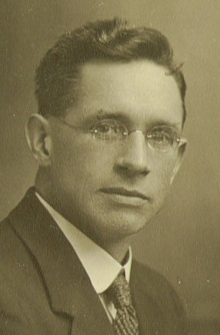
After spending a year on the continent, Rynne returns to Ireland in 1957 to join the antiquities division of the National Museum of Ireland (NMI) in Kildare Street. One of his first assignments is to participate in the excavations at the Hill of Tara, previously headed by his old mentor at UCD, the recently deceased Professor Seán P. Ó Ríordáin. Already an expert on the Iron Age, he expands his expertise to cover Irish Celtic and early Christian art. He becomes an influential figure at the museum, remaining until 1967 and gaining much valuable experience in archaeological research, cataloguing and display, and is once described as the “true master of the Kildare Street crypt.” Intimately acquainted with the museum’s early Christian artefacts, he is particularly drawn to the eighth-century Ardagh chalice, on which he compiles extensive research notes relating to its dismantling and conservation. Although he is recognised as a leading authority on the chalice, his workload at the NMI and various academic commitments, not least his thirty-five years as editor of the North Munster Antiquarian Journal (NMAJ), prevent publication of his great work on the treasure.
During Rynne’s time at the NMI, he develops a close friendship with its director, Dr. Anthony T. Lucas, and on April 1, 1967 marries his daughter Aideen in the Church of the Miraculous Medal, Clonskeagh, Dublin. That year, he leaves the museum to take up a lectureship in archaeology at University College Galway (UCG), remaining there for thirty-one years until his retirement as professor of Celtic archaeology in 1998. During his professorship, he introduces many innovative changes at UCG, placing great emphasis on the value of well-planned field trips to historical monuments and archaeological sites around Connacht and north Clare, including Poulnabrone in his beloved Burren and Dún Aonghasa on Inishmore, which in 1991 he is first to suggest was built for ceremonial rather than defensive purposes. He often ventures further afield to sites such as the Jorvik Viking Centre, York, and the West Kennet Long Barrow in Wiltshire. Many local expeditions include small excavations, which he continues to conduct on behalf of the NMI.
Despite his heavy workload, Rynne writes close to one hundred academic papers in local and international journals, his expansive subject matter including not only archaeology but also folklore and Irish War of Independence history, the latter interest stemming from his father’s involvement in the formation of the Irish state (1917–23). His editorial tenure at the NMAJ includes the publication in 1975 and 1978 of dedicated issues on Edward MacLysaght and John Hunt respectively, and he is editor of Figures from the Past (1987), the Festschrift for Helen Maybury Roe. He also uses the national press to express his sometimes-eccentric views on various subjects, such as Irish neutrality, the American justice system and running the M3 motorway through Tara. A highly engaging and entertaining speaker, he thrives in front of an audience, be it a small group of students standing in a muddy field or an official address to the Royal Society of Antiquaries of Ireland, of which he serves as president from 1985 to 1989. His lectures are marked by his erudite and characteristically passionate delivery, complete with subtle intonation, and he is as comfortable speaking French as he is English or Irish.
Rynne’s legacy cannot be fairly assessed without reference to his largely unpopular stance in the Wood Quay controversy of the late 1970s. When Dublin’s original Viking settlement at Wood Quay is unearthed by archaeologists, he sides with the NMI, which, under the directorship of Joseph Raftery, decides to excavate only a small section of the site before handing it over to developers. This results in the destruction of much unexcavated archaeology. The NMI’s decision results in serious damage to its reputation, with Rynne one of the few archaeologists publicly supporting its unpopular stance. His loyalty to the NMI administration, which includes his father-in-law Lucas, alienates many fellow archaeologists, and is described by Patrick Wallace, then director of excavations at Wood Quay and among the many scholars who campaign to save the site, as “excessive, unnecessary and so unquestioning that it led to his being on the … wrong side during the Wood Quay court case.”
Rynne’s contribution to the history and heritage of his adopted province of Connacht and city of Galway is, however, widely acknowledged as immense. Once settled in UCG, he makes his home in the medieval town of Athenry, where he engages enthusiastically with the local community via lectures, walks and talks on the town’s famous walls and castle. Although Dublin-born, he becomes firmly entrenched in Galway’s colourful past and is instrumental in the founding of the city’s first municipal museum in Comerford House, adjacent to the Spanish Arch, in 1971. Drawing on his considerable NMI experience, he acts as honorary curator for the Galway museum for over a decade, before its move to the present purpose-built building in 2007. Ever willing to disseminate the story of Galway’s past beyond the twin towers of its university, to its citizens and the wider public, he compiles the Tourist Trail of Old Galway (1977). This signposted walking tour of Galway communicates the city’s importance in the medieval world, not only from an Irish, but also from a European and global perspective, and represents an enduring legacy to the self-styled promoter and protector of the city’s heritage.
In the summer of 2012 Rynne suffers a stroke and dies at the age of 79 on June 22, 2012, at University Hospital Galway. He is survived by Aideen, his wife of forty-five years, and their four sons and one daughter. A fifth son pre-deceases him. He is buried in the New Cemetery, Athenry.
(From: “Rynne, Etienne Andrew” by Frank Cullen, Dictionary of Irish Biography, http://www.dib.ie, June 2018)







 seamus dubhghaill