seamus dubhghaill

Promoting Irish Culture and History from Little Rock, Arkansas, USA


Leave a comment

Birth of William Vincent Wallace, Composer & Musician

william-vincent-wallace

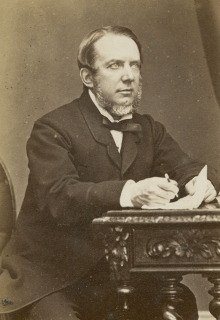
William Vincent Wallace, Irish composer and musician, is born at Colbeck Street, Waterford, County Waterford on March 11, 1812. In his day, he is famous on three continents as a double virtuoso on violin and piano. Nowadays, he is mainly remembered as an opera composer of note, with key works such as Maritana (1845) and Lurline (1847/60), but he also writes a large amount of piano music that is much in vogue in the 19th century.

Wallace’s father, Spencer Wallace of County Mayo, becomes a regimental bandmaster with the North Mayo Militia based in Ballina. William is born while the regiment is stationed for one year in Waterford. The family returns to Ballina in 1816 and he spends his formative years there, taking an active part in his father’s band and already composing pieces by the age of nine for the band recitals.

Under the tuition of his father and uncle, Wallace writes pieces for the bands and orchestras of his native area. He becomes accomplished in playing various band instruments before the family leaves the Army in 1826, moving from Waterford to Dublin, and becoming active in music in the capital. He learns to play several instruments as a boy, including the violin, clarinet, organ, and piano. In 1830, at the age of 18, he becomes organist of the Roman Catholic Cathedral at Thurles, County Tipperary, and teaches music at the Ursuline Convent there. He falls in love with a pupil, Isabella Kelly, whose father consents to their marriage in 1832 on condition that Wallace become a Roman Catholic. The couple soon moves to Dublin where he is employed as a violinist at the Theatre Royal.

Economic conditions in Dublin deteriorate after the Acts of Union 1800 and the whole Wallace family decides to emigrate to Australia in 1835. Wallace’s party first lands at Hobart, Tasmania in late October, where they stay several months before moving on to Sydney in January 1836. The Wallaces open the first Australian music academy in April. Wallace has already given many celebrity concerts in Sydney, and being the first virtuoso to visit the Colony, becomes known as the “Australian Paganini.” He is also active in the business of importing pianos from London, but his main activity involves many recitals in and around Sydney under the patronage of the Governor, General Sir Richard Bourke. The most significant musical events of this period are two large oratorio concerts on behalf of the organ fund at St. Mary’s Cathedral in Sydney in 1836 and 1838, which he directs, and which utilize all the available musical talent of the Colony, including the recently formed Philharmonic [Choral] Society.

In 1838, Wallace separates from his wife and begins a roving career that takes him around the globe. In 1841, he conducts a season of Italian opera in Mexico City. Moving on to the United States, he stays in New Orleans for some years, where he is feted as a virtuoso on violin and piano, before reaching New York City, where he is equally celebrated, and publishes his first compositions (1843–44).

Wallace arrives in London in 1845 and makes various appearances as a pianist. In November of that year, his opera Maritana is performed at the Theatre Royal, Drury Lane with great success, and is later presented internationally. Maritana is followed by Matilda of Hungary (1847), Lurline (1847/60), The Amber Witch (1861), Love’s Triumph (1862) and The Desert Flower (1863). He also publishes numerous compositions for the piano.

In New York in 1843–1844, Wallace is associated with the early concert seasons of the New York Philharmonic Society, and in 1853 is elected an Honorary (Life) Member of the Society. In 1854, he becomes an American citizen after a marriage in New York to German-born pianist Hélène Stoepel, sister of composer Robert Stoepel. In later years, having returned to Europe for the premieres of his later operas, he develops a heart condition for which he receives treatment in Paris in 1864. He dies in poor circumstances at the Château de Bagen, Sauveterre-de-Comminges, in the Haute Garonne on October 12, 1865. He is buried in Kensal Green Cemetery, London.

(Pictured: William Vincent Wallace. Undated portrait by Mathew Brady, New York City, Library of Congress)


Leave a comment

Birth of Samuel Lover, Songwriter, Novelist & Painter

samuel-lover-1

Samuel Lover, Irish songwriter, composer, novelist, and a painter of portraits, chiefly miniatures, is born at 60 Grafton Street in Dublin on February 24, 1797. He is also known as “Ben Trovato” (“well invented”) and is the grandfather of Victor Herbert. He is noted as saying, “When once the itch of literature comes over a man, nothing can cure it but the scratching of a pen.”

Lover goes to school at Samuel Whyte’s at 79 Grafton Street, now home to Bewley’s café. By 1830 he is secretary of the Royal Hibernian Academy and lives at 9 D’Olier Street. In 1835 he moves to London and begins composing music for a series of comic stage works. To some of them, like the operetta Il Paddy Whack in Italia (1841), he contributes both words and music, for others he merely contributes a few songs.

Lover produces a number of Irish songs, of which several – including The Angel’s Whisper, Molly Bawn, and The Four-leaved Shamrock – attain great popularity. He also writes novels, of which Rory O’Moore and Handy Andy are the best known, and short Irish sketches which, with his songs, he combines into a popular entertainment called Irish Nights or Irish Evenings. With the latter, he tours North America between 1846 and 1848. He joins with Charles Dickens in founding Bentley’s Magazine.

Lover’s grandson is composer Victor Herbert whose mother is Lover’s daughter Fanny. Herbert is best remembered for his many successful musicals and operettas that premier on Broadway. As a small child he lives with the Lovers in a musical environment following the divorce of his mother.

Samuel Lover dies on July 6, 1868, in Saint Helier on the island of Jersey. A memorial in St. Patrick’s Cathedral, Dublin summarises his achievements:

“Poet, painter, novelist and composer, who, in the exercise of a genius as distinguished in its versatility as in its power, by his pen and pencil illustrated so happily the characteristics of the peasantry of his country that his name will ever be honourably identified with Ireland.”


1 Comment

Birth of Composer Gerard Victory

gerard-victoryThe prolific Irish composer Thomas Joseph Gerard Victory is born in Dublin on December 24, 1921. He writes over two hundred works across many genres and styles, including tonal, serial, aleatoric and electroacoustic music.

Victory is the son of shop keeper Thomas Victory and his wife, Delia (née Irwin). After schooling, he reads Celtic Studies at University College Dublin and Music at Trinity College Dublin, earning a doctorate in 1972.

In April 1948 Victory marries Geraldine Herity and they have five children: Alma, Fiona, Isolde, Raymond, and Alan.

In terms of composition, Victory is mostly self-taught, although he receives some formal training from John Francis Larchet, Alan Rawsthorne and Walter Beckett. He also attends the “International Summer Courses for New Music” in Darmstadt, Germany.

In 1948 he is joint composer of music for a song in a play by Irish playwright Teresa Deevy called Light Falling. This is performed by the Abbey Experimental Theatre Company in the Peacock Theatre, Dublin.

Victory’s career is primarily in music administration, serving as Director of Music for Ireland’s national broadcasting station RTÉ from 1967 to 1982. He is a president of UNESCO‘s International Rostrum of Composers, a Fellow of the Royal Irish Academy of Music and a recipient of the French Ordre des Arts et des Lettres and the Order of Merit of the Federal Republic of Germany.

The Gerard Victory Commission is a prize named in his honour that is awarded to the most promising individual composer.

Gerard Victory dies in Dublin on March 14, 1995. His papers are held in Trinity College and a number of his scores are held at the Contemporary Music Centre.


Leave a comment

Death of Peadar Kearney, Composer & Irish Republican

peadar-kearney

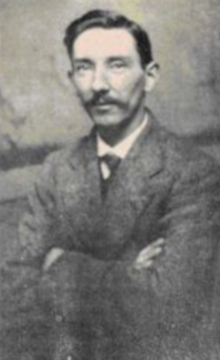
Peadar Kearney, Irish republican and composer of numerous rebel songs, dies in Inchicore, Dublin on November 24, 1942. In 1907 he writes the lyrics to “The Soldier’s Song” (“Amhrán na bhFiann“), now the Irish national anthem. He is the uncle of Irish writers Brendan Behan, Brian Behan, and Dominic Behan.

Kearney was born on December 12, 1883, at 68 Lower Dorset Street, Dublin, above one of the two grocer’s shops owned by his father, John Kearney, originally from Funshog, Collon, County Louth. His mother, Katie (née McGuinness), is from Rathmaiden, Slane, County Meath. He is educated at the Model School, Schoolhouse Lane and St. Joseph’s Secondary C.B.S. in Fairview. He hears Willie Rooney give nationalist lectures on history in the Mechanics’ Institute. For a short time, he attends Belvedere College. Following the death of his father, he is left to support his mother and five younger siblings. He has various menial jobs for three years before being apprenticed to a house painter.

In 1901, the death of Willie Rooney prompts Kearney to join the Willie Rooney Branch of the Gaelic League. He joins the Irish Republican Brotherhood in 1903. He teaches night classes in Irish and numbers Seán O’Casey among his pupils. He finds work with the National Theatre Society and in 1904 is one of the first to inspect the derelict building that becomes the Abbey Theatre. He assists with props and performs occasional walk-on parts at the Abbey until 1916.

Kearney is a co-founder of the Irish Volunteers in 1913 and takes part in the Howth and Kilcoole gun runnings in 1914. In the Easter Rising of 1916 he fights at Jacob’s biscuit factory under Thomas MacDonagh, abandoning an Abbey Theatre tour in England to take part in the Rising. He escapes before the garrison is taken into custody.

Kearney is also active in the Irish War of Independence. On November 25, 1920, he is captured at his home in Summerhill, Dublin and is interned first in Collinstown Camp in Dublin and later in Ballykinler Camp in County Down.

A personal friend of Michael Collins, Kearney at first takes the Free State side in the Irish Civil War but loses faith in the Free State after Collins’s death. He takes no further part in politics, returning to his original trade of house painting.

Kearney’s songs are highly popular with the Irish Volunteers (which later becomes the Irish Republican Army) in the 1913–1922 period. Most popular is “The Soldier’s Song.” He pens the original English lyrics in 1907 and his friend and musical collaborator Patrick Heeney composes the music. The lyrics are published in 1912 and the music in 1916. After 1916 it replaces “God Save Ireland” as the anthem of Irish nationalists. The Irish Free State is established in 1922 and formally adopts the anthem in 1926.

Other well-known songs by Kearney include “Down by the Glenside,” “The Tri-coloured Ribbon,” “Down by the Liffey Side,” “Knockcroghery” (about the village of Knockcroghery) and “Erin Go Bragh” (Erin Go Bragh is the text on the Irish national flag before the adoption of the tricolour).

Peadar Kearney dies in relative poverty in Inchicore on November 24, 1942. He is buried in Glasnevin Cemetery in Dublin.


Leave a comment

Death of George Alexander Osborne, Composer & Pianist

george-alexander-osborne

George Alexander Osborne, Irish composer, pianist and director of the Royal Academy of Music, dies at his home in Regent’s Park, London on November 17, 1893.

Osborne is born in Limerick, County Limerick. He leaves Ireland for Brussels at the age of eighteen, where he is appointed music instructor for the eldest son of the Dutch king, William of Orange, and becomes friends with Charles de Bériot. With de Bériot he is later to compose more than thirty duos for violin and piano, which enjoy great popularity.

In 1830 Osborne fights for the royalists in the Belgian Revolution, and after his capture and release he moves to Paris. Here he studies under Johann Peter Pixis, François-Joseph Fétis and Friedrich Kalkbrenner and becomes friendly with some of the leading musicians of his time including Hector Berlioz and Frédéric Chopin.

In 1843, Osborne settles permanently in London, although he maintains a home in Paris until 1848, when he encourages a nervous Chopin during the latter’s tour of England in 1848. In London he holds directorships of the Royal Philharmonic Society and the Royal Academy of Music and conducts the Amateur Musical Society from 1852.

Osborne’s compositions are mostly on a small scale and include 83 original piano works, 178 transcriptions and fantasias for piano solo, 24 piano duos, 44 vocal works and 55 chamber music pieces. His unpublished works include two operas and some orchestral overtures, all now lost. Berlioz observes that Osborne’s songs and trios are “lofty in style and spacious in design.” One of his most popular compositions is a piano piece entitled La Pluie de perles (Shower of Pearls), which goes through many editions. Some of his piano music is written to display his own virtuosity, while others are conceived as salon music for domestic entertainment.

George Alexander Osborne dies on November 17, 1893 at his home in Regent’s Park, London, at the age of 87.


Leave a comment

Birth of Thomas Moore, Poet, Satirist & Composer

thomas-moore

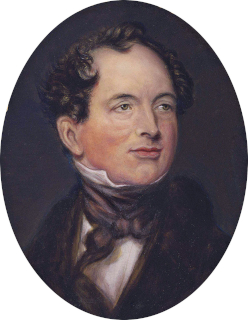
Thomas Moore, poet, satirist, composer, and political propagandist, is born in Dublin on May 28, 1779. He is best remembered for the lyrics of “The Minstrel Boy” and “The Last Rose of Summer.” He is a close friend of Lord Byron and Percy Bysshe Shelley. As Lord Byron’s named literary executor, along with John Murray, Moore is responsible for burning Lord Byron’s memoirs after his death. In his lifetime he is often referred to as Anacreon Moore.

The son of a Roman Catholic wine merchant, Moore graduates from Trinity College, Dublin, in 1799 and then studies law in London. His major poetic work, Irish Melodies (1807–34), earns him an income of £500 annually for a quarter of a century. It contains such titles as “The Last Rose of Summer” and “Oft in the Stilly Night.” The Melodies, a group of 130 poems set to the music of Moore and of Sir John Stevenson and performed for London’s aristocracy, arouses sympathy and support for the Irish nationalists, among whom Moore is a popular hero.

Lalla-Rookh (1817), a narrative poem set in an atmosphere of Oriental splendour, gives Moore a reputation among his contemporaries rivaling that of Byron and Sir Walter Scott. It is perhaps the most translated poem of its time, and it earns what was until then the highest price paid by an English publisher for a poem (£3,000). His many satirical works, such as The Fudge Family in Paris (1818), portray the politics and manners of the Regency era.

In 1824 Moore becomes a participant in one of the most celebrated episodes of the Romantic era. He is the recipient of Byron’s memoirs, but he and the publisher John Murray burn them, presumably to protect Byron. He later brings out the Letters and Journals of Lord Byron (1830), in which he includes a life of the poet. His lifelong espousal of the Catholic cause leads him to produce such brilliant works as his parody of agrarian insurgency, The Memoirs of Captain Rock (1824), and his courageous biography of the revolutionary leader of the 1798 rebellion, The Life and Death of Lord Edward Fitzgerald (1831).

Moore’s personal life is dogged by tragedy including the deaths of all five of his children within his lifetime and a stroke in later life, which disables him from performances, the activity for which he is most renowned. Moore dies while being cared for by his wife, Elizabeth (nee Dyke), at Sloperton Cottage, Bromham, Wiltshire, England on February 26, 1852. His remains are in a vault at St. Nicholas churchyard, Bromham, within view of his cottage-home and beside his daughter Anastasia.

(Pictured: Thomas Moore, after a painting by Thomas Lawrence)


Leave a comment

Birth of Sir Arnold Bax, Composer, Poet & Author

arnold-bax

Sir Arnold Edward Trevor Bax, English composer, poet, and author, is born to a prosperous family in the London suburb of Streatham on November 8, 1883. His prolific output includes songs, choral music, chamber pieces, and solo piano works, but he is best known for his orchestral music. In addition to a series of symphonic poems he writes seven symphonies and is for a time widely regarded as the leading British symphonist.

Bax is encouraged by his parents to pursue a career in music, and his private income enables him to follow his own path as a composer without regard for fashion or orthodoxy. Consequently, he comes to be regarded in musical circles as an important but isolated figure.

After a preparatory school in Balham, Bax attends the Hampstead Conservatoire during the 1890s. In 1900 he moves on to the Royal Academy of Music, where he remains until 1905, studying composition with Frederick Corder and piano with Tobias Matthay.

While still a student at the Royal Academy of Music, Bax becomes fascinated with Ireland and Celtic culture, which become a strong influence on his early development. In the years before World War I he lives in Ireland and becomes a member of Dublin literary circles, writing fiction and verse under the pseudonym Dermot O’Byrne. Later, he develops an affinity with Nordic culture, which for a time supersedes his Celtic influences in the years after World War I.

Between 1910 and 1920 Bax writes a large amount of music, including the symphonic poem Tintagel, his best-known work. During this period he forms a lifelong association with the pianist Harriet Cohen – at first an affair, then a friendship, and always a close professional relationship. In the 1920s he begins the series of seven symphonies which form the heart of his orchestral output.

In 1942 Bax is appointed Master of the King’s Music, but composes little in that capacity. In his last years he maintains a contented retirement for much of the time but finds his music regarded as old-fashioned, and after his death it is generally neglected.

Celebrations are planned by the Hallé Orchestra and others to celebrate Bax’s seventieth birthday in November 1953. However, the celebrations become memorials as while visiting Cork in October 1953 he dies suddenly of heart failure. He is interred in St. Finbarr’s Cemetery, Cork.

From the 1960s onwards, mainly through a growing number of commercial recordings, his music is gradually rediscovered, although little of it is heard with any frequency in the concert hall. In more recent years, his music has been rediscovered enthusiastically by a new generation via online distribution services such as YouTube.

(Picture credit to Alan Patient of http://www.plaquesoflondon.co.uk)


Leave a comment

Death of Composer Michael William Balfe

michael-william-balfe

Michael William Balfe, Irish composer best remembered for his opera The Bohemian Girl, dies in Dublin on October 20, 1870.

Balfe is born in Dublin on May 15, 1808, where his musical gifts become apparent at an early age. He receives instruction from his father, a dancing master and violinist, and the composer William Rooke. His family moves to Wexford when he is a child.

In 1817, Balfe appears as a violinist in public, and in this year composes a ballad, first called “Young Fanny” and afterwards, when sung in Paul Pry by Lucia Elizabeth Vestris, “The Lovers’ Mistake”. In 1823, upon the death of his father, he moves to London and is engaged as a violinist in the orchestra of the Theatre Royal, Drury Lane. He eventually becomes the leader of that orchestra. While there, he studies violin with Charles Edward Horn and composition with Charles Frederick Horn.

While still playing the violin, Balfe pursues a career as an opera singer. He debuts unsuccessfully at Norwich in Carl Maria von Weber‘s Der Freischütz. In 1825, Count Mazzara takes him to Rome for vocal and musical studies and introduces him to Luigi Cherubini. In Italy, he also pursues composing, writing his first dramatic work, a ballet, La Perouse. He becomes a protégée of Gioachino Rossini‘s, and at the close of 1827, he appears as Figaro in The Barber of Seville at the Italian opera in Paris.

Balfe soon returns to Italy, where he is based for the next eight years, singing and composing several operas. In 1829 in Bologna, he composes his first cantata for the soprano Giulia Grisi, then 18 years old. He produces his first complete opera, I rivali di se stessi, at Palermo in the carnival season of 1829—1830.

Balfe returned to London in May 1835. His initial success takes place some months later with the premiere of The Siege of Rochelle on October 29, 1835, at Drury Lane. Encouraged by his success, he produces The Maid of Artois in 1836, which is followed by more operas in English. In July 1838, Balfe composes a new opera, Falstaff, for The Italian Opera House, based on The Merry Wives of Windsor, with an Italian libretto by S. Manfredo Maggione.

In 1841, Balfe founds the National Opera at the Lyceum Theatre, but the venture is a failure. The same year, he premieres his opera, Keolanthe. He then moves to Paris, presenting Le Puits d’amour in early 1843, followed by his opera based on Les quatre fils Aymon for the Opéra-Comique and L’étoile de Seville for the Paris Opera. Meanwhile, in 1843, he returns to London where he produces his most successful work, The Bohemian Girl, on November 27, 1843, at the Theatre Royal, Drury Lane. The piece runs for over 100 nights, and productions are soon mounted in New York, Dublin, Philadelphia, Vienna, Sydney, and throughout Europe and elsewhere.

From 1846 to 1852, Balfe is appointed musical director and principal conductor for the Italian Opera at Her Majesty’s Theatre. There he first produces several of Giuseppe Verdi‘s operas for London audiences. He conducts for Jenny Lind at her opera debut and on many occasions thereafter.

In 1851, in anticipation of The Great Exhibition in London, Balfe composes an innovative cantata, Inno Delle Nazioni, sung by nine female singers, each representing a country. He continues to compose new operas in English, including The Armourer of Nantes (1863), and writes hundreds of songs. His last opera, nearly completed when he dies, is The Knight of the Leopard and achieves considerable success in Italian as Il Talismano.

Balfe retires in 1864 to Hertfordshire, where he rents a country estate. He dies at his home in Rowney Abbey, Ware, Hertfordshire, on October 20, 1870, and is buried at Kensal Green Cemetery in London, next to fellow Irish composer William Vincent Wallace. In 1882, a medallion portrait of him is unveiled in Westminster Abbey.

In all, Balfe composes at least 29 operas. He also writes several cantatas and a symphony. His only large-scale piece that is still performed regularly today is The Bohemian Girl.


Leave a comment

Birth of Charles Villiers Stanford, Composer & Conductor

charles-villiers-stanford

Sir Charles Villiers Stanford, composer, music teacher, and conductor, is born in Dublin on September 30, 1852.

Stanford is born into a well-off and highly musical family, the only son of John James Stanford, a prominent Dublin lawyer, Examiner to the Court of Chancery in Ireland and Clerk of the Crown for County Meath, and his second wife, Mary, née Henn. He is educated at the University of Cambridge before studying music in Leipzig and Berlin. He is instrumental in raising the status of the Cambridge University Musical Society, attracting international stars to perform with it.

While still an undergraduate, Stanford is appointed organist of Trinity College, Cambridge. In 1882, at the age of 29, he is one of the founding professors at the Royal College of Music, where he teaches composition for the rest of his life. From 1887 he is also Professor of Music at Cambridge. As a teacher, he is skeptical about modernism and bases his instruction chiefly on classical principles as exemplified in the music of Johannes Brahms. Among his pupils are rising composers whose fame go on to surpass his own, such as Gustav Holst and Ralph Vaughan Williams. As a conductor, he holds posts with the Bach Choir and the Leeds Triennial Music Festival.

Stanford composes a substantial number of concert works, including seven symphonies, but his best-remembered pieces are his choral works for church performance, chiefly composed in the Anglican tradition. He is a dedicated composer of opera, but none of his nine completed operas has endured in the general repertory. Some critics regard him, together with Hubert Parry and Alexander Mackenzie, as responsible for a renaissance in music from the British Isles. However, after his conspicuous success as a composer in the last two decades of the 19th century, his music is eclipsed in the 20th century by that of Edward Elgar as well as former pupils.

In September 1922, Stanford completes the sixth Irish Rhapsody, his final work. Two weeks later he celebrates his 70th birthday and thereafter his health declines. On March 17, 1924, he suffers a stroke and dies on March 29 at his home in London, survived by his wife and children. He is cremated at Golders Green Crematorium on April 2 and his ashes are buried in Westminster Abbey the following day.

Stanford’s last opera, The Travelling Companion, composed during World War I, is premiered by amateur performers at the David Lewis Theatre, Liverpool in 1925 with a reduced orchestra. The work is given complete at Bristol in 1928 and at Sadler’s Wells Theatre, London, in 1935.

Stanford receives many honours, including honorary doctorates from University of Oxford (1883), University of Cambridge (1888), Durham University (1894), University of Leeds (1904), and Trinity College, Dublin (1921). He is knighted in 1902 and in 1904 is elected a member of the Prussian Academy of Arts, Berlin.


Leave a comment

Death of Victor Herbert, Composer, Cellist and Conductor

victor-herbert

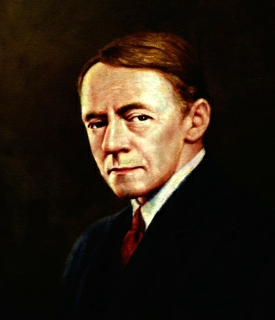
Victor August Herbert, an Irish-born, German-raised American composer, cellist and conductor, dies suddenly of a heart attack on May 26, 1924, shortly after his final show, The Dream Girl, begins its pre-Broadway run in New Haven, Connecticut.

Herbert is born in Dublin on February 1, 1859, to Protestants Edward Herbert and Fanny Herbert (née Lover). At age three and a half, shortly after the death of his father, he and his mother move to live with his maternal grandparents in London, England, where he received encouragement in his creative endeavours. His grandfather is the Irish novelist, playwright, poet and composer Samuel Lover. The Lovers welcome a steady flow of musicians, writers and artists into their home. He joins his mother in Stuttgart, Germany in 1867, a year after she marries a German physician, Carl Schmidt of Langenargen. In Stuttgart he receives a strong liberal education at the Eberhard-Ludwigs-Gymnasium, which includes musical training.

Herbert initially plans to pursue a career as a medical doctor. Although his stepfather is related by blood to the German royal family, his financial situation is not good by the time Herbert is a teenager. Medical education in Germany is expensive, and so he focuses instead on music. He initially studies the piano, flute and piccolo but ultimately settles on the cello, beginning studies on that instrument with Bernhard Cossmann from age 15 to age 18. He then attends the Stuttgart Conservatory. After studying cello, music theory and composition under Max Seifritz, he graduates with a diploma in 1879.

Although Herbert enjoys important careers as a cello soloist and conductor, he is best known for composing many successful operettas that premiere on Broadway from the 1890s to World War I. He is also prominent among the Tin Pan Alley composers and is later a founder of the American Society of Composers, Authors, and Publishers (ASCAP). A prolific composer, Herbert produces two operas, a cantata, 43 operettas, incidental music to 10 plays, 31 compositions for orchestra, nine band compositions, nine cello compositions, five violin compositions with piano or orchestra, 22 piano compositions and numerous songs, choral compositions and orchestrations of works by other composers, among other music.

In the early 1880s, Herbert begins a career as a cellist in Vienna, Austria, and Stuttgart, Germany, during which he begins to compose orchestral music. Herbert and his opera singer wife, Therese Förster, move to the United States in 1886 when both are engaged by the Metropolitan Opera. He continues his performing career, while also teaching at the National Conservatory of Music of America, conducting and composing. His most notable instrumental compositions are his Cello Concerto No. 2 in E minor, Op. 30 (1894), which enters the standard repertoire, and his Auditorium Festival March (1901). He leads the Pittsburgh Symphony Orchestra from 1898 to 1904 and then founds the Victor Herbert Orchestra, which he conducts throughout the rest of his life.

Herbert begins to compose operettas in 1894, producing several successes, including The Serenade (1897) and The Fortune Teller (1898). Some of the operettas that he writes after the turn of the 20th century are even more successful: Babes in Toyland (1903), Mlle. Modiste (1905), The Red Mill (1906), Naughty Marietta (1910), Sweethearts (1913) and Eileen (1917). After World War I, with the change of popular musical tastes, he begins to compose musicals and contributes music to other composers’ shows. While some of these are well-received, he never again achieves the level of success that he enjoyed with his most popular operettas.

A healthy man throughout his life, Herbert dies suddenly of a heart attack at the age of 65 on May 26, 1924, shortly after his final show, The Dream Girl, began its pre-Broadway run in New Haven. He is survived by his wife and two children, Ella Victoria Herbert Bartlett and Clifford Victor Herbert. He is entombed in Woodlawn Cemetery in The Bronx, New York City.

Herbert and his music are celebrated in the 1939 film The Great Victor Herbert, where he is portrayed by Walter Connolly, and which also features Mary Martin. He is also portrayed by Paul Maxey in the 1946 film Till the Clouds Roll By. Many of Herbert’s own works are made into films, and his music has been used in numerous films and television shows. A Chicago elementary school is named for him. During World War II the Liberty ship SS Victor Herbert is built in Panama City, Florida, and named in his honor.