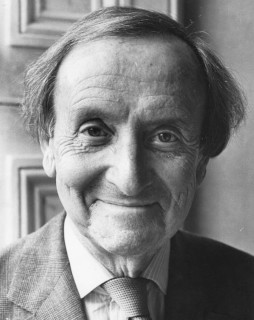
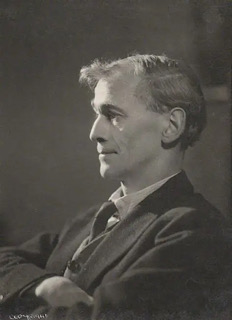
Milligan is brought up as a Methodist, the daughter of the writer Seaton Milligan, antiquarian and member of the Royal Irish Academy (RIA). She is one of eleven children, including music collector Charlotte Milligan Fox, and from 1877 to 1887 attends Methodist College Belfast (MCB), after which she completes a teacher-training course. Together with her father she writes a political travelogue of the north of Ireland in 1888, Glimpses of Erin. She writes her first novel, A Royal Democrat, in 1890.
After the death of Charles Stewart Parnell, Milligan becomes an ardent nationalist. In 1894 with Jenny Armour, she founds branches of the Irish Women’s Association in Belfast and other places and becomes its first president. With Ethna Carbery she founds two nationalist publications in the 1890s, The Northern Patriot, and later The Shan Van Vocht, a monthly literary magazine published in Belfast from 1896 to 1899.
Alice Milligan dies in Omagh in April 1953 and is buried in Blackford Municipal Cemetery, County Tyrone. On her headstone is inscribed “She loved no other place than Ireland.”
During 2010/2011 the Ulster History Circle mounts plaques for famous Ulster figures. Charlotte Milligan Fox and Alice Milligan have a plaque mounted on Omagh Library, 1 Spillar’s Place, Omagh, County Tyrone.
Brian Moore, novelist and screenwriter who is acclaimed for the descriptions in his novels of life in Northern Ireland after World War II, is born in Belfast, Northern Ireland on August 25, 1921. He has been described as “one of the few genuine masters of the contemporary novel.”
In 1948 Moore emigrates to Canada to work as a reporter for the Montreal Gazette and becomes a Canadian citizen. While eventually making his primary residence in California, he continues to live part of each year in Canada up to his death.
Moore lives in Canada from 1948 to 1958, where he meets his first wife, Jacqueline (“Jackie”) Sirois, a French Canadian and fellow journalist. They marry in 1952. He moves to New York City in 1959 to take up a Guggenheim Fellowship and remains there until his divorce in October 1967. He then moves to the west coast of the United States, settling in Malibu, California, with his new wife Jean Denney, a former commentator on Canadian TV. There he teaches creative writing at UCLA.
Moore writes his first novels in Canada. His earliest novels are thrillers, published under his own name or using the pseudonyms Bernard Mara or Michael Bryan. His first novel outside the genre, Judith Hearne, remains among his most highly regarded. The book is rejected by ten American publishers before being accepted by a British publisher. It is made into a film, with British actress Maggie Smith playing the lonely spinster who is the book/film’s title character.
Some of Moore’s novels feature staunchly anti-doctrinaire and anti-clerical themes, and in particular he speaks strongly about the effect of the Church on life in Ireland. A recurring theme in his novels is the concept of the Catholic priesthood. On several occasions he explores the idea of a priest losing his faith. At the same time, several of his novels are deeply sympathetic and affirming portrayals of the struggles of faith and religious commitment, Black Robe most prominently.
Moore dies at his Malibu home, which is celebrated in Seamus Heaney‘s poem Remembering Malibu, on January 11, 1999, from pulmonary fibrosis. His widow, Jean, lives on in the house until it is destroyed in 2018 in the Woolsey Fire.
At the time of his death, Moore is working on a novel about the 19th-century French symbolist poet Arthur Rimbaud. His last published work before his death is an essay entitled “Going Home.” It is a reflection inspired by a visit he made to the grave in Connemara of his family friend, the Irish nationalist Bulmer Hobson. The essay is commissioned by Granta and published in The New York Times on February 7, 1999.
In 1996, the Brian Moore Short Story Awards is launched by the Creative Writers Network in Northern Ireland and is open to all authors of Irish descent. Previous judges have included Glenn Patterson, Lionel Shriver, Carlo Gébler and Maeve Binchy.
In 1975 Moore arranges for his literary materials, letters and documents to be deposited in the Special Collections Division of the University of Calgary Library, an inventory of which is published by the University of Calgary Press in 1987. His archives, which include unfilmed screenplays, drafts of various novels, working notes, a 42-volume journal (1957–1998), and his correspondence, are housed at the Harry Ransom Center at the University of Texas at Austin.
O’Donovan moves to London but failing to find work as a priest, he leaves the Catholic priesthood in May 1908. He becomes a subwarden at Toynbee Hall in the East End in March 1910. In October that year, he marries Florence Emily Beryl Verschoyle (1886–1968), the daughter of an Irish Protestant colonel fifteen years his junior. They have three children, two daughters and a son.
In 1913, O’Donovan publishes his first and best-known novel, Father Ralph, which draws in large part on his own life. Around this time, he changes his first name from Jeremiah to Gerald. Another novel titled Waiting is published in 1914. He joins the war effort in 1915 and rises to become head of the Italian section at the Ministry of Information in 1918. There he meets his secretary and future lover, English novelistRose Macaulay.
O’Donovan publishes a few more novels after the war: How They Did It (1920), Conquest (1920), Vocations (1921), and The Holy Tree (1922). The clandestine affair with Macaulay continues for nearly two decades. In 1939, the pair are on holiday in the Lake District when they meet with a motoring accident, which damages O’Donovan’s health. He dies of cancer in Albury, Surrey three years later, on July 26, 1942. His letters to Macaulay had been destroyed the previous year when her flat in Central London was bombed during the Blitz.
In her novel The Towers of Trebizond, Macaulay features a woman character (Laurie) torn between her attraction to Christianity and her adulterous love for a married man. This is considered to reflect the author’s relationship with O’Donovan.
Brugha is born Charles William St. John Burgess of mixed Roman Catholic and Protestant parentage in Dublin on July 18, 1874. He attends Colmkille Schools until 1888 when he is admitted to Belvedere College. He intends to study medicine, but this does not come to fruition after his father’s business fails in 1890. He is seen as an austere figure, not very different from Éamon de Valera, and is known not to smoke cigarettes, swear or drink alcohol.
In 1899, Brugha joins the Gaelic League, and he subsequently changes his name from Charles Burgess to Cathal Brugha. He meets his future wife, Caitlín Kingston, at an Irish class in Birr, County Offaly, and they marry in 1912. The marriage produces six children. He becomes actively involved in the Irish Republican Brotherhood (IRB) and in 1913 he becomes a lieutenant in the Irish Volunteers. He leads a group of twenty Volunteers to receive the arms smuggled into Ireland in the Howth gun-running of 1914.
Brugha is second-in-command at the South Dublin Union under Commandant Éamonn Ceannt in the Easter Rising of 1916. On the Thursday of Easter Week, being badly wounded, he is unable to leave when the retreat is ordered. Brugha, weak from loss of blood, continues to fire upon the enemy and is found by Eamonn Ceannt singing “God Save Ireland” with his pistol still in his hands. He recovers over the next year but is left with a permanent limp.
Brugha proposes a Republican constitution at the 1917 Sinn Féin convention, which is unanimously accepted. In October 1917, he becomes Chief of Staff of the Irish Republican Army and holds that post until March 1919.
Brugha is elected Ceann Comhairle of Dáil Éireann at its first meeting on January 21, 1919, and he reads out the Declaration of Independence in Irish, which ratifies “the establishment of the Irish Republic.” On the following day he is appointed president of the ministry pro tempore. He retains this position until April 1, 1919, when Éamon de Valera takes his place.
Brugha has differences with Michael Collins, who, although nominally only the Irish Republican Army‘s (IRA) Director of Intelligence, has far more influence in the organisation as a result of his position as a high-ranking member of the IRB, an organisation that Brugha sees as undermining the power of the Dáil and especially the Ministry for Defence. He opposes the oath of allegiance required for membership of the IRB. In 1919, his proposition that all Volunteers should swear allegiance to the Irish Republic and the Dáil is adopted.
At a top-level IRA meeting in August 1920, Brugha argues against ambushes of Crown forces unless there is first a call to surrender, but it is dismissed as unrealistic by the brigade commanders present. He also has the idea of moving the front line of the war to England but is opposed by Collins.
On January 7, 1922, Brugha votes against the Anglo-Irish Treaty. During the Treaty debates, he points out that Collins has only a middling rank in the Department for Defence, which supervises the IRA, even though Griffith hails him as “the man who had won the war.” It is argued that, by turning the issue into a vote on Collins’ popularity, Brugha swings the majority against his own side. Frank O’Connor, in his biography of Collins, states that two delegates who had intended to vote against the Treaty changed sides in sympathy with Collins. Brugha leaves the Dáil and is replaced as Minister for Defence by Richard Mulcahy.
In the months between the Treaty debates and the outbreak of Irish Civil War, Brugha attempts to dissuade his fellow anti-treaty army leaders, including Rory O’Connor, Liam Mellows and Joe McKelvey, from taking up arms against the Free State. When the IRA occupies the Four Courts, he and Oscar Traynor call on them to abandon their position. When they refuse, Traynor orders the occupation of the area around O’Connell Street in the hope of easing the pressure on the Four Courts and of forcing the Free State to negotiate.
On June 28, 1922, Brugha is appointed commandant of the forces in O’Connell Street. The outbreak of the Irish Civil War ensues in the first week of July when Free State forces commence shelling of the anti-treaty positions.
Most of the anti-Treaty fighters under Traynor escape from O’Connell Street when the buildings they are holding catch fire, leaving Brugha in command of a small rearguard. On July 5, he orders his men to surrender, but refuses to do so himself. He then approaches the Free State troops, brandishing a revolver. He sustains a bullet wound to the leg which “severed a major artery causing him to bleed to death.” He dies on July 7, 1922, eleven days before his 48th birthday. He had been re-elected as an anti-Treaty TD at the 1922 Irish general election but dies before the Dáil assembles. He is buried in Glasnevin Cemetery in Dublin.
The proclamation states that the proscribed organisations are dangerous, and a “grave menace” designed to “terrorise the peaceful and law-abiding subjects of His Majesty in Ireland.” It goes on to say that these associations “encourage and aid persons to commit crimes and promote and incite to acts of violence and intimidation and interfere with the administration of the law and disturb the maintenance of law and order.”
The Irish Times, no supporter of any of the banned organisations, welcomes the development as a sign that the government has decided that sedition will “no longer be preached and practised with impunity in Ireland.” The paper also says that this new policy “furnishes final proof of the gravity of the Irish problem.”
In the immediate aftermath of the proclamation, business continues as usual at the Sinn Féin headquarters at 6 Harcourt Street and at the Gaelic League’s head offices at 25 Parnell Square. Both organisations claim that they have not received any direct communication, let alone any visits, from the police or military.
Speaking to a representative of the Evening Telegraph, Eoin MacNeill, President of the Gaelic League, strikes a defiant note, declaring that the organisation will “not allow itself to be driven underground” and will continue to “have the support of the nation and of Irishmen abroad.”
MacNeill points out that the Gaelic League is approaching its 25th anniversary, on July 23, and that throughout its lifetime it has always been “non-political – that is to say has never interfered in the controversy with regard to the form of the Irish Government and left all its members absolutely free to hold whatever political opinions they pleased. Of course, it is a new situation now. The Government itself has taken the initiative in making the neutrality of the Gaelic League impossible.”
Apparently, the banning of the Gaelic League spurs interest in the language movement as several booksellers refer to being “inundated with orders” for booklets and manuals of instruction and conversations in the Irish language. The casual use of Irish on the streets also reportedly increases.
Cumann na mBan expresses surprise at the actions of the government and takes it as a sign that “conscription is now a certainty.” All of the organisation’s public work up to this point has been geared towards the campaign to oppose conscription.
The Lord Lieutenant makes his proclamation under the Criminal Law and Procedure (Ireland) Act of 1887 which gives the authorities the power to outlaw any organisation it believes to be involved in criminal activities.
(From: “BANNED: Sinn Féin, Irish Volunteers, Cumann na mBan and the Gaelic League,” RTÉ.ie, the website of Raidió Teilifís Éireann | Photo: The government trying to douse the flames of Sinn Féin, from “The Republic,” April 11, 1907, DigitalLibrary@Villanova University)
Ó Dubhda leaves the local primary school at the age of twelve with only the most basic of an education, but when he goes to work as a delivery boy driving around the roads of North Louth on his horse and cart, he always has his O’Growney grammar book at his side, perfecting his knowledge of the Irish language. As a youth he joins the local brass band, where he is taught the cornet, but such is the depth of his intellect and his love for music he is an accomplished violinist, flautist and pianist in a very short time.
From his youth stretching into early manhood Ó Dubhda’s love of the Irish language is evident. He helps found a Gaelic League branch in Dundalk and perfects his use of the language by visiting Gaeltacht areas in the west of Ireland and Omeath. He is awarded a certificate to teach Irish by the Patrick Pearse and is a teacher in St. Mary’s College in Dundalk for over 20 years from 1915.
Ó Dubhda leaves teaching when he is offered his own children’s hour on Radio Éireann, a programme that lasts for over 30 years and through which a generation of Irish youth come to know and love his stories.
Ó Dubhda’s major work is the translation of the entire Douay version of the bible into Irish. The work takes twelve years and involves the deciphering of over three million words. The work is presented to the Irish nation in 1955 and is held in the National Museum of Ireland.
In 1950 Ó Dubhda is presented with the Papal medal, Pro Ecclessia el Pontifice by Pope Pius XII, to mark his 50th year as a member of his St. Malachy’s choir and one of his most prized possessions is a personal letter from Pope John XXIII praising him for his work for the church.
Peadar Ó Dubhda is just a month shy of his 90th birthday when he passes away in the loving care of his nieces in their Park Drive home on May 26, 1971. He is buried in Dundalk and his funeral is attended by PresidentÉamon De Valera.
De Paor is born Máire MacDermott to Eamonn MacDermott and Delia MacVeigh. She is educated in the Convent of Mercy in Buncrana before going to University College Dublin, where she completes a master’s degree and a doctorate on early Christian archaeology and metalwork.
De Paor works in the Department of Archeology at UCD from 1946 to 1958. She marries Liam de Paor in 1946, and they have a daughter and four boys. They collaborate on a number of publications. She publishes her papers in the Proceedings of the Royal Irish Academy, Archaeologia, Seanchas Armagh and Comhar. Her husband also works at the university and, as a result of policies about married women, she is forced to leave. Initially she lectures in the United States, Canada, Scandinavia, France and the United Kingdom. She works as lecturer in archaeology at Trinity College, Dublin. The de Paors spend a year in Nepal on a UNESCO project in 1963.
De Paor works as a freelance researcher for Raidió Teilifís Éireann until she is given a full-time position in the 1970s.
De Paor is elected a member of the Royal Irish Academy in 1960 and is a member of the Arts Council from 1973. She becomes a member of Conradh na Gaeilge from 1962. From 1968 she is working with Cumann Merriman, the Irish cultural organisation named after Brian Merriman, working with the group as a director of the schools and spends four years as chairperson. In 1992 she is appointed to the board of Amharclann de hÍde.
Máire de Paor dies on December 6, 1994, at the age of 69.
University College Dublin has created the Dr. Máire de Paor Award for best PhD thesis. Her biographer identifies her as a committed republican, socialist and feminist.
Lynd is born to Robert John Lynd, a Presbyterian minister, and Sarah Rentoul Lynd, the second of seven children. His paternal great-grandfather emigrated from Scotland to Ireland. He is educated at Royal Belfast Academical Institution and Queen’s University Belfast. His father serves a term as Presbyterian Church Moderator, but he is just one of a long line of Presbyterian clergy in the family.
Lynd marries the writer Sylvia Dryhurst on April 21, 1909. They meet at Gaelic League meetings in London. Their daughters Máire and Sigle become close friends of Isaiah Berlin. Sigle’s son, born in 1941, is artist Tim Wheeler. In March 1924, they move to what is to be their long-term married home, the elegant Regency house of 5 Keats Grove in the leafy suburb of Hampstead in northwest London. The house had been lived in by various members of Sylvia’s family.
The Lynds are literary hosts, in the group including J. B. Priestley. They are on good terms also with Hugh Walpole. Priestley, Walpole and Sylvia Lynd are founding committee members of the Book Society. Irish guests include James Joyce and James Stephens. On one occasion reported by Victor Gollancz in Reminiscences of Affection, Joyce intones Anna Livia Plurabelle to his own piano accompaniment. Joyce and his wife Nora Barnacle hold their wedding lunch at the Lynds’ house after getting married at Hampstead Town Hall on July 4, 1931.
Lynd uses the pseudonym Y.Y. in writing for the New Statesman. According to C. H. Rolph‘s Kingsley, Lynd’s weekly essay, which runs from 1913 to 1945, is “irreplaceable.” In 1941, editor Kingsley Martin decides to alternate it with pieces by James Bridie on Ireland, but the experiment is not at all a success.
Lynd’s political views are at a certain point radicalised by his experience of how Ulster and Home Rule develop in the 1912–1914 period. He is appalled at the threat of the use of violence to deliver Ulster from Home Rule and the later decision to postpone the implementation of the Third Home Rule Bill. He later writes, “Then came August 1914 and England began a war for the freedom of small nations by postponing the freedom of the only small nation in Europe which it was within her power to liberate with the stroke of a pen.”
Lynd becomes fluent in the Irish language and is a Gaelic League member. As a Sinn Féin activist, he uses the name Robiard Ó Flionn/Roibeard Ua Flionn. He dies in Hampstead, London on October 6, 1949. He is buried in Belfast City Cemetery.
A “Remembrance Wall” showing the names of all those who died during the 1916 Easter Rising is unveiled at Glasnevin Cemetery in Dublin on April 3, 2016. The memorial wall bears the names of all those who died, Irish and British, military and civilian, in the rebellion 100 years earlier.
Almost 500 people are killed in the uprising, with 268 of them being civilians caught up in the violence. The names are displayed chronologically without distinction between the different categories. The inclusion of the names of 119 British soldiers on the wall, some of whom are buried in Glasnevin, causes some controversy and a number of protesters gather outside the cemetery to demonstrate as the interfaith service takes place inside. A significant Garda Síochána presence monitors the protest events.
The Glasnevin Trust insists the memorial is an attempt to present the historical facts, without hierarchy or judgement. Chairman of Glasnevin Trust John Green tells the service the wall reflects modern Ireland. “Behind each and every one of these lost lives is a story of heartbreak, no matter what side the person served on or indeed for those innocently caught up in the conflict,” he says. “One hundred years on we believe this memorial reflects the time we live in, with the overwhelming majority of the Irish people wishing to live in peace and in reconciliation. But it is for each visitor to take from the wall what they wish.”
Senior church figures from a range of faiths and humanist representatives are among those to speak at the ceremony. Inspiration for the project is drawn from an international memorial near Arras in France that lists the names of 580,000 people killed in fighting on the western front in World War I. TaoiseachEnda Kenny lays a wreath during the event, which is part of the official State programme commemorating the uprising.
Conradh na Gaeilge expresses its disappointment about a spelling mistake on the new memorial wall. The wall is titled Éirí Amach na Cásca but the word Éirí (meaning Rising) appears with a fada on the first i, instead of on the E. Julian de Spáinn of Conradh na Gaeilge says the mistake illustrates a laziness toward the Irish language and he cannot understand why those involved did not ensure that the Irish is as accurate and correct as the English spelling on the wall.
Fahy is born in Kinvara, County Galway, on September 29, 1854 into a family of seventeen, eight of whom survive. His father, Thomas, comes from the Burren area and his mother, Celia Marlborough, is born near Gort, County Galway.
In 1896, Fahy becomes president of the emerging Conradh na Gaeilge (Gaelic League) in London, a position he holds until 1908. He is also a long time member of the London Irish Literary Society. Described as a small, brisk man, his enthusiasm and energy knows no bounds. His most memorable poems and songs include “The Ould Plaid Shawl,” “The Queen of Connemara,” the original “Galway Bay,” and “The Tide Full In.” His publications include The Child’s Irish Song Book (1881), The Irish Reciter (1882), Irish History in Rhyme (1882) and Irish Songs and Poems (1887).
Fahy retires from the Civil Service at the age of 65. He dies at the age of 81 on April 1, 1935.