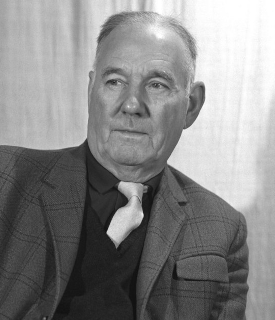
O’Toole makes his motion picture debut in Kidnapped in 1960 and two years later becomes an international star for his portrayal of T.E. Lawrence in David Lean’s epic Lawrence of Arabia (1962). In 1964 he plays Henry II of England in Becket, and he has the title role in Lord Jim (1965). He appears as Henry II again in The Lion in Winter (1968), a film notable for the witty verbal sparring matches between O’Toole and costar Katharine Hepburn. The Ruling Class (1972), a controversial black comedy that has become a cult classic, casts O’Toole as a schizophrenic English earl with a messiah complex.
Personal problems contribute to a decline in his popularity during the 1970s, but he makes a strong comeback in the early 1980s with three well-received efforts. He portrays a duplicitous and domineering movie director in The Stunt Man (1980), and his performance as the Roman commander Lucius Flavius Silva in the acclaimed television miniseries Masada (1981) is hailed as one of the finest of his career. His most popular vehicle during this period is My Favorite Year (1982), an affectionate satire on the early days of television, in which he plays Alan Swann, a faded Errol Flynn-type swashbuckling screen star with a penchant for tippling and troublemaking.
O’Toole subsequently maintains his status with fine performances in such films as the Oscar-winning The Last Emperor (1987), the cult favourite Wings of Fame (1989), and Fairy Tale: A True Story (1997), in which he portrays Sir Arthur Conan Doyle. Notable screen roles in the 21st century included King Priam in the historical epic Troy (2004), an aging romantic in Venus (2006), the voice of a haughty food critic in the animated Ratatouille (2007), and a priest in the historical drama For Greater Glory (2012). In addition, in 2008 he portrays Pope Paul III in the TV series The Tudors.
In 1992 O’Toole publishes a lively memoir, Loitering with Intent: The Child. A second volume, Loitering with Intent: The Apprentice, appears in 1996. He is nominated for an Academy Award eight times — for Lawrence of Arabia, Becket, The Lion in Winter, Goodbye, Mr. Chips (1969), The Ruling Class, The Stunt Man, My Favorite Year, and Venus — but never wins. In 2003 he is awarded an honorary Oscar. He receives an Emmy Award for his performance as Bishop Pierre Cauchon in the television miniseries Joan of Arc (1999).
O’Toole dies on December 14, 2013, at Wellington Hospital in St. John’s Wood, London, at the age of 81. His funeral is held at Golders Green Crematorium in London on December 21, 2013, where his body is cremated in a wicker coffin. His ashes are planned to be taken to Connemara, Ireland. They are kept at the residence of the President of Ireland, Áras an Uachtaráin, by President Michael D. Higgins, an old friend of O’Toole. His family has stated their intention to fulfill his wishes and take his ashes to the west of Ireland.
León Ó Broin, senior civil servant, historian, and author, is born Leo Byrne on November 10, 1902, at 21 Aungier Street, Dublin, the second of four sons of James P. Byrne, a potato factor’s bookkeeper, and Mary Byrne (née Killeen), daughter of a seaman who abandoned his family.
After early education in convent school, Ó Broin attends Synge Street CBS, where he is especially adept at languages. After working in several minor clerical employments, he becomes a clerk in the Kingsbridge headquarters of the Great Southern Railway. Joining a local Sinn Féin club, he canvasses for the party in the College Green ward during the 1918 Irish general election. Sent from an early age to Irish language classes by his father, he attends the Irish summer college in Spiddal, County Galway, and joins the Gaelic League, becoming by early 1921 secretary of central branch. He writes articles for the league’s successive weekly organs, each in its turn suppressed by the authorities. Despite regarding such writing as practice work within a language he is yet learning, he is selected best writer of Irish at the 1920 Dublin feis.
Arrested with his father and two brothers just before Christmas 1920 when Black and Tans discover a letter in Irish on his person during a house raid, Ó Broin is imprisoned for several weeks in Wellington Barracks. Leaving his railway job, he works as a clerk in the clandestine office of the Dáil ÉireannDepartment of Agriculture (1921–22). During the Irish Civil War, with departmental work at a standstill, he joins the National Army as a commissioned officer assigned to general headquarters staff at Portobello Barracks. Having recently commenced legal studies at the King’s Inns and University College Dublin (UCD), he handles army legal matters, such as compensation claims for damage to property.
Called to the bar in 1924, Ó Broin enters the civil service. Assigned to the Department of Education (1925–27), he was involved in launching the Irish language publishing imprint An Gúm, intended to redress the paucity of reading material, apart from school texts, in the language. Transferred to the Department of Finance (1927), he serves as estimates officer and parliamentary clerk and is assistant secretary of the economy committee established by the Cumann na nGaedheal government to make recommendations on reductions in current expenditure. Appointed private secretary to the Minister for Finance (1931–32), he serves both Ernest Blythe and the first Fianna Fáil minister, Seán MacEntee. Promoted to assistant principal (1932), and to principal officer (1939), he represents the department on the Irish Folklore Commission, and serves on the interdepartmental committee that, after the disastrous Kirkintilloch bothy fire in 1937, investigates seasonal migration to Scotland. During the emergency he is regional commissioner for Galway and Mayo (1940–45), one of eight such officers charged with organising contingency preparations for dealing with the likely collapse of central administration in the event of invasion by any of the wartime belligerents.
Transferred out of Finance, Ó Broin becomes assistant secretary (1945–48) and secretary (1948–67) of the Department of Posts and Telegraphs, administering both the postal service and telecommunications. He works closely with Fianna Fáil minister Patrick Little to improve the range and quality of music offered by the broadcasting service, playing a large part in the decision to form and adequately staff a full Radio Éireann symphony orchestra. He represents Ireland in several post-war conferences in Europe and America that reorganise the international regulation of broadcasting activities. He is elected to the European Broadcasting Union‘s administrative council (1953). He establishes and serves on a departmental committee in 1953 that studies all facets of launching a television service.
A devout but liberal Catholic, Ó Broin is prominent for many years in the Legion of Mary, founded by his close friend and civil-service colleague Frank Duff. President of a legion presidium of writers, actors, and artists, he is first editor (1937–47) of the quarterly organ Maria Legionis. Sharing Duff’s ecumenism, he belongs to the Mercier Society, the Pillar of Fire Society, and Common Ground, groups organised by Duff in the early 1940s to facilitate discussion between Catholics and, respectively, protestants, Jews, and secular intellectuals. The first two are suspended amid disapproval by the Catholic Archbishop of Dublin, John Charles McQuaid.
On retirement from the civil service in 1967, Ó Broin concentrates on the parallel career of research and writing that he had cultivated over many years. Having begun writing articles and short stories in Irish from his earliest years in the Gaelic League, he publishes his first collection of short stories, Árus na ngábhad, in 1923. With the establishment of An Gúm, he publishes three more collections of original short stories and translations of such masters of the genre as Alexander Pushkin, Prosper Mérimée, Guy de Maupassant, and Jerome K. Jerome. He translates several popular modern novels, including Robert Louis Stevenson‘s Kidnapped and H. G. Wells‘s The War of the Worlds. Active as secretary, actor, and writer with the state-subsidised Gaelic Drama League (An Comhar Drámaíochta), which produces Irish language plays, he publishes many plays in Irish, both original and translated. His best-selling book in Irish is Miss Crookshank agus coirp eile (1951), about the mummified corpses in the vaults of St. Michan’s Church, Dublin.
Ó Broin writes prolifically on modern Irish history and biography. His Irish language biography of Charles Stewart Parnell (1937), the first full-scale study of its kind in Irish since the commencement of the language revival, is a landmark publication, praised for the quality of its prose by such critics as Frank O’Connor and Seán Ó Faoláin. His biography of Robert Emmet, published in Irish in 1954, and awarded the Douglas Hyde prize, pioneers the scholarly subversion of the romantic myth surrounding its subject, and includes consideration of the political and social context. The subjects of subsequent biographies include Richard Robert Madden, Charles Gavan Duffy, Joseph Brenan, Michael Collins, and Frank Duff.
Ó Broin takes a largely biographical approach to historical writing, researching neglected aspects of pivotal historical events, and basing his studies on previously unexploited primary sources, often the papers of a single individual, whose career serves as the linchpin of his narrative, filtering events through the perspective of that person. Another vein of his scholarship is his primary research into the history of Irish separatism, especially with sources in the Irish State Paper Office.
Ó Broin receives an honorary LL. D from the National University of Ireland (NUI) in 1967. Elected a member of the Royal Irish Academy (RIA) in 1971, he is a council member (1974–76) and senior vice-president (1976–77) and chairs the group whose recommendations results in the academy’s establishment of the National Committee on International Affairs. He is president of the Irish Historical Society (1973–74), and a member of the Irish Manuscripts Commission.
In 1925 Ó Broin marries Cait Ní Raghallaigh, an office assistant reared in Baltinglass, County Wicklow, whom he met in the Gaelic League. They have two sons and three daughters. After residing in the south city suburbs, they move to Booterstown, County Dublin in the 1930s, and from there to the Stillorgan Road in the 1950s.
Ó Broin dies February 26, 1990, in Dublin, and is buried in Deans Grange Cemetery. His papers are in the National Library of Ireland (NLI). His eldest son, Eimear Ó Broin, is an accomplished musicologist and assistant conductor of the several Radio Éireann orchestras (1953–89).
(From: “Ó Broin, León” by Lawrence William White, Dictionary of Irish Biography, http://www.dib.ie)
In the 1960s Gallagher changes allegiance and becomes a member of Fianna Fáil. He is elected to Mayo County Council in 1967 and is elected to Dáil Éireann on his third attempt at the 1973 Irish general election for the Mayo West constituency. He does not remain on the backbenches for very long. He joins the Fianna Fáil front bench in 1974 as spokesperson on Fisheries. He remains in that position until 1977 when the party returns to power, and he is appointed Minister for the Gaeltacht. He is an active Minister with an interest in Irish language affairs.
Following the 1987 Irish general election, Gallagher is not appointed to cabinet. He is, however, appointed as Minister of State at the Department of the Gaeltacht, while Haughey has appointed himself as Minister for the Gaeltacht. As a result, he retires from politics at the following general election in 1989. After his retirement, he works to advance the Irish language cause and also serves as chairman of the Gaelic Athletic Association in Mayo.
Gallagher dies on November 4, 2001, at the age of 78 in Castlebar, County Mayo. He is buried at Polranny Cemetery, Achill Sound, County Mayo. He is survived by his wife Hannah, twelve children and thirty grandchildren.
John Arden, English playwright, is born in Barnsley, South Yorkshire, England, on October 26, 1930. At the time of his death he is lauded as “one of the most significant British playwrights of the late 1950s and early 60s.”
Arden is initially associated with the English Stage Company at the Royal Court Theatre in London. His 1959 play, Serjeant Musgrave’s Dance, in which four army deserters arrive in a northern mining town to exact retribution for an act of colonial violence, is considered to be his best. His work is influenced by Bertolt Brecht and epic theatre as in Left-Handed Liberty (1965, on the anniversary of Magna Carta). Other plays include Live Like Pigs, The Workhouse Donkey, and Armstrong’s Last Goodnight, the last of which is performed at the 1963 Chichester Festival by the Royal National Theatre after it was rejected by the Royal Court.
Arden’s 1978 radio play Pearl is considered in a Guardian survey to be one of the best plays in that medium. He also writes several novels, including Silence Among the Weapons, which is shortlisted for the Booker Prize in 1982, and Books of Bale, about the Protestant apologist John Bale. He is a member of the Royal Society of Literature.
With his wife and co-writer Margaretta D’Arcy, Arden pickets the Royal Shakespeare Company (RSC) premiere of his Arthurian play The Island of the Mighty, because they believe the production to be pro-imperialist. They write several plays together which are highly critical of British presence in Ireland, where he and D’Arcy live from 1971 onward.
In 1961, Arden is a founder member of the anti-nuclear Committee of 100, and he also chairs the pacifist weekly Peace News. In Ireland, he is for a while a member of Official Sinn Féin. He is an advocate of civil liberties, and opposes anti-terror legislation, as demonstrated in his 2007 radio play The Scam.
Arden is elected to Aosdána in 2011 before dying in Galway, County Galway on March 28, 2012. He is waked in a wicker casket.
(Pictured: Photograph of John Arden in 1966, credit to Sam Falk/The New York Times)
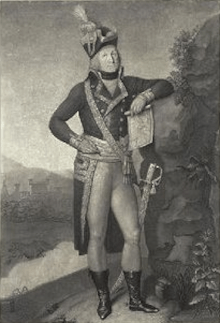
General Charles Edward Saul Jennings, Irish soldier and revolutionary who serves France in the eighteenth century and is sometimes romanticised as Brave Kilmaine, is born on October 19, 1751, in Sauls Court, Dublin.
Jennings is the second son of Theobald Jennings, a physician of Polaniran (Ironpool), Tuam, County Galway, and Eleonore Saul, daughter of Laurence Saul, a wealthy Dublin distiller. Educated privately in Dublin, he leaves Ireland in 1769, settling in Tonnay-Charente in the south of France, where his father had set up practice. His father had, several years previously, assumed the fictitious title of ‘baron of Kilmaine’ in the hope of improving his position in French society, and he subsequently assumes the same title.
In 1774 Jennings joins the Royal Dragoons as a trooper, transferring in 1778 into the Légion de Lauzun, a corps made up mostly of foreign volunteers. After the campaign in Senegal (1778–79) he returns to France and is commissioned as a sous-lieutenant. He then campaigns with Gilbert du Motier, Marquis de Lafayette, during the American Revolutionary War and teaches cavalry tactics at Metz on his return. Promoted to captain in 1788, at the outbreak of the French Revolution, he is stationed at Verdun and, despite a short period in prison, continues to serve with his regiment. In 1791, when several of the regiment’s officers flee from France, he remains and is one of the first officers to swear allegiance to the national assembly.
Promoted to Chef d’escadron in April 1792, Jennings serves under Charles François Dumouriez during the invasion of the Netherlands, distinguishing himself at the Battle of Valmy and the Battle of Jemappes, where he reinforces the French centre at a critical point, ensuring victory. A series of rapid promotions follow. He is made a colonel in January 1793, a general of brigade in March 1794, and a general of division in May1794.
After a series of reverses in the summer of 1793, in which the French lose the fortress-towns of Condé and Valenciennes, the committee of public safety appoints Jennings to command the Armée du Nord on May 15, 1793, with the rank of full general. In August, in order to preserve his force in the face of overwhelming opposition, he retreats from a position 120 miles north of Paris known as ‘Caesar’s camp.’ Although the allied army swings away to invest Dunkirk, he is arrested and imprisoned for endangering the city, and remains in prison until after the fall of Robespierre in July 1794. Within a few days, due to the turbulent political situation, he is rearrested and not released until December 1794. In May 1795 he cooperates with Napoléon Bonaparte in suppressing the Jacobin uprising in Faubourg Saint-Antoine in Paris and, having reestablished his credentials, commands the cavalry during the invasion of Italy (1796). Bonaparte regards him highly, and he distinguishes himself at the Battle of Lodi on May 10, 1796, seizing the city of Milan five days later. He defeats a large Austrian force in the Battle of Borghetto before investing and taking the fortress-town of Mantua in February 1797.
When peace terms are agreed with Austria, Jennings returns to France, taking command of the centre column of the Armée d’Angleterre, which had been raised to invade Britain and Ireland. However, his deteriorating health makes some observers question his suitability for such an appointment. An associate of Thomas Paine and James Napper Tandy, and a friend of Wolfe Tone, he is forced to watch the gradual reduction of his army as Napoleon diverts troops for his campaign in Egypt. Tone is at first suspicious of him, given that many Irish-born French officers had deserted the revolutionary cause but comes to admire him.
After the defeat of Admiral Bombard’s expedition to Ireland and Tone’s arrest on November 3, 1798, Jennings requests that the French government should take a senior British prisoner as hostage and subject him to the same treatment as Tone. After Tone’s death he assists Matilda Tone and her children. In early 1799 he is appointed military governor of Switzerland but is forced to resign due to his failing health.
In a fragile condition Jennings leaves Switzerland and returns to Passy in Paris, where his domestic griefs and chagrins add to the poignancy of his bodily sufferings, for his constitution is now completely broken up. He dies of dysentery on December 11, 1799, at the age of 48. He is buried with full military honours.
Jennings is historically honored at the Arc de Triomphe in Paris, where his name can be seen on the inside triumphal arch, on the Northern pillar, Column 05. Underneath the Arc is the Tomb of the Unknown Soldier (World War I). There is a personal portrait of Jennings in the ‘Hotel de Ville’ (City Hall) at Tonnay-Charente, where his father Dr. Theobald Jennings practiced as a physician.
A monument was erected in Jennings’s memory in Tonnay-Charente in the 19th century. Rue du Général Kilmaine, a street in Tonnay-Charente, is named in his honour in the 19th century.
Pádraic Ó Conaire, Irish writer and journalist whose production is primarily in the Irish language, dies in Dublin on October 6, 1928. In his lifetime he writes 26 books, 473 stories, 237 essays and 6 plays. His acclaimed novel Deoraíocht has been described by Angela Bourke as “the earliest example of modernist fiction in Irish.”
Ó Conaire is born in the Lobster Pot public house on the New Docks in Galway, County Galway, on February 28, 1882. His father is a publican, who owns two premises in the town., and his mother is Kate McDonagh. He is orphaned by the age of eleven. He spends a period living with his uncle in Gairfean, Ros Muc, Connemara. The area is in the Gaeltacht (Irish-speaking area) and Ó Conaire learns to speak Irish fluently.
Ó Conaire emigrates to London in 1899 where he gets a job with the Board of Education and becomes involved in the work of the Gaelic League. A pioneer in the Gaelic revival in the last century, he and Pádraig Pearse are regarded as being the two most important Irish language short story writers during the first decades of the 20th century.
Ó Conaire marries Molly Ní Mhanais, with whom he has four children: Eileen (b. 22 Feb 1905), Patrick (b. 3 Nov 1906), Kathleen (b. 24 Feb 1909), and Mary Josephine (b. 28 Jul 1911), who dies of diphtheria in 1922.
Ó Conaire returns to Ireland in 1914, leaving his family in London. Living mostly in Galway, he earns a meagre living through writing, teaching at Gaeltacht summer schools, and as an occasional organiser for the Gaelic League.
Ó Conaire dies at the age of 46 on October 6, 1928, while on a visit to Dublin, after complaining of internal pains while at the head office of the Gaelic League. His fellow poet Frederick Robert Higgins writes a celebrated Lament for Pádraic Ó Conaire.
Ó Conaire has family still living to this day in England, as well as in Galway and Canada. The Ó Conaire surname is still strong in the Ros Muc area.
Ó Conaire’s short story M’asal Beag Dubh is the inspiration for an Internet-based satire on the football transfer market. The fictitious character Masal Bugduv is created. The name sounds similar to the Gaelic pronunciation of M’asal Beag Dubh. Journalists who did not fact check quite as thoroughly as they should have missed the satire and tell the world of the up-and-coming Moldovan star.
A statue of Ó Conaire’s is unveiled in 1935 by Éamon de Valera in Eyre Square in the heart of Galway City. It is popular with tourists until it is decapitated by four men in 1999. It is repaired at a cost of £50,000 and moved to Galway City Museum in 2004. A bronze replica of the statue is unveiled in Eyre Square in November 2017.
Between 1932 and 1937, Dillon serves as a TD for the Donegal constituency for the National Centre Party and after its merger with Cumann na nGaedheal, for the new party of Fine Gael. He plays a key role in instigating the creation of Fine Gael and becomes a key member of the party in later years. He remains as TD for Monaghan from 1937 to 1969. He becomes deputy leader of Fine Gael under W. T. Cosgrave.
Dillon temporarily resigns from Fine Gael in 1942 over its stance on Irish neutrality during World War II. While Fine Gael supports the government’s decision to stay out of the war, he urges the government to side with the Allies. A passionate anti-Nazi, he describes the Nazi creed as “the devil himself with twentieth-century efficiency.” His zeal against Adolf Hitler draws him the ire of the German Minister to Ireland Eduard Hempel, who denounces him as a “Jew” and “German-hater.” Even Éamon de Valera, then Taoiseach, is not spared the fierceness of Dillon’s rhetoric. When the Taoiseach ridicules his stark support for the Allies, noting this means he has to adopt a Pro-British stance, Dillon defiantly retorts, “My ancestors fought for Ireland down the centuries on the continent of Europe while yours were banging banjos and bartering budgies in the backstreets of Barcelona.”
In 1942, while holidaying in Carna, County Galway, Dillon meets Maura Phelan of Clonmel on a Friday. By that Monday the two are engaged and six weeks after that the pair are married. He is 40 and Maura is 22 years of age.
Dillon is one of the independents who supports the first inter-party government (1948–1951) and is appointed Minister for Agriculture. As Minister, he is responsible for huge improvements in Irish agriculture. Money is spent on land reclamation projects in the areas of less fertile land while the overall quality of Irish agricultural produce increases.
Dillon rejoins Fine Gael in 1953. He becomes Minister for Agriculture again in the second inter-party government (1954–1957). In 1959, he becomes leader of Fine Gael, succeeding Richard Mulcahy. He becomes president of the party in 1960. In 1965, Fine Gael loses the general election to Seán Lemass and Fianna Fáil. The non-Fianna Fáil parties win 69 seats to Fianna Fáil’s 72. Had the other parties won four more seats between them, they would have been able to form a government. Having narrowly failed to become Taoiseach, Dillon stands down as Fine Gael leader after the election.
On Northern Ireland, while Dillon stands against Partition, he equally opposes any “armed solution” or militant nationalist policy, stating, “We have got to win, not only the barren acres of Ulster, but the hearts of the people who live in it.”
Dillon is a colourful contributor to Dáil proceedings and is noted for his high standard of oratory. He remains a TD until 1969, when he retires from politics. He dies in Malahide, Dublin on February 10, 1986, at the age of 83.
Yeats is very sick as a child, spending three years in two different hospitals. She then goes to the Pension Henriette, a boarding school in Villars-sur-Bex, Switzerland from 1928–1930. In 1923 her Aunt Elizabeth “Lolly” gives her brush drawing lessons which aids her in winning first prize in the RDS National Art competition for children under eight years old in 1925 and 1926.
Yeats trains in the Royal Hibernian Academy school from 1933 to 1936 and works as a stage designer with the Abbey Theatre in Dublin. In 1936, at the age of 16, she is hired by the Abbey Theatre as assistant to Tanya Moiseiwitsch. She studies for four months at the School of Theatrical Design in Paris with Paul Colin in 1937. At 18, she begins her costume career on sets with Ria Mooney‘s company. At the Abbey, she designs the sets and costumes for revivals of W.B. Yeats’ plays The Resurrection and On Baile’s Strand (1938).
In 1938 Yeats designs the first production of W.B. Yeats’ play Purgatory, which is her most successful achievement. Purgatory is the last play that W.B Yeats sees on stage, and when it is performed it is a full house. When working on Purgatory, Hugh Hunt wants to have a moon on the back cloth of the production but Yeats refuses. “If she does not win, she is going to say that she doesn’t wish to have her name on the programme as a designer of the setting.” This could be the main reason why her name is not on many productions that she works on. She also designs the first play of her uncle Jack Yeats to receive professional production, Harlequin’s Positions.
In 1939 Yeats is promoted to head of design at the Abbey until her departure in May 1941. In 1939 it is commented that her designs are “getting arty” and not in keeping with the style of the Abbey. One of her last designs is her father’s last play, The Death of Cuchulain, for the Lyric Theatre on the Abbey stage, in 1949. She designs and stage-manages for the Peacock Theatre, the Cork Opera House, the Olympia Theatre, the Gaiety Theatre, the Austin Clarke Lyric Theatre, the Abbey Theatre and Players’ Theatre.
Among the work Yeats is credited with in the Abbey Theatre, she is also recorded as having worked on five productions in the Peacock Theatre with the Theatre Company: Alarm Among the Clerks (1937), The Phoenix (1937), Harlequin’s Positions (1939), The Wild Cat (1940), and Cavaliero (The Life of a Hawk) (1948).
Yeats chooses to move towards painting full-time beginning a brief study at the Dublin Metropolitan School of Art in 1941. She experiments with watercolour and wax. She has a touching naive expressionist style and is interested in representing domestic humanity. She designs many of the covers for the books of Irish-language publisher Sáirséal agus Dill over a twenty-year period from 1958. She does illustrations for books by Denis Devlin, Thomas Kinsella and Louis MacNeice, and works with many young designers, such as Louis le Brocquy.
The Royal Hibernian Academy holds a retrospective of her work in 1995, as does the National Gallery of Ireland in 2002. She donates her collection of Jack B. Yeats’ sketch books to the National Gallery of Ireland, leading to the creation of the Yeats Museum within the Gallery. Her brother, Michael, in turn, donates her sketchbooks to the Museum.
(Pictured: “Gossip & Scandal,” 1943 oil on canvas, by Anne Butler Yeats)
In April 1913 London‘s Daily Mail offers a prize of £10,000 to the aviator who first crosses the Atlantic Ocean in an airplane from any point in the United States, Canada or Newfoundland to any point in Great Britain or Ireland in 72 continuous hours. The competition is suspended with the outbreak of war in 1914 but reopens after Armistice is declared in 1918.
Several teams enter the competition and, when Alcock and Brown arrive in St. John’s, the Handley Page team are in the final stages of testing their aircraft for the flight, but their leader, AdmiralMark Kerr, is determined not to take off until the plane is in perfect condition. The Vickers team quickly assembles their plane and while the Handley Page team are conducting yet another test, the Vickers plane takes off from Lester’s Field.
It is not an easy flight. The overloaded aircraft has difficulty taking off the rough field and barely misses the tops of the trees. At 5:20 PM the wind-driven electrical generator fails, depriving them of radio contact, their intercom and heating. An exhaust pipe bursts shortly afterwards, causing a frightening noise which makes conversation impossible without the failed intercom.
Alcock and Brown also have to contend with thick fog, which prevents Brown from being able to navigate using his sextant. Alcock twice loses control of the aircraft in the fog and nearly crashes into the sea. He also has to deal with a broken trim control that makes the plane become very nose heavy as fuel is consumed. Their electric heating suits fail, making them very cold in the open cockpit.
At 3:00 AM they fly into a large snowstorm. They are drenched by rain, their instruments ice up, and the plane is in danger of icing and becoming unflyable. The carburetors also ice up.
They make landfall in County Galway at 8:40 AM on June 15, 1919, not far from their intended landing place, after less than sixteen hours of flying time. The aircraft is damaged upon arrival because they land on what appears from the air to be a suitable green field, but which turns out to be Derrygilmlagh Bog, near Clifden. This causes the aircraft to nose-over, although neither of the airmen is hurt. Brown says that had the weather been favorable they could have pressed on to London. Their first interview is given to Tom ‘Cork’ Kenny of the Connacht Tribune.
Alcock and Brown are treated as heroes on the completion of their flight. The Secretary of State for Air, Winston Churchill, presents them with the Daily Mail prize. In addition to a share of the Daily Mail award, Alcock receives 2,000 guineas (£2,100) from the State Express Cigarette Company and £1,000 from Laurence R. Philipps for being the first Briton to fly the Atlantic Ocean. Both men are knighted a week later by King George V at Windsor Castle.
(Pictured: Statue of Alcock and Brown formerly located at London Heathrow Airport. Relocated to Clifden, Connemara, County Galway, Ireland to celebrate centenary in 2019.)
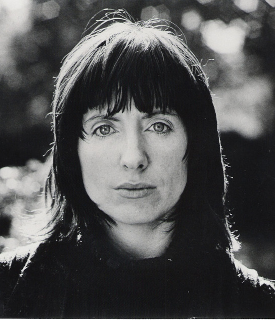
Maude is reared in the Irish language. Her mother, Máire Nic an Iomaire, is a school teacher from Ballyfinglas. She receives her primary education from her mother on a small island off the coast of Rosmuc, Connemara. Her father, John Maude, is from Cill Bhriocáin in Rosmuc. She attends University College Galway, where she excels in French. She becomes a teacher, working in schools in Counties Kildare, Mayo, and Wicklow. She also works in other capacities in London and Dublin.
Maude is widely praised as an actor. She acts at the University, at An Taibhdhearc in Galway and the Damer in Dublin, and is particularly successful in a production of An Triail by Máiréad Ní Ghráda in 1964, in which she plays the protagonist of the story, Máire Ní Chathasaigh. She herself is a playwright and co-authors An Lasair Choille with poet Michael Hartnett.
Maude begins writing poetry in Irish in secondary school and develops a lyrical style closely attuned to the rhythms of the voice. Though not conventionally religious, she says in an interview that she has a deep interest in the spiritual and that this leaves its mark on her poetry. She is noted as a highly effective reciter of her own verse. Géibheann is the best-known of her poems, and is studied at Leaving Certificate Higher Level Irish in the Republic of Ireland. A posthumous collected edition, Caitlín Maude, Dánta, is published in 1984, Caitlín Maude: file in 1985 in Ireland and Italy, and Coiscéim in 1985.
As a member of the Dublin Irish-speaking community Maude is active in many campaigns, including the establishment of the Gaelscoil (Irish-medium primary school) Scoil Santain in Tallaght, County Dublin.
Maude is a sean-nós singer of distinction. She makes one album in this genre, Caitlín, released in 1975 on Gael Linn Records and now available as a CD. It contains both traditional songs and a selection of her poetry.
Maude marries Cathal Ó Luain in 1969. They have one child, their son Caomhán.
Maude dies of complications from cancer at the age of 41 on June 6, 1982. She is buried in Bohernabreena graveyard overlooking the city on the Dublin Mountains.
In 2001, a new writers’ centre in Galway, Ionad Schribhneoiri Chaitlin Maude, Gaillimh, is named in her memory.






 seamus dubhghaill