seamus dubhghaill

Promoting Irish Culture and History from Little Rock, Arkansas, USA


Leave a comment

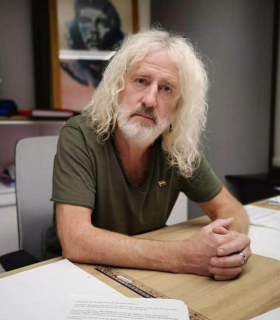
Birth of Mick Wallace, Member of the European Parliament

Michael “Mick” Wallace, former property developer and Irish politician who has been a Member of the European Parliament (MEP) from Ireland for the South constituency since July 2019, is born in Wellingtonbridge, County Wexford, on November 9, 1955. He is considered to be one of the most eccentric and unconventional figures in Irish national politics.

Wallace is born into a family of twelve children. He graduates from University College Dublin (UCD) with a teaching qualification. He marries Mary Murphy from Duncormick, County Wexford, in 1979. The couple has two sons, but the marriage ends when the children are young. He has two more children from another relationship in the 1990s.

In 2007, Wallace founds the Wexford Football Club which he manages for their first three seasons and is chairman of its board. The club is in the League of Ireland First Division.

Prior to entering politics, Wallace owns a property development and construction company completing developments such as the Italian Quarter in the Ormond Quay area of the Dublin quays. The company later collapses into liquidation, with him finally being declared bankrupt on December 19, 2016.

On February 5, 2011, while a guest on Tonight with Vincent Browne, Wallace makes the announcement that he intends to contest the upcoming February 25 general election as an Independent candidate. He tops the poll in the Wexford constituency with 13,329 votes.

On December 15, 2011, Wallace helps to launch a nationwide campaign against the household charge which is introduced as part of the 2012 Budget.

Wallace is the listed officer of the Independents 4 Change, which is registered to stand for elections in March 2014 and, along with Clare Daly, is one of two MEPs which represent the party in the European parliament. During their time in the Dáil, Wallace and Daly, the Dublin North TD, become friends and political allies, and work together on many campaigns, including opposition to austerity and highlighting revelations of alleged Garda malpractices, including harassment, improper cancellation of penalty points and involvement of officers in the drug trade. They are partially active in protesting the Garda whistleblower scandal, which eventually leads to the resignation of Minister for Justice Frances Fitzgerald, although she is later cleared of wrongdoing by the Charleton Tribunal.

In July 2014, Wallace and Daly are arrested at Shannon Airport while trying to board a U.S. military aircraft. He says the airport is being used as a U.S. military base and that the government should be searching the planes to ensure that they are not involved in military operations or that there are no weapons on board. He is fined €2,000 for being in an airside area without permission and chooses not to pay. He is sentenced to 30 days in prison in default, and in December 2015 is arrested for non-payment of the fine.

In December 2015, Wallace and independent TDs Clare Daly and Maureen O’Sullivan each put forward offers of a €5,000 surety for a man charged with membership of an unlawful organisation and with possession of a component part of an improvised explosive device.

At the 2016 Irish general election, Wallace stands as an Independents 4 Change candidate and is re-elected, finishing third on the first-preference count with 7,917 votes.

In 2017, Wallace calls on Ireland to join the Boycott, Divestment and Sanctions movement against Israel and “condemn the illegal expansion of Israeli settlements on Palestinian lands as well as the ongoing human rights abuses against Palestinians.”

At the 2019 European Parliament election, Wallace is elected as an MEP for the South constituency.

Wallace is criticised for supporting Venezuela, Ecuador, China, Russia, Belarus and Syria during his period as an MEP. In November 2020, he refers to Belarusian opposition presidential candidate Svetlana Tikhanovskaya as a “pawn of western neoliberalism.” In February 2021, he is reprimanded for using a swear word during a session of the European Parliament. He has referred to Venezuelan opposition leader Juan Guaidó as being an “unelected gobshite.”

In April 2021, Wallace and Daly are called “embarrassments to Ireland” by Fianna Fáil‘s Malcolm Byrne after the two MEPs had travelled to Iraq and visited the headquarters of the Popular Mobilization Forces, an Iraqi militia supported by Iran.

Wallace questions the director general of the Organisation for the Prohibition of Chemical Weapons (OPCW), Fernando Arias, in the European Parliament in April 2021. He accuses the OPCW of falsely blaming the government of Bashar al-Assad for the 2018 Douma chemical attack. He says that, while he does not know what had happened in Douma, the White Helmets were “paid for by the U.S. and UK to carry out regime change in Syria.” Fianna Fáil’s Barry Andrews calls his accusation against the White Helmets a conspiracy theory and disinformation. French MEP Nathalie Loiseau describes his comments as “fake news” and apologises on his behalf to NGO groups in Syria.

In June 2021, Wallace and Daly are among the MEPs censured by the European Parliament’s Democracy Support and Election Coordination Group for acting as unofficial election-monitors in the December 2020 Venezuelan parliamentary election and April 2021 Ecuadorian general election without a mandate or permission from the EU. They are barred from making any election missions until the end of 2021. They are warned that any further such action may result in their ejection from the European parliament under the end of their terms in 2024.

Wallace has stated his opposition to vaccination certificates. He says, “I’m not anti-vax but we’re going down a dangerous path with COVID pass” and expresses concerns about civil liberties. Both Wallace and Daly have refused to present vaccination certs upon entering the European Parliament, resulting in them being reprimanded by the European Parliament.

In April 2022, Wallace and Daly initiate defamation proceedings against RTÉ.

On September 15, 2022, Wallace is one of sixteen MEPs who vote against condemning President Daniel Ortega of Nicaragua for human rights violations, in particular the arrest of Bishop Rolando José Álvarez Lagos.

In November 2022, Wallace criticises protests in Iran following the death of Mahsa Amini, accusing some protestors of violence and destruction and saying it “would not be tolerated anywhere.”

In February 2023, Wallace claims on social media that he has “three wine bars in Dublin.” This arouses alarm from his European parliamentary group, as no such assets were listed on his mandatory declaration of financial interests. After the chair of his parliamentary group calls any omission from the declaration “unacceptable” and not “worthy of our political group,” he amends his declaration to state that he is an “advisor” to the three wine bars and receives up to €500 a month in income for this role.


Leave a comment

Death of Hamilton Deane, Actor, Playwright & Director

Hamilton Deane, Irish actor, playwright and director, dies on October 25, 1958, in Ealing, London, England. He plays a key role in popularising Bram Stoker‘s 1897 novel Dracula as a 1924 stage play and a 1931 film.

Deane is born on December 2, 1879, in New Ross, County Wexford, and grows up in Clontarf, a suburb of Dublin. His family lives close to the families of both Bram Stoker and his wife, Florence Balcombe, and his mother had been acquainted with Bram Stoker in her youth.

Deane enters the theater as a young man, first appearing in 1899 with the Henry Irving Company, of which Stoker is stage manager for many years. Even before he forms his own troupe in the early 1920s, he has been thinking about bringing Dracula to the stage. Stoker had attempted this in 1897 but the verdict from Irving consigned it to the waste-paper basket. Unable to find a scriptwriter to take on the project, Deane writes the play himself in a four-week period of inactivity while he is suffering with a severe cold. He then contacts Florence Stoker, Bram’s widow, and negotiates a deal for the dramatic rights.

To stage the production, Deane is required to submit the completed script to the Lord Chamberlain for a license under the Theatres Act 1843. The play is censored to limit violence – for example, the count’s death cannot be shown to the audience – but is approved on May 15, 1924.

Deane re-imagines Count Dracula as a more urbane and theatrically acceptable character who could plausibly enter London society. It is Deane’s idea that the count should wear a tuxedo and stand-up collar, and a flowing cape which conceals Dracula while he slips through a trap-door in the stage floor, giving the impression that he has disappeared. He also arranges to have a uniformed nurse available at performances, ready to administer smelling salts should anyone faint.

Deane’s play premieres on August 5, 1924, at the Grand Theatre in Derby, England. Despite critics’ misgivings, the audiences love it. Although he originally intended to play the title role himself, Raymond Huntley plays the role of the Count and Deane fills the role of Van Helsing. It is a huge success and the production tours England for three years before settling in London, where it opens at the Little Theatre in the Adelphi on February 14, 1927. It later transfers to the Duke of York’s Theatre and then the Prince of Wales Theatre to accommodate larger audiences.

When the play crosses the Atlantic in 1927, the role of Dracula is taken by the then-unknown Hungarian-American actor Bela Lugosi. For its United States debut, Dracula is rewritten by the American playwright John L. Balderston. The show runs for a year on Broadway and for two more years on tour, breaking all previous records for any show put on tour in the United States. It is the Deane/Balderston interpretation upon which the classic Tod Browning film Dracula (1931) is based.


Leave a comment

Death of Father Austin Flannery

Fr. Austin Flannery OP, was a Dominican priest, scholar, editor, journalist and social justice campaigner, dies of a heart attack at Kiltipper Woods Care Centre, Dublin, on October 21, 2008.

Born William “Liam” Flannery at Rearcross, County Tipperary, on January 10, 1925, he is the eldest of seven children produced by William K. Flannery and his wife Margaret (née Butler), merchants, publicans and hoteliers there and later at New Ross, County Wexford. After national school in Rearcross, he is educated at St. Flannan’s College in Ennis, County Clare, completing his secondary education at Newbridge College, Newbridge, County Kildare, a Dominican institution where he revels in an environment spurring independent thinking.

Flannery joins the Dominican Order in 1943, making his first profession in September 1944. After studies in theology at St. Mary’s Priory, Tallaght, County Dublin, and then at Blackfriars Hall, Oxford, he is ordained a Catholic priest on September 2, 1950, and adopts the forename Austin. He continues his studies at the Pontifical University of Saint Thomas Aquinas in Rome where he is awarded a doctorate in dogmatic theology. After his studies he teaches theology at Glenstal Abbey, County Limerick, for two years in the mid-1950s, before returning to Newbridge College for a year to teach Latin.

Flannery edits the Dominican bi-monthly journal entitled Doctrine and Life from 1958 to 1988, while at St. Saviour’s Priory, Dublin, where he also serves as prior from 1957 to 1960. He also edits the Religious Life Review. During and after the Second Vatican Council he makes available in English all the documents from the event.

Flannery’s campaigning to end apartheid in South Africa leads to involvement with Kader Asmal, and the founding the Irish Anti-Apartheid Movement, of which he serves as chairman and president. In the late sixties his campaigning on behalf of the Dublin Housing Action Committee, due to its association with republicans and left-wing activists, leads him to being accused of being a communist. He is dismissed in the Dáil by the then Minister for Finance, Charles Haughey, as “a gullible cleric.”

From August 1969, Flannery is a member of the executive committee of the Northern Relief Coordination Committee, raising funds on behalf of the families of those interned without trial in Northern Ireland during the early 1970s.

Flannery embodies the post-Vatican II conception of the priest as a social catalyst engaged by the gospel, closer to his flock than to the clerical hierarchy. He has a great gift for friendship, is indefatigably interested in people, and courts religious affairs commentators and journalists at a time when the hierarchy ignores them, magnifying his influence.

Flannery dies of a heart attack on October 21, 2008, at Kiltipper Woods Care Centre, Dublin. Following a funeral mass at St. Saviour’s Priory, he is buried in the Dominican plot at Glasnevin Cemetery, Dublin, on October 24, 2008.


Leave a comment

Death of Irish Hurler Bobby Rackard

Robert “Bobby” Rackard, Irish hurler who plays as a right corner-back for the Wexford senior team, dies in Killane, County Wexford, on October 19, 1996.

Rackard is born in Killane on January 6, 1927. He makes his first regular appearance for the Wexford senior team during the 1947 All-Ireland Senior Hurling Championship and is a regular member of the starting fifteen until his retirement before the 1957 All-Ireland championship. During that time he wins two All-Ireland medals, four Leinster medals and one National Hurling League medal. He is an All-Ireland runner-up on two occasions. His brothers, Nicky and Billy, also experience All-Ireland success with Wexford.

Rackard plays his club hurling with Rathnure and enjoys much success and is a four-time county club championship medalist in his lengthy career.

In 1948, Rackard is a key member of the defence as Rathnure reaches only their second championship decider ever. A 3–5 to 0–2 trouncing of reigning champions Ferns St. Aidan’s gives him his first championship medal. After failing to retain their title the following year, Rathnure is back in the county decider once again in 1950. Another convincing 5–10 to 2–6 defeat of old rivals Ferns St. Aidan’s gives him his second championship medal.

It is 1955 before Rathnure qualifies for another championship decider and four-in-a-row hopefuls Ferns St. Aidan’s provides the opposition once again. A close game develops, however, a 2–9 to 2–5 victory gives Rackard a third championship medal.

After a number of years out of the limelight, Rathnure reaches the county final once again in 1961. A fourth defeat of Ferns St. Aidan’s gives Rackard, who scores two goals from his full-forward berth, a fourth and final championship medal.

Rackard first comes to prominence on the inter-county scene as a member of the Wexford minor hurling team in the early 1940s. He enjoys little success in this grade but is called up to the senior team in 1947.

After losing the provincial final in 1950, Rackard is at centre-back the following year as Wexford faces Laois in the eastern decider. A 3–12 to 4–3 victory gives him his first Leinster medal as Wexford claims the provincial crown for the first time since 1918. The subsequent All-Ireland decider sees three-in-a-row hopefuls Tipperary providing the opposition. Nicky Rackard’s goal-scoring ability is quelled by Tipperary goalkeeper Tony Reddin, while Séamus Bannon, Tim Ryan and Paddy Kenny score key goals which power Tipperary to a 7–7 to 3–9 victory.

After back-to-back Leinster defeats over the next two years, Wexford faces Dublin in the 1954 decider. A huge 8-5 to 1–4 victory gives Rackard his second Leinster medal. A record crowd of 84,856 attend the subsequent All-Ireland decider with Cork providing the opposition. Wexford has a four-point lead with seventeen minutes left to play, however, history is against Wexford when Johnny Clifford scores the winning goal for Cork with just four minutes left. A 1–9 to 1–6 victory secures a third successive All-Ireland for Cork.

In 1955, Wexford continues their provincial dominance with Rackard collecting a third Leinster medal following a 5–6 to 3–9 defeat of Kilkenny in a replay of the Leinster final. Galway, who gets a bye into the final without picking up a hurley, provides the opposition and takes a halftime lead. A Tim Flood goal nine minutes from the end clinches a 3–13 to 2–8 victory and a first All-Ireland medal for Rackard. It is Wexford’s first All-Ireland triumph in forty-five years.

Rackard adds a National Hurling League medal to his collection in 1956 as Tipperary is bested by 5–9 to 2–14. The subsequent championship campaign sees Wexford reach the provincial final once again. A narrow 4–8 to 3–10 defeat of Kilkenny gives Rackard his fourth and final Leinster medal. Galway falls heavily in the All-Ireland semi-final, allowing Wexford to advance to an All-Ireland final meeting with Cork. The game goes down in history as one of the all-time classics as Christy Ring is bidding for a record ninth All-Ireland medal. The game turns on one important incident as the Wexford goalkeeper, Art Foley, makes a miraculous save from a Ring shot and clears the sliotar up the field to set up another attack. Nicky Rackard scores a crucial goal with two minutes to go giving Wexford a 2–14 to 2–8 victory. In spite of Cork’s loss, Wexford’s Nick O’Donnell and Rackard, in an unparalleled display of sportsmanship in any game, raise Christy Ring onto their shoulders and carry him off the field. Wexford wins the game and Rackard collects his second All-Ireland medal but there is no doubt in their minds that the real hero is Ring.

A farm accident in 1957 brings an end to Rackard’s inter-county career.

Rackard also has the honour of being selected for Leinster in the inter-provincial series of games and enjoys some success. In 1956 he lines out in his only inter-provincial decider. A 5–11 to 1–7 trouncing of Munster gives Rackard a Railway Cup medal.

In retirement, Rackard, along with his brothers, come to be regarded as one of the greatest hurling families of all-time. In 1984, the centenary year of the foundation of the Gaelic Athletic Association, he is named to the Hurling Team of the Century. In 1992, both Billy and Bobby Rackard’s brilliance is recognised when they are presented with the All-Time All Star Award for hurling. Rackard is also posthumously named on the Hurling Team of the Millennium in 1999.

(Pictured: The Rackard brothers from left Bobby, Nicky and Billy)


Leave a comment

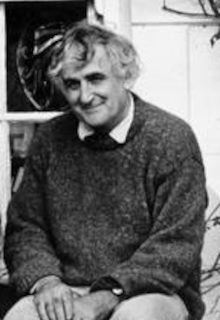
Death of Sculptor Conor Fallon

Irish sculptor Conor Hubert Fallon dies of lung cancer at the Blackrock Clinic, County Dublin, on October 3, 2007.

Fallon is born at Holles Street Hospital, Dublin, on January 30, 1939, the third of six sons of Padraic Fallon, the Irish poet and playwright, and Dorothea Maher. The family moves to Clonard, County Wexford, where he grows up. He has three surviving brothers, Brian, Ivan and Padraic, who have all had journalism careers. His early interest in literature and the arts is nourished by his father and elder brothers, and by contact with the cultured circle of writers, artists, musicians and intellectuals within which his father moves.

Fallon is educated at St. Peter’s College, Wexford, and Trinity College, Dublin. He begins painting in 1957 while at Trinity College, where he is studying natural science but is advised to pay more attention to his art. His interest in painting is probably inspired by the example of Tony O’Malley, a close family friend. As a compromise with his father, who does not see his talent, he also studies accountancy at night.

Largely self-taught in painting, he learns fundamentals of technique from Richard Kingston, to whom he is introduced by O’Malley. He largely paints landscapes in acrylic and gouache, in a manner heavily influenced by that of Jack Butler Yeats.

In 1964, Fallon visits O’Malley in St. Ives, Cornwall, where he had emigrated several years earlier, intending also to meet the Cornish abstract landscape painter Peter Lanyon, the chief creative force in the thriving artists’ colony centred on St. Ives. His arrival, however, coincides with Lanyon’s death from injuries suffered in a gliding accident. A gently sympathetic stranger amid the bereaved artistic community, he finds an immediate empathy and rapport with Nancy Wynne-Jones, a Welsh-born painter sixteen years his senior who had studied under Lanyon. They marry in 1966. They adopt two children in 1970, siblings John and Bridget.

Encouraged to take up sculpture, English sculptor Denis Mitchell becomes Fallon’s mentor in Cornwall, and with Breon O’Casey, he develops his sculpting. He becomes notable for his cast steel and bronze work, especially birds, horses and hares. He has his first solo exhibition in Newlyn in 1972, showing both painting and sculpture.

In May 1972, Fallon moves with his family back to Ireland, settling at Scilly House, on a hillside overlooking the harbour at Kinsale, County Cork. Removed from any centre of artistic activity, he devotes himself fulltime to a solitary development of his sculpture, refining his methodology and technique, and his skills in working various metals, beginning in 1974 to work in steel. In 1975, he first exhibits in Ireland at a solo show at the Emmet Gallery, Dublin, again showing both painting and sculpture, including his first steel sculptures to be exhibited.

Beginning in 1983, Fallon exhibits regularly with the Taylor Galleries, Dublin. Desiring closer proximity to Dublin art activities, and with their children attending university in the city, Fallon and his wife move in 1987 to Ballard House, Ballinaclash, Rathdrum, County Wicklow.

In 1980, Fallon is awarded the Oireachtas gold medal for sculpture. He becomes an honorary associate of the National College of Art and Design in 1993. He is secretary of the Royal Hibernian Academy, becoming a full member in 1989, and on the board of the National Gallery of Ireland. He is also elected to Aosdána in 1984.

In the summer of 2007, some six months after his wife’s death, Fallon wis diagnosed with advanced metastatic lung cancer. He dies on October 3, 2007, at the Blackrock Clinic, County Dublin, and is buried beside his wife in Ballinatone churchyard, Greenan, Rathdrum, County Wicklow.


Leave a comment

Birth of Denis “Denny” Barry, Irish Volunteer & Trade Unionist

Denis “Denny” Barry, Irish Volunteer, commandant of the Cork No. 1 Brigade and trade unionist, is born into a farming family on July 15, 1883, in Riverstick, Cullen, County Cork.

Barry learns Irish from a young age. He attends Ballymartle National School but is unable to attend secondary school due to a lack of facilities in the area. He begins work on the family farm after primary school. In 1903, he moves to Cork to work as a draper‘s apprentice with the firm O’Sullivan and Howard, where he becomes involved in the Gaelic League and the Ancient Order of Hibernians. A successful athlete, he also plays for the Blackrock National Hurling Club and wins four senior county hurling championships between 1910–13.

In 1913, Barry joins the newly formed Irish Volunteers. In 1915, he moves to Kilkenny to take up employment there, where he continues his volunteer activities. Shortly after the 1916 Easter Rising, he is arrested in Kilkenny in a British Government crackdown, and sent to Frongoch internment camp in North Wales. In 1919, he returns to Cork, where he is Commandant of the Irish Republican Police (IRP) in Cork during the Irish War of Independence. In the Cork No. 1 Brigade of the Irish Republican Army (IRA), he helps with prisoner escapes and returning looted goods after the burning of Cork by Black and Tans. After the Anglo-Irish Treaty and the split that follows, he chooses the anti-Treaty branch of the IRA. He is captured by Irish Free State troops and is sent to Newbridge internment camp on October 6, 1922. He is not charged or convicted of any crime.

Irish Republican prisoners in Mountjoy Prison begin the 1923 Irish hunger strikes, protesting being interned without charges or trial and poor prison conditions. The strike quickly spreads to other camps and prisons, and Barry takes part starting on October 16. He dies 35 days later on November 20, 1923, at the hospital at Curragh Camp. IRA Volunteers Joseph Whitty from Newbawn, County Wexford, dies on September 2, 1923 and Andy O’Sullivan from Denbawn, County Cavan, dies as a result of hunger on November 22, 1923, in Mountjoy Prison. The 41-day hunger strike is called off the following day, November 23. Whitty, Barry and O’Sullivan are three of the 22 Irish Republicans who die on hunger-strike during the twentieth century. Barry is initially buried by the Free State army in the Curragh, but three days later, following a court order, his remains are disinterred. He is buried in the Republican plot at St. Finbarr’s Cemetery, Cork.

Prior to Barry’s body arriving in County Cork, the Bishop of Cork, Daniel Cohalan, issues a letter to the Catholic churches which forbids them to open their doors to his body. Bishop Cohalan expresses far different opinions on the 1920 death, also by hunger strike, of the Lord Mayor of Cork Terence MacSwiney. “Terence MacSwiney takes his place among the martyrs in the sacred cause of the Freedom of Ireland. We bow in respect before his heroic sacrifice. We pray that God may have mercy on his soul.”

In Barry’s hometown of Riverstick there stands a stone memorial, unveiled in 1966, in his honor and he is remembered with a wreath-laying commemoration every November.


Leave a comment

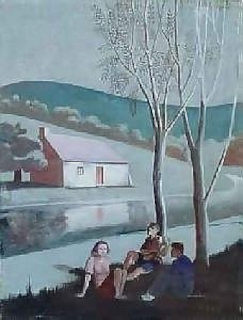
Birth of Cecil Ffrench Salkeld, Painter, Critic & Writer

Cecil Ffrench Salkeld, Irish painter, printmaker, critic and writer, is born in Assam, India on July 9, 1904.

Salkeld’s parents are Henry Lyde Salkeld, a member of the Indian Civil Service (ICS), and Blanaid Salkeld (née Mullen), a poet. He returns to Ireland with his mother in 1910 following the death of his father in 1909. He attends Mount St. Benedict’s, Gorey, County Wexford, and the Dragon School in Oxford, England. He wins a scholarship to Oundle School in Oundle, North Northhamptonshire, but returns to Dublin where he enters the Dublin Metropolitan School of Art in 1919 to study under Seán Keating and James Sleator. He marries Irma Taesler in Germany in 1922. They have two daughters, Celia and Beatrice. The latter marries Brendan Behan in 1954.

Salkeld works in tempera and oil, as well as etching and wood engraving. In 1921 he travels to Germany to study under Ewald Dulberg at the Kassell Kunstschule. He attends the Union of Progressive International Artists in Düsseldorf in May 1922, and is exhibited at the Internationale Kunstausstellung. Upon his return to Dublin in 1924, he holds his first solo exhibition in the Society of Dublin Painters gallery. He becomes a member of the Dublin Painters in 1927. With Francis Stuart, he co-edits the first two issues of To-morrow in 1924. His studio is in a converted labourer’s cottage at Glencree, County Wicklow. He also exhibits with the New Irish Salon and the Radical Painters’ Group.

Salkeld wins the 1926 Royal Dublin Society‘s Taylor scholarship, and has his first exhibited work with the Royal Hibernian Academy (RHA) in 1929. He lives in Berlin for a year in 1932. He exhibits in Daniel Egan’s Gallery in Dublin in 1935. He has a wide circle of literary friends, including Samuel Beckett and Flann O’Brien. In O’Brien’s At Swim-Two-Birds, the character of Michael Byrne is designed for Salkeld, reflecting his debilitating alcoholism. He also teaches at the Dublin Metropolitan School of Art, teaching artists such as Reginald Gray.

From 1937 to 1946 Salkeld runs a private press called Gayfield Press. This is co-founded with his mother, and operates from a garden shed at their home, 43 Morehampton Road. The press is a small Adana wooden hand press. He illustrates her 1938 The Engine Left Running, as well as Ewart Milne‘s Forty North Fifty West (1938) and Liam O’Flaherty‘s Red Barbara and Other Stories (1928). In 1951, he loans the press to Liam and Josephine Miller to found the Dolmen Press.

Salkeld’s most famous public work is his 1942 three-part mural in Davy Byrne’s pub. He is a co-founder of the Irish National Ballet School in the 1940s in his capacity as a pianist. In 1946 he is appointed an associate member of the RHA. In 1953 his play Berlin Dusk is staged at 37 Theatre Club, Dublin. During the 1950s he is a broadcaster with Radio Éireann as well as a director of cultural events for An Tóstal. He dies on May 11, 1969, in St. Laurence’s Hospital, Dublin.

The National Gallery of Ireland holds a portrait by Salkeld of his daughter, Celia.

(Pictured: “Figures In Moonlight” by Cecil Ffrench Salkeld, oil on canvas)


Leave a comment

Death of Father Michael Murphy

Fr. Michael Murphy, Irish Roman Catholic priest and United Irishmen leader during the Irish Rebellion of 1798, dies at the Battle of Arklow in Arklow, County Wicklow, on June 9, 1798.

Murphy is born in 1767. While his birthplace in Ireland is undetermined, various locations, such as Ballinoulart, Castleannesley or in Kilnew, County Wexford, are documented as possibilities. He is ordained a priest in 1785 at Wexford after completing hedge school in Oulart. His first parish is at Ballycanew, after Theology and Philosophy studies at the Irish College in Bordeaux in France. Murphy joins the Rebellion on May 27, 1798, following the vandalism of his church by Crown yeomen, despite a mostly pacifist stance by the church leadership.

Murphy proceeds toward battle at Gorey, Kilthomas Hill, then Ballyorril Hill where he meets with fellow priest Fr. John Murphy of Boolavogue. He is attacking a gun position on horseback at the Battle of Arklow on June 9, 1798, when he is killed by gunfire. His grave is at Castle Ellis.

(Pictured: Michael Murphy Monument in Arklow, County Wicklow)


Leave a comment

Birth of Nicholas “Nicky” Rackard, Irish Hurler

Nicholas “Nicky” Rackard, Irish hurler whose league and championship career with the Wexford senior team spans seventeen years from 1940 to 1957, is born on April 28, 1922, in Killanne, County Wexford. He establishes many championship scoring records, including being the top championship goal-scorer of all time with 59 goals. He is widely regarded as one of the greatest hurlers in the history of the game.

Rackard is the eldest son of five boys and four girls born to Robert (Bob) Rackard and Anastasia Doran, who had been married in 1918. He is introduced to sport by his father who had hoped he would become a cricketer. His uncle, John Doran, won an All-Ireland medal as a Gaelic footballer with Wexford in 1918 and it is hurling and Gaelic football that Rackard develops a talent for.

Rackard plays competitive hurling as a boarder at St. Kieran’s College in Kilkenny, County Kilkenny. Here he wins back-to-back Leinster Colleges Senior Hurling Championship medals in 1938 and 1939, however, an All-Ireland medal remains elusive. He later attends University College Dublin (UCD) where he studies to be a veterinary surgeon. In all, his studies take eight years to complete because of his huge commitment to his sporting exploits.

Rackard plays his club hurling with his local Rathnure club and enjoys much success. He wins his first senior county title in 1948. It was Rathnure’s first ever championship triumph. Two years later in 1950 he captures a second county title, a victory which allows him to take over the captaincy of the county senior team for the following year. He wins his third and final county medal in 1955.

Rackard makes his debut on the inter-county scene when he is selected for the Wexford minor panel. He is just out of the minor grade when he is selected for the Wexford senior team in 1940. Over the course of the next seventeen years, he wins two All-Ireland medals as part of the Wexford hurling breakthrough in 1955 and 1956. He also wins four Leinster Senior Hurling Championship medals, one National Hurling League medal and one Leinster Senior Football Championship medal as a Gaelic footballer. He plays his last game for Wexford in August 1957.

By the late 1940s, Rackard is a regular in the full-forward line on the Leinster inter-provincial team. Success comes in the twilight of his career and he claims his sole Railway Cup medal in 1956.

Rackard’s brothers, Billy and Bobby, also experience All-Ireland success with Wexford.

In retirement from playing Rackard becomes involved in team management and coaching. It is with the Wexford senior team that he enjoys his greatest successes as a selector when he helps the team secure the 1968 All-Ireland Senior Hurling Championship title.

Rackard is most famous for his scoring prowess and is the all-time top championship scorer at the time of his retirement from hurling. His private life is marred by periods of excessive drinking, which had started during his university studies, and eventually develops into alcoholism. After quitting drinking completely in 1970, he travels the country as a counsellor with Alcoholics Anonymous. In an interview in The Irish Press in 1975, he details his life as a recovering alcoholic and becomes one of the first sportspeople to break the taboo of alcoholism in Ireland.

Rackard death from cancer at St. Vincent’s Hospital in Dublin on April 10, 1976, sees a huge outpouring of grief amongst the hurling community. He is posthumously honoured by being named on the Hurling Team of the Century in 1984, however, he is sensationally omitted from the Hurling Team of the Millennium in favour of Ray Cummins. His scoring prowess has also earned him a place on the top ten list of all-time scoring greats. In 2005 the GAA further honours him by naming the Nicky Rackard Cup, the hurling competition for Division 3 teams, in his honour.

In 2006, a Wexford author, Tom Williams, writes a long-overdue biography of Rackard entitled Cuchulainn’s Son – The Story of Nickey Rackard. The same author also pens a now well-known song about Rackard many years earlier. It too is called Cuchulainn’s Son and has been recorded by various artists over the last 20 years and is a lament for the great sportsman.

In Wexford town, there is a statue to commemorate Rackard, erected in 2012.


Leave a comment

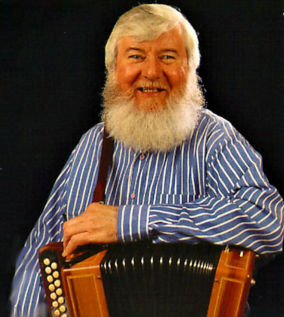
Birth of Joe Burke, Button Accordion Player

Joseph Burke, Irish musician noted for being a pre-eminent button accordion player, is born in Kilnadeema, south of Loughrea, County Galway, on April 11, 1939. He records and performs traditional Irish music for over half a century.

Burke starts playing traditional at age four and purchases his first accordion in the 1950s. He wins the All-Ireland Senior Accordion Championship in Thurles in 1959 and again in Boyle the following year. Together with fiddler Aggie Whyte, he wins the All-Ireland duet championship in 1962 in Gorey, County Wexford.

Burke co-founds the Leitrim Ceili Band with Padden Downey in 1956. Other members of the east Galway-based band, which wins All-Ireland Championships in 1959 and 1962, includes Irish flute players Paddy Carty, Ambrose Moloney and Tony Molloy, button accordionists Mick Darcy and Sean McGlynn, fiddlers Michael Joe Dooley, Paddy Doorhy, Aggie Whyte and Séamus Connolly, drummer Sean Curley and pianist Anne-Marie Courtney. The band tours in England and releases an LP on the New York-based Dublin label.

Burke first tours in the United States in 1961, and lives mainly in New York from 1962 to 1965, during which period he forms a musical partnership with fiddler Andy McGann. With McGann and pianist Felix Dolan, he records an LP, A Tribute to Michael Coleman, first released in 1966 on his own Shaskeen label. He records again with this trio, issuing The Funny Reel LP on the Shanachie Records label in 1979. Other musical collaborators over the years include Belfast fiddle great Sean McGuire, piper Michael Cooney, harpist Máire Ní Chathasaigh, fiddler Kevin Burke, pianist Charlie Lennon and his wife Anne Conroy Burke, whom he marries in 1990, on guitar and button accordion.

Burke’s first solo LP, Galway’s Own, is released in 1971. He also tours extensively for the next two decades, including with groups sponsored by Comhaltas Ceoltóirí Éireann. From 1988 to 1991, he lives in St. Louis, Missouri, where he has a musical residency at John D. McGurk’s Pub and hosts radio programmes at two stations, one of them the “Ireland in America” programme on KDHX. He represents Ireland in 1989 and 1992 at the International Accordion Festivals, in Montmagny, Quebec, along with accordion greats who include Cajun accordion player Marc Savoy and jazz accordionist Art Van Damme.

After residing in the United States from 1988 until 1991, Burke returns to Kilnadeema in 1992. There, he carries on teaching and performing music. He dies at the age of 81 on February 20, 2021, at Galway Hospice.

Burke is named RTɑs Traditional Musician of the Year in 1970. He goes on to win both the AIB Traditional Musician of the Year and the Lifetime Achievement Award from The Irish World in 1997. A Joe Burke Tribute Concert is held in April 1997 at the Town Hall Theatre in Galway, on his reception of the AIB award. Three years later, he receives an award in Musical Mastery from Boston College. He is later conferred Gradam an Chomhaltais in 2003.