On October 21, 2002, the Real Irish Republican Army (RIRA) pledges to continue their campaign of violence, ignoring a call by the prisoners in Portlaoise Prison to disband and confirm the organisation has split.
Hardliners on the outside, mostly from Northern Ireland, issue a statement warning people to stay away from British army barracks and police stations.
The caller to a newspaper in Derry says, “We warn all civilians to stay away from military installations and Crown Force personnel. A number of recent attacks have had to be aborted due to the presence of civilians in the vicinity. Anyone entering military installations does so at their own risk.”
No reference is made to a lengthy statement, issued over the previous weekend by prisoners in Portlaoise Prison, that calls for the “Army Council” to stand down.
The prisoners with the exception of three claim the present leadership’s “financial motivations far outweigh their political commitment.” The Real IRA, heavily involved in smuggling cigarettes, is estimated to amass nearly 5m a year. Nearly 40 prisoners are being held in Portlaoise at the time and a further 30 are in jail in Northern Ireland. Three are serving sentences in England.
In the statement, the organisation claims responsibility for a coffee-jar bomb attack on Castlederg Police Station in County Tyrone. They have also been blamed for a series of hoax bomb alerts in the centre of Belfast and at Belfast International Airport.
Michael Gallagher, whose son Aidan is one of 29 people, including a woman pregnant with twins, killed in the group’s bomb attack in Omagh in August 1998, says the statement is a clear message that the Real IRA are going to continue killing innocent people. “The only people who have decided to pursue a peaceful path are those who are locked up in jail and are powerless to do anything about it,” Gallagher says.
“It looks as if it is business as usual for the Real IRA even though there is obviously an internal split,” Gallagher adds.
The Real IRA statement is phoned with a recognised code word to the Derry Journal newspaper, where civilian workman David Caldwell was killed in a Real IRA bomb attack on a Territorial Army base in August 2002.
(From: “Real IRA vows to continue violence” by John Breslin, Irish Examiner, October 22, 2002)
In January 1969, while a student at the New University of Ulster, she joins a civil rights march from Belfast to Derry, organised by the People’s Democracy. At Burntollet Bridge, a few miles from Derry, the march is attacked by loyalists. She is struck on the head, knocked unconscious, falls into the river, and is brought to hospital suffering from a concussion. The march is echoed in her 1994 play After Easter.
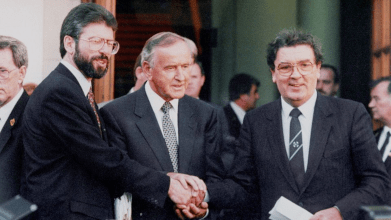
The Provisional Irish Republican Army (IRA) announces a ceasefire on August 31, 1994, after a quarter century of what it calls its “armed struggle” to get the British out of Northern Ireland. The statement comes just after 11:00 a.m. BST and says there will be a “complete cessation of military operations” from midnight and that the organisation is willing to enter into inclusive talks on the political future of the Province.
The statement raises hopes for peace and an end to 25 years of bombing and shooting that led to the deaths of more than 3,000 people. There is scepticism from the loyalist community and celebration in the Catholic areas of Belfast and Derry.
But loyalists are suspicious of the declaration and fear it may lead to a sell-out in which Northern Ireland’s position within the United Kingdom is under threat. The Ulster Unionist Party (UUP) MPJames Molyneaux says no moves towards talks should begin until the IRA has added the word “permanent” to the ceasefire declaration.
The announcement comes 18 months after secret talks began between the British Government and Irish republicans. It leads to the Anglo-Irish Downing Street Declaration in December 1993 which states that any change in the partition of Ireland can only come with the consent of those living north of the border. It also challenges republicans to renounce violence.
Ian Paisley, leader of the hardline Democratic Unionist Party (DUP), rejects the wording of the declaration and says it is an “insult to the people [the IRA] has slaughtered because there was no expression of regret.”
Seven weeks later, on October 13, the loyalist terrorist groups announce their own ceasefire. On December 9, British officials meet Sinn Féin representatives for their first formal talks in 22 years.
The IRA ceasefire ends on February 9, 1996, when it plants a huge bomb in the London Docklands. It kills two, injures more than 100 and causes more than £85m of damage.
A new ceasefire is finally announced in July 1997.
(Pictured: (L to R) Sinn Féin President Gerry Adams, Taoiseach Albert Reynolds and Social Democratic and Labour Party leader John Hume)
Scallon is born Rosemary Brown, the fifth of seven children of a King’s Cross railway station porter and trumpet player originally from Derry, Northern Ireland. When she is five, the family moves back to Derry where she grows up in the Creggan housing estate and Bogside. She attends St. Eugene’s Primary School and then enrolls at Thornhill College. A singing talent from childhood, she wins several local contests while also participating in local choirs and taking piano, violin and ballet lessons.
In the early 1960s Scallon forms a trio with two of her sisters, often performing at charity concerts organized by their father. When one sister leaves, the remaining duo lands a summer-long booking at the Palladium and a recording contract with Decca Records. Her other sister, however, leaves to join her new husband, a United States airman, in America. Stricken with stage fright, Scallon the solo singer manages to win a folk competition at the Embassy Ballroom with her eyes shut. The contest’s sponsor, teacher and music promoter Tony Johnston, helps her complete her equivalency degree and records a demo that convinces Decca Records to sign her on as a solo artist. She releases a single in 1967 that brings some attention from local TV and radio.
Performing under her school nickname “Dana,” Scallon becomes a fixture in Dublin‘s cabaret and folk clubs. She is crowned “Queen of Cabaret” and feted with a parade and a reception at Clontarf Castle on the Saturday before Easter 1968.
At the suggestion of Decca Record’s local agent, Phil Mitton, Scallon auditions for the Irish National Song Contest, a preliminary for the 1969 Eurovision competition. She reaches the finals in Dublin but comes in second.
RTÉ Television chief Tom McGrath invites Scallon back to compete the following year. She accepts even though she is preparing to retire from active performing to pursue teaching. The song, “All Kinds of Everything” by Derry Lindsay and Jackie Smith, is picked for her by McGrath and propels her to victory. She goes on to represent Ireland in the 1970 Eurovision contest, held in Amsterdam. She performs perched on a stool on stage and defeats England’s Mary Hopkin and Spain‘s Julio Iglesias to secure Ireland’s victory.
Scallon is given a hero’s welcome upon her return to Ireland, especially in Northern Ireland. “All Kinds of Everything” shoots to #1 on the Irish Singles Chart, as well as the UK Singles Chart. It is also successful in Australia, Austria, Germany, Israel, Malaysia, the Netherlands, New Zealand, Singapore, South Africa, Switzerland and Yugoslavia, on its way to passing 1 million sales. She quickly records an album, with orchestral accompaniment. Her follow-up single, “I Will Follow You,” fails to make much of a splash. Given the choice of giving up, she decides to fight for her recording career, and succeeds with Paul Ryan‘s “Who Put the Lights Out,” which spends eleven weeks on the UK charts.
In 1974 Scallon switches to GTO Records. Her first single on that label, “Please Tell Him That I Said Hello,” returns her to the top 10. Her 1975 holiday single “It’s Gonna be a Cold Cold Christmas” by Roger Greenaway and Geoff Stephens, reaches #4 and remains a classic. Now an established Irish singing star she appears in films and festivals and sells out a week of concerts at the London Palladium. She also maintains her “Queen of the Cabaret” reputation with regular appearances in top London clubs. The BBC gives her two shows of her own: a series called A Day with Dana in 1974 and four-part series of Wake Up Sunday in 1979. BBC Radio follows suit with a series of I Believe in Music in 1977.
Meanwhile, Scallon begins performing stage pantomime in a blockbuster production of Cinderella in Oxford. In September 1976, however, she is hospitalized with a non-malignant growth on her left vocal cord, requiring surgery. The single “Fairytale” is sustained in the charts with the publicity from her dire medical prognosis. The experience strengthens her religious faith. On October 5, 1978, she marries Damien Scallon, a hotel-owner from Newry, at St. Eugene’s Cathedral in Derry.
In 1979, recovered from her surgery, Scallon records a new album entitled The Girl is Back, which has modest success. Pope John Paul II‘s visit to Ireland that year inspires her to write a song based on his personal motto, “Totus Tuus,” which tops the Irish charts. Long associated with Christian causes and Sunday-morning programs, she and her husband look for opportunities to reach a broader market for Christian music and find one in the United States. They attend the National Religious Broadcasters conference in Washington, D.C. in 1980 and secure a contract with Word Records.
Scallon’s first album of Christian songs, Totally Yours, is released on Word Records in 1981. She continues to record pop music, including the 1982 album Magic and the official 1982 FIFA World Cup song for the Northern Ireland team, “Yer Man.” She also continues her stage career, starring in Snow White and the Seven Dwarfs at Hull and later in London’s West End and Wolverhampton. She tours the United States in 1984, including appearances at Billy Graham‘s Boston crusades. She pens an autobiography in 1985. She performs “Totus Tuus” before a packed Superdome crowd during John Paul II’s visit to New Orleans in 1987.
Also in 1987, after one of her husband’s hotels is damaged for the seventh time by a terrorist bomb, he takes a job managing retreats for EWTN and moves the family to Alabama. They rent a house in the Cherokee Bend area of Mountain Brook and enroll their children at Saint Rose Academy. Scallon is welcomed to the network as well, hosting the Say Yes and We Are One Body programs. She leaves Word Records and signs with Heart Beat Records for her later Catholic albums. In 1993 she again performs for the Pope at a World Youth Day event in Denver, Colorado.
Scallon is naturalized as a dual citizen of the United States and Northern Ireland in 1997 and moves back there a year later because she has been drafted as an independent candidate for President of Ireland. She garners 15% of the popular vote, finishing third in the race won by Mary McAleese, ahead of the Labour Party candidate. Most of her votes come from rural districts where conservative values are more strongly held.
In 1999 Scallon wins a seat on the European Parliament, representing Connacht-Ulster on a family values and anti-abortion platform. During her five-year term she opposes the development of a European constitution. She also speaks out against a 2001 proposal to amend the Irish constitution to legalize the “morning-after pill” and intrauterine contraceptive devices. With the support of the mainstream parties, the amendment is put to a popular referendum, which fails in 2002. That same year she is defeated in a campaign to represent Galway West in the Dáil Éireann, the lower house of the Irish parliament. In 2004 she fails to hold her seat in the European Parliament and also does not secure a nomination for President.
Leaving politics behind, Scallon joins a weight-loss challenge on RTÉ’s The Afternoon Show in 2005. In 2006 she competes with Ronan McCormack on Celebrity Jigs ‘n’ Reels, finishing second on the popular dance contest.
That same year, Scallon and her husband launch their own music label, DS Music Productions, and release a compilation of songs deidcated to John Paul II’s memory. That is followed by Good Morning Jesus: Prayers and Songs for Children of All Ages, which is featured in a special series on EWTN. Heart Beat Records files a lawsuit against DS Music Productions for alleged copyright violations.
In 2007 Scallon appears as a guest judge for Young Star Search, a Belfast CityBeat radio contest. In 2009 she is brought on as a judge for The All Ireland Talent Show. That same year she returns to EWTN as host of Dana and Friends.
The road and castle are on the northern bank of the Newry River, which marks the border between Northern Ireland and the Republic of Ireland. The Republic’s side of the river, the Cooley Peninsula in County Louth, is an ideal spot from which to launch an ambush. It is thickly wooded, which gives cover to the ambushers, and the river border prevents British forces from giving chase.
On the afternoon of August 27, a British Army convoy of one Land Rover and two four-ton lorries carrying soldiers of the 2nd Battalion, Parachute Regiment is driving from Ballykinlar Barracks to Newry. The British Army is aware of the dangers of using the stretch of road along the Newry River and often declares it out of bounds. However, they sometimes use it to avoid setting a pattern. At 4:40 p.m., as the convoy is driving past Narrow Water Castle, an 800-pound fertiliser bomb, hidden among bales of straw on a parked flatbed trailer, is detonated by remote control by IRA members watching from across the border in County Louth. The explosion catches the last lorry in the convoy, hurling it onto its side and instantly killing six paratroopers, whose bodies are scattered across the road. There are only two survivors amongst the soldiers traveling in the lorry, both of whom receive serious injuries. The lorry’s driver, Anthony Wood (19), is one of those killed. All that remains of his body is his pelvis, welded to the seat by the fierce heat of the blast.
According to the soldiers, immediately after the blast they are targeted by rifle fire from the woods on the Cooley Peninsula on the other side of the border, with this view supported by two part-time firefighters assisting the wounded. Shortly afterwards, the two IRA members arrested by the Garda Síochána and suspected of being behind the ambush, are found to have traces of gunsmoke residue on their hands and on the motorbike they are riding. The IRA’s first statement on the incident, however, denies that any shots had been fired at the troops, and according to Royal Ulster Constabulary (RUC) researchers, the soldiers might have mistaken the sound of ammunition cooking off for enemy gunfire. Nevertheless, at the official inquiry the soldiers declare on oath that they had been fired on.
The surviving paratroopers radio for urgent assistance, and reinforcements are dispatched to the scene by road. A rapid reaction unit is sent by Gazelle helicopter, consisting of Lieutenant Colonel David Blair, commanding officer of the Queen’s Own Highlanders, his signaler Lance Corporal Victor MacLeod, and army medics. Another helicopter, a Wessex, lands to pick up the wounded. Colonel Blair assumes command once at the site.
William Hudson, a 29-year-old from London, is killed by the British Army and his cousin Barry Hudson, a 25-year-old native of Dingle, is wounded when shots are fired across the Newry River into the Republic of Ireland about 3 km from the village of Omeath, County Louth.
The pair are partners in ‘Hudson Amusements’ and had been operating their amusements in Omeath for the duration of the Omeath Gala. When the first explosion is heard across the Lough, the pair go down to the shore to see what is unfolding. The pair makes their way to Narrow Water on the southern side of the border to get a better view of what is happening on the northern side. Barry Hudson is shot in the arm and as he falls to the ground he sees his cousin, who is the son of a coachman at Buckingham Palace, fall to the ground, shot in the head. He dies almost immediately.
The IRA had been studying how the British Army behaves after a bombing and correctly predicts that they would set up an incident command point (ICP) at the stone gateway on the other side of the road. At 5:12 p.m., thirty-two minutes after the first explosion, another 800-pound bomb hidden in milk pails explodes at the gateway, destroying it and hurling lumps of granite through the air. It detonates as the Wessex helicopter is taking off carrying wounded soldiers. The helicopter is damaged by the blast but does not crash.
The second explosion kills twelve soldiers, ten from the Parachute Regiment and the two from the Queen’s Own Highlanders. Lieutenant Colonel Blair is the second Lieutenant Colonel to be killed in the Troubles up until then, following Lieutenant Colonel Corden-Lloyd of the 2nd Battalion Royal Green Jackets in 1978. Only one of Colonel Blair’s epaulettes remains to identify him as his body had been vaporised in the blast. The epaulette is taken from the scene by BrigadierDavid Thorne to a security briefing with Prime MinisterMargaret Thatcher to “illustrate the human factor” of the attack. Mike Jackson, then a major in the Parachute Regiment, is at the scene soon after the second explosion and later describes seeing human remains scattered over the road, in the water and hanging from the trees. He is asked to identify the face of his friend, Major Peter Fursman, still recognisable after it had been ripped from his head by the explosion and recovered from the water by divers from the Royal Engineers.
Press photographer Peter Molloy, who arrives at the scene after the first explosion, comes close to being shot by an angry paratrooper who sees him taking photographs of the dead and dying instead of offering to help the wounded. The soldier is tackled by his comrades. Molloy says, “I was shouted at and called all sorts of things, but I understood why. I had trespassed on the worst day of these fellas’ lives and taken pictures of it.”
The Warrenpoint ambush is a victory for the IRA. It is the deadliest attack on the British Army during the Troubles and the Parachute Regiment’s biggest loss since World War II, with sixteen paratroopers killed. General Sir James Glover, Commander of British forces in Northern Ireland, later says it was “arguably the most successful and certainly one of the best planned IRA attacks of the whole campaign.” The ambush happens on the same day that Lord Mountbatten, a prominent member of the British royal family, is killed by an IRA bomb aboard his boat at Mullaghmore, County Sligo, along with three others.
Republicans portray the attack as retaliation for Bloody Sunday in 1972 when the Parachute Regiment shot dead 13 unarmed civilians during a protest march in Derry. Graffiti appears in republican areas declaring “13 gone and not forgotten, we got 18 and Mountbatten.” The day after the Mountbatten and Warrenpoint attacks, the Ulster Volunteer Force (UVF) retaliates by shooting dead a Catholic man, John Patrick Hardy (43), at his home in Belfast‘s New Lodge estate. Hardy is targeted in the mistaken belief that he is an IRA member.
Very shortly after the ambush, IRA volunteers Brendan Burns and Joe Brennan are arrested by the Gardaí. They are stopped while riding a motorbike on a road opposite Narrow Water Castle. They are later released on bail due to lack of evidence. Burns dies in 1988 when a bomb he is handling explodes prematurely. In 1998, former IRA member Eamon Collins claims that Burns had been one of those who carried out the Warrenpoint ambush. No one has ever been criminally charged.
According to Toby Harnden, the attack “drove a wedge” between the Army and the RUC. Lieutenant General Sir Timothy Creasey, General Officer Commanding Northern Ireland, suggests to Margaret Thatcher that internment should be brought back and that liaison with the Gardaí should be left in the hands of the military. Sir Kenneth Newman, the RUC Chief Constable, claims instead that the British Army practice since 1975 of supplying their garrisons in south County Armagh by helicopter gives too much freedom of movement to the IRA. One result is the appointment of Sir Maurice Oldfield to a new position of Co-ordinator of Security Intelligence in Northern Ireland. His role is to co-ordinate intelligence between the military, MI5 and the RUC. Another is the expansion of the RUC by 1,000 members. Tim Pat Coogan asserts that the deaths of the 18 soldiers hastens the move to Ulsterisation.
Although slightly smaller than their opponents, Coote’s troops consist largely of veterans from the New Model Army and have three times the number of cavalry. After an hour of fighting, the Ulster army collapses and flees, losing most of its men, officers, weapons, and supplies. The battle secures the north of Ireland for the Commonwealth and clears the way to complete the Cromwellian conquest of Ireland.
In September 1643, Ormond agrees a truce, or ‘Cessation’, with the Confederation, freeing his troops for use in England against Parliament in the First English Civil War. Some Irish Protestants object, and switch sides, including Sir Charles Coote, who becomes Parliamentarian commander in Connacht. Charles surrenders in 1646, while a Covenanter/Royalist uprising is quickly suppressed in the 1648 Second English Civil War. On January 17, 1649, the Confederation allies with Ormond’s Royalists. Following the execution of Charles on January 30, they are joined by the Laggan Army and remaining Scots troops in Ulster.
There are various reasons for this. The Covenanter government, who provide support for Scottish settlers in Ulster, consider Oliver Cromwell and other leaders of the new Commonwealth of England dangerous political and religious radicals. As Scots, they object to the execution of their king by the English. As Presbyterians, they view monarchy as divinely ordained, making regicide also sacrilegious, and they transfer their allegiance to his son, Charles II of England.
However, this is offset by a split within the Confederation, between Catholic landowners who want to preserve the position prevailing in 1641, and those like Ó Néill, whose estates had been confiscated in 1607. As a result, he agrees a truce with Coote, and refuses to join the Alliance, depriving them of their most effective fighting force in the north. Despite this, by late July, Ormond’s combined Royalist/Confederate army control most of Ireland.
Ormond’s defeat at the Battle of Rathmines on August 2 allows Cromwell and an army of 12,000 to land in Dublin unopposed. After capturing Drogheda on September 11, his main force heads south towards Wexford. Colonel Robert Venables is sent north with three regiments, or around 2,500 men, to take control of Ulster. Munro’s garrisons surrender with minimal resistance, and by the end of September, Venables has occupied Dundalk, Carlingford, Newry, and Belfast. These are accompanied by the mass expulsion of Scots settlers, as punishment for their defection. When Coote captures Coleraine on September 15, he massacres the largely Scottish garrison.
Ó Néill’s death in November 1649 and Coote’s defeat of a combined Royalist/Covenanter force at Lisnagarvey in December leaves the Catholic Ulster army as the only remaining opposition to the Commonwealth in the north. At a meeting at Belturbet on March 18, 1650, Heber MacMahon, Catholic Bishop of Clogher, is appointed in his place. Although a leading figure in the Confederation, MacMahon has no military experience and opposes the alliance with Ormond’s Royalists. His election is essentially a compromise between supporters of Henry, Ó Néill’s son, and his cousin, Felim Ó Néill.
By May 20, MacMahon and his deputy Richard O’Farrell have assembled an army near Loughgall, with 5,000 infantry and 1,000 cavalry. They lack both arms and artillery but after Ormond promises to send these from Connacht, they march north, intending to divide Coote’s troops at Derry from those commanded by Venables at Carrickfergus in the east. To do this, MacMahon establishes a line of garrisons with its northern end at Ballycastle, then moves south, intending to cross the River Foyle just below Lifford and maintain contact with Ormond through Ballyshannon.
At this point, Coote has only 1,400 men and seems vulnerable. The Irish cross the river on June 2, beating off an attack by the Commonwealth cavalry and occupy Lifford, where they spend the next two weeks and Coote withdraws to Derry. However, the supplies promised by Ormond fail to arrive, leaving MacMahon short of provisions, while on June 18 Coote is joined by an additional 1,000 infantry under Colonel Roger Fenwick sent from Belfast. At the same time, detaching men for the new garrisons leave MacMahon with around 4,000 infantry and 400 cavalry.
MacMahon now relocates to the Doonglebe/Tullygay Hill overlooking the pass at Scariffhollis, a strong defensive position two miles west of Letterkenny on the River Swilly. When Myles MacSweeney takes his regiment off to recapture his ancestral home at Doe Castle, it leaves the two armies roughly equal in number. However, Coote’s men are well equipped veterans, and he has three times the number of cavalry. When he appears at Scariffhollis on June 21, MacMahon’s subordinates advise him not to risk battle. They argue Coote will soon be forced to retreat due to lack of provisions, allowing the Irish to withdraw into Connaught in good order.
For reasons that are still debated, MacMahon ignores this advice and on the morning of June 21, 1650, orders his troops down from their mountain camp to give battle. Coote later reports that although the ground is still “excessive bad,” it allows him to use his cavalry, although the initial fighting is conducted by the opposing infantry.
The Irish army is drawn up in a large mass formation with 200–300 musketeers in front, which may have been due to their shortage of ammunition. The battle begins when Colonel Fenwick leads a detachment of 150 men against the advance guard. After an exchange of fire, during which Fenwick is mortally wounded, it turns into a hand-to-hand struggle. As Coote feeds in reinforcements, the Irish musketeers fall back on their main force, which has no room to manoeuvre and is now subjected to devastating volleys at close range. After an hour of bitter conflict, the Irish are out of ammunition and at this point the Parliamentarian cavalry charges their flank. Thrown into disarray, the Irish break and run.
In most battles, flight is the point at which the defeated suffer the heaviest casualties, exacerbated by the lack of Irish cavalry and the brutal nature of the war. Most of the infantry dies on the battlefield or in the pursuit that follows, including Henry Ó Néill and many officers, some of whom are killed after surrendering. Estimates of the Irish dead range from 2,000 – 3,000, while Coote loses around 100 killed or wounded.
MacMahon escapes with 200 horse but is captured a week later and executed. Phelim Ó Néill and O’Farrell make it to Charlemont, which is besieged by Coote and surrenders on August 14. With the exception of a few scattered garrisons, this ends fighting in the north. Limerick is taken by Hardress Waller in October 1651, and the war ends when Galway surrenders to Coote in May 1652.
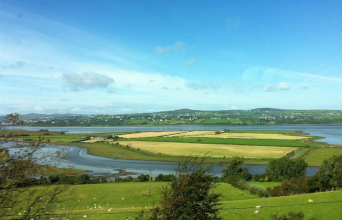
(Pictured: A view of the mouth of River Swilly at Lough Swilly, Letterkenny, County Donegal)
William of Orange, King of Holland, and recently declared King William III of England, arrives with his fleet in Belfast on June 14, 1690. He remains for twelve days, departing on June 26. For his part he likes what he sees. “This country is worth fighting for,” he says.
William’s departure from London is held up by parliamentary business until the end of May, when he announces that he can wait no longer and adjourns Parliament. He sets out early in the morning of June 4, reaching Northampton before nightfall. On Sunday, June 8, he attends divine service in Chester Cathedral and goes on to inspect the ships at Hoylake on the tip of the Wirral Peninsula.
For two days the wind is contrary, but on June 11 he embarks on board the yacht “Mary” with a fleet escorted by Sir Cloudesley Shovell‘s squadron. On June 14 the hills of Ireland come in sight and in the afternoon the fleet casts anchor off Carrickfergus. He is rowed ashore in the Rear Admiral’s barge and at about 3:30 p.m. lands at the Old Quay under the shadow of the great Norman Castle.
The Garrison of the Castle has drawn up a Guard of Honour and the townspeople add their applause. The chosen spokesman is a Quaker, whose principles forbid him to doff his hat or use such titles as Sir and Majesty. He gets around the difficulty by taking off his hat and laying it on a stone and then stepping forward and saying “William, thou art welcome to thy Kingdom” which pleases the King so much that he replies, “You are the best-bred gentleman I have met since I came to England.” With these words he mounts his horse and sets off for Belfast.
Halfway along the shore is the little port of Whitehouse, where most of the army disembarks. The Commander-in-Chief, Frederick Schomberg, 1st Duke of Schomberg, and his senior commanders are waiting here to welcome the King. To cover the disembarkation, earthworks have been thrown up by the engineers at Fort William and garrisoned by troops ready for action.
In 1690 Belfast consists of about 300 houses in five streets. It has two churches, the Parish Church, where St. George’s Church still stands in the High Street, and the Presbyterian Meeting House in Rosemary Lane. The town had been surrounded by a rampart in 1642 and had been captured by Colonel Robert Venebles for Oliver Cromwell after a four-day siege and an assault on the North Gate in 1649.
It is at the North Gate that King William enters Belfast where North Street now crosses Royal Avenue. Here he is welcomed by the magistrates and burgesses in their robes and by the Rev. George Walker, now Bishop-elect of Derry. A Royal Salute is fired from the Castle and is echoed and re-echoed by the guns which Schomberg had placed at wide intervals for the purpose of conveying signals from post to post. Wherever it is heard it is known that King William has come. Before midnight all the heights of Antrim and Down are blazing with bonfires.
The next day being Sunday, William attends church at the Corporation Church, now St. George’s Church. On Monday, June 16, addresses of loyalty are presented on behalf of the Church of Ireland and Presbyterian Church clergy, the civic authorities of the city of Londonderry, the town of Belfast and by the Sheriffs, Justices of the Peace and Gentlemen of the Counties of Down and Antrim. The next two days are spent in military preparation.
In the previous season Schomberg had conducted a slow and cautious campaign but William says he has not come to Ireland to let the grass grow under his feet. He orders a general muster of the army in the Parish of Aghaderg which includes Scarvagh and on Thursday, June 19, begins his southward march from Belfast Castle.
The line of march continues along Upper Malone by the Old Coach Road and past the ruins of both Drumbeg and Lambeg Parish Churches which had been burned down in 1641. William reaches Schomberg’s headquarters in Lisburn Castle for lunch on the same day that he left Belfast Castle. The afternoon and evening are spent inspecting troops on Blaris Moor, and then on to Hillsborough Castle for the night.
The cavalcade moves on through the little round hills of County Down, crosses the Upper Bann between Huntly and Ballievey by ford over the hill of Banbridge and on to the rendezvous on the northwest of Loughbrickland.
After the disappointments of the previous season and the appalling loss of life through disease, Schomberg had dispersed his army into winter quarters all over Ulster. The Derry and Enniskillen men had gone home to pick up the threads of their lives. Now the farmers among them have the crop in and are recalled to the colours and ready to be reviewed. There are four regiments of Enniskillen men – Wynns, Tiffins, Lloyds and Cunninghams, one of foot and three of horse. There is only one regiment of Derry men, St. John’s, commanded by Mitchelburne with Rev. George Walker as chaplain.
On June 22, William sits in the saddle for hours reviewing his 36,000 men. Marching past are 10,000 Danes, some of whom came from Norway and Sweden, and even Finland, 7,000 Dutch and Brandenburgers, 2,000 French Huguenots, 11,000 English and Scots, 800 Derrymen, 4,500 Inniskilleners and two companies from Bandon, County Cork.
On June 24, an advance party reaches beyond Newry to the edge of Dundalk and brings intelligence that the deposed King James II has fallen back on Ardee. The following day the main army advances to Newry and camps on the side of a hill. On June 25, with the King at their head, wearing an Orange colour sash, they go through the Moyry Gap and pass out of Ulster en route to the Boyne.
There are no reports of any casualties and army technical experts are at the scene shortly after the blast.
Gregory Campbell, security spokesman for the anti-agreement Democratic Unionist Party, visits the scene and says the blast bears similarities to an incident at Ballykelly, twelve miles away, in February 2000. He adds, “In Ballykelly there was a breach of the security fence, with the bomb planted near sleeping quarters. Here it was beside a former guardhouse. It appears to have been outside the perimeter.”
Campbell also claims that in recent months the base’s watchtowers had not been manned. “I get the impression that security has become a bit lax since the ceasefire,” he says. “This is confirmation of what we all knew was coming, a determined effort by paramilitary groups.”
Campbell continues, “When you look at the past few months it is very obvious that these groups – if they are splinter groups, if they are people who are leaving the Provisional IRA to join these dissidents or if the Provisional IRA is giving a wink and a nod to these dissidents – it is as plain as the nose on your face these people are developing terrorist capabilities.”
“When there is a device at a security cordon and another device inside another camp 12 miles down the road from here it is very obvious they are working towards a major attack with loss of life. Within a few months we are going to be faced with a major onslaught,” Campbell adds.
Meanwhile, Ulster Unionist Party (UUP) leader David Trimble, speaking in advance of a House of Commons debate warning of damaging consequences if the government presses on with moves to rename the Royal Ulster Constabulary, says it appears that the blast at the barracks in Derry is part of a wider campaign of low level terrorist activity by dissident republicans. Speaking on BBC Radio Trimble says, “There have been a number of incidents recently which have been attributed to dissident republicans. This may be another one. And there is reason to believe that dissident republicans are trying to launch a sustained campaign.”
Seven people are killed in the explosion, including two members of the Royal Ulster Constabulary (RUC), who say they had evacuated people to what was considered to have been a safe area following misleading telephone calls, which had originally placed the device in a nearby street. The Provisional IRA Belfast Brigade admits responsibility for the bomb, which also injures 148 people, but claims that the security forces had deliberately misrepresented the warnings in order to maximise the casualties. This is one of the first car bombs the IRA uses in their armed campaign.
On Monday, March 20, 1972, at 11.45 a.m., a local carpet dealer receives a telephone call warning that a bomb will explode in Belfast city centre’s Church Street which is crowded with shoppers, office workers on lunch breaks, and schoolchildren. British Army troops and the RUC are alerted and immediately begin to evacuate the people into nearby Lower Donegall Street. The second call to The Irish News newspaper seven minutes later also gives Church Street as the location for the device. A final call comes at 11:55 a.m. advising theNews Letter newspaper that the bomb is instead placed outside its offices in Lower Donegall Street where the crowds have been sent. Thus, the warning arrives too late for the security forces to clear the street. Staff working inside the News Letter building are told by the caller that they have 15 minutes in which to leave the building, but they never have a chance to evacuate.
At 11:58 a.m. a 100-pound gelignite bomb explodes inside a green Ford Cortina parked in the street outside the offices of the News Letter, shaking the city centre with the force of its blast, and instantly killing the two RUC constables, Ernest McAllister (31) and Bernard O’Neill (36), who had been examining the vehicle. The remains of the two policemen are allegedly found inside a nearby building. Minutes earlier they had been helping to escort people away from Church Street.
The explosion sends a ball of flame rolling down the street and a pall of black smoke rising upward. The blast wave rips into the crowds of people who had run into Donegall Street for safety, tossing them in all directions and killing another four men outright: Ernest Dougan (39), James Macklin (30), Samuel Trainor (39) and Sydney Bell (65). Trainor is also an off-duty Ulster Defence Regiment (UDR) soldier and a member of the Orange Order. A seriously wounded pensioner, Henry Miller (79) dies in hospital on April 5. Most of the dead are mutilated beyond recognition. With the exception of Constable O’Neill, who is a Catholic, the other six victims are Protestants.
The explosion blows out all the windows in the vicinity, sending shards of glass into people’s bodies as they are hit by falling masonry and timber. The ground floor of the News Letter offices and all buildings in the area suffer heavy damage. The News Letter library in particular sustains considerable damage with many priceless photographs and old documents destroyed. Around the blast’s epicentre, the street resembles a battlefield. About one hundred schoolgirls lay wounded on the rubble-strewn, bloody pavement covered in glass and debris, and screaming in pain and fright. A total of 148 people are injured in the explosion, 19 of them seriously. Among the injured are many of the News Letter staff.
One of the wounded is a child whose injuries are so severe a rescue worker at the scene assumes the child has been killed. A young Czech art student, Blanka Sochor (22), receives severe injuries to her legs. She is photographed by Derek Brind of the Associated Press as a British Paratrooper holds her in his arms. Passerby Frank Heagan witnesses the explosion and comes upon what is left of two binmen who had been “blown to pieces.” He adds that “there was blood everywhere and people moaning and screaming. The street was full of girls and women all wandering around.” The injured can be heard screaming as the ambulances transport them to hospital. Emergency amputations are performed at the scene.
While the security forces and firemen pull victims from the debris in Donegall Street, two more bombs go off elsewhere in the city centre, however, nobody is hurt in either attack. On the same day in Derry, a British soldier, John Taylor, is shot dead by an IRA sniper. In Dublin, Chief of Staff of the Irish Republican Army, Seán Mac Stíofáin, suffers burns to his face and hands after he opens a letter bomb sent to him through the post. Cathal Goulding, head of the Official Irish Republican Army, also receives a letter bomb but escapes injury by having dismantled the device before it exploded.
This is amongst the first car bombs used by the Provisional IRA during The Troubles in its militant campaign to force a British military withdrawal and reunite the six counties of Northern Ireland with the rest of the island of Ireland. It is part of the IRA’s escalation of violence to avenge the Bloody Sunday killings in which 13 unarmed Catholic civilian men were killed by the British Army’s Parachute Regiment when the latter opened fire during an anti-internment demonstration held in Derry on January 30, 1972.
The bombing is carried out by the North Belfast unit of the Provisional IRA’s Third Battalion Belfast Brigade. The OC of the Brigade at that time is the volatile Seamus Twomey, who orders and directs the attack.
On March 23, the IRA admits responsibility for the bomb with one Belfast Brigade officer later telling a journalist, “I feel very bad when the innocent die.” The IRA, however, tempers the admission by claiming that the caller had given Donegall Street as the correct location for the bomb in all the telephone calls and that the security forces had deliberately evacuated the crowds from Church Street to maximise the casualties. The IRA’s official statement claiming responsibility for the blast is released through the Irish Republican Publicity Bureau.
The IRA follows the Donegall Street attack two days later with a car bomb at a carpark adjacent to the Belfast Great Victoria Street railway station and close to the Europa Hotel. Seventy people are treated in hospital for injuries received mainly by flying glass, but there are no deaths. The blast causes considerable damage to two trains, parked vehicles, the hotel, and other buildings in the area.
Although many members of the Provisional IRA are rounded up by police in the wake of the Donegal Street attack, none of the bombers are ever caught nor is anyone ever charged in connection with the bombing.
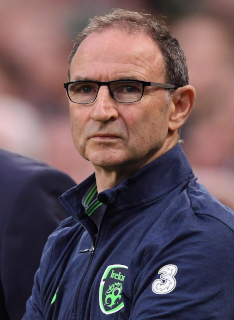
O’Neill becomes Republic of Ireland manager in 2013 and leads them to qualification for the 2016 UEFA European Football Championship for the third time in the nation’s history, beating the reigning world champions, Germany, in the process. He leaves the role with assistant Roy Keane by “mutual agreement” in November 2018. He is appointed as Nottingham Forest manager on January 15, 2019. He guides the club to a ninth-place finish in the Championship. However, he is sacked as manager on June 28, 2019, after reportedly falling out with some of the senior first team players.
In 2002, Norwich supporters voted O’Neill into the club’s Hall of Fame. He is awarded an OBE for services to sport in 2004. He is awarded the Nottingham Lifetime Achievement Award on November 3, 2013 for his services to football and achievements with Nottingham Forest.






 seamus dubhghaill