seamus dubhghaill

Promoting Irish Culture and History from Little Rock, Arkansas, USA


Leave a comment

Laying of the Foundation Stone of Parliament House

parliament-house

The foundation stone of Parliament House in College Green is laid on February 3, 1729, by Thomas Wyndham, 1st Baron Wyndham, the Lord Chancellor of Ireland. Parliament House is initially home to the Parliament of Ireland and later houses the Bank of Ireland. It is the world’s first purpose-built bicameral parliament house. The current parliament building is Leinster House.

The building is home to the two Houses of Parliament, serving as the seat of both chambers, the House of Lords and House of Commons, of the Parliament of the Kingdom of Ireland for most of the 18th century until that parliament is abolished by the Acts of Union 1800, when Ireland becomes part of the United Kingdom of Great Britain and Ireland.

In the 17th century, parliament settles at Chichester House, a town house in Hoggen Green (later College Green) formerly owned by Sir George Carew, Lord President of Munster and Lord High Treasurer of Ireland, which had been built on the site of a nunnery disbanded by King Henry VIII at the time of the dissolution of the monasteries. Carew’s house, named Chichester House after its later owner Sir Arthur Chichester, is a building of sufficient importance to have become the temporary home of the Kingdom of Ireland’s law courts during the Michaelmas law term in 1605. Most famously, the legal documentation facilitating the Plantation of Ulster is signed there on November 16, 1612.

Chichester House is in a dilapidated state, allegedly haunted and unfit for official use. In 1727 parliament votes to spend £6,000 on a new building on the site. It is to be the world’s first purpose-built two-chamber parliament building.

The then ancient Palace of Westminster, the seat of the English before 1707 and, later, British Parliament, is a converted building. The House of Commons‘s odd seating arrangements is due to the chamber’s previous existence as a chapel. Hence MPs face each other from former pews.

The design of the new building, one of two purpose-built Irish parliamentary buildings (along with Parliament Buildings, Stormont), is entrusted to an architect, Edward Lovett Pearce, who is a member of parliament and a protégé of the Speaker of the Irish House of Commons, William Conolly of Castletown House. During construction, Parliament moves into the Blue Coat Hospital on Dublin‘s Northside.

The original, domed House of Commons chamber is destroyed by fire in the 1790s, and a less elaborate new chamber, without a dome, is rebuilt in the same location and opened in 1796, four years before the Parliament’s ultimate abolition.

Pearce’s designs come to be studied and copied both at home and abroad. The Viceregal Apartments in Dublin Castle imitate his top-lit corridors. The British Museum in Bloomsbury in London copies his colonnaded main entrance. His impact reaches Washington, D.C., where his building, and in particular his octagonal House of Commons chamber, is studied as plans are made for the United States Capitol building. While the shape of the chamber is not replicated, some of its decorative motifs are, with the ceiling structure in the Old Senate Chamber and old House of Representatives chamber (now the National Statuary Hall) bearing a striking resemblance to Pearce’s ceiling in the House of Commons.

(Pictured: Architectural drawing of the front of Parliament House by Peter Mazell based on the drawing by Rowland Omer, 1767)


Leave a comment

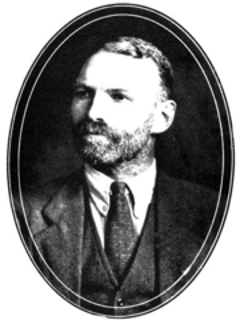
Birth of William X. O’Brien, Politician & Trade Unionist

william-x-obrien

William X. O’Brien, politician and trade unionist, is born on January 23, 1881, in Clonakilty, County Cork. He is christened “John William.”

O’Brien moves with his family to Dublin in 1897 and quickly becomes involved in the Irish Socialist Republican Party (ISRP). He is described as “a very significant figure in the ISRP” by ISRP historian David Lynch. He is a member of the Socialist Party of Ireland, serving on its executive.

A close friend and associate of James Connolly, O’Brien helps establish the Irish Transport and General Workers’ Union (ITGWU) in 1909 and is instrumental in the Dublin lock-out strike in 1913.

A member of the Irish Neutrality League and Anti-Conscription Committee during World War I, O’Brien is interned on several occasions by the Dublin Castle government. During one of these instances, he stands in the 1920 Stockport by-election but is refused a release to campaign in it.

With the formation of the Irish Free State, O’Brien is elected as Teachta Dála (TD) for Dublin South at the 1922 general election, and again for Tipperary in June 1927 and again in 1937.

An important figure in the Labour Party in Ireland in its formative days, O’Brien resists James Larkin‘s attempt to gain control of the Party on release from prison. Taking Larkin to court over his occupation of ITGWU headquarters, the Larkin-O’Brien feud results in a split within the labour and trade union movements, and the formation of the Irish Congress of Trade Unions.

In 1930, O’Brien seeks to have Leon Trotsky granted asylum in Ireland, but the head of the Free State government, W. T. Cosgrave, refuses to allow it.

Active in politics and the trade union movement into his 60s, O’Brien retires in 1946 and dies on October 31, 1968.


Leave a comment

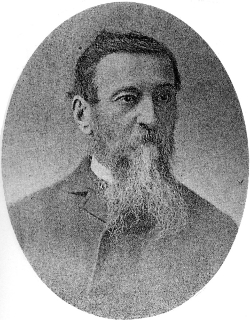
Birth of Thomas Clarke Luby, Irish Revolutionary

thomas-clarke-luby

Thomas Clarke Luby, Irish revolutionary, author, journalist and one of the founding members of the Irish Republican Brotherhood, is born in Dublin on January 16, 1822.

Luby is the son of a Church of Ireland clergyman from Templemore, County Tipperary, his mother being a Catholic. He is educated at Trinity College Dublin where he studies law and puts in the necessary number of terms in London and Dublin where he acquires a reputation as a scholar and takes his degree. He goes on to teach at the college for a time.

Luby supports the Repeal Association and contributes to The Nation newspaper. After the breach with Daniel O’Connell, he joins the Young Irelanders in the Irish Confederation. He is deeply influenced by James Fintan Lalor at this time. Following the suppression of the Young Ireland Rebellion of 1848, he with Lalor and Philip Gray attempt to revive the fighting in 1849 as members of the secret Irish Democratic Association. This, however, ends in failure.

In 1851 Luby travels to France, where he hopes to join the French Foreign Legion to learn infantry tactics but finds the recruiting temporarily suspended. From France he goes to Australia for a year before returning to Ireland. From the end of 1855 he edits the Tribune newspaper founded by John E. Pigot who had been a member of The Nation group. During this time, he remains in touch with the small group of ’49 men including Philip Gray and attempts to start a new revolutionary movement. Luby’s views on social issues grow more conservative after 1848 which he makes clear to James Stephens whom he meets in 1856.

In the autumn of 1857 Owen Considine arrives with a message signed by four Irish exiles in the United States, two of whom are John O’Mahony and Michael Doheny. The message conveys the confidence they have in Stephens and asks him to establish an organisation in Ireland to win national independence. Considine also carries a private letter from O’Mahony to Stephens which is a warning, and which is overlooked by Luby and Stephens at the time. Both believe that there is a strong organisation behind the letter, only later to find it is rather a number of loosely linked groups. On December 23 Stephens dispatches Joseph Denieffe to America with his reply which is disguised as a business letter dated and addressed from Paris. In his reply, Stephen’s outlines his conditions and his requirements from the organisation in America.

On March 17, 1858, Denieffe arrives in Dublin with the acceptance of Stephens’s terms by the New York Committee and the eighty pounds. On that very evening the Irish Republican Brotherhood is established in Peter Langan’s timberyard in Lombard Street.

In mid-1863 Stephens informs his colleagues he wishes to start a newspaper, with financial aid from O’Mahony and the Fenian Brotherhood in America. The offices are established at 12 Parliament Street, almost at the gates of Dublin Castle. The first issue of the Irish People appears on November 28, 1863. The staff of the paper along with Luby are Charles J. Kickham and Denis Dowling Mulcahy as the editorial staff. Jeremiah O’Donovan Rossa and James O’Connor have charge of the business office, with John Haltigan being the printer. John O’Leary is brought from London to take charge in the role of Editor.

On July 15, 1865, American-made plans for a rising in Ireland are discovered. Superintendent Daniel Ryan, head of the G Division of the Dublin Metropolitan Police at Dublin Castle, has an informer within the offices of the Irish People who supplies him with an “action this year” message on its way to the IRB unit in Tipperary. With this information, Ryan raids the offices of the Irish People on Thursday, September 15, followed by the arrests of Luby, O’Leary and O’Donovan Rossa. Kickham is caught after a month on the run. Stephens is also caught with the support of Fenian prison warders. The last number of the paper is dated September 16, 1865.

After his arrest and the suppression of the Irish People, Luby is sentenced to twenty years of penal servitude. He is released in January 1871 but is compelled to remain away from Ireland until the expiration of his sentence.

Upon his release Luby goes first to the Continent and later settles in New York City. He lectures all over the country for years and writes for a number of Irish newspapers on political topics. At the memorial meeting on the death of John Mitchel, he delivers the principal address in Madison Square Garden.

Thomas Clarke Luby dies at 109½ Oak Street, Jersey City, New Jersey of paralysis, on November 29, 1901, and is buried in a grave shared with his wife in Bayview Cemetery in Jersey City. His epitaph reads: “Thomas Clarke Luby 1822–1901 He devoted his life to love of Ireland and quest of truth.”


Leave a comment

The Bottle Riot

king-william-of-orange-monument

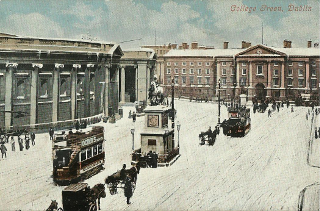
On December 14, 1822, a “bottle riot” takes place at a performance of Oliver Goldsmith’s She Stoops to Conquer at the Theatre Royal in Dublin. Among those in attendance is the Lord Lieutenant of Ireland, Richard Wellesley, the brother of the Duke of Wellington. Wellesley is quite unpopular at the time among Orange Order members in the city, owing to what they perceive as his role in stopping an annual ceremony at the statue of King William of Orange on College Green, and other perceived concessions to the Catholic population.

The statue is the location for annual rituals organised by loyalist elements in the city, with events held in July and November being flashpoints on the Dublin calendar. Heavily criticised by Daniel O’Connell and other nationalist voices, Dublin Castle distances itself from the ceremonies, but it is the eventual banning of the November ceremony which infuriates the Orange Order into action.

Following clashes at the event in July 1822, a decision is made by Marquess Wellesley, in his capacity as Lord Lieutenant, to seek a ban against the November event. A heavy military presence prevents the traditional loyalist display. This decision causes great resentment towards Wellesley from loyalists in the city, as would other actions such as appointing a Catholic lawyer to a position of importance in the courts. A visit by him to the Theatre Royal is seen as an opportunity to show that discontent. The Theatre Royal on Hawkins Street is relatively new at the time, having only opened the previous year. The announcement that the Lord Lieutenant would be attending the theatre causes considerable excitement in the city.

Six men meet in a tavern on Wednesday, December 11, all members of the Orange Order. John and George Atkinson, James Forbes, William Graham and Henry and Matthew Handwith drink to “the glorious, immortal and pious memory” of King William of Orange, plotting a protest against the Lord Lieutenant which would grab the attention of the city. On December 13, a meeting of Lodge 1612 of the Orange Order on Werburgh Street decides to fund the purchase of twelve pit tickets for the upcoming play, with the aim of creating a scene which would embarrass the Lord Lieutenant.

The trouble begins inside the theatre with the tossing of pamphlets with the slogan “No Popery” upon them, most of which drift towards the stage. There are some cries of “No Popish Lord Lieutenant,” and the Lord Mayor of Dublin is also subject to ridicule. The play begins as planned, only to be interrupted throughout. A series of items are thrown in the direction of the Lord Lieutenant. The event comes to be known as “The Bottle Riot” in Dublin, owing to the missiles thrown. While the Lord Lieutenant is never in any real physical danger, the incident is hugely embarrassing for the authorities, with mob rule taking centre stage at one of Dublin’s most prestigious venues.

Several days later, the behaviour of the Orangemen is the subject of a protest meeting in Dublin. This meeting is significant as it is addressed by some hugely influential figures, including the Duke of Leinster, Daniel O’Connell, Henry Grattan, Jr. and Arthur Guinness II, son of the famous brewer. Guinness denounces the men as a “mischievous faction” and calls for them to be opposed “by the severe but wholesome discipline of the laws.”

While the instigators of the affair are brought in front of the courts on two separate occasions, both cases collapse causing much anger. Lord Chief Justice of Ireland Charles Kendal Bushe remarks to the jury in his summation that “an audience may cry down a play, or hiss, or hoot an actor,” but that riotous behaviour is not permitted. One effect of the mini riot is the outlawing of the Orange Order for a period, when the Unlawful Societies Act of 1825 comes into being.

(Pictured: Undated postcard showing the monument of King William of Orange on College Green)


Leave a comment

Execution of Thomas Russell, United Irishmen Co-founder

thomas-russell

Thomas Paliser Russell, co-founder and leader of the Society of United Irishmen, is executed for his part in Robert Emmet‘s rebellion on October 21, 1803.

Born in Dromahane, County Cork to an Anglican family, Russell joins the British army in 1783 and serves in India. He returns to Ireland in 1786 and commences studies in science, philosophy and politics. In July 1790 he meets Theobald Wolfe Tone in the visitors’ gallery in the Irish House of Commons and they become firm friends.

In 1790 Russell resumes his military career as a junior officer in the 64th Regiment of Foot and is posted to Belfast. The French Revolution in 1789 is warmly greeted in Belfast as are its ideals of liberty, equality, and fraternity. With his keen mind and radical ideas, Russell soon becomes a confidante of Henry Joy McCracken, James Hope, Samuel Neilson and others who are to play a prominent role in the United Irish movement. With them he develops ideas of parliamentary reform, to include the bulk of the people, and Catholic emancipation.

Russell leaves the army in July 1791 and attends a convention of the Whig Club in Belfast to mark Bastille Day. The convention is addressed by William Drennan, who proposes a brotherhood promoting separation from England and co-operation with the increasingly radical Cisalpine Club in the pursuit of political and social reforms. However, Russell notes the lack of trust between Dissenters and Catholics which is due to fears that Catholic radicalism can be bought off by religious concessions. Informing Wolfe Tone of his observations, within weeks leads to Wolfe Tone’s publication of Argument on Behalf of the Catholics of Ireland to address these suspicions. The pamphlet is extremely well received and provides the impetus for the founding of the Society of United Irishmen in Belfast on October 18, 1791.

Pressure from Dublin Castle later forces the United Irish movement to become a clandestine organisation as the would-be revolutionaries seek to continue their slow progress towards challenging the occupying British.

In 1795 Russell, Andrew Henderson, Henry Joy McCracken and Samuel Neilson lead a band of United Irishmen to the top of Cavehill overlooking the town of Belfast where they swear an oath “never to desist in our effort until we have subverted the authority of England over our country and asserted her independence” prior to Wolfe Tone’s exile to the United States. The event is noted in Dublin Castle although there is no immediate move to disband or arrest the members of the United Irishmen.

In 1796, Russell publishes an ambitious and far-sighted document, Letter to the People of Ireland, which lays out his vision of social and economic reform for the Irish nation. In addition to his stance on religious freedom, he makes clear his anti-slavery views in the Northern Star on March 17, 1792.

Russell takes an active part in organising the Society of United Irishmen becoming the United Irish commander in County Down. However, the outbreak of the French Revolution in 1793 leads to an ongoing campaign against the United Irishmen and in 1796 he is arrested and imprisoned as a “state prisoner” in Dublin. In March 1799 he and the other state prisoners are transferred to Fort George in Scotland, an extensive fortress some miles north of Inverness built in the wake of the failed Jacobite rebellion of 1745-46. He is released on condition of exile to Hamburg in June 1802 following a brief cessation in the war with France.

Not content to sit things out in Hamburg, Russell soon makes his way to Paris where he meets Robert Emmet who is planning another insurrection pending the French renewal of the war against England. He agrees to return to Ireland in March 1803 to organise the North in conjunction with James Hope. However, he meets with little success as much of the north is subdued following the suppression of the Irish Rebellion of 1798 and displays little appetite for a renewed outbreak. Finally, finding some support in the vicinity of Loughinisland, he prepares to take to the field on July 23, 1803, the date set by Emmett.

However, the plan is badly thought out and quickly collapses, forcing Russell to flee to Dublin before a shot is fired in anger. He manages to hide for a number of weeks, but Dublin is a hard place in which to hide in the days following the failure of Emmett’s rebellion as the shocked authorities have launched a massive campaign of raids and arrests in an effort to finally eradicate the United Irishmen.

Thomas Russell is promptly arrested and sent to Downpatrick Gaol where he is executed by hanging then beheaded on October 21, 1803.


Leave a comment

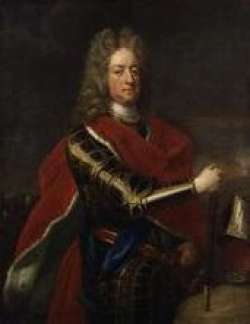
Birth of James Butler, 2nd Earl of Ormond

james-butler-2nd-earl-of-ormond

James Butler, 2nd Earl of Ormond, a noble in the Peerage of Ireland, is born in Kilkenny CastleKilkenny on October 4, 1331. He is Lord Justice of Ireland in 1359, 1364, and 1376, and a dominant political leader in Ireland in the 1360s and 1370s. He is usually called The Noble Earl, being a great-grandson, through his mother, of King Edward I of England.

Butler is the son of James Butler, 1st Earl of Ormond and Lady Eleanor de Bohun. He is given in ward on September 1, 1344 to Maurice FitzGerald, 1st Earl of Desmond for the fine of 2306 marks and afterward to John Darcy, 1st Baron Darcy de Knayth.

On May 15, 1346, Butler marries Elizabeth Darcy, daughter of Sir John Darcy and Joan de Burgh. They have five children: James Butler, 3rd Earl of Ormond (1362-1405), Thomas Butler (1359-1396), Justice of Cork, Eleanor Butler (1350-1392), Joan Butler (1360-1393), and Ralph Butler (1356-1367).

In 1362, Butler slays six hundred of Art Óg Mac Murchadha Caomhánach‘s followers at Tiscoffin in what is now County Kilkenny. On April 22, 1364, he is appointed Lord Deputy of Ireland to Lionel of Antwerp, 1st Duke of Clarence. Clarence, from his first arrival in Ireland, places great trust in him, and for a few years it seems that as Deputy he is almost all-powerful.

In the 1360s Butler clashes with Maurice FitzGerald, 4th Earl of Kildare. In 1364 the Irish House of Commons sends a delegation to England, headed by Kildare, to complain of misgovernment, and to ask for the removal of “corrupt” officials, some of whom have links to Butler. A number of these officials are removed, but Butler’s position is not seriously threatened.

Butler is Lord Justice by July 24, 1376, with a salary of £500 per year, in which office he is continued by King Richard II of England. On April 2, 1372, he is made constable of Dublin Castle, with the fee of £18 5s per year. He is summoned to the Parliaments held by Richard II.

James Butler dies October 18, 1382 at Knocktopher Castle in Kilkenny, Leinster, near which he had founded a priory for Carmelite friars in 1356. He is buried in St. Canice’s Cathedral, Kilkenny.


Leave a comment

U.S. Vice President Joe Biden Arrives in Ireland

joe-biden-michael-higgins

Vice President of the United States Joe Biden arrives in Ireland on Tuesday, June 21, 2016, for a six-day visit. He arrives with his brother and sister, his daughter and five grandchildren and is welcomed to Ireland by Minister for Foreign Affairs and Trade Charles Flanagan.

Biden then travels to Government Buildings where he is formally welcomed by Taoiseach Enda Kenny. Kenny says he hopes Biden enjoyed his visit and Biden says that he himself has visited Ireland several times privately, but never as vice president. He adds that he had promised his late son Beau that he would make a family trip to Ireland, “Unfortunately Beau didn’t make it, but we decided that we would bring the whole family.”

Biden, an Irish American, speaks of his great-grandfather who emigrated from Ireland, and he also speaks of the pride his family feels in their Irish heritage.

Kenny presents Biden with a hurley and a sliotar, to which the Vice President responds, “I have witnessed one game and I have one regret, that they don’t have this in the United States. I played American football and American baseball in high school and college, but this would have been … this is a dangerous game.”

Biden holds a bilateral meeting with Kenny in the evening and meets with the President of Ireland, Michael D. Higgins, the following day at his official residence, Áras an Uachtaráin in Dublin‘s Phoenix Park. As he signs the visitors’ book, he paraphrases another famous Irish American, former U.S. President John F. Kennedy, who had visited the Republic of Ireland 53 years earlier. His written entry makes reference to a speech made to Dáil Éireann in June 1963, when Kennedy said, “our two nations, divided by distance, have been united by history.”

During his visit Biden visits County Mayo and County Louth, where his ancestors originated, in addition to several engagements in Dublin and a stop at Newgrange. He also arranges to fit in a round of golf with Kenny.

Biden speaks at an event at Trinity College, Dublin on the morning of Friday, June 24 and delivers a keynote address to an American Ireland Fund event in Dublin Castle in the evening. He addresses the Irish American experience, the shared heritage of the two nations, and the values of tolerance, diversity and inclusiveness.

On Saturday, June 25, Biden visits various locations in County Louth including the Kilwirra Cemetery and Newgrange in County Meath.

Biden returns to the United States following a lunch with Kenny on Sunday, June 26.

(Pictured: U.S. Vice President Joe Biden signing the visitor’s book as Irish President Michael D. Higgins look on at his official residence, Áras an Uachtaráin)


Leave a comment

Patrick Darcy Delivers His “Argument”

dublin-castlePatrick Darcy, a prominent constitutional lawyer who wrote the constitution of Confederate Ireland, delivers his famous Argument during a conference on June 9, 1641.

During a conference held in the dining room of Dublin Castle, Darcy delivers his Argument. Published in 1643 and reprinted in 1764, it is the first forceful and detailed statement of the rule of law in Ireland, articulating an effective constitutional position for her as England‘s colonial country. He is quoted arguing to William Molyneux that “no parliament but an Irish one can properly legislate for Ireland,” which is the central summation of his work.

In 1961, the American constitutional expert C.H. McIlwain says in compliment of Darcy’s Argument that it “constitute the first definite statement of the central point of the American opposition more than a century later. Patrick Darcy deserves a place in American constitutional history.”

The format of the 142-page Argument comprises a series of legal questions on the powers of the Parliament of Ireland in 1640–41. It refers to and suggests the extent by which the parliament’s general self-governing powers are superior to all ad-hoc (and possible illegal, unlawful or illicit) decisions by judges and royal officials in the Kingdom of Ireland. The relevant text nearest to the subject of Irish self-government is at page 130:

“Whither the Subjects of this kingdome bee a free people, and to be governed onely by the Common-lawes of England, and statutes of force in this kingdome. The subjects of this his Majesties kingdome of Ireland, are a free people, and to be governed onely according to the Common-law of England, and Statutes made & established by Parliament in this kingdome of Ireland, and according to the lawfull customes used in the same.”

(Pictured: Dublin Castle)


Leave a comment

Death of Joseph Holt, United Irish General

joseph-holt

Joseph Holt, United Irish general and leader of a large guerrilla force which fights against British troops in County Wicklow from June–October 1798, dies at Kingstown, now Dún Laoghaire, near Dublin on May 16, 1826.

Holt is one of six sons of John Holt, a farmer in County Wicklow. He joins the Irish Volunteers in the 1780s and holds a number of minor public offices but becomes involved in law enforcement as a sub-constable, billet master for the militia and a bounty hunter. He is involved in the Battle of Vinegar Hill which is an engagement during the Irish Rebellion of 1798 on June 21, 1798, when over 15,000 British soldiers launch an attack on Vinegar Hill outside Enniscorthy, County Wexford.

Despite Holt’s apparent loyalism, he becomes a member of the Society of United Irishmen in 1797 and gradually begins to attract suspicion until finally in May 1798, his house is burned down by the militia of Fermanagh. He then takes to the Wicklow mountains, gradually assuming a position of prominence with the United Irish rebels. The defeat of the County Wexford rebels at Vinegar Hill on June 21 sees surviving rebel factions heading towards the Wicklow Mountains to link up with Holt’s forces.

Emerging to meet them, Holt is given much of the credit for the planning of the ambush and defeat of a pursuing force of 200 British cavalry in the Battle of Ballyellis on June 30, 1798. However, the subsequent Midlands campaign to revive the rebellion is a disaster, and he is lucky to escape with his life back to the safety of the Wicklow Mountains.

Holt largely holds out in expectation of the arrival of French aid but news of the defeat of the French in the Battle of Ballinamuck together with his ill-health brought about by the hardships of his fugitive life, age and family considerations prompt him to initiate contact with the Dublin Castle authorities with a view to a negotiated surrender. Dublin Castle is eager to end the rebellion in Wicklow and allows him exile after incarceration in the Bermingham Tower without trial in New South Wales.

Holt goes out on the Minerva and meets Captain William Cox who has been appointed paymaster of the New South Wales Corps. The ship arrives at Sydney on January 11, 1800, and shortly afterwards Holt agrees to manage Captain Cox’s farm. He always claims in Australia that he is a political exile and not a convict. In 1804 when the Castle Hill uprising occurs Holt, who is not involved, has been warned that evening that it is about to happen. During the night he sets up a defense of Captain Cox’s house. He is nonetheless afterwards hounded by Governor Philip Gidley King and many false witnesses are brought against him. Although there is no plausible evidence at all against him, he is exiled by King to Norfolk Island in April 1804, and there put to hard labour.

Holt is officially pardoned on January 1, 1811, and in December 1812, with his wife and younger son, takes passage to Europe on the Isabella. The ship is wrecked by a reef, so the passengers and crew are landed at Eagle Island, one of the Falkland Islands. He shows great resolution and ingenuity in making the best of the conditions on the island. He is rescued on April 4, 1813, but does not reach England until February 22, 1814, as he travels via the United States. He retires to Ireland where he lives for the rest of his life but regrets he had left Australia.

Joseph Holt dies at Kingstown, now Dún Laoghaire, near Dublin on May 16, 1826, and is buried in Carrickbrennan Churchyard at Monkstown.


Leave a comment

Bill Whelan Receives IMRO Lifetime Achievement Award

bill-whelan

Taoiseach Bertie Ahern presents Irish composer and musician Bill Whelan with the IMRO Lifetime Achievement Award at Dublin Castle on March 2, 2001. Such big names as The Corrs, Brian Kennedy, Jean Butler, Jim Sheridan, Paul McGuinness and Moya Doherty join him to celebrate the award.

Whelan is best known for composing a piece for the interval of the 1994 Eurovision Song Contest. The result, Riverdance, is a seven-minute display of traditional Irish dancing that becomes a full-length stage production and spawns a worldwide craze for Irish dancing and Celtic music and also wins him a Grammy Award. It is released as a single in the United Kingdom in 1994, credited to “Bill Whelan and Anúna featuring the RTÉ Concert Orchestra.” It reaches number 9 and stays in the charts for 16 weeks. The album of the same title reaches number 31 in the album charts in 1995. He also composes a symphonic suite version of Riverdance, with its premiere performed by the Ulster Orchestra on BBC Radio 3 in August 2014.

Whelan is a native of Limerick and is educated at Crescent College, University College Dublin and the King’s Inns. While he is best known for his Riverdance composition, he has been involved in many ground-breaking projects in Ireland since the 1970s. As a producer he has worked with U2 (on their War album), Van Morrison, Kate Bush, The Dubliners, Planxty, Andy Irvine & Davy Spillane, Patrick Street, Stockton’s Wing and fellow Limerickman Richard Harris.

In theatre, Whelan receives a Laurence Olivier Award nomination for his adaption of Gilbert and Sullivan‘s H.M.S. Pinafore. He writes original music for fifteen of William Butler Yeats‘s plays for Dublin‘s Abbey Theatre and his film credits include Dancing at Lughnasa (starring Meryl Streep), Some Mother’s Son, Lamb (starring Liam Neeson) and the award-winning At the Cinema Palace.