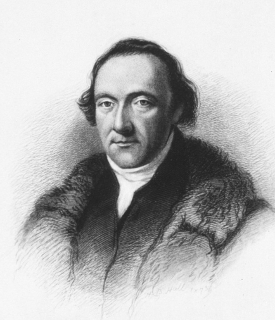
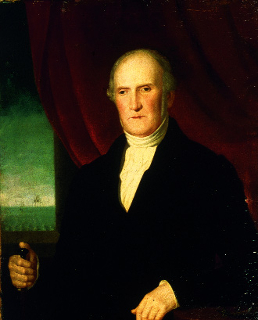
MacNeven is born on March 21, 1763, at Ballinahown, Aughrim, County Galway. The eldest of four sons, at the age of 12 MacNeven is sent by his uncle Baron MacNeven to receive his education abroad as the Penal Laws render education impossible for Catholics in Ireland. He makes his collegiate studies in Prague. His medical studies are made in Vienna where he is a pupil of Pestel and takes his degree in 1784. He returns to Dublin in the same year to practise.
In 1807, he delivers a course of lectures on clinical medicine in the recently established College of Physicians and Surgeons. Here in 1808, he receives the appointment of professor of midwifery. In 1810, at the reorganization of the school, he becomes the professor of chemistry, and in 1816 is appointed to the chair of materia medica. In 1826 with six of his colleagues, he resigns his professorship because of a misunderstanding with the New York Board of Regents and accepts the chair of materia medica at Rutgers Medical College, a branch of the New Jersey institution of that name, established in New York as a rival to the College of Physicians and Surgeons. The school at once becomes popular because of its faculty, but after four years is closed by legislative enactment on account of interstate difficulties. The attempt to create a school independent of the regents results in a reorganization of the University of the State of New York.
MacNeven, affectionately known as “The Father of American Chemistry,” dies in New York City on July 12, 1841. He is buried on the Riker Farm in the Astoria section of Queens, New York.
One of the oldest obelisks in New York City is dedicated to him in the Trinity Church, located between Wall Street and Broadway, New York. The obelisk is opposite to another commemorated for his friend Thomas Emmet. MacNeven’s monument features a lengthy inscription in Irish, one of the oldest existent dedications of this kind in the Americas.
In 1990 Wilson challenges Brian Lenihan for the Fianna Fáil nomination for the 1990 presidential election. Lenihan wins the nomination but fails to be elected President and is also sacked from the government. Wilson is then appointed Tánaiste. He remains in the cabinet until retirement in 1993. Although the 26th Dáil Éireann is dissolved in December 1992, he serves in Government until the new government takes office.
John Wilson dies at St. James Hospital, Dublin on July 9, 2007, one day after his 84th birthday. His funeral takes place at the Good Shepherd Church at Churchtown, Dublin. President Mary McAleese is one of a number of prominent figures among the mourners, while Taoiseach Bertie Ahern is represented by his Aide-de-Camp.
Born Carlo Bianconi, in Tregolo, Costa Masnaga, Italy on September 24, 1786, he moves from an area poised to fall to Napoleon and travels to Ireland via England in 1802, just four years after the Irish Rebellion of 1798. At the time, British fear of continental invasion results in an acute sense of insecurity and additional restrictions on the admission of foreigners. He is christened Carlo but anglicises his name to Charles when he arrives in Ireland in 1802.
At the age of 16, Bianconi works as an engraver and printseller in Dublin, near Essex Street, under his sponsor, Andrea Faroni. In 1806 he sets up an engraving and print shop in Carrick-on-Suir, moving to Clonmel in 1815.
Bianconi eventually becomes famous for his innovations in transport and is twice elected mayor of Clonmel. He is the founder of public transportation in Ireland, at a time preceding railways. He establishes regular horse-drawn carriage services on various routes beginning in 1815. These are known as “Bianconi coaches” and the first service, Clonmel to Cahir, which takes five to eight hours by boat, takes only two hours by Bianconi’s carriage. Travel on a coach costs one penny farthing a mile.
Bianconi’s carriage services continue into the 1850s and later, by which time there are a number of railway services in the country. The Bianconi coaches continue to be well-patronised, by offering connections from various termini, one of the first and few examples of an integrated transport system in Ireland. By 1865 Bianconi’s annual income is about £35,000.
In 1832 Bianconi marries Eliza Hayes, the daughter of a wealthy Dublin stockbroker. They have three children. Bianconi dies on September 22, 1875 at Longfield House, Boherlahan, County Tipperary.
Having donated land to the parish of Boherlahan for the construction of a parish church, Bianconi wishes to be buried on the Church grounds. He, and his family, are buried in a side chapel, separate from the parish church in Boherlahan, approximately 5 miles from Cashel, County Tipperary.
Millmount has been fortified in historical times since the early 12th century when invading Normans built a mote and bailey on what was probably originally a neolithic passage grave similar to Newgrange. In Irish cosmology, it is often assumed to be the burial place of Amergin Glúingel, whose name indicates that in ancient Irish mythology he was regarded as the originator of the arts of song, poetry and music.
Hugh de Lacy, one of the Normans who comes to Ireland after Strongbow, builds the original fort circa 1172, having been granted the Kingdom of Meath by Henry II of England. Later a stone castle is built on the site. This castle forms part of the defences of the town during the Siege of Drogheda during the Cromwellian conquest of Ireland in 1649. The fort’s English defenders attempt to surrender to Parliamentarian troops under Oliver Cromwell but are massacred when they give themselves up on September 11, 1649. The complex is later called Richmond Barracks. Some of the present buildings, in the courtyard, are built circa 1714. After the unrest and rebellions of the 1790s and the Acts of Union 1800 the complex is re-fortified, and the Martello tower is built.
The fort suffers considerable damage during the Irish Civil War. It is occupied by Anti-Treaty forces and on July 4, 1922, it becomes the target of shelling by the army of the Irish Free State. The Free State Forces under Michael Collins have been given extensive support by the British Army at the express wish of Winston Churchill who insists that the Republican Forces be crushed. Using the same British Army 18-pounder artillery piece which had shelled the Republican H.Q. in the Four Courts in Dublin some days earlier the Free State Forces bombard Millmount fort for several hours before the Republican garrison retreats. The famous Martello tower is all but destroyed during the shelling.
Today, after being restored in 2000, the complex houses the Millmount Museum which houses a wide variety of artifacts of local and national importance. The complex is Drogheda’s most dominant feature, clearly visible from all parts of the town. The Martello tower is affectionately known as “The Cup and Saucer” by locals. The whole fort is a national monument and has been designated as Drogheda’s Cultural Quarter.
McCarthy becomes a professional soldier and shows great skill in his profession, but poor eyesight hampers his career. He enters the French army in 1671 and then transfers to James Scott, 1st Duke of Monmouth‘s regiment, then in French pay, and serves against the Dutch.
McCarthy comes to England in 1678 and is befriended by the future James II, who generally chooses soldiers, especially Irish soldiers, as his boon companions. Charles II decides to use his services in Ireland and makes him a colonel in Sir Thomas Dongan‘s regiment. On the outbreak of the Popish Plot, however, the discovery of McCarthy’s presence at Whitehall causes uproar. He flees the country and the Secretary of State for the Northern Department, Sir Joseph Williamson, who had issued his commission, is sent to the Tower of London.
In 1689 McCarthy takes Castlemartyr and Bandon for James. At Bandon there is a massacre called “Black Monday,” but he persuades the King to issue a general pardon to his defeated opponents. He meets James at his landing at Kinsale and is commanded to raise seven regiments. He sits in the Irish House of Lords in the Parliament of Ireland of 1689.
With 3,000 men McCarthy advances from Dublin toward Enniskillen, which with Derry is the remaining resistance to James II. He is met by 2,000 Protestant “Inniskillingers” at the Battle of Newtownbutler on July 31, 1689. His forces are routed, he is wounded and then captured. Allowed out on parole he breaks parole and escapes to Dublin. Frederick Schomberg, 1st Duke of Schomberg, remarks that he had thought McCarthy was a man of honour, but on the other hand he expected no better from an Irishman.
McCarthy goes into exile in France and commands the first Irish Brigade of Louis XIV. His later career is hampered by his near blindness. He dies at Barèges on July 1, 1694, and is buried there.
After serving for four years on the Roscommon County Council, Doherty is elected as a Fianna Fáil TD for the Roscommon–Leitrim constituency at the 1977 general election.
Doherty’s brother-in-law, Garda Thomas Nangle, is charged with assaulting James McGovern, a native of County Fermanagh, in a public house in December 1981. On September 27, 1982, hours before the case is due to be heard in District Court in the small village of Dowra, County Cavan, McGovern is arrested by the Special Branch of the Royal Ulster Constabulary (RUC) on the basis of entirely false Garda intelligence that he is involved in terrorism. The case against Nangle is dismissed because the principal witness, McGovern, fails to appear in court. The solicitor representing Nangle is Kevin Doherty, Seán Doherty’s brother. This questionable use of Garda/RUC Special Branch liaison, set up under the 1985 Hillsborough Anglo-Irish Agreement, prevents meetings between the Garda commissioner and the RUC chief constable for almost three years.
After Doherty leaves office it is revealed in The Irish Times that he ordered the tapping of three journalists home telephones. The newspaper also discloses that he has been interfering in the workings of the Garda and the administration of justice for both political and personal reasons. He immediately resigns from the party only to rejoin it in 1984.
At the 1989 general election his loses his seat in Dáil Éireann to the independent candidate Tom Foxe. He is also an unsuccessful candidate in the elections on the same day to the European Parliament, but he is later elected instead to the Seanad on the Administrative Panel and becomes the Cathaoirleach (Chairman) of the 19th Seanad.
In January 1992 the phone tapping scandal returns to haunt Fianna Fáil. Doherty announces in a television interview that he had shown transcripts of the conversations to Charles Haughey while Haughey was Taoiseach in 1982 although he had previously denied this. Haughey denies the claim also, but is forced to resign from the government, and then resigns as leader of Fianna Fáil. Doherty then regains his seat at the 1992 general election and holds it until his retirement at the 2002 general election.
On April 14, 1922, a column of 200 men led by Rory O’Connor occupies the Four Courts, hoping to provoke an armed confrontation with British forces which are in the process of evacuating from Ireland following the signing of the Anglo-Irish Treaty the previous winter which had split the Irish Republican Army (IRA) into two opposing factions. The occupation is a direct challenge to the legitimacy of the Provisional government who seeks a smooth transition to a viable independent Irish state in the 26 counties of Southern Ireland.
On June 22, Field MarshalSir Henry Wilson is gunned down by two IRA assassins and on June 26, the Free State Army Deputy Chief of Staff General J.J. O’Connell is kidnapped by the Four Courts IRA garrison. Michael Collins has also shipped guns issued by the British to arm the new Irish Army to Northern IRA units to defend themselves from Ulster loyalists.
Collins, no longer able to resist British pressure, receives two 18-pounder artillery guns and a stock of 200 artillery shells from the store at Kilmainham. The guns are set up at Parliament Street and Winetavern Street and Bridgefoot Street and Usher’s Quay across the River Liffey from the facade of the heavily fortified Four Courts where the Anti-Treaty IRA has barricaded themselves. Free State troops establish a cordon around the building, closing streets with riflemen and machine gunners occupying windows and rooftops. Among the IRA leaders inside are Chief-of-Staff Joe McKelvey, Director of Engineering Rory O’Connor, Quarter Master General Liam Mellows, commander of the IRA’s 2nd Southern Division Ernie O’Malley, Commandant Paddy O’Brien, Commandant Tom Barry and many others. The IRA mostly drawn from 1st and 2nd Battalions of the 1st Dublin Brigade are armed with rifles, five Thompson submachine guns and two Lewis machine guns as well as an armoured car nicknamed “The Mutineer.”
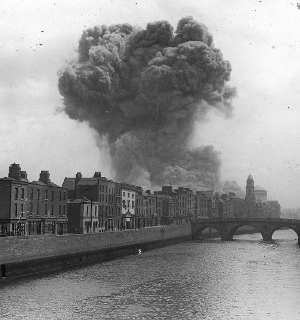
The bombardment begins on June 28 as artillery guns supervised by Emmet Dalton begin blasting the Four Courts at point blank range every fifteen minutes from across the River Liffey. The complex of buildings also comes under a hail of rifle and machine gun fire. However, the strong stone walls of the 18th century Four Courts hold out. A number of the shells overshoot their target and land near General McCready’s British Army headquarters. IRA leader Ernie O’Malley later claims to have witnessed a gun crew fighting a duel with a sniper in the dome of the courts. The failures of the first day lead the impatient British to offer two more 18-pounders as well as heavy howitzers and aircraft in order to destroy the Four Courts once and for all.
On the 29th, Free State troops storm the eastern wing of the Four Courts, suffering three fatalities, 14 wounded and taking 33 prisoners. The republicans’ armored car, “The Mutineer,” is disabled and abandoned by its crew. Early the following day Paddy O’Brien is injured by shrapnel and Ernie O’Malley takes over military command in the Four Courts. By this time the shelling has caused the Four Courts to catch fire. In addition, orders arrive from Oscar Traynor, the anti-treaty IRA commander in Dublin, for the Four Courts garrison to surrender, as he is unable to reach their position to help them. At 3:30 PM on June 30, O’Malley surrenders the Four Courts to Brig. Gen. Paddy Daly of the Free State’s Dublin Guard unit.
Daly is a militant member of the Prisoners’ Relatives Action Committee and the national Hunger Strike Committee. In that campaign, she works with Seamus Costello and soon joins him in the Irish Republican Socialist Party (IRSP) and the Irish National Liberation Army (INLA). After Costello is assassinated, she becomes chairperson, leading the party for two years. During this time, she and her husband are instrumental in opposing Sinn Féin‘s drift towards federalism.
On June 26, 1980, Daly is shot dead at her home in the Andersonstown area of west Belfast. At the time of her assassination, she is in charge of the IRSP prisoners’ welfare.
According to reports in The Irish Times, members of the Ulster Defence Association gain entry to her home with the intention of killing her husband, who is also a republican activist. Daly is captured and tied up while they wait for him to return home. However, he is in Dublin at the time and so does not arrive. After a considerable time, the UDA men decide to kill Daly instead. Muffling the sound of the gun with a cushion, they shoot her in the head and cut the phone lines before fleeing. Her body is discovered when her ten-year-old daughter arrives home from school.
Mitchell is born in Dublin on April 13, 1780. His family moves to Belfast while he is a child. He receives his formal education at Belfast Academy where he excels in mathematics. He begins to notice that his eyesight is failing. By the age of 16 he can no longer read and by the age of 22 he is completely blind.
Undeterred, Mitchell borrows £100 and starts up a successful business making bricks in the Ballymacarrett area of Belfast. This enables him to start building his own houses and he completes approximately twenty in the city. It is during this period that his talent for inventing comes to the fore and he fabricates several machines for use in brickmaking and the building trade.
Mitchell patents the screw-pile in 1833, for which he later gains some fame. The screw-pile is used for the erection of lighthouses and other structures on mudbanks and shifting sands, including bridges and piers. His designs and methods are employed all over the world from the Portland, Mainebreakwater to bridges in Bombay. Initially it is used for the construction of lighthouses on Maplin Sands in the Thames Estuary in 1838, at Fleetwood Lancashire (UK) Morecambe Bay in 1839 and at Belfast Lough where his lighthouse is finished in July 1844.
In May 1851 Mitchell moves to Cobh to lay the foundation for the Spit Bank Lighthouse. The success of these undertakings leads to the use of his invention on the breakwater at Portland, the viaduct and bridges on the Bombay, Baroda and Central India Railway and a broad system of Indian telegraphs.
Alexander Mitchell dies at Glen Devis near Belfast on June 25, 1868, and is buried in the old Clifton graveyard in Belfast. His wife and daughter predecease him.
O’Sullivan is born in Boyle, County Roscommon on May 17, 1911, the daughter of Evangeline “Mary Eva” Lovatt and Charles Joseph O’Sullivan, an officer in the Connaught Rangers who serves in World War I. She attends a convent school in Dublin, then the Convent of the Sacred Heart at Roehampton, England. One of her classmates there is Vivian Mary Hartley, future Academy Award-winning actress Vivien Leigh. After attending finishing school in France, O’Sullivan returns to Dublin to work with the poor.
O’Sullivan’s film career begins when she meets motion picture director Frank Borzage, who is doing location filming on Song o’ My Heart for 20th Century Fox. He suggests she take a screen test, which she does, and wins a part in the movie, which stars Irish tenor John McCormack. She travels to the United States to complete the movie in Hollywood. O’Sullivan appears in six movies at Fox, then makes three more at other movie studios.
In 1932, she signs a contract with Metro-Goldwyn-Mayer. After several roles there and at other movie studios, she is chosen by Irving Thalberg to appear as Jane Parker in Tarzan the Ape Man, opposite co-star Johnny Weissmuller. She is one of the more popular ingenues at MGM throughout the 1930s and appears in a number of other productions with various stars. In all, O’Sullivan plays Jane in six features between 1932 and 1942.
She plays another Jane in Pride and Prejudice (1940) with Laurence Olivier and Greer Garson and supports Ann Sothern in Maisie Was a Lady (1941). After appearing in Tarzan’s New York Adventure (1942), O’Sullivan asks MGM to release her from her contract so she can care for her husband who has just left the Navy with typhoid. She retreats from show business, devoting her time to her family. In 1948, she re-appears on the screen in The Big Clock, directed by her husband for Paramount Pictures. She continues to appear occasionally in her husband’s movies and on television. However, by 1960 she believes she has permanently retired. In 1958, Farrow’s and O’Sullivan’s eldest son, Michael, dies in a plane crash in California.
Actor Pat O’Brien encourages her to take a part in summer stock, and the play A Roomful of Roses opens in 1961. That leads to another play, Never Too Late, in which she co-stars with Paul Ford in what is her Broadway debut. Shortly after it opens on Broadway, John Farrow dies of a heart attack. O’Sullivan sticks with acting after Farrow’s death. She is also an executive director of a bridal consulting service, Wediquette International. In June and July 1972, O’Sullivan is in Denver, Colorado, to star in the Elitch Theatre production of Butterflies are Free with Karen Grassle and Brandon deWilde. The show ends on July 1, 1972. Five days later, while still in Denver, deWilde is killed in a motor vehicle accident.
When her daughter, actress Mia Farrow, becomes involved with Woody Allen both professionally and romantically, she appears in Hannah and Her Sisters, playing Farrow’s mother. She has roles in Peggy Sue Got Married (1986) and the science fiction oddity Stranded (1987). Mia Farrow names one of her own sons Ronan O’Sullivan Farrow for her mother. In 1994, she appears with Robert Wagner and Stefanie Powers in Hart to Hart: Home Is Where the Hart Is, a feature-length made-for-TV movie with the wealthy husband-and-wife team from the popular weekly detective series Hart to Hart.
Maureen O’Sullivan dies in Scottsdale, Arizona, of complications from heart surgery on June 23, 1998, at the age of 87. O’Sullivan is buried at Most Holy Redeemer Cemetery, Niskayuna, New York. She is survived by six of her children, 32 grandchildren, and 13 great-grandchildren. Michael, her oldest son, is killed at age 19 in a plane crash in 1958.