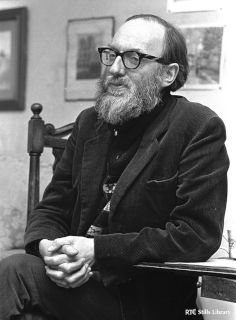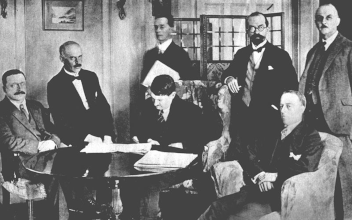
Dillon is a member of the British House of Commons during 1880–1883 and 1885–1918. For his vigorous work in the Irish National Land League, which seeks fixed tenure, fair rents, and free sale of Irish land, he is imprisoned twice between May 1881 and May 1882. He is Parnell’s fellow inmate in Kilmainham Gaol in Dublin from October 1881. For six months in 1888 he is imprisoned for aiding William O’Brien, author of the “plan of campaign” against high rent charges by English absentee landlords in Irish farming districts.
When Parnell is named co-respondent in Captain William Henry O’Shea’s divorce suit in 1890, Dillon and O’Brien at first affirm their support of him, but they finally decide that he will thenceforth be a liability as party leader. The party then splits, the anti-Parnellite majority forming the Irish National Federation, of which Dillon serves as chairman from 1896. In 1900, however, he agrees to join a reunited party under the Parnellite John Redmond.
During the prime ministry of Arthur James Balfour (1902–1905), Dillon comes to believe that the British Conservative government intends to grant Irish reforms without independence, thereby “killing Home Rule by kindness.” In 1905 he advises Irishmen to vote for Liberal Party candidates for Parliament, and, after the Liberals had taken office that year, he supports their reform program.
Throughout World War I Dillon vehemently opposes the extension of British military conscription to Ireland, both because that measure would strengthen the agitation by the more extreme nationalist Sinn Féin party and because he never accepted the view that British imperial interests necessarily coincided with those of Ireland. After the Easter Rising in Dublin in 1916, he protests against the harsh measures that ensue and, in the House of Commons, makes a passionate speech in defense of the Irish rebels.
Upon Redmond’s death on March 6, 1918, Dillon, who had broken with him over Irish support for the British war effort, succeeds him as Irish Parliamentary Party leader. By that time, however, the party has been discredited and in the 1918 Irish general election Sinn Féin wins easily. On losing his House of Commons seat to Éamon de Valera, the future president of the Republic of Ireland, he retires from politics.
Griffith, a Roman Catholic, is born at 61 Upper Dominick Street, Dublin on March 31, 1871, of distant Welsh lineage. He is educated by the Irish Christian Brothers. He works for a time as a printer before joining the Gaelic League (Conradh na Gaeilge), which is aimed at promoting the restoration of the Irish language.
After a short spell in South Africa, Griffith founds and edits the Irish nationalist newspaper The United Irishman in 1899. In 1904, he writes The Resurrection of Hungary: A Parallel for Ireland, which advocates the withdrawal of Irish members from the Parliament of the United Kingdom and the setting up of the institutions of government at home, a policy that becomes known as Sinn Féin (ourselves). On November 28, 1905, he presents “The Sinn Féin Policy” at the first annual Convention of the National Council. The occasion is marked as the founding date of the Sinn Féin party. Although the organization is still small at the time, Griffith takes over as president of Sinn Féin in 1911.
Griffith is arrested following the Easter Rising of 1916, despite not having taken any part in it. On his release, he works to build up Sinn Féin, which wins a string of by-election victories. At the party’s Ardfheis (annual convention) in October 1917, Sinn Féin becomes an unambiguously republican party, and Griffith resigns the presidency in favour of the 1916 leader Éamon de Valera, becoming vice-president instead. Griffith is elected as a member of parliament (MP) for East Cavan in a by-election in June 1918, and is re-elected in the 1918 Irish general election, when Sinn Féin wins a huge electoral victory over the Irish Parliamentary Party and, refusing to take their seats at Westminster, set up their own constituent assembly, Dáil Éireann.
In the Dáil, Griffith serves as Minister for Home Affairs from 1919 to 1921, and Minister for Foreign Affairs from 1921 to 1922. In September 1921, he is appointed chairman of the Irish delegation to negotiate a treaty with the British government. After months of negotiations, he and the other four delegates sign the Anglo-Irish Treaty, which creates the Irish Free State, but not as a republic. This leads to a split in the Dáil. After the Treaty is narrowly approved by the Dáil, de Valera resigns as president and Griffith is elected in his place. The split leads to the Irish Civil War.
Griffith enters St. Vincent’s Nursing Home, Leeson Street, Dublin, during the first week of August 1922, following an acute attack of tonsillitis. He is confined to his room by his doctors, who had observed signs of what they thought might be a subarachnoid hemorrhage. It is difficult to keep him quiet and he resumes his daily work in the government building. When about to leave for his office shortly before 10:00 AM on August 12, 1922, he pauses to retie his shoelace and falls down unconscious. He regains consciousness but collapses again with blood coming from his mouth. Three doctors render assistance, but to no avail. Father John Lee of the Marist Fathers administers extreme unction, and Griffith expires as the priest recites the concluding prayer. The cause of death, intracerebral hemorrhage, is also reported as being due to heart failure. He dies at the age of 51, ten days before Michael Collins‘s assassination in County Cork and two months after the outbreak of the Irish Civil War. He is buried in Glasnevin Cemetery four days later.
A fascinating article entitled “Ireland Seething Again Over Partition” is published by John F. Kennedy for the Hearst Newspaper group on July 29, 1945.
Kennedy’s comments about “the brilliant, austere (Éamon) De Valera” are particularly astute who is still “fighting politically the same relentless battle, that was fought in the field during the uprising of 1916, in the war of independence and later in the civil war.”
Kennedy is not always given credit for his writing abilities, with the majority of credit for speech writing given rightly to his White House CounselTed Sorenson), but some elements of this article are lyrical.
Commenting on De Valera’s debate elaboration, “he left the situation to many observers as misty as this island on an early winter’s morning.” And on De Valera’s Fianna Fáil colleagues, “All have been in both England and Ireland prisons, and many have wounds which still ache when the cold winds come in from the west.”
When visiting Ireland in 1963, Kennedy makes humorous reference to the respective birth places of the Kennedy and De Valera clan.
Francis Stevenson, Private Secretary to Lloyd George recalls, “I have never seen David so excited as he was before de Valera arrived at 4:30. He kept walking in and out of my room… As I told him afterwards, he was bringing up all his guns! He had a big map of the British Empire hung up on the wall in the Cabinet room, with its great blotches of red all over it. This was to impress de Valera with the greatness of the British Empire and to get him to recognise it, and the King.” De Valera apparently is not impressed.
When de Valera, Richard Barton and Art O’Brien arrive at Downing Street, “cheers were raised, Sinn Féin flags were displayed, and the crowd sang Irish airs.” As the meeting goes on, a “large crowd of Irish sympathisers knelt in the rain at Whitehall, at the end of Downing Street, recited the Rosary, and sang several hymns. Before the prayers started, they sang “Ireland a Nation.” According to a reporter covering the event, the singing of Irish songs and the praying never ceases.
Six days later, Britain makes its first formal proposal. The main negotiations take place in December culminating with the signing of the Anglo-Irish Treaty on December 6, 1921.
(From: Stair na hÉireann | History of Ireland, http://www.stairnaheireann.net, July 14, 2016 | Photo credit: National Library of Ireland collection, dated Thursday, July 14, 1921 (at approximately 5:30 PM), outside Downing Street as de Valera meets Lloyd George, at the first of four meetings held between the two in July 1921.)
Sebastian Barry, novelist, playwright and poet, is born in Dublin on July 5, 1955. He is noted for his lyrical literary writing style and is considered one of Ireland’s finest writers. He is named Laureate for Irish Fiction, 2019–2021.
Barry starts his literary career with the novel Macker’s Garden in 1982. This is followed by several books of poetry and a further novel, The Engine of Owl-Light (1987), before his career as a playwright begins with his first play produced in the Abbey Theatre, Boss Grady’s Boys (1988).
Both The Steward of Christendom and the novel The Whereabouts of Eneas McNulty, are about the dislocations, physical and otherwise, of loyalist Irish people during the political upheavals of the early 20th century. The title character of the latter work is a young man forced to leave Ireland by his former friends in the aftermath of the Irish War of Independence.
Barry has been twice shortlisted for the Man Booker Prize for his novels A Long Long Way (2005) and The Secret Scripture (2008), the latter of which wins the 2008 Costa Book of the Year and the James Tait Black Memorial Prize. His fifth novel, On Canaan’s Side (2011), is longlisted for the 2011 Man Booker Prize and wins the 2012 Walter Scott Prize. In January 2017, he is awarded the Costa Book of the Year prize for Days Without End (2016), becoming the first novelist to win the prestigious prize twice. The novel also wins The Walter Scott Prize and The Independent Booksellers’ Prize, and is longlisted for the Man Booker Prize 2017.
In 2001, Barry establishes his personal and professional archive at the Harry Ransom Center. More than sixty boxes of papers document his diverse writing career and range of creative output which includes drawings, poetry, short stories, novels, essays, and scripts.
O’Kelly is born on August 25, 1882, on Capel Street in the north inner-city of Dublin. He joins the National Library of Ireland in 1898 as a junior assistant. That same year, he joins the Gaelic League, becoming a member of the governing body in 1910 and General Secretary in 1915.
In 1905 O’Kelly joins Sinn Féin who, at the time, supports a dual monarchy. He is an honorary secretary of the party from 1908 until 1925. In 1906 he is elected to Dublin Corporation, which is Dublin’s city council. He retains the seat for the Inns Quay Ward until 1924.
O’Kelly is elected Sinn Féin MP for Dublin College Green in the 1918 Irish general election. Along with other Sinn Féin MPs he refuses to take his seat in the British House of Commons. Instead, they set up an Irish parliament, called Dáil Éireann, in Dublin. O’Kelly is Ceann Comhairle (Chairman) of the First Dáil. He is the Irish Republic’s envoy to the post-World War I peace treaty negotiations at the Palace of Versailles, but the other countries refuse to allow him to speak as they do not recognise the Irish Republic.
O’Kelly is a close friend of Éamon de Valera, and both he and de Valera oppose the Anglo-Irish Treaty of December 1921. When de Valera resigns as President of the Irish Republic on January 6, 1922, O’Kelly returns from Paris to try to persuade de Valera to return to the presidency but de Valera orders him to return to Paris.
During the Irish Civil War, O’Kelly is jailed until December 1923. Afterwards he spends the next two years as a Sinn Féin envoy to the United States.
In 1926 when de Valera leaves Sinn Féin to found his own republican party, Fianna Fáil, O’Kelly follows him, becoming one of the party’s founding members. In 1932, when de Valera is appointed President of the Executive Council of the Irish Free State, he makes O’Kelly the Minister for Local Government and Public Health. He often tries to publicly humiliate the Governor-General of the Irish Free State, James McNeill, which damages O’Kelly’s reputation and image, particularly when the campaign backfires.
In 1938, many believe that de Valera wants to make O’Kelly the Fianna Fáil choice to become President of Ireland, under the new Irish constitution, Bunreacht na hÉireann. When Lord Mayor of Dublin, Alfie Byrne, says he wants to be president there is an all-party agreement to nominate Douglas Hyde, a Protestant Irish Senator, Irish language enthusiast and founder of the Gaelic League. They believe Hyde to be the only person who might win an election against Alfie Byrne. O’Kelly is instead appointed Minister of Finance and helps create Central Bank in 1942.
O’Kelly leaves the cabinet when he is elected President of Ireland on June 18, 1945, in a popular vote of the people, defeating two other candidates. He is re-elected unopposed in 1952. During his second term he visits many nations in Europe and speaks before the United States Congress in 1959. He retires at the end of his second term in 1959, to be replaced by his old friend, Éamon de Valera. Following his retirement, he is described as a model president by the normally hostile newspaper, The Irish Times. Though controversial, he is widely seen as genuine and honest, but tactless.
O’Kelly’s strong Roman Catholic beliefs sometimes cause problems. Éamon de Valera often thinks that O’Kelly either deliberately or accidentally leaks information to the Knights of Saint Columbanus and the Church leaders. He ensures that his first state visit, following the creation of the Republic of Ireland in 1949, is to the Vatican City to meet Pope Pius XII. He accidentally reveals the Pope’s private views on communism. This angers the Pope and Joseph Stalin and is why he is not given the papal Supreme Order of Christ which is given to many Catholic heads of state.
O’Kelly dies in Blackrock, Dublin on November 23, 1966, at the age of 84, fifty years after the Easter Rising that first brought him to prominence. He is buried in Glasnevin Cemetery, Glasnevin, Dublin.
Walsh is born at 11 Essex Quay in Dublin, the only child of Ralph and Mary Perce Walsh. His father is a watchmaker and jeweler. He inherits his sympathy for Irish nationalism and independence from his father, who has the boy enrolled in the Repeal Association before he is two years old. He is educated locally at Mr. Fitzpatrick’s School on Peter St. and at St. Laurence O’Toole Seminary School, Harcourt Street, Dublin. In 1856, he goes to the Catholic University of Ireland and three years later to St. Patrick’s College, Maynooth where he becomes Professor of Theology in 1867. He is appointed vice-president of Maynooth in 1878 and president in 1880. A poor preacher, he makes the press his pulpit, making a name for himself in the areas of land law and education.
Walsh is ordained into the priesthood on May 22, 1866. He is appointed Archbishop of Dublin on July 3, 1885, followed by his consecration on August 2, 1885. He serves in this position until his death in 1921 and is succeeded by Edward Joseph Byrne.
The Land issue divides the Irish hierarchy. Walsh supports agrarian reform on behalf of the rural population. He is openly sympathetic to Irish nationalism, and an advocate of both Home Rule and agrarian land reform. It is his support for this movement, led by Michael Davitt, which leads the Vatican to honour Michael Logue in Armagh with the dignity of Cardinal in 1893 rather than Walsh in Dublin.
Walsh serves on the Senate of the Royal University of Ireland (1883–84) and as part of the Commission of National Education (1885–1901). He is appointed Chancellor of the newly founded National University of Ireland in 1908, a position he holds until his death, after which he is succeeded by Éamon de Valera.
Walsh has been described as “the greatest archbishop of Dublin since Laurence O’Toole (Lorcán Ua Tuathail). Walsh Road in Drumcondra, Dublin is named after him.
After the Irish Free State is formed and the Irish Civil War is concluded, the new state sets up a single radio channel named 2RN in 1926, launched by Douglas Hyde. The channel, operating out of Dublin, largely serves the Anglosphere population and at best reaches as far as County Tipperary, a situation that does not change until more powerful transmitters are adopted in the 1930s at Athlone.
In 1943, de Valera, at the time serving as Taoiseach and whose wife Sinéad Ní Fhlannagáin is a keen Conradh na Gaeilge activist, promotes the idea of a Gaeltacht station, but there is no breakthrough. By this time, 2RN has become Radio Éireann and still only has one channel, with limited broadcasting hours, often in competition for listeners with BBC Radio and Radio Luxembourg.
In the 1950s, a general liberalisation and commercialisation, indeed Americanisation begins to occur in Ireland, as a push is made to move Ireland from a rural-agrarian society with a protectionist cultural policy towards a market economy basis, with supply and demand the primarily basis of public communications. In 1960, RTÉ is established, and direct control of communications moves from a government ministry position to a non-governmental RTÉ Director-General position, first filled by Edward Roth
Gerry Collins, the Minister for Posts and Telegraphs, announces in Dáil Éireann in February 1971 that a new radio station for the Gaeltacht will be created. Raidió na Gaeltachta begins broadcasting at 3:00 PM on April 2, 1972, as part of an Easter Sunday programming. During the very first broadcast, the main station at Casla, County Galway is not yet finished and the studios in County Kerry and County Donegal are still under construction, so the broadcast originates from Galway. The first Ceannaire (Controller) Pádraic Ó Raghallaigh opens the show, which is followed by a recording from President Éamon de Valera. A recording of Seán Ó Riada‘s Irish language Mass, Ceol an Aifrinn, from the Seipéal Mhic Dara at Carraroe is also played.
At foundation, the station begins with a staff of seven, including six former teachers and a businessman, and broadcasts for only two hours a day and is only available in or near the three largest Gaeltacht districts. The local studio at Derrybeg in Gweedore, County Donegal aids the native Irish music scene there. In the 1970s, Raidió na Gaeltachta gives early coverage to Clannad and Mairéad Ní Mhaonaigh, later the singer for Altan. These groups gain popularity not only in Ireland, but on the international stage, selling millions of records during the 1980s especially. The station is dedicated to bringing the listener general news, both national and international, as well as Gaelic sports coverage and more localised affairs of significance to the community in the Gaeltacht.
For many years RnaG is the only Irish language broadcaster in the country. In recent years it has been joined by a television service, Telefís na Gaeilge (TG4), and by regional community radio stations Raidió na Life in Dublin, Raidió Fáilte in Belfast, and Raidió Rí-Rá.
The Irish Times is launched at 4 Lower Abbey Street in Dublin on March 29, 1859. The first appearance of a newspaper using the name occurs in 1823 but it closes in 1825. The title is revived as a thrice weekly publication by Major Lawrence E. Knox. It is originally founded as a moderate Protestant newspaper, reflecting the politics of Knox, who stands unsuccessfully as a parliamentary candidate for Isaac Butt’s Home Rule League. In its early days, its main competitor is the Dublin Daily Express.
After Knox’s death in 1873, the paper is sold to the widow of Sir John Arnott, MP, a former Lord Mayor of Cork and owner of Arnotts, one of Dublin’s major department stores. The sale, for £35,000, leads to two major changes. Its headquarters is shifted to 31 Westmoreland Street, remaining in buildings on or near that site until 2005. Its politics also shifts dramatically, becoming predominantly Unionist in outlook, and it is closely associated with the Irish Unionist Alliance. The paper, along with the Irish Independent and various regional papers, calls for the execution of the leaders of the failed 1916 Easter Rising.
Though the paper becomes a publicly listed company in 1900, the family continues to hold a majority shareholding until the 1960s. The last member of the Arnott family to sit on the paper’s board is Sir Lauriston Arnott, who dies in 1958.
In 1974, ownership is transferred to a non-charitable trust, The Irish Times Trust. The Trust is set up as “a company limited by guarantee” to purchase The Irish Times Limited and to ensure that The Irish Times will be published as an independent newspaper with specific editorial objectives. The former owner, Major Thomas Bleakley McDowell, is made “president for life” of the trust which runs the paper and is paid a large dividend. However several years later the articles of the Trust are adjusted, giving Major McDowell ten preference shares and one more vote than the combined votes of all the other directors should any move be made to remove him. Major McDowell dies in 2009.
The Trust is regulated by a legal document, the Memorandum and Articles of Association, and controlled by a maximum of eleven Governors under company law. It is not a charity and does not have charitable status. It has no beneficial shareholders and it cannot pay dividends. Any profits made by The Irish Times cannot be distributed to the Trust but must be used to strengthen the newspaper, directly or indirectly.
In 1994, The Irish Times establishes a website called Irish-times.ie, the first newspaper in Ireland and one of the first 30 newspapers in the world to do so. The company acquires the domain name Ireland.com in 1997, and from 1999 to 2008, uses it to publish its online edition. On June 30, 2008, the company relaunches Ireland.com as a separate lifestyle portal and the online edition of the newspaper is now published at irishtimes.com. It is supplied free of charge, but a subscription is charged to view its archives.
On October 15, 2012, John O’Shea, Head of Online, The Irish Times, announces that the ireland.com domain name has been sold to Tourism Ireland, and that the ireland.com email service will end on November 7, 2012, affecting about 15,000 subscribers. The newspaper announces on February 17, 2015 the reintroduction of a paywall for its website, irishtimes.com, beginning on February 23.
In December 2017, it is reported that The Irish Times has reached an agreement to purchase the newspaper, radio and website interests of Landmark Media Investments which include the Irish Examiner. Initially subject to regulatory approval, this sale is completed in July 2018. In September 2018, following the Landmark Media Investments acquisition, The Irish Times starts a voluntary redundancy scheme.
Average print circulation is approximately 100,000 copies per issue in 2011, dropping to approximately 62,000 by 2017. The circulation of the newspaper is no longer audited.
McGarrity’s family grows up in poverty, motivating his need to immigrate later in life. He grows up hearing his father discussing Irish politics, including topics such as the Fenians, the Irish Parliamentary Party (IPP), and Irish Home Rule. By the time he is an adult, he has developed a keen interest in politics himself.
McGarrity immigrates to the United States in 1892 at the age of 18. He is reputed to have walked to Dublin before boarding a cattle boat to Liverpool disguised as a drover, and then sailing to the United States using a ticket belonging to someone else. He settles in Philadelphia, Pennsylvania and becomes successful in the liquor business. His business fails, however, on three occasions, twice due to embezzlement by his business partner.
In 1893 McGarrity joins Clan na Gael, an Irish organisation based in the United States committed to aiding the establishment of an independent Irish state. Clan na Gael had been heavily involved with the Fenian Brotherhood that McGarrity had grown up hearing about, and by the latter half of the 19th century had become a sister organisation of the Irish Republican Brotherhood (IRB). In the decade just before McGarrity joins, Clan na Gael and the Fenian movement had waged the Fenian dynamite campaign, where they attempted to force the British state to make concessions in Ireland by bombing British Infrastructure. However, this had caused a split within Clan na Gael that is not mended until seven years after McGarrity joins when, in 1900, the factions reunite and plead to support “the complete independence of the Irish people, and the establishment of an Irish republic.” In the years that follow the 1880s and 1890s, he is, amongst others, credited with helping to stitch the organisation back together and bring it renewed strength.
McGarrity helps sponsor several Irish Race Conventions and founds and runs a newspaper called The Irish Press from 1918-22 that supports the Irish War of Independence. He is the founder of the Philadelphia chapter of Clan Na Gael.
When Éamon de Valera arrives in the United States in 1919 they strike up an immediate rapport and McGarrity manages de Valera’s tour of the country. He persuades de Valera of the benefits of supporting him and the Philadelphia branch against the New York branch of the Friends of Irish Freedom organisation led by John Devoy and Judge Daniel F. Cohalan. He becomes president of the American Association for the Recognition of the Irish Republic. He christens his newborn son Éamon de Valera McGarrity, although their relationship becomes strained upon de Valera’s entry back into Dáil Éireann in the Irish Free State.
The Irish Civil War sees a split in Clan na Gael just as it had split Sinn Féin back in Ireland. McGarrity and a minority of Clan na Gael members support the anti-treaty side but a majority support the pro-treaty side, including John Devoy and Daniel Cohalan. Furthermore, in October 1920 Harry Boland informs the Clan na Gael leadership that the IRB will be cutting their ties to the Clan unless the IRB is given more influence over their affairs. Devoy and Cohalan resist this, but McGarrity sees the Clan’s connection with the IRB as vital. While McGarrity’s faction is initially labelled “Reorganised Clan na Gael,” they are able to inherit total control of the Clan na Gael name as Devoy is not able to keep effective organisation of the group. In general, however, the in-fighting amongst the Irish on both sides of the Atlantic is quite disheartening for Irish Americans and in the years to come neither pro or anti-treaty sides of Clan na Gael see much in the way of donations.
With the scope of Clan na Gael now narrowed, and Devoy and Cohalan removed from the picture, McGarrity becomes chairman of the organisation. He does not support the founding of Fianna Fáil in 1926 and opposes the party’s entry into the Dáil in 1927. Even after the Irish Civil War, he still supports the idea that a 32-county Irish Republic can be achieved through force. in the spring of 1926, he receives Chief of Staff of the Irish Republican ArmyAndrew Cooney to the United States. Cooney and Clan na Gael formally agree that each organisation will support the other and that Clan na Gael will raise funds, purchase weapons and build support for the IRA in the United States.
Going into the late 1920s though Clan na Gael, as are most Irish American organisations, is struggling. Having limped past the split caused by the Irish Civil War, the rejection of Fianna Fáil has caused a second split in the membership. Many Irish Americans see the IRA and Fianna Fáil as one and the same at that point and Clan na Gael and McGarrity’s hostility to them causes much friction.
By July 1929, the Clan’s membership in one of its strongholds, New York City, is down to just 620 paid members. Then in October of that same year Wall Street crashes and the Great Depression hits. In 1933 McGarrity is left almost bankrupt after he is found guilty of “false bookkeeping entries.” His livelihood is saved when he becomes one of the main ticket agents in the United States for the Irish Hospitals’ Sweepstake. He is a personal friend of Joseph McGrath, one of the founders of the Sweepstake. The sweepstakes allow him to turn his fortunes around.
Despite the trying times of both Clan na Gael and his personal life, McGarrity holds fast in his belief in physical force Irish Republicanism. In 1939 he supports the demand from Seán Russell for the “S-Plan” bombing campaign in Britain, which proves disastrous. He allegedly meets Hermann Göring in Berlin in 1939 to ask for aid for the IRA, which leads indirectly to “Plan Kathleen.”
McGarrity is a lifelong friend of fellow Carrickmore native and avid Republican, Patrick McCartan. When he dies on September 4, 1940, a mass is held in the St. Mary’s Pro-Cathedral in Dublin. He remains an unrepentant physical force republican all his life. A number of McGarrity’s papers are in the National Library of Ireland. He donates his personal Library to Villanova University.
The IRA signs all its statements ‘J.J. McGarrity’ until 1969 when the organisation splits into the ‘Official‘ and ‘Provisional‘ movements. Thereafter the term continues to be used by the Officials while the Provisionals adopt the moniker ‘P.O’Neill.’