Having begun his career as a freelance musician, playing with the BBC Philharmonic orchestra and English National Opera North, an accident ends Cusack’s career as a musician, resulting in him pursuing a career in arts administration. Initially he focuses on the classical music sector, working at two leading concert venues in London, the Wigmore Hall and the Southbank Centre.
In 1992, Cusack makes his first move into theatre following his appointment as Administrative Director of West Yorkshire Playhouse in Leeds, alongside Jude Kelly, where he produces a number of plays including the touring production of Five Guys Named Moe for Cameron Mackintosh Limited. In 1996, he is appointed Head of Planning of the Royal National Theatre under the outgoing artistic director, Sir Richard Eyre, and subsequently with Sir Trevor Nunn and Sir Nicholas Hytner. In 2009, he becomes the National Theatre’s Associate Producer. During this period, he produces numerous productions for tour both in the UK and internationally, taking the work of the National Theatre to five continents. Alongside this, he works as a touring consultant for the Abbey Theatre in Dublin, the Royal Court Theatre, London, Fiery Angel in London’s West End, Canadian Stage in Toronto, Bangarra Dance Theatre in Sydney, TheEmergencyRoom and Corn Exchange in Dublin and Galway International Arts Festival. In June 2016, he is appointed Executive Producer of Wales Millennium Centre in Cardiff. In addition to this, he is Consultant Producer to the National Centre for the Performing Arts (India) in Mumbai.
As well as his theatre producing work, Cusack offers representation to a number of Irish artists including the director Annie Ryan, the composer Mel Mercier and the British playwrightMatt Wilkinson.
In 2023, Cusack is the recipient of the Olwen Wymark Award from the Writers’ Guild of Great Britain for his championing of new writing which is presented at the 18th Annual Awards Ceremony in London.
Cronin is born on August 29, 1922, in Dublin, the only son among three children of Con Cronin, a member of the IRA, and his wife Kate. After his father’s death, his mother works as a cook in a boarding school while the children are brought up by relatives in Ballinskelligs in the County KerryGaeltacht. Educated locally, he is deeply influenced by his Gaeltacht childhood; his later writings often refer to the hypocrisy of a state that romanticises the Gaeltacht while neglecting its social problems.
During World War II, Cronin’s sisters emigrate to England to train as nurses while he works as a labourer for Kerry County Council. In December 1941, he joins the Irish Army and is selected in 1943 for an officers’ training course, on which he forms a lifelong friendship with the future theatre directorAlan Simpson. He is commissioned and remains in the army until 1948.
Shortly thereafter Cronin emigrates to New York City, where he finds work as a journalist writing for The Advocate, an Irish American newspaper. He is strongly influenced by interviewing 1916 veterans for The Advocate and by contact with left-wing Irish American associates of Michael Quill, who played leading roles in the foundation of the Transport Workers Union of America. He becomes active in the semi-secret separatist organisation Clan na Gael, and in autumn 1955 returns to Ireland with the aim of helping the IRA to prepare for another military campaign.
Cronin begins work as a sub-editor with the Evening Press and also contributes summaries of world affairs to The Irish Times.
Cronin establishes contact with the IRA, and his military experience leads to his rapid assignment to GHQ staff. He is initially placed in charge of training and instruction, composing a manual on guerrilla warfare and twelve lectures on battlefield training. He teaches new military techniques and new recruits, such as the future IRA Chief of Staff Ruairí Ó Brádaigh, find him deeply impressive.
Cronin becomes a leading advocate of an early IRA campaign against Northern Ireland and becomes the chief strategist for Operation Harvest, a campaign which sees the carrying out of a range of military operations from direct attacks on security installations to disruptive actions against infrastructure. He is arrested on January 8, 1957, near the border in County Cavan. He is imprisoned several times over the course of the campaign (1956–1962).
Most of the IRA and Sinn Féin leadership are interned by the Dublin government on July 6, 1957. Cronin, one of the few to escape, becomes IRA Chief of Staff. He also acts for a time as editor of the movement’s newspaper, United Irishman. He tries to secure weapons from various sources, leading an unsuccessful raid on a British Army base at Blandford Camp in Dorset on February 16, 1958, and through contacts with Spanish republican exiles in Paris. The Irish American community remains the IRA’s main source of external support.
Cronin is arrested on September 30, 1958, and interned, causing considerable disarray, as he had been running much of the campaign single-handed. When the internees are released in March 1959, he resumes his position as Chief of Staff after a factional dispute causes the resignations of Tomás Óg Mac Curtain and the former Chief of Staff Tony Magan. He continues to argue that a sustained guerrilla campaign might yet succeed, but in June 1960 is again arrested and imprisoned for six months.
In November 1960, the Irish Freedom Committee (IFC), a Clan na Gael splinter group, accuses Cronin of being a communist and a “Free State agent,” supposedly implicated in the 1944 execution of Charlie Kerins. The IRA supports Cronin, but he nevertheless decides to resign successively as Chief of Staff, as a member of the Army Council, and as an IRA volunteer, on the grounds that his presence endangers the American support necessary for the continuance of the campaign. He then secures a job as a journalist on the Irish Independent. He withdraws his resignation in November 1961 after the Irish government reinstates military tribunals to try suspected IRA men. He is subsequently sentenced to six months’ imprisonment by a military tribunal and is in prison when the border campaign ends on February 26, 1962. Released on amnesty on April 19, 1962, he finally resigns from the IRA the next day.
By February 1966, Cronin has returned to the United States, where he resides for the remainder of his life, with regular visits to Ireland. He works as a journalist on the Newark Evening News and the Dow Jones News Service and is the U.S. correspondent of The Irish Times from 1967 to 1991, becoming that paper’s first Washington, D.C. correspondent.
In the 1970s Cronin takes a degree at New York University, then teaches and studies for a doctorate at The New School for Social Research in New York under Hans Morgenthau. His dissertation forms the basis for his magnum opus, Irish nationalism: its roots and ideology (1980). Although limited by its colonial model and socialist-republican intellectual framework, this historically oriented account draws on his extensive research and personal contacts to some effect.
Cronin is the author of a dozen books and pamphlets, including a biography of republican Frank Ryan, Washington’s Irish Policy 1916-1986: independence, partition, neutrality (1987), an authoritative account of Irish-US relations, Our Own Red Blood: The Story of the 1916 Rising (1966), and a number of works on guerrilla strategy, including an early Sinn Féin pamphlet Resistance under the pseudonym of J. McGarrity.
After the death of his first wife in 1974, Cronin marries Reva Rubinstein, a toxicologist. In 1980 they move to Washington, D.C. He has no children by either marriage, though his second wife brings him a stepson. After several years of illness, he dies in Baltimore, Maryland, on March 9, 2011. He is survived by his second wife, Reva Rubenstein Cronin.
Hales is born on a family farm owned by his father, Robert Hales, an activist in the Irish Land War and a reputed member of the Irish Republican Brotherhood (IRB) and his wife, Margaret (née Fitzgerald). He is the sixth of nine children (five sons and four daughters). He is educated at Ballinadee national school and Warner’s Lane school, Bandon. After leaving school he works at Harte’s timber yard, Bandon.
Hales joins and is involved with the Irish Volunteers movement from its inception in November 1913. Elected a delegate at the Volunteer national convention in the Abbey Theatre in 1915, he is among the majority who vote for the election of the national executive.
Hales is a part of a group of volunteers who are mobilised and plan to rise up in Cork during the 1916 Easter Rising. He sends a number of dispatches to Cork requesting further instructions. However, they receive last minute orders to stand down and there is no uprising in Cork to match that in Dublin. The Volunteers give up their arms and are later arrested.
By May 1916, Hales and his brothers, Seán, Bob, and William, are fighting with the IRA in west Cork during the Irish War of Independence. Terence MacSwiney is arrested in Hales’ home on May 3, 1916, and Hales himself escapes and goes on the run. He states that he was listed as “wanted” in the Hue and Cry police gazette.
In 1918, Hales takes part in a raid on a British gunboat and holds 25 armed Royal Irish Constabulary (RIC) members prisoner at Snugmore Castle. He takes part in a decoy in assisting his elder brother, Seán, to escape after his arrest in connection with the German Plot. He is elected Battalion Commandant of the 1st (Bandon) Battalion (1917–19), and Brigade Commandant of Cork 3rd Brigade, IRA, in January 1919.
In December 1919, Hales takes part in an ambush against the RIC at Kilbrittain and Bandon and is involved in the manufacture of gunpowder for IRA munitions. By this point he is the commander of the Third Cork Brigade of the IRA. In July 1920, he along with Harte is arrested by soldiers from the Essex Regiment.
The pair are taken to a nearby military barracks, where they are severely beaten while being interrogated by officers of the regiment. Hales has his fingernails pulled out, an event that later inspires a scene in the film The Wind That Shakes the Barley. However, neither Hales nor Harte give up any information and are eventually sent to a military hospital to recuperate. Hales is tried and is eventually sentenced to two years’ penal servitude, which he serves in Pentonville and Dartmoor prisons in England. He is commander of the Irish prisoners at Pentonville, but is released following a general amnesty after the Anglo-Irish Treaty in December 1921. According to Tom Barry, Harte suffers brain damage and goes insane before dying in Broadmoor Hospital.
A fifth Hales brother, Donal, settles in Genoa from 1913, and is appointed Irish Consular and Commercial Agent for Italy in February 1919. In this capacity he plays a leading propaganda role. Several letters from Michael Collins to Donal Hales still exist which are used by Hales to promote international awareness of the Irish conflict in Italian publications. Donal oversees a failed attempt to import a substantial number of Austrian weapons and ammunition captured from World War I, from Genoa in the spring of 1921, through the person of Gabriele D’Annunzio.
During the Irish Civil War, Tom and Seán Hales fight on opposite sides, with Hales fighting against the Anglo-Irish Treaty with the Anti-Treaty IRA while Seán joins the newly formed National Army of the Irish Free State. While the bothers end up on opposite sides of the war, they never openly criticise one another for their rival political stances.
Hales is elected to the anti-Treaty IRA executive in March 1922, but resigns in June over a proposal to prevent the Free State’s first general election in June 1922. He resumes his old rank during the Irish Civil War as commander of Cork 3 Brigade.
During the Irish Civil War in July 1922, Hales takes part in the raid and capture of Skibbereen Barracks and Ballineen by anti-Treaty forces. He is also involved in a skirmish with Free State troops at Newcestown. He is arrested in November 1922 and imprisoned first in Cork and then at the Curragh. He is released in December 1923, having taken part in a hunger strike for fourteen days. He mentions in his application for a military pension that he was a member of the Supreme Council of the IRB at this time.
In December 1922, Hales’s brother Seán is assassinated by the anti-Treaty IRA in Dublin, in reprisal for the Free State government’s execution of IRA prisoners. Hales later applies to the Irish government for a service pension under the Military Service Pensions Act, 1934 and is awarded nine years’ service in 1935 at Grade B for his service with the Irish Volunteers and the IRA between April 1, 1917, and September 30, 1923.
Hales makes his living as farmer. A member of the Mallow area board of the beet growers’ association from 1934 to 1942, he is also connected with other farming organisations. He marries Ann Lehane from Tirelton, Macroom, on April 30, 1927. They have five children, Seán, Robert, Thomas, Eileen, and Margaret.
Hales dies on April 29, 1966, at St. Finbarr’s Hospital, Cork, and is buried at St. Patrick’s Cemetery, Bandon.
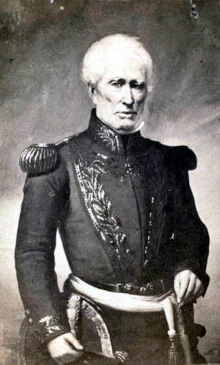
Brown is born on June 22, 1777, in Foxford, County Mayo. Comparatively little is known of his early life, and it has been suggested that he was illegitimate and took his mother’s surname and that his father’s surname was actually Gannon. He emigrates with his father to Baltimore, Maryland, in 1793, eventually settling in Philadelphia, Pennsylvania. A short time after their arrival, the friend who had invited them and offered them food and hospitality dies of yellow fever. Several days later, his father also succumbs to the same disease.
One morning, while Brown is wandering along the banks of the Delaware River, he meets the captain of a ship then moored in port. The captain inquires if he wants employment and Brown agrees. The captain engages him as a cabin boy, thereby setting him on the naval promotion ladder, where he works his way to the captaincy of a merchant ship. After ten years at sea, where he develops his skills as a sailor and reaches the rank of captain, Brown is press-ganged into a Royal Navy warship. British impressment of American sailors is one of the primary issues leading to the War of 1812.
During the Napoleonic Wars, Brown escapes the ship he is serving on, a galley, and scuttles the vessel. However, the French do not believe he had assisted them and imprison him in Lorient. On being transferred to Metz, he escapes, disguised in a French officer’s uniform. However, he is recaptured and is imprisoned in the fortress of Verdun. In 1809, he escapes from there in the company of a British Army officer named Clutchwell, and eventually reaches German territory.
Returning to England, Brown renounces his maritime career and on July 29, 1809, he marries Elizabeth Chitty, daughter of an English shipping magnate, in Kent. As he is a Catholic and she a Protestant, they agree to raise their sons as Catholics and their daughters as Protestants. Despite lengthy periods of enforced separation, they have nine children. He leaves the same year for the Río de la Plata on board Belmond and sets himself up as a merchant in Montevideo, Uruguay.
Late in 1811 Brown settles in Buenos Aires just as a criollo rebellion against Spanish colonial rule in Argentina is gaining strength. By April 1812, he is developing a coastal shipping business in fruit and hides. As the Spanish naval blockade of 1812–14 begins to choke trade, he is first commissioned by the patriot government as a privateer licensed to raid Spanish merchantmen, and then, on March 1, 1814, invited to take charge of a small rebel naval squadron to contest Spanish control of the Río de la Plata estuary. Leading a fleet of nineteen ships, he fixes with great speed on a set of wartime naval routines and signaling methods, and organises a system of discipline, founding the navy on principles that pay exceptional attention to the welfare of ordinary seamen.
In early March 1814, Brown shows personal courage and incisive skill in outwitting and defeating a more powerful Spanish force near Martín García Island, thereby dividing the Spanish blockade. A Spanish attempt in May 1814 to break his blockade of Montevideo is decisively crushed by him and his makeshift navy, and the Spanish strongholds on the Atlantic coast collapse, ending open war. In 1815 and 1816, however, he carries out skirmishing raids on military and commercial targets belonging to Spanish South American possessions, until detained by a British colonial governor in Barbados in July 1816 for alleged infringements of international rules of trade.
Illness, and a tortuous but ultimately successful appeal process, take up most of 1817–18, but when Brown returns to Argentina in October 1818, political enemies set in motion a prosecution for alleged disobedience of orders. Cashiered in August 1819, then restored in rank but forced to retire, he attempts suicide the following month. Convalescence and resumption of his trading concern occupies him for several years.
A repentant government renews Brown’s command of the navy in December 1825, when war breaks out with Brazil. Though vastly outnumbered by the Brazilian fleet, he shows audacity and great finesse in a number of successful engagements in the Plate estuary in 1826, roving up the Brazilian coast on occasion to create great confusion. In February 1827, he triumphs in a series of actions known as the Battle of Juncal. After another year of commercial privateering against the Brazilian merchant fleet, he is one of two delegates selected to sign peace terms with Brazil in October 1828.
Retiring from active service that month, Brown tries to remain neutral as civil war erupts in Argentina, but reluctantly accepts the post of governor of Buenos Aires under General Juan Lavalle from December 1828 to May 1829, when he resigns in disgust at government excesses. During 1829–37 he holds aloof from the despotic government of Juan Manuel de Rosas. After French and British encroachments on the region in the later 1830s, he offers to take charge of the navy again to protect national independence and is available to defend Argentine interests when war breaks out with a French-backed Uruguay in early 1841. Though exasperated by a long and “stupid war,” he blockades the Uruguayan navy effectively until French and British fleets intervene in July 1845 with overwhelming force to capture his squadron and bring the war to an end.
Idolised by the Argentinian population for his high-principled and humane advocacy of independent democracy, Brown passes his last years trading and farming a country estate. In late 1847, he journeys to Ireland, hoping to find relations in Mayo, and is shocked by the hunger and destitution of the Great Famine.
Brown dies on March 3, 1857, at his home in Buenos Aires and is buried with full military honours. The Argentine government issues a comuniqué: “With a life of permanent service to the national wars that our homeland has fought since its independence, William Brown symbolized the naval glory of the Argentine Republic.” During his burial, General Bartolomé Mitre famously says: “Brown in his lifetime, standing on the quarterdeck of his ship, was worth a fleet to us.” His grave is currently located in the La Recoleta Cemetery in Buenos Aires.
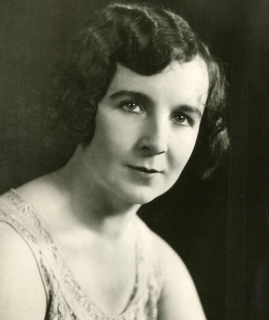
Born Alice Izabella, she is one of ten children born to grocer Moses Crowe and Therese Eglinton. From an early age, she shows an interest in the theatre, and regularly attends productions in both the Gaiety and Abbey theatres. Having completed her education, she joins a convent but soon after abandons the idea of becoming a nun. In October 1921, she enters the Abbey School of Acting. She has a career with the Abbey Theatre from 1921 to 1970.
Upon her entry to the Abbey School of Acting, Crowe makes her debut in 1921 in the play The Revolutionist, taking the lead role of Nora Mangan. She plays her last role of Miss Hatty in Grogan and the Ferret, after which she retires. During nearly five decades, she stars in many plays, some of which include The Marriage of Columbine (1921) and Juno and the Paycock (1924). Between 1931 and 1953, she appears in the Abbey Theatre productions of plays by Irish playwrightTeresa Deevy including A Disciple (1931), Katie Roche (1936, 1937, 1949, 1953), Temporal Powers (1932, 1937) and The Reapers (1930).
Also in 1964, Crowe appears in the Aldwych Theatre‘s production of Juno and the Paycock in London. She works in the Abbey for the vast majority of her career, except for when she is on a six-month tour for Peg O’ My Heart, touring Northern Ireland and England.
In 1924, when the play Grasshopper is being produced, Crowe meets her husband, Peter Judge, also known as F. J. McCormick. They are married in 1925 and the marriage produces a daughter and a son.
The idea for a new party is discussed at a meeting in Dublin on February 21, 1940, attended by 104 former officers of the pro- and anti-Treaty wings of the Irish Republican Army (IRA). The inaugural meeting of the new party takes place on March 2, 1940. Simon Donnelly, who had fought in Boland’s Mill under Éamon de Valera in the 1916 Easter Rising, the former leader of the Dublin section of the IRA, and former chief of the Irish Republican Police (IRP), is elected as president of a central committee of fifteen members. Other leaders are Seán Fitzpatrick, another Irish War of Independence veteran; Con Lehane, who had recently left the IRA; Séamus Gibbons; Tom O’Rourke; Seán Dowling, one of Rory O’Connor‘s principal lieutenants in the Irish Civil War; Colonel Roger McCorley, one of the principal IRA leaders in Belfast during the Irish War of Independence who had taken the Irish Free State side in the Irish Civil War; Frank Thornton, one of Michael Collins‘ top intelligence officers; Roger McHugh, a lecturer in English at University College Dublin (UCD) and later professor; Captain Martin Bell and Peter O’Connor.
Also in attendance at the first meeting is Seamus O’Donovan, Director of Chemicals on IRA Headquarters Staff in 1921 and architect of the IRA Sabotage Campaign in England by the IRA in 1939–40. Indeed, O’Donovan proposes several of the basic resolutions. Additionally, the meeting is attended by Eoin O’Duffy and several former leaders of the Irish Christian Front.
Many members of the Irish far-right join Córas na Poblachta including Gearóid Ó Cuinneagáin, who becomes the leader of the party’s youth wing Aicéin and goes on to found Ailtirí na hAiséirghe, Alexander McCabe, Maurice O’Connor and Reginald Eager from the Irish Friends of Germany, George Griffin, Patrick Moylett, his brother John and Joseph Andrews of the People’s National Party, Dermot Brennan of Saoirse Gaedheal, and Hugh O’Neill and Alexander Carey of Córas Gaedhealach. As a result, the party assumes a pro-German and antisemitic attitude which is frequently expressed in party functions, and Gardaí suspects Córas na Poblachta members of daubing the walls of Trinity College Dublin in antisemitic slogans following the visit of British politician Leslie Hore-Belisha to Ireland in 1941.
Socialist republicans Nora Connolly O’Brien and Helena Molony take an interest in the group. Reflecting divisions within the IRA, a minority of the party’s leaders sympathise with communism rather than fascism.
The main aim of Córas na Poblachta is the formal declaration of a Republic. It also demands that the Irish language be given greater prominence in street names, shop signs, and government documents and bank notes. It proposes to introduce national service in order that male citizens understand their responsibilities. The party’s economic policy is the statutory right to employment and a living wage. It proposes breaking the link with the British pound, the nationalisation of banks and the making of bank officials into civil servants. In the area of education, the party espouses free education for all children over primary age as a right, and university education when feasible. It also calls for the introduction of children’s allowances. In addition, Córas na Poblachta advocates for “the destruction of the Masonic Order in Ireland” and during its founding meeting reporters are told that the party will be ready to take over the government of Ireland “on either a corporate or fascist basis.”
The party has close ties with the Irish nationalist and pro-fascist party Ailtirí na hAiséirghe, whose leader, Gearóid Ó Cuinneagáin, had led Córas na Poblachta’s youth wing Aicéin until its independence is terminated in 1942. There is talk of a merger, however, while the majority of the party’s executive committee, noted by G2 to be made up of “four ex-Army men, old IRA, ex-Blueshirts and a number of IRA who had been active up until comparatively recently”, desires a combination of Ireland’s extreme nationalist movements, the three most prominent leaders, Simon Donnelly, Sean Dowling and Roger McCorley, oppose one due to the fear that the party will be submerged in a joint organisation. Ó Cuinneagáin is dismissive of Córas na Poblachta’s prospects and discussions between him and the party’s leaders reinforce their fears that Ó Cuinneagáin seeks an outright takeover by Ailtirí na hAiséirghe. Proposals for a merging of the two parties are dropped though they continue to maintain cordial relations and co-operate in the 1943 Irish general election.
The party is not successful and fails to take a seat in a by-election held shortly after the party’s foundation. The party slowly falls apart, and Tim Pat Coogan notes that: “Dissolution occurred because people tended to discuss the party rather than join it.” Importantly, the party is not supported by the hardcore of republican legitimatists, such as Brian O’Higgins, who views the IRA Army Council as the legitimate government of an existing Irish Republic. Indeed, in March 1940, O’Higgins publishes a pamphlet entitled Declare the Republic lambasting the new party as making what he regards as false promises that will be compromised on following the party’s election to the Oireachtas.
Córas na Poblachta fields candidates in the 1943 Irish General Election but none are elected, receiving a total of 3,892 votes between them.
Although a failure, Tim Pat Coogan argues Córas na Poblachta was the “nucleus” of the Clann na Poblachta party which emerges to help take power from Fianna Fáil in 1948.
(Pictured: IRA veteran Simon Donnelly who serves as President of Córas na Poblachta)
Sir Rory O’Moore (Irish: Ruaidhrí Ó Mórdha), Irish politician and landowner also known Sir Roger O’Moore or O’More or Sir Roger Moore, dies in obscurity on February 16, 1655. He is most notable for being one of the four principal organizers of the Irish Rebellion of 1641.
O’Moore’s uncle, Rory O’More, Lord of Laois, had fought against the English during the Tudor conquest of Ireland. In 1556, Queen Mary I confiscates the O’Mores’ lands and creates “Queens County” (modern-day County Laois). Over 180 family members, who are peaceful and have taken no part in any rebellion, are murdered with virtually all of the leaders of Laois and Offaly by the English at a feast at Mullaghmast, County Kildare, in 1577. Rory Óg and his wife Maighréad O’Byrne, sister of Fiach MacHugh O’Byrne, are hunted down and killed soon afterwards. This leads to the political downfall of the O’Moore family as their estates are given to English settlers.
Given the causes of the rebellion and the Crown’s weakness during the Bishops’ Wars into 1641, O’Moore plans a bloodless coup to overthrow the English government in Ireland. With Connor Maguire, 2nd Baron of Enniskillen, he plans to seize Dublin Castle, which is held by a small garrison, on October 23, 1641. Allies in Ulster led by Sir Phelim O’Neill are to seize forts and towns there. The leaders are to assume the governing of their own country and with this provision offer allegiance to King Charles. They are betrayed, and the plan is discovered on October 22 and the rising fails in its first objective. O’Neill has some success, and O’Moore quickly succeeds in creating an alliance between the Ulster Gaelic clans and the Old English gentry in Leinster.
In November 1641, the Irish forces besiege Drogheda, and a royalist force comes north from Dublin to oppose them. O’Moore is one of the leaders of the rebel army that intercepts and defeats the relief force at the Battle of Julianstown on November 29.
The Irish historian Charles Gavan Duffy writes: “Then a private gentleman, with no resources beyond his intellect and his courage, this Rory, when Ireland was weakened by defeat and confiscation, and guarded with a jealous care constantly increasing in strictness and severity, conceived the vast design of rescuing the country from England, and even accomplished it; for, in three years, England did not retain a city in Ireland but Dublin and Drogheda, and for eight years the land was possessed and the supreme authority exercised by the Confederation created by O’Moore. History contains no stricter instance of the influence of an individual mind.”
Bishop Michael Comerford writes that after O’Moore’s defeat at the Battle of Kilrush in April 1642 he retires and dies in Kilkenny city in the winter of 1642–43, having co-founded the Irish Catholic Confederation there a few months earlier. However, this ignores his contacts with Inchiquin and Ormonde in 1647–48.
In 1652, O’Moore goes to Inishbofin off the coast of Galway, one of the last Catholic strongholds, but as the parliamentary forces approach, he makes arrangements to flee. Walter Lynch, Bishop of Clonfert, sails in the last ship to leave the island without waiting for O’Moore, who is forced to make his own way. He finally escapes into Ulster but dies in obscurity on February 16, 1655. He is buried at Steryne churchyard, in the parish of Magilligan, County Londonderry.
St. Colman’s Church on the island once bears a tablet with the inscription: “In memory of many valiant Irishmen who were exiled to this Holy Island and in particular Rory O’More a brave chieftain of Leix, who after fighting for Faith and Fatherland, disguised as a fisherman escaped from his island to a place of safety. He died shortly afterwards, a martyr to his Religion and his County, about 1653. He was esteemed and loved by his countrymen, who celebrated his many deeds of valour and kindness in their songs and reverenced his memory, so that it was a common expression among them; ‘God and Our Lady be our help and Rory O’More’.”
The Balyna estate is inherited from Calvagh O’More by Rory’s brother Lewis. Balyna is passed down to Lewis’s last surviving O’More descendant, Letitia, who is also descended from Rory O’More because her grandfather married a second cousin. Letitia marries a Richard Farrell in 1751. This Farrell family henceforth takes the surname More O’Ferrall.
On February 21, 1910, Carson accepts the parliamentary leadership of the anti-Home Rule Irish Unionists and, forfeiting his chance to lead the British Conservative Party, devotes himself entirely to the Ulster cause. His dislike of southern Irish separatism is reinforced by his belief that the heavy industry of Belfast is necessary to the economic survival of Ireland. The Liberal government (1908–16) under H. H. Asquith, which in 1912 decides to prepare a Home Rule bill, cannot overcome the effect of his extra-parliamentary opposition. The Solemn League and Covenant of resistance to Home Rule, signed by Carson and other leaders in Belfast on September 28, 1912, and afterward by thousands of Ulstermen, is followed by his establishment of a provisional government in Belfast in September 1913. Early in that year he recruits a private Ulster army, the Ulster Volunteer Force, that openly drills for fighting in the event that the Home Rule Bill is enacted. In preparation for a full-scale civil war, he successfully organizes the landing of a large supply of weapons from Germany at Larne, County Antrim, on April 24, 1914. The British government, however, begins to make concessions to Ulster unionists, and on the outbreak of World War I he agrees to a compromise whereby the Home Rule Bill is enacted but its operation suspended until the end of the war on the understanding that Ulster’s exclusion will then be reconsidered.
Appointed Attorney General for England in Asquith’s wartime coalition ministry on May 25, 1915, Carson resigns on October 19 because of his dissatisfaction with the conduct of the war. In David Lloyd George’s coalition ministry (1916–22) he is First Lord of the Admiralty from December 10, 1916, to July 17, 1917, and then a member of the war cabinet as minister without portfolio until January 21, 1918.
Carson retires in October 1929. In July 1932, during his last visit to Northern Ireland, he witnesses the unveiling of a large statue of himself in front of Parliament Buildings at Stormont. The statue is sculpted by Leonard Stanford Merrifield, cast in bronze and placed upon a plinth. The inscription on the base reads “By the loyalists of Ulster as an expression of their love and admiration for its subject.” It is unveiled by James Craig, 1st Viscount Craigavon, in the presence of more than 40,000 people.
Carson lives at Cleve Court, a Queen Anne house near Minster-in-Thanet in the Isle of Thanet, Kent, bought in 1921. It is here that he dies peacefully on October 22, 1935. A warship brings his body to Belfast for the funeral. Thousands of shipworkers stop work and bow their heads as HMS Broke steams slowly up Belfast Lough, with his flag-draped coffin sitting on the quarterdeck. Britain gives him a state funeral on Saturday, October 26, 1935, which takes place in Belfast’s St. Anne’s Cathedral. He remains the only person to have been buried there. From a silver bowl, soil from each of the six counties of Northern Ireland is scattered onto his coffin, which had earlier been covered by the Union Jack. At his funeral service the choir sings his own favourite hymn, “I Vow to Thee, My Country.”
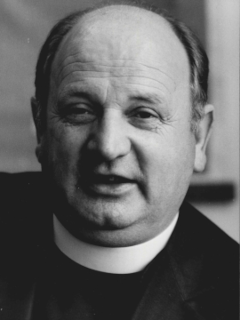
Eamonn Casey, Irish Catholicprelate who serves as bishop of Galway and Kilmacduagh from 1976 until his resignation 1992, returns to Ireland on February 5, 2006, following fourteen years in exile. He fled Ireland after he admitted to fathering his son, Peter.
Casey holds this position until 1976, when he is appointed Bishop of Galway and Kilmacduagh and apostolic administrator of Kilfenora. While in Galway, he is seen as a progressive. It is a significant change in a diocese that had been led for nearly forty years by the very conservative Michael Browne, bishop from 1937 to 1976. He is highly influential in the Irish Catholic hierarchy and a friend and colleague of another highly prominent Irish priest, Father Michael Cleary.
In 1992 it is reported that, despite the vow of chastity undertaken by Catholic clergy, Casey has a sexual relationship in the early 1970s with American woman Annie Murphy. When Murphy becomes pregnant, he is determined that the child should be given up for adoption in order to avoid any scandal for himself or the Catholic church. By contrast, Murphy is determined to accept responsibility for her child, and she returns to the United States with their son, Peter, who is born in 1974 in Dublin. He makes covert payments for the boy’s maintenance, fraudulently made from diocesan funds and channeled through intermediaries. In order to continue the cover up of his affair with Murphy and his fraudulent activities, he refuses to develop a relationship with his son, or acknowledge him. Murphy is very disappointed by this, and in the early 1990s contacts The Irish Times to tell the truth about Casey’s hypocrisy and deception. Having been exposed, he reluctantly admits that he had “sinned” and wronged the boy, his mother and “God, his church and the clergy and people of the dioceses of Galway and Kerry,” and his embezzlement of church funds. He is forced to resign as bishop and flees the country under a cloud of scandal. He is succeeded by his secretary, James McLoughlin, who serves in the post until his own retirement on July 3, 2005.
Murphy publishes a book, Forbidden Fruit, in 1993 revealing the truth of their relationship and the son she bore by Casey, exposing the institutional level of hypocrisy, moral corruption and misogyny within the Irish Catholic Church.
Casey is ordered by the Vatican to leave Ireland and become a missionary alongside members of the Missionary Society of St. James in a rural parish in Ecuador, whose language, Spanish, he does not speak. During this time, he travels long distances to reach the widely scattered members of his parish but does not travel to meet his own son. After his missionary position is completed, he takes a position in the parish of St. Pauls, Haywards Heath, West Sussex, England.
In 2005, Casey is investigated in conjunction with the sexual abuse scandal in Galway, Kilmacduagh and Kilfenora diocese, and cleared of any wrongdoing. In 2019, it emerges that he had faced at least three accusations of sexual abuse before his death, with two High Court cases being settled. The Kerry diocese confirms that it had received allegations against him, that Gardaí and health authorities had been informed and that the person concerned was offered support by the diocese.
Casey returns to Ireland on February 5, 2006, with his reputation in tatters, and is not permitted to say Mass in public.
In August 2011, Casey, in poor health, is admitted to a nursing home in County Clare. He dies on March 13, 2017, a month before his 90th birthday. He is interred in Galway cathedral’s crypt.
Casey is the subject of Martin Egan’s song “Casey,” sung by Christy Moore. He is also the subject of The Saw Doctors‘ song “Howya Julia.”
Walter is born in Norfolk, England, in 1165, the son of Hervey Walter and his wife, Matilda de Valoignes, who is one of the daughters of Theobald de Valoignes. Their children were Theobald, Hubert, Bartholomew, Roger, and Hamon. He and his brother Hubert are brought up by their uncle Ranulf de Glanvill, the great justiciar of Henry II of England who had married his mother’s sister Bertha.
On April 25, 1185, Prince John, in his new capacity as Lord of Ireland, lands at Waterford and around this time grants the hereditary office of butler of Ireland to Walter, whereby he and his successors are to attend the Kings of England at their coronation, and on that day present them with the first cup of wine. His father had been the hereditary holder of the office of butler of England. Sometime after, King Henry II of England grants him the prisage of wines, to enable him and his heirs, the better to support the dignity of that office. By this grant, he has two barrels of wine out of every ship, which breaks bulk in any trading port of Ireland, and is loaded with 20 tons of that commodity, and one ton from 9 to 20. He accompanies John on his progress through Munster and Leinster. At this time, he is also granted a large section of the north-eastern part of the Kingdom of Limerick. The grant of five and a half cantreds is bounded by:
“…the borough of Killaloe and the half cantred of Trucheked Maleth in which it lay, and the cantreds of Elykarval, Elyochgardi, Euermond, Aros and Wedene, and Woedeneoccadelon and Wodeneoidernan.”
Walter is active in the war that takes place when Rory O’Connor attempts to regain his throne after retiring to the monastery of Cong (present day County Mayo), as his men are involved in the death of Donal Mor McCarthy during a parley in 1185 near Cork. In 1194, he supports his brother during Hubert’s actions against Prince John, with him receiving the surrender of John’s supporters in Lancaster. He is rewarded with the office of sheriff of Lancaster, which he holds until Christmas of 1198. He is again sheriff after John takes the throne in 1199.
In early 1200, however, John deprives Walter of all his offices and lands because of his irregularities as sheriff. His lands are not restored until January 1202. A manuscript in the National Library of Ireland points to William de Braose, 4th Lord of Bramber, as the agent of his restoration:
“Grant by William de Braosa, (senior) to Theobald Walter (le Botiller) the burgh of Kildelon (Killaloe) … the cantred of Elykaruel (the baronies of Clonlisk and Ballybrit, County Offaly), Eliogarty, Ormond, Ara and Oioney, etc. 1201.”
“Elykaruel” refers to the Gaelic túath of “Ely O’Carroll”, which straddles the southern part of County Offaly and the northern part of Tipperary (at Ikerrin). The other cantreds named are probably the modern baronies of Eliogarty, Ormond Upper, Ormond Lower and Owney and Arra in County Tipperary.
Walter founds the Abbey of Woney, of which nothing now remains, in the townland of Abington, near the modern village of Murroe in County Limerick around 1200. He also founds the Cockersand Abbey in Lancaster, Abbey of Nenagh in County Tipperary, and a monastic house at Arklow in County Wicklow.
Walter marries Maud le Vavasour (1176–1226), heiress of Robert le Vavasour, a baron of Yorkshire. John Lodge in the Peerage of Ireland in 1789 gives the year as 1189, but on no apparent authority, as no other author follows him on this. Their children are Theobald le Botiller, 2nd Chief Butler of Ireland, and Maud (1192–1244), who marries three times yet only has two surviving children, Ralph and Marie.
Walter dies on February 4, 1206, at Arklow Castle, County Wicklow, and is buried at Wotheney Abbey.





 seamus dubhghaill