seamus dubhghaill

Promoting Irish Culture and History from Little Rock, Arkansas, USA


Leave a comment

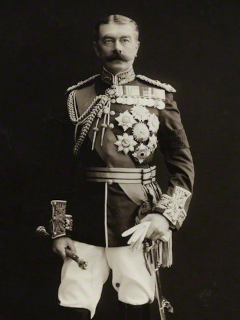
Birth of Horatio Herbert Kitchener, 1st Earl Kitchener

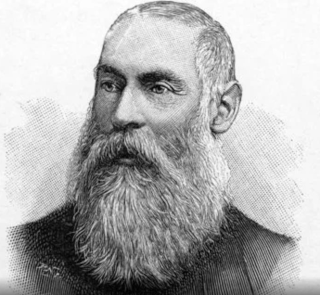
Horatio Herbert Kitchener, 1st Earl Kitchener of Khartoum and Broome in Kent, British Army officer and colonial administrator, is born on June 24, 1850, at Gunsborough Villa, north of Listowel, County Kerry.

Kitchener is the second son of Lieutenant Colonel Henry Horatio Kitchener and his first wife, Frances Anne (née Chevallier), daughter of clergyman John Chevallier. Col. Kitchener resigns his commission in 1849 and purchases Ballygoghlan House estate near Tarbert, County Kerry, in early 1850 under the provisions of the Encumbered Estates Act of 1849. Ballygoghlan House is in a state of disrepair, however, and the family lives in Gunsborough Villa until the end of 1850. In 1857, Col. Kitchener purchases Crotta House, near Kilflynn, County Kerry, and the Kitcheners divide their time between the two residences. While innovative and successful in his agricultural methods, Col. Kitchener is harsh towards his tenants and, after carrying out many evictions, becomes extremely unpopular in the area. He is a rigid disciplinarian and occasionally punishes his son severely.

Although Kitchener attends Ballylongford village school, his education is largely neglected. When examined by his cousin Francis Elliot Kitchener, fellow of Trinity College Dublin (TCD), he is found to have only the most rudimentary knowledge of grammar and arithmetic. Education by private tutors follows. In 1864, his father sells his Irish estates and moves to Switzerland for the sake of his wife’s health. After further private tuition, he passes into the Royal Military Academy, Woolwich, in 1868, and is commissioned into the Royal Engineers in December 1870.

Kitchener begins his career on survey missions and carries out such work in Palestine (1874–78) and Cyprus (1878–82). He then enters the Egyptian Army and takes part in the Sudan campaign of 1883–85, organised to relieve Genral Charles George Gordon. Subsequent appointments include governor of Suakin (1886–88), adjutant-general of the Egyptian Army (1888–92), and Sirdar (Commander-in-Chief) of the Egyptian Army (1892–96). After the Dongola Expedition in 1896, he is promoted to major-general. He commands the Khartoum Expedition of 1898, defeating Mahdist forces at Atbara and Omdurman, and is raised to the peerage.

At the outbreak of the Second Boer War in 1899, he is appointed chief of staff to Frederick Roberts, 1st Earl Roberts, and assumes total command, with the rank of lieutenant-general, in 1900. While acting as commander-in-chief in South Africa he reorganises the British forces and, using new tactics, manages finally to defeat the Boers. He is severely criticised in the world press for the conditions in the concentration camps where Boer families are confined, but is made a viscount, promoted to general, and awarded £50,000 by parliament at the end of the war.

Kitchener serves as commander-in-chief in India beginning in 1902, is promoted to Field Marshal in 1909, and is a member of the Committee of Imperial Defence (1910) and consul-general in Egypt (1911–14). At the outbreak of World War I he is made Secretary of State for War and begins to reorganise the British Army, an immense achievement, raising 1,700,000 men in service battalions by May 1915, creating an army of volunteers to reinforce the depleted regular army in Belgium and France. An archconservative, he totally opposes Home Rule for Ireland, and initially blocks plans by John Redmond for the formation of a southern Irish division from members of the National Volunteers. Convinced that an all-Irish brigade or division would be a security risk, he rejects Redmond’s suggestions in a meeting of August 1915 and originally proposes dispersing Irish recruits through the numerous regiments in the army. Impressed by Redmond’s persistence, and impelled by the recruiting crisis of late 1915, he finally reverses his decision and sanctions the establishment of the 16th (Irish) Division.

On June 5, 1916, Kitchener is making his way to Russia on HMS Hampshire to attend negotiations with Tsar Nicholas II when in bad weather the ship strikes a German mine 1.5 miles (2.4 km) west of Orkney, Scotland, and sinks. He is among 737 who perish. He is the highest-ranking British officer to die in action in the entire war.

Although he only spends his early years in Kerry, Kitchener occasionally returns to Ireland. While on leave in June 1910 he goes on a tour of County Kerry, visiting places connected to his childhood. There are numerous portraits and memorials to him in England, including a marble effigy by W. Reid Dick in St. Paul’s Cathedral in London and a statue by John Tweed in Horse Guards Parade, London. There is a commemorative bible in the Church of Ireland church at Kilflynn, County Kerry, where he regularly attended Sunday service as a boy. There are some Kitchener letters in the John Redmond papers in the National Library of Ireland.

(From: “Kitchener, Horatio Herbert” by David Murphy, Dictionary of Irish Biography, http://www.dib.ie, October 2009)

Leave a comment

Death of Charles Cunningham Boycott, Land Agent

Charles Cunningham Boycott, land agent and the man who gave the English language the word “boycott,” dies in Flixton, Suffolk, England, on June 19, 1897.

Boycott is born on March 12, 1832, at Burgh St. Peter, Norfolk, England, eldest surviving son of William Boycatt (1798–1877), rector of Wheatacrebury, Norfolk, and Elizabeth Georgiana Boycatt (née Beevor). The family name is changed to Boycott by his father in 1862. Educated at a boarding school in Blackheath, London, and the Royal Military Academy, Woolwich, he is commissioned ensign in the 39th (Dorsetshire) Regiment of Foot on February 15, 1850, and serves briefly in Ireland. He sells his commission on December 17, 1852, having attained the rank of captain, marries Annie Dunne of Queen’s County (County Laois) in 1852, and leases a farm in south County Tipperary.

In 1855, Boycott leaves for Achill Island, County Mayo, where he sub-leases 2,000 acres and acts as land agent for a friend, Murray McGregor Blacker, a local magistrate. He settles initially near Keem Strand but after some years builds a fine house near Dooagh overlooking Clew Bay. He clashes with local landowners and agents and is regularly involved in litigation. Twice summonsed unsuccessfully for assault (1856, 1859), he is involved (1859–60) in a bitter dispute with a land agent over salvage rights for shipwrecks, one of the few lucrative activities on the island. Achill’s remoteness and the difficulties of wresting a living from its harsh environment adds a roughness to the island’s social relations and probably aggravates Boycott’s tendency to high-handedness.

In 1873, Boycott inherits money and moves to mainland County Mayo, leasing Lough Mask House near Ballinrobe and its surrounding 300 acres. He also becomes agent for John Crichton, 3rd Earl Erne‘s neighbouring estate of 1,500 acres, home to thirty-eight tenant farmers paying rents of £500 a year, of which he receives 10 per cent as agent. He also serves as a magistrate and is unpopular because of his brusque and authoritarian manner, and for denying locals such traditional indulgences as collecting wood from the Lough Mask estate or taking short cuts across his farm. In April 1879, he purchases the 95-acre Kildarra estate between Claremorris and Ballinlough and an adjoining wood for £1,125, taking out a mortgage of £600 which stretches his finances.

Boycott is no brutal tyrant, but he is aloof, stubborn, and pugnacious, and believes that the Irish peasantry is prone to idleness and require firm handling. Such qualities and beliefs are unremarkable enough, but in the peculiar circumstances of the land war in County Mayo, they are enough to catapult this rather ordinary man to worldwide notoriety.

In autumn 1879, concerted land agitation begins in County Mayo, and on August 1, 1879, Boycott receives a notice threatening his life unless he reduces rents. He ignores it and evicts three tenants, which embitter relations on the estate. Lough Mask House is placed under Royal Irish Constabulary (RIC) surveillance beginning in November 1879. In August 1880, his farm labourers, encouraged by the Irish National Land League, strike successfully for a wage increase from 7s. –11s. to 9s. –15s. Since the harvest is poor, Lord Erne allows a 10 per cent rent abatement. But in September 1880, when Boycott demands the rent, most tenants seek a 25 per cent abatement. Lord Erne refuses, and on September 22, Boycott attempts to serve processes against eleven defaulters. Servers and police are attacked by an angry crowd of local women and forced to take refuge in Boycott’s house. Almost immediately he is subjected to the ostracism against land grabbers advocated by Charles Stewart Parnell in his September 19 speech at Ennis, County Clare. This weapon proves as devastating against an English land agent as an Irish land-grabber. His servants leave him, labourers refuse to work his land, his walls and fences are destroyed, and local traders refuse to do business with him. He is jeered on the roads, is hissed and hustled by hostile crowds in Ballinrobe, and requires police protection.

The campaign against Boycott is largely orchestrated by Fr. John O’Malley, a local parish priest and president of the Neale branch of the Irish National Land League. It is probably O’Malley who coins the term “boycott” as an alternative to the word “ostracise,” which he believes would mean little to the local peasantry. Propagated by O’Malley’s friend, the American journalist, James Redpath, it is adopted by advocates and opponents alike.

On October 22, 1880, before his story breaks on the world, Boycott gives evidence of his treatment to the Bessborough Commission in Galway. He publicises his plight in an October 18, 1880, letter to The Times, and in a long interview with The Daily News on October 24, which is reprinted in Irish unionist newspapers and arouses considerable sympathy for him. Although he rarely uses his former military rank, he becomes universally known as “Captain Boycott,” since it suits both sides to portray him as someone of social standing. Letters of support appear in unionist papers and the Belfast News Letter sets up a “Boycott Relief Fund” and proposes a relief expedition, portraying Boycott as a peaceable English gentleman unjustly subjected to intimidation.

The prospect of hundreds of armed loyalists descending on County Mayo alarms the government, who announced on November 8 that they will provide protection for a small group of labourers to harvest Boycott’s crops. On November 12, fifty-seven loyalists from counties Cavan and Monaghan, “the Boycott Relief Expedition,” arrive at Lough Mask with an escort of almost a thousand troops. After harvesting Boycott’s crops, they leave on November 26. The entire operation costs £10,000 – about thirty times the value of the crops. Although the expedition passes off largely without incident, it focuses international media attention on the affair and establishes the word “boycott” in English and several other languages as a standard term for communal ostracism.

On November 27, Boycott and his wife go to the Hammam hotel, Dublin, where he receives death threats. On December 1, he travels to London and then to the United States (March–May 1881) to see Murray McGregor Blacker, the friend from his time on Achill Island who has since settled in Virginia. In an interview with the New York Herald, he criticises the liberal government’s weakness toward the Land League and claims that the Irish land question is an intractable problem that can only be solved in the long term by emigration and industrialisation.

Boycott returns to Lough Mask on September 19, 1881, and at an auction in Westport is mobbed and burned in effigy. This, however, is the last outburst of hostility against him, and as the land agitation wanes so does his unpopularity. Although unsuccessful in efforts to win compensation from the government, he receives a public subscription of £2,000. He remains in County Mayo as Lord Erne’s agent until February 1886, when he obtains the post of land agent for Sir Hugh Adair in Flixton, Suffolk, but he keeps the small Kildarra estate, where he continues to holiday. On December 12, 1888, he gives evidence of his treatment to the parliamentary commission on “Parnellism and crime.”

After suffering from ill-health for some years, Boycott dies at Flixton on June 19, 1897, and is buried in the churchyard of Burgh St. Peter. A British-made film, Captain Boycott (1947), stars Cecil Parker in the title role.

(From: “Boycott, Charles Cunningham” by James Quinn, Dictionary of Irish Biography, http://www.dib.ie, October 2009 | Photo credit: Granger NYC/© Granger NYC/Rue des Archives)


Leave a comment

The 1974 Houses of Parliament Bombing

The Provisional Irish Republican Army bomb the British Houses of Parliament on June 17, 1974, causing extensive damage and injuring eleven people.

The Provisional IRA begins a bombing campaign in England in March 1973 when they bomb the Old Bailey courthouse, injuring over two hundred people. The following year is the worst year of the Troubles outside of Northern Ireland. At the beginning of 1974, the IRA explodes a bomb on a coach carrying soldiers and some family members on the M62, killing twelve people, including four civilians. A month before the Houses of Parliament bombing, thirty-four people are killed in the Republic of Ireland in the Dublin and Monaghan bombings of May 1974 carried out by the Ulster Volunteer Force, an Ulster loyalist paramilitary group based in Northern Ireland, the worst single incident of the conflict.

A man with an Irish accent telephones the Press Association with a warning given just six minutes before the device explodes. London police say a recognised IRA codeword is given. The bomb explodes in a corner of Westminster Hall at about 8:30 a.m. on June 17, 1974. The IRA in a telephoned warning says it planted the bomb that weighed approximately 20 lbs. (9.1 kg). The explosion is suspected to have damaged a gas main and a fire spreads quickly through the centuries-old hall in one of Britain’s most security-tight buildings. An annex housing a canteen and a number of offices is destroyed, but the great hall itself receives only light damage. The attack signals the start of a renewed IRA bombing campaign in England that is to last until late 1975 and is to claim the lives of dozens of people. The most notorious attacks of the bombing campaign are the Guildford pub bombings on October 5, 1974, that kill five and injure sixty, and the Birmingham pub bombings on November 21, 1974, which kill twenty-one people and injured one hundred eighty.

The year 1974 ends with the IRA killing twenty-eight people (twenty-three civilians and five British soldiers) in bombing operations in England. Twenty-one people are killed in the Birmingham pub bombings and a further seven are killed in the Guildford and Woolwich Pub bombings. Nearly three hundred people are injured from these bombings alone. The IRA calls off their bombing campaign in February 1975 but restarts it on August 27, 1975, with the Caterham Arms pub bombing which injures over thirty people. A week later, the IRA carries out the London Hilton bombing which kills two and injures over sixty.


Leave a comment

Birth of Julia O’Faolain, Novelist & Short Story Writer

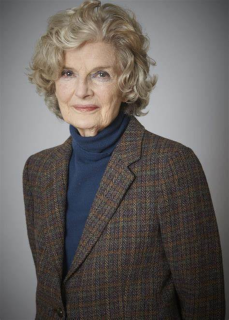
Julia O’Faolain, Irish novelist and short story writer, is born in London on June 6, 1932. She works as a writer, language teacher, editor and translator and lives in France, Italy, and the United States.

Although born in England when her father, Irish writer Seán Ó Faoláin, is lecturing at the Catholic college, St. Mary’s College, at Strawberry Hill, London, O’Faolain grows up in Ireland. The family returns to Ireland when she is just one year old. They live first in Killough House in County Wicklow, where future Taoiseach Garret FitzGerald is a playmate, artist Paul Henry a neighbour and Cork writer Frank O’Connor a regular visitor. The family then moves to Knockaderry House in Killiney, County Dublin, where her father publishes the literary journal The Bell from an outhouse at the bottom of the garden. Writers, poets and intellectuals such as Patrick Kavanagh, Brendan Behan and Conor Cruise O’Brien are regular visitors and often have to entertain her while waiting to speak with her father.

O’Faolain does not begin school until she is eight years old as her mother, Irish writer and teacher Eileen Gould, has little time for nuns. Following her schooling, she completes an arts degree at University College Dublin (UCD) and then further studies at the Sapienza University of Rome and the Sorbonne in Paris. A formidable student and strikingly beautiful, she makes a strong impression on those who meet her.

In search of love, literature and freedom from 1950s Ireland, the young O’Faolain remains abroad working variously as a translator, language teacher, editor and writer in London. She makes lifelong friends who speak highly of her generosity, loyalty and kindness. As well as maintaining a strong interest in politics throughout her life, she attains a black belt in karate and attends karate classes until her early 70s.

In her 2013 memoir, O’Faolain recounts a number of her adult loves before she meets and marries Lauro Martines in Florence in 1957. The couple lives in Florence for a year while Martines completes a travelling fellowship from Harvard University. They then move to Portland, Oregon, where their son Lucien is born in 1959. While in the United States, she teaches French at Reed College in Portland. The family returns to live in Florence from 1962-66 while her husband carries out research. When he is offered a professorship at the University of California, Los Angeles in 1966, they move back to the United States. However, not keen to live full-time in the United States, they purchase a house in Hampstead in 1970 and later in central London where she spends a good deal of time. From the 1990s onwards, she and Lauro spend more and more time in London, and they visit Ireland more during these years. Lucian, a painter and picture repairer, lives in London.

O’Faolain’s novels include No Country for Young Men, which is nominated for the Booker Prize in 1980, Women in the Wall (1975), The Obedient Wife (1982) and The Judas Cloth (1992) which is set in 19th-century Italy. Her first collection of short stories, We Might See Sights and Other Stories, is published in 1968, followed by Man in the Cellar (1974), Melancholy Baby (1978) and Daughters of Passion (1982). And with her husband, she edits Not in God’s Image: Women in History from the Greeks to the Victorians (1973).

O’Faolain’s writings are suffused with themes of clerical intrigue, women’s role in society, power, faith and sexuality. She says once that she is more detached from her characters than her father was. “He was fond of his characters whereas I was more impatient of mine… The fact that he often forgave their foolishness showed that he was fond of Ireland itself, where he lived for the most of his life. I instead left it and found I was happier elsewhere.”

As a writer, O’Faolain is not particularly well-known in Ireland. Following the publication of her memoir in 2013, she is asked by The Irish Times journalist Arminta Wallace if it bothers her that her name does not often figure in lists of famous Irish writers, perhaps because she did not live here. She replies, “Not only do I not live here but when my last book came out someone wrote an article naming me as a ‘forgotten writer’… which was not a cheerful read. It wasn’t in any way offensive, but it wasn’t very comforting…I suppose I didn’t write enough. You mustn’t let too many years go by between books – and I did that.”

O’Faolain dies at the age of 88 in London on October 27, 2020, following a long illness. Her papers, which include manuscripts of her writing and a significant correspondence between her and her father, are donated to UCD in 2018. At the time, archivists expect them to be available to researchers by 2022.


Leave a comment

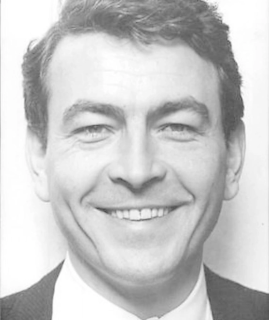
Birth of Patrick Bedford, Stage & Television Actor

Patrick Alexander Bedford, Irish stage and television actor, is born in Dublin on May 30, 1932.

Bedford begins his career in the 1950s at the Gate Theatre in Dublin then under the direction of Hilton Edwards and Micheál Mac Liammóir, including productions of Anton Chekhov, George Bernard Shaw and William Shakespeare. He later works on the stage and in television in England. In London, he appears on stage and television in Edgar Wallace Mysteries and in several plays adapted for television.

Bedford is in the original stage production of Brian Friel‘s Philadelphia, Here I Come! at the Gaiety Theatre in Dublin in September 1964, in the London West End transfer at the Criterion Theatre, and in the Broadway New York City transfer. His performance earns him a 1965 Tony Award for Best Actor in a Play nomination, along with Donal Donnelly, and an Outer Critics Circle Award.

Bedford is a key figure in episode four, “A Death in England,” of the ABC Weekend TV sci-fi drama Undermind on UK television in 1965. He has a small part in Orson Welles‘s film Chimes at Midnight (1965) and a starring role with Sandy Dennis in the 1967 film Up the Down Staircase about life in a New York City high school and is in The Next Man (1976).

Bedford then mainly works in theatre in the United States, on both coasts, but mainly in New York City both on and off Broadway. He is in the premiere of Tennessee Williams‘s last play Small Craft Warnings at the New Theatre in New York in 1972. Other stage appearances include Brian Friel’s The Mundy Scheme in New York in 1969 and as John Adams in the nationwide tour of the musical 1776. He appears in over 200 stage productions throughout his career.

Bedford dies at the age of 67 on November 20, 1999, in Manhattan, New York City, of cancer six weeks after entering the hospital.


Leave a comment

Death of Joseph Brenan, Poet, Journalist & Author

Joseph Brenan (also Brennan), poet, journalist and author, and leading member of the Young Irelanders and Irish Confederation, dies on May 27, 1857, in New Orleans, Louisiana.

Brenan is born in Cork, County Cork, on November 17, 1828. He begins to write verse at an early age and is one of the genuine poets of the Young Ireland movement. His earlier poems are published under the initials “J. B., Cork,” or “J. B—n,” and some of his American verses under the pseudonym “Gondalez.” He is also an able prose writer.

Brenan is an active member of the Cork Historical Society, and is one of the editors of the Cork Magazine, which appears in November 1847, and continues to be published until the end of 1848, when the journal ceases publication. Some of its contributors, who include Frazer, Martin MacDermott, Fitz James O’Brien, Mulchinock and Mary Savage, later either end up in jail or in exile.

In January 1848, John Mitchel visits Cork and, according to Michael Cavanagh, who publishes a sketch of Brenan’s life in Young Ireland, Dublin, in June and July 1885, Brenan for the first time “beheld the man he most admired on earth, and with whose future destiny, whether for weal or woe, he felt his own was bound up. Never had the archenemy of England a more faithful or earnest follower.”

Brenan contributes to the Mitchel’s United Irishman and sells his rifle to obtain train fare so he can take up his residence in Dublin, the headquarters of the revolutionary movement. He later publishes articles in John Martin‘s The Irish Felon urging the Confederate Clubs members, many of whom have arms, to be in readiness for action. “The sooner you realise the fact,” he writes in a letter addressed to the Members of the Provincial Confederate Clubs, “that the Confederation was got up for the purpose of doing something, the better for us all. Just think what it undertook to do. It undertook to defeat the strongest Government and to liberate the most degraded country that ever existed. It undertook to give – to a province—to strike the chains off millions of slaves and, if necessary, to wash out the iron moulds in blood.”

In another letter to “the Young Men of Ireland” on July 22, 1848, he writes, “On you I principally rely. You realise that you are very ‘rash,’ rather inclined to be ‘violent,’ and have exceedingly little prudence to spare. Brothers, let your watchword be ‘Now or never—now and forever’ rashly.”

Brenan is associated with John Savage and John O’Mahony while Savage is operating on the slopes of the Comeragh Mountains. He is arrested and kept in prison for seven months alternately in Newgate Prison, Carrickfergus and Kilmainham Gaols. During his confinement he writes some fine poems, according to T. F. O’Sullivan, one, entitled Yearnings, evidently addressed to Mary Savage, sister of John.

After his release without trial in March 1849, Brenan becomes editor of the Irishman which had been started in Dublin by Bernard Fulham, and for six months attempts to rekindle the insurrectionary flame in the country. He is implicated in the attack on the Cappoquin police barracks on September 16, 1848, and in October escapes to the United States.

In America Brenan becomes associated with a number of journals, including Horace Greeley‘s New-York Tribune, Devin Reilly’s People, The Enquirer of Newark, New Jersey, and the New Orleans Delta in which he writes a series of papers under the pen-name Ben Fox. On August 27, 1851, he marries Mary Savage, in her parents’ house, on Thirteenth Street, New York.

Brenan writes some articles and poems for John Mitchel’s Irish Citizen in 1854. He is an enthusiastic supporter of the Southern cause and founds the New Orleans Times.

Brenan dies on May 27, 1857, at the early age of twenty-nine and is buried in the old French cemetery of New Orleans. During the last year of his life, he is almost totally blind. He is attended in his last illness by Dr. Dalton Williams. There are seven children of his and Mary’s marriage, only one of whom, Florence, survives their parents. She possesses her father’s literary ability but devotes her life to religion as a member of the Mercy Order.

Brenan’s best-known poem, “Come to Me, Dearest,” is addressed to Mary Savage before their marriage. The love story of Brenan and Mary is told in the sketch by Ellen Mary Patrick Downing, afterwards Sister Mary Alphonsus.


Leave a comment

The Occupation and Burning of the Custom House

The Custom House in Dublin is occupied and then burned in an operation by the Irish Republican Army (IRA) on May 25, 1921, during the Irish War of Independence. At the time, the Custom House is the headquarters of the Local Government Board for Ireland, an agency of the British administration in Ireland, against which the IRA is fighting in the name of the self-proclaimed Irish Republic. The operation, involving over 100 IRA volunteers, is a propaganda coup for the republicans but a military disaster for the IRA in the Irish capital. A force of British Auxiliaries quickly arrives, and a gun battle erupts. Five IRA volunteers, John Doyle, Edward Dorins, Daniel Head, Captain Patrick and Lieutenant Stephen O’Reilly, are killed, along with three civilians. Approximately 80 volunteers are captured.

The operation is the largest action in Dublin by rebels since the Easter Rising of April 1916.

The Irish War of Independence is a guerrilla campaign by the IRA in support of the Irish Republic. The conflict enters its bloodiest phase in the first six months of 1921. In Dublin, a total of 309 people are killed in the conflict and several hundred more wounded.

Dublin is garrisoned by over 10,000 British troops and 1,600 police including 400 men of the Royal Irish Constabulary (RIC) Auxiliary Division. Most IRA actions in the city consist either of assassinations of selected police, military or administration figures by the Squad, or ambushes on British forces by one of the four Active Service Units (ASU) of the IRA’s Dublin Brigade, together comprising about 100 men. These are usually rapid and fleeting attacks using grenades and handguns, followed by a quick getaway. There are strict orders given to IRA units to avoid prolonged engagements with the better-armed British forces.

However, this policy is reversed after a meeting of the Ministry of Dáil Éireann in May 1921 where the President of the Republic, Éamon de Valera, calls for a spectacular public show of force by the IRA, to reinforce the idea that it is an army representing an Irish government. For this reason, it is decided to attack and burn the Custom House, which, although an important government building, is not defended by the British military. Michael Collins is against the attack but is overruled.

Michael O’Kelly, Lieutenant E Company, 2nd Battalion, Dublin Brigade, recalls plans to “deliver a smashing blow to England.” Two large scale operations – to capture Beggars Bush Barracks, or to destroy the Customs House are initially considered. The Custom House is eventually chosen. IRA member Vincent Byrne says that the operation is “one of many under review.”

In the early afternoon of May 25, 1921, roughly 120 non-uniformed IRA Volunteers begin to gather around the Custom House in groups of two or three. Three quarter of those involved belonged to the 2nd Battalion of the Dublin Brigade under Tom Ennis. Only a minority of them are experienced guerrilla fighters and they are armed only with pistols and a limited amount of ammunition. At 1:00 p.m., they rush the Custom House and overpower the police guard. A lorry pulls up outside the building with tins of petrol and bales of cotton, which are then sprinkled throughout the building. The IRA Volunteers herd all the staff into the main hall. The caretaker of the building, Francis Davis, is shot dead when he tries to call the police.

However, at about 1:10 p.m., a watching policeman notifies British forces and 60 Auxiliaries in three lorries and an armored car quickly arrive on the scene. IRA Volunteers from the 1st, 3rd and 4th battalions are positioned outside the building to stop the enemy from approaching.

Four Auxiliaries are wounded in a gun battle with one of these IRA protection teams outside the building. Other Auxiliaries fire into the building with rifles and Lewis machine guns, exchanging fire with the IRA fighters inside. A number of IRA Volunteers and civilians are killed or wounded by the Auxiliaries. As fighting rages outside, IRA Volunteers inside the building are ordered to set it alight.

The ammunition of the IRA Volunteers quickly runs out and the firefight ends within 30 minutes. Some Volunteers are shot as they try to run away. Tom Ennis, in command of the operation, escapes but is hit twice in the leg. Many others are arrested along with civilians as they come out of the now burning Custom House with their hands up. The Fire Brigade, which had been delayed from responding by other IRA companies in the city, arrives too late to put out the fire.

British military forces composed of units from the Wiltshire Regiment arrive and take over the operation from the Auxiliaries at this point. A total of 111 people are arrested, of whom 70–80 are IRA volunteers.

The Custom House burns for five days and is all but completely destroyed by the fire. With it are destroyed many centuries of local government records. The Irish Bulletin, official gazette of the Irish Republic, reports:

“A detachment of the Dublin Brigade of the Irish Army was ordered to carry out the destruction of the Custom House in accordance with a decision arrived at after due deliberation of the ministry of Dáil Éireann. We in common with the rest of the nation regret the destruction of historical buildings. But the lives of four million people are a more cherished charge than any architectural masterpiece. The Custom House was the seat of an alien tyranny.”

From the republican point of view, the operation is successful for its propaganda value, but it is a heavy blow in terms of the numbers lost, both killed and arrested. Following the operation, the Dublin Brigade and The Squad are amalgamated into the Dublin Guard. However, the operation does not totally impede the IRA’s campaign in Dublin. The Dublin Brigade carries out 107 attacks in the city in May and 93 in June, showing a decline but not a dramatic one.

The memoir of Harry Colley, Adjutant of the Dublin IRA, estimates the numbers in the five Dublin battalions at 1,400 in early 1921.

The armed conflict is brought to an end on July 11, 1921, and negotiations are opened which produces the Anglo-Irish Treaty in December of that year. The Custom House is re-built after the end of the war.

Irish local government records from the 1600s had been brought from rural parts of Ireland to the Custom House for safekeeping, and these are lost in the blaze. At the time, The New York Times subtitles their report on the fire as “Priceless Records Lost.” Some genealogists still lament the loss of these historical records.

(Pictured: The Custom House in flames, taken on May 25, 1921)


Leave a comment

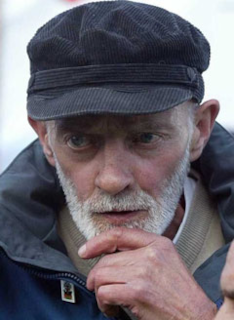
Death of Brian Keenan, Member of the Army Council of the Provisional IRA

Brian Keenan, a member of the Army Council of the Provisional Irish Republican Army (IRA), dies on May 21, 2008, at Cullyhanna, County Armagh, Northern Ireland, following a battle with colorectal cancer. He receives an 18-year prison sentence in 1980 for conspiring to cause explosions and plays a key role in the Northern Ireland peace process.

The son of a member of the Royal Air Force (RAF), Keenan is born on July 17, 1941, in Swatragh, County Londonderry, Northern Ireland, before his family moves to Belfast. As a teenager, he moves to England to find work, for a time working as a television repairman in partnership with his brother in Corby, Northamptonshire. During this time, he comes to the attention of the police when he damages a cigarette machine, which leads to police having his fingerprints on file. He returns to Northern Ireland when the Troubles begin and starts working at the Grundig factory in the Finaghy area of Belfast where he acquires a reputation as a radical due to his involvement in factory trade union activities.

Despite his family having no history of republicanism, Keenan joins the Provisional Irish Republican Army in 1970 or 1971, and by August 1971 is the quartermaster of the Belfast Brigade. He is an active IRA member, planning bombings in Belfast and travelling abroad to make political contacts and arrange arms smuggling, acquiring contacts in East Germany, Libya, Lebanon and Syria. In 1972, he travels to Tripoli to meet with Libyan leader Muammar Gaddafi in order to acquire arms and finance from his government. In early 1973 he takes over responsibility for control of the IRA’s bombing campaign in England and also becomes IRA Quartermaster General. In late 1973, he is the linchpin of the kidnap of his former employer at Grundig, director Thomas Niedermayer.

In early 1974, Keenan plans to break Gerry Adams and Ivor Bell out of Long Kesh using a helicopter, in a method similar to Seamus Twomey‘s escape from Mountjoy Prison in October 1973, but the plan is vetoed by Billy McKee. He is arrested in the Republic of Ireland in mid-1974 and sentenced to twelve months imprisonment for IRA membership. On March 17, 1975, he is shot and wounded while attempting to lead a mass escape from Portlaoise Prison. While being held in Long Kesh, Gerry Adams helps to devise a blueprint for the reorganisation of the IRA, which includes the use of covert cells and the establishment of a Southern Command and Northern Command. As the architects of the blueprint, Adams, Bell and Brendan Hughes, are still imprisoned, Martin McGuinness and Keenan tour the country trying to convince the IRA Army Council and middle leadership of the benefits of the restructuring plan, with one IRA member remarking “Keenan was a roving ambassador for Adams.” The proposal is accepted after Keenan wins support from the South Derry Brigade, East Tyrone Brigade and South Armagh Brigade, with one IRA member saying, “Keenan was really the John the Baptist to Adams’ Christ.”

In December 1975, members of an IRA unit based in London are arrested following the six-day Balcombe Street siege. The IRA unit had been active in England since late 1974 carrying out a series of bombings, and a few months after his release from prison Keenan visits the unit in Crouch Hill, London, to give it further instructions. In follow-up raids after the siege, police discover crossword puzzles in his handwriting and his fingerprints on a list of bomb parts. A warrant is issued for his arrest.

Garda Síochána informer Sean O’Callaghan claims that Keenan recommended IRA Chief of Staff Seamus Twomey to authorise an attack on Ulster Protestants in retaliation to an increase in sectarian attacks on Catholic civilians by Protestant loyalist paramilitaries, such as the killing of three Catholics in a gun and bomb attack by the Ulster Volunteer Force (UVF) on Donnelly’s Bar in Silverbridge, County Armagh on December 19, 1975. According to O’Callaghan “Keenan believed that the only way, in his words, to put the nonsense out of the Prods [Protestants] was to just hit back much harder and more savagely than them.” Soon after the sectarian Kingsmill massacre occurs, when ten Protestant men returning home from their work are ordered out of a minibus they are travelling in and executed en masse with a machine gun on January 5, 1976.

Keenan is arrested on the basis of the 1975 warrant near Banbridge on March 20, 1979, when the Royal Ulster Constabulary (RUC) stopped two cars travelling north on the main road from Dublin to Belfast and is extradited to England to face charges relating to the Balcombe Street Gang‘s campaign in England. His capture is a blow to the IRA, in particular as he was carrying an address book listing his contacts including Palestinian activists in the United Kingdom. The IRA responds by dispatching Bobby Storey and three other members to break Keenan out of prison using a helicopter, but all four are arrested and remanded to Brixton Prison. Keenan stands trial at the Old Bailey in London in June 1980 defended by Michael Mansfield and is accused of organising the IRA’s bombings in England and being implicated in the deaths of eight people including Ross McWhirter and Gordon Hamilton Fairley. He is sentenced to eighteen years imprisonment after being found guilty on June 25, 1980.

Keenan continues to support Gerry Adams while in prison. In August 1982 Adams is granted permission by the IRA’s Army Council to stand in a forthcoming election to the Northern Ireland Assembly, having been refused permission at a meeting the previous month. In a letter sent from Leicester Prison, Keenan writes that he “emphatically” supports the move and endorses the Army Council’s decision.

Keenan is released from prison in June 1993 and by 1996 is one of seven members of the IRA’s Army Council. Following the events after the IRA’s ceasefire of August 1994, he is openly critical of Gerry Adams and the “tactical use of armed struggle,” or TUAS, strategy employed by the republican movement. After the Northern Ireland peace process becomes deadlocked over the issue of the IRA decommissiong its arms, he and the other members of the Army Council authorise the Docklands bombing which kills two people and marks the end of the IRA’s eighteen-month ceasefire in February 1996.

Keenan outlines the IRA’s public position in May 1996 at a ceremony in memory of hunger striker Seán McCaughey at Milltown Cemetery, where he states, “The IRA will not be defeated…Republicans will have our victory…Do not be confused about decommissioning. The only thing the Republican movement will accept is the decommissioning of the British state in this country.” In the same speech he accuses the British of “double-dealing” and denounces the Irish government as “spineless.”

On February 25, 2001, Keenan addresses a republican rally in Creggan, County Armagh, saying that republicans should not fear “this phase” of “the revolution” collapsing should the Good Friday Agreement fail. He confirms his continued commitment to the Armalite and ballot box strategy, saying that both political negotiations and violence are “legitimate forms of revolution” and that both “have to be prosecuted to the utmost.” He goes on to say, “The revolution can never be over until we have British imperialism where it belongs—in the dustbin of history,” a message aimed at preventing rank-and-file IRA activists defecting to the dissident Real IRA.

Keenan plays a key role in the peace process, acting as the IRA’s go-between with the Independent International Commission on Decommissioning (IICD). Gerry Adams remarks, “There wouldn’t be a peace process if it wasn’t for Brian Keenan.” Keenan resigns from his position on the Army Council in 2005 due to ill-health, and is replaced by Bernard Fox, who had taken part in the 1981 Irish hunger strike. On May 6, 2007, he is guest speaker at a rally in Cappagh, County Tyrone, to commemorate the 20th anniversary of the deaths of the so-called “Loughgall Martyrs,” eight members of the IRA East Tyrone Brigade killed by the Special Air Service (SAS) in 1987.

In July 2002, Keenan is diagnosed as suffering from terminal colorectal cancer. It is alleged by the Irish Independent and The Daily Telegraph that Keenan succeeded Thomas “Slab” Murphy as Chief of Staff of the Provisional IRA at some point between the late 1990s and the mid-2000s before he relinquished the role to deal with his poor health caused by cancer.

Keenan’s last years are spent living with his wife in Cullyhanna, County Armagh, where he dies of cancer on May 21, 2008. He is an atheist and receives a secular funeral, representing a major republican show of strength.


Leave a comment

The “German Plot”

On Friday, May 17, 1918, the British government orders the arrest and imprisonment of all leading members of Sinn Féin, claiming they were involved in a plan to import arms from Germany. The British cover for these arrests is a bogus “German Plot,” which has since been thoroughly discredited.

The “German Plot” is a spurious conspiracy that the Dublin Castle administration in Ireland claims to exist between the Sinn Féin movement and the German Empire in May 1918. Allegedly, the two factions conspire to start an armed insurrection in Ireland during World War I, which would divert the British war effort. The administration uses these claims to justify the internment of Sinn Féin leaders, who are actively opposing attempts to introduce conscription in Ireland and more Irishmen being used as cannon fodder in service to their oppressors.

The “plot” originates on April 12 when the British arrest Joseph Dowling after he is put ashore in County Clare by a German U-boat. Dowling is a member of the Irish Brigade, one of several schemes by Roger Casement to get German assistance for the 1916 Easter Rising. Dowling now claims that the Germans are planning a military expedition to Ireland. William Reginald Hall and Basil Thomson believe him and convince the authorities to intern all Sinn Féin leaders. One hundred fifty are arrested on the night of May 17–18 and taken to prisons in England, including Éamon de Valera, Arthur Griffith, Constance Markievicz and W. T. Cosgrave. The introduction of internment and conscription reflects a decision of the British cabinet to take a harder line on the Irish Question following the failure of the Irish Convention.

Historian Paul McMahon characterises the “Plot” as “a striking illustration of the apparent manipulation of intelligence in order to prod the Irish authorities into more forceful action.” Republicans are tipped off about the impending arrests, allowing some to escape capture while others choose to be taken in order to secure a propaganda victory. The internment is counterproductive for the British, imprisoning the more accommodating Sinn Féin leadership while failing to capture members of the Irish Republican Brotherhood who are more committed to physical force republicanism.

The British live to regret one man who slips through their fingers that spring. Michael Collins uses the months he might have spent in an English prison assembling and consolidating his control of an intelligence organisation and putting it on a more focused military footing that soon makes the Empire squeal.

Even at the time, the proposition that the Sinn Féin leadership are directly planning with the German authorities to open another military front in Ireland is largely seen as spurious. Irish nationalists generally view the “German Plot” not as an intelligence failure but as a black propaganda project to discredit the Sinn Féin movement, particularly to an uninformed public in the United States. McMahon comments that this belief is mistaken, and that the authorities acted honestly but on the basis of faulty intelligence. It is still a matter of study and conjecture what impact it had on U.S. foreign policy regarding the 1919 bid for international recognition of the Irish Republic.

(Pictured: Dublin Castle, Dame Street, Dublin)


Leave a comment

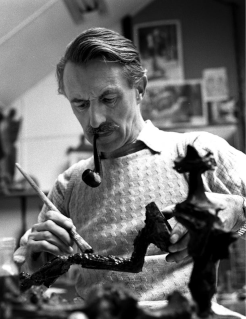
Death of Surrealist Sculptor F. E. McWilliam

Frederick Edward McWilliam CBE RA, Northern Irish surrealist sculptor, dies in London on May 13, 1992. He works chiefly in stone, wood and bronze. His style of work consists of sculptures of the human form contorted into strange positions, often described as modern and surreal.

McWilliam is born in Banbridge, County Down, on April 30, 1909, the son of Dr. William McWilliam, a local general practitioner. Growing up in Banbridge has a great influence on his work. He makes references to furniture makers such as Carson the Cooper and Proctors in his letters to his friend, Marjorie Burnett.

McWilliam attends Campbell College in Belfast and later attends Belfast College of Art from 1926. After 1928, he continues to study at the Slade School of Fine Art in London. He originally intends to become a painter, but influenced by Alfred Horace Gerrard, head of the sculpture department at the Slade, and by Henry Moore whom he meets there, he turns to sculpture. He receives the Robert Ross Leaving Scholarship which enables him and his wife, Beth (née Crowther), to travel to Paris where he visits the studio of Constantin Brâncuși.

During the first year of World War II, he joins the Royal Air Force and is stationed in England for four years where he is engaged in interpreting aerial reconnaissance photographs. He is then posted to India. While there he teaches art in the Hindu Art School in New Delhi.

After his return from India, McWilliam teaches for a year at the Chelsea School of Art. He is then invited by A. H. Gerrard to teach sculpture at the Slade. He continues in this post until 1968.

The 1950s see McWilliam receive many commissions including the Four Seasons Group for the Festival of Britain exhibition in 1951. A major commission in 1957 is Princess Macha for Altnagelvin Area Hospital in Waterside, Derry.

During the Northern Ireland Troubles McWilliam produces a series of bronzes in 1972 and 1973 known as Women of Belfast in response to the bombing at the Abercorn Tea-Rooms.

In 1964 McWilliam is awarded an Honorary Doctor of Letters from Queen’s University Belfast. In 1966 he is appointed CBE and in 1971 he wins the Oireachtas Gold Medal. He is represented in many public collections, including the Museum of Modern Art in New York City and Tate Britain in London. In 1984 the National Self-Portrait Gallery purchases a McWilliam self-portrait amongst acquisitions from fellow Northerners Brian Ballard, Brian Ferran and T. P. Flanagan.

The Arts Council of Northern Ireland organises a retrospective of his work in 1981 and a second retrospective is shown at the Tate Gallery in 1989 for his 80th birthday.

McWilliam continues carving up to his death. He dies of cancer in London on May 13, 1992.

In September 2009 Banbridge District Council opens a gallery and studio dedicated to the work of and named after McWilliam.