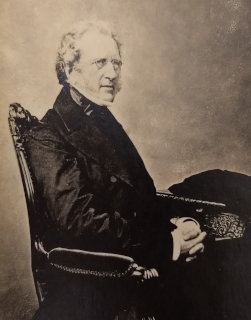
Holwell grows up in London and studies medicine at Guy’s Hospital. He gains employment as a surgeon in the East India Company and is sent to India in 1732. He serves in this capacity until 1749. In 1751, he is appointed as zamindar of the 24 Parganas district of Bengal. He then serves as a member of the Council of Fort William (Calcutta) and defends the settlement against Siraj ud-Daulah in 1756.
In June 1756, Holwell is a survivor of the Black Hole of Calcutta, the incident in which British subjects and others are crammed into a small poorly ventilated chamber overnight, resulting in many deaths. His 1758 account of this incident obtains wide circulation in England and some claim this gains support for the East India Company’s conquest of India. His account of the incident is not publicly questioned during his lifetime nor for more than a century after his death. However, in recent years, his version of the event has been called into question by many historians.
Holwell succeeds Robert Clive as temporary Governor of Bengal in 1760, but is dismissed from the Council in 1761 for remonstrating against the appointment of Henry Vansittart as Governor of Bengal. He is elected Fellow of the Royal Society (FRS) in 1767.
Holwell has also become an important source for modern historians of medicine, as a result of his description of the practice of smallpox variolation in eighteenth-century Bengal, An Account of the Manner of Inoculating for the Small Pox in the East Indies with Some Observations on the Practice and Mode of Treating that Disease in those Parts (London, 1767).
Richard Boyle, 1st Earl of Cork, English-born politician who serves as Lord Treasurer of the Kingdom of Ireland and is also known as the Great Earl of Cork, dies on September 15, 1643 in Youghal, County Cork. He is an important figure in the continuing English colonisation of Ireland in the 16th and 17th centuries, as he acquires large tracts of land in plantations in Munster in southern Ireland.
Boyle goes to Ireland in 1588. He becomes deputy Escheator under Ireland’s Escheator General John Crofton and uses his office to enrich himself, only to lose his property in the Munster rebellion in 1598. Returning to England, he is imprisoned on charges of embezzlement arising from his activities in Ireland. He is acquitted by a royal court, however, and in 1600 Elizabeth I of England appoints him clerk of the council of Munster.
Two years later, Boyle purchases Sir Walter Raleigh’s estates in the Irish counties of Cork, Waterford, and Tipperary. By employing settlers imported from England, he develops his lands and founds ironworks and other industries. The enormous wealth he accumulates brings him honours and political influence. Created Earl of Cork in 1620, he is appointed a Lord Justice of Appeal in 1629 and Lord High Treasurer in 1631. Nevertheless, soon after Sir Thomas Wentworth (afterward Earl of Strafford) goes to Ireland as lord deputy in 1633, Boyle is fined heavily for possessing defective titles to some of his estates. Thereafter his political influence declines.
Boyle dies at Youghal on September 15, 1643, having been chased off his lands in the Irish Rebellion of 1641. His sons, however, recover the family estates after the suppression of the rebellion.
Boyle’s first wife, Joan Apsley, the daughter and co-heiress of William Apsley of Limerick, whom he marries on November 6, 1595, dies at Mallow, County Cork on December 14, 1599 during childbirth. By his second wife, Catherine Fenton, daughter of Sir Geoffrey Fenton, he has eight daughters and seven sons, including the renowned chemist Robert Boyle and the statesman-dramatist Roger Boyle, 1st Earl of Orrery.
Louis MacNeice, British poet and playwright, is born in Belfast on September 12, 1907. He is a member, along with Wystan Hugh Auden, Cecil Day-Lewis, and Stephen Spender, of a group whose low-keyed, unpoetic, socially committed, and topical verse is the “new poetry” of the 1930s. His body of work is widely appreciated by the public during his lifetime, due in part to his relaxed but socially and emotionally aware style.
MacNeice’s first book of poetry, Blind Fireworks, appears in 1929, followed by more than a dozen other volumes, such as Poems (1935), Autumn Journal (1939), Collected Poems, 1925–1948 (1949), and, posthumously, The Burning Perch (1963). An intellectual honesty, Celtic exuberance, and sardonic humour characterize his poetry, which combines a charming natural lyricism with the mundane patterns of colloquial speech. His most characteristic mood is that of the slightly detached, wryly observant, ironic and witty commentator. Among MacNeice’s prose works are Letters from Iceland (with W.H. Auden, 1937) and The Poetry of W.B. Yeats (1941). He is also a skilled translator, particularly of Horace and Aeschylus (The Agamemnon of Aeschylus, 1936).
By the early 1960s, MacNeice is “living on alcohol,” and eating very little, but still writing. In August 1963 he goes caving in Yorkshire to gather sound effects for his final radio play, Persons from Porlock. Caught in a storm on the moors, he does not change out of his wet clothes until he is home in Hertfordshire. Bronchitis evolves into viral pneumonia and he is admitted to hospital in London on August, 27. He dies there on September 3, 1963 at the age of 55. He is buried in Carrowdore churchyard in County Down, alongside his mother.
MacNeice’s final book of poems, The Burning Perch, is published a few days after his funeral. His life-long friend from Oxford, W.H. Auden, who gives a reading at MacNeice’s memorial service, describes the poems of his last two years as “among his very best.”
Christy Brown, Irish writer and painter who has cerebral palsy and is able to write or type only with the toes of one foot, dies on September 7, 1981, in Parbrook, Somerset, England. His most recognized work is his autobiography, My Left Foot (1954).
Brown is born into a working-class Irish family at the Rotunda Hospital in Dublin on June 5, 1932. He is one of 22 siblings of parents Bridget Fagan and Patrick Brown. After his birth, doctors discover that he has severe cerebral palsy, a neurological disorder which leaves him almost entirely spastic in his limbs. Though urged to commit him to a hospital, his parents are unswayed and subsequently determined to raise him at home with their other children. During his adolescence, social worker Katriona Delahunt becomes aware of his story and begins to visit the Brown family regularly. She brings him books and painting materials as, over the years, he has shown a keen interest in the arts and literature. He has also demonstrated extremely impressive physical dexterity since, soon after discovering several household books, he had learned to both write and draw himself with his left leg, the only limb over which he has unequivocal control.
Brown quickly matures into a serious artist. Although he famously receives almost no formal schooling during his youth, he does attend St. Brendan’s School-Clinic in Sandymount intermittently. At St. Brendan’s he comes in contact with Dr. Robert Collis, a noted author. Collis discovers that Brown is also a natural novelist and, later, helps use his own connections to publish My Left Foot, by then a long-gestating autobiographical account of Brown’s struggle with everyday life amidst the vibrant culture of Dublin.
When My Left Foot becomes a literary sensation, one of the many people who write letters to Brown is married American woman Beth Moore. Brown and Moore become regular correspondents and, in 1960, he holidays in North America and stays with Moore at her home in Connecticut. When they meet again in 1965, they began an affair. Brown journeys to Connecticut once more to finish his magnum opus, which he had been developing for years. He finally does so in 1967 with help from Moore, who introduces and administers a strict working regimen, mostly by denying him alcohol until a day’s work is completed. The book, Down All the Days, is published in 1970. It is an ambitious project drawn largely from a playful expansion of My Left Foot. It becomes an international best-seller, translated into fourteen languages. The Irish Times reviewer Bernard Share claims the work is “the most important Irish novel since Ulysses.”
Down All the Days is followed by a series of other novels, including A Shadow on Summer (1972), Wild Grow the Lilies (1976) and A Promising Career (published posthumously in 1982). He also publishes three poetry collections: Come Softly to My Wake, Background Music and Of Snails and Skylarks. All the poems are included in The Collected Poems of Christy Brown.
Brown’s fame continues to spread internationally, and he becomes a prominent celebrity. Upon his return to Ireland, he is able to use proceeds from the sales of his books to design and move into a specially constructed home outside Dublin with his sister’s family. Though he and Beth had planned to marry and live together at the new home, and though Moore had informed her husband of these plans, it is around this time that he begins an affair with Englishwoman Mary Carr, whom he meets at a party in London. He then terminates his affair with Moore and marries Carr at the Registry Office, Dublin, in 1972. They move to Stoney Lane, Rathcoole, County Dublin, to Ballyheigue, County Kerry and then to Somerset. He continues to paint, write novels, poetry and plays. His 1974 novel, A Shadow on Summer, is based on his relationship with Moore, whom he still considers a friend.
Brown’s health deteriorates after marrying Carr. He becomes mainly a recluse in his last years, which is thought to be a direct result of Carr’s influence and perhaps abusive nature. He dies at the age of 49 on September 7, 1981, after choking during a lamb chop dinner. His body is found to have significant bruising, which leads many to believe that Carr had physically abused him. Further suspicions arise after Georgina Hambleton’s biography, The Life That Inspired My Left Foot, reveals a supposedly more accurate and unhealthier version of their relationship. The book portrays Carr as an abusive alcoholic and habitually unfaithful. He is buried in the Glasnevin Cemetery in Dublin.
The Anglo-Irish rock band The Pogues pay tribute to Christy Brown with a song titled “Down All the Days.” It is the seventh track on their 1989 recording Peace and Love. Similarly, U2 releases a song titled “Down All the Days” with the 20th anniversary edition of Achtung Baby. The Men They Couldn’t Hang also writes a song “Down All the Days” which appears on their Silver Town album also released in 1989.
Hely is born in 1724 at Gortroe, Mallow, son of Francis Hely, a gentleman of County Cork. He is educated at Trinity College Dublin (BA 1744) and is called to the Irish bar in 1748. He takes the additional name of Hutchinson upon his marriage in 1751 to Christiana Nixon, heiress of her uncle, Richard Hutchinson.
Hely-Hutchinson is elected member of the Irish House of Commons for the borough of Lanesborough in 1759, but from 1761 to 1790 he represents Cork City. He at first attaches himself to the patriotic party in opposition to the government, and although he afterwards joins the administration, he never abandons his advocacy of popular measures.
After a session or two in parliament he is made a privy councillor and prime Serjeant-at-law. From this time, he gives a general, though by no means invariable, support to the government. In 1767 the ministry contemplates an increase of the army establishment in Ireland from 12,000 to 15,000 men, but the Augmentation Bill meets with strenuous opposition, not only from Henry Flood, John Ponsonby and the habitual opponents of the government, but from the Undertakers, or proprietors of boroughs, on whom the government has hitherto relied on to secure them a majority in the House of Commons.
It therefore becomes necessary for Lord Townshend to turn to other methods for procuring support. Early in 1768 an English Act is passed for the increase of the army, and a message from King George III setting forth the necessity for the measure is laid before the House of Commons in Dublin. An address favourable to the government policy is, however, rejected as Hely-Hutchinson, together with the speaker and the attorney general, do their utmost both in public and private to obstruct the bill. Parliament is dissolved in May 1768, and the lord lieutenant sets about the task of purchasing or otherwise securing a majority in the new parliament. Peerages, pensions and places are bestowed lavishly on those whose support could be thus secured. Hely-Hutchinson is won over by the concession that the Irish army should be established by the authority of an Irish act of parliament instead of an English one.
The Augmentation Bill is carried in the session of 1769 by a large majority. Hely-Hutchinson’s support had been so valuable that he receives as reward an addition of £1,000 a year to the salary of his sinecure of alnager, a major’s commission in a cavalry regiment, and a promise of the Secretaryship of State. He is at this time one of the most brilliant debaters in the Irish parliament and is enjoying an exceedingly lucrative practice at the bar. This income, however, together with his well-salaried sinecure, and his place as prime serjeant, he surrenders in 1774 to become provost of Trinity College, although the statute requiring the provost to be in holy orders has to be dispensed with in his favour.
For this great academic position Hely-Hutchinson is in no way qualified and his appointment to it for purely political service to the government is justly criticised with much asperity. His conduct in using his position as provost to secure the parliamentary representation of the university for his eldest son brings him into conflict with Patrick Duigenan, while a similar attempt on behalf of his second son in 1790 leads to his being accused before a select committee of the House of Commons of impropriety as returning officer. But although without scholarship Hely-Hutchinson is an efficient provost, during whose rule material benefits are conferred on Trinity College.
Hely-Hutchinson continues to occupy a prominent place in parliament, where he advocates free trade, the relief of the Catholics from penal legislation, and the reform of parliament. He is one of the very earliest politicians to recognise the soundness of Adam Smith‘s views on trade and he quotes from the Wealth of Nations, adopting some of its principles, in his Commercial Restraints of Ireland, published in 1779, which William Edward Hartpole Lecky pronounces one of the best specimens of political literature produced in Ireland in the latter half of the 18th century.
In the same year, the economic condition of Ireland being the cause of great anxiety, the government solicits from several leading politicians their opinion on the state of the country with suggestions for a remedy. Hely-Hutchinson’s response is a remarkably able state paper, which also shows clear traces of the influence of Adam Smith. The Commercial Restraints, condemned by the authorities as seditious, goes far to restore Hely-Hutchinson’s popularity which has been damaged by his greed of office. Not less enlightened are his views on the Catholic question. In a speech in parliament on Catholic education in 1782 the provost declares that Catholic students are in fact to be found at Trinity College, but that he desires their presence there to be legalised on the largest scale.
In 1777 Hely-Hutchinson becomes Secretary of State. When Henry Grattan in 1782 moves an address to the king containing a declaration of Irish legislative independence, he supports the attorney general’s motion postponing the question. On April 16, however, after the Easter recess, he reads a message from the Lord Lieutenant, the William Cavendish-Bentinck, 3rd Duke of Portland, giving the king’s permission for the House to take the matter into consideration, and he expresses his personal sympathy with the popular cause which Grattan on the same day brings to a triumphant issue. Hely-Hutchinson supports the opposition on the regency question in 1788, and one of his last votes in the House is in favour of parliamentary reform. In 1790 he exchanges the constituency of Cork for that of Taghmon in County Wexford, for which borough he remains member until his death at Buxton, Derbyshire on September 4, 1794.
(Pictured: Portrait, oil on canvas, of John Hely-Hutchinson (1724–1794) by Sir Joshua Reynolds (1723–1792))
The Royalist rebellion that breaks out in Ireland against the new English republic in 1649 is met by a prompt English response. On August 15 Oliver Cromwell and 15,000 troops land in Dublin. His merciless policy toward the Irish Royalists becomes brutally clear within a month.
The defeat of the Irish Royalists at Rathmines in early August is fortuitous for Cromwell, for without it, the English would have held only the small port of Derry (known as Londonderry from 1662) in the north, making his invasion almost impossible to effect. Cromwell quickly finds that the Irish Royalists have retreated into fortified towns. He therefore prepares for a series of sieges.
The first such siege occurs at Drogheda, 28 miles north of Dublin. Cromwell arrives at Drogheda on September 3. His siege guns, brought up by sea, arrive two days later. He finds the town surrounded by high but relatively thin walls and its governor, Sir Arthur Ashton, is confident of his defenses and refuses an order to surrender. On September 10 Cromwell begins an artillery bombardment of the walls. These are breached the following day, but the gap created is too small to allow troops to enter the city. Twice they are repelled until Cromwell himself leads an assault and overwhelms the defenders on September 11.
The carnage inside the city is appalling. Cromwell’s troops kill priests and monks on sight and set fire to a Catholic church sheltering some soldiers. Civilians as well as soldiers are massacred, and Ashton is bludgeoned to death with his own wooden leg. The few Royalist soldiers who survive are transported to Barbados. What happens at Drogheda is replicated at Wexford the following month and Clonmel the next May. By the time Cromwell has put down the rebellion and returned to England in that same month, he has become forever hated by Irish Catholics.
During the eight day siege the British lose 150 of their 12,000 men while 2,800 Irish are killed and 200 captured of the 3,100 at Drogheda.
(Pictured: St Laurence’s Gate – the last remaining of the ten original defensive gates at Drogheda)
The Hunt/de Vere family estate of 300 years (1657–1957), including the period of the de Vere Baronetcy of Curragh, is the present day Curraghchase Forest Park, in County Limerick. De Vere spends most of his life on the estate and is closely involved in its management. He suffers much trouble from his ownership of the island of Lundy, which his father, who was not much of a businessman, had unwisely purchased in 1802, and which becomes a heavy drain on the family’s finances. Sir Vere is never able to find a purchaser for Lundy, and it takes his son until 1834 to dispose of it.
De Vere stands for election in the 1820 General Election and comes in third with 2,921 votes.
De Vere is a poet. William Wordsworth calls his sonnets the most perfect of the age. These and his drama, Mary Tudor: An Historical Drama, are published by his son, the poet Aubrey Thomas de Vere, in 1875 and 1884.
De Vere produces numerous works over his lifetime. The most notable are Ode to the Duchess of Angouleme (1815), Julian the Apostate: A Dramatic Poem (1822), The Duke of Mercia: An Historical Drama [with] The Lamentation of Ireland, and Other Poems (1823), A Song of Faith: Devout Exercises and Sonnets and his most famous work, Mary Tudor: An Historical Drama.
Robert Emmet, one of the most famous revolutionaries in Irish history, is captured by the British at the home of a Mrs. Palmer in Harold’s Cross, outside Dublin on August 25, 1803.
Emmet is born at 109 St. Stephen’s Green in Dublin on March 4, 1778. He is the youngest son of Dr. Robert Emmet, a court physician, and his wife Elizabeth Mason. He attends Oswald’s school in Dopping’s-court, off Golden-lane and enters Trinity College, Dublin, in October 1793 at the age of fifteen. In December 1797, he joins the College Historical Society, a debating society.
While he is in college, his brother Thomas and some of his friends become involved in political activism. Emmet becomes secretary of a secret United Irish Committee in college and is expelled in April 1798 as a result. That same year he flees to France to avoid the many British arrests of nationalists that are taking place in Ireland. While in France, he garners the support of Napoleon, who promises to lend support when the upcoming revolution starts.
After the Irish Rebellion of 1798, Emmet is involved in reorganising the defeated Society of United Irishmen. In April 1799, a warrant is issued for his arrest. He escapes and soon after travels to the continent in the hope of securing French military aid. His efforts are unsuccessful, as Napoleon is concentrating his efforts on invading England. He returns to Ireland in October 1802.
In March of the following year, Emmet begins to prepare a new rebellion, with fellow Anglo-Irish revolutionaries Thomas Russell and James Hope. The revolutionaries conceal their preparations, but a premature explosion at one of Emmet’s arms depots kills a man, forcing Emmet to advance the date of the rising before the authorities’ suspicions are aroused.
Despite being unable to secure help from Michael Dwyer‘s Wicklow rebels and many rebels from Kildare turning back due to the scarcity of firearms, the rising begins in Dublin on the evening of July 23, 1803. Failing to seize the lightly defended Dublin Castle, the rising amounts to a large-scale disturbance in the Thomas Street area. Emmet witnesses a dragoon being pulled from his horse and piked to death, the sight of which prompts him to call off the rising to avoid further bloodshed. However, sporadic clashes continue into the night until finally quelled by British military forces.
Emmet flees into hiding, moving from Rathfarnham to Harold’s Cross so that he can be near his sweetheart, Sarah Curran. He is captured on August 25 and taken to Dublin Castle, then later removed to Kilmainham Gaol. Vigorous but ineffectual efforts are made to procure his escape.
Emmet is tried for and found guilty of high treason on September 19, 1803. Chief Justice John Toler, 1st Earl of Norbury sentences Emmet to be hanged, drawn, and quartered, as is customary for conviction of treason. The following day, Emmet is executed in Thomas Street near St. Catherine’s Church. He is hanged and beheaded after his death. Out of fear of being arrested, no one comes forward to claim his remains.
Emmet’s remains are first delivered to Newgate Prison and then returned to Kilmainham Gaol, where the jailer is under instructions to be bury the remains in a nearby hospital’s burial grounds if no one claims them. No remains have been found there and though not confirmed, it appears that he was secretly removed and reinterred in St. Michan’s Church, a Dublin church with strong United Irish associations. There is also speculation that the remains are buried secretly in the vault of a Dublin Anglican church. When inspected in the 1950s, a headless corpse is found in the vault but cannot be identified. The widely accepted theory is that Emmet’s remains are transferred to St. Peter’s Church in Aungier St. under cover of the burial of his sister in 1804. In the 1980s the church is deconsecrated, and all the coffins are removed from the vaults. The church has since been demolished.
Luce is the fourth son of the Reverend John James Luce and Alice Luce (née Stubbs). He is educated at Lindley Lodge School and Eastbourne College. He enters Trinity College, Dublin in 1901. He obtains his BA in 1905, BD in 1908 and MA in 1911.
Luce’s earlier work focuses largely on theological matters within Christianity. His academic career is interrupted by World War I, in which he serves with the 12th Royal Irish Rifles. He is awarded the Military Cross in 1917. After the war, he publishes “Monophysitism Past and Present” (1921) which deals with the nature of Jesus and his relationship to the world. The following year, he publishes his Donnellan Lectures on Henri Bergson where he examines issues in psychology and evolution as well as religion.
From the 1930s, Luce becomes interested in the Irish philosopher George Berkeley. He feels many of the previous studies of Berkeley are in many ways inadequate and sometimes wrong. His unearthing of new sources on Berkeley as well as better ways of interpreting existing sources guide his work in this direction. He stresses the role of the French monk Nicolas Malebranche on influencing the thought of the young Berkeley. Prior to his Berkeley and Malebranche (1934), Berkeley had been seen almost solely in the patrimony of John Locke and empiricism.
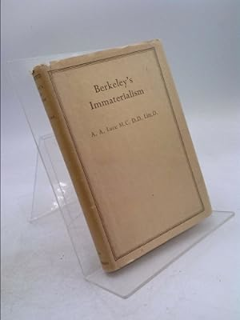
Berkeley’s mature philosophy is given lucid exposition by Luce in his 1945 work “Berkeley’s Immaterialism”. Along with Thomas Edmund Jessop, he edits The Works of George Berkeley (in nine volumes, 1948–1957).
Luce is not only a Berkeley scholar but comes to be a believer in Berkelianism itself. In “Sense without Matter” (1954) he attempts to bring Berkeley up to date by modernising the philosopher’s vocabulary and putting the issues Berkeley faced in today’s terms.
Berkeley’s personal reputation among historians and the public is also an area which Luce feels needs correcting and updating. Some studies of Berkeley had contributed to his reputation as a dreamer or a loner who often hid his real views. Luce’s “Life of George Berkeley, Bishop of Cloyne” (1949) takes aim at this picture of Berkeley and, by careful use of often new sources, paints a more grounded picture of the man.
In 1918, Luce marries Lilian Mary Thomson, with whom he has three children. Tragically, his wife and young daughter drown in 1940. His elder son, Professor John Victor Luce (1920–2011), is also an academic at Trinity and also serves as vice-provost.
Luce dies in Dublin on June 28, 1977, shortly after an assault by a man who has an antipathy towards clergymen.
Ellen Kean, one of the finest English actresses of her day, dies in Bayswater, City of Westminster, England on August 20, 1880. She is known as Ellen Tree until her marriage in 1842, after which she is known both privately and professionally as Mrs. Charles Kean and always appears in productions together with her husband.
Kean is born Eleanora Tree in Ireland on December 12, 1805, the third of four daughters of Cornelius Tree, an official of the East India Company in London. Her three sisters become actresses, but, unlike Ellen, retire from the stage when they marry. Her professional stage debut is in a musical version of Twelfth Night in London in 1822 as Olivia alongside her sister Maria as Viola. She gains experience touring in the provinces, and from 1826 is a regular member of the companies at the Theatre Royal, Drury Lane and Theatre Royal Haymarket, making a success in The Wonder and The Youthful Queen. At the Royal Opera House at Covent Garden, she takes on the roles of William Shakespeare‘s Romeo to the Juliet of Fanny Kemble, Françoise de Foix in Francis I, and Lady Townley in The Provoked Husband.
In 1832, by now established as a leading actress, Tree accepts an engagement in Hamburg, Germany, where a junior member of the company is Charles Kean. He had made an undistinguished debut at Drury Lane in 1827, and he and Tree had acted together in 1828 in a play called Lovers’ Vows and later in Othello. In the German season they fall in love but are persuaded by family and friends not to marry in haste. Tree returns to London and resumes her successful West End career, including a considerable success in Ion in another breeches role. At the end of 1836, Tree goes to the United States, where she tours in Shakespeare for more than three years, playing heroines such as Rosalind, Viola and Beatrice, among other roles. By the time of her return to England in 1839, she has made a profit of £12,000 on the tour, equivalent to at least £1 million in modern terms.
By 1841 Charles Kean has established himself as a successful actor, and he and Tree appear together in Romeo and Juliet at the Theatre Royal Haymarket. They are married the next year, and she at once switches her professional name from Ellen Tree to Mrs. Charles Kean. For the next nine years they appear together at the Haymarket, making a joint visit to the United States in 1846. In 1850, Kean takes over the management of the Princess’s Theatre in London. The Times called this “the most important period of Mrs. Kean’s career…. Hitherto she had been the Rosalind and the Viola of the stage; henceforward her name was to be associated with characters of a more matronly type” in roles including Lady Macbeth and Gertrude in Hamlet. The same writer also credits her for “the good taste and artistic completeness” of Kean’s productions. Ellen Terry, who makes her first stage appearance as the boy Mamillius in The Winter’s Tale, remembers Kean “as Hermione wearing a Greek wreath round her head and a crinoline with many layers of petticoats.”
Charles Kean dies in 1868, and his widow retires from the stage, living quietly in Bayswater, in the City of Westminster, where she dies at the age of 73 on August 20, 1880. The Times in its obituary says, “Mrs. Kean is not to be numbered with the greatest votaries of the English stage, but her acting was distinguished by considerable power, tenderness and refinement.” She is buried in a vault alongside her husband at Catherington, Hampshire.
(Pictured: “Charles Kean and Wife Ellen Tree” by Mathew Brady Studio (1844-1894), modern albumen print from wet plate collodion negative, National Portrait Gallery, Smithsonian Institution)






 seamus dubhghaill