seamus dubhghaill

Promoting Irish Culture and History from Little Rock, Arkansas, USA


Leave a comment

Birth of Shakespearean Actress Harriet Smithson

Harriet Constance Smithson, Anglo-Irish Shakespearean actress of the 19th century and best known as the first wife and muse of Hector Berlioz, is born at Ennis, County Clare on March 18, 1800.

Her father, William Joseph Smithson, is an actor and theatrical manager from Gloucestershire, England, and her mother is an actress whose full name is unknown. She also has a brother, Joseph Smithson, and a sister, name also unknown. In October 1801, she is left in the care of Reverend James Barrett, a priest of the Church of Ireland, parish of Drumcliffe. Barrett becomes her guardian and raises her as though she were his own daughter. He instructs her “in the precepts of religion,” and keeps everything connected with the stage from her view. After his death on February 16, 1808, the Smithsons send Harriet to a boarding school in Waterford.

On May 27, 1814, Smithson makes her first stage appearance at the Theatre Royal, Dublin, as Albina Mandevill in Frederick Reynolds‘s The Will. Her performance is well received. In 1815, she takes her parents’ place in Montague Talbot’s company in Belfast after they return to Dublin. The season opens on January 1, 1816, where she extends her range in roles, performing in multiple comedies. She then travels to Newry, Limerick, Dublin, and Birmingham, where she joins Robert Elliston‘s company. She spends the next two months playing over forty roles in various genres.

Four years later, January 20, 1818, Smithson makes her first London appearance at Drury Lane as Letitia Hardy in The Belle’s Stratagem. Her first performance receives mixed reviews from critics, but she quickly gains some favour of critics and performers as she obtains more experience. She joins the permanent company at the Royal Coburg Theatre later that year. However, she rejoins Drury Lane Company in the autumn of 1820. On February 20, 1821, she takes the lead female role in Thérèse by John Howard Payne, when the cast actress falls ill. Overall, the London public remembers her as The Times put it, “a face and features well adapted to her profession; but [an actress] not likely to make a great impression on a London audience, or to figure among stars of the first magnitude.”

In 1827, Smithson makes her Paris début as Lydia Languish in The Rivals at the Théâtre de l’Impératrice. Though she receives negative reviews for this role, she is highly praised for her beauty and ability in the subsequent performance of She Stoops to Conquer. On September 11, 1827, she is given the small part of Ophelia next to Charles Kemble in Shakespeare’s Hamlet. She leaves a long-lasting impression on the French through her interpretation of Ophelia’s madness, utilizing pantomime and natural presentation.

The tremendous success of Hamlet leads to the announcement of Romeo and Juliet, for September 15. Smithson is cast as Juliet, where she revolutionizes the women’s role in theatre by becoming as important as her male counterpart. Until this point, women’s lines in theatre are heavily cut and censored to reduce the role for the company’s “restricted talent.” Again, the production is widely well received. On September 18, Shakespeare’s Othello becomes the third Shakespeare tragedy to be performed by The English theatre. Her performance as Desdemona is less effective, but the production is popular enough to be repeated the following week. She is cast as Jane Shore in the renowned tragedy The Tragedy of Jane Shore, a role in which she moves her audience to tears. The production soon becomes the most performed play in the English season. At the end of her time in France, she had acted in several productions with famous actors such as William Charles Macready, Edmund Kean, and Charles Kemble.

As opportunities to continue her work in Paris dwindle, Smithson returns to London to perform Jane Shore again. The production opens at Covent Garden on May 11, 1829, under unfavorable circumstances. Some audience members, who had read her reviews before she went to Paris, feel reluctant to attend the show. However, just seven days after her next performance as Juliet, in Shakespeare’s Romeo and Juliet, the press gives her glowing reviews.

After Covent Garden closes for the summer in 1832, Smithson tours England to minor theatres performing almost exclusively in tragedies. In June 1832, she joins the Theatre Royal Haymarket, where she has limited success and receives criticism about her weight.

In 1830, Smithson goes back to Paris to set up an English theatre under her own management. She obtains permission to perform at the Theatre-Italien where she performs several unsuccessful plays. A year later, she breaks her leg and is forced to put her career on hold until her leg heals, leaving her in great debt. She gives her last performance, as Ophelia, on December 15, 1836, before her health deteriorates.

Toward the end of her life, Smithson suffers from paralysis, which leaves her barely able to move or speak. She dies on March 3, 1854, at her home on the rue Saint-Vincent, and is buried at the Cimetière Saint-Vincent. Berlioz has her body is later reinterred at the Montmartre Cemetery when Cimetière Saint-Vincent undergoes redevelopment.

(Pictured: Oil on canvas portrait of Harriet Smithson by Claude-Marie-Paul Dubufe, located at the Musee Magnin, Dijon, France)


2 Comments

Birth of James Patrick Mahon, Journalist, Barrister & Parliamentarian

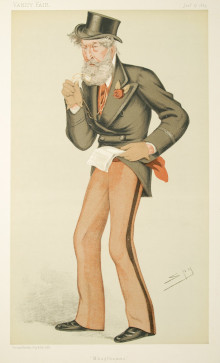
James Patrick Mahon, Irish nationalist journalist, barrister, parliamentarian and international mercenary, is born into a prominent Roman Catholic family in Ennis, County Clare, on March 17, 1803.

Mahon, the eldest of four children, is the son of Patrick Mahon of New Park, who took part in the Irish Rebellion of 1798, and Barbara, a considerable heiress and the only daughter of James O’Gorman of Ennis. He studies at Clongowes Wood College, where he is one of the earliest pupils, and at Trinity College Dublin, where he takes his BA in 1822 and his MA in law in 1832. Following his father’s death in 1821, he inherits half the family property and becomes a magistrate for Clare.

In 1830, Mahon marries Christina, the daughter of John O’Brien of Dublin. She is an heiress and has property valued at £60,000 in her own right, which gives him the resources to seek election to parliament. The couple spends little time together, and she dies apart from him in Paris in 1877. They have one son who dies in 1883.

In 1826, Mahon joins the newly formed Catholic Association. He encourages fellow member Daniel O’Connell to stand for election at the 1828 Clare by-election. O’Connell’s election, in which Mahon plays a large role, persuades the British Government to pass the Roman Catholic Relief Act 1829, which finalises the process of Catholic Emancipation and permitted Roman Catholics to sit in the British Parliament.

As a result, when Mahon is elected for Clare at the 1830 United Kingdom general election, he is entitled to take his seat. However, during the election campaign he quarrels with O’Connell, and after his election he is unseated for bribery. He is subsequently acquitted and stands again at the 1831 United Kingdom general election, but is defeated by two O’Connell-backed candidates, one of whom is his old schoolfriend Maurice O’Connell, Daniel O’Connell’s son. He gives up on politics, becomes deputy lieutenant of Clare, and captain of the local militia.

Mahon becomes a barrister in 1834, but the following year, he leaves for Paris. There he associates with Charles Maurice de Talleyrand-Périgord, becoming a favourite at Louis Philippe‘s court and working as a journalist. He travels the world, spending time in both Africa, where he befriends Ferdinand de Lesseps, engineer of the Suez Canal, and South America, before returning to Ireland in 1846.

At the 1847 United Kingdom general election, Mahon is elected for Ennis and declares himself a Whig in favour of Irish Repeal. However, he opposes the Young Irelanders and narrowly loses his seat at the 1852 United Kingdom general election.

Following his defeat in the 1852 election, Mahon returns to Paris, then travels on to Saint Petersburg, where he serves in the Imperial Bodyguard. During this period, he journeys through lands from Finland to Siberia. He then travels across China, India and Arabia. His finances largely exhausted, he serves as a mercenary in the Ottoman and Austrian armies before returning to England in 1858. Late that year, he leaves for South America, where he attempts to finance the construction of a canal through Central America.

After exploits abroad Mahon returns to Ireland in 1871 and is a founding member of the Home Rule League. Nearly ruined by his ventures, he even ends up at the Old Bailey as a consequence of his dealings but is acquitted. He is defeated in Ennis at the 1874 United Kingdom general election, and also at the 1877 Clare by-election. Finally, he wins the 1879 Clare by-election and holds the seat at the 1880 United Kingdom general election.

Mahon is a close associate of Charles Stewart Parnell, who he successfully nominates for the leadership of the League in 1880 but is dropped in 1885 as a party candidate because of his age and his tendency to vote with the Liberal Party in Parliament. He is also embroiled in a court case disputing the will of his son.

Parnell personally ensures Mahon is a candidate at the 1887 County Carlow by-election, which he wins at the age of 87 as a Liberal. By this point, he is the oldest MP in the House of Commons of the United Kingdom. He dies at his home in South Kensington, London on June 15, 1891, while still in office.

Mahon had served alongside William O’Shea as an MP, and the two were close friends. He introduced him and Katharine O’Shea, his wife, to Parnell. After Parnell is named in the O’Sheas’ divorce case in 1890, Mahon splits with Parnell, siding with the Irish National Federation. However, Parnell attends Mahon’s funeral in Glasnevin Cemetery a few months later.

(Pictured: Caricature of James Patrick Mahon by Sir Leslie Matthew Ward under the pseudonym “Spy” published in Vanity Fair in 1885)


Leave a comment

Groundbreaking for the West Clare Railway

File source: http://commons.wikimedia.org/wiki/File:CIE_F502_(17156275240).jpg

Charles Stewart Parnell turns the first sod for the construction of the West Clare Railway (WCR) on January 27, 1885, although actual work on the line had begun in November 1884. The line is opened on July 2, 1887.

At the end of the Great Famine there is a new growth in local businesses. The British Government determines that an improved railway system is necessary to aid in the recovery of the West of Ireland. The West Clare Railway and the South Clare Railway are built by separate companies, but in practice the West Clare Railway operates the entire line. The lines meet at Milltown Malbay. In due course the entire line becomes known as the West Clare Railway.

The West Clare Railway originally operates in County Clare between 1887 and 1961. The 3-foot narrow gauge railway runs from the county town of Ennis, via numerous stopping points along the West Clare coast to two termini, at Kilrush and Kilkee, with the routes diverging at Moyasta Junction. The system is the last operating narrow gauge passenger system in Ireland and connects with the mainline rail system at Ennis, where a station still stands today for bus and train services to Limerick and Galway. Intermediate stops include Ennistymon, Lahinch and Milltown Malbay.

On 27 September 27, 1960, CIÉ gives notice of its intending closure with effect from February 1, 1961, despite the dieselisation of passenger services in 1952 and freight in 1953. CIÉ says that the West Clare is losing £23,000 per year, despite the considerable traffic it handles. In December 1960 it is announced that the line would close completely on January 1, 1961 although actual closure does not take place until January 31, 1961. CIÉ begins dismantling the line the following day.

A preservation society maintains a railway museum at Moyasta Junction station, and successfully re-opens a section of the railway as a passenger carrying heritage line with diesel traction in the 1990s, and with steam motive power from 2009.


Leave a comment

Birth of Tomás Mac Giolla, Irish Workers’ Party Politician

tomas-mac-giolla

Tomás Mac Giolla, Workers’ Party of Ireland politician who serves as Lord Mayor of Dublin from 1993 to 1994, leader of the Workers’ Party from 1962 to 1988 and leader of Sinn Féin from 1962 to 1970, is born Thomas Gill in Nenagh, County Tipperary on January 25, 1924. He serves as a Teachta Dála (TD) for the Dublin West constituency from 1982 to 1992.

Mac Giolla’s uncle T. P. Gill is a Member of Parliament (MP) and member of the Irish Parliamentary Party (IPP) of Charles Stewart Parnell. His father, Robert Paul Gill, an engineer and architect, also stands unsuccessfully for election on a number of occasions. His mother is Mary Hourigan.

Mac Giolla is educated at the local national school in Nenagh before completing his secondary education at St. Flannan’s College in Ennis, County Clare. It is while at St. Flannan’s that he changes to using the Irish language version of his name. He wins a scholarship to University College Dublin where he qualifies with a Bachelor of Arts degree, followed by a degree in Commerce.

A qualified accountant, Mac Giolla is employed by the Irish Electricity Supply Board (ESB) from 1947 until he goes into full-time politics in 1977.

In his early life Mac Giolla is an active republican. He joins Sinn Féin and the Irish Republican Army (IRA) around 1950. He is interned by the Government of Ireland during the 1956–1962 IRA border campaign. He also serves a number of prison sentences in Mountjoy Prison in Dublin.

At the 1961 Irish general election, Mac Giolla unsuccessfully contests the Tipperary North constituency for Sinn Féin. In 1962, he becomes President of Sinn Féin and is one of the people who moves the party to the left during the 1960s. In 1969, Sinn Féin splits, and he remains leader of Official Sinn Féin. It is also in 1962 that he marries May McLoughlin who is also an active member of Sinn Féin as well as Cumann na mBan, the women’s section of the IRA. In 1977, the party changes its name to Sinn Féin the Workers Party and in 1982 it becomes simply the Workers’ Party.

Mac Giolla is elected to Dublin City Council representing the Ballyfermot local electoral area in 1979 and at every subsequent local election until he retires from the council in 1997. In the November 1982 Irish general election, he is elected to Dáil Éireann for his party. In 1988, he steps down as party leader and is succeeded by Proinsias De Rossa. He serves as Lord Mayor of Dublin from 1993 to 1994 and remains a member of Dublin Corporation until 1998.

While president Mac Giolla is regarded as a mediator between the Marxist-Leninist wing headed by Sean Garland and the social democratic wing of Prionsias De Rossa. At the 1992 special Ardfheis he votes for the motion to abandon democratic centralism and to re-constitute the party much as the Italian Communist Party became the Democratic Party of the Left. However, the motion fails to reach the required two-thirds majority. Following the departure of six Workers’ Party TDs led by De Rossa to form the new Democratic Left party in 1992, Mac Giolla is the sole member of the Workers’ Party in the Dáil. He loses his Dáil seat at the 1992 Irish general election by a margin of just 59 votes to Liam Lawlor of Fianna Fáil.

In 1999, Mac Giolla writes to the chairman of the Flood Tribunal calling for an investigation into revelations that former Dublin Assistant City and County Manager George Redmond had been the official supervisor at the election count in Dublin West and was a close associate of Liam Lawlor. In 2003, Redmond is convicted of corruption by a Dublin court but subsequently has his conviction quashed due to conflicting evidence.

In his eighties Mac Giolla continues to be active and is a member of the group which campaigns to prevent the demolition of No. 16 Moore Street in Dublin city centre, where the surrender after the Easter Rising was completed. He also serves on the Dublin ’98 committee to commemorate the 200th anniversary of the Irish Rebellion of 1798.

Tomás Mac Giolla dies in Beaumont Hospital in Beaumont, Dublin on February 4, 2010, after a long illness.


Leave a comment

Muhammad Ali Fights Al Lewis in Dublin

muhammad-ali-and-al-lewis

Muhammad Ali fights Al “Blue” Lewis in Dublin on July 19, 1972, and defeats him via a technical knockout (TKO) in the eleventh round.

After losing to Joe Frazier in March 1971, Ali goes on something of a world tour, fighting 13 times in six countries before defeating Frazier in a rematch in January 1974.

The promotion is the brainchild of a character from County Kerry named Butty Sugrue, known throughout Ireland as a circus strongman, whose alleged claim to fame is pulling double-decker buses by a rope in his teeth. Dublin journalists laugh at him when he first announces his intentions.

But despite the scepticism, the fight is arranged for July 19, 1972. As soon as he steps off the plane at Dublin Airport, Ali, ever the showman, immediately captures the heart of a nation by announcing that he has Irish roots. In the 1860s, Abe Grady left his native Ennis in County Clare and emigrated to the United States. In Kentucky, he met and married an emancipated slave. A century later Abe Grady’s great grandson Muhammad Ali touches down in Dublin.

In the week leading up to the fight Ali meets people from all walks of life in Dublin. He spends time with celebrities, including actor Peter O’Toole, and playfully spars with director John Huston, whose boxing movie, Fat City, is screened with both Ali and Lewis in attendance.

Ali also meets politicians, including Taoiseach Jack Lynch in Leinster House and political activist Bernadette Devlin. The Cork Examiner comments on how popular Ali has proven with politicians in Ireland. “Not since the late President John F. Kennedy was in Dublin in 1963 has a visitor from abroad been given as big a welcome at Leinster House as that accorded to Muhammad Ali.”

Ali is always about so much more than boxing, and that week in Dublin is another case in point, as the fight itself is not a classic. He has a cold and is wary of Lewis, who is a dangerous fighter and a man who had previously served time in prison for manslaughter. Ali who, prior to the bout predicts that his opponent’s chances of victory lay somewhere between “slim and none,” eventually wins with a TKO in the eleventh round.

In 2009, Ali returns to Ireland to visit Ennis in County Clare, the hometown of his ancestor Abe Grady, where he is granted the freedom of the town. The huge crowds who come out to meet him are testament to his enduring appeal. But the magic of Muhammad Ali leaves an indelible impact on Ireland after his 1972 visit as the late Budd Schulberg, a legendary boxing writer, said, “Ali was like the Pied Piper. It was really kind of magical. He had enormous influence over there. He was a fellow Irishman.”

(From: “When Ali thrilled Ireland: How ‘the Greatest’ shook up Dublin” by Peter Crutchley, BBC NI Digital & Learning, June 6, 2016)


Leave a comment

Birth of Tom McBride, Ireland’s King of Country Music

tom-mcbride

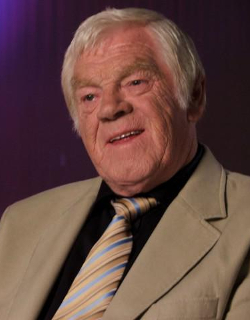
Tom McBride, Irish country, traditional, easy listening singer, guitarist, and saxophone player best known as Big Tom, is born in Castleblayney, County Monaghan on September 18, 1936. He is affectionally known as “Ireland’s king of country music.”

With a career spanning over five decades, McBride starts his career in 1966 as the frontman of the Irish showband Big Tom and The Mainliners. In 1980, suffering from a fear of flying, he undertakes a sea voyage across the Atlantic Ocean to record his Blue Wings album in Nashville, Tennessee.

In 2000, McBride undergoes a vocal cord nodule operation on his throat. On July 8, 2005, a plaque is erected by the local community in his home village of Castleblayney. In November 2006, he suffered a sudden heart attack at the age of 70, which puts doubt into whether he will ever tour again with his band.

On February 1, 2008, McBride begins a 12-date tour of Ireland after doctors give him the all clear. On March 24, he performs at Castlebar‘s TF Ballroom’s final farewell night but reportedly takes ill on stage during the performance.

On 25 May, McBride performs for the closure night of the Galtymore dance hall in Cricklewood, London. He is the headline act at London’s Irish Festival on July 27 and headlines the Claremorris Dance Festival weekend on November 23.

In July 2009, K-MAC Records announces more dates in Ireland for Big Tom and the Mainliners which commences in August. From August 14 to September 13, McBride runs a successful tour of Ireland with large attendances to venues. The highlight is the Glencarn Hotel in his hometown Castleblayney where the concert is packed to capacity. The tour ends in Ennis, County Clare, with fans travelling many miles to see McBride and the band. Two days after the end of the tour the band’s trombone player and vocalist Cyril McKevitt dies of a heart attack.

In 2010, McBride announces an extensive series of tour dates. From 2011 until his death in Drogheda, County Louth on April 17, 2018, McBride and his band continue to perform with sporadic appearances.

In June 2016, McBride becomes the inaugural artist to be inducted into the Irish Country Music Hall of Fame.


Leave a comment

Birth of Maura O’Connell, Singer & Actress

maura-oconnell

Maura O’Connell, singer and actress known for her contemporary interpretations of Irish traditional music, strongly influenced by American country music, is born on September 16, 1958, in Ennis, County Clare.

Born into a musical family, O’Connell is the third of four sisters. Her mother’s family owns Costello’s fish shop in Ennis where O’Connell works until music becomes her full-time career. She grows up listening to her mother’s light opera, opera, and parlour music records. Her father’s interest leans towards the rebel ballads. Despite the presence of classical music in the house, O’Connell gets very involved in the local folk club scene and together with Mike Hanrahan, who later fronts folk rock outfit Stockton’s Wing, they perform a country music set, as a duo called “Tumbleweed.”

O’Connell attends St. Joseph’s Secondary School in Spanish Point from 1971 to 1974, where she takes part in the school choir. She is also a member of the “Cúl Aodha Choir”, led by Peader Ó Riada, that sings at the funeral of Willie Clancy in 1973.

O’Connell begins her professional musical journey during a six-week tour of the United States in 1980, as vocalist for the traditionally based Celtic group De Dannan. The following year, she is featured on the band’s landmark album, The Star Spangled Molly, which becomes something of a national phenomenon in her homeland. However, not long after joining the group she becomes very interested in the experimental roots music of America’s New Grass Revival when the bands’ paths cross. She moves to the United States in 1986, settling in Nashville, Tennessee. There she meets progressive bluegrass pioneers Béla Fleck and Jerry Douglas, with whom she works on most of her records.

O’Connell records her first solo album in 1983, however, it does not make any impact in Ireland or in the United States. She receives a Grammy Award nomination for her 1989 album, Helpless Heart, which is her first record released under Warner Bros. Records. Real Life Story (1990) and Blue is the Colour of Hope (1992) register a move toward a pop synthesis. Her versions of “Living in These Troubled Times” and Cheryl Wheeler‘s “Summerfly” become standout tracks on the 1993 album A Woman’s Heart, on four all-female overseas tours and on the 1994 follow-up album in her homeland. A Woman’s Heart Vol. 2 features her heartfelt renditions of Nanci Griffith‘s “Trouble in the Fields” and Gerry O’Beirne’s “Western Highway.” After numerous albums heavily inspired by American newgrass music, she returns to her Irish roots with the 1997 release Wandering Home.

As the new millennium approaches, O’Connell signs with Sugar Hill Records in late 2000 and begins working on her seventh album. Instead of working with her longtime producer Jerry Douglas, she has Ray Kennedy produce Walls and Windows, which is released in 2001, and features an eclectic collection of songs, including work by Kim Richey, Van Morrison, John Prine, Eric Clapton and Patty Griffin. Her 2004 album, Don’t I Know, contains musical textures added by everything from fiddles to clavinets, to lap steel guitar and B-3 organ.

Naked With Friends (2009) is O’Connell’s first a cappella album. Guest vocalists include Mary Black, Paul Brady, Moya Brennan, Jerry Douglas, Alison Krauss, Mairéad Ní Mhaonaigh, Tim O’Brien, Dolly Parton, Sarah Dugas, Kate Rusby and Darrell Scott. The album is nominated for a Grammy Award.

In addition to her solo work, O’Connell has collaborated with a number of Celtic, folk, pop and country artists, including Van Morrison, Brian Kennedy, Moya Brennan, Mary Black, John Prine, Jerry Douglas, Tim O’Brien, John Gorka, Béla Fleck, Robert Earl Keen, Dolly Parton and Shawn Colvin. She has also sung background vocals for a number of artists, including Van Morrison’s 1988 project with The Chieftains, Irish Heartbeat and Stockton’s Wing on Take A Chance.

Aside from the music world, Martin Scorsese casts O’Connell, scruffed up for the role, as an Irish migrant street singer in his 19th-century epic Gangs of New York, released in 2002.

O’Connell announces the end of her solo career in 2013.


Leave a comment

Charles Stewart Parnell’s Famous Speech at Ennis

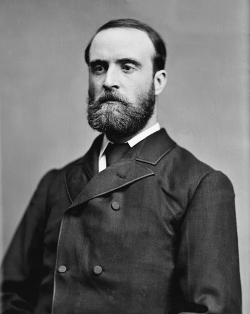
Charles Stewart Parnell delivers his famous speech at Ennis, County Clare, on September 19, 1880, in which he introduces the term for non-violent protest – boycotting.

Parnell is elected president of Michael Davitt‘s newly founded Irish National Land League in Dublin on October 21, 1879, signing a militant Land League address campaigning for land reform. During the summer of 1880, the Land League, goes into decline but its fortunes are transformed when the House of Lords rejects a moderate measure of land reform. The movement is transformed into a national movement as it spreads into Munster and Leinster. As the movement spreads, crime increases especially in the West. Parnell, who had been elected leader of the Irish Parliamentary Party in May, is very worried about this violence and hopes that the Land League can deflect tenants away from the traditional violence associated with land agitation. He advocates a policy of “moral force” where tenants are to deny all social or commercial contact with anyone who is believed to oppose the aims of the League.

During his speech at Ennis, Parnell asks his audience, “What are you to do with a tenant who bids for a farm from which another has been evicted?” Several voices reply “Shoot him!” and “Kill him!” Parnell responds, “I wish to point out to you a very much better way, a more Christian and charitable way, which will give the lost man an opportunity of repenting. When a man takes a farm from which another has been evicted, you must shun him on the roadside when you meet him, you must shun him in the streets of the town, you must shun him in the shop, you must shun him on the fair green and in the market place, and even in the place of worship, by leaving him alone, by putting him in moral Coventry, by isolating him from the rest of the country, as if he were the leper of old – you must show him your detestation of the crime he committed.”

This type of “moral Coventry” is used in the cast of Captain Charles Cunningham Boycott, a County Mayo land agent, who is isolated by the local people until his nerve breaks. This leads to a new word entering into the English language – boycotting.


Leave a comment

Birth of Thomas Dermody, Scholar & Poet

thomas-dermody

Thomas Dermody, classical scholar and poet, is born in Ennis, County Clare, on January 15, 1775. He writes under several pseudonyms including Mauritius Moonshine and Marmaduke Myrtle.

Dermody is scholarly but lives hard and makes little of his life. At the age of nine he is employed as a classical teacher in his father’s school, and has already acquired from his father a love for literature and the bottle.

Dermody has the genius of a poet, and writes fairly good poetry, but his genius is not enough. He lives for 27 years, half his life a promising boy and half a ne’er-do-well. His promise brings him generous patrons in his early days in Ireland, but he scorns the hand that feeds him, denies the friends who could nurse his genius, and runs away to England to keep bad company.

At the age of nineteen, he enlists in the army and behaves uncommonly well under military discipline. He becomes corporal, sergeant, and eventually second lieutenant, serving with distinction. He is wounded in France, and upon his return to England, is retired on half-pay.

He gains and loses friend after friend and abuses patron after patron. They clothe and clean him and make him presentable, but he then drinks himself to nakedness and rags and behaves like a brute. Such from day to day and year to year is his life, and in the end he drinks himself to death and perishes in a miserable cottage near Lewisham on July 15, 1802. He is filled with conceit and a slave to his desires, but the lines that are fading away on the stone above his grave show that he was a poet. Dermody is buried in the churchyard of St. Mary’s Church Lewisham.

Dermody publishes two books of poems which, after his death, are collected as The Harp of Erin. Some 56 of his sonnets have been published in various works, from his first 1789 collection Poems to those published in 1792, with a few posthumously published verses in the biography by James Grant Raymond. Samuel Taylor Coleridge takes an interest in some of his verse which has been included in the literary magazine The Anthologia Hibernica.


Leave a comment

First Aircraft Lands at Rineanna Airfield (Shannon Airport)

rineanna-airport

The first aircraft, an Irish Air Corps Aero Anson A43, lands at the newly opened Rineanna Airfield, which is later to become known as Shannon International Airport, on May 18, 1939.

Transatlantic aviation in the Shannon Estuary first commences with a seaplane base at Foynes. In October 1935, the Irish Government makes a decision to initiate a survey to find suitable bases for the operation of seaplanes and land planes on a transatlantic service. The Department of Defence, which provides technical advice on aviation to the Civil Aviation Section of the Department of Industry, is given the task.

On November 21, 1935, a survey party sets out and surveys sites as far north as Athlone and south to Askeaton. Among the sites for a seaplane base to be considered are the Shannon just below Limerick, Lough Derg, Lough Corrib, Tralee Bay, Kenmare Bay, Lough Ree, and Valentia. Foynes, near the mouth of the Fergus River, is finally selected due to its sheltered anchorage and its proximity to long open stretches of water.

The first priority is drainage to remove surface water from the site and to construct embankments to prevent flooding of the airfield due to its proximity to the tidal River Shannon. Several hundred men are employed to dig narrow lateral drains for the approximately 135 miles of pipes which are laid in parallel lines 50 feet apart over almost the entire area of the airfield site. They also excavate catchment drains to collect water from the surface of the site.

At this time all indications are that regular aerial travel between Europe and the United States will be initially by flying boat and accordingly, the base at Rineanna is designed to cater to both land planes and flying boats.  Construction work commences to build embankments and a breakwater to provide for a seaplane base and to protect the airfield site from flooding from the River Shannon.

Developments in aviation during World War I ensure land planes and not flying boats are to be the future of aviation, therefore the mooring basin and the east breakwater which are being constructed for flying boats at Rineanna are never quite finished.  Construction of the embankments continue to protect the site from the River Shannon and to form a drainage lagoon for surface water from the western headland of the airport site.

When World War II ends, the airport is ready to be used by the many new post-war commercial airlines of Europe and North America. On September 16, 1945, the first transatlantic proving flight, a Pan Am DC-4, lands at Shannon from New York City. On October 24, the first scheduled commercial flight, an American Overseas Airlines DC-4, passes through Shannon Airport. An accident involving President Airlines on September 10, 1961 results in the loss of 83 lives. The Douglas DC-6 aircraft crashes into the River Shannon while leaving Shannon Airport for Chicago.

The number of international carriers rises sharply in succeeding years as Shannon becomes well known as the gateway between Europe and the Americas as limited aircraft range necessitates refueling stops on many journeys. Shannon becomes the most convenient stopping point before and after a trip across the Atlantic. Additionally, during the Cold War, many transatlantic flights from the Soviet Union stop here for refueling, because Shannon is the westernmost non-NATO airport.

Shannon Airport is one of Ireland’s three primary airports, along with Dublin Airport and Cork Airport, and includes the longest runway in Ireland at 10,495 feet. It is a designated emergency landing site for the Space Shuttle during the U.S. shuttle program. In 2015, 1.715 million passengers pass through the airport, making it the third busiest airport in the country after Dublin and Cork. Shannon Airport is in Shannon, County Clare, and mainly serves Limerick, Ennis, Galway, and the south-west of Ireland.