seamus dubhghaill

Promoting Irish Culture and History from Little Rock, Arkansas, USA


Leave a comment

Birth of Dairine Vanston, Landscape Artist

Dairine (Doreen) Vanston, Irish landscape artist who works in a Cubist style, is born in Dublin on October 19, 1903.

Vanston is the daughter of solicitor John S. B. Vanston, and sculptor Lilla Vanston (née Coffey). She attends Alexandra College, going on to study at Goldsmiths College, London under Roger Bissière. She then goes to Paris to the Académie Ranson, being sent there following the advice of Paul Henry. While in Paris she meets Guillermo Padilla, a Costa Rican law student at the University of Paris. They marry in 1926 and she takes the name Vanston de Padilla. The couple lives for a time in Italy, before moving to San José, Costa Rica. The marriage breaks down in the early 1930s, at which point she returns to Paris with her son and studies with André Lhote. She is living in France at the outbreak of World War II with Jankel Adler, but is able to escape to London in 1940, and later to Dublin.

Vanston’s time in Paris leaves a lasting impression on her work, including use of primary colours and a strong Cubist influence. She belongs to what critic Brian Fallon calls the “Franco-Irish generation of painters who looked to Paris,” along with Mainie JellettEvie Hone, and Norah McGuinness. Her time spent living in Costa Rica in the late 1920s and early 1930s imbues her work with tropical and highly toned colours. In Dublin in 1935, she exhibits 17 paintings, largely Costa Rican landscapes, at Daniel Egan’s gallery on St. Stephen’s Green. This is the closest thing to a solo show she would mount, with this show also featuring Grace HenryCecil Ffrench Salkeld, and Edward Gribbon.

Meeting the English artist Basil Rakoczi, who is also living in Dublin during World War II, leads Vanston to become associated with The White Stag group. In November 1941, she exhibits for the first time at a group show with 24 other artists, including Patrick Scott. One work that is shown at this exhibition is the painting Keel dance hall, which demonstrates that she spends time in the west of Ireland. The most important event staged by the group is the Exhibition of subjective art, which takes place at 6 Lower Baggot St. in January 1944. The Dublin Magazine notes her work at this show as the most effective of the experimental vanguard. This work, Dying animal, is a Cubist work with semi-representation forms rendered in bold colours. In 1945, her work is featured in a White Stag exhibition in London of young Irish painters at the Arcade gallery, Old Bond Street.

In 1947, Vanston spends almost a year in Costa Rica where she paints primarily in watercolours. Apart from this period, she lives and works in Dublin, living at 3 Mount Street Crescent near St. Stephen’s Church. At the inaugural Irish Exhibition of Living Art in 1943, she exhibits five works. At the first Exhibition of Independent Artists in 1960, of which she is a founder, she exhibits three landscapes and a work entitled War. She largely exhibits with the Independent Artists, the Irish Exhibition of Living Art, and the Oireachtas na Gaeilge, and does not exhibit with the Royal Hibernian Academy. Later in life, she exhibits with the Figurative Image exhibitions in Dublin, and is amongst the first painters chosen for Aosdána. A number of her works are featured in the 1987 exhibition, Irish women artists, from the eighteenth century to the present arranged by the National Gallery of Ireland and The Douglas Hyde Gallery.

Vanston dies on July 12, 1988, in a nursing home in Enniskerry, County Wicklow. Her work is greatly admired, but has received little by way of critical attention, which may have been to do with her slow rate of output. A number of her works have proved difficult to trace. She was a private person, even refusing to cooperate with the Taylor Galleries in the 1980s when they wanted to mount a retrospective of her work. The National Self-Portrait Collection in Limerick holds a work by Vanston.

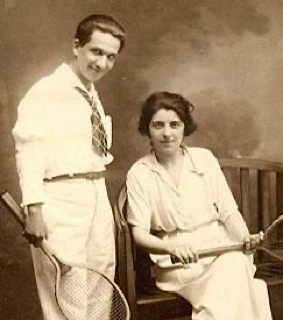
(Pictured: Dairine Vanston with Guillermo Padilla in Paris)


Leave a comment

Death of Joseph Campbell, Poet & Lyricist

Joseph Campbell, Irish poet and lyricist, dies at Lacken Daragh, Enniskerry, County Wicklow, on June 6, 1944. He writes under the Gaelic form of his name Seosamh Mac Cathmhaoil (also Seosamh MacCathmhaoil), as Campbell is a common anglicisation of the old Irish name MacCathmhaoil. He is now remembered best for words he supplied to traditional airs, such as “My Lagan Love” and “Gartan Mother’s Lullaby.” His verse is also set to music by Arnold Bax and Ivor Gurney.

Campbell is born in Belfast on July 15, 1879, into a Catholic and Irish nationalist family from County Down. He is educated at St. Malachy’s College, Belfast. After working for his father he teaches for a while. He travels to Dublin in 1902, meeting leading nationalist figures. His literary activities begin with songs, as a collector in Antrim, County Antrim and working with the composer Herbert Hughes. He is then a founder of the Ulster Literary Theatre in 1904. He contributes a play, The Little Cowherd of Slainge, and several articles to its journal Uladh edited by Bulmer HobsonThe Little Cowherd of Slainge is performed by the Ulster Literary Theatre at the Clarence Place Hall in Belfast on May 4, 1905, along with Lewis Purcell’s The Enthusiast.

Campbell moves to Dublin in 1905 and, failing to find work, moves to London the following year where he is involved in Irish literary activities while working as a teacher. He marries Nancy Maude in 1910, and they move shortly thereafter to Dublin, and then later to County Wicklow. His play Judgement is performed at the Abbey Theatre in April 1912.

Campbell takes part as a supporter in the Easter Rising of 1916, doing rescue work. The following year he publishes a translation from Irish of the short stories of Patrick Pearse, one of the leaders of the Rising.

Campbell becomes a Sinn Féin Councillor in Wicklow in 1921. Later in the Irish Civil War he is on the Republican side, and is interned in 1922-23. His marriage breaks up, and he emigrates to the United States in 1925 where he settles in New York City. He lectures at Fordham University, and works in academic Irish studies, founding the University’s School of Irish Studies in 1928, which lasts four years. He is the editor of The Irish Review (1934), a short lived “magazine of Irish expression.” The business manager is George Lennon, former Officer Commanding of the County Waterford Flying Column during the Irish War of Independence. The managing editor is Lennon’s brother-in-law, George H. Sherwood.

Campbell returns to Ireland in 1939, settling at Glencree, County Wicklow. He dies at Lacken Daragh, Enniskerry, County Wicklow on June 6, 1944.


Leave a comment

Death of Katy French, Socialite, Model & TV Personality

Katy Ellen French, Irish socialite, model, writer, television personality and charity worker, dies on December 6, 2007, in Navan, County Meath, after collapsing at a friend’s house on December 2. According to the BBC, “in the space of less than two years, she had become one of Ireland’s best-known models and socialites.” Her cause of death is given as hypoxic ischemic brain injury caused by cocaine and ephedrine.

French is born on October 31, 1983, in Basel, Switzerland, to John and Janet French, from Australia and Britain respectively. At the age of two, she moves with her family to Ireland, briefly living in the Sandyford area before settling in Enniskerry, County Wicklow, and later to Stillorgan, County Dublin. She attends Alexandra College in Milltown, Dublin, from the age of seven. While still in school she works part-time as a hostess at the Dublin branch of the Planet Hollywood restaurant chain.

French studies psychology and marketing before working for the Assets Modelling Agency and later writing articles for several Dublin magazines and newspapers. She represents Sony Ericsson and Suzuki among many other brands, becoming more famous in 2007 as a result of her fiancé, restaurateur Marcus Sweeney, ending their relationship in a very public fashion after she is photographed for a lingerie shoot for the Sunday Independent in his restaurant in January of that year. As a result of this publicity, her image appears more regularly in daily Irish tabloid newspapers, and she makes numerous television appearances on shows such as RTÉ‘s The Podge and Rodge Show in April 2007 and Tubridy Tonight a week before her death.

French is known for deliberately courting controversy to promote her career. On Tubridy Tonight she speaks of her appearance on Celebrities Go Wild as well as her relationship break up with Sweeney. Mention is also made of her birthday party which she is to celebrate the following week, having missed her birthday due to Celebrities Go Wild. Host Ryan Tubridy is invited to the event. Footage is shown of the charity single “Down in the Bog” which is to be released as a Christmas single. She works for several Irish charities including Our Lady’s Children’s Hospital, Crumlin and GOAL in Calcutta, India. She writes a column for Social & Personal magazine.

In an interview with Hot Press‘s Jason O’Toole, French says that she would consider having an abortion if she became pregnant during the peak of her career, a controversial statement in Ireland where abortion is at that time effectively illegal, and that she loves fur despite being a “massive animal lover.” She also airs her religious beliefs, being a member of the Church of England as well as a practising Catholic and speaks highly of Islam and her Muslim friends saying, “When you read the Koran, you realise that Islam is a beautiful religion.” In the same interview she is asked if she has ever used cocaine and denies ever having done so. In November 2007, she tells an Irish tabloid that she has used cocaine but has stopped. A week before she dies, she celebrates her 24th birthday with celebrity and media friends.

French dies on the evening of December 6, 2007, in Our Lady’s Hospital, Navan, County Meath, having collapsed at a house in Kilmessan, County Meath, in the early hours of Sunday, December 2. There is widespread speculation in the media that her death is the result of a drug overdose. A postmortem finds she has suffered brain damage, and that traces of cocaine are found in her body. A senior Garda states, “We strongly suspect that drugs contributed to her death. This was a previously healthy person being brought to hospital in a collapsed state.” In 2010 two people are charged with supplying cocaine to French and in failing to get medical assistance in a timely fashion. She is buried in her hometown of Enniskerry, County Wicklow, on December 10. Taoiseach Bertie Ahern‘s aide de camp, Captain Michael Tracey, attends her funeral.

On November 13, 2012, two friends of French, Kieron Ducie and Ann Corcoran, plead guilty to possession of cocaine with intent to supply on the weekend of French’s death. Trim Circuit Court is told that a second charge against the pair is not being pursued, that they had intentionally or recklessly engaged in behaviour relating to the supply of cocaine to French and failed to get medical assistance in a timely fashion. In July 2013 the pair are sentenced to a 2-1⁄2 year suspended sentence and three-year good behaviour bond, and a two-year suspended sentence and two-year good behaviour bond respectively. At the verdict, French’s cause of death is given as hypoxic ischemic brain injury caused by cocaine and ephedrine.


Leave a comment

Birth of Artist Paul Henry

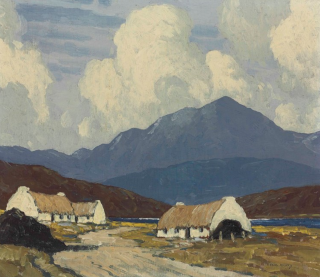
Paul Henry, Irish artist noted for depicting the Connacht province landscape in the west of Ireland in a spare Post-Impressionist style, is born at 61 University Road, Belfast, on April 11, 1876.

Henry is the third of four sons of the Rev. Robert Mitchell Henry, minister of the Reformed Presbyterian Church, and his wife Kate Ann Berry, eldest of four daughters of Thomas Berry, minister of the Baptist church, Athlone. His father becomes a Baptist in 1858 and pastor of Great Victoria Street Baptist Church, Belfast, resigning in 1875 to join the Plymouth Brethren.

Henry begins to draw in pencil and watercolours at the age of four, even before entering the kindergarten at Methodist College Belfast (MCB), in 1882 where he first begins drawing regularly. At the age of fifteen he moves to the Royal Belfast Academical Institution. He studies art at the Belfast School of Art before going to Paris in 1898 to study at the Académie Julian and at James McNeill Whistler‘s Académie Carmen.

Henry marries the painter Emily Grace Mitchell on September 17, 1903, in London at St Peter’s Anglican church, Bayswater. He returns to Ireland in 1910. From then until 1919 he lives on Achill Island, where he learns to capture the peculiar interplay of light and landscape specific to the west of Ireland. In 1919, he moves to Dublin and in 1920 he is one of the founders of the Society of Dublin Painters, originally a group of ten artists. He designs several railway posters, some of which, notably Connemara Landscape, achieves considerable sales. He separates from his wife in 1929. His second wife is the artist Mabel Young.

In the 1920s and 1930s, Henry is Ireland’s best-known artist, one who has a considerable influence on the popular image of the west of Ireland. Although he seems to cease experimenting with his technique after leaving Achill and his range is limited, he creates a large body of fine images whose familiarity is a testament to its influence.

Henry’s use of colour is affected by his red-green colour blindness. He loses his sight in 1945 and does not regain his vision before his death.

Henry dies on August 24, 1958, at his home at 1 Sidmonton Square, Bray, County Wicklow, and is buried at St. Patrick’s Church, Enniskerry, County Wicklow. He is survived by his wife, Mabel. His papers and sketchbooks are in the libraries of the National Gallery of Ireland and Trinity College Dublin.

A commemorative exhibition of Henry’s work is held at Trinity College, Dublin, in 1973 and the National Gallery of Ireland holds a major exhibition of his work in 2004.

A painting by Henry is featured on an episode of the BBC‘s Antiques Roadshow, broadcast on November 12, 2006. The painting is given a value of approximately £40,000–60,000 by the Roadshow. However, due to the buoyancy of the Irish art market at the time, it sells for €260,000 on December 5, 2006, in James Adams’ and Bonhams’ joint Important Irish Art sale.

Pictured: “Roadside Cottages, below Mweelrea Mountain” by Paul Henry, RHA, oil on panel, 1940)


Leave a comment

Birth of Sir William Basil Goulding, Art Collector, Businessman & Cricketer

Sir William Basil Goulding, Irish cricketer, squash player, art collector and prominent businessman, is born in Dublin on November 4, 1909. He is an important art collector of contemporary art in Ireland and is renowned for his extensive collection which is dispersed posthumously. He is an adept businessman and sits on the boards of many companies.

Goulding is educated at Winchester College and Christ Church, Oxford. He inherits the family business W & HM Goulding Ltd. and succeeds his father as Chairperson in 1935. Goulding Ltd. is a well-established fertiliser manufacturer based in Dublin and Cork. The factory closes and is demolished in the mid-20th century and very little of it remains today. The land is donated to the people of Cork by Goulding in the late 1960s and is subsequently developed as an amenity park.

In 1939 Goulding marries Valerie Hamilton Monckton, daughter of Sir Walter Monckton, a lawyer, the UK Attorney General during the Edward VIII abdication crisis, and later a Member of Parliament (MP) for Bristol West. She is an Irish campaigner for disabled people, founder of the Central Remedial Clinic and senator. Together, they have three sons, Hamilton, Timothy and Lingard. The family lives in Enniskerry, County Wicklow, where he has the significant ‘Goulding Summer House’ built by Scott Tallon Walker architects.

During World War II, Goulding is commissioned as a pilot officer in the Royal Air Force. By the end of 1942 he has reached the rank of wing commander.

The Arts Act of 1951 establishes the Arts Council in response to the Bodkin Report which outlines the sad condition of the arts in Ireland. Goulding is a co-opted member of the Council from its formative years and is instrumental in acting on many of its policies.

Goulding is the founding Chairperson of the Contemporary Irish Art Society in 1962, along with Gordon Lambert, Cecil King, Stanley Mosse, James White and Michael Scott. The enthusiasm and vision of these founding members of the society is the catalyst which leads to the development of many important art collections in Ireland. The purpose of the society is to encourage a greater level of patronage of living Irish artists which, at the time, is extremely low. This is mainly achieved by raising funds to purchase artworks by living artists, which are then donated to public collections. The first purchase in 1962 is an important painting by Patrick Scott, donated to the Municipal Gallery of Modern Art (now the Hugh Lane Gallery). Over the following 12 years the society purchases 37 works for the gallery, until in 1974, Dublin Corporation starts to provide an annual purchasing fund for the gallery.

Following completion of the report ‘Design in Ireland,’ the Kilkenny Design Workshops (KDW) is set up in 1963. It endeavours to nurture native Irish crafts particularly textiles, metalwork, ceramics, glass and furniture to have a modern yet distinctly Irish sensibility. The KDW is the first State sponsored design agency in the world and is held as a model of governmental intervention in design. Goulding sits on the board of the KDW from its origination and occupies the role of Chairperson from 1977 until 1981.

A right-handed batsman and wicket-keeper, Goulding plays twice for the Ireland cricket team against the Marylebone Cricket Club (MCC) in 1934, the year in which his father is president of the Irish Cricket Union. He makes his debut in July in a two-day match, scoring seven runs in the Ireland second innings and taking one catch in the MCC first innings. The following month, he plays his only first-class match, not scoring in either inning. In addition to playing cricket, he also represents Ireland at squash, and captains Oxford University at football.

(Photo: Basil Goulding from Tim Goulding’s website, http://www.timgoulding.com)


Leave a comment

Birth of Joseph Campbell, Poet & Lyricist

Joseph Campbell, Irish poet and lyricist, is born in Belfast on July 15, 1879. He writes under the Gaelic form of his name Seosamh Mac Cathmhaoil (also Seosamh MacCathmhaoil), as Campbell is a common anglicisation of the old Irish name MacCathmhaoil. He is now remembered best for words he supplied to traditional airs, such as “My Lagan Love” and “Gartan Mother’s Lullaby.” His verse is also set to music by Arnold Bax and Ivor Gurney.

Campbell is born into a Catholic and Irish nationalist family from County Down. He is educated at St. Malachy’s College, Belfast. After working for his father he teaches for a while. He travels to Dublin in 1902, meeting leading nationalist figures. His literary activities begin with songs, as a collector in Antrim, County Antrim and working with the composer Herbert Hughes. He is then a founder of the Ulster Literary Theatre in 1904. He contributes a play, The Little Cowherd of Slainge, and several articles to its journal Uladh edited by Bulmer Hobson. The Little Cowherd of Slainge is performed by the Ulster Literary Theatre at the Clarence Place Hall in Belfast on May 4, 1905, along with Lewis Purcell’s The Enthusiast.

Campbell moves to Dublin in 1905 and, failing to find work, moves to London the following year where he is involved in Irish literary activities while working as a teacher. He marries Nancy Maude in 1910, and they move shortly thereafter to Dublin, and then later to County Wicklow. His play Judgement is performed at the Abbey Theatre in April 1912.

Campbell takes part as a supporter in the Easter Rising of 1916, doing rescue work. The following year he publishes a translation from Irish of the short stories of Patrick Pearse, one of the leaders of the Rising.

Campbell becomes a Sinn Féin Councillor in Wicklow in 1921. Later in the Irish Civil War he is on the Republican side, and is interned in 1922-23. His marriage breaks up, and he emigrates to the United States in 1925 where he settles in New York City. He lectures at Fordham University, and works in academic Irish studies, founding the University’s School of Irish Studies in 1928, which lasts four years. He is the editor of The Irish Review (1934), a short lived “magazine of Irish expression.” The business manager is George Lennon, former Officer Commanding of the County Waterford Flying Column during the Irish War of Independence. The managing editor is Lennon’s brother-in-law, George H. Sherwood.

Campbell returns to Ireland in 1939, settling at Glencree, County Wicklow. He dies at Lacken Daragh, Enniskerry, County Wicklow on June 6, 1944.


Leave a comment

Death of Landscape Artist Dairine Vanston

Dairine (Doreen) Vanston, Irish landscape artist who works in a Cubist style, dies in Enniskerry, County Wicklow on July 12, 1988.

Vanston is born in Dublin on October 19, 1903. She is the daughter of solicitor John S. B. Vanston, and sculptor Lilla Vanston (née Coffey). She attends Alexandra College, going on to study at Goldsmith’s College, London under Roger Bissière. She then goes to Paris to the Académie Ranson, being sent there following the advice of Paul Henry. While in Paris she meets Guillermo Padilla, a Costa Rican law student at the University of Paris. They marry in 1926 and she takes the name Vanston de Padilla. The couple lives for a time in Italy, before moving to San José, Costa Rica. The marriage breaks down in the early 1930s, at which point she returns to Paris with her son and studies with André Lhote. She is living in France at the outbreak of World War II with Jankel Adler, but is able to escape to London in 1940, and later to Dublin.

Vanston’s time in Paris leaves a lasting impression on her work, including use of primary colours and a strong Cubist influence. She belongs to what critic Brian Fallon calls the “Franco-Irish generation of painters who looked to Paris,” along with Mainie Jellett, Evie Hone, and Norah McGuinness. Her time spent living in Costa Rica in the late 1920s and early 1930s imbues her work with tropical and highly toned colours. In Dublin in 1935, she exhibits 17 paintings, largely Costa Rican landscapes, at Daniel Egan’s gallery on St. Stephen’s Green. This is the closest thing to a solo show she would mount, with this show also featuring Grace Henry, Cecil Ffrench Salkeld, and Edward Gribbon.

Meeting the English artist Basil Rakoczi, who is also living in Dublin during World War II, leads Vanston to become associated with The White Stag group. In November 1941, she exhibits for the first time at a group show with 24 other artists, including Patrick Scott. One work that is shown at this exhibition is the painting Keel dance hall, which demonstrates that she spends time in the west of Ireland. The most important event staged by the group is the Exhibition of subjective art, which takes place at 6 Lower Baggot St. in January 1944. The Dublin Magazine notes her work at this show as the most effective of the experimental vanguard. This work, Dying animal, is a Cubist work with semi-representation forms rendered in bold colours. In 1945, her work is featured in a White Stag exhibition in London of young Irish painters at the Arcade gallery, Old Bond St.

In 1947, Vanston spends almost a year in Costa Rica where she paints primarily in watercolours. Apart from this period, she lives and works in Dublin, living at 3 Mount Street Crescent near St. Stephen’s Church. At the inaugural Irish Exhibition of Living Art in 1943, she exhibits five works. At the first Exhibition of Independent Artists in 1960, of which she is a founder, she exhibits three landscapes and a work entitled War. She largely exhibits with the Independent Artists, the Irish Exhibition of Living Art, and the Oireachtas na Gaeilge, and does not exhibit with the Royal Hibernian Academy. Later in life, she exhibits with the Figurative Image exhibitions in Dublin, and is amongst the first painters chosen for Aosdána. A number of her works are featured in the 1987 exhibition, Irish women artists, from the eighteenth century to the present arranged by the National Gallery of Ireland and The Douglas Hyde Gallery.

Vanston dies on July 12, 1988, in a nursing home in Enniskerry, County Wicklow. Her work is greatly admired, but has received little by way of critical attention, which may have been to do with her slow rate of output. A number of her works have proved difficult to trace. She was a private person, even refusing to cooperate with the Taylor Galleries in the 1980s when they wanted to mount a retrospective of her work. The National Self-Portrait Collection in Limerick holds a work by Vanston.

(Pictured: “Landscape with Lake and Hills” (1964), oil on paper (monotype) by Dairine Vanston)


Leave a comment

Birth of Charles Monck, 1st Governor General of Canada

charles-stanley-monck

Charles Stanley Monck, 4th Viscount Monck GCMG PC, the last Governor-General of the Province of Canada and the first Governor General of Canada after Canadian Confederation, is born on October 10, 1819 in Templemore, County Tipperary. Prior to Confederation he is concurrently Lieutenant Governor of both Canada West and Canada East. He is the son of Charles Monck, 3rd Viscount Monck, and his wife Bridget née Willington.

Monck obtains a law degree from Trinity College, Dublin. He marries his first cousin Lady Elizabeth Louise Mary Monck on July 24, 1844, and in 1849 he inherits his father’s title of Viscount Monck. In 1852 he is elected MP for Portsmouth, and from 1855 to 1858 he serves as Lord of the Treasury under Henry John Temple, 3rd Viscount Palmerston.

In 1861 Monck is appointed Governor General of British North America as well as Governor of the Province of Canada. During this time, the Canadian colonies are beginning to organise themselves into a confederation. The American Civil War has just broken out, and the Trent Affair causes diplomatic tension between the United States and Britain. The Canadian government is eager to gain some measure of independence during this turbulent period. The Quebec Conference, the Charlottetown Conference, and the London Conference, at which the details of confederation are discussed, all take place during Monck’s time as governor. Monck supports the idea, and works closely with John A. Macdonald, George Brown, George-Étienne Cartier, and Étienne-Paschal Taché, who form the “Great Coalition” in 1864.

In 1866 Monck becomes a peer with the title Baron Monck. When the Canadian colonies become a semi-independent confederation the next year, he becomes the country’s first Governor General. He is also responsible for establishing Rideau Hall as the residence of the Governor General in Ottawa.

In 1869 Monck is succeeded by John Young, 1st Baron Lisgar. He returns home to Ireland, where he becomes Lord Lieutenant of Dublin in 1874. He dies in Enniskerry, County Wicklow on November 29, 1894.