seamus dubhghaill

Promoting Irish Culture and History from Little Rock, Arkansas, USA


Leave a comment

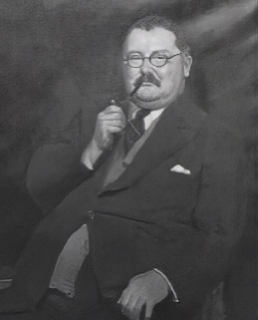
Death of R. M. “Bertie” Smyllie, Editor of “The Irish Times”

Robert Maire Smyllie, known as Bertie Smyllie, editor of The Irish Times for twenty years, dies on September 11, 1954.

Smyllie is born on March 20, 1893, at Hill Street, ShettlestonGlasgowScotland. He is the eldest of four sons and one daughter of Robert Smyllie, a Presbyterian printer originally from Scotland who is working in Sligo, County Sligo, at the time, and Elisabeth Follis, originally from Cork, County Cork. His father marries in Sligo on July 20, 1892, and later becomes proprietor and editor of the unionist Sligo Times. Smyllie attends Sligo Grammar School in 1906 and enrolls at Trinity College Dublin (TCD) in 1911.

After two years at TCD, Smyllie’s desire for adventure leads him to leave university in 1913. Working as a vacation tutor to an American boy in Germany at the start of World War I, he is detained in Ruhleben internment camp, near Berlin, during the war. As an internee, he is involved in drama productions with other internees. Following his release at the end of the war, he witnesses the German revolution of 1918–1919. During this period, he encounters revolutionary sailors from Kiel who temporarily make him a representative of the Workers’ and Soldiers’ Council, and he observes key events including the looting of the Kaiser’s Palace and violent clashes between rival factions in Berlin. It is also during this period that he secures a personal interview with David Lloyd George at the Paris Convention of 1919. This helps Smyllie gain a permanent position with The Irish Times in 1920, where he quickly earns the confidence of editor John Healy. Together, they take part in secret but unsuccessful attempts to resolve the Irish War of Independence.

Smyllie contributes to the Irishman’s Diary column of the paper from 1927. In 1927, he publishes an exclusive report outlining a draft government including both Labour Party and Fianna Fáil TDs, signaling the volatile politics of the early state years.

Smyllie’s knowledge of languages (particularly the German he had learned during his internment) led to numerous foreign assignments. His reports on the rise of National Socialism in 1930s Germany are notably prescient and instill in him a lasting antipathy towards the movement.

When Healy dies in 1934, Smyllie becomes editor of The Irish Times and also takes on the role of Irish correspondent for The Times (London), a position that brings significant additional income. Under Healy’s leadership, The Irish Times shifted from representing the Anglo-Irish ascendancy to becoming an organ of liberal, southern unionism, and eventually becomes a critical legitimising force in the Irish Free State. Smyllie enthusiastically supports this change. He establishes a non-partisan profile and a modern Irish character for the erstwhile ascendancy paper. For example, he drops “Kingstown Harbour” for “Dún Laoghaire.” He also introduces the paper’s first-ever Irish-language columnist. He is assisted by Alec Newman and Lionel Fleming, recruits Patrick Campbell and enlists Flann O’Brien to write his thrice-weekly column “Cruiskeen Lawn” as Myles na gCopaleen. As editor, he introduces a more Bohemian and informal style, establishing a semi-permanent salon in Fleet Street’s Palace Bar. This becomes a hub for journalists and literary figures and a source of material for his weekly column, Nichevo.

One of Smyllie’s early political challenges as editor concerns the Spanish Civil War. At a time when Irish Catholic opinion is strongly pro-Franco, he ensures The Irish Times coverage is balanced and fair, though advertiser pressure eventually forces the withdrawal of the paper’s young reporter, Lionel Fleming, from the conflict. His awareness of the looming European crisis earns him the Order of the White Lion of Czechoslovakia in 1939. However, during World War II, he clashes with Ireland’s censorship authorities, especially under Minister Frank Aiken. He challenges their views both publicly and privately, though his relationship with the editor of the Irish Independent, Frank Geary, is cold, reducing the effectiveness of their joint opposition to censorship.

During the 1943 Irish general election, Smyllie uses the paper to promote the idea of a national government that could represent Ireland with authority in the postwar world. He praises Fine Gael’s proposal for such a government and criticises Éamon de Valera for dismissing it as unrealistic. This leads to a public exchange between de Valera and Smyllie, with the latter defending The Irish Times’s role as a constructive voice for Ireland’s future rather than a partisan interest.

Following the war, Smyllie’s editorial stance shifts toward defending Ireland’s neutrality and diplomatic position. When Winston Churchill accuses de Valera of fraternising with Axis powers, Smyllie counters by revealing Ireland’s covert collaboration with the Allies, such as military and intelligence cooperation, despite official neutrality. In the same period, he continues to oppose censorship, particularly the frequent banning of Irish writers by the Censorship of Publications Board. This opposition features prominently in a controversy on The Irish Times letters page in 1950, later published as the liberal ethic. The paper also adopts a critical stance toward the Catholic Church, notably during the 1951 resignation of Minister for Health Noël Browne amid opposition from bishops and doctors to a national Mother and Child Scheme. His editorials suggest the Catholic Church is effectively the government of Ireland, though he maintains a cordial relationship with Archbishop of DublinJohn Charles McQuaid, who invites him annually for dinner.

Smyllie is also wary of American foreign policy, showing hostility particularly during the Korean War. American diplomats in Dublin allege that Smyllie is “pro-communist“. Despite growing readership among an educated Catholic middle class, The Irish Times’s circulation in 1950 remains under 50,000, far below the Irish Independent and the Fianna Fáil-aligned The Irish Press.

In later years, Smyllie’s health declines, prompting a quieter lifestyle. He moves from his large house in Pembroke Park, Dublin, to DelganyCounty Wicklow. As he does not drive, he becomes less present in the newspaper office in D’Olier Street, contributing to a decline in the paper’s dynamism. His health deteriorates further, resulting in frequent absences from his editorial duties, though he retains his position despite management attempts to limit his authority, especially over finances. He dies of heart failure on September 11, 1954.

In 1925, Smyllie marries Kathlyn Reid, eldest daughter of a County Meath landowner. They have no children.

Smyllie is an eccentric: he hits his tee shots with a nine iron, speaks in a curious mix of Latin phrases and everyday Dublin slang, and weighs 22 stone (308 lbs.; 140 kg) yet still cycles to work wearing a green sombrero.


Leave a comment

Death of Osborn Bergin, Irish Language & Literature Scholar

Osborn Joseph Bergin, a scholar of the Irish language and early Irish literature, dies in a nursing home in Dublin at the age of 76 on October 6, 1950.

Bergin is born in Cork, County Cork on November 26, 1873, the sixth child and eldest son of Osborn Roberts Bergin and Sarah Reddin. He is educated at Queen’s College Cork, now University College Cork. He then goes to Germany for advanced studies in Celtic languages, working with Heinrich Zimmer at the Friedrich Wilhelm University in Berlin, now the Humboldt University of Berlin, and later with Rudolf Thurneysen at the University of Freiburg, where he writes his dissertation on palatalization in 1906. He then returns to Ireland and teaches at the School of Irish Learning and at University College Dublin (UCD).

Within one year of becoming Director of the School of Irish Studies in the Dublin Institute for Advanced Studies, Bergin resigns both the senior professorship and his office of director. The reason for his resignation is never made public.

Bergin, who never uses the name Joseph except when signing with his initials, does not seem to have felt the need of institutional religion, and during his lifetime, he rarely attends religious services. He develops Irish nationalist sympathies and remains a firm nationalist all his life but without party affiliations. From the number of Irish speakers living in Cork, he quickly masters the spoken Irish of West Munster. By 1897, his knowledge of spoken and literary Modern Irish is so strong that he is appointed lecturer in Celtic in Queen’s College, Cork. It is during this time that he becomes an active member of the Gaelic League.

Bergin publishes extensively in the journal for Irish scholarship, Ériu. He is best known for his discovery of Bergin’s Law, which states that while the normal order of a sentence in Old Irish is verb-subject-object, it is permissible for the verb, in the conjunct form, to be placed at the end of the sentence. His friend Frank O’Connor writes humorously that while he discovers the law “he never really believed in it.” He writes poetry in Irish and makes a number of well-received translations of Old Irish love poetry.

Bergin is celebrated in Brian O’Nolan‘s poem Binchy and Bergin and Best, originally printed in the Cruiskeen Lawn column in The Irish Times and now included in The Best of Myles. He is noted for his feuds with George Moore and William Butler Yeats, but he enjoys a lifelong friendship with George William Russell. Frank O’Connor describes Bergin’s eccentricities affectionately in his memoir My Father’s Son.

Osborn Bergin dies in a nursing home in Dublin at the age of 76 on October 6, 1950, having never married. He is buried in St. Finbarr’s Cemetery, Cork. He leaves the valuable contents of his library – over 1,200 volumes on philology and other scholarly subjects, many with important annotations – and a collection of personal papers to the Royal Irish Academy (RIA). There is a portrait of Bergin at UCD.


2 Comments

Death of Seán Ó Faoláin, Short Story Writer

Seán Proinsias Ó Faoláin, short story writer of international repute and one of the most influential figures in 20th-century Irish culture, dies in Dublin on April 20, 1991. He is also a leading commentator and critic.

Ó Faoláin is born John Francis Whelan in Cork, County Cork, on February 27, 1900. He is educated at the Presentation Brothers College secondary school in Cork. He comes under the influence of Daniel Corkery, joining the Cork Dramatic Society, and increasing his knowledge of the Irish language, which he had begun in school. Shortly after entering University College Cork (UCC), he joins the Irish Volunteers and fights in the Irish War of Independence. During the Irish Civil War, he serves as censor for The Cork Examiner and as publicity director for the Irish Republican Army (IRA). After the Republican loss, he receives MA degrees from the National University of Ireland (NUI) and from Harvard University where he studies for three years. He is a Commonwealth Fellow from 1926 to 1928 and is a Harvard Fellow from 1928 to 1929.

Ó Faoláin writes his first stories in the 1920s, eventually completing ninety stories over a period of sixty years. From 1929 to 1933 he lectures at the Catholic college, St. Mary’s College, at Strawberry Hill, London, during which period he writes his first two books. His first book, Midsummer Night Madness, is published in 1932. It is a collection of stories partly based on his Civil War experiences. He afterward returns to Ireland. He publishes four novels, seven additional volumes of short stories, six biographies, three travel books, a play, a memoir, a history book, translations and literary criticism, including one of the rare full-length studies of the short story, The Short Story (1948). He also writes a cultural history, The Irish, in 1947. His last short story volume, Foreign Affairs, is published in 1976. His Collected Stories is published in 1983.

Ó Faoláin produces critical studies of the novel and the short-story form, introduces texts of historical and literary merit, and contributes scores of articles, reviews, and uncollected stories to periodicals in Ireland, Britain, and the United States.

Ó Faoláin is a founder member and editor of the Irish literary periodical The Bell from 1940 to 1946. Under his editorship, The Bell participates in many key debates of the day. It also provides a crucial outlet for established and emerging writers during the lean war years. The list of contributors to The Bell include many of Ireland’s foremost writers, among them Patrick Kavanagh, Patrick Swift, Flann O’Brien, Frank O’Connor and Brendan Behan.

A recurring thread in Ó Faoláin’s work is the idea that national identities are historically produced and culturally hybrid; an additional thesis is that Irish history should be conceived in international terms, and that it should be read, in particular, in the context of social and intellectual developments across Europe.

Ó Faoláin serves as director of the Arts Council of Ireland from 1956 to 1959.

Ó Faoláin marries Eileen Gould, a children’s book writer who publishes several books of Irish folk tales, in 1929. They have two children: Julia (1932–2020), who becomes a Booker-nominated novelist and short story writer, and Stephen (b. 1938).

Ó Faoláin dies in Dublin at the age of 91 on April 20, 1991.

Ó Faoláin is a controversial figure in his own lifetime and two of his books are banned for “indecency” in Ireland — his debut collection of short stories and his second novel, Bird Alone (1936). His legacy has proven divisive. If some consider him a social liberal cosmopolitan who challenges “proscriptive” definitions of Irish culture, others see him as a chauvinistic snob who paradoxically restricts the development of Irish writing. Proto-revisionist or nascent postcolonial, O’Faoláin has been considered both, sometimes within the same critical survey. Either way, his work is central to the evolution of a post–Literary Revival aesthetic, and his voice is one of the most prominent, and eloquent, in the fight against censorship in Ireland.

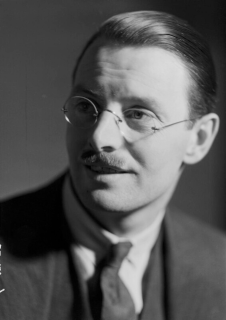
(Pictured: Portrait of Seán Ó Faoláin by Howard Coster, 1930s, National Portrait Gallery)


Leave a comment

Birth of Anthony Cronin, Poet, Activist, Critic & Editor

Anthony Gerard Richard Cronin, Irish poet, arts activist, biographer, commentator, critic, editor and barrister, is born in Enniscorthy, County Wexford, on December 28, 1923.

After obtaining a B.A. from the National University of Ireland, Cronin enters the King’s Inns and is later called to the Bar.

Cronin is known as an arts activist as well as a writer. He is Cultural Adviser to Taoiseach Charles Haughey and briefly to Garret FitzGerald. He involves himself in initiatives such as Aosdána, the Irish Museum of Modern Art and the Heritage Council. He is a founding member of Aosdána, and is a member of its governing body, the Toscaireacht, for many years. He is elected Saoi, a distinction for exceptional artistic achievement, in 2003. He is also a member of the governing bodies of the Irish Museum of Modern Art and the National Gallery of Ireland, of which he is for a time Acting Chairman.

With Flann O’Brien, Patrick Kavanagh and Con Leventhal, Cronin celebrates the first Bloomsday in 1954. He contributes to many television programmes, including Flann O’Brien: Man of Parts (BBC) and Folio (RTÉ).

From 1966 to 1968 Cronin is a visiting lecturer at the University of Montana in Missoula, Montana, and from 1968 to 1970 he is poet in residence at Drake University in Des Moines, Iowa. He reads a selection of his poems for the Irish Poetry Reading Archive in 2015. He has honorary doctorates from several institutions, including the University of Dublin, the National University of Ireland and the Adam Mickiewicz University in Poznań, Poland.

Cronin begins his literary career as a contributor to Envoy, A Review of Literature and Art. He is editor of The Bell in the 1950s and literary editor of Time and Tide (London). He writes a weekly column, “Viewpoint,” in The Irish Times from 1974 to 1980. Later he contributes a column on poetry to the Sunday Independent.

His first collection of poems, called simply Poems (Cresset Press, London), is published in 1958. Several collections follow and his Collected Poems (New Island Books, Dublin) is published in 2004. The End of the Modern World (New Island Books, 2016), written over several decades, is his final publication.

Cronin’s novel, The Life of Riley, is a satire on Bohemian life in Ireland in the mid-20th century, while his memoir Dead as Doornails addresses the same subject.

Cronin knows Samuel Beckett from when they do some work for the BBC during the 1950s and 1960s. He gives a prefatory talk to Patrick Magee‘s reading of The Unnamable on the BBC Third Programme. Beckett is not impressed, saying, “Cronin delivered his discourse… It was all right, not very exciting.” Cronin later publishes a biography of him, Samuel Beckett: The Last Modernist (1996), followed on from No Laughing Matter: The Life and Times of Flann O’Brien (1989).

In his later years, Cronin suffers from failing health, which prevents him from traveling abroad, thus limiting his dealings to local matters. He dies in Dublin on December 27, 2016, one day short of his 93rd birthday.

Cronin firstly marries Thérèse Campbell, from whom he separates in the mid-1980s. She dies in 1999. They have two daughters, Iseult and Sarah. Iseult is killed in a road accident in Spain. He secondly marries the writer Anne Haverty who, along with daughter Sarah, survives him.


Leave a comment

Birth of Cecil Ffrench Salkeld, Painter, Critic & Writer

Cecil Ffrench Salkeld, Irish painter, printmaker, critic and writer, is born in Assam, India on July 9, 1904.

Salkeld’s parents are Henry Lyde Salkeld, a member of the Indian Civil Service (ICS), and Blanaid Salkeld (née Mullen), a poet. He returns to Ireland with his mother in 1910 following the death of his father in 1909. He attends Mount St. Benedict’s, Gorey, County Wexford, and the Dragon School in Oxford, England. He wins a scholarship to Oundle School in Oundle, North Northhamptonshire, but returns to Dublin where he enters the Dublin Metropolitan School of Art in 1919 to study under Seán Keating and James Sleator. He marries Irma Taesler in Germany in 1922. They have two daughters, Celia and Beatrice. The latter marries Brendan Behan in 1954.

Salkeld works in tempera and oil, as well as etching and wood engraving. In 1921 he travels to Germany to study under Ewald Dulberg at the Kassell Kunstschule. He attends the Union of Progressive International Artists in Düsseldorf in May 1922, and is exhibited at the Internationale Kunstausstellung. Upon his return to Dublin in 1924, he holds his first solo exhibition in the Society of Dublin Painters gallery. He becomes a member of the Dublin Painters in 1927. With Francis Stuart, he co-edits the first two issues of To-morrow in 1924. His studio is in a converted labourer’s cottage at Glencree, County Wicklow. He also exhibits with the New Irish Salon and the Radical Painters’ Group.

Salkeld wins the 1926 Royal Dublin Society‘s Taylor scholarship, and has his first exhibited work with the Royal Hibernian Academy (RHA) in 1929. He lives in Berlin for a year in 1932. He exhibits in Daniel Egan’s Gallery in Dublin in 1935. He has a wide circle of literary friends, including Samuel Beckett and Flann O’Brien. In O’Brien’s At Swim-Two-Birds, the character of Michael Byrne is designed for Salkeld, reflecting his debilitating alcoholism. He also teaches at the Dublin Metropolitan School of Art, teaching artists such as Reginald Gray.

From 1937 to 1946 Salkeld runs a private press called Gayfield Press. This is co-founded with his mother, and operates from a garden shed at their home, 43 Morehampton Road. The press is a small Adana wooden hand press. He illustrates her 1938 The Engine Left Running, as well as Ewart Milne‘s Forty North Fifty West (1938) and Liam O’Flaherty‘s Red Barbara and Other Stories (1928). In 1951, he loans the press to Liam and Josephine Miller to found the Dolmen Press.

Salkeld’s most famous public work is his 1942 three-part mural in Davy Byrne’s pub. He is a co-founder of the Irish National Ballet School in the 1940s in his capacity as a pianist. In 1946 he is appointed an associate member of the RHA. In 1953 his play Berlin Dusk is staged at 37 Theatre Club, Dublin. During the 1950s he is a broadcaster with Radio Éireann as well as a director of cultural events for An Tóstal. He dies on May 11, 1969, in St. Laurence’s Hospital, Dublin.

The National Gallery of Ireland holds a portrait by Salkeld of his daughter, Celia.

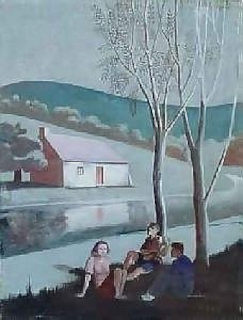
(Pictured: “Figures In Moonlight” by Cecil Ffrench Salkeld, oil on canvas)


Leave a comment

Death of Cecil Ffrench Salkeld, Painter, Printmaker, Critic & Writer

Cecil Ffrench Salkeld, Irish painter, printmaker, critic and writer dies in Dublin on May 11, 1969.

Salkeld is born in Assam, India on July 9, 1904. His parents are Henry Lyde Salkeld, a member of the Indian Civil Service (ICS), and Blanaid Salkeld (née Mullen), a poet. He returns to Ireland with his mother in 1910 following the death of his father in 1909. He attends Mount St. Benedict’s, Gorey, County Wexford, and the Dragon School in Oxford, England. He wins a scholarship to Oundle School in Oundle, North Northhamptonshire, but returns to Dublin where he enters the Dublin Metropolitan School of Art in 1919 to study under Seán Keating and James Sleator. He marries Irma Taesler in Germany in 1922. They have two daughters, Celia and Beatrice. The latter marries Brendan Behan in 1954.

Salkeld works in tempera and oil, as well as etching and wood engraving. In 1921 he travels to Germany to study under Ewald Dulberg at the Kassell Kunstschule. He attends the Union of Progressive International Artists in Düsseldorf in May 1922, and is exhibited at the Internationale Kunstausstellung. Upon his return to Dublin in 1924, he holds his first solo exhibition in the Society of Dublin Painters gallery. He becomes a member of the Dublin Painters in 1927. With Francis Stuart, he co-edits the first two issues of To-morrow in 1924. His studio is in a converted labourer’s cottage at Glencree, County Wicklow. He also exhibits with the New Irish Salon and the Radical Painters’ Group.

Salkeld wins the 1926 Royal Dublin Society‘s Taylor scholarship, and has his first exhibited work with the Royal Hibernian Academy (RHA) in 1929. He lives in Berlin for a year in 1932. He exhibits in Daniel Egan’s Gallery in Dublin in 1935. He has a wide circle of literary friends, including Samuel Beckett and Flann O’Brien. In O’Brien’s At Swim-Two-Birds, the character of Michael Byrne is designed for Salkeld, reflecting his debilitating alcoholism. He also teaches at the Dublin Metropolitan School of Art, teaching artists such as Reginald Gray.

From 1937 to 1946 Salkeld runs a private press called Gayfield Press. This is co-founded with his mother, and operates from a garden shed at their home, 43 Morehampton Road. The press is a small Adana wooden hand press. He illustrates her 1938 The Engine Left Running, as well as Ewart Milne‘s Forty North Fifty West (1938) and Liam O’Flaherty‘s Red Barbara and Other Stories (1928). In 1951, he loans the press to Liam and Josephine Miller to found the Dolmen Press.

Salkeld’s most famous public work is his 1942 three-part mural in Davy Byrne’s pub. He is a co-founder of the Irish National Ballet School in the 1940s in his capacity as a pianist. In 1946 he is appointed an associate member of the RHA. In 1953 his play Berlin Dusk is staged at 37 Theatre Club, Dublin. During the 1950s he is a broadcaster with Radio Éireann as well as a director of cultural events for An Tóstal. He dies on May 11, 1969 in St. Laurence’s Hospital, Dublin.

The National Gallery of Ireland holds a portrait by Salkeld of his daughter, Celia.

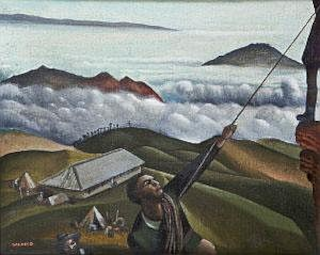
(Pictured: “The Climber” by Cecil Ffrench Salkeld, oil on canvas)


Leave a comment

Birth of Short Story Writer Seán Ó Faoláin

sean-ofaolain

Seán Proinsias Ó Faoláin, Irish short story writer, is born as John Francis Whelan on February 22, 1900, in Cork, County Cork.

Ó Faoláin is educated at the Presentation Brothers Secondary School in Cork. He comes under the influence of Daniel Corkery, joining the Cork Dramatic Society and increasing his knowledge of the Irish language, which he had begun in school. Shortly after entering University College Cork, he joins the Irish Volunteers and fights in the Irish War of Independence. During the Irish Civil War, he serves as Censor for The Cork Examiner and as publicity director for the Irish Republican Army (IRA). After the Republican loss, he receives M.A. degrees from the National University of Ireland and from Harvard University where he studies for three years. He is a Commonwealth Fellow from 1926 to 1928 and is a Harvard Fellow from 1928 to 1929.

Ó Faoláin writes his first stories in the 1920s, eventually completing 90 stories over a period of 60 years. From 1929 to 1933 he lectures at the Catholic college, St. Mary’s College, at Strawberry Hill in Twickenham, England, during which period he writes his first two books. His first book, Midsummer Night Madness, is published in 1932. It is a collection of stories partly based on his Civil War experiences. He afterwards returns to his native Ireland. He publishes novels, short stories, biographies, travel books, translations, and literary criticism – including one of the rare full-length studies of the short story, The Short Story (1948). He also writes a cultural history, The Irish, in 1947.

Ó Faoláin serves as director of the Arts Council of Ireland from 1956 to 1959, and from 1940 to 1990 is a founder member and editor of the Irish literary periodical The Bell. The list of contributors to The Bell include many of Ireland’s foremost writers, among them Patrick Kavanagh, Patrick Swift, Flann O’Brien, Frank O’Connor and Brendan Behan. His Collected Stories are published in 1983. He is elected Saoi of Aosdána in 1986.

Seán Proinsias Ó Faoláin dies after a short illness on April 20, 1991, in the Dublin nursing home where he had lived for two years.