seamus dubhghaill

Promoting Irish Culture and History from Little Rock, Arkansas, USA


Leave a comment

Birth of Henry John Stephen Smith, Mathematician & Amateur Astronomer

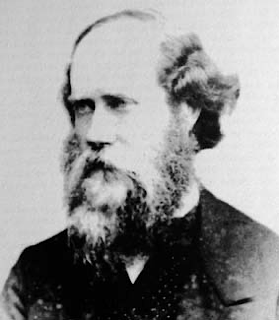
Henry John Stephen Smith, mathematician and amateur astronomer, is born in Dublin on November 2, 1826. He is remembered for his work in elementary divisorsquadratic forms, and Smith–Minkowski–Siegel mass formula in number theory. In matrix theory he is visible today in having his name on the Smith normal form of a matrix. He is also first to discover the Cantor set.

Smith is the fourth child of John Smith (1792–1828), a barrister, who dies when Henry is two. His mother, Mary Murphy (d.1857) from Bantry Bay, very soon afterward moves the family to England. He has thirteen siblings, including Eleanor Smith, who becomes a prominent educational activist. He lives in several places in England as a boy. His mother does not send him to school but educates him herself until age 11, at which point she hires private tutors. In 1841, at the age of 15, he is admitted to Rugby School in Warwickshire, where Thomas Arnold is the school’s headmaster. This comes about because his tutor, Henry Highton, takes up a housemaster position there.

At the age of 19 Smith wins an entrance scholarship to Balliol College, Oxford. He graduates in 1849 with high honours in both mathematics and classics. He is fluent in French having spent holidays in France, and he takes classes in mathematics at the College of Sorbonne in Paris during the 1846–47 academic year. He is unmarried and lives with his mother until her death in 1857. He then brings his sister, Eleanor, to live with him as housekeeper at St. Giles.

Smith remains at Balliol College as a mathematics tutor following his graduation in 1849 and is soon promoted to Fellow status.

In 1861, Smith is promoted to the Savilian Chair of Geometry at the University of Oxford. In 1873, he is made the beneficiary of a fellowship at Corpus Christi College, Oxford, and gives up teaching at Balliol College.

In 1874, Smith becomes Keeper of the University Museum and moves, along with his sister, to the Keeper’s House on South Parks Road in Oxford.

On account of his ability as a man of affairs, Smith is in demand for academic administrative and committee work: he is Keeper of the Oxford University Museum of Natural History, a Mathematical Examiner for the University of London, a member of a Royal Commission to review scientific education practice, a member of the commission to reform University of Oxford governance, chairman of the committee of scientists overseeing the Meteorological Office and twice president of the London Mathematical Society.

Smith dies in Oxford on February 9, 1883. He is buried in St. Sepulchre’s Cemetery in Oxford.


Leave a comment

Birth of Nora Twomey, Animator, Director & Screenwriter

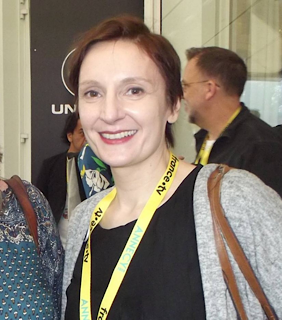
Nora Twomey, Irish animator, director, screenwriter, producer and voice actress, is born on October 31, 1971, in Cork, County Cork. She is best known as the co-founder of Cartoon Saloon, alongside Tomm Moore and Paul Young, an animation studio and production company, based in Kilkenny, County Kilkenny.

Twomey is educated at St. Mary’s Secondary School in Midleton, County Cork but leaves before completing the Leaving Certificate at the age of fifteen. She does manual labor at a local factory but continues to draw and briefly studies fine art before she is admitted to Ballyfermot Senior College in Dublin to their School of Animation program on the basis of her portfolio. In the factory she operates a conveyor belt for up to twelve hours on end during the night shift. She credits this period of her life to much of her success, as she wears headphones to drown out the loud noise of machinery, the silence combined with the monotony of the task she performs allows her to ponder concepts and generate ideas, many of which are put to film later in her life.

After graduating from Ballyfermot Senior College in 1995, Twomey begins to work for Brown Bags Film, an animation studio in Dublin. In 1999, she helps found Cartoon Saloon, along with Tomm Moore, Paul Young and Ross Murray. In 2002, she directs the award-winning short animated film From Darkness. The short film has no dialogue and is based on an Inuit folk tale where a man helps a woman with only a skeleton for a body to regenerate. She also works on the successful animated TV series Skunk Fu!.

Twomey goes on to write and direct the animated short Cúilín Dualach (Backwards Boy), released in 2004. Based on a story by Jackie Mac Donacha, a boy with his head on backwards finds only love and acceptance in his mother and has to work to gain that from the rest of his community but most of all his father.

Twomey co-directs, with Tomm Moore, The Secret of Kells, an animated feature film as well as doing additional voice acting for the film. The film is set in 9th century Ireland, at the time when the Book of Kells is written. In it, a 12-year-old orphan boy living at a monastery has the task of finishing a book with the art of illumination. The film premieres at the Berlin International Film Festival in February 2009. The Secret of Kells is nominated in the category of Best Animated Feature Film at the 82nd Academy Awards.

Twomey continues to work on feature films with Cartoon Saloon with 2014’s Song of the Sea directed by Tomm Moore. She works as the film’s head of story and voice director.

Twomey next directs the animated film The Breadwinner, released in 2017. Based on the best-selling young adult novel by Deborah Ellis, an 11-year-old girl named Parvana must dress as a boy and become the titular breadwinner for her family when her father is wrongfully arrested by the Taliban. It premieres at the Toronto International Film Festival in September 2017 with a wide release in November 2017. It is the first feature-length film she has sole director credit on. She works on the project with actress Angelina Jolie, who helps fund the project and works as an executive producer. The project is a huge success for Twomey, as she is recognized as a solo female filmmaker, and given accolades as well as being lauded by many as a source of female empowerment, all while battling cancer during production. During the development of The Breadwinner, she is named in Variety‘s “2017 10 Animators to Watch.”

Twomey is a member of the Academy of Motion Picture Arts and Sciences.

Twomey becomes the seventh graduate of Ballyfermot Senior College to be nominated for an Academy Award with her work on The Breadwinner when it is nominated for Best Animated Feature at the 90th Academy Awards. She is also nominated for an award at the Golden Globe Awards.

The Breadwinner earns ten nominations at the 45th Annie Awards, including Outstanding Achievement for Directing in an Animated Feature Production for Twomey. It wins the award for best animated feature for an independent film. This marks the first time a sole female director directs the film that wins the award. It also wins the Cinema for Peace award for Justice in 2018.

Twomey’s work also has a heavy presence at the Emile Awards, an annual event held by the European Animation Awards Association that honors European creators of animation. During the awards of 2018, which are hosted in Lile, France, her film The Breadwinner wins awards in five categories: Best Direction, Best Storyboarding, Best Character Animation, Best Background, and Best Character Design.

Twomey has won several awards according to the Screen Directors Guild of Ireland (SDGI). These awards include the best New Irish Short Animation at the Galway Film Fleadh (2002), Best Short at the Boston Irish Film Festival (2003), Best Animation at the Kerry Film Festival (2003), and the Silver Award at the Kalamazoo Animation Festival International (2003) for her film From Darkness. Her film Cúilín Dualach (Backwards Boy) also wins the Best Animated Short from the Irish Film & Television Academy (2005), Best Short Film at Cartoons on the Bay (2005), Best Animation for Children at Animadrid (2005) and the Best Animation at the Celtic Film Festival (2005). Among other awards, the 2018 Cinema for Peace Award for Justice for her movie The Breadwinner can be included.

Cartoon Saloon, the studio Twomey co-founds with contemporaries Paul Young and Tom Moore in Kilkenny, has been nominated for five Academy Awards, a British Academy of Film and Television Arts (BAFTA) award and several Emmy Awards.


Leave a comment

Birth of Helena Concannon, Historian, Writer & Politician

Helena Concannon (née Walsh), Irish historian, writer, language scholar and Fianna Fáil politician, is born in MagheraCounty Londonderry, on October 28, 1878.

Concannon is educated by the Loreto nuns in Coleraine, County Londonderry. In 1897, she studies modern languages at the Royal University of Ireland on a three-year scholarship. She studies abroad during these years as in 1899, she travels to Germany and studies German in Berlin University accompanied by her friend, Mary Macken. She then travels to France to study French at Sorbonne University. In 1900, she graduates Bachelor of Arts with first class honours and goes on to study Master of Arts in 1902 at the Royal University of Ireland. She is fortunate to being one of the first generation of educated women.

In 1906, Concannon marries Tomás Bán Ó Conceanainn, who she met in 1900 when he arrived home from the United States. They settle down in County Galway where they share the same love for the Irish language and write many Irish texts. They have no children. In Galway, she is a professor at University College Galway where she teaches history, which mainly involves the history of Irish women. In 1909, she is offered a lectureship at University College Dublin, in Italian, but the offer is then withdrawn before she can accept it, so she decides to pursue a writing career.

Concannon produces over twenty books, including works on religion, the history of Ireland and Irish women’s history. Her works are highly impacted by her political and nationalist views. Her analyses of Irish history is based on Catholicism and patriotism. She is also an advocate of Irish language restoration. Her first writings are love poems to her husband. These poems are ”simple, sensuous and passionate.”

Concannon also produces a number of imaginative historical text for children. She uses her married name for her publications and her first book, entitled A Garden of girls, or the famous schoolgirls of former days, is published in 1914. It is about “school life and education of real little girls” Her next well known piece is the Life of St. Columban in 1915, which is a study about the Irish ancient monastic life and a biography of a sixth-century saint.

Two of Concannon’s books, Daughters of Banba (1922) and St. Patrick (1932), receive the Tailteann Medal for Literature, and The Poor Clares in Ireland (1929) wins the National University Prize, a D.Litt. higher doctorate degree for historical research.

Concannon’s most common publication, Women of ‘Ninety Eight, is dedicated to all the dead women and all the living ones who have given their loved ones. This book emerges on the ideologies of Catholicism and patriotism “praising the devotion of Irish nationalist women while emphasising the centrality of women’s spiritual and domestic role in the home to the well-being of the nation.” As this work is written during the time of the Irish War of Independence, she stresses the importance of women help during the rebellion as “they acted as messengers and intelligence officers,” and in some cases, they fought as any men.

Concannon was elected to the 8th Dáil for Fianna Fáil at the 1933 Irish general election for the National University of Ireland constituency, serving from February 8, 1933 until June 14, 1937.

Concerning the Land Purchase (Guarantee Fund) Bill 1935, which according to George Cecil Bennett will negatively impact the rural middle class of which he is a representative, Bennett accuses Concannon and her fellow Dublin men of not caring about the people of the country. Concannon goes on to vote that the Dáil should disagree with the Seanad Éireann-proposed bill with 71 others.

Though Concannon is a TD as a university representative, she votes with her party to remove university representation from the Dáil, leading one TD to say, “I am very much surprised to see such a distinguished scholar and such a great contributor to Irish literature as Deputy Mrs. Concannon voting for the disfranchisement of the University that she has so well and so ably represented.”

Concannon speaks on behalf of Irish women in the Dáil in 1936. She speaks on how Irish women play a fundamental role in Ireland’s agricultural economy and therefore more money should be put toward educating these women.

Concannon is one of the minority voices against the role appointed to women in Éamon de Valera‘s constitution. She does not contest the Dáil election of 1937.

After the adoption of the Constitution of Ireland in 1937, the National University of Ireland constituency is reconstituted in the new Seanad Éireann. The first election takes place in 1938, and Concannon is elected. She is a popular figure and is re-elected each election in the Seanad until she dies in office on February 27, 1952.


Leave a comment

Birth of Sarah Atkinson, Writer & Philanthropist

Sarah (née Gaynor) Atkinson, Irish writer, biographer, essayist and philanthropist, is born in Athlone, County Westmeath, on October 23, 1823.

She is the eldest daughter of John and Anne Gaynor, of Athlone. At the age of fifteen she moves with her family to Dublin where her education is completed. Two of her sisters, Anna and Marcella, become nuns with Religious Sisters of Charity. At twenty-five, she marries the much older George Atkinson, a medical doctor and, with Sir John Gray, joint proprietor of the Freeman’s Journal. They are both interested in art and she accompanies her husband on many trips abroad, taking in the cultural centres of Europe. At home they make the acquaintance of prominent politicians, journalists and musicians. Regular guests at their house are Dr. John Shaw, editor of the Evening MailRosa Mulholland and Katharine Tynan.

The loss of her only child in his fourth year deeply affected Atkinson and she throws herself into charitable and other good works. She moves with her husband to Drumcondra in Dublin, where she makes the acquaintance of Ellen Woodlock. Woodlock, a sister of Francis Sylvester Mahony, is born in Cork, County Cork, in 1811 and is married in 1830 and widowed quite young, just before the birth of her only son. Woodlock is the sister-in-law of Rev. Dr. Bartholomew Woodlock, who is President of All Hallows College. She intends to join a religious community in France but after spending a few years in that country (with her son in a nearby school) returns to Cork and then moves to Dublin. At this time the post-famine city is inundated with poverty-stricken families and abandoned children. Fever and disease are rife, and the Poor Law of the day is insufficient to meet the needs of the starving population. Many evictions are taking place in deplorable circumstances, which force the poor, however reluctantly, to seek refuge in the workhouses. The most vulnerable sections of the community are single women (including widows) and children. Woodlock is totally against placing children in workhouses and founds St. Joseph’s Industrial Institute in 1855 to rescue girls from that situation. With her, Atkinson interests herself in the female paupers of the South Dublin Union. With much difficulty in the 1860s, she gains permission for ladies like herself to enter and inspect the condition of young girls in the North and South Dublin Unions, after which she opens a better home to which many were transferred. She campaigns for years to improve the state of the workhouses and provide better conditions for the poverty-stricken. One of her sisters runs the Our Lady’s Hospice in Dublin, to which she donates funds. She helps Woodlock establish the Children’s Health Ireland at 9 Buckingham Street in 1872, which later moves to Temple Street, which she visits every day. Every week she visits hospitals and prisons, in the 1880s accompanying Katharine Tynan to visit the last of the Land Leaguers incarcerated in Kilmainham Gaol.

From the 1850s Atkinson contributes a large number of historical and biographical articles and essays to several publications, including Duffy’s Hibernian MagazineThe MonthThe Nation and the Freeman’s Journal. She later writes for the Irish Monthly after it is established, and for the Irish Quarterly Review. Her Life of Mary Aikenhead is published in 1875 and is very well received. She follows this with biographies of the Irish sculptors John Henry Foley and John Hogan and also a life of Catherine of Siena. A collection of her essays, with a preface and biography by Rosa Mulholland, is published posthumously in 1895.

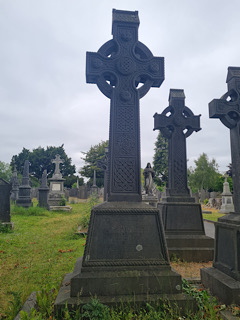
Atkinson dies in County Dublin on July 8, 1893, and is buried in Glasnevin Cemetery, Dublin, where the cemetery committee places a Celtic cross as a monument to her and her husband after his death on December 8, 1893.


Leave a comment

Birth of Dairine Vanston, Landscape Artist

Dairine (Doreen) Vanston, Irish landscape artist who works in a Cubist style, is born in Dublin on October 19, 1903.

Vanston is the daughter of solicitor John S. B. Vanston, and sculptor Lilla Vanston (née Coffey). She attends Alexandra College, going on to study at Goldsmiths College, London under Roger Bissière. She then goes to Paris to the Académie Ranson, being sent there following the advice of Paul Henry. While in Paris she meets Guillermo Padilla, a Costa Rican law student at the University of Paris. They marry in 1926 and she takes the name Vanston de Padilla. The couple lives for a time in Italy, before moving to San José, Costa Rica. The marriage breaks down in the early 1930s, at which point she returns to Paris with her son and studies with André Lhote. She is living in France at the outbreak of World War II with Jankel Adler, but is able to escape to London in 1940, and later to Dublin.

Vanston’s time in Paris leaves a lasting impression on her work, including use of primary colours and a strong Cubist influence. She belongs to what critic Brian Fallon calls the “Franco-Irish generation of painters who looked to Paris,” along with Mainie JellettEvie Hone, and Norah McGuinness. Her time spent living in Costa Rica in the late 1920s and early 1930s imbues her work with tropical and highly toned colours. In Dublin in 1935, she exhibits 17 paintings, largely Costa Rican landscapes, at Daniel Egan’s gallery on St. Stephen’s Green. This is the closest thing to a solo show she would mount, with this show also featuring Grace HenryCecil Ffrench Salkeld, and Edward Gribbon.

Meeting the English artist Basil Rakoczi, who is also living in Dublin during World War II, leads Vanston to become associated with The White Stag group. In November 1941, she exhibits for the first time at a group show with 24 other artists, including Patrick Scott. One work that is shown at this exhibition is the painting Keel dance hall, which demonstrates that she spends time in the west of Ireland. The most important event staged by the group is the Exhibition of subjective art, which takes place at 6 Lower Baggot St. in January 1944. The Dublin Magazine notes her work at this show as the most effective of the experimental vanguard. This work, Dying animal, is a Cubist work with semi-representation forms rendered in bold colours. In 1945, her work is featured in a White Stag exhibition in London of young Irish painters at the Arcade gallery, Old Bond Street.

In 1947, Vanston spends almost a year in Costa Rica where she paints primarily in watercolours. Apart from this period, she lives and works in Dublin, living at 3 Mount Street Crescent near St. Stephen’s Church. At the inaugural Irish Exhibition of Living Art in 1943, she exhibits five works. At the first Exhibition of Independent Artists in 1960, of which she is a founder, she exhibits three landscapes and a work entitled War. She largely exhibits with the Independent Artists, the Irish Exhibition of Living Art, and the Oireachtas na Gaeilge, and does not exhibit with the Royal Hibernian Academy. Later in life, she exhibits with the Figurative Image exhibitions in Dublin, and is amongst the first painters chosen for Aosdána. A number of her works are featured in the 1987 exhibition, Irish women artists, from the eighteenth century to the present arranged by the National Gallery of Ireland and The Douglas Hyde Gallery.

Vanston dies on July 12, 1988, in a nursing home in Enniskerry, County Wicklow. Her work is greatly admired, but has received little by way of critical attention, which may have been to do with her slow rate of output. A number of her works have proved difficult to trace. She was a private person, even refusing to cooperate with the Taylor Galleries in the 1980s when they wanted to mount a retrospective of her work. The National Self-Portrait Collection in Limerick holds a work by Vanston.

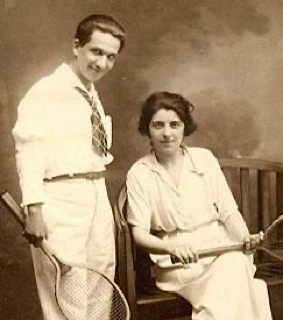
(Pictured: Dairine Vanston with Guillermo Padilla in Paris)


Leave a comment

Death of David Bailie Warden, United Irishman & Diplomat

David Bailie Warden, United Irishman, diplomat, and bibliographer, dies in Paris on October 9, 1845, where he had lived for the previous thirty-eight years.

Warden is born in the townland of Ballycastle, near Newtownards in County Down, the eldest among three sons of Robert Warden, tenant farmer, and Elizabeth Warden (née Bailie). Educated locally, he studies for the Presbyterian ministry, despite being told by a clergyman that he is a “blockhead.” Entering the University of Glasgow, he wins a silver medal for his work on barometers, receives a certificate in midwifery, and graduates MA in April 1797. Returning to Ireland, he accepts a provisional license to preach from the Presbytery of Bangor, County Down, and becomes a popular preacher in the region. A patriot in politics, he joins the United Irishmen. Because of this a warrant was issued for his arrest in 1798 and he surrenders himself to the government. Banished from Ireland, he decides to emigrate to the United States and writes a pamphlet explaining his decision, A farewell address to the junto of the presbytery of Bangor, in which he accuses the church leaders of “meanness, injustice and cruelty.”

On his arrival in New York City in 1799, Warden decides to abandon his career as a clergyman and become a teacher. Interested in mathematics, science and literature, he becomes principal of the Columbia Academy in Kinderhook, New York, and is appointed in 1801 the head tutor at Kingston Academy in Ulster County, New York. Employed by General John Armstrong, Jr. to teach his children, he makes useful connections in American society. He becomes a citizen in 1804 and is asked to accompany Armstrong to France when he is appointed ambassador. Arriving in Paris in 1806, he gives strong support to Armstrong and defends him from criticism in the American press. He is appointed acting consul in 1808, and serves as head of the legation on two occasions when Armstrong is absent. Surprisingly, despite their ties of friendship, Armstrong does not recommend Warden to succeed him permanently, and advises President Thomas Jefferson that although “honest and amiable” he is “not well qualified for business.” Stung by these comments, Warden reacts angrily and his friendship with Armstrong ends acrimoniously. As a result he is swiftly recalled from Paris.

Once back in America, Warden lobbies vigorously to be appointed French consul. Supported by Jefferson, now out of office, he returns to Paris in August 1811 having convinced the government of his credentials. Befriending the new ambassador, Joel Barlow, he soon allows pride to get the better of him. Arrogantly styling himself “consul general” after Barlow dies in December 1812, he provokes much anger and is dismissed from office on June 10, 1814. He never holds a diplomatic appointment again.

Deciding to remain in France, he resumes his scholarly activities and publishes his first book, On the Origin, Nature, Progress and Influence of Consular Establishments in 1813. A friend of many of the leading French writers and intellectuals, he also offers assistance to visiting scholars from America, providing a bridge between the European and American intellectual communities. His reputation increases with the publication of Chorographical and Statistical Description of the District of Columbia (1816) and A Statistical, Political and Historical Account of the United States of North America (3 vols., 1819). The publishers of a series, L’art de vérifier les dates, commissions him to research the volumes on North and South America in 1821. These run to ten volumes and are written over thirteen years.

Beset by financial difficulties, Warden is twice forced to sell part of his vast library to raise money. He dies on October 9, 1845, in Paris, after a long illness. He never marries.

(From: “Warden, David Bailie” by Patrick M. Geoghegan, Dictionary of Irish Biography, http://www.dib.ie, October 2009)


Leave a comment

Death of Patrick Sarsfield, 1st Earl of Lucan

Patrick Sarsfield, 1st Earl of Lucan, an Irish army officer, is killed at Huy, Belgium, on August 21, 1693, while serving in the French Royal Army. He is now best remembered as an Irish patriot and military hero.

Originally of English descent, Sarsfield is born into a wealthy Catholic family around 1655. His father, Patrick, is an Irish landowner and soldier, and his mother is Anne O’Moore, daughter of Rory O’Moore, a Gaelic noble who plays a leading part in the Irish Rebellion of 1641.

There are few surviving records of Sarsfield’s early life, although it is generally agreed he is brought up on the family estates at Tully. While some biographies claim he is educated at a French military college, there is no evidence for this.

In the 1670 Secret Treaty of Dover, Charles II agrees to support a French attack on the Dutch Republic, and supply 6,000 troops for the French army. When the Franco-Dutch War begins in 1672, Sarsfield is commissioned into his brother-in-law James Scott, 1st Duke of Monmouth‘s regiment. Although England leaves the war in 1674, the brigade continues to serve in the Rhineland, under Henri de La Tour d’Auvergne, Viscount of Turenne. Sarsfield transfers into a regiment commanded by Irish Catholic Sir George Hamilton.

Sarsfield fights at EntzheimTurckheim and Altenheim. He and Hamilton are standing next to Turenne when he is killed by a chance shot at Salzbach in July 1675. He remains in France until the war ends in 1678, then returns to London to join a new regiment being recruited by Thomas Dongan, 2nd Earl of Limerick. However, the Popish Plot then results in Sarsfield and other Catholics being barred from serving in the military.

This leaves Sarsfield short of money, and he becomes involved in an expensive legal campaign to regain Lucan Manor from the heirs of his brother William, who dies in 1675. This ultimately proves unsuccessful amid allegations of forged documents, and in 1681 he returns to London, where he makes two separate attempts to abduct an heiress and is lucky to escape prosecution. When Charles’s Catholic brother James becomes king in 1685, Sarsfield rejoins the army and fights in the decisive Battle of Sedgemoor, which ends the Monmouth Rebellion. James is keen to promote Catholics, whom he views as more loyal, and by 1688 Sarsfield is colonel of a cavalry unit.

After Richard Talbot, 1st Earl of Tyrconnell, is appointed Lord Deputy of Ireland in 1687, he begins creating a Catholic-dominated Irish army and political establishment. Aware of preparations for invasion by his nephew and son-in-law William of Orange, James sends Sarsfield to Dublin in September to persuade Tyrconnell to provide him with Irish troops. This proves unsuccessful, and in November James is deposed by the Glorious Revolution. Sarsfield takes part in the Wincanton Skirmish, one of the few military actions during the invasion. He remains in England until January when he is allowed to join James in France.

Accompanied by French troops and English exiles, James lands in Ireland in March 1689, beginning the Williamite War in Ireland. Sarsfield is promoted brigadier, elected to the 1689 Irish Parliament for County Dublin, and commands cavalry units in the campaign in Ulster and Connacht. When an Irish brigade is sent to France in October, French ambassador Jean-Antoine de Mesmes proposes Sarsfield as its commander. He notes that while “not…of noble birth […], (he) has distinguished himself by his ability, and (his) reputation in this kingdom is greater than that of any man I know […] He is brave, but above all has a sense of honour and integrity in all that he does”.

James rejects this, stating that although unquestionably brave, Sarsfield is “very scantily supplied with brains.” His role at the Battle of the Boyne is peripheral, although the battle is less decisive than often assumed, Jacobite losses being around 2,000 from a force of 25,000. James returns to France, leaving Tyrconnell in control. He is the leader of the “Peace Party,” who want to negotiate a settlement preserving Catholic rights to land and public office. Sarsfield heads the “War Party,” who feel they can gain more by fighting on. It includes the Luttrell brothers, Nicholas Purcell and English Catholic William Dorrington, a former colleague from Monmouth’s Regiment.

The position of the War Party is strengthened by the Declaration of Finglas, which offers the rank and file amnesty but excludes senior officers. French victories in the Low Countries briefly increases hopes of a Stuart restoration, and the Jacobites establish a defensive line along the River Shannon. Sarsfield cements his reputation with an attack on the Williamite artillery train at Ballyneety, widely credited with forcing them to abandon the  first siege of Limerick. The Jacobites also retain Athlone, offset by the loss of Kinsale and Cork, which make resupply from France extremely difficult.

With Tyrconnell absent in France, Sarsfield takes control and in December 1690, arrests several leaders of the peace faction. He then bypasses James by asking Louis XIV directly for French support, and requesting the removal of Tyrconnell and the army commander James FitzJames, 1st Duke of Berwick, James’ illegitimate son. The latter, who later describes Sarsfield as “a man […] without sense”, albeit “very good-natured,” leaves Limerick for France in February.

Tyrconnell returns in January 1691, carrying letters from James making Sarsfield Earl of Lucan, an attempt to placate an “increasingly influential and troublesome figure.” A large French convoy arrives at Limerick in May, along with Charles Chalmot de Saint-Ruhe, appointed military commander in an attempt to end the conflict between the factions. Saint-Ruhr and 7,000 others die at Aughrim in July 1691, reputedly the bloodiest battle ever on Irish soil. Sarsfield’s role is unclear: one account claims he quarrels with Saint-Ruhe and is sent to the rear with the cavalry reserves.

The remnants of the Jacobite army regroup at Limerick. Tyrconnell dies of a stroke in August, and in October, Sarsfield negotiates terms of surrender. He is criticised for this, having constantly attacked Tyrconnell for advocating the same thing, while it is suggested the Williamite army is weaker than he judged. However, the collapse of the Shannon line and surrender of Galway and Sligo leaves him little option. Without French supplies, the military position is hopeless, and defections mean his army is dissolving.

The military articles of the Treaty of Limerick preserve the Jacobite army by allowing its remaining troops to enter French service. About 19,000 officers and men, including Sarsfield, choose to leave in what is known as the Flight of the Wild Geese. Sarsfield’s handling of the civil articles is less successful. Most of its protections are ignored by the new regime, although Sarsfield possibly views it as temporary, hoping to resume the war.

On arrival in France, Sarsfield becomes Major-General in the army of exiles, an appointment James makes with great reluctance. In addition to other acts of perceived insubordination, Sarsfield allegedly tells William’s negotiators at Limerick “change but kings with us, and we will fight it over again.” After the planned invasion of England is abandoned in 1692, the exiles become part of the French army, and Sarsfield a French maréchal de camp.

Sarsfield fights at Steenkerque in August 1692, and is fatally wounded at the Battle of Landen in 1693, dying at Huy on August 21, 1693. Despite several searches, no grave or burial record has been found, although a plaque at St. Martin’s Church, Huy, has been set up in commemoration and an announcement in 2023 states that, pending exhumation and identification, his remains have been located. Like much else, his reputed last words, “Oh that this had been shed for Ireland!” are apocryphal.


Leave a comment

Birth of Sidney Hatch, Member of the Irish American Athletic Club

Sidney Herbert Hatch, an American athlete and a member of the Irish American Athletic Club, is born in River Forest, Illinois, on August 18, 1883. He competes for the United States in the 1904 Summer Olympics held in St. Louis, Missouri, in the 4-mile team where he wins the silver medal with his teammates Jim LightbodyFrank VernerLacey Hearn and Frenchman Albert Corey.

Hatch is also a well-known marathon runner. From 1904 through 1922 he runs more than 45 marathons with a score of victories including the Chicago Marathon in 1909 and the Yonkers Marathon in 1911, competing as a member of the Illinois State Gaelic Athletic Association (GAA). In 1910, he finishes in 5th place in the Yonkers Marathon, competing as a member of the Chicago Irish American Athletic Club.

Hatch never fails to finish a marathon. He is a six-time (1906, 1907, 1908, 1911, 1914, and 1915) winner of the Missouri Athletic Club‘s All Western Marathon in St. Louis including the 1908 marathon that qualifies him for the 1908 Summer Olympics in London. He competes in the marathon in two Olympics, placing 8th in 1904 at St. Louis and 14th in 1908 in London. He wins a silver medal in the 1904 Olympics Four-Mile team event.

On January 8, 1909, Hatch finishes third behind Matthew Maloney and James Crowley in an indoor marathon before 5,000 “wildly cheering” spectators held within the second Madison Square Garden with a time of 3:03:29.4. Maloney is reported to have set a new indoor record for the event (2:54:45.4).

On November 27, 1909, Hatch finishes sixth in the third edition of the Yonkers Marathon with a time of 3:00:24. In July of the same year, he wins a 100-mile race in Chicago, Illinois.

In March 1912, Hatch is one of “twenty of the best distance runners in the middle west” scheduled to participate in a 20-mile indoor marathon at Riverview Rink in Chicago. He also qualifies for the 1912 Summer Olympics but does not compete. He places in the top 10 in the Boston Marathon several times with a second-placed finish in 1917. He finishes third in the Boston Marathon in 1915 and 1916. In October 1916, he sets a record in the 96-mile Milwaukee to Chicago Run, completing the race in 14 hours, 50 minutes and 30 seconds.

Hatch serves as a U.S. Army messenger in World War I and is decorated for “extraordinary heroism” under fire near Brieulles, France, October 11, 1918. He is awarded the Purple Heart and Distinguished Service Cross as well as the French Croix de Guerre. After World War I, he returns to run two more Boston Marathons before retiring from marathon running. He is a letter carrier in River Forest, Illinois, from 1923 to 1953, retiring at age 70. He and Gertrude Morris are married in 1921 and have three children, Herbert, and twin girls June and Jane.

Hatch dies in Maywood, Illinois, on October 17, 1966. He is buried at the Chapel Hills Gardens West Cemetery, Oak Brook Terrace, Illinois.


Leave a comment

Death of Liam Ó Briain, Irish Language Expert & Political Activist

Liam Ó BriainIrish language expert and political activist, dies on August 12, 1974, in CabinteelyCounty Dublin.

Christened as William O’Brien, Ó Briain is born at 10 Church Street, North Wall, Dublin, on September 16, 1888, the seventh child of Arthur O’Brien, clerk, and Mary O’Brien (née Christie), who is from County Meath. He takes an interest in the Irish language from an early age and begins learning Irish by himself from a grammar book, as it is not encouraged by his teachers at the Christian Brothers’ O’Connell School nor spoken by his parents. While still at the O’Connell School, he starts using the Irish version of his name. He also attends meetings of the Gaelic League, then attends University College Dublin (UCD) on a scholarship, where he studies FrenchEnglish and Irish, receiving a BA (1909) and an MA (1910).

UCD decides to start awarding one annual scholarship for overseas travel in 1911, and Ó Briain wins the first one, using it to visit Germany and study under Kuno Meyer and Rudolf Thurneysen. After three years, he returns home, where he rejoins the Gaelic League and begins teaching French at UCD. He also joins the Irish Volunteers then, the following year, Seán T. O’Kelly convinces him to join the Irish Republican Brotherhood (IRB).

During the 1916 Easter Rising, Ó Briain sees action with the Irish Citizen Army. He comes into conflict with his commander, Michael Mallin, as he wants to pursue a strategy without the Dublin brigade being “cooped up in the city.” However, Mallin overrules him and insists they should focus on taking Dublin Castle. He spends two months in Wandsworth Prison in London and six months in Frongoch internment camp in Wales before being released to discover that he has been fired from his job. However, he quickly obtains a professorship in Romance languages at University College Galway (UCG).

Around this time, Ó Briain joins Sinn Féin, and he stands unsuccessfully for the party in Mid Armagh at the 1918 United Kingdom general election in Ireland, taking 5,689 votes. His campaign leads, indirectly, to his arrest and three months in jail in Belfast. In 1920, following his release, he is appointed a judge in the then-illegal republican court system in Galway, and visits both France and Italy to try to source weapons for the Irish Republican Army (IRA). In November 1920, he is arrested in the UCG dining room by Black and Tans, and is imprisoned for thirteen months, first in Galway and then in the Curragh camp in County Kildare, thereby missing the conclusion of the Irish War of Independence. By the time he is released, the Anglo-Irish Treaty has been signed. He supports the treaty and takes no further part in militant activity.

In the newly independent Ireland, Ó Briain remains a professor at Galway. He also stands in the 1925 Seanad election, although he is not successful. He is the founding secretary of the Taibhdhearc na Gaillimhe theatre, also acting in many of its productions, and spends much time translating works from English and the Romance languages into Irish. He stands to become president of UCG in 1945, but is not elected, and in the 1940s and 1950s is best known for his many appearances on television and radio.

From his retirement in 1959, Ó Briain lives in Dublin. In 1974, the National University of Ireland (NUI) confers an honorary doctorate on him. He dies on August 12, 1974, at St. Gabriel’s Hospital, Cabinteely, County Dublin. His funeral to Glasnevin Cemetery is almost a state occasion, with a huge attendance of public figures, and a military firing party at the graveside, where the oration is given by Micheál Mac Líammóir and a lesson is read by Siobhán McKenna. For days after his death, the newspapers carry tributes to his many-sided career and personality. On the one hundredth anniversary of his birth, Proinsias Mac Aonghusa and Art Ó Beoláin write commemorative articles in Feasta.

On September 1, 1921, Ó Briain marries Helen Lawlor, of Dublin, who dies two years before him. The couple’s only child is Eibhlín Ní Bhriain, who is a journalist for The Irish Times and other periodicals.


Leave a comment

Birth of Dame Jean Iris Murdoch, Novelist & Philosopher

Dame Jean Iris Murdoch DBE, Irish and British novelist and philosopher, is born on July 15, 1919, in PhibsboroughDublin. She is best known for her novels about good and evilsexual relationshipsmorality, and the power of the unconscious. In 2008, The Times ranks her twelfth on a list of “The 50 greatest British writers since 1945.”

Murdoch is the daughter of Irene Alice (née Richardson) and Wills John Hughes Murdoch. Her father, a civil servant, comes from a mainly Presbyterian sheep farming family from HillhallCounty Down. In 1915, he enlists as a soldier in King Edward’s Horse and serves in France during World War I before being commissioned as a second lieutenant. Her mother trains as a singer before Iris is born and is from a middle-class Church of Ireland family in Dublin. Her parents first meet in Dublin when her father is on leave and are married in 1918.  Iris is the couple’s only child. When she is a few weeks old the family moves to London, where her father had joined the Ministry of Health as a second-class clerk.  She is a second cousin of the Irish mathematician Brian Murdoch.

Murdoch is brought up in Chiswick and educated in progressive independent schools, entering the Froebel Demonstration School in 1925 and attending Badminton School in Bristol as a boarder from 1932 to 1938. In 1938 she goes up to Somerville College, Oxford, with the intention of studying English, but switches to “Greats“, a course of study combining classics, ancient history, and philosophy. At Oxford she studies philosophy with Donald M. MacKinnon and attends Eduard Fraenkel‘s seminars on Agamemnon. She is awarded a first-class honours degree in 1942. After leaving Oxford she goes to work in London for HM Treasury. In June 1944 she leaves the Treasury and goes to work for the United Nations Relief and Rehabilitation Administration (UNRRA). At first, she is stationed in London at the agency’s European Regional Office. In 1945 she is transferred first to Brussels, then to Innsbruck, and finally to GrazAustria, where she works in a refugee camp. She leaves the UNRRA in 1946.

From 1947 to 1948 Murdoch studies philosophy as a postgraduate at Newnham College, Cambridge. She meets Ludwig Wittgenstein at Cambridge but does not hear him lecture, as he had left his Trinity College professorship before she arrives. In 1948 she becomes a fellow of St. Anne’s College, Oxford, where she teaches philosophy until 1963. From 1963 to 1967 she teaches one day a week in the General Studies department at the Royal College of Art.

In 1956 Murdoch marries John Bayley, a literary critic, novelist, and from 1974 to 1992 Warton Professor of English at Oxford University, whom she had met in Oxford in 1954. The unusual romantic partnership lasts more than forty years until Murdoch’s death. Bayley thinks that sex is “inescapably ridiculous.” She in contrast has “multiple affairs with both men and women which, on discomposing occasions, Bayley witnesses for himself.”

Murdoch’s first novel, Under the Net, is published in 1954 and is selected in 1998 as one of Modern Library’s 100 best English-language novels of the 20th century. She had previously published essays on philosophy, and the first monograph about Jean-Paul Sartre published in English. She goes on to produce 25 more novels and additional works of philosophy, as well as poetry and drama.

Murdoch’s 1978 novel The Sea, the Sea wins the Booker Prize. Her other books include The Bell (1958), A Severed Head (1961), The Red and the Green (1965), The Nice and the Good (1968), The Black Prince (1973), Henry and Cato (1976), The Philosopher’s Pupil (1983), The Good Apprentice (1985), The Book and the Brotherhood (1987), The Message to the Planet (1989), and The Green Knight (1993).

In 1976, Murdoch is named a Commander of the Order of the British Empire and in 1987 is made a Dame Commander of the Order of the British Empire by Queen Elizabeth II for services to literature.  She is awarded honorary degrees by the University of Bath (D.Litt, 1983), University of Cambridge (1993) and Kingston University (1994), among others. She is elected a Foreign Honorary Member of the American Academy of Arts and Sciences in 1982.

Murdoch’s last novel, Jackson’s Dilemma, is published in 1995. She is diagnosed with Alzheimer’s disease in 1997 and dies on February 8, 1999, in Oxford, England. There is a bench dedicated to her in the grounds of Lady Margaret Hall, Oxford, where she enjoyed walking.