seamus dubhghaill

Promoting Irish Culture and History from Little Rock, Arkansas, USA


3 Comments

Birth of Frederick Hugh Crawford, Loyalist & British Army Officer

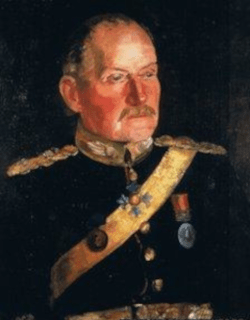
Colonel Frederick Hugh Crawford, CBE, JP, an officer in the British Army, is born in Belfast on August 21, 1861. A staunch Ulster loyalist, he is one of the lesser-known figures in Ulster Unionist history but one who is hugely influential because of his involvement in what is known as the Larne gun-running incident, when he is responsible for smuggling over 25,000 guns and ammunition into the North on the night of April 24, 1914. This makes him a hero for Northern Ireland‘s unionists.

Crawford is born into a “solid Methodist” family of Ulster Scots roots. He attends Methodist College Belfast and University College London (UCL). While Crawford is a determined Ulster loyalist, his great-grandfather was Alexander Crawford, a United Irishman arrested in March 1797 for “high treason,” and sent to Kilmainham Gaol, sharing a cell with prominent United Irishman Henry Joy McCracken.

According to the 1911 census for Ireland, Crawford is living in Marlborough Park, Belfast, with his wife of 15 years, Helen, and four of their five children: Helen Nannie, Marjorie Doreen, Ethel Bethea and Malcolm Adair Alexander. His other child, Stuart Wright Knox, is recorded as a pupil at Ballycloghan National School, Belfast. Stuart would become a lieutenant colonel in the British Army, before being invalided in 1944. Malcolm, after being a member of the Colonial Police, joins the Royal Ulster Constabulary (RUC), advancing to District Inspector. In 1931, Malcolm becomes a Justice of the Peace for Singapore.

Crawford works as an engineer for White Star Line in the 1880s, before returning from Australia in 1892. In 1894, he enlists with the Mid-Ulster Artillery regiment of the British Army, before being transferred to the Donegal Artillery, with which he serves during the Boer Wars, earning himself the rank of major.

In 1898, Crawford is appointed governor of Campbell College, Belfast. Two of his children, Stuart Wright Knox and Malcolm Adair Alexander, both attend Campbell College.

In 1911, Crawford becomes a member of the Ulster Unionist Council. On September 28, 1912, he is in charge of the 2,500 well-dressed stewards and marshals that escort Sir Edward Carson and the Ulster Unionist leadership from the Ulster Hall in central Belfast to the nearby City Hall on Donegall Square for the signing of the Ulster Covenant, which he allegedly signs in his own blood. With the formation of the Ulster Volunteers in 1913, he is made their Director of Ordnance.

During World War I Crawford is an officer commanding the Royal Army Service Corps and is awarded the Royal Humane Society‘s bronze medal for saving life. He also becomes a justice of the peace for Belfast.

With regard to Irish Home Rule, Crawford is strongly partisan and backs armed resistance to it, being contemptuous of those who use political bluffing. His advocation of armed resistance is evident when he remarks, at a meeting of the Ulster Unionist Council, that his heart “rejoiced” when he heard talk of looking into using physical force. At another meeting he even goes as far as asking some attendees to step into another room where he has fixed bayonets, rifles and cartridges laid out.

In 1910, the Ulster Unionist Council plans for the creation of an army to oppose Home Rule and approaches Crawford to act as their agent in securing weapons and ammunition. He tries several times to smuggle arms into Ulster, however, vigilant customs officials seize many of them at the docks. Despite this, the meticulously planned and audacious Larne gun-running of April 1914, devised and carried out by Crawford, is successful in bringing in enough arms to equip the Ulster Volunteer Force.

By the 1920s Crawford remains as stoic in his beliefs, remarking in a letter in 1920 that “I am ashamed to call myself an Irishman. Thank God I am not one. I am an Ulsterman, a very different breed.” In March 1920, he begins to reorganize the UVF and in May 1920 he appeals to Carson and James Craig for official government recognition. He states, “We in Ulster will not be able to hold our men in hand much longer…we will have the Protestants…killing a lot of the well-known Sinn Féin leaders and hanging half a dozen priests.” In 1921, he attempts to create an organisation intended to be a “Detective Reserve,” but called the “Ulster Brotherhood,” the aims of which are to uphold the Protestant religion and political and religious freedom, as well as use all means to “destroy and wipe out the Sinn Féin conspiracy of murder, assassination and outrage.” This organisation only lasts for a few months after failing to gain acceptance from the political authorities.

In 1921, Crawford is included in the Royal Honours List and appointed a CBE. In 1934, he writes his memoirs, titled Guns for Ulster.

Crawford dies on November 5, 1952, and is buried in the City Cemetery, Falls Road, Belfast. Upon news of his death, he is described by the then Prime Minister of Northern Ireland, Sir Basil Brooke, as being “as a fearless fighter in the historic fight to keep Ulster British.”


Leave a comment

Execution of James Dickey, Member of the Society of United Irishmen

James Dickey, a young barrister from a Presbyterian family in Crumlin, County Antrim, in the north of Ireland, is hanged at Corn Market, Belfast, on June 26, 1798. He is active in the Society of United Irishmen and is hanged with Henry Joy McCracken for leading rebels at the Battle of Antrim.

The Society of United Irishmen is formed in October 1791 by leading citizens in Belfast who seek a representative government in Ireland based on principles they believe have been modelled by the American and French Revolutions. At their first meeting they embrace the argument of Theobald Wolfe Tone for a “brotherhood of affection” between Irishmen of all religious persuasions. Tone argues that in Ireland the landed Anglican Ascendancy and the English appointed Irish executive employ division between Protestants and Catholics to balance “the one party by the other, plunder and laugh at the defeat of both.”

Despairing of reform, and in the hope of French assistance, in May 1798, the United Irishmen take up arms against the Dublin government and the British Crown. Beginning in Kildare, the insurrection spreads to other counties in Leinster before finally reaching the Presbyterian districts surrounding Belfast. On June 5, the Antrim societies of United Irishmen meet in Templepatrick where they elect textile manufacturer Henry Joy McCracken as their General. The next day McCracken issues a proclamation calling for the United army of Ulster to rise. The initial plan meets with success, as the towns of Larne, Ballymena, Maghera and Randalstown are taken and the bridge at Toome is damaged to prevent the government rushing reinforcements into Antrim from west of the River Bann.

According to the memoirs of James Burns from Templepatrick, Dickey commands the insurgents at Randalstown and kills Samuel Parker, a “traitor, with his own hands, while standing at his own door, where he went for the purpose.”

McCracken leads a body of about 6,000 rebels in an attack on Antrim town. As promised, Catholic Defenders turn out, but in the march upon the town tensions with the Presbyterian United Irish causes some desertions and a delay in McCracken’s planned assault. McCracken’s men are defeated, and his army melts away. On June 15, Dickey, together with McCracken, James Hope, James Orr and about fifty other rebel survivors from Antrim, arrive at Slemish, near Ballymena. There they set up camp for three weeks before leaving under threat of attack from Colonel Green of the Tay Fencibles.

Dickey is captured by the Sutherland fencibles on Divis, a hill northwest of Belfast. He is court-martialed and hanged at Corn Market, Belfast on June 26, 1798. Famously, before his hanging he refuses to wear a black hood saying to the hangman, “Sir, don’t cover my face!” According to local legend he shouts, “Don’t think gentlemen, I am ashamed to show my face among you, I am dying for my country!” However, a loyalist source hostile to the United Irish cause, Henry Joy of the Belfast News Letter, has Dickey on the scaffold recanting his commitment to the “brotherhood of affection” between Catholic and Protestant. He supposedly warned the assembled that had “the Presbyterians of the north succeeded in their [republican] designs, they would ultimately have had to contend with the Roman Catholics.” It is testament to the sentiment that in the north is to largely expunge the memory of his, and McCracken’s, sacrifice.

Dickey is 22 years old at the time of his execution. His head is placed on a spike outside the Market House on Belfast’s High Street.

Dickey’s brother, John Dickey of Crumlin, is also implicated in the rebellion. He is informed on by neighbours who had noticed that he was making pikes and attending secret meetings of the United Irishmen late at night. Arrested and court-martialed, he refuses the terms granted by the government to the “State Prisoners” in Dublin. He is transported to the West Indies for penal servitude but manages to escape and makes his way to the United States.


Leave a comment

The Battle of Antrim

The Battle of Antrim is fought on June 7, 1798, in County Antrim during the Irish Rebellion of 1798 between British troops and Irish insurgents led by Henry Joy McCracken. The British win the battle, beating off a rebel attack on Antrim town following the arrival of reinforcements but the county governor, John O’Neill, 1st Viscount O’Neill, is fatally wounded.

The outbreak of the United Irish rebellion in Leinster on May 23 had prompted calls from Ulster United Irishmen to take to the field in support of their southern comrades. However, the organisation in Ulster had been severely damaged in a brutal disarmament campaign the previous year, and the new leadership are less radical and are not willing take to the field without French assistance, which is expected daily.

After waiting for two weeks while the rebellion rages in the south, the grassroots United Irish membership in Antrim decides to hold a number of meetings independent of their leaders. The outcome is the election of Henry Joy McCracken as their adjutant general and the decision to rise immediately. McCracken, together with James Hope, quickly formulate a plan to attack and seize all government outposts in County Antrim and then for the main attack to fall on Antrim town. Then using artillery seized at Antrim, the rebels are to march on Belfast in conjunction with the United Irish rebels in County Down.

McCracken has high hopes that many members of the militia will desert and join him, as disaffection is believed to be widespread, evidenced by the execution of four of the Monaghan militia for treason in Belfast in May.

On 6 June, McCracken and James Hope issue a proclamation calling for the United army of Ulster to rise. The initial plan meets with success, as the towns of Larne, Ballymena, Portaferry and Randalstown are taken and the bridge at Toome damaged to prevent the government from rushing reinforcements into Antrim from west of the River Bann. The rebels then assemble at Donegore Hill in preparation for the march and attack on Antrim town, where an emergency meeting of the county’s magistrates called by the county governor, Lord O’Neill, is due to take place.

Although almost 10,000 rebels assemble at Donegore, many display reluctance for the coming fight and stay on the hill in reserve or desert later so that probably fewer than 4,000 actually take part in the attack. The United Irishmen in Ulster are mostly Presbyterian, but are joined with Catholic Defenders and the tension between the two groups on the march likely causes some desertions. These difficulties lead to a loss of momentum, and the attack is delayed. McCracken is forced to make adjustments to his plan of attack, which had envisaged a simultaneous overwhelming assault on the town from four separate points.

The town is garrisoned by a small force of about 200 yeomen, cavalry under Lt. Col. William Lumley and armed volunteers but they also have four artillery pieces and the delay in the rebel attack allows them to send requests for assistance to Belfast and Lisburn from where reinforcements are already on the way. The garrison forms themselves at the base of the demesne wall of Antrim Castle, with artillery to the front and cavalry to the rear with their flanks anchored by the Market House and Presbyterian Meeting House. A part of the Scottish Quarter in the town is also burned by the garrison as it is perceived to be a stronghold of rebel sympathisers.

The attack finally begins shortly before 3:00 p.m. when the rebels begin a cautious march through the town. As rebel front ranks arrive to face the garrison’s defensive line, artillery opens fire on the rebels, causing them to pull back out of range. Large clouds of dust and smoke are thrown up which, together with the fires from the Scottish Quarter, obscure the garrison’s view of events.

The rebel withdrawal is mistaken for a full retreat and the cavalry moves out to pursue and rout the supposed fleeing rebels. The cavalry effectively runs into a gauntlet of rebels who are protected by a long churchyard wall and stationed in houses along the main street, suffering heavy losses to the gunfire and pikes of the rebels.

After routing the cavalry, the rebels attack the remainder of the garrison, which then begins to pull back to the safety of the castle wall. This is mistaken by a newly arrived rebel column as an attack on them, causing them to flee in panic. In the confusion, the county commander, Lord O’Neill, trapped with his magistrates, is fatally wounded by James Clements who avoids trial by joining the army. A rebel attempt to seize the artillery is only narrowly beaten off by troops stationed behind the demesne wall.

At this critical juncture, British reinforcements from Belfast arrive outside the town and, assuming it to be held by the rebels, begin to shell it with their artillery. This prompts more desertions and the rebel army begins to disintegrate, but their withdrawal is protected by a small band under James Hope which fights a successful rearguard action from the church grounds along the main street. This allows the bulk of the rebels to withdraw safely.

When the military enters the town, they begin a spree of looting, burning and murder, of which the most enthusiastic perpetrators are reported to be the Monaghan militiamen, who are anxious to prove their loyalty and expunge the shame of the recent executions of their comrades for sedition. The town of Templepatrick is burned to the ground and Old Stone Castle is razed to the ground. McCracken, Hope and their remaining supporters withdraw northward, establishing camps of ever dwindling size along the route of their retreat until news of the defeat at Ballynahinch causes their final dispersion. McCracken is arrested by yeomen on July 7 and is hanged in Belfast on July 17, having refused an offer of clemency in return for informing on his comrades.

Commemoration of the centenary of the battle, marked by a nationalist parade in Belfast on June 6, 1898, provokes loyalist riots.


Leave a comment

Death of Henry Joy McCracken, Founding Member of the United Irishmen

Henry Joy McCracken, Irish Republican, industrialist and a founding member of the Society of United Irishmen, is hanged from gallows erected in front of the Market House on Belfast‘s High Street on July 17, 1798, on land his grandfather had donated to the city.

McCracken is born in Belfast on August 31, 1767, into two of the city’s most prominent Presbyterian industrial families. He is the son of a shipowner, Captain John McCracken and Ann Joy, daughter of Francis Joy, of French Huguenot descent. The Joy family makes their money in linen manufacture and founds the News Letter. He is the older brother of political activist and social reformer Mary Ann McCracken, with whom he shares an interest in Irish traditional culture.

In 1792, McCracken helps organise the Belfast Harp Festival which gathers aged harpists from around Ireland and helps preserve the Irish airs by having them transcribed by Edward Bunting. Bunting, who lodges in the McCracken’s Rosemary Lane home, is a classically trained musician.

McCracken becomes interested in republican politics from an early age and along with other Protestants forms the Society of United Irishmen in 1795 which quickly makes him a target of the authorities. He regularly travels throughout the country using his business as a cover for organising other United Irish societies but is arrested in October 1796 and imprisoned in Kilmainham Gaol in Dublin. While imprisoned with other leaders of the United Irishmen, he falls seriously ill and is released on bail in December 1797.

Following the outbreak of the Irish Rebellion of 1798 in Leinster in May 1798, the County Antrim organisation meets on June 3 to decide on their response. The meeting ends inconclusively with a vote to wait for French aid being passed by a narrow margin. A new meeting of delegates is held in Templepatrick on June 5 where McCracken is elected general for Antrim, and he quickly begins planning military operations.

McCracken formulates a plan for all small towns in Antrim to be seized after which rebels will converge upon Antrim town on June 7 where the county’s magistrates are to hold a crisis meeting. Although the plan meets initial success and McCracken leads the rebels in the attack on Antrim, the Catholic Defenders group whom he expects assistance from are conspicuous by their absence. The mainly Ulster Scots rebels led by McCracken are defeated by the English forces and his army melts away.

Although McCracken initially escapes with James Hope, James Orr, and James Dickey and is supported in his month-long period of hiding by his sister Mary Ann, a chance encounter with men who recognize him from his cotton business leads to his arrest. He is offered clemency if he testifies against other United Irishmen leaders, but he refuses to turn on his compatriots.

McCracken is court martialed and hanged at Corn Market, Belfast, on land his grandfather had donated to the city, on July 17, 1798. According to historian Guy Beiner, his corpse is spared the indignity of decapitation in order not to provoke renewed agitation. He is buried in the Parish Church of St. George in Belfast, but a few years later the grave is demolished.

McCracken’s remains are believed to have been re-interred by Francis Joseph Bigger in 1909 at Clifton Street Cemetery, Belfast, alongside his sister Mary Ann. His illegitimate daughter Maria, whose mother is speculated to have been Mary Bodell, is raised by her aunt Mary Ann McCracken.


Leave a comment

Death of James “Jemmy” Hope, United Irishmen Leader

James “Jemmy” Hope, Society of United Irishmen leader who fights in the Irish Rebellions of 1798 and 1803 against British rule in Ireland, dies on February 10, 1847 at his son Henry’s home, 1 Lancaster St., Belfast.

Hope is born in Templepatrick, County Antrim, on August 25, 1764 to a Presbyterian family originally of Covenanter stock. He is apprenticed as a linen weaver but attends night school in his spare time. Influenced by the American Revolution, he joins the Irish Volunteers, but upon the demise of that organisation and further influenced by the French Revolution, he joins the Society of the United Irishmen in 1795.

Hope quickly establishes himself as a prominent organiser and is elected to the central committee in Belfast, becoming close to leaders such as Samuel Neilson, Thomas Russell, and Henry Joy McCracken. He is almost alone among the United Irish leaders in targeting manufacturers as well as landowners as the enemies of all radicals. In 1796, he is sent to Dublin to assist the United Irish organisation there to mobilise support among the working classes, and he is successful in establishing several branches throughout the city and especially in The Liberties area. He also travels to counties in Ulster and Connacht, disseminating literature and organizing localities.

Upon the outbreak of the 1798 rebellion in Leinster, Hope is sent on a failed mission to Belfast by Henry Joy McCracken to brief the leader of the County Down United Irishmen, Rev. William Steel Dickson, with news of the planned rising in County Antrim, unaware that Dickson had been arrested only a couple of days before. He manages to escape from Belfast in time to take part in the Battle of Antrim where he plays a skillful and courageous role with his “Spartan Band,” in covering the retreat of the fleeing rebels after their defeat.

Hope manages to rejoin McCracken and his remaining forces after the battle at their camp upon Slemish mountain, but the camp gradually disperses, and the dwindling band of insurgents are then forced to go on the run. He successfully eludes capture, but his friend McCracken is captured and executed on July 17. Upon the collapse of the general rising, he refuses to avail of the terms of an amnesty offered by Charles Cornwallis, 1st Marquess Cornwallis on the grounds that to do so would be “not only a recantation of one’s principles, but a tacit acquiescence in the justice of the punishment which had been inflicted on thousands of my unfortunate associates.”

Hope lives the years following 1798 on the move between counties Dublin, Meath and Westmeath but is finally forced to flee Dublin following the failure of Robert Emmet‘s rebellion in 1803. He returns to the north and evades the authorities attentions in the ensuing repression by securing employment with a sympathetic friend from England. He is today regarded as the most egalitarian and socialist of all the United Irish leadership.

After suffering poor health for some years, Hope dies on February 10, 1847 at his son Henry’s home, 1 Lancaster St., Belfast. He is buried in the Mallusk Cemetery, Newtownabbey, County Antrim. The headstone is raised by his friends, Henry Joy McCracken’s sister Mary Ann, and the Shankill Road United Irishman Isreal Milliken. The historian Richard Robert Madden, who had encouraged Hope to write his memoirs, supplies the inscription. The headstone features the outline of a large dog, which supposedly brought provisions to him and his compatriots when they were hiding following the Battle of Antrim.


Leave a comment

Birth of Mary Ann McCracken, Humanitarian & Social Reformer

Mary Ann McCracken, Irish businesswoman, radical humanitarian, supporter of the Society of United Irishmen and a noted social reformer, is born in Belfast on July 8, 1770.

McCracken’s father is Captain John McCracken, a Presbyterian of Scottish descent and a prominent shipowner. Her mother, Ann Joy, comes from a French Protestant Huguenot family, which made its money in the linen trade and founded the Belfast News Letter. Her liberal and far-sighted parents send her to David Manson‘s progressive co-educational school, where ‘young ladies’ received the same education as the boys. She excels at mathematics.

As an adult, McCracken manages a successful muslin business in Belfast, which pioneers the production of patterned and checked muslin. She runs the business together with her sister and has at least one agent in Dublin.

McCracken is the sister of Henry Joy McCracken, one of the founding members of the Society of United Irishmen. In the aftermath of her brother’s defeat at the Battle of Antrim on June 7, 1798, she helps Henry Joy and some colleagues hide in the hills of south Antrim, bringing them clothes and money. She is arranging for a ship to take him to the United States when he is recognised by three Carrickfergus soldiers and arrested there on July 7, 1798.

McCracken shares her brother’s interest in reviving the oral-music tradition of Ireland and is a founding member of the Belfast Harp Society (1808–1813). She supports Edward Bunting in his collecting of traditional music, introducing him to people who can help, acting as his unofficial secretary and contributes anonymously to the second volume of his work The Ancient Music of Ireland in 1809. Bunting lives with the McCrackens for thirty-five years, before moving to Dublin 1819 and thereafter corresponds regularly with McCracken.

McCracken, like her brother, holds radical beliefs and these extend not just to the politics of the time, but to many social issues, such as poverty and slavery. She is dedicated to the poor of Belfast and from her earliest childhood she works to raise funds and provide clothes for the children of the Belfast Poorhouse, now known as Clifton House, Belfast. Following a visit from Elizabeth Fry she forms the Ladies Committee of the Belfast Charitable Society and is chair from 1832–1855. Thanks to the efforts of the committee a school, and later a nursery, is set up to educate the orphans of Belfast. She takes particular pains to find a suitable teacher, displaying a high level of dedication and compassion for her cause. The committee also inspects the homes where children of the poorhouse are apprenticed out.

McCracken leads the Women’s Abolitionary Ccmmittee in Belfast during the height of the anti-slavery movement and continues to promote the cause long after the spirit of radicalism had died in Belfast. By the 1850s, the liberality of the 1790s had largely evaporated in the aftermath of the failure of the Irish Rebellion of 1798, and the subsequent executions or exile of the leading protagonists.

At the age of 88, McCracken is to be seen at the Belfast docks, handing out anti-slavery leaflets to those boarding ships bound for the United States, where slavery is still practised. Her continued campaign long after the deaths of her counterparts serves to demonstrate the strength of radicalism that exists in certain circles of Belfast society at the close of the eighteenth century.

After her brother’s execution in Belfast, McCracken takes over the care of his illegitimate daughter, Maria, which is not universally accepted in her wider family. She lives with Maria and her family until her death at the age of 96 on July 26, 1866. She is buried in grave number 35 at Clifton Street Cemetery.

A blue plaque has been placed by the Ulster History Circle on the house at 62 Donegall Pass, Belfast, where McCracken lived for much of her later life.


Leave a comment

Birth of Robert Simms, Founding Member of the Society of United Irishmen

Robert Simms, Irish radical, a founding member of the Society of United Irishmen (Cumann na nÉireannach Aontaithe) in Belfast, and proprietor of the Northern Star newspaper, is born into a Presbyterian family in Belfast on March 20, 1761.

Simms is the owner of a paper mill in Ballyclare with his brother William Simms, one of twelve proprietors of the Northern Star. A close friend of Theobald Wolfe Tone, he is one of the founders of the Society of United Irishmen in Belfast in 1791 and the author of “Declaration and Resolutions of the Society of United Irishmen of Belfast.” He serves as the first Secretary of the Society, drafting many of its early letters, pamphlets and papers.

Following the French declaration of war on Britain in February 1793, the movement is outlawed and goes underground from 1794 as they become more determined to force a revolt against British rule. Simms, along with his brother William and Thomas Addis Emmet are arrested, but swiftly acquitted. The leadership is divided into those who wish to wait for French aid before rising and the more radical elements that wish to press ahead regardless. However, the suppression of a bloody preemptive rebellion, which breaks out in Leitrim in 1793, leads to the former faction prevailing and links are forged with the revolutionary French government with instructions to wait sent to all of the United Irish membership.

In 1795, along with Wolfe Tone, Samuel Neilson and Thomas Russell meet atop the summit of McArt’s Fort, overlooking Belfast, and, in Wolfe Tone’s words, “took a solemn obligation…never to desist in our efforts until we had subverted the authority of England over our country and asserted her independence.” The Simms brothers are again arrested in 1797 and held in Newgate Prison. From there he is transported along with Russell and Emmett to Fort George, Scotland. In his absence, the printing press and building housing the Northern Star is burned.

Upon his release, Simms is appointed as Commander of the United Army in Antrim. The appointment is met reluctantly however, as he feels his lack of military experience counts against him being an effective leader. In addition, many leaders are beginning to agitate for a rising without French aid. He is unwavering in his rejection of this idea. He resigns his position on June 1, 1798, after falling out with the leadership on this issue when most had changed their minds. He is replaced by Henry Joy McCracken who leads the Society in the Battle of Antrim. Simms is accused by many of cowardice and indecision for his refusal to launch an insurrection in Antrim.

Simms is nonetheless arrested and again imprisoned in Fort George with Emmet and William James MacNeven and is released in 1802. When Robert Emmet‘s failed coup is launched in 1803, the Simms brothers do not participate. He dies at the age of 82 in 1843.

Simms is a friend of the naturalist John Templeton and his son, also Robert Simms, is one of the founders of the Belfast Natural History Society.


Leave a comment

Birth of Henry Joy McCracken, Irish Republican

henry-joy-mccracken

Henry Joy McCracken, Irish Republican and industrialist, is born in Belfast on August 31, 1767. He is a founding member of the Society of the United Irishmen.

McCracken is born into two of the city’s most prominent Presbyterian industrial families. He was the son of a shipowner, Captain John McCracken and Ann Joy, daughter of Francis Joy, of French Huguenot descent. The Joy family made their money in linen manufacture and founded the Belfast News Letter. He is the older brother of political activist and social reformer Mary Ann McCracken, with whom he shares an interest in Irish traditional culture.

In 1792, McCracken helps organise the Belfast Harp Festival which gathers aged harpists from around Ireland and helps preserve the Irish airs by having them transcribed by Edward Bunting. Bunting, who lodges in the McCracken’s Rosemary Lane home, is a classically trained musician.

McCracken becomes interested in republican politics from an early age and along with other Protestants forms the Society of the United Irishmen in 1795 which quickly makes him a target of the authorities. He regularly travels throughout the country using his business as a cover for organising other United Irish societies but is arrested in October 1796 and imprisoned in Kilmainham Gaol in Dublin. While imprisoned with other leaders of the United Irishmen, he falls seriously ill and is released on bail in December 1797.

Following the outbreak of the Irish Rebellion of 1798 in Leinster in May 1798, the County Antrim organisation meets on 3 June to decide on their response. The meeting ends inconclusively with a vote to wait for French aid being passed by a narrow margin. A new meeting of delegates is held in Templepatrick on June 5 where McCracken is elected general for Antrim, and he quickly begins planning military operations.

McCracken formulates a plan for all small towns in Antrim to be seized after which rebels will converge upon Antrim town on June 7 where the county’s magistrates are to hold a crisis meeting. Although the plan meets initial success and McCracken leads the rebels in the attack on Antrim, the Catholic Defenders group whom he expects assistance from are conspicuous by their absence. The mainly Ulster Scots rebels led by McCracken are defeated by the English forces and his army melts away.

Although McCracken initially escapes with James Hope, James Orr, and James Dickey and is supported in his month-long period of hiding by his sister Mary Ann, a chance encounter with men who recognize him from his cotton business leads to his arrest. He is offered clemency if he testifies against other United Irishmen leaders, but he refuses to turn on his compatriots.

McCracken is court martialed and hanged at Corn Market, Belfast, on land his grandfather had donated to the city, on July 17, 1798. According to historian Guy Beiner, his corpse is spared the indignity of decapitation in order not to provoke renewed agitation. He is buried in the Parish Church of St. George in Belfast, but a few years later the grave is demolished.

McCracken’s remains are believed to have been re-interred by Francis Joseph Bigger in 1909 at Clifton Street Cemetery, Belfast, alongside his sister Mary Ann. His illegitimate daughter Maria, whose mother is speculated to have been Mary Bodell, is raised by her aunt Mary Ann McCracken.


Leave a comment

Execution of Thomas Russell, United Irishmen Co-founder

thomas-russell

Thomas Paliser Russell, co-founder and leader of the Society of United Irishmen, is executed for his part in Robert Emmet‘s rebellion on October 21, 1803.

Born in Dromahane, County Cork to an Anglican family, Russell joins the British army in 1783 and serves in India. He returns to Ireland in 1786 and commences studies in science, philosophy and politics. In July 1790 he meets Theobald Wolfe Tone in the visitors’ gallery in the Irish House of Commons and they become firm friends.

In 1790 Russell resumes his military career as a junior officer in the 64th Regiment of Foot and is posted to Belfast. The French Revolution in 1789 is warmly greeted in Belfast as are its ideals of liberty, equality, and fraternity. With his keen mind and radical ideas, Russell soon becomes a confidante of Henry Joy McCracken, James Hope, Samuel Neilson and others who are to play a prominent role in the United Irish movement. With them he develops ideas of parliamentary reform, to include the bulk of the people, and Catholic emancipation.

Russell leaves the army in July 1791 and attends a convention of the Whig Club in Belfast to mark Bastille Day. The convention is addressed by William Drennan, who proposes a brotherhood promoting separation from England and co-operation with the increasingly radical Cisalpine Club in the pursuit of political and social reforms. However, Russell notes the lack of trust between Dissenters and Catholics which is due to fears that Catholic radicalism can be bought off by religious concessions. Informing Wolfe Tone of his observations, within weeks leads to Wolfe Tone’s publication of Argument on Behalf of the Catholics of Ireland to address these suspicions. The pamphlet is extremely well received and provides the impetus for the founding of the Society of United Irishmen in Belfast on October 18, 1791.

Pressure from Dublin Castle later forces the United Irish movement to become a clandestine organisation as the would-be revolutionaries seek to continue their slow progress towards challenging the occupying British.

In 1795 Russell, Andrew Henderson, Henry Joy McCracken and Samuel Neilson lead a band of United Irishmen to the top of Cavehill overlooking the town of Belfast where they swear an oath “never to desist in our effort until we have subverted the authority of England over our country and asserted her independence” prior to Wolfe Tone’s exile to the United States. The event is noted in Dublin Castle although there is no immediate move to disband or arrest the members of the United Irishmen.

In 1796, Russell publishes an ambitious and far-sighted document, Letter to the People of Ireland, which lays out his vision of social and economic reform for the Irish nation. In addition to his stance on religious freedom, he makes clear his anti-slavery views in the Northern Star on March 17, 1792.

Russell takes an active part in organising the Society of United Irishmen becoming the United Irish commander in County Down. However, the outbreak of the French Revolution in 1793 leads to an ongoing campaign against the United Irishmen and in 1796 he is arrested and imprisoned as a “state prisoner” in Dublin. In March 1799 he and the other state prisoners are transferred to Fort George in Scotland, an extensive fortress some miles north of Inverness built in the wake of the failed Jacobite rebellion of 1745-46. He is released on condition of exile to Hamburg in June 1802 following a brief cessation in the war with France.

Not content to sit things out in Hamburg, Russell soon makes his way to Paris where he meets Robert Emmet who is planning another insurrection pending the French renewal of the war against England. He agrees to return to Ireland in March 1803 to organise the North in conjunction with James Hope. However, he meets with little success as much of the north is subdued following the suppression of the Irish Rebellion of 1798 and displays little appetite for a renewed outbreak. Finally, finding some support in the vicinity of Loughinisland, he prepares to take to the field on July 23, 1803, the date set by Emmett.

However, the plan is badly thought out and quickly collapses, forcing Russell to flee to Dublin before a shot is fired in anger. He manages to hide for a number of weeks, but Dublin is a hard place in which to hide in the days following the failure of Emmett’s rebellion as the shocked authorities have launched a massive campaign of raids and arrests in an effort to finally eradicate the United Irishmen.

Thomas Russell is promptly arrested and sent to Downpatrick Gaol where he is executed by hanging then beheaded on October 21, 1803.


Leave a comment

Birth of James Hope, United Irishmen Leader

james-hope

James “Jemmy” Hope, Society of United Irishmen leader who fights in the Irish Rebellions of 1798 and 1803 against British rule in Ireland, is born in Templepatrick, County Antrim on August 25, 1764.

Hope is born to a Presbyterian family originally of Covenanter stock. He is apprenticed as a linen weaver but attends night school in his spare time. Influenced by the American Revolution, he joins the Irish Volunteers, but upon the demise of that organisation and further influenced by the French Revolution, he joins the Society of the United Irishmen in 1795.

Hope quickly establishes himself as a prominent organiser and is elected to the central committee in Belfast, becoming close to leaders such as Samuel Neilson, Thomas Russell, and Henry Joy McCracken. He is almost alone among the United Irish leaders in targeting manufacturers as well as landowners as the enemies of all radicals. In 1796, he is sent to Dublin to assist the United Irish organisation there to mobilise support among the working classes, and he is successful in establishing several branches throughout the city and especially in The Liberties area. He also travels to counties in Ulster and Connacht, disseminating literature and organizing localities.

Upon the outbreak of the 1798 rebellion in Leinster, Hope is sent on a failed mission to Belfast by Henry Joy McCracken to brief the leader of the County Down United Irishmen, Rev. William Steel Dickson, with news of the planned rising in County Antrim, unaware that Dickson had been arrested only a couple of days before. He manages to escape from Belfast in time to take part in the Battle of Antrim where he plays a skillful and courageous role with his “Spartan Band,” in covering the retreat of the fleeing rebels after their defeat.

Hope manages to rejoin McCracken and his remaining forces after the battle at their camp upon Slemish mountain, but the camp gradually disperses, and the dwindling band of insurgents are then forced to go on the run. He successfully eludes capture, but his friend McCracken is captured and executed on July 17. Upon the collapse of the general rising, he refuses to avail of the terms of an amnesty offered by Charles Cornwallis, 1st Marquess Cornwallis on the grounds that to do so would be “not only a recantation of one’s principles, but a tacit acquiescence in the justice of the punishment which had been inflicted on thousands of my unfortunate associates.”

Hope lives the years following 1798 on the move between counties Dublin, Meath and Westmeath but is finally forced to flee Dublin following the failure of Robert Emmet‘s rebellion in 1803. He returns to the north and evades the authorities attentions in the ensuing repression by securing employment with a sympathetic friend from England. He is today regarded as the most egalitarian and socialist of all the United Irish leadership.

James Hope dies in 1846 and is buried in the Mallusk cemetery, Newtownabbey. His gravestone features the outline of a large dog, which supposedly brought provisions to him and his compatriots when they were hiding following the Battle of Antrim.