seamus dubhghaill

Promoting Irish Culture and History from Little Rock, Arkansas, USA


Leave a comment

Birth of Arthur Griffith, Founder of Sinn Féin

arthur-griffith

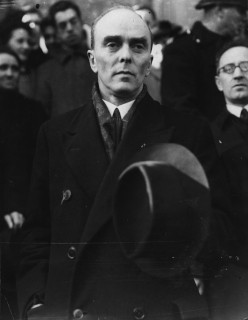
Arthur Joseph Griffith, writer, newspaper editor and politician who founded the political party Sinn Féin, is born in Dublin on March 31, 1871. He leads the Irish delegation at the negotiations that produce the 1921 Anglo-Irish Treaty and serves as President of Dáil Éireann from January 1922 until his death in August 1922.

Griffith, a Roman Catholic, is educated by the Irish Christian Brothers. He works for a time as a printer before joining the Gaelic League, which is aimed at promoting the restoration of the Irish language.

After a short spell in South Africa, Griffith founds and edits the Irish nationalist newspaper The United Irishman in 1899. In 1904, he writes The Resurrection of Hungary: A Parallel for Ireland, which advocates the withdrawal of Irish members from the Parliament of the United Kingdom and the setting up of the institutions of government at home, a policy that becomes known as Sinn Féin (ourselves). On November 28, 1905, he presents “The Sinn Féin Policy” at the first annual Convention of the National Council. The occasion is marked as the founding date of the Sinn Féin party. Although the organization is still small at the time, Griffith takes over as president of Sinn Féin in 1911.

Griffith is arrested following the Easter Rising of 1916, despite not having taken any part in it. On his release, he works to build up Sinn Féin, which wins a string of by-election victories. At the party’s Ardfheis (annual convention) in October 1917, Sinn Féin becomes an unambiguously republican party, and Griffith resigns the presidency in favour of the 1916 leader Éamon de Valera, becoming vice-president instead. Griffith is elected as a member of parliament (MP) in June 1918, and is re-elected in the 1918 general election, when Sinn Féin wins a huge electoral victory over the Irish Parliamentary Party and refusing to take their seats at Westminster, set up their own constituent assembly, Dáil Éireann.

In the Dáil, Griffith serves as Minister for Home Affairs from 1919 to 1921, and Minister for Foreign Affairs from 1921 to 1922. In September 1921, he is appointed chairman of the Irish delegation to negotiate a treaty with the British government. After months of negotiations, he and the other four delegates sign the Anglo-Irish Treaty, which creates the Irish Free State, but not as a republic. This leads to a split in the Dáil. After the Treaty is narrowly approved by the Dáil, de Valera resigns as president and Griffith is elected in his place. The split leads to the Irish Civil War.

Griffith enters St. Vincent’s Nursing Home, Leeson Street, Dublin, during the first week of August 1922, following an acute attack of tonsillitis. He is confined to his room by his doctors, who had observed signs of what they thought might be a subarachnoid hemorrhage. It is difficult to keep him quiet and he resumes his daily work in the government building. When about to leave for his office shortly before 10:00 AM on August 12, 1922, he pauses to retie his shoelace and falls down unconscious. He regains consciousness but collapses again with blood coming from his mouth. Three doctors render assistance, but to no avail. Father John Lee of the Marist Fathers administers extreme unction, and Griffith expires as the priest recites the concluding prayer. The cause of death, cerebral hemorrhage, is also reported as being due to heart failure. He dies at the age of 51, ten days before Michael Collins‘ assassination in County Cork and two months after the outbreak of the Irish Civil War. He is buried in Glasnevin Cemetery four days later.


Leave a comment

Death of Sir Horace Curzon Plunkett

Sir Horace Curzon Plunkett, Anglo-Irish agricultural reformer, pioneer of agricultural cooperatives, Unionist Member of Parliament (MP), supporter of Home Rule, Irish Senator and author, dies in Weybridge, Surrey, England on March 26, 1932.

Plunkett, the third son of Admiral the 16th Baron of Dunsany, of Dunsany Castle, Dunsany, near Dunshaughlin, County Meath, and the Honourable Anne Constance Dutton, daughter of John Dutton, 2nd Baron Sherborne, is born on October 24, 1854. He is educated at Eton College and University College, Oxford, of which he becomes an honorary fellow in 1909.

Threatened by lung trouble in 1879, Plunkett goes to the United States and spends ten years as a cattle rancher in the Bighorn Mountains of Wyoming. He returns to Ireland in 1889 and devotes himself to the agricultural cooperative movement, first organizing creameries and then, in 1894, the Irish Agricultural Organisation Society, a forerunner of similar societies in England, Wales, and Scotland. A moderate Unionist member of Parliament for South County Dublin from 1892 to 1900, he becomes vice president (1899–1907) of the new Department of Agriculture and Technical Instruction for Ireland, which he has been instrumental in creating.

Plunkett’s later experience convinces him of the need for the independence of an Ireland without partition inside the Commonwealth, and he fights strongly for this goal, as chairman of the Irish Convention (1917–18) and, in 1919, as founder of the Irish Dominion League and of the Plunkett Foundation for Cooperative Studies, an agricultural research and information centre. He is appointed to the first Senate of the Irish Free State (1922–23). His house in Dublin is bombed and burned during in the Irish Civil War and he lives in England thereafter. In 1924 the Plunkett Foundation also moves to England. In 1924 he presides over a conference in London on agricultural co-operation in the British Commonwealth and in 1925 he visits South Africa to help the movement there.

Plunkett is made a Fellow of the Royal Society in 1902 and Knight Commander of the Royal Victorian Order in 1903. His writings include Ireland in the New Century (1904) and The Rural Life Problem of the United States (1910).

Sir Horace Plunkett dies at Weybridge, Surrey, England on March 26, 1932.


Leave a comment

Birth of Painter Sir John Lavery

john-lavery

Sir John Lavery, Irish painter best known for his portraits and wartime depictions, is born in Belfast on March 20, 1856.

Lavery attends Haldane Academy in Glasgow in the 1870s and the Académie Julian in Paris in the early 1880s. He returns to Glasgow and is associated with the Glasgow School. In 1888 he is commissioned to paint the state visit of Queen Victoria to the Glasgow International Exhibition of Science, Art and Industry. This launches his career as a society painter, and he moves to London soon thereafter. In London he becomes friends with James McNeill Whistler and is clearly influenced by him.

Like William Orpen, Lavery is appointed an official artist in World War I. Ill-health, however, prevents him from travelling to the Western Front. A serious car crash during a Zeppelin bombing raid also keeps him from fulfilling this role as war artist. He remains in Britain and mostly paints boats, aeroplanes, and airships. During the war years he is a close friend of H.H. Asquith‘s family and spends time with them at their Sutton Courtenay Thames-side residence, painting their portraits and idyllic pictures like Summer on the River (Hugh Lane Gallery).

After the war Lavery is knighted and in 1921 he is elected to the Royal Academy of Arts.

During this time, he and his wife, Hazel, are tangentially involved in the Irish War of Independence and the Irish Civil War. They give the use of their London home to the Irish negotiators during the negotiations leading to the Anglo-Irish Treaty. After Michael Collins is assassinated, Lavery paints Michael Collins, Love of Ireland, now in the Hugh Lane Gallery. In 1929, Lavery makes substantial donations of his work to both the Ulster Museum and the Hugh Lane Gallery and in the 1930s he returns to Ireland. He receives honorary degrees from the University of Dublin and Queen’s University Belfast. He is also made a free man of both Dublin and Belfast. A long-standing member of Glasgow Art Club, Lavery exhibits at the club’s annual exhibitions, including its exhibition in 1939 in which his The Lake at Ranelagh is included.

Sir John Lavery dies of natural causes, at the age of 84, in Rossenarra House, Kilmoganny, County Kilkenny on January 10, 1941, and is interred in Putney Vale Cemetery.


Leave a comment

Birth of Lady Gregory, Writer & Playwright

lady-gregory

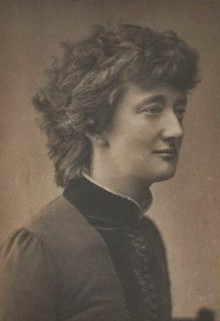
Isabella Augusta, Lady Gregory (née Isabella Augusta), Irish playwright, folklorist and theatre manager, is born on March 15, 1852, at Roxborough, County Galway. Her translations of Irish legends, her peasant comedies and fantasies based on folklore, and her work for the Abbey Theatre, play a considerable part in the late 19th-century Irish Literary Revival.

Augusta is the youngest daughter of the Anglo-Irish gentry family Persse. Her mother, Frances Barry, is related to Standish O’Grady, 1st Viscount Guillamore, and her family home, Roxborough, is a 6,000-acre estate located between Gort and Loughrea, the main house of which is later burned down during the Irish Civil War. She is educated at home, and her future career is strongly influenced by the family nanny, Mary Sheridan, a Catholic and a native speaker of the Irish language, who introduces the young Augusta to the history and legends of the local area.

In 1880 Augusta marries Sir William Henry Gregory, a neighbouring landowner who had previously served as a Member of Parliament and as governor of Ceylon. He is a well-educated man with many literary and artistic interests, and his estate at Coole Park houses a large library and extensive art collection, both of which Lady Gregory is eager to explore. He also has a house in London, where the couple spends a considerable amount of time.

Lady Gregory’s literary career does not begin until after Sir Gregory’s death in 1892. In 1896 she meets William Butler Yeats and becomes his lifelong friend and patron. She takes part in the foundation of the Irish Literary Theatre in 1899 and becomes a director of the Abbey Theatre in 1904, which owes much of its success to her skill at smoothing the disputes among its highly individualistic Irish nationalist founders. As a playwright, she writes pleasant comedies based on Irish folkways and picturesque peasant speech, offsetting the more tragic tones of the dramas of Yeats and John Millington Synge.

Lady Gregory writes or translates nearly forty plays. Seven Short Plays (1909), her first dramatic works, are among her best, vivid in dialogue and characterization. The longer comedies, The Image and Damer’s Gold, are published in 1910 and 1913 and her strange realistic fantasies, The Golden Apple and The Dragon, in 1916 and 1920. She also arranges and makes continuous narratives out of the various versions of Irish sagas, translating them into an Anglo-Irish peasant dialect that she labels “Kiltartan.” These are published as Cuchulain of Muirthemne (1902) and Gods and Fighting Men (1904).

Lady Gregory returns to live in Galway after ill health forces her retirement from the Abbey Theatre board in 1928, although she continues to visit Dublin regularly. The house and demesne at Coole Park are sold to the Irish Forestry Commission in 1927, with Lady Gregory retaining life tenancy. Her Galway home had long been a focal point for the writers associated with the Irish Literary Revival, and this continues after her retirement. On a tree in what were the grounds of the house, one can still see the carved initials of Synge, Æ, Yeats and his artist brother Jack, George Moore, Seán O’Casey, George Bernard Shaw, Katharine Tynan and Violet Martin.

Lady Gregory, whom Shaw once described as “the greatest living Irishwoman,” dies at the age of 80 on May 22, 1932, at home from breast cancer. She is buried in the New Cemetery in Bohermore, County Galway. The entire contents of Coole Park are auctioned three months after her death, and the house is demolished in 1941.


Leave a comment

Birth of Writer Pádraig Ó Siochfhradha

padraig-o-siochfhradha

Pádraig Ó Siochfhradha, writer under the pseudonym An Seabhac and promoter of the Irish language, is born in the Gaeltacht near Dingle, County Kerry on March 10, 1883. His brother, Mícheál Ó Siochfhradha is also a writer, teacher, and Irish language storyteller.

Ó Siochfhradha becomes an organiser for Conradh na Gaeilge, cycling all over the countryside to set up branches and promote the Irish language. As a writer, he takes the penname An Seabhac, the Hawk, writing books including An Baile Seo Gainne (1913) and Jimín Mháire Thaidhg (1921), both of which draw on his Dingle youth and are later published in one volume as Seoda an tSeabhaic (1974).

Ó Siochfhradha is a prominent and influential figure of early 20th century Irish culture, a key populariser of the Irish Revival. He is an author, storyteller, folklorist, activist and politician.

Ó Siochfhradha’s nickname is thought to be a consequence of his years as a travelling teacher, when he adopts it as a pseudonym for the writing of his most famous book Jimín Mháire Thaidhg. This book, known in its English translation as Jimeen, is a fictionalised account of life growing up in the country, which follows the tribulations and misadventures of a young boy who cannot stay out of trouble.

Ó Siochfhradha works as a teacher from 1910 until 1922 in Kildare and in the Fermoy region of Kerry. He also works as an editor of The Light, a bilingual magazine which lasts six years, from 1907 to 1913. He is a member of Conradh na Gaeilge from early in his life and a frequent member of the League of Employment, which is an outgrowth of Conradh na Gaeilge. In 1911, a resolution, proposed by him and a colleague, is adopted that helps set the agenda for the ongoing revival of the Irish language. The proposal is to teach Irish to children of secondary school age as a living language rather than an antique one. This strategy persists to the present day.

Ó Siochfhradha becomes an active organiser for the Irish Volunteers in 1913 and is imprisoned three times for his activities. He spends time in Durham Prison in England and on Bere Island, County Cork.

In 1922 Ó Siochfhradha moves to Dublin under the auspices of the Department of Education. It is around this time that he is thought to have taken up residence in 119 Morehampton Road, Donnybrook, where he remains for the rest of his life. He continues to stay active in a large number of writing and political projects. He is secretary to the Irish Manuscripts Commission from October 1928 to October 1932.

During the Irish Civil War, it is said Ó Siochfhradha does his best to reconcile the opposing sides of the conflict. His political sympathies are primarily republican, and he spends a great deal of energy in the 1920s establishing Irish-speaking schools in Dublin. He is a member of Seanad Éireann from 1946–1948, 1951–1954 and 1957–1964, being personally nominated by his friend Taoiseach Éamon de Valera, on each occasion.

Ó Siochfhradha dies on November 19, 1964. His personal papers are on loan to Tralee Library and his archive has been digitised and stored by the University of Limerick.

(From: Stair na hÉireann/History of Ireland (https://stairnaheireann.net), “Pádraig Ó Siochfhradha – An Seabhac”)


Leave a comment

Birth of George Moore, Writer, Poet & Dramatist

george-augustus-moore

George Augustus Moore, novelist, short story writer, poet, art critic, memoirist, and dramatist, is born in Moore Hall, near Lough Carra, County Mayo on February 24, 1852. He is considered an innovator in fiction in his day.

Moore comes from a distinguished Catholic family of Irish landholders. When he is 21, he leaves Ireland for Paris to become a painter. His Reminiscences of the Impressionist Painters (1906) vividly describes the Café Nouvelle-Athènes and the circle of Impressionist painters who frequent it. He is particularly friendly with Édouard Manet, who sketches three portraits of him. Another account of the years in Paris, in which he introduces the younger generation in England to his version of fin de siècle decadence, is his first autobiography, Confessions of a Young Man (1888).

Deciding that he has no talent for painting, Moore returns to London in 1882 to write. His first novels, A Modern Lover (1883) and A Mummer’s Wife (1885), introduce a new note of French Naturalism into the English scene, and he later adopts the realistic techniques of Gustave Flaubert and Honoré de Balzac. Esther Waters (1894), his best novel, deals with the plight of a servant girl who has a baby out of wedlock. It is a story of hardship and humiliation illumined by the novelist’s compassion. It is an immediate success, and he follows it with works in a similar vein: Evelyn Innes (1898) and Sister Teresa (1901).

In 1901 Moore moves to Dublin, partly because of his loathing for the South African War and partly because of the Irish Literary Revival spearheaded by his friend, the poet William Butler Yeats. In Dublin he contributes notably to the planning of the Abbey Theatre. He also produces The Untilled Field (1903), a volume of fine short stories reminiscent of Ivan Turgenev’s writing that focuses on the drudgery of Irish rural life, and a short poetic novel, The Lake (1905). The real fruits of his life in Ireland, however, come with the trilogy Hail and Farewell (Ave, 1911; Salve, 1912; Vale, 1914). Discursive, affectionate, and satirical by turns, it reads like a sustained monologue that is both a carefully studied piece of self-revelation and an acute, though not always reliable, portrait gallery of his Irish acquaintance, which included Yeats, George William Russell, and Lady Gregory. Above all it is a perfectly modulated display of the comic spirit.

The increasing narrowness of the Irish mind, politics, and clericalism sends Moore back to England in 1911. After Hail and Farewell, he makes another literary departure. Aiming at epic effect he produces The Brook Kerith (1916), an elaborate and stylish retelling of the Gospel story that is surprisingly effective despite some dull patches. He continues his attempts to find a prose style worthy of epic theme in Héloïse and Abélard (1921). His other works include A Story-Teller’s Holiday (1918), a blend of autobiography, anecdote, Irish legend, and satire, Conversations in Ebury Street (1924), autobiography, The Pastoral Loves of Daphnis and Chloe (1924) and Ulick and Soracha (1926), an Irish legendary romance.

George Moore dies at his home at Ebury Street in the London district of Belgravia on January 21, 1933, leaving a fortune of £70,000. He is cremated in London at a service attended by Ramsay MacDonald among others. An urn containing his ashes is interred on Castle Island in Lough Carra in view of the ruins of Moore Hall, which had been burned by anti-treaty forces in 1923, during the final months of the Irish Civil War.


Leave a comment

Cumann na mBan Rejects Anglo-Irish Treaty

cumann-na-mban

Cumann na mBan (Irishwomen’s Council), at the behest of Constance Markievicz, votes overwhelmingly to reject the Anglo-Irish Treaty on February 5, 1922. During the Irish Civil War, over 400 members of the movement are arrested by the Irish Free State Government.

Cumann na mBan is an Irish republican women’s paramilitary organisation formed in Dublin on April 2, 1914, merging with and dissolving Inghinidhe na hÉireann and, in 1916, it becomes an auxiliary of the Irish Volunteers. Although it is otherwise an independent organisation, its executive is subordinate to that of the Volunteers.

On January 7, 1922 the Anglo-Irish Treaty is approved by the Second Dáil by a close vote of 64–57. On February 5 a convention is held to discuss this, and 419 Cumann na mBan members vote against as opposed to 63 in favour. In the ensuing Civil War, its members largely support the anti-Treaty Republican forces. Over 400 of its members are imprisoned by the forces of the Provisional government which becomes in December 1922 the Irish Free State. Some of those who support the Treaty change the name of their branches to Cumann na Saoirse, while others retain their name but give allegiance to the Free State Government.

Cumann na mBan continues to exist after the Treaty, forming (alongside Sinn Féin, the Irish Republican Army, Fianna Éireann and other groups) part of the Irish republican milieu. The government of the Irish Free State bans the organisation in January 1923 and opens up Kilmainham Gaol as a detention prison for suspect women.

Its membership strength is adversely affected by the many splits in Irish republicanism, with sections of the membership resigning to join Fianna Fáil, Clann na Poblachta and other parties. Máire Comerford, a lifelong member from 1914, reflects in later years that it became a “greatly weakened organisation” that “gathered speed downhill” from the founding of Fianna Fáil in 1926.


Leave a comment

Burning of the Sligo Railway Station

sligo-railway-station

Forty Republicans burn the railway station in Sligo, County Sligo on January 11, 1923 during the Irish Civil War, destroying it and badly damaging seven engines and forty carriages. Seven engines are sent down the line to the quay and one crashes through a concrete wall into the harbour.

The Great Southern and Western Railway Company releases a report detailing the damage Anti-Treaty forces have caused to their property over the previous six months – 375 lines damaged, 42 engines derailed, 51 over-bridges and 207 under-bridges destroyed, 83 signal cabins, and 13 other buildings destroyed. In the same month, Republicans destroy the railway stations at Ballybunion and Listowel.

The Sligo station opens on December 3, 1862 when Sligo acquires rail links to Dublin. The Sligo, Leitrim and Northern Counties Railway link to Enniskillen to the north in 1881. A link to Limerick and the south follows in 1895. The line to Enniskillen closes in 1957 and passenger services to Limerick close in 1963. For many years CIÉ keeps the latter line open for freight traffic, and although it is now disused, it forms part of the Western Rail Corridor redevelopment project.

In 1966 Sligo railway station is renamed Sligo Mac Diarmada Station after Irish rebel Seán Mac Diarmada from County Leitrim.

Today, Sligo Mac Diarmada station is a mainline railway station which serves the town of Sligo. It is a terminal station, with two platforms. There is a passing loop at the approach to the station. Iarnród Éireann, Ireland’s national railway operator, runs inter-city rail services between Sligo and Dublin on the Dublin-Sligo railway line.


Leave a comment

Ratification of the Anglo-Irish Treaty

anglo-irish-treaty-negotiatorsThe Anglo-Irish Treaty is ratified by the Parliament of the United Kingdom on December 16, 1921. It is ratified by the British House of Commons by a vote of 401 to 58. On the same day the House of Lords votes in favour by 166 to 47.

The Anglo-Irish Treaty, commonly known as “The Treaty” and officially the “Articles of Agreement for a Treaty Between Great Britain and Ireland,” is an agreement between the government of the United Kingdom of Great Britain and Ireland and representatives of the Irish Republic that concludes the Irish War of Independence. It provides for the establishment of the Irish Free State within a year as a self-governing dominion within the “community of nations known as the British Empire,” a status “the same as that of the Dominion of Canada.” It also provides Northern Ireland, which had been created by the Government of Ireland Act 1920, an option to opt out of the Irish Free State, which it exercises.

The agreement is signed in London on December 6, 1921, by representatives of the Government of the United Kingdom, which includes Prime Minister David Lloyd George, who is head of the British delegates, and by representatives of the Irish Republic including Michael Collins and Arthur Griffith. The Irish representatives have plenipotentiary status (negotiators empowered to sign a treaty without reference back to their superiors) acting on behalf of the Irish Republic, though the British government declines to recognise that status. As required by its terms, the agreement is ratified by “a meeting” of the members elected to sit in the House of Commons of Southern Ireland and separately by the British Parliament.

Éamon de Valera calls a cabinet meeting to discuss the treaty on December 8, where he comes out against the treaty as signed. The cabinet decides by four votes to three to recommend the treaty to Dáil Éireann on December 14. Though the treaty is narrowly ratified, the split leads to the Irish Civil War, which is won by the pro-treaty side.

The Irish Free State as contemplated by the treaty comes into existence when its constitution becomes law on December 6, 1922 by a royal proclamation giving the force of law to the Irish Free State Constitution Act 1922.

(Pictured: Members of the Irish negotiation committee returning to Ireland in December 1921)


Leave a comment

The Execution of Rory O’Connor

rory-o-connor

Rory O’Connor, Irish republican revolutionary, is executed by firing squad on December 8, 1922, in reprisal for the anti-treaty Irish Republican Army‘s (IRA) killing of Irish Free State member of parliament Sean Hales.

O’Connor is born in Kildare Street, Dublin on November 28, 1883. He is educated at St. Mary’s College, Dublin and then in Clongowes Wood College, a public school run by the Jesuit order and also attended by James Joyce, and his close friend Kevin O’Higgins, the man who later condemns him to death.

In 1910 O’Connor takes his Bachelor of Engineering and Bachelor of Arts degrees in University College Dublin, then known as the National University. He goes to work as a railway engineer in Ireland, then moves to Canada, where he is an engineer in the Canadian Pacific Railway and Canadian Northern Railway, being responsible for the construction of 1,500 miles of railroad.

After his return to Ireland, O’Connor becomes involved in Irish nationalist politics, joins the Ancient Order of Hibernians and is interned after the Easter Rising in 1916.

During the subsequent Irish War of Independence (1919-1921) O’Connor is made Director of Engineering of the Irish Republican Army (IRA) – a military organisation descended from the Irish Volunteers.

O’Connor does not accept the Anglo-Irish Treaty of 1921, which establishes the Irish Free State and abolishes the Irish Republic declared in 1916, which he and his comrades had sworn to uphold. On March 26, 1922, the anti-treaty officers of the IRA hold a convention in Dublin in which they reject the Treaty compromise and repudiate the authority of the Dáil, the elected Irish Parliament. Asked by a journalist if this means they are proposing a military dictatorship in Ireland, O’Connor replies, “you can take it that way if you want.”

On April 14, 1922, O’Connor, with 200 other hardline anti-treaty IRA men under his command, takes over the Four Courts building in the centre of Dublin in defiance of the new Irish government. They want to provoke the British troops, who are still in the country, into attacking them, which they believe will restart the war with Britain and re-unite the IRA against their common enemy. Michael Collins tries desperately to persuade O’Connor and his men to leave the building before fighting breaks out.

On June 28, 1922, after the Four Courts garrison has kidnapped JJ “Ginger” O’Connell, a general in the new Free State Army, Collins shells the Four Courts with borrowed British artillery. O’Connor surrenders after two days of fighting and is arrested and held in Mountjoy Prison. This incident sparks the Irish Civil War as fighting breaks out around the country between pro and anti-treaty factions.

On December 8, 1922, along with Liam Mellows, Richard Barrett and Joe McKelvey, three other republicans captured with the fall of the Four Courts, Rory O’Connor is executed by firing squad in reprisal for the anti-treaty IRA’s killing of Free State member of parliament Sean Hales. The execution order is given by Kevin O’Higgins, who less than a year earlier had appointed O’Connor to be best man at his wedding, symbolising the bitterness of the division that the Treaty has caused. O’Connor, one of 77 republicans executed by the Cumann na nGaedheal government of the Irish Free State, is seen as a martyr by the Republican movement in Ireland.