seamus dubhghaill

Promoting Irish Culture and History from Little Rock, Arkansas, USA


Leave a comment

Drowning of Anna Catherine Parnell

anna-catherine-parnell

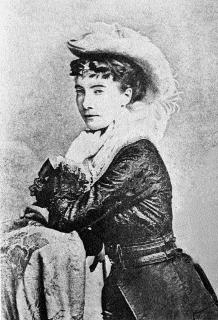
Anna Catherine Parnell, Irish nationalist and younger sister of Irish Nationalist leader Charles Stewart Parnell, drowns at Ilfracombe, Devon, England on September 20, 1911.

Parnell is born at Avondale House near Rathdrum, County Wicklow, the tenth of eleven children of John Henry Parnell, a landlord, and Delia Tudor Stewart Parnell, an Irish American and daughter of Admiral Charles Stewart of the United States Navy. She has very little formal education as a child, but the family has an extensive library which she is encouraged to read by her mother. After her father dies in 1859, she moves with the family to Dublin. Delia Parnell is an active socialite while in Dublin and exposes her children to a wide variety of political views.

In 1865 the family moves to Paris, but Parnell feels stifled by upper class society rules imposed upon her. She is in Paris when the Franco-Prussian War breaks out in 1870 and is active in the American Ladies’ Committee fundrasing and setting up hospitals. She returns alone to Dublin in 1870 to study art.

Parnell moves to London in 1875 to continue studying art. When her brother Charles is elected as a Member of Parliament (MP) for Meath, she becomes increasingly political. She frequently visits Parliament during debates, sitting in the Ladies’ Gallery. She writes articles about the debates in a column titled Notes From the Ladies’ Cage in the Celtic Monthly. In 1879 she joins her sister, Fanny Parnell, a poet, in New York City where they raise money in support of the Irish National Land League. The sisters work closely with their brother Charles and Michael Davitt but are critical of how the funds raised in America are being used in Ireland. In October 1880 the sisters found the New York Ladies’ Land League with their mother as president. They raised thousands of dollars sent to Ireland.

Parnell returns in Dublin in late 1880. When it seems that the Land League men are likely to be arrested, it is suggested that a women’s league in Ireland could take over the work in their absence. Public opinion at the time is against women in politics, but the Ladies’ Land League is founded on January 31, 1881, with Parnell as its effective leader.

When Charles Parnell and other leaders are imprisoned in 1881, as predicted, the Ladies’ Land League takes over their work. Though it is envisioned as a place holder until the men are released, Parnell organises branches throughout Ireland, encouraging women to play an active role in Land League activities. Offices are given to the ladies but little help. They raise funds for the League and for the support of prisoners and their families. They distribute Land League wooden huts to shelter evicted tenant families and by the beginning of 1882 they have 500 branches, thousands of women members and considerable publicity. They distribute £60,000 in relief aid.

This puts the Ladies’ Land League in serious debt. Parnell approaches her brother Charles, requesting money to settle the debts. Charles, who distrusts her understanding of politics, agrees to provide the money under the condition that the Ladies’ Land League is disbanded. She agrees, disbanding in 1882, but she never forgives Charles.

After her brother’s death in 1891 Parnell lives the rest of her life in the south of England under the assumed name Cerisa Palmer. She writes an angry account of her Land League experiences in Tale of a Great Sham, which is not published until 1986. She makes one last political appearance when she campaigns for a Sinn Féin candidate in a 1907 by-election.

By the summer of 1911, the 59-year-old Parnell is staying in lodgings at Ilfracombe in Devon. An enthusiastic swimmer since childhood, she bathes every day, and on September 20, disregarding a warning of dangerous seas, she goes swimming as usual. She is seen to be in difficulties and the alarm is raised, but by the time rescuers reached her, she is dead. Unlike her brother, whose funeral in Dublin had been the occasion for a massive outpouring of grief and remorse, Anna Parnell was buried quietly in the churchyard of Holy Trinity Church in Ilfracombe, in the presence of just seven strangers, and far away from the scenes of her greatest efforts and notoriety.

Leave a comment

Birth of James Caulfeild, 1st Earl of Charlemont

james-caulfeild

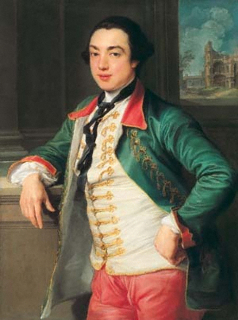
James Caulfeild, 1st Earl of Charlemont, Irish statesman, soldier and nationalist, is born in Dublin on August 18, 1728.

Caulfeild, the son of the 3rd Viscount Charlemont, succeeds his father as 4th Viscount in 1734. The title of Charlemont descends from Sir Toby Caulfeild, 1st Baron Caulfeild (1565–1627) of Oxfordshire, England, who is given lands in Ireland, and creates Baron Charlemont (the name of a fort on the Blackwater), for his services to King James I in 1620. The 1st Viscount is the 5th Baron (d. 1671), who is advanced by Charles II.

Lord Charlemont is well known for his love of Classical art and culture and spends nine years on the Grand Tour in Italy, Greece, Turkey and Egypt. He returns to Dublin and employs the Scottish architect Sir William Chambers to remodel his main residence Marino House, to design his town house Charlemont House and the unique Neoclassical Garden pavilion building, the Casino at Marino.

Lord Charlemont is historically interesting for his political connection with Henry Flood and Henry Grattan. He is a cultivated man with literary and artistic tastes, and both in Dublin and in London he has considerable social influence. He is the first President of the Royal Irish Academy and is a member of the Royal Dublin Society. He is appointed Custos Rotulorum of County Armagh for life in 1760. For various early services in Ireland, he is made an earl in 1763, but he disregards court favours and cordially joins Grattan in 1780 in the assertion of Irish independence. In 1783 he is made a founding Knight of the Order of St. Patrick.

Lord Charlemont is president of the volunteer convention in Dublin in November 1783, having taken a leading part in the formation of the Irish Volunteers, and he is a strong opponent of the proposals for the Acts of Union 1800. His eldest son, who succeeds him, is subsequently created an English Baron in 1837.

Lord Charlemont dies on August 4, 1799.

(Pictured: Charlemont as painted by Pompeo Batoni, c. 1753-56)


Leave a comment

The Falls Curfew

falls-curfew

The Falls Curfew, also called the Battle of the Falls, a British Army operation in the Falls Road district of Belfast, Northern Ireland takes place on July 3-5, 1970.

The Northern Ireland riots of August 1969 mark the beginning of the Troubles. In Belfast, Catholic Irish nationalists clash with Protestant Ulster loyalists and the mainly-Protestant Royal Ulster Constabulary (RUC), Northern Ireland’s police force. Hundreds of Catholic homes and businesses are burned and more than 1,000 families, mostly Catholics, are forced to flee. The rioting ends with Operation Banner, the deployment of British troops.

A week before the Falls Curfew, on Saturday, June 27, 1970, there is severe rioting in Belfast following marches by the Protestant/unionist Orange Order. At the Short Strand, a Catholic enclave in a Protestant part of the city, the Provisional Irish Republican Army (IRA) fights a five-hour gun battle with loyalists. Three people are killed, and the loyalists withdraw. The Provisional IRA presents itself as having successfully defended a vulnerable Catholic enclave from armed loyalist mobs.

Meanwhile, the Official IRA arranges for a large number of weapons to be brought into the mainly nationalist and Catholic Lower Falls area for distribution. The area is a stronghold of the Official IRA.

The operation begins at about 4:30 PM on Friday, July 3, as a search for weapons in the staunchly Irish nationalist district. As the search ends, local youths attack the British soldiers with stones and petrol bombs and the soldiers respond with CS gas. This quickly develops into gun battles between British soldiers and the Irish Republican Army (IRA). After four hours of continuous clashes, the British commander seals off the area, which comprises 3,000 homes, and imposes a curfew which lasts 36 hours. Thousands of British troops move into the curfew zone and carry out house-to-house searches for weapons, while coming under intermittent attack from the IRA and rioters. The searches cause much destruction, and a large amount of CS gas is fired into the area. Many residents complain of suffering abuse at the hands of the soldiers. On July 5, the curfew is brought to an end when thousands of women and children from Andersonstown march into the curfew zone with food and groceries for the locals.

During the operation, four civilians are killed by the British Army, at least 78 people are wounded and 337 are arrested. Eighteen soldiers are also wounded. Large quantities of weapons and ammunition are captured. The British Army admits afterwards that some of its soldiers had been involved in looting.

The Falls Curfew is a turning point in the Troubles. It is seen as having turned many Catholics/Irish nationalists against the British Army and having boosted support for the IRA.

(Pictured: British soldiers on the Falls Road during the 1970 curfew)


Leave a comment

Death of William Smith O’Brien, Young Ireland Leader

william-smith-obrien

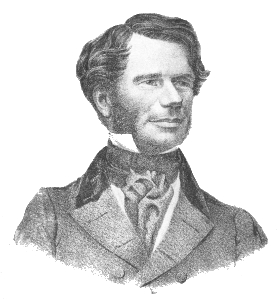
William Smith O’Brien, Irish nationalist Member of Parliament (MP) and leader of the Young Ireland movement, dies in Bangor, Gwynedd, Wales on June 18, 1864.

Born in Dromoland, Newmarket-on-Fergus, County Clare, O’Brien is the second son of Sir Edward O’Brien, 4th Baronet, of Dromoland Castle. His mother is Charlotte Smith, whose father owns a property called Cahirmoyle in County Limerick. He takes the additional surname Smith, his mother’s maiden name, upon inheriting the property. He lives at Cahermoyle House, a mile from Ardagh, County Limerick. He is a descendant of the eleventh century Ard Rí (High King of Ireland), Brian Boru. He receives an upper-class English education at Harrow School and Trinity College, Cambridge. Subsequently, he studies law at King’s Inns in Dublin and Lincoln’s Inn in London.

From April 1828 to 1831 O’Brien is Conservative MP for Ennis. He becomes MP for Limerick County in 1835, holding his seat in the House of Commons of the United Kingdom until 1849.

Although a Protestant country-gentleman, O’Brien supports Catholic emancipation while remaining a supporter of British-Irish union. In 1843, in protest against the imprisonment of Daniel O’Connell, he joins O’Connell’s anti-union Repeal Association.

Three years later, O’Brien withdraws the Young Irelanders from the association. In January 1847, with Thomas Francis Meagher, he founds the Irish Confederation, although he continues to preach reconciliation until O’Connell’s death in May 1847. He is active in seeking relief from the hardships of the famine. In March 1848, he speaks out in favour of a National Guard and tries to incite a national rebellion. He is tried for sedition on May 15, 1848, but is not convicted.

On July 29, 1848, O’Brien and other Young Irelanders lead landlords and tenants in a rising in three counties, with an almost bloodless battle against police at Ballingarry, County Tipperary. In O’Brien’s subsequent trial, the jury finds him guilty of high treason. He is sentenced to be hanged, drawn, and quartered. Petitions for clemency are signed by 70,000 people in Ireland and 10,000 people in England. In Dublin on June 5, 1849, the sentences of O’Brien and other members of the Irish Confederation are commuted to transportation for life to Van Diemen’s Land (Tasmania in present-day Australia).

O’Brien attempts to escape from Maria Island off Tasmania but is betrayed by the captain of the schooner hired for the escape. He is sent to Port Arthur where he meets up with John Mitchel.

O’Brien is a founding member of the Ossianic Society, which is founded in Dublin on St. Patrick’s Day 1853, whose aim is to further the interests of the Irish language and to publish and translate literature relating to the Fianna. He writes to his son Edward from Van Diemen’s Land, urging him to learn the Irish language. He himself studies the language and uses an Irish-language Bible and presents to the Royal Irish Academy Irish-language manuscripts he has collected.

In 1854, after five years in Tasmania, O’Brien is released on the condition he never returns to Ireland. He settles in Brussels. In May 1856, he is granted an unconditional pardon and returns to Ireland that July. He contributes to the Nation newspaper but plays no further part in politics.

In 1864 he visits England and Wales, with the view of rallying his failing health, but no improvement takes place, and he dies at Bangor, in Wales on June 16, 1864.

A statue of William Smith O’Brien stands in O’Connell Street, Dublin. Sculpted in Portland limestone, it is designed by Thomas Farrell and erected in D’Olier Street, Dublin, in 1870. It is moved to its present position in 1929.


Leave a comment

The Battle of Ridgeway

battle-of-ridgeway

The Battle of Ridgeway, sometimes called the Battle of Lime Ridge or Limestone Ridge, is fought on June 2, 1866, in the vicinity of the town of Fort Erie across the Niagara River from Buffalo, New York between Canadian troops and an irregular army of Irish American invaders, the Fenians.

The Fenian insurgents, led by Brigadier General John O’Neill, a former Union cavalry commander who had specialized in anti-guerrilla warfare in Ohio, secures boats and transfers some 800 men across the Niagara River, landing above Fort Erie, before dawn on June 1, 1866. An additional 200–400 Fenians and supplies cross later in the morning and early afternoon until the U.S. Navy gunboat, the USS Michigan, begins intercepting Fenian barges at 2:20 PM.

O’Neill spends the first day trying to rally the local citizenry to the Fenian cause and to commandeer supplies for his mission, but his force is plagued by desertions almost from the outset. An additional column of 200 Fenians join his group, bringing his total strength at Ridgeway to at least 650 men.

Meanwhile, the British are mobilizing both local Canadian militia and British garrison troops to defend against the impending invasion of Canada. The Fenians night-march north across Black Creek through a cedar swamp, then turn inland on Ridge Road on the morning of June 2, taking up a defensive position on Limestone Ridge near the present Canadian town of Ridgeway. There, they clash with 850 advancing Canadian militia commanded by Lieutenant-Colonel Alfred Booker of the 13th Battalion.

In the first hour of the battle, the Canadians appear to prevail, driving Fenian skirmishers back across Bertie Road. Then the tide turns, and to this day, it is not clear what causes the impending chaos. O’Neill, observing the chaos breaking out in the Canadian ranks, quickly orders a bayonet charge that completely routs the inexperienced Canadians. The Fenians take and briefly hold the town of Ridgeway. Then, expecting to be overwhelmed by British reinforcements, they quickly turn back to Fort Erie where they fight a second battle, the Battle of Fort Erie, against a small but determined detachment of Canadians holding the town.

The Canadian loss is nine killed on the field, four dying of wounds in the immediate days following the battle, 22 dying of wounds or disease later and 37 are wounded, some severely enough to require amputation of their limbs. O’Neill says that four or five of his men are killed, but Canadians claim to have found six Fenian bodies on the field. The relatively low casualty figures make this an interesting battle for proponents of theories about soldiers’ reluctance to shoot to kill but might also be accounted for by the fact that the Fenians had deployed only their skirmishers in an attempt to lure the Canadians towards their main force which did not advance until the last minutes of the battle when they launched a bayonet attack that broke Canadian lines.

The battlefield is designated a National Historic Site of Canada in 1921 and is the last battle fought in the province of Ontario against a foreign invasion. The action at Ridgeway has the distinction of being the only armed victory for the cause of Irish independence between the Irish Rebellion of 1798 and the Irish War of Independence (1919).

(Pictured: An 1869 illustration of the battle: Charge of General O’Neill’s Fenians upon the Canadian troops, causing their rout.)


Leave a comment

Birth of Frank Harte, Traditional Irish Singer

frank-harte

Frank Harte, traditional Irish singer, music collector, architect and lecturer, is born in Chapelizod, County Dublin on May 14, 1933. He emigrates to the United States for a short period, but later returns to Ireland where he works as an architect, lecturer at Dublin Institute of Technology in Rathmines, Dublin and in later life fully engages in songs in many ways.

Harte’s introduction to Irish traditional singing comes from a chance listening to an itinerant who is selling ballad sheets at a fair in Boyle, County Roscommon. He begins collecting early in life and by the end of his life has assembled a database of over 15,500 recordings.

Harte becomes a great exponent of the Dublin street ballad, which he prefers to sing unaccompanied. He is widely known for his distinctive singing, his Dublin accent having a rich nasal quality complementing his often high register. His voice mellows considerably by the time of his later recordings, allowing for an expressive interpretation of many love songs such as “My Bonny Light Horseman” on the album My Name is Napoleon Bonaparte. This is contrasted sublimely by his cogent interpretation of the popular “Molly Malone.” He also becomes more accustomed to singing with accompaniment which is not strictly part of the Irish singing tradition and does not come naturally to him.

Though Irish Republican in his politics, Harte believes that the Irish song tradition need not be a sectarian or nationalist preserve. He believes that songs are a key to understanding the past often saying, “those in power write the history, while those who suffer write the songs, and, given our history, we have an awful lot of songs.” Though considered a stalwart of traditional Irish singing and well aware of it, he does not consider himself to be a sean-nós singer.

Harte wins the All-Ireland Fleadh Cheoil singing competition on a number of occasions and in 2003 receives the Traditional Singer of the Year award from the Irish-language television channel TG4.

Harte records several albums and makes numerous television and radio appearances, most notably the Singing Voices series he writes and presents for RTÉ Radio, which is produced by Peter Browne in 1987. He is a regular at the Sunday morning sessions at The Brazen Head pub, along with Liam Weldon who runs the session. He is also an enthusiastic supporter of An Góilín Traditional Singer’s Club.

Harte appears at many American festivals including The Blarney Star in New York City, Gaelic Roots in Boston College, The Catskills Irish Arts Week, The Greater Washington Ceili Club Festival in Maryland and the Milwaukee Irish Fest and for seventeen years he is a veritable staple at the Irish Week every July in the Augusta Heritage Festival in Elkins, West Virginia where he often performs with Mick Moloney.

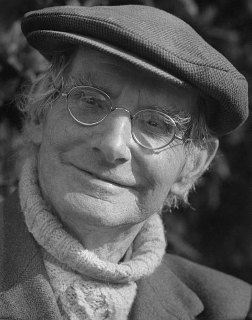
Frank Harte dies of a heart attack, aged 72, on June 27, 2005. His influence is still evident in singers such as Karan Casey and he continues to be remembered fondly in sessions and folk clubs on both sides of the Irish Sea.


Leave a comment

Death of Justin McCarthy, Novelist & Politician

justin-mccarthy

Justin McCarthy, Irish nationalist and Liberal historian, novelist and politician, dies on April 24, 1912. He is a Member of Parliament (MP) from 1879 to 1900, taking his seat in the House of Commons of the United Kingdom of Great Britain and Ireland.

McCarthy is born in Cork, County Cork on November 22, 1830, and is educated there. He begins his career as a journalist at the age of 18 in Cork. From 1853 to 1859 he is in Liverpool, on the staff of the Northern Daily Times. In March 1855, he marries Charlotte Ailman. In 1860 he moves to London, as parliamentary reporter to the Morning Star, of which he becomes editor in 1864. He gives up his post in 1868 and, after a lecturing tour in the United States, joins the staff of The Daily News as leader-writer in 1870. In this capacity he becomes one of the most useful and respected upholders of the liberal politics of the time. He lectures again in America in 1870–71 and in 1886–87.

McCarthy is first elected to Parliament at a by-election on April 4, 1879, when he is returned unopposed as a Home Rule League MP for County Longford. He is re-elected unopposed as a Parnellite Home Ruler in 1880, and when the two-seat Longford constituency is split into two divisions under the Redistribution of Seats Act 1885, he is elected as an Irish Parliamentary Party member for the new single-seat Northern division of Longford. His sole opponent, a Conservative, wins only 6% of the votes.

At the 1886 general election, he is returned unopposed in North Longford, but also stands in Londonderry City, where he is declared the loser to the Irish Unionist Alliance candidate by the narrow margin of 1778 votes to 1781. However, the result is later overturned on petition and McCarthy opts to sit for Derry City. During the divorce controversy surrounding Charles Stewart Parnell in November 1890, the British Prime Minister William Ewart Gladstone expresses a warning, given to McCarthy as intermediary, that if Parnell retains leadership of the Irish Parliamentary Party it will mean the loss of the next election, the end of their alliance and Home Rule. When the annual party leadership election meeting is called later that month, the threat is somehow not conveyed to the members, who re-elect Parnell leader of the Party.

After a further historical meeting of the Irish Party MPs in early December, Parnell refuses to retire and the Party divides. McCarthy becomes chairman of the Anti-Parnellite group, the Irish National Federation, for a year in 1891–1892. His nationalism is of a temperate and orderly kind, and though his personal distinction singles him out for the chairmanship during the party dissensions of this period, he is in no active sense the political leader.

At the 1892 general election, McCarthy again stands both in North Longford and in Derry City. In each seat there is a two-way contest between the Anti-Parnellite McCarthy and a Unionist candidate, but the narrow Unionist victory in Derry is not overturned, and McCarthy sits for North Longford, where he wins over 93% of the votes. He is returned unopposed for North Longford in 1895 United Kingdom general election in Ireland and stands down from Parliament at the 1900 United Kingdom general election in Ireland.

It is claimed that McCarthy’s true vocation is literature. His earliest publications are novels, some of which, such as A Fair Saxon (1873), Dear Lady Disdain (1875), Miss Misanthrope (1878), and Donna Quixote (1879), attain considerable popularity. His most important work is his History of Our Own Times, which treats of the period between Queen Victoria‘s accession and her Diamond Jubilee. He begins a History of the Four Georges (1884–1901) and the latter half is written by his son, Justin Huntly McCarthy.

Justin McCarthy dies at the age of 81 in Folkestone, Kent, England on April 24, 1912.


Leave a comment

Birth of Playwright Seán O’Casey

sean-ocasey

Seán O’Casey, Irish playwright renowned for realistic dramas of the Dublin slums in war and revolution, in which tragedy and comedy are juxtaposed in a way new to the theatre of his time, is born at 85 Upper Dorset Street in Dublin on March 30, 1880.

Born as John Casey into a lower middle-class Irish Protestant family, his father dies when he is six, and thereafter the family becomes progressively poorer. With only three years of formal schooling, he educates himself by reading. He starts work at 14, mostly at manual labour, including several years with the Irish railways.

O’Casey becomes caught up in the cause of Irish nationalism, and he changes his name to its Irish form and learns the Irish language. His attitudes are greatly influenced by the poverty and squalor he witnesses in Dublin’s slums and by the teachings of the Irish labour leader Jim Larkin. He becomes active in the labour movement and writes for The Irish Worker. He also joins the Irish Citizen Army, a paramilitary arm of the Irish labour unions, and draws up its constitution in 1914. At this time, he becomes disillusioned with the Irish nationalist movement because its leaders put nationalist ideals before socialist ones. He does not take part in the 1916 Easter Rising against the British authorities.

Disgusted with the existing political parties, he turns his energies to drama. His tragicomedies reflect in part his mixed feelings about his fellow slum dwellers, seeing them as incapable of giving a socialist direction to the Irish cause but at the same time admirable for their unconquerable spirit.

After several of his plays have been rejected, the Abbey Theatre in Dublin produces The Shadow of a Gunman (1923), set during the guerrilla warfare between the Irish Republican Army and British forces. In 1924 the Abbey stages Juno and the Paycock, his most popular play, set during the period of civil war over the terms of Irish independence. The Plough and the Stars (1926), with the 1916 Easter Rising as its background, causes riots at the Abbey by patriots who think the play denigrates Irish heroes. When first produced in the 1920s, these plays have an explosive effect on the audiences at the Abbey and help to enlarge the theatre’s reputation.

O’Casey goes to England in 1926, meets the Irish actress Eileen Carey Reynolds, marries her, and henceforth makes England his home. His decision to live outside Ireland is motivated in part by the Abbey’s rejection of The Silver Tassie, a partly Expressionist antiwar drama produced in England in 1929. Another Expressionist play, Within the Gates (1934), follows, in which the modern world is symbolized by the happenings in a public park. The Star Turns Red (1940) is an antifascist play, and the semiautobiographical Red Roses for Me (1946) is set in Dublin at the time of the Irish railways strike of 1911.

O’Casey’s later plays, given to fantasy and ritual and directed against the life-denying puritanism he believes has beset Ireland, include Cock-a-Doodle Dandy (1949), The Bishop’s Bonfire (1955), and The Drums of Father Ned (1958). His last full-length play is a satire on Dublin intellectuals, Behind the Green Curtains, published in 1961.

O’Casey’s three indisputably great plays are The Shadow of a Gunman, Juno and the Paycock, and The Plough and the Stars. All are tragicomedies set in the slums of Dublin during times of war and revolution. Violent death and the everyday realities of tenement life throw into relief the blustering rhetoric and patriotic swagger of men caught up in the struggle for Irish independence. The resulting ironic juxtapositions of the comic and tragic reveal the waste of war and the corrosive effects of poverty. His gifts are for vivid characterization and working-class language and, though he portrays war and poverty, he writes some of the funniest scenes in modern drama. His later plays are not considered as powerful or moving as his earlier realistic plays. In his later plays he tends to abandon vigorous characterization in favour of expressionism and symbolism, and sometimes the drama is marred by didacticism.

Six volumes of O’Casey’s autobiography appeared from 1939 to 1956. They are later collected as Mirror in My House (1956) in the United States and as Autobiographies (1963) in Great Britain. O’Casey’s letters from 1910 to 1941 are edited by David Krause in two volumes (1975, 1980).

Sean O’Casey dies of a heart attack at the age of 84 on September 18, 1964, in Torquay, Devon. He is cremated at the Golders Green Crematorium.


Leave a comment

The Bombing of Nelson’s Pillar

nelsons-pillar-bombing

A powerful explosion destroys the upper portion of Nelson’s Pillar in Dublin in the early morning hours of March 8, 1966, bringing Nelson’s statue crashing to the ground amid hundreds of tons of rubble. All that is left of the Pillar is a 70-foot-high jagged stump. The pillar is seen by many as an anachronistic monument to English occupation of Ireland, especially as 1966 is the 50th anniversary of the 1916 Easter Rising.

Nelson’s Pillar is a large granite column capped by a statue of Horatio Nelson, built in the centre of what is then Sackville Street (later renamed O’Connell Street) in Dublin. It is completed in 1809 when Ireland is part of the United Kingdom. Its remnants are later destroyed by the Irish Army.

The decision to build the monument is taken by Dublin Corporation in the euphoria following Nelson’s victory at the Battle of Trafalgar in 1805. The original design by William Wilkins is greatly modified by Francis Johnston, on grounds of cost. The statue is sculpted by Thomas Kirk. From its opening on October 29, 1809, the Pillar is a popular tourist attraction, but provokes aesthetic and political controversy from the outset. A prominent city centre monument honouring an Englishman rankles as Irish nationalist sentiment grows, and throughout the 19th century there are calls for it to be removed or replaced with a memorial to an Irish hero.

During the Easter Rising in 1916 an attempt is made to blow up the pillar, but the explosives fail to ignite due to dampness. It remains in the city as most of Ireland becomes the Irish Free State in 1922, and the Republic of Ireland in 1949. The chief legal barrier to its removal is the trust created at the Pillar’s inception, the terms of which gave the trustees a duty in perpetuity to preserve the monument. Successive Irish governments fail to deliver legislation overriding the trust. Although influential literary figures such as James Joyce, William Butler Yeats and Oliver St. John Gogarty defend the Pillar on historical and cultural grounds, pressure for its removal intensifies in the years preceding the 50th anniversary of the Rising, and its sudden demise is, on the whole, well received by the public. Although it is widely believed that the action is the work of the Irish Republican Army (IRA), the police are unable to identify any of those responsible.

After years of debate and numerous proposals, the site is occupied in 2003 by the Spire of Dublin, a slim needle-like structure rising almost three times the height of the Pillar. In 2000 a former republican activist gives a radio interview in which he admits planting the explosives in 1966, but after questioning him the Gardaí decides not to take action. Relics of the Pillar are found in Dublin museums and appear as decorative stonework elsewhere, and its memory is preserved in numerous works of Irish literature.


Leave a comment

Death of John Redmond, Politician & Barrister

john-edward-redmond

John Edward Redmond, Irish nationalist politician, barrister, and Member of Parliament (MP) in the House of Commons of the United Kingdom, dies on March 6, 1918, in London, England. He is best known as leader of the moderate Irish Parliamentary Party (IPP) from 1900 until his death. He is also leader of the paramilitary organisation the National Volunteers.

Redmond is born to an old prominent Catholic family in Kilrane, County Wexford on September 1, 1856. Several relatives are politicians. He takes over control of the minority IPP faction loyal to Charles Stewart Parnell after Parnell dies in 1891. He is a conciliatory politician who achieves the two main objectives of his political life: party unity and, in September 1914, the passing of the Irish Home Rule Act.

The Irish Home Rule Act grants limited self-government to Ireland, within the United Kingdom. However, implementation of Home Rule is suspended by the outbreak of the World War I. Redmond calls on the National Volunteers to join Irish regiments of the New British Army and support the British and Allied war effort to restore the “freedom of small nations” on the European continent, thereby to also ensure the implementation of Home Rule after a war that is expected to be of short duration. However, after the Easter Rising of 1916, Irish public opinion shifts in favour of militant republicanism and full Irish independence, resulting in his party losing its dominance in Irish politics.

In sharp contrast to Parnell, Redmond lacks charisma. He works well in small committees but has little success in arousing large audiences. Parnell had always chosen the nominees to Parliament. Now they are selected by the local party organisations, giving Redmond numerous weak MPs over whom he has little control. He is an excellent representative of the old Ireland but grows increasingly old-fashioned because he pays little attention to the new forces attracting younger Irishmen, such as Sinn Féin in politics, the Gaelic Athletic Association in sports, and the Gaelic League in cultural affairs.

Redmond never tries to understand the unionist forces emerging in Ulster. He is further weakened in 1914 by the formation of the Irish Volunteers by Sinn Féin members. His enthusiastic support for the British war effort alienates many Irish nationalists. His party has been increasingly hollowed out, and a major crisis, notably the Easter Rising, is enough to destroy it.

Redmond is increasingly eclipsed by ill-health after 1916. An operation in March 1918 to remove an intestinal obstruction appears to progress well initially, but he then suffers heart failure. He dies a few hours later at a London nursing home on March 6, 1918.

Condolences and expressions of sympathy are widely expressed. After a funeral service in Westminster Cathedral his remains are interred, as requested in a manner characteristic of the man, in the family vault at the old Knights Templars‘ chapel yard of Saint John’s Cemetery, Wexford, amongst his own people rather than in the traditional burial place for Irish statesmen and heroes in Glasnevin Cemetery. The small, neglected cemetery near the town centre is kept locked to the public. His vault, which has been in a dilapidated state, has been only partially restored by Wexford County Council.