The play centers on the Irish Rebellion of 1798. The play is startlingly nationalistic, in its last pages encouraging young men to sacrifice their lives for the heroine Cathleen ni Houlihan, who represents an independent and separate Irish state. The title character first appears as an old woman at the door of a family celebrating their son’s wedding. She describes her four “beautiful green fields,” representing the four provinces of Ireland, that have been unjustly taken from her. With little subtlety, she requests a blood sacrifice, declaring that “many a child will be born and there will be no father at the christening” and that “they that have red cheeks will have pale cheeks for my sake, and for all that, they will think they are well paid.” She convinces the future groom, Michael, to give up the wedding and go fight.
After the youth leaves the safety of his home to fight for her, she appears as an image of youth with “the walk of a queen,” professing of those who fight for her: “They shall be remembered forever, They shall be alive forever, They shall be speaking forever, The people shall hear them forever.”
Death is common during the time around the rising, but becoming a martyr is somethings that is admirable, so oftentimes people welcome death so they can create themselves a heroic memory. The martyrs will be remembered forever, which is why this theme is so ingrained into this play.
Cathleen ni Houlihan is such a simple play that contains many symbols and has the goal of convincing men to fight for Ireland. While the play is written about the rising of 1798, it is meant to inspire people for the 1916 Easter Rising. Throughout the whole play, there is constant reference to memory and its influence on the public. The men that die while fighting for Ireland are considered heroes, which is why memory and martyrdom are such important themes that are incorporated into works about revolution.
Cathleen ni Houlihan is about Irish Independence, but there are themes of martyrdom in other works, like the musicals about American Independence, Hamilton and 1776.
(Pictured: Scene from a production of “Cathleen ni Houlihan,” circa 1912)
The son of a Roman Catholic wine merchant, Moore is born at 12 Aungier Street in Dublin on May 28, 1779. From a relatively early age he shows an interest in music and other performing arts. He attends several Dublin schools including Samuel Whyte’s English Grammar School in Grafton Street where he learns the English accent with which he speaks for the rest of his life. In 1795 he graduates from Trinity College, Dublin in an effort to fulfill his mother’s dream of his becoming a lawyer.
Upon graduation from Trinity, Moore studies law in London. His major poetic work, Irish Melodies (1807–34), earns him an income of £500 annually for a quarter of a century. It contains such titles as “The Last Rose of Summer” and “Oft in the Stilly Night.” The Melodies, a group of 130 poems set to the music of Moore and Sir John Andrew Stevenson and performed for London’s aristocracy, arouses sympathy and support for the Irish nationalists, among whom Moore is a popular hero.
Lalla-Rookh (1817), a narrative poem set in an atmosphere of Oriental splendour, gives Moore a reputation among his contemporaries rivaling that of Byron and Sir Walter Scott. It is perhaps the most translated poem of its time, and it earns what is up until then the highest price paid by an English publisher for a poem (£3,000). His many satirical works, such as The Fudge Family in Paris (1818), portray the politics and manners of the Regency era.
In 1824 Moore becomes a participant in one of the most celebrated episodes of the Romantic era. He is the recipient of Byron’s memoirs, but he and the publisher John Murray burn them, presumably to protect Byron. He later brings out the Letters and Journals of Lord Byron: With Notices of his Life (1830), in which he includes a life of the poet. His lifelong espousal of the Catholic cause leads him to produce such brilliant works as his parody of agrarian insurgency, The Memoirs of Captain Rock (1824), and his courageous biography of the revolutionary leader of the Irish Rebellion of 1798, The Life and Death of Lord Edward Fitzgerald (1831).
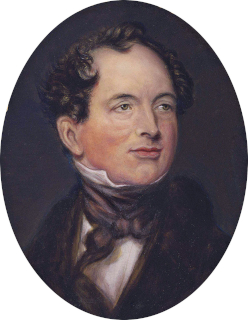
Moore finally settles in Sloperton Cottage at Bromham, Wiltshire, England, and becomes a novelist and biographer as well as a successful poet. Around the time of the Reform Act he is invited to stand for parliament, and considers it, but nothing comes of it. In 1829 he is painted by Thomas Lawrence, one of the last works completed by the artist before his death.
Moore’s personal life is dogged by tragedy including the deaths of all five of his children within his lifetime and a stroke in later life, which disables him from performances – the activity for which he is most renowned. He dies being cared for by his wife at Sloperton on February 25, 1852. His remains are in a vault at St. Nicholas churchyard, Bromham, within view of his cottage-home, beside his daughter Anastasia.
Kane is born at 48 Henry Street, Dublin on September 24, 1809 to John and Eleanor Kean (née Troy). His father is involved in the Irish Rebellion of 1798 and flees for a time to France where he studies chemistry. Back in Dublin, Kean (now Kane) founds the Kane Company and manufactures sulfuric acid.
Kane studies chemistry at his father’s factory and attends lectures at the Royal Dublin Society as a teenager. He publishes his first paper in 1828, Observations on the existence of chlorine in the native peroxide of manganese, in the London Quarterly Journal of Science, Literature and Art. The following year, his description of the natural arsenide of manganese results in the compound being named Kaneite in his honour. He studies medicine at Trinity College, Dublin, graduating in 1834 while working in the Meath Hospital. He is appointed Professor of Chemistry at the Apothecaries’ Hall, Dublin in 1831, which earns him the moniker of the “boy professor.” In the following year he participates in the founding of the Dublin Journal of Medical & Chemical Science.
Kane publishes a three-volume Elements of Chemistry in 1841–1844, and a detailed report on the Industrial Resources of Ireland. This includes the first assessment of the water power potential of the River Shannon, which is not realised until the 1920s at Ardnacrusha.
Kane becomes a political adviser on scientific and industrial matters. He serves on several commissions to enquire into the Great Irish Famine, along with Professors Lindley and Taylor, all more or less ineffective. His political and administrative work means that his contribution to chemistry ceases after about 1844.
Kane’s work on Irish industry leads to his being appointed director of the Museum of Irish Industry in Dublin in 1845. The Museum is a successor to the Museum of Economic Geology, and is housed at 51 St. Stephen’s Green.
Also in 1845 Kane becomes the first President of Queen’s College, Cork (now University College Cork). He does not spend a lot of time in Cork as he has work in Dublin, and his wife lives there. The science building on the campus is named in his honour. He is knighted in 1846.
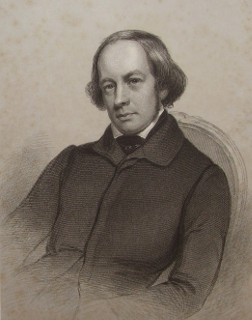
In 1873 Kane takes up the post of National Commissioner for Education. He is elected president of the Royal Irish Academy in 1877, holding the role until 1882. In 1880 he is appointed the first chancellor of the newly created Royal University of Ireland. After a motion to admit women to the University, put forward by Prof. Samuel Haughton at Academic Council in Trinity College Dublin, March 10, 1880, Kane is appointed to a committee of ten men to look into the matter. He is opposed to the admission of women, and nothing is reported from the committee in the Council minutes for the next ten years.
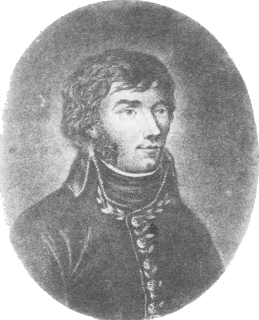
In 1794, after serving in the Army of the Coasts of Brest, Humbert serves under Louis Lazare Hoche in the Army of the Rhin-et-Moselle. Charged to prepare for an expedition against Ireland, he takes command of the Légion des Francs under Hoche, sailing in the ill-fated Expédition d’Irlande against Bantry Bay in 1796, and is engaged in actions at sea against the Royal Navy. Contrary weather and enemy action force this expedition to withdraw. The trip home ends in a naval battle, the Action of 13 January 1797, during which Humbert, on the French ship Droits de l’Homme (1794), narrowly escapes death. As the ship is destroyed and sinks, hundreds of men perish, but Humbert is among the last to escape.
On his return to France, Humbert serves in the Army of the Sambre-et-Meuse, before being appointed to command the troops in another attempt to support a rising in Ireland in 1798. His command chiefly consists of infantry of the 70th demi-brigade with a few artillerymen and some cavalry of the 3rd Hussars, however by the time he arrives off the Irish coast the United Irish rising has already suffered defeat. The expedition is able to land in Ireland at Killala on Thursday August 23, 1798, meeting with initial success in the Battle of Castlebar where he routs the Irish Militia. Humbert subsequently declares a Republic of Connacht, with hopes of taking Dublin. However, Humbert’s small force is defeated at the Battle of Ballinamuck by the Irish Royal Army, and he is taken as a prisoner of war by the authorities. The British send the French officers home in two frigates and then massacre their Irish supporters. Humbert makes no attempt to save the Irish who bravely supported him.
Humbert is shortly repatriated in a prisoner exchange and appointed in succession to the Armies of Mayence, Danube and Helvetia, with which he serves at the Second Battle of Zurich. He then embarks for Santo Domingo and participates in several Caribbean campaigns for Napoleon Bonaparte before being accused of plundering by General Brunet. It is also rumored that he engages in an affair with Pauline Bonaparte, the wife of his commanding officer Charles Leclerc. He is returned to France by order of General Leclerc in October 1802, for “prevarications, and liaison relationships with organisers of the inhabitants and with leaders of brigands.” A committed Republican, his displeasure at Napoleon’s Imperial pretensions lead to him being dismissed in 1803 and he retires to Morbihan in Brittany.
In 1810, after brief service in the Army of the North, Humbert emigrates to New Orleans, where he makes his acquaintance with French pirate Jean Lafitte. In 1813, Humbert joins the revolutionary Juan Bautista Mariano Picornell y Gomila in an unsuccessful attempt to foment rebellion in Spanish Mexico, but the effort fails. In 1814, Humbert again leaves New Orleans and joins the rebelling forces of Buenos Aires, briefly commanding a corps, before returning home. Humbert last fights the British at the Battle of New Orleans, as a volunteer private soldier in U.S. ranks, in the War of 1812, wearing his Napoleonic uniform. General Andrew Jackson thanks him for his assistance there after the American victory in January 1815. Thereafter Humbert lives peacefully as a schoolteacher until his death on January 3, 1823.
A monument to General Humbert depicting Mother Ireland stands on Humbert Street, Ballina, County Mayo. In 1989, sculptor Carmel Gallagher unveils a bust of General Humbert in Killala, Ireland, to mark the upcoming bicentennial of the Irish Rebellion of 1798.
Theobald Wolfe Tone, Irish republican and rebel who sought to overthrow English rule in Ireland and who led a French military force to Ireland during the Irish Rebellion of 1798, dies at Provost’s Prison, Dublin on November 19, 1798, from a stab wound to his neck which he inflicted upon himself on November 12. His attempted suicide is the result of being refused a soldier’s execution by firing squad and being sentenced to death by hanging.
Wolfe Tone is born in Dublin on June 20, 1763. The son of a coach maker, he studies law and is called to the Irish bar in 1789 but soon gives up his practice. In October 1791 he helps found the Society of United Irishmen, initially a predominantly Protestant organization that works for parliamentary reforms, such as universal suffrage and Roman Catholic emancipation. In Dublin in 1792 he organizes a Roman Catholic convention of elected delegates that forces Parliament to pass the Catholic Relief Act of 1793. He himself, however, is anticlerical and hopes for a general revolt against religious creeds in Ireland as a sequel to the attainment of Irish political freedom.
By 1794 Wolfe Tone and his United Irishmen friends begin to seek armed aid from Revolutionary France to help overthrow English rule. After an initial effort fails, he goes to the United States and obtains letters of introduction from the French minister at Philadelphia to the Committee of Public Safety in Paris. In February 1796 he arrives in the French capital, presents his plan for a French invasion of Ireland, and is favourably received. The Directory then appoints one of the most brilliant young French generals, Lazare Hoche, to command the expedition and makes Tone an adjutant in the French army.
On December 16, 1796, Wolfe Tone sails from Brest with 43 ships and nearly 14,000 men. But the ships are badly handled and, after reaching the coast of west Cork and Kerry, are dispersed by a storm. He again brings an Irish invasion plan to Paris in October 1797, but the principal French military leader, Napoleon Bonaparte, takes little interest. When insurrection breaks out in Ireland in May 1798, Wolfe Tone can only obtain enough French forces to make small raids on different parts of the Irish coast. In September he enters Lough Swilly, Donegal, with 3,000 men and is captured there.
At his trial in Dublin on November 10, Wolfe Tone defiantly proclaims his undying hostility to England and his desire “in fair and open war to produce the separation of the two countries.” He is found guilty and is sentenced to be hanged. Early in the morning of November 12, 1798, the day he is to be hanged, he cuts his throat with a penknife and dies at the age of 35 in Provost’s Prison, Dublin, not far from where he was born. He is buried in Bodenstown, County Kildare, near his birthplace, and his grave is in the care of the National Graves Association.
In 1790 Russell resumes his military career as a junior officer in the 64th Regiment of Foot and is posted to Belfast. The French Revolution in 1789 is warmly greeted in Belfast as are its ideals of liberty, equality, and fraternity. With his keen mind and radical ideas, Russell soon becomes a confidante of Henry Joy McCracken, James Hope, Samuel Neilson and others who are to play a prominent role in the United Irish movement. With them he develops ideas of parliamentary reform, to include the bulk of the people, and Catholic emancipation.
Russell leaves the army in July 1791 and attends a convention of the Whig Club in Belfast to mark Bastille Day. The convention is addressed by William Drennan, who proposes a brotherhood promoting separation from England and co-operation with the increasingly radical Cisalpine Club in the pursuit of political and social reforms. However, Russell notes the lack of trust between Dissenters and Catholics which is due to fears that Catholic radicalism can be bought off by religious concessions. Informing Wolfe Tone of his observations, within weeks leads to Wolfe Tone’s publication of Argument on Behalf of the Catholics of Ireland to address these suspicions. The pamphlet is extremely well received and provides the impetus for the founding of the Society of United Irishmen in Belfast on October 18, 1791.
Pressure from Dublin Castle later forces the United Irish movement to become a clandestine organisation as the would-be revolutionaries seek to continue their slow progress towards challenging the occupying British.
In 1795 Russell, Andrew Henderson, Henry Joy McCracken and Samuel Neilson lead a band of United Irishmen to the top of Cavehill overlooking the town of Belfast where they swear an oath “never to desist in our effort until we have subverted the authority of England over our country and asserted her independence” prior to Wolfe Tone’s exile to the United States. The event is noted in Dublin Castle although there is no immediate move to disband or arrest the members of the United Irishmen.
In 1796, Russell publishes an ambitious and far-sighted document, Letter to the People of Ireland, which lays out his vision of social and economic reform for the Irish nation. In addition to his stance on religious freedom, he makes clear his anti-slavery views in the Northern Star on March 17, 1792.
Russell takes an active part in organising the Society of United Irishmen becoming the United Irish commander in County Down. However, the outbreak of the French Revolution in 1793 leads to an ongoing campaign against the United Irishmen and in 1796 he is arrested and imprisoned as a “state prisoner” in Dublin. In March 1799 he and the other state prisoners are transferred to Fort George in Scotland, an extensive fortress some miles north of Inverness built in the wake of the failed Jacobite rebellion of 1745-46. He is released on condition of exile to Hamburg in June 1802 following a brief cessation in the war with France.
Not content to sit things out in Hamburg, Russell soon makes his way to Paris where he meets Robert Emmet who is planning another insurrection pending the French renewal of the war against England. He agrees to return to Ireland in March 1803 to organise the North in conjunction with James Hope. However, he meets with little success as much of the north is subdued following the suppression of the Irish Rebellion of 1798 and displays little appetite for a renewed outbreak. Finally, finding some support in the vicinity of Loughinisland, he prepares to take to the field on July 23, 1803, the date set by Emmett.
However, the plan is badly thought out and quickly collapses, forcing Russell to flee to Dublin before a shot is fired in anger. He manages to hide for a number of weeks, but Dublin is a hard place in which to hide in the days following the failure of Emmett’s rebellion as the shocked authorities have launched a massive campaign of raids and arrests in an effort to finally eradicate the United Irishmen.
Thomas Russell is promptly arrested and sent to Downpatrick Gaol where he is executed by hanging then beheaded on October 21, 1803.
On September 5, 1798, Teeling clears the way for the advancing Irish-French army by single handedly disabling a British gunner post during the Battle of Collooney in Sligo when he breaks from the French ranks and gallops towards Union Rock. He is armed with a pistol and shoots the cannon’s marksman and captures the cannon. The French and Irish advance and the British, after losing the cannon position, retreat towards their barracks at Sligo, leaving 60 dead and 100 prisoners.
During the Battle of Ballinamuck at Longford, Teeling and approximately 500 other Irishmen are captured along with their French allies. The French troops are treated as prisoners of war and later returned to France, however the Irish troops are executed by the British.
Teeling is court-martialled by Britain as an Irish rebel and for committing treason. To positively identify him, the authorities enlist William Coulson, a damask manufacturer from Lisburn, who identifies him as a son of Luke Teeling, a linen merchant who lived in Chapel Hill, Lisburn. Bartholomew Teeling is hanged at Arbour Hill Prison in Dublin on September 24, 1798.
In 1898, the centenary year of the battle, a statue of Teeling is erected in Carricknagat. One of the main streets in Sligo, which accommodates the Sligo Courthouse and main Garda Síochána barracks, is later named Teeling Street also in honour of Bartholomew Teeling.
Hope is born to a Presbyterian family originally of Covenanter stock. He is apprenticed as a linen weaver but attends night school in his spare time. Influenced by the American Revolution, he joins the Irish Volunteers, but upon the demise of that organisation and further influenced by the French Revolution, he joins the Society of the United Irishmen in 1795.
Hope quickly establishes himself as a prominent organiser and is elected to the central committee in Belfast, becoming close to leaders such as Samuel Neilson, Thomas Russell, and Henry Joy McCracken. He is almost alone among the United Irish leaders in targeting manufacturers as well as landowners as the enemies of all radicals. In 1796, he is sent to Dublin to assist the United Irish organisation there to mobilise support among the working classes, and he is successful in establishing several branches throughout the city and especially in The Liberties area. He also travels to counties in Ulster and Connacht, disseminating literature and organizing localities.
Upon the outbreak of the 1798 rebellion in Leinster, Hope is sent on a failed mission to Belfast by Henry Joy McCracken to brief the leader of the County Down United Irishmen, Rev. William Steel Dickson, with news of the planned rising in County Antrim, unaware that Dickson had been arrested only a couple of days before. He manages to escape from Belfast in time to take part in the Battle of Antrim where he plays a skillful and courageous role with his “Spartan Band,” in covering the retreat of the fleeing rebels after their defeat.
Hope manages to rejoin McCracken and his remaining forces after the battle at their camp upon Slemish mountain, but the camp gradually disperses, and the dwindling band of insurgents are then forced to go on the run. He successfully eludes capture, but his friend McCracken is captured and executed on July 17. Upon the collapse of the general rising, he refuses to avail of the terms of an amnesty offered by Charles Cornwallis, 1st Marquess Cornwallis on the grounds that to do so would be “not only a recantation of one’s principles, but a tacit acquiescence in the justice of the punishment which had been inflicted on thousands of my unfortunate associates.”
Hope lives the years following 1798 on the move between counties Dublin, Meath and Westmeath but is finally forced to flee Dublin following the failure of Robert Emmet‘s rebellion in 1803. He returns to the north and evades the authorities attentions in the ensuing repression by securing employment with a sympathetic friend from England. He is today regarded as the most egalitarian and socialist of all the United Irish leadership.
James Hope dies in 1846 and is buried in the Mallusk cemetery, Newtownabbey. His gravestone features the outline of a large dog, which supposedly brought provisions to him and his compatriots when they were hiding following the Battle of Antrim.
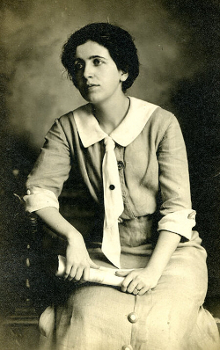
Flynn’s family moves to New York in 1900, where she is educated in the local public schools. She grows up being regaled by tales of Irish revolutionaries. According to their oral tradition all four of her great-grandfathers, Flynn, Gurley, Conneran, and Ryan, are members of the Society of United Irishmen, with grandfather Flynn being one of the leaders in County Mayo when the French fleet lands there during the Irish Rebellion of 1798. Her parents introduce her to socialism. When she is only fifteen, she gives her first public speech, “What Socialism Will Do for Women,” at the Harlem Socialist Club.
In 1907, Flynn becomes a full-time organizer for the Industrial Workers of the World. Over the next few years, she organizes campaigns among garment workers in Pennsylvania, silk weavers in New Jersey, restaurant workers in New York, miners in Minnesota, Missoula, Montana, and Spokane, Washington and textile workers in Massachusetts. She is arrested ten times during this period but is never convicted of any criminal activity. It is a plea bargain, on the other hand, that results in her expulsion from the IWW in 1916, along with fellow organizer Joe Ettor.
A founding member of the American Civil Liberties Union (ACLU) in 1920, Flynn plays a leading role in the campaign against the conviction of Nicola Sacco and Bartolomeo Vanzetti. She is particularly concerned with women’s rights, supporting birth control and women’s suffrage. She also criticizes the leadership of trade unions for being male-dominated and not reflecting the needs of women.
Between 1926 and 1936, Flynn lives in southwest Portland, Oregon with birth control activist, suffragette, and WobblyMarie Equi where she is an active and vocal supporter of the 1934 West Coast Longshoremen’s Strike. In 1936, she joins the Communist Party and writes a feminist column for its journal, the Daily Worker. Two years later, she is elected to the national committee. Her membership in the Party leads to her ouster from the board of the ACLU in 1940.
During World War II, Flynn plays an important role in the campaign for equal economic opportunity and pay for women and the establishment of day care centers for working mothers. In 1942, she runs for the United States Congress at-large in New York and receives 50,000 votes. In July 1948, a dozen leaders of the Communist Party are arrested and accused of violating the Smith Act by advocating the overthrow of the U.S. government by force and violence. After they are convicted in the Foley Square trial they appeal to the Supreme Court, which upholds their conviction in Dennis v. United States.
Flynn launches a campaign for their release but, in June 1951, is herself arrested in the second wave of arrests and prosecuted under the Smith Act. After a nine-month trial, she is found guilty and serves two years in Federal Prison Camp, Alderson near Alderson, West Virginia. She later writes a prison memoir, The Alderson Story: My Life as a Political Prisoner.
After her release from prison, Flynn resumes her activities for leftist and Communist causes. She runs for the New York City Council as a Communist in 1957, garnering a total of 710 votes. She becomes national chairwoman of the Communist Party of the United States in 1961 and makes several visits to the Soviet Union.
Born Carlo Bianconi, in Tregolo, Costa Masnaga, Italy on September 24, 1786, he moves from an area poised to fall to Napoleon and travels to Ireland via England in 1802, just four years after the Irish Rebellion of 1798. At the time, British fear of continental invasion results in an acute sense of insecurity and additional restrictions on the admission of foreigners. He is christened Carlo but anglicises his name to Charles when he arrives in Ireland in 1802.
At the age of 16, Bianconi works as an engraver and printseller in Dublin, near Essex Street, under his sponsor, Andrea Faroni. In 1806 he sets up an engraving and print shop in Carrick-on-Suir, moving to Clonmel in 1815.
Bianconi eventually becomes famous for his innovations in transport and is twice elected mayor of Clonmel. He is the founder of public transportation in Ireland, at a time preceding railways. He establishes regular horse-drawn carriage services on various routes beginning in 1815. These are known as “Bianconi coaches” and the first service, Clonmel to Cahir, which takes five to eight hours by boat, takes only two hours by Bianconi’s carriage. Travel on a coach costs one penny farthing a mile.
Bianconi’s carriage services continue into the 1850s and later, by which time there are a number of railway services in the country. The Bianconi coaches continue to be well-patronised, by offering connections from various termini, one of the first and few examples of an integrated transport system in Ireland. By 1865 Bianconi’s annual income is about £35,000.
In 1832 Bianconi marries Eliza Hayes, the daughter of a wealthy Dublin stockbroker. They have three children. Bianconi dies on September 22, 1875 at Longfield House, Boherlahan, County Tipperary.
Having donated land to the parish of Boherlahan for the construction of a parish church, Bianconi wishes to be buried on the Church grounds. He, and his family, are buried in a side chapel, separate from the parish church in Boherlahan, approximately 5 miles from Cashel, County Tipperary.





 seamus dubhghaill