seamus dubhghaill

Promoting Irish Culture and History from Little Rock, Arkansas, USA


Leave a comment

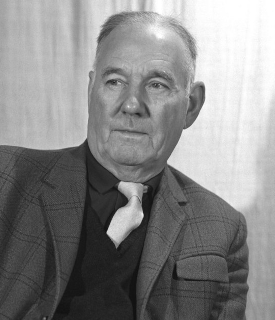
Birth of León Ó Broin, Civil Servant, Historian & Author

León Ó Broin, senior civil servant, historian, and author, is born Leo Byrne on November 10, 1902, at 21 Aungier Street, Dublin, the second of four sons of James P. Byrne, a potato factor’s bookkeeper, and Mary Byrne (née Killeen), daughter of a seaman who abandoned his family.

After early education in convent school, Ó Broin attends Synge Street CBS, where he is especially adept at languages. After working in several minor clerical employments, he becomes a clerk in the Kingsbridge headquarters of the Great Southern Railway. Joining a local Sinn Féin club, he canvasses for the party in the College Green ward during the 1918 Irish general election. Sent from an early age to Irish language classes by his father, he attends the Irish summer college in Spiddal, County Galway, and joins the Gaelic League, becoming by early 1921 secretary of central branch. He writes articles for the league’s successive weekly organs, each in its turn suppressed by the authorities. Despite regarding such writing as practice work within a language he is yet learning, he is selected best writer of Irish at the 1920 Dublin feis.

Arrested with his father and two brothers just before Christmas 1920 when Black and Tans discover a letter in Irish on his person during a house raid, Ó Broin is imprisoned for several weeks in Wellington Barracks. Leaving his railway job, he works as a clerk in the clandestine office of the Dáil Éireann Department of Agriculture (1921–22). During the Irish Civil War, with departmental work at a standstill, he joins the National Army as a commissioned officer assigned to general headquarters staff at Portobello Barracks. Having recently commenced legal studies at the King’s Inns and University College Dublin (UCD), he handles army legal matters, such as compensation claims for damage to property.

Called to the bar in 1924, Ó Broin enters the civil service. Assigned to the Department of Education (1925–27), he was involved in launching the Irish language publishing imprint An Gúm, intended to redress the paucity of reading material, apart from school texts, in the language. Transferred to the Department of Finance (1927), he serves as estimates officer and parliamentary clerk and is assistant secretary of the economy committee established by the Cumann na nGaedheal government to make recommendations on reductions in current expenditure. Appointed private secretary to the Minister for Finance (1931–32), he serves both Ernest Blythe and the first Fianna Fáil minister, Seán MacEntee. Promoted to assistant principal (1932), and to principal officer (1939), he represents the department on the Irish Folklore Commission, and serves on the interdepartmental committee that, after the disastrous Kirkintilloch bothy fire in 1937, investigates seasonal migration to Scotland. During the emergency he is regional commissioner for Galway and Mayo (1940–45), one of eight such officers charged with organising contingency preparations for dealing with the likely collapse of central administration in the event of invasion by any of the wartime belligerents.

Transferred out of Finance, Ó Broin becomes assistant secretary (1945–48) and secretary (1948–67) of the Department of Posts and Telegraphs, administering both the postal service and telecommunications. He works closely with Fianna Fáil minister Patrick Little to improve the range and quality of music offered by the broadcasting service, playing a large part in the decision to form and adequately staff a full Radio Éireann symphony orchestra. He represents Ireland in several post-war conferences in Europe and America that reorganise the international regulation of broadcasting activities. He is elected to the European Broadcasting Union‘s administrative council (1953). He establishes and serves on a departmental committee in 1953 that studies all facets of launching a television service.

A devout but liberal Catholic, Ó Broin is prominent for many years in the Legion of Mary, founded by his close friend and civil-service colleague Frank Duff. President of a legion presidium of writers, actors, and artists, he is first editor (1937–47) of the quarterly organ Maria Legionis. Sharing Duff’s ecumenism, he belongs to the Mercier Society, the Pillar of Fire Society, and Common Ground, groups organised by Duff in the early 1940s to facilitate discussion between Catholics and, respectively, protestants, Jews, and secular intellectuals. The first two are suspended amid disapproval by the Catholic Archbishop of Dublin, John Charles McQuaid.

On retirement from the civil service in 1967, Ó Broin concentrates on the parallel career of research and writing that he had cultivated over many years. Having begun writing articles and short stories in Irish from his earliest years in the Gaelic League, he publishes his first collection of short stories, Árus na ngábhad, in 1923. With the establishment of An Gúm, he publishes three more collections of original short stories and translations of such masters of the genre as Alexander Pushkin, Prosper Mérimée, Guy de Maupassant, and Jerome K. Jerome. He translates several popular modern novels, including Robert Louis Stevenson‘s Kidnapped and H. G. Wells‘s The War of the Worlds. Active as secretary, actor, and writer with the state-subsidised Gaelic Drama League (An Comhar Drámaíochta), which produces Irish language plays, he publishes many plays in Irish, both original and translated. His best-selling book in Irish is Miss Crookshank agus coirp eile (1951), about the mummified corpses in the vaults of St. Michan’s Church, Dublin.

Ó Broin writes prolifically on modern Irish history and biography. His Irish language biography of Charles Stewart Parnell (1937), the first full-scale study of its kind in Irish since the commencement of the language revival, is a landmark publication, praised for the quality of its prose by such critics as Frank O’Connor and Seán Ó Faoláin. His biography of Robert Emmet, published in Irish in 1954, and awarded the Douglas Hyde prize, pioneers the scholarly subversion of the romantic myth surrounding its subject, and includes consideration of the political and social context. The subjects of subsequent biographies include Richard Robert Madden, Charles Gavan Duffy, Joseph Brenan, Michael Collins, and Frank Duff.

Ó Broin takes a largely biographical approach to historical writing, researching neglected aspects of pivotal historical events, and basing his studies on previously unexploited primary sources, often the papers of a single individual, whose career serves as the linchpin of his narrative, filtering events through the perspective of that person. Another vein of his scholarship is his primary research into the history of Irish separatism, especially with sources in the Irish State Paper Office.

Ó Broin receives an honorary LL. D from the National University of Ireland (NUI) in 1967. Elected a member of the Royal Irish Academy (RIA) in 1971, he is a council member (1974–76) and senior vice-president (1976–77) and chairs the group whose recommendations results in the academy’s establishment of the National Committee on International Affairs. He is president of the Irish Historical Society (1973–74), and a member of the Irish Manuscripts Commission.

In 1925 Ó Broin marries Cait Ní Raghallaigh, an office assistant reared in Baltinglass, County Wicklow, whom he met in the Gaelic League. They have two sons and three daughters. After residing in the south city suburbs, they move to Booterstown, County Dublin in the 1930s, and from there to the Stillorgan Road in the 1950s.

Ó Broin dies February 26, 1990, in Dublin, and is buried in Deans Grange Cemetery. His papers are in the National Library of Ireland (NLI). His eldest son, Eimear Ó Broin, is an accomplished musicologist and assistant conductor of the several Radio Éireann orchestras (1953–89).

(From: “Ó Broin, León” by Lawrence William White, Dictionary of Irish Biography, http://www.dib.ie)
Leave a comment

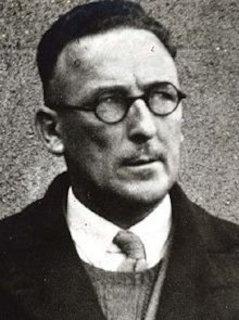
Death of Séamus O’Donovan, IRA Volunteer & Nazi Collaborator

James O’Donovan, a leading volunteer in the Irish Republican Army (IRA) and Nazi collaborator also known as Séamus or Jim O’Donovan, dies in Dublin on June 4, 1979. He is best known for his contacts with the Abwehr military intelligence of Nazi Germany.

Born on November 3, 1896, in County Roscommon, O’Donovan is an explosives expert and reputedly invents the “Irish War Flour” (named after the flour sacks in which it was smuggled into Dublin aboard ships) and “Irish Cheddar” devices. He subsequently becomes IRA Director of Chemicals in 1921. During the Irish War of Independence, he is imprisoned in Mountjoy Prison and Kilmainham Gaol and later interned in Newbridge, County Kildare.

In addition to fighting in the Irish War of Independence, O’Donovan fights on the Anti-Treaty side during the Irish Civil War. In 1930 he becomes manager at Electricity Supply Board (ESB) headquarters in Dublin.

In August 1938, at the request of IRA Chief of Staff Seán Russell, O’Donovan writes the S-Plan, a bombing campaign targeting the United Kingdom. In his unpublished memoirs he writes that he “conducted the entire training of cadre units, was responsible for all but locally derived intelligence, carried out small pieces of research and, in general, controlled the whole explosives and munitions end” of S-Plan. During this time, he and Russell are the only GHQ members of the old IRA still in the organisation.

As “Agent V-Held”, O’Donovan visits Germany three times in 1939 on behalf of the IRA. On February 28 he negotiates an arms and radio equipment delivery at the Abwehrstelle in Hamburg. On April 26 he concludes a new arms deal with the Abwehrstelle and establishes, with the help of a Breton, a secret courier connection to Ireland via France. On August 23, he receives the last instructions for the event of war.

On February 9, 1940, Abwehr II agent Ernst Weber-Drohl lands at Killala Bay, County Sligo aboard U-37. He is equipped with an ‘Ufa’ transmitter, cash, and instructions for O’Donovan, who by this time is the chief IRA contact for Abwehr I/II. The transmitter is lost upon landing, but when Weber-Drohl reaches O’Donovan at Shankill, Killiney, County Dublin, he is able to deliver new transmission codes, $14,450 in cash, and a message from “Pfalzgraf Section” asking that the IRA concentrate its S-Plan attacks on military rather than civilian targets.

O’Donovan becomes increasingly enamoured of Nazi ideology during this time, and visits Germany three times. In 1942 he writes an article arguing that Ireland’s future lay in an alliance with a victorious Germany and attacks Britain and the United States for being “centres of Freemasonry, international financial control and Jewry.” Even long after the pact with the Germans falls apart, he continues to express his sympathy for the Nazi regime. His son, Gerard O’Donovan, recalls that every Saturday night a visitor would come to the family home and send messages to Germany.

In 1940, O’Donovan is involved in setting up Córas na Poblachta, a minor Irish republican political party which proves unsuccessful.

O’Donovan dies in Dublin on June 4, 1979.


Leave a comment

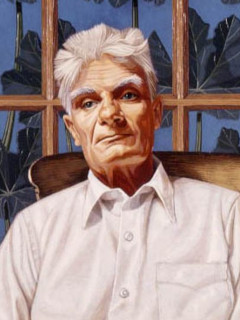
Birth of Irish Writer Francis Stuart

Henry Francis Montgomery Stuart, Irish writer, is born in Townsville, Queensland, Australia on April 29, 1902. He is awarded one of the highest artistic accolades in Ireland, being elected a Saoi of Aosdána, before his death in 2000. His years in Nazi Germany lead to a great deal of controversy.

Stuart is born to Irish Protestant parents, Henry Irwin Stuart and Elizabeth Barbara Isabel Montgomery. His father is an alcoholic and kills himself when Stuart is an infant. This prompts his mother to return to Ireland and Stuart’s childhood is divided between his home in Ireland and Rugby School in England, where he boards.

In 1920, at age 17, Stuart becomes a Catholic and marries Iseult Gonne, daughter of Maud Gonne. Her father is the right-wing French politician Lucien Millevoye, with whom Maud Gonne had had an affair between 1887 and 1899. Because of her complex family situation, Iseult is often passed off as Maud Gonne’s niece in conservative circles in Ireland. Iseult has a brief affair with Ezra Pound prior to meeting Stuart. Pound and Stuart both believe in the primacy of the artist over the masses and are subsequently drawn to fascism, Stuart to Nazi Germany and Pound to Fascist Italy.

Gonne and Stuart have a baby daughter who dies in infancy. Perhaps to recover from this tragedy, they travel for a while in Europe but return to Ireland as the Irish Civil War begins. Unsurprisingly given Gonne’s strong opinions, the couple are caught up on the anti-Treaty Irish Republican Army (IRA) side of the fight. Stuart is involved in gun running and is interned following a botched raid.

After independence, Stuart participates in the literary life of Dublin and writes poetry and novels. His novels are successful, and his writing is publicly supported by W. B. Yeats.

Stuart’s time with Gonne is not an entirely happy time as both he and his wife apparently struggle with personal demons and their internal anguish poisons their marriage. In letters to close friend W. B. Yeats, Maud Gonne characterizes Stuart as being emotionally, financially, and physically abusive towards Iseult.

During the 1930s Stuart becomes friendly with German Intelligence (Abwehr) agent Helmut Clissmann and his Irish wife Elizabeth. Clissmann is working for the German Academic Exchange Service and the Deutsche Akademie (DA). He is facilitating academic exchanges between Ireland and the Third Reich but also forming connections which might be of benefit to the Abwehr. Clissmann is also a representative of the Nazi Auslandorganisation (AO), the Nazi Party’s foreign organisation, in pre-war Ireland.

Stuart is also friendly with the head of the German Legation in Dublin, Dr. Eduard Hempel, largely as a result of Maud Gonne MacBride’s rapport with him. By 1938 he is seeking a way out of his marriage and the provincialism of Irish life. Iseult intervenes with Clissmann to arrange for Stuart to travel to Germany to give a series of academic lectures in conjunction with the DA. He travels to Germany in April 1939 and visits Munich, Hamburg, Bonn and Cologne. After his lecture tour, he accepts an appointment as lecturer in English and Irish literature at Berlin University to begin in 1940. At this time, under the Nuremberg Laws, the German academic system has barred Jews.

In July 1939, Stuart returns home to Laragh, County Wicklow, and after his plans for traveling to Germany are finalised, he receives a visit from his brother-in-law, Seán MacBride, following the seizure of an IRA radio transmitter on December 29, 1939, which had been used to contact Germany. Stuart, MacBride, Seamus O’Donovan, and IRA Chief of Staff Stephen Hayes then meet at O’Donovan’s house. Stuart is told to take a message to Abwehr HQ in Berlin. Upon arrival in Berlin in January 1940, he delivers the IRA message and has some discussion with the Abwehr on conditions in Ireland and the fate of the IRA-Abwehr radio link. Around August 1940, he is asked by Sonderführer Kurt Haller if he will participate in Operation Dove and he agrees, although he is later dropped in favour of Frank Ryan.

Between March 1942 and January 1944 Stuart works as part of the Redaktion-Irland team, reading radio broadcasts containing Nazi propaganda which are aimed at and heard in Ireland. In his broadcasts he frequently speaks with admiration of Adolf Hitler and expresses the hope that Germany will help unite Ireland. He is dropped from the Redaktion-Irland team in January 1944 because he objects to the anti-Soviet material that is presented to him and deemed essential by his supervisors. His passport is taken from him by the Gestapo after this event.

In 1945 Stuart plans to Ireland with a former student Gertrude Meissner. They are arrested and detained by Allied troops. Following their release, Stuart and Meissner live in Germany and then France and England. They marry in 1954 after Iseult’s death and in 1958 they return to settle in Ireland. In 1971 Stuart publishes his best-known work, Black List Section H, an autobiographical fiction documenting his life and distinguished by a queasy sensitivity to moral complexity and moral ambiguity.

In 1996 Stuart is elected a Saoi of Aosdána, a high honour in the Irish art world. Influential Irish language poet Máire Mhac an tSaoi objects strongly, referring to Stuart’s actions during the war and claiming that he holds anti-Semitic opinions. When it is put to a vote, she is the only person to vote for her motion. She resigns from Aosdána in protest, sacrificing a government stipend by doing so. While the Aosdána affair is ongoing, The Irish Times columnist Kevin Myers attacks Stuart as a Nazi sympathiser. Stuart sues for libel and the case is settled out of court. The statement from The Irish Times read out in the High Court accepts “that Mr. Stuart never expressed anti-Semitism in his writings or otherwise.”

For some years before his death Stuart lives in County Clare with his partner Fionuala and in County Wicklow with his son Ian and daughter-in-law Anna in a house outside Laragh village. He dies of natural causes on February 2, 2000, at the age of 97 in County Clare.


Leave a comment

Birth of Otto Moses Jaffe, Lord Mayor of Belfast

otto-jaffe

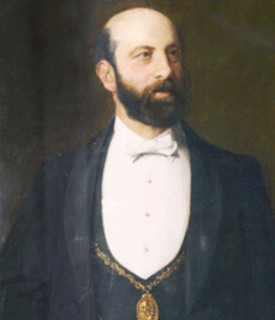
Sir Otto Moses Jaffe, German-born British businessman who is twice elected Lord Mayor of Belfast, is born in Hamburg on August 13, 1846. He is the first non-Protestant to hold the office of Lord Mayor of Belfast.

Jaffe is born into a Jewish family, one of four boys and five girls born to Daniel Joseph and Frederiké Jaffe. In 1852, his parents bring their family to Belfast. His father, along with his older brothers, Martin, John and Alfred, set up a business exporting linen. He is educated at Mr. Tate’s school in Holywood, County Down, and later in Hamburg and Switzerland.

Jaffe marries Paula Hertz, daughter of Moritz Hertz from Braunschweig, on March 8, 1879. They have two sons, Arthur Daniel and William Edward Berthold Jaffe. Daniel Joseph Jaffé is his nephew, son of his brother Martin.

From 1867 to 1877 Jaffe lives and works in New York. In 1877, his brothers retire so he returns to Belfast to head the family business, The Jaffe Brothers, at Bedford Street. He builds it up to become the largest linen exporter in Ireland. He is a member of the Belfast Harbour Commission and becomes a naturalised citizen in 1888. In 1894, he successfully agitates for the reporting and destruction of shipwrecks in the North Atlantic Ocean.

Jaffe is a Justice of the Peace, a governor of the Royal Hospital, a member of the Irish Technical Education Board and a member of the Senate of Queen’s College, which later becomes Queen’s University Belfast. He is the German consul in Belfast. He is an active member of the committee which gets the Public Libraries Act extended to Belfast, leading to the first free library being established there. In 1910 he erects the Jaffe Spinning Mill on the Newtownards Road, also known as Strand Spinning. This provides work for 350 people, rising to 650 in 1914 when the company expands to make munitions. He is lavishly charitable and contributes to Queen’s College.

Jaffe takes a keen interest in the Jewish community of Belfast. He is life-president of the Belfast Hebrew Congregation, which worships at the Great Victoria Street, Belfast synagogue. His father established it on July 7, 1871. Between 1871 and 1903 the congregation increases from fifty-five to over a thousand. He pays most of the £4,000 cost of building the synagogue in Annesley Street. He opens it in 1904 wearing his mayoral regalia. Three years later with his wife, they set up the Jaffe Public Elementary School on the Cliftonville Road.

Jaffe is a member of the Irish Unionist Party. He represents St. Anne’s Ward for the Belfast Corporation in 1894 and is elected Lord Mayor of Belfast in 1899. As mayor, he launches an appeal for the dependents of soldiers fighting in the Second Boer War. On March 5, 1900, he is knighted at Dublin Castle by George Cadogan, 5th Earl Cadogan, Lord Lieutenant of Ireland. In 1901 he is High Sheriff of Belfast and in 1904 is again elected Lord Mayor.

The outbreak of war sees anti-German sentiment and when the RMS Lusitania passenger liner is torpedoed by a German U-boat of the coast of County Cork on May 7, 1915, resulting in the death of 1,000 people, anti-German feeling in Britain and Ireland rise to breaking point. Even though he is loyal to the Crown, and his eldest son Arthur and his nephew are serving in the British Army, Jaffe is accused of being a German spy. Society women refuse support for the Children’s Hospital so long as Jaffe and his wife remain on the board. He is “overwhelmed with pain and sorrow.”

After twenty-five years of service, Jaffe resigns his post as Alderman of Windsor Ward for Belfast City Council in June 1916 when he is almost 70 years of age and takes up residence in London, where he dies on April 29, 1929. Lady Jaffe is too ill to attend his funeral, and she dies a few months later, in August 1929.


Leave a comment

Death of Singer Delia Murphy Kiernan

delia-murphy

Delia Murphy Kiernan, singer and collector of Irish ballads, dies of a massive heart attack on February 11, 1971, five days before her 69th birthday. She records several 78 RPM records in the 1930s, 1940s, and 1950s. In 1962 she records her only LP record, The Queen of Connemara, for Irish Prestige Records, New York, on the cover of which her name appears alongside the LP title. Her notable voice gives her the nickname the “Queen of Connemara.”

Murphy is born on February 16, 1902, in Ardroe, Roundfort, County Mayo, to a well-off family. Her father, John Murphy, from nearby Hollymount, makes his fortune in the Klondike Gold Rush. While in America, he marries Ann Fanning from Roscrea, County Tipperary. They return to Ireland in 1901 and purchase the large Mount Jennings Estate in Hollymount. Murphy’s father encourages her interest in singing ballads from a young age. He also allows Irish travellers to camp on the estate. According to her own account, she learns her first ballads at their campfires.

Murphy is educated at Presentation Convent in Tuam, Dominican College in Dublin, and University College Galway (UCG), where she graduates with a Bachelor of Commerce degree. While at UCG she meets Dr. Thomas J. Kiernan, and they marry in 1924, on her 22nd birthday. Kiernan then joins the Irish diplomatic service, where his first posting is to London. While there Murphy sings at many venues including many gatherings of Irish emigrants and becomes quite well-known. In 1939 she records The Blackbird, The Spinning Wheel, and Three Lovely Lassies for HMV.

In 1941, Kiernan is appointed Irish Minister Plenipotentiary to the Holy See in Rome. The Irish legation is the only English-speaking legation to remain open after the United States enters World War II. Murphy becomes one of those who assist Monsignor Hugh O’Flaherty in saving the lives of 6,500 Allied soldiers and Jews. In 1943, when Italy changes sides, many escaped POWs are helped by the legation to leave Italy.

In 1946, Murphy is awarded to Dame Commander of the Equestrian Order of the Holy Sepulchre.

Kiernan later serves as Irish High Commissioner and later first Ambassador in Australia, and later to West Germany, Canada, and the United States. In 1961, while living in Ottawa, Murphy makes the recording of The Queen of Connemara produced by Ken Goldstein. Murphy and Kiernan purchase a farmhouse in Jasper, Ontario, near the Rideau Canal where she spends most of her time, even after Kiernan is posted to Washington, D.C. Tom Kiernan dies in December 1967.

By 1969 Murphy’s health is in decline. In November of that year, she sells her farmhouse in Canada and returns to Ireland. She lives in a cottage in Strawberry Beds, Chapelizod, County Dublin, until her death. During her lifetime she records upwards of 100 songs.


Leave a comment

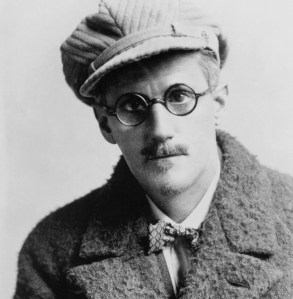
The Death of James Augustine Aloysius Joyce

james-joyce

James Augustine Aloysius Joyce, considered to be one of the most influential writers in the modernist avant-garde of the early 20th century, dies in Zurich, Switzerland, following surgery for a perforated ulcer on January 13, 1941.

Joyce is born on February 2, 1882, in the wealthy Rathgar suburb of Dublin. The family is initially well off as Dublin merchants with bloodlines that connected them to old Irish nobility in the country. James’ father, John Stanislaus Joyce, is a fierce Irish Catholic patriot and his political and religious influences are most evident in Joyce’s two key works A Portrait of the Artist as a Young Man (1916) and Ulysses (1922).

The Joyce family is repeatedly forced to move to more modest residences due to their steadily diminishing wealth and income. John Joyce’s habitual unemployment as well as his drinking and spending habits make it difficult for the Joyces to retain their social standing. As a young man, Joyce is sent away to the renowned Clongowes Wood College in County Kildare in 1888, a Jesuit institution regarded as the best preparatory school in Ireland. The Clongowes school figures prominently in Joyce’s work, specifically in the story of his recurring character Stephen Dedalus. Joyce earns high marks both at the Clongowes School and at Belvedere College in Dublin where he continues his education. At this point in his life, it seems evident that Joyce is to enter the priesthood, a decision that would please his parents. However, as Joyce makes contact with various members of the Irish Literary Renaissance, his interest in the priesthood wanes. Joyce becomes increasingly critical of Ireland and its conservative elements, especially the Church.

Against his mother’s wishes, Joyce leaves Ireland in 1902 to pursue a medical education in Paris and does not return until the following year upon receiving news of his mother’s debilitation and imminent death. After burying his mother, Joyce continues to stay in Ireland, working as a schoolteacher at a boys’ school, another autobiographical detail that recurs in the story of Stephen Dedalus. After barely spending a year in Dublin, Joyce returns to the Continent, drifting in and out of medical school in Paris before taking up residence in Zurich. It is during this period that Joyce begins writing professionally.

In 1905, Joyce completes a collection of eight stories entitled Dubliners, although it is not actually printed until 1913. During these frustrating and impoverished years, Joyce heavily relies upon the emotional support of Nora Barnacle, his unmarried Irish lover, as well as the financial support of his younger brother, Stanislaus Joyce. Both Nora and Stanislaus remain as protective, supporting figures for the duration of Joyce’s life. During the eight years between Dubliners‘ completion and publication, Joyce and Barnacle have two children, a son named Giorgio, and a daughter named Lucia.

Joyce’s next major work, A Portrait of the Artist as a Young Man, appears in serialized form in 1914 and 1915. Joyce is “discovered” by Ezra Pound and the complete text is printed in New York City in 1916, and in London in 1917. It is with the assistance of Pound, a prominent literary figure of the time, that Joyce comes into contact with Harriet Shaw Weaver, who serves as both editor and patron while Joyce writes Ulysses.

When Ulysses is published in Paris in 1922, many immediately hail the work as genius. With his inventive narrative style and engagement with multiple philosophical themes, Joyce has established himself as a leading Modernist. The novel charts the passage of one day, June 16, 1904, as depicted in the life of an Irish Jew named Leopold Bloom, who plays the role of a Ulysses by wandering through the streets of Dublin. Despite the fact that Joyce is writing in self-imposed exile, living in Paris, Zurich, and Trieste while writing Ulysses, the novel is noted for the incredible amount of accuracy and detail regarding the physical and geographical features of Dublin.

Similar in theme to Joyce’s previous works, Ulysses examines the relationship between the modern man and his myth and history, focusing on contemporary questions of Irish political and cultural independence, the effects of organized religion on the soul, and the cultural and moral decay produced by economic development and heightened urbanization. While Joyce is writing it, there is serious doubt as to whether Ulysses will be completed. Midway through his writing, Joyce undergoes the first of eleven eye operations to salvage his ever-worsening eyesight. At one point, a disappointed Joyce casts the bulk of his manuscript into the fire, but Nora Barnacle immediately rescues it.

While Ulysses is hailed by some, the novel is banned in both the United Kingdom and the United States on obscenity charges. It is not until 1934 that Random House wins a court battle that grants permission to print and distribute Ulysses in the United States. The novel is legalized in Britain two years later.

By this time, Joyce is approaching the end of his public career and has concluded work on his final novel, Finnegan’s Wake (1939). Considered to be far more baffling and convoluted than Ulysses, Finnegan’s Wake is a critical failure. At the outbreak of World War II, Joyce remains in Paris until he is forced to move, first to Vichy, and then to Switzerland. On January 13, 1941, Joyce dies of a stomach ulcer at the age of 58 and is buried in Zurich’s Fluntern Cemetery.