seamus dubhghaill

Promoting Irish Culture and History from Little Rock, Arkansas, USA


Leave a comment

Dáil Éireann Declared Illegal by the British

On September 12, 1919, the British government, acting through the Lord Lieutenant of Ireland Sir John French, declares Dáil Éireann — the revolutionary parliament of the Irish Republic — illegal. The proclamation categorises the Dáil as a “dangerous organisation” and adds it to a list of banned groups, which also includes Sinn Féin, the Irish Volunteers, Cumann na mBan, and the Gaelic League.

The ban comes after just eight months of Dáil Éireann’s existence, which begins on January 21, 1919, when Sinn Féin MPs refuse to take their seats in Westminster and instead convene a separate parliament in Dublin. The British initially underestimate its significance, but events change rapidly.

Sinn Féin’s attempt to raise funds (the Dáil Loan) in August 1919 for the republican cause is seen as a move to legitimise an independent administration, undermining British control. Also, some Irish Volunteers members swear allegiance to Dáil Éireann, which is seen as a political act with potential to inspire wider resistance. The summer of 1919 also sees a surge in attacks, prompting Dublin Castle to respond with suppression measures.

The proclamation takes effect nationwide, including all counties and major boroughs such as Dublin, Belfast, Cork, Limerick, Derry, and Waterford. Within days, police raids and searches target Sinn Féin headquarters and members’ homes. The Harcourt Street headquarters in Dublin is raided, leading to arrests of figures like Patrick O’Keefe and Ernest Blythe. Similar searches occur in Belfast, Derry, Omagh, and Ballycastle, uncovering literature, weapons, and ammunition in some cases.

The ban is a major blow to Sinn Féin’s political prestige, but it also hardens the resolve of many republicans. Historians note that the suppression turned some moderate politicians into “extremists” and increased the likelihood of militarisation. Despite the crackdown, the Dáil continues to operate in secret, meeting in multiple Dublin locations to maintain the Irish Republic’s political legitimacy.

In short, the September 12, 1919 declaration marks a turning point in the Irish War of Independence, shifting the conflict from political negotiation to open confrontation.

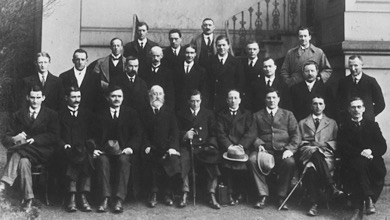
(Pictured: Members of the First Dáil Éireann seated and standing outside the Mansion House in Dublin on January 21, 1919)


Leave a comment

Anti-Treaty Irish Republican Army Captures Kenmare

On September 9, 1922, eighty-four Anti-Treaty Irish Republican Army (IRA) fighters capture Kenmare in County Kerry, killing local pro-Treaty officers and seizing National Army troops and arms, marking a major republican victory in the Irish Civil War.

By early September 1922, the Irish Civil War has already seen the Irish Free State forces secure most large towns in County Kerry following seaborne landings in August, but rural areas and towns like Kenmare remain under republican control. The IRA has retreated to the hills after abandoning other towns, preparing for guerrilla operations. Kenmare becomes a focal point for one of the largest republican offensives in the county.

On September 9, anti-Treaty fighters launch a coordinated attack on Kenmare. During the assault, they capture 120 National Army troops, later releasing them, and seize 110 rifles and 20,000 rounds of ammunition, significantly bolstering their resources. The attack also results in the killing of local pro-Treaty officer Tom “Scarteen” O’Connor and his brother after they are taken prisoner, highlighting the lethal intensity of the conflict.

The capture of Kenmare is a major tactical victory for the IRA, allowing anti-Treaty forces to maintain a stronghold in County Kerry and continue a guerrilla campaign for the remainder of the war. It demonstrates the resilience of republican forces despite the Irish Free State’s earlier successes and foreshadows the brutal guerrilla warfare that follows in County Kerry, including ambushes, executions, and widespread disruption to civilian life.

Following the attack, the IRA continues to operate effectively in County Kerry, using Kenmare as a base for further operations. The event contributes to the prolonged and violent nature of the Irish Civil War in County Kerry, which becomes notorious for its intensity and the high number of fatalities compared to other counties. The battle also exemplifies the personal and local dimensions of the conflict, with targeted killings and the capture of troops reflecting the deep divisions within Irish society at the time.

The September 9 attack on Kenmare remains a key episode in the history of the Irish Civil War, illustrating both the strategic and human costs of the conflict in County Kerry.

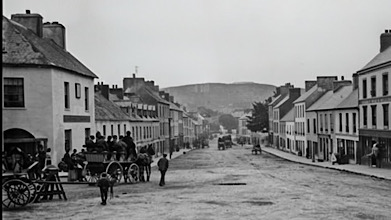
(Pictured: Main Street in Kenmare, County Kerry, September 1922)


Leave a comment

Birth of Otto Moses Jaffe, Lord Mayor of Belfast

otto-jaffe

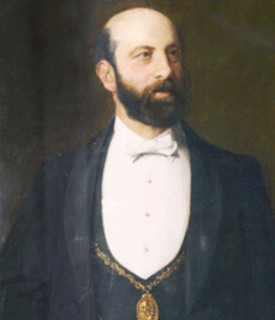
Sir Otto Moses Jaffe, German-born British businessman who is twice elected Lord Mayor of Belfast, is born in Hamburg on August 13, 1846. He is the first non-Protestant to hold the office of Lord Mayor of Belfast.

Jaffe is born into a Jewish family, one of four boys and five girls born to Daniel Joseph and Frederiké Jaffe. In 1852, his parents bring their family to Belfast. His father, along with his older brothers, Martin, John and Alfred, set up a business exporting linen. He is educated at Mr. Tate’s school in Holywood, County Down, and later in Hamburg and Switzerland.

Jaffe marries Paula Hertz, daughter of Moritz Hertz from Braunschweig, on March 8, 1879. They have two sons, Arthur Daniel and William Edward Berthold Jaffe. Daniel Joseph Jaffé is his nephew, son of his brother Martin.

From 1867 to 1877 Jaffe lives and works in New York. In 1877, his brothers retire so he returns to Belfast to head the family business, The Jaffe Brothers, at Bedford Street. He builds it up to become the largest linen exporter in Ireland. He is a member of the Belfast Harbour Commission and becomes a naturalised citizen in 1888. In 1894, he successfully agitates for the reporting and destruction of shipwrecks in the North Atlantic Ocean.

Jaffe is a Justice of the Peace, a governor of the Royal Hospital, a member of the Irish Technical Education Board and a member of the Senate of Queen’s College, which later becomes Queen’s University Belfast. He is the German consul in Belfast. He is an active member of the committee which gets the Public Libraries Act extended to Belfast, leading to the first free library being established there. In 1910 he erects the Jaffe Spinning Mill on the Newtownards Road, also known as Strand Spinning. This provides work for 350 people, rising to 650 in 1914 when the company expands to make munitions. He is lavishly charitable and contributes to Queen’s College.

Jaffe takes a keen interest in the Jewish community of Belfast. He is life-president of the Belfast Hebrew Congregation, which worships at the Great Victoria Street, Belfast synagogue. His father established it on July 7, 1871. Between 1871 and 1903 the congregation increases from fifty-five to over a thousand. He pays most of the £4,000 cost of building the synagogue in Annesley Street. He opens it in 1904 wearing his mayoral regalia. Three years later with his wife, they set up the Jaffe Public Elementary School on the Cliftonville Road.

Jaffe is a member of the Irish Unionist Party. He represents St. Anne’s Ward for the Belfast Corporation in 1894 and is elected Lord Mayor of Belfast in 1899. As mayor, he launches an appeal for the dependents of soldiers fighting in the Second Boer War. On March 5, 1900, he is knighted at Dublin Castle by George Cadogan, 5th Earl Cadogan, Lord Lieutenant of Ireland. In 1901 he is High Sheriff of Belfast and in 1904 is again elected Lord Mayor.

The outbreak of war sees anti-German sentiment and when the RMS Lusitania passenger liner is torpedoed by a German U-boat of the coast of County Cork on May 7, 1915, resulting in the death of 1,000 people, anti-German feeling in Britain and Ireland rise to breaking point. Even though he is loyal to the Crown, and his eldest son Arthur and his nephew are serving in the British Army, Jaffe is accused of being a German spy. Society women refuse support for the Children’s Hospital so long as Jaffe and his wife remain on the board. He is “overwhelmed with pain and sorrow.”

After twenty-five years of service, Jaffe resigns his post as Alderman of Windsor Ward for Belfast City Council in June 1916 when he is almost 70 years of age and takes up residence in London, where he dies on April 29, 1929. Lady Jaffe is too ill to attend his funeral, and she dies a few months later, in August 1929.