seamus dubhghaill

Promoting Irish Culture and History from Little Rock, Arkansas, USA


Leave a comment

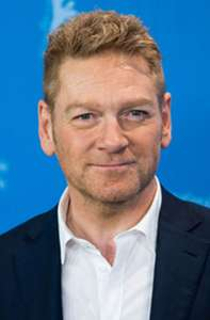
Birth of Kenneth Branagh, Actor, Director & Producer

kenneth-branagh

Sir Kenneth Charles Branagh, British actor, director, producer, and screenwriter, is born in Belfast on December 10, 1960.

Branagh is the middle of three children of working-class Protestant parents Frances (née Harper) and William Branagh, a plumber and joiner who runs a company that specialises in fitting partitions and suspended ceilings. He lives in the Tiger’s Bay area of the city and is educated at Grove Primary School.

At the age of nine, Branagh moves with his family to Reading, Berkshire, England, to escape the Troubles. He is educated at Whiteknights Primary School, then Meadway School, Tilehurst, where he appears in school productions such as Toad of Toad Hall and Oh, What a Lovely War!. He attends the amateur Reading Cine & Video Society (now called Reading Film & Video Makers) as a member and is a keen member of Progress Theatre for whom he is now the patron. He goes on to train at the Royal Academy of Dramatic Art in London and in 2015 succeeds Richard Attenborough as its president.

Branagh has both directed and starred in several film adaptations of William Shakespeare‘s plays, including Henry V (1989) (for which he was nominated for the Academy Award for Best Actor and Academy Award for Best Director), Much Ado About Nothing (1993), Othello (1995), Hamlet (1996) (for which he was nominated for the Academy Award for Best Adapted Screenplay), Love’s Labour’s Lost (2000), and As You Like It (2006).

Branagh stars in numerous other films and television series including Fortunes of War (1987), Woody Allen‘s Celebrity (1998), Wild Wild West (1999), The Road to El Dorado (2000), Conspiracy (2001), Harry Potter and the Chamber of Secrets (2002), Warm Springs (2005), as Major General Henning von Tresckow in Valkyrie (2008), The Boat That Rocked (2009), Wallander (2008–2016), My Week with Marilyn (2011) as Sir Laurence Olivier (nominated for Academy Award for Best Supporting Actor), and as Royal Navy Commander Bolton in the action-thriller Dunkirk (2017). He directs such films as Dead Again (1991), in which he also stars, Swan Song (1992) (nominated for Academy Award for Best Live Action Short Film), Mary Shelley’s Frankenstein (1994) in which he also stars, The Magic Flute (2006), Sleuth (2007), the blockbuster superhero film Thor (2011), the action thriller Jack Ryan: Shadow Recruit (2014) in which he also co-stars, the live-action film Cinderella (2015), and the mystery drama adaptation of Agatha Christie‘s Murder on the Orient Express (2017), in which he also stars as Hercule Poirot.

Branagh narrates the series Cold War (1998), the BBC documentary miniseries Walking with Dinosaurs (1999), Walking with Beasts (2001) and Walking with Monsters (2005). He has been nominated for five Academy Awards, five Golden Globe Awards, and has won three BAFTAs, and an Emmy Award. He is appointed a Knight Bachelor in the 2012 Birthday Honours and is knighted on November 9, 2012. He is awarded the Freedom of the City of his native city of Belfast in January 2018.


Leave a comment

Death of Jim Mitchell, Fine Gael Politician

jim-mitchell

Jim Mitchell, senior Irish politician who serves in the cabinets of Taoiseach Garret FitzGerald, loses his three-year battle with cancer in Dublin on December 2, 2002.

Mitchell begins his political involvement when he supports Seán MacBride, leader of the radical republican Clann na Poblachta in the 1957 general election. He joins Fine Gael in 1967, becoming that party’s unsuccessful candidate in a by-election in 1970. He seeks a party nomination to run in the 1973 Irish general election. However, he agrees not to contest the seat to allow Declan Costello, a senior figure in his party and son of former Taoiseach John A. Costello, to be elected. Costello goes on to serve as Attorney General of Ireland in the 1973-1977 National Coalition of Fine Gael and the Labour Party.

Mitchell is elected to Dublin Corporation in 1974. In 1976, at the age of 29, he becomes the youngest ever Lord Mayor of Dublin. He is an unsuccessful candidate for Dáil Éireann in the 1973 general election in Dublin South-West and loses again in the 1976 by-election in the same constituency, to Labour’s Brendan Halligan.

In the 1977 general election he is elected to the 21st Dáil for the new constituency of Dublin Ballyfermot. With the party’s loss of power in 1977, the new leader, Garret FitzGerald appoints Mitchell to the Party’s Front Bench as spokesman on Labour. At the 1981 general election Mitchell is elected for the Dublin West and Fine Gael dramatically increases its number of seats, forming a coalition government with the Labour Party. On his appointment as Taoiseach, Garret FitzGerald causes some surprise by excluding some of the older conservative ex-ministers from his cabinet. Instead, young liberals like Mitchell are appointed, with Mitchell receiving the high-profile post of Minister for Justice, taking responsibility for policing, criminal and civil law reform, penal justice, etc. The Fine Gael-Labour government collapses in January 1982 but regains power in December of that year. Mitchell again is included in a FitzGerald cabinet, as Minister for Transport.

As Minister for Transport, Mitchell grants the aviation license to a fledgling airline called Ryanair on November 29, 1985. This is granted despite strong opposition by Ireland’s national carrier Aer Lingus. The issue of the license breaks Aer Lingus’ stranglehold on flights to London from the Republic of Ireland.

Mitchell, who is seen as being on the social liberal wing of Fine Gael, is out of favour with John Bruton when he becomes Fine Gael leader in 1990. When Bruton forms the Rainbow Coalition in December 1994, Mitchell is not appointed to any cabinet post.

Mitchell contests and wins Dáil elections in 1977, 1981, (February and November) 1982, 1987, 1989, 1992, 1997. He runs for his party as its candidate to become a member of the European Parliament in the 1994 and 1998 elections. He also is director of elections for Austin Currie, the Fine Gael candidate, in the 1990 presidential election.

In 2001, Bruton is deposed as Fine Gael leader and replaced by Michael Noonan. Mitchell serves as his deputy from 2001 to 2002. He also chairs the key Oireachtas Public Accounts Committee. The Committee’s work under his chairmanship is widely praised for its inquiry into allegations of corruption and wide-scale tax evasion in the banking sector.

Though regarded in politics as one of Fine Gael’s “survivors,” who holds onto his seat amid major boundary changes, constituency changes and by attracting working class votes in a party whose appeal is primarily middle class, Mitchell loses his Dublin Central seat in the 2002 general election. That election witnesses a large-scale collapse in the Fine Gael vote, with the party dropping from 54 to 31 seats in Dáil Éireann. Although Mitchell suffers from the swing against Fine Gael in Dublin, he is not aided by the fact that Inchicore, which is considered his base in the constituency has been moved to Dublin South-Central. He chooses not to run in that constituency as his brother, Gay, is a sitting Teachta Dála (TD) running for re-election for that constituency.

Mitchell earlier has a liver transplant in an attempt to beat a rare form of cancer which had cost the lives of a number of his siblings. Though the operation is successful, the cancer returns. Although he appears to be making a recovery, Jim Mitchell ultimately dies of the disease on December 2, 2002.

His former constituency colleague and rival, Taoiseach Bertie Ahern, describes Jim Mitchell as having made an “outstanding contribution to Irish politics.”


Leave a comment

The Birth of John Toland, Philosopher & Freethinker

john-toland

John Toland, Irish rationalist philosopher and freethinker, and occasional satirist, is born in Ardagh on the Inishowen peninsula, a predominantly Catholic and Irish-speaking region in northwestern Ireland, on November 30, 1670. He writes numerous books and pamphlets on political philosophy and philosophy of religion which are early expressions of the philosophy of the Age of Enlightenment.

Very little is known of Toland’s early life. His parents are unknown. He later writes that he had been baptised Janus Junius, a play on his name that recalls both the Roman two-faced god Janus and Lucius Junius Brutus, reputed founder of the Roman Republic. According to his biographer, Pierre des Maizeaux, he adopts the name John as a schoolboy with the encouragement of his schoolteacher.

Having formally converted from Catholicism to Protestantism at the age of 16, Toland gets a scholarship to study theology at the University of Glasgow. In 1690, at age 19, the University of Edinburgh confers a master’s degree on him. He then gets a scholarship to spend two years studying at Leiden University in the Netherlands, and subsequently nearly two years at the University of Oxford in England (1694–95). The Leiden scholarship is provided by wealthy English Dissenters who hope Toland will go on to become a minister for Dissenters.

In Toland’s first and best-known book, Christianity not Mysterious (1696), he argues that the divine revelation of the Bible contains no true mysteries. Rather, all the dogmas of the faith can be understood and demonstrated by properly trained reason from natural principles. For this argument he is prosecuted by a grand jury in London. As he is a subject of the Kingdom of Ireland, members of the Parliament of Ireland propose that he should be burned at the stake. In his absence three copies of the book are burned by the public hangman in Dublin as the content is contrary to the core doctrines of the Church of Ireland. Toland bitterly compares the Protestant legislators to “Popish Inquisitors who performed that Execution on the Book, when they could not seize the Author, whom they had destined to the Flames.”

After his departure from Oxford, Toland resides in London for most of the rest of his life but is also a somewhat frequent visitor to Continental Europe, particularly Germany and the Netherlands. He lives on the Continent from 1707 to 1710.

John Toland dies in Putney on March 10, 1722. Just before he dies, he composes his own epitaph: “He was an assertor of liberty, a lover of all sorts of learning … but no man’s follower or dependent. Nor could frowns or fortune bend him to decline from the ways he had chosen.” The 1911 Encyclopædia Britannica says of him that at his death in London at age 51 “he died… as he had lived, in great poverty, in the midst of his books, with his pen in his hand.”

Very shortly after his death a lengthy biography of Toland is written by Pierre des Maizeaux.

(Pictured: The only known image of John Toland)


Leave a comment

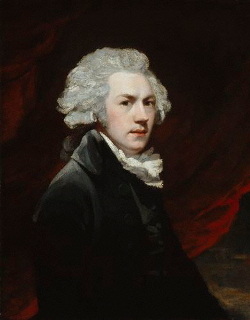
Birth of Laurence Sterne, Humorist & Author

laurence-sterne

Lawrence Sterne, Anglican clergyman, humorist, and author of the experimental novel The Life and Opinions of Tristram Shandy, Gentleman, is born on November 24, 1713, in Clonmel, County Tipperary. Though popular during his lifetime, he becomes even more celebrated in the 20th century, when modernist and postmodernist writers rediscover him as an innovator in textual and narrative forms.

Sterne is born to a British military officer stationed in County Tipperary. Following his father’s postings, the family moves briefly to Yorkshire before returning to Ireland, where they live largely in poverty and move frequently throughout the rest of Sterne’s youth. When the elder Sterne is dispatched to Jamaica, where he would die in 1731, he places his son with a wealthy uncle who supports the boy’s education.

Sterne attends Jesus College, Cambridge, following in the footsteps of his grandfather, Richard Sterne, who had been Master of the College. After being ordained as an Anglican priest, he takes up the vicarship of Sutton-on-the-Forest, where he marries Elizabeth Lumley. The couple lives there for the next 20 years.

Through his paternal family line, Sterne is connected to several powerful clergymen. His uncle, Archdeacon Jacques Sterne, encourages him to contribute to Whig political journals, and consequently he writes several articles supporting Sir Robert Walpole. However, when his political fervency fails to match his uncle’s, prompting him to abandon the role of political controversialist, Jacques Sterne cuts ties with his nephew and refuses to support his career. Nevertheless, Sterne continues writing.

Sterne’s first long work, a sharp satire of the spiritual courts entitled A Political Romance, makes him as many enemies as allies. Though the work is not widely distributed and indeed is burned at the request of those targeted by its Swiftian-style criticism, it represents Sterne’s first foray into the kind of humorous satire for which he would become famous. At age 46, he steps back from managing his parishes and turns his full attention to writing.

Sterne begins what becomes his best-known work, The Life and Opinions of Tristram Shandy, Gentleman, at a moment of personal crisis. He and his wife are both ill with tuberculosis and, in the same year that the first volumes of his long comic novel appear, his mother and uncle Jacques die. The blend of sentiment, humour and philosophical exploration that characterises his works matures during this difficult period. Tristram Shandy is an enormous success, and Sterne becomes, for the first time in his life, a famous literary figure in London. Still suffering from tuberculosis, he leaves England for Continental Europe, where his travels influence his second major work, A Sentimental Journey Through France and Italy (1768).

Sterne’s narrator in A Sentimental Journey is Parson Yorick, a sensitive but also comic figure who first appears in Tristram Shandy and who becomes Sterne’s fictive alter ego. In A Sentimental Journey, Parson Yorick wears a “little picture of Eliza around his neck,” and in the last year of his life Sterne writes the autobiographical Journal to Eliza under the pseudonym Yorick. Eliza is Eliza Draper, the wife of an East India Company official, and the literary and emotional muse of Sterne’s final years. After Draper returns to India, the two continue to exchange letters, some of which Draper allows to be published after Sterne’s death in the volume Letters from Yorick to Eliza.

In early 1768, less than a month after A Sentimental Journey is published, Sterne’s strength fails him and he dies in his lodgings at 41 Old Bond Street in London on March 18, 1768, at the age of 54. He is buried in the churchyard of St. George’s Hanover Square Church.

(Pictured: Laurence Sterne painted in watercolour by French artist Louis Carrogis Carmontelle, ca. 1762)


Leave a comment

Cash-strapped Aer Lingus Auctions Paintings

by-merrion-strandCash-strapped Aer Lingus auctions its collection of paintings on November 20, 2001. Most money goes on By Merrion Strand by Jack Butler Yeats, an oil-on-canvas, which sells for £290,000.

Aer Lingus, already in difficulties, is left in an even more perilous position by the effects of the September 11 terrorist attacks in the United States. The airline decides to realise some of its assets by selling 25 paintings from the company art collection. Members of the public are given an opportunity to buy part of Aer Lingus well ahead of any possible share flotation. The paintings are handed over to Dublin auctioneer John de Vere White and are offered at the Royal Hibernian Academy Gallagher Gallery on November 20 with the expectation of bringing around £500,000 (€635,000).

Visitors to Dublin Airport or Aer Lingus’s various offices notice very little change as in recent years only two of the paintings are on display, both of them in the chairman’s office. The remainder have been in storage which is one reason why the group are now being sold as part of Aer Lingus’s efforts to raise additional revenue.

One of the pictures removed from the chairman’s office is also both the longest-owned by the organisation and is ultimately the highest earner at auction. Jack Butler Yeats’s By Merrion Strand, which dates from 1929 and shows a woman standing before an expanse of the south Dublin coastline, is acquired by Aer Lingus in 1940, just four years after the company’s founding. According to company lore, it was spotted in London by a member of staff who left a £5 deposit on the painting.

Two paintings by Nathaniel Hone also have reasonably strong pre-sale estimates, Children on the Rocks valued at £25,000-£35,000 and Cattle in a Field at Malahide believed to be worth £10,000-£15,000. Other artists represented in the Aer Lingus collection being sold include Louis Le Brocquy, Patrick Collins, Norah McGuinness, Gerard Dillon and George Campbell.

Five other works in the collection, all acquired by the airline between the 1940s and the 1960s, are bought by the Irish state ahead of the auction.

(Pictured: By Merrion Strand, an oil-on-canvas painting by Jack B. Yeats, dating from the late 1920s)


Leave a comment

Death of Poet William Allingham

william-allingham

William Allingham, Irish poet, diarist and editor, dies in Hampstead, London, England on November 18, 1889. He writes several volumes of lyric verse, and his poem “The Faeries” is much anthologised. However, he is better known for his posthumously published Diary, in which he records his lively encounters with Alfred Tennyson, Thomas Carlyle and other writers and artists. His wife, Helen Allingham, is a well-known watercolourist and illustrator.

Allingham is born on March 19, 1824, in the small town of Ballyshannon, County Donegal, and is the son of the manager of a local bank who is of English descent. During his childhood his parents move twice within the town, where he enjoys the country sights and gardens, learns to paint and listens to his mother’s piano playing. When he is nine, his mother dies.

Allingham obtains a post in the custom house of his native town and holds several similar posts in Ireland and England until 1870. During this period, he publishes Poems (1850), which includes his well-known poem “The Fairies,” and Day and Night Songs (1855). Laurence Bloomfield in Ireland, his most ambitious, though not his most successful work, a narrative poem illustrative of Irish social questions, appears in 1864. He also edits The Ballad Book for the Golden Treasury series in 1864, and Fifty Modern Poems in 1865.

In April 1870 Allingham retires from the customs service, moves to London and becomes sub-editor of Fraser’s Magazine, eventually becoming editor in succession to James Anthony Froude in June 1874, a post he holds until 1879. On August 22, 1874, he marries the illustrator, Helen Paterson, who is twenty-four years younger than he. His wife gives up her work as an illustrator and becomes well known under her married name as a water-colour painter. At first the couple lives in London, at 12 Trafalgar Square, Chelsea, near Allingham’s friend, Thomas Carlyle, and it is there that they have their first two children – Gerald Carlyle (b. 1875 November) and Eva Margaret (b. 1877 February).

Allingham’s Songs, Poems and Ballads appears in 1877. In 1881, after the death of Carlyle, the Allinghams move to Sandhills near Witley in Surrey, where their third child, Henry William, is born in 1882. At this period Allingham publishes Evil May Day (1883), Blackberries (1884) and Irish Songs and Poems (1887).

In 1888, due to Allingham’s declining health, they move back to the capital, to the heights of Hampstead village. However, on November 18, 1889, he dies at Hampstead. According to his wishes he is cremated. His ashes are interred at St. Anne’s church in his native Ballyshannon.

Posthumously Allingham’s Varieties in Prose is published in 1893. William Allingham A Diary, edited by Mrs. Helen Allingham and D. Radford, is published in 1907. It contains Allingham’s reminiscences of Tennyson, Carlyle and other writers and artists.


Leave a comment

Birth of Luke Kelly, Founding Member of The Dubliners

luke-kelly

Luke Kelly, singer, folk musician and actor, is born into a working-class family in Lattimore Cottages at 1 Sheriff Street, Dublin on November 17, 1940. He is noted as a founding member of the band The Dubliners.

After Dublin Corporation demolished Lattimore Cottages in 1942, the Kellys become the first family to move into the St. Laurence O’Toole flats, where Luke spends the bulk of his childhood, although the family is forced to move by a fire in 1953 and settles in the Whitehall area.

Kelly is interested in music during his teenage years and regularly attends cèilidh with his sister Mona and listens to American vocalists including Fats Domino, Al Jolson, Frank Sinatra and Perry Como. He also has an interest in theatre and musicals, being involved with the staging of plays by Dublin’s Marian Arts Society. The first folk club he comes across is in the Bridge Hotel, Newcastle upon Tyne in early 1960. Having already acquired the use of a banjo, he starts memorising songs.

Kelly befriends Sean Mulready in Birmingham and lives in his home for a period. Mulready is a teacher who is forced from his job in Dublin because of his communist beliefs. Mulready’s brother-in-law, Ned Stapleton, teaches Kelly “Rocky Road to Dublin.” During this period he studies literature and politics under the tutelage of Mulready, his wife Mollie, and Marxist classicist George Derwent Thomson.

In 1961 there is a folk music revival or “ballad boom,” as it is later termed, in waiting in Ireland. Kelly returns to Dublin in 1962. A concert John Molloy organises in the Hibernian Hotel leads to his “Ballad Tour of Ireland” with the Ronnie Drew Ballad Group. This tour leads to the Abbey Tavern and the Royal Marine Hotel and then to jam-packed sessions in the Embankment, Tallaght. Ciarán Bourke joins the group, followed later by John Sheahan. They rename themselves The Dubliners at Kelly’s suggestion, as he is reading James Joyce‘s book of short stories, entitled Dubliners, at the time. Kelly is the leading vocalist for the group’s eponymous debut album in 1964, which includes his rendition of “Rocky Road to Dublin.”

In 1964 Kelly leaves the group for nearly two years and is replaced by Bob Lynch and John Sheahan. Kelly goes with Deirdre O’Connell, founder of the Focus Theatre, to whom he marries the following year, back to London and becomes involved in Ewan MacColl‘s “gathering.”

When Bob Lynch leaves The Dubliners, John Sheahan and Kelly rejoin. The ballad boom in Ireland is becoming increasingly commercialised with bar and pub owners building ever larger venues for pay-in performances. Ewan MacColl and Peggy Seeger on a visit to Dublin express concern to Kelly about his drinking.

The arrival of a new manager for The Dubliners, Derry composer Phil Coulter, results in a collaboration that produces three of Kelly’s most notable performances: “The Town I Loved So Well”, “Hand Me Down My Bible“, and “Scorn Not His Simplicity”, a song about Phil’s son who had Down Syndrome. Kelly remains a politically engaged musician, becoming a supporter of the movement against South African apartheid and performing at benefit concerts for the Irish Travellers community.

Kelly’s health deteriorates in the 1970s. During a concert in the Cork Opera House on June 30, 1980 he collapses on the stage. He had already suffered for some time from migraines and forgetfulness which had been ascribed to his intense schedule, alcohol consumption, and “party lifestyle.” A brain tumor is diagnosed. Although he tours with the Dubliners after enduring an operation, his health deteriorates further. He forgets lyrics, has to take longer breaks in concerts due to weakness and becomes more withdrawn. In the autumn of 1983 he has to leave the stage in Traun, Austria and again in Mannheim, Germany. Shortly after this, he has to cancel the tour of southern Germany and, after a short stay in hospital in Heidelberg, he is flown back to Dublin.

After another operation Kelly spends Christmas with his family but is taken to hospital again in the New Year, where he dies on January 30, 1984. His funeral in Whitehall attracts thousands of mourners from across Ireland. His gravestone in Glasnevin Cemetery, Dublin, bears the inscription: Luke Kelly – Dubliner.


Leave a comment

Birth of Sophie Mary Peirce-Evans, Irish Aviator

lady-heath

Sophie Mary Peirce-Evans, Lady Heath, Irish aviator, is born on November 10, 1896, in Knockaderry, County Limerick, near the town of Newcastle West. She is one of the best-known women in the world for a five-year period from the mid-1920s.

When Peirce-Evans is one year old, her father, John Peirce-Evans, bludgeons her mother, Kate Theresa Dooling, to death with a heavy stick. He is found guilty of murder and declared insane. She is taken to the home of her grandfather in Newcastle West where she is brought up by two maiden aunts, who discourage her passion for sports.

After schooldays in Rochelle School in Cork, Princess Garden Belfast and St. Margaret’s Hall on Mespil Road in Dublin, where she plays hockey and tennis, Peirce-Evans enrolls in the Royal College of Science for Ireland. The college is designed to produce the educated farmers which the country then needs. One of the few women in the college, she duly takes a top-class degree in science, specialising in agriculture. She also plays with the college hockey team and contributes to a student magazine, copies of which are held in the National Library of Ireland.

Before becoming a pilot, Peirce-Evans has already made her mark. She spends two years as a dispatch rider during World War I, based in England and later France. By that time, she has married the first of her three husbands, Major William Elliot Lynn, and, as Sophie Mary Eliott-Lynn, is one of the founders of the Women’s Amateur Athletic Association after her move to London in 1922. She is Britain’s first women’s javelin champion and sets a disputed world record for the high jump. Alleging cruelty, her marriage to Elliot Lynn ends in divorce.

In 1925, Elliot-Lynn takes her first flying lessons and two years later becomes the first woman to hold a commercial flying licence in Britain. Along the way, she set records for altitude in a small plane and later a Shorts seaplane and is the first woman to parachute from an aeroplane.

In an era when the world has gone aviation-mad due to the exploits of Charles Lindbergh and Amelia Earhart, Elliot-Lynn is more than able to hold her own. “Britain’s Lady Lindy,” as she is known in the United States, makes front-page news as the first pilot, male or female, to fly a small open-cockpit aircraft from Cape Town to London. A scale model of the plane is on display at The Little Museum of Dublin. She writes about the experience later in the book Woman and Flying, which she co-authors with Stella Wolfe Murray. After her great flight from the Cape, she takes a mechanic’s qualification in the United States, the first woman to do so.

On October 11, 1927, Peirce-Evans marries Sir James Heath at Christ Church in Mayfair, London, and assumes the title Lady Heath. In July 1928, she spends a few weeks volunteering as a co-pilot with a civil airline, KLM. She is hoping to be appointed to the newly created Batavia route, which would make her the first female pilot with a commercial airline. The world is not ready for female pilots and her hope is not fulfilled.

In 1929, just when her fame is at its height, with her life a constant whirl of lectures, races and long-distance flights, Lady Heath is badly injured in a crash just before the National Air Races in Cleveland, Ohio. Before the accident Lady Heath applies for American citizenship, intending to remain in the United States where she has made a good living on the lecture circuit and as an agent for Cirrus engines. She is never the same after her accident.

Lady Heath divorces Sir James Heath in Reno, Nevada in January 1930. On 12 November 12, 1931, in Lexington, Kentucky, she marries G.A.R Williams, a horseman and pilot of Caribbean origin. They return to Ireland, and she becomes involved in private aviation, briefly running her own company at Kildonan, near Dublin in the mid-1930s, and helping produce the generation of pilots that would help establish the national airline Aer Lingus.

Lady Heath dies in St Leonard’s Hospital, Shoreditch, London on May 9, 1939, following a fall inside a double-decker tram. Although alcoholism had been a problem in previous years, a pathologist finds no evidence of alcohol but detailed evidence of an old blood clot which might have caused the fall. On May 15, 1939, according to newspaper reports, her ashes are scattered over Surrey from an aircraft flown by her estranged husband although legend has it that her ashes are returned to Ireland where they are scattered over her native Newcastle West.


Leave a comment

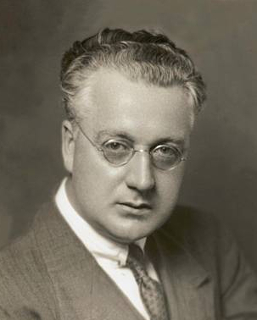
Birth of Sir Arnold Bax, Composer, Poet & Author

arnold-bax

Sir Arnold Edward Trevor Bax, English composer, poet, and author, is born to a prosperous family in the London suburb of Streatham on November 8, 1883. His prolific output includes songs, choral music, chamber pieces, and solo piano works, but he is best known for his orchestral music. In addition to a series of symphonic poems he writes seven symphonies and is for a time widely regarded as the leading British symphonist.

Bax is encouraged by his parents to pursue a career in music, and his private income enables him to follow his own path as a composer without regard for fashion or orthodoxy. Consequently, he comes to be regarded in musical circles as an important but isolated figure.

After a preparatory school in Balham, Bax attends the Hampstead Conservatoire during the 1890s. In 1900 he moves on to the Royal Academy of Music, where he remains until 1905, studying composition with Frederick Corder and piano with Tobias Matthay.

While still a student at the Royal Academy of Music, Bax becomes fascinated with Ireland and Celtic culture, which become a strong influence on his early development. In the years before World War I he lives in Ireland and becomes a member of Dublin literary circles, writing fiction and verse under the pseudonym Dermot O’Byrne. Later, he develops an affinity with Nordic culture, which for a time supersedes his Celtic influences in the years after World War I.

Between 1910 and 1920 Bax writes a large amount of music, including the symphonic poem Tintagel, his best-known work. During this period he forms a lifelong association with the pianist Harriet Cohen – at first an affair, then a friendship, and always a close professional relationship. In the 1920s he begins the series of seven symphonies which form the heart of his orchestral output.

In 1942 Bax is appointed Master of the King’s Music, but composes little in that capacity. In his last years he maintains a contented retirement for much of the time but finds his music regarded as old-fashioned, and after his death it is generally neglected.

Celebrations are planned by the Hallé Orchestra and others to celebrate Bax’s seventieth birthday in November 1953. However, the celebrations become memorials as while visiting Cork in October 1953 he dies suddenly of heart failure. He is interred in St. Finbarr’s Cemetery, Cork.

From the 1960s onwards, mainly through a growing number of commercial recordings, his music is gradually rediscovered, although little of it is heard with any frequency in the concert hall. In more recent years, his music has been rediscovered enthusiastically by a new generation via online distribution services such as YouTube.

(Picture credit to Alan Patient of http://www.plaquesoflondon.co.uk)


Leave a comment

Birth of Siobhán McCarthy, Television & Stage Actress

siobhan-mccarthy

Siobhán Mary Ann McCarthy, television and stage actress, is born in Dublin on November 6, 1957. She is perhaps best known for her role as Roisin Connor in ITV1‘s prison drama Bad Girls. Her television credits include Lovejoy, The Big Battalions and Holby City.

McCarthy originates the roles of the Mistress in Evita in 1978 in London‘s West End, before later returning to the show to play the title role. In between, she joins the vocal harmony group Wall Street Crash (1980 – 1983) where she performs several times at London’s Talk of the Town, at the Casino in Monte Carlo, and in two episodes of Royal Variety Performance (1980 and 1982). She is also the first to play Donna Sheridan in Mamma Mia! in 1999, for which she is nominated for a Laurence Olivier Award for Best Actress in a Musical.

McCarthy’s other roles include leads as Mrs. Johnstone in Blood Brothers, Svetlana in the original London production of Chess, Fantine in Les Misérables, Mary Magdalene in Jesus Christ Superstar and Deborah Warner’s Medea.

More recently McCarthy plays the roles of Velma von Tussle in the London production of Hairspray (February 2010 – March 2010) and Joanne in the Southwark Playhouse revival of Stephen Sondheim‘s Company.

McCarthy is married to theatrical sound designer Andrew Bruce and resides in London with her husband and two children, Kieran and Juliet.