seamus dubhghaill

Promoting Irish Culture and History from Little Rock, Arkansas, USA


Leave a comment

Birth of Mick Moloney, Irish American Musician & Scholar

Michael “Mick” Moloney, Irish-born American musician and scholar, is born in Limerick, County Limerick, on November 15, 1944. He is the artistic director of several major arts tours and co-founds Green Fields of America.

Moloney is the son of Michael Moloney, the head air traffic control officer of Shannon Airport, and his wife, Maura, who works as the principal of a Limerick primary school. He first plays tenor banjo during his teenage years. He studies at University College Dublin (UCD), graduating with a bachelor’s degree in economics. He then relocates to London to be a social worker assisting immigrant communities, before joining The Johnstons. After playing with the group for five years, he immigrates to the United States in 1973. He initially settles in Philadelphia, Pennsylvania, and eventually becomes an American citizen.

Three years after moving to the United States, Moloney co-founds Green Fields of America, an ensemble of Irish musicians, singers, and dancers which tour across the country on several occasions. He also serves as the artistic director for several major arts tours. One of these is the 1985 festival in Manhattan titled “Cherish the Ladies” to highlight female musicians in the area of Irish traditional music, which had been dominated by men until that decade. He produces an album for the female group by the same name titled Irish Women Musicians in America. The group’s leader, Joanie Madden, is one of several future fellows of the National Endowment for the Arts (NEA) to be mentored by Moloney. He produces and performs on over 70 albums and serves as advisor for numerous festivals and concerts across America, with ethnomusicologist and musician Daniel T. Neely putting the figure as high as 125 albums.

Moloney undertakes postgraduate studies at the University of Pennsylvania, obtaining a master’s degree before being awarded a Doctor of Philosophy in folklore and folk life in 1992. He goes on to teach ethnomusicology, folklore, and Irish studies at Penn, Georgetown University, and Villanova University. He is also global distinguished professor of music and Irish studies at New York University (NYU) until his death. In recognition of his work in public folklore, he receives a 1999 National Heritage Fellowship from the NEA.

In addition to music performance, Moloney writes Far from the Shamrock Shore: The Story of Irish American History Through Song, which is published by Crown Publications in February 2002 with a supplementary CD on Shanachie Records. He hosts three nationally syndicated series covering folk music on American Public Television (APT). He works as a consultant, performer, and interviewee on the RTÉ special Bringing It All Back Home, and is also a participant, consultant, and music arranger for Out of Ireland, a documentary film by PBS. He performs on the PBS special The Irish in America: Long Journey Home.

Moloney is married three times over the course of his life. His first marriage is to Miriam Murphy. His second marriage is to Philomena Murray. Together, they have one child but eventually divorce. His third marriage to Judy Sherman also ends in divorce. He is in a domestic partnership with Sangjan Chailungka at the time of his death. During his later years, he divides his time between Bangkok, where he resides with Chailungka, and his apartment in Greenwich Village. In Bangkok, he volunteers as a music therapist and teacher for abandoned children with HIV at the Mercy Center in the Khlong Toei district, which is founded by the Redemptorist priest Joseph H. Maier.

Moloney dies at the age of 77 on July 27, 2022, at his home in Manhattan, having played at the Maine Celtic Festival less than a week before. The cause of death is not announced.


Leave a comment

Birth of Judith Cochrane, Alliance Party Politician

Judith Cochrane, Alliance Party of Northern Ireland politician, is born in Bloomfield, Belfast, Northern Ireland, on October 31, 1975. She serves as a member of Northern Ireland Assembly for the Belfast East constituency from 2011 to 2016.

Cochrane is a lifelong resident of East Belfast. She is educated at Strandtown Primary School and Methodist College Belfast. After earning her bachelor’s degree in nutrition at Robert Gordon University in Aberdeen, Scotland, she returns to Belfast to complete her master’s degree in business administration at Queen’s University Belfast (QUB).

Prior to her election as Member of the Legislative Assembly (MLA), Cochrane serves as a Councillor on Castlereagh Borough Council between 2005 and 2011 and works in the Department for Social Development and as a Management Consultant for SMEs in Northern Ireland.

During her term at Stormont, Cochrane sits on the Finance and Personnel Committee and is a member of the Assembly Commission. She founds the All Party Group on Small and Medium Sized Enterprises (SMEs) and is a member of the All Party Group on Cancer, the All Party Group on Tourism, and the All Party Group on Rugby, which she co-founds and serves as vice chair.

Cochrane is also the present Chairperson of the Northern Ireland Assembly and Business Trust (NIABT).

In addition to her duties at Stormont, Cochrane runs her own constituency office on the Upper Newtownards Road in Ballyhackamore.

Cochrane chooses not to seek reelection and stands down ahead of the 2016 Northern Ireland Assembly election. Former MLA and MP for Belfast East Naomi Long replaces her on the ballot.

Cochrane is married to Jonny Cochrane with whom she has two children. The family resides in East Belfast and actively attends Bloomfield Presbyterian Church.

(Pictured: Judith Cochrane, MLA for Belfast East, speaking in the Assembly on December 2, 2014, Northern Ireland Assembly, https://www.youtube.com/watch?v=sKY0y0_uBUQ)


Leave a comment

Birth of Irish Novelist Cecelia Ahern

Cecelia Ahern, Irish novelist known for her works like PS, I Love You (2004), Where Rainbows End (2004) and If You Could See Me Now (2005), is born in Dublin on September 30, 1981. She is now published in nearly fifty countries and has sold over 25 million copies of her novels worldwide. Two of her books have been adapted as major motion pictures. The short story collection Roar (2018) has been adapted as a series for Apple TV+.

Ahern and her books have won numerous awards, including the Irish Book Award for Popular Fiction for The Year I Met You (2014). She publishes several novels and contributes a number of short stories to various anthologies.

Ahern is the daughter of Bertie Ahern, former Taoiseach of Ireland, and Miriam Ahern. Her older sister, Georgina Ahern, is married to Nicky Byrne of Irish pop group Westlife. In 2000, she is part of the Irish pop group Shimma, who finishes third in the Irish national final for the Eurovision Song Contest.

Before starting her writing and producing career, Ahern obtains a degree in journalism and media communications from Griffith College Dublin, but withdraws from a master’s degree course to pursue her writing career.

In 2002, when Ahern is twenty-one, she writes her first novel, PS, I Love You. Published in 2004, it is the number 1 bestseller in Ireland (for 19 weeks), the United Kingdom, United States, Germany and the Netherlands. It is sold in over forty countries. The book is adapted as a motion picture directed by Richard LaGravenese and starring Hilary Swank and Gerard Butler. It is released in the United States on December 21, 2007.

Ahern’s second book, Where Rainbows End (known as Love, Rosie in the United States), also reaches number 1 in Ireland and the United Kingdom and wins the German Corine Literature Prize in 2005. It is adapted as a motion picture titled Love, Rosie which is released in 2014, directed by Christian Ditter and starring Lily Collins and Sam Claflin.

Ahern has contributed to charity books with the royalties from short stories such as Irish Girls are Back in Town and Ladies’ Night.

Ahern is the co-creator and producer of the ABC comedy Samantha Who? starring Christina Applegate, Jean Smart, Jennifer Esposito, Barry Watson, Kevin Dunn, Melissa McCarthy and Tim Russ.

Ahern’s book The Gift is published just before Christmas 2008 in the United Kingdom. Her following book, The Book of Tomorrow, is published on October 1, 2009. In 2016, she releases Flawed, her first book for young adults, and Lyrebird.

Ahern is nominated for Best Newcomer 2004/5 at the British Book Awards for her debut novel PS, I Love You. She wins the 2005 Irish Post Award for Literature and a 2005 Corine Literature Prize for her second book Where Rainbows End, which is voted for by German readers. In 2006, she is long listed for the International IMPAC Dublin Literary Award for PS, I Love You. Cosmopolitan US honours her with a Fun Fearless Fiction Award 2007 for If You Could See Me Now. Irish Tatler awards her Writer of the Year at the Woman of the Year awards in 2009. Her fifth novel, Thanks for the Memories, is nominated for Most Popular Book in the British Book Awards 2008. She is voted Author of Year in the UK Glamour Awards in 2008.

Ahern marries David Keoghan in 2010. They have three children, two daughters and a son. As of 2015, they reside in Malahide in County Dublin. She had COVID-19 in early 2022, describing it as “kind of mild. I was lucky.”


Leave a comment

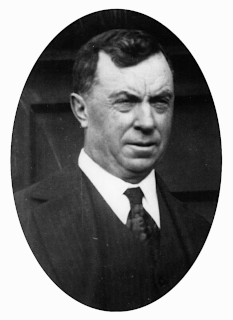
Birth of Daniel F. Cohalan, Irish American Lawyer & Politician

Daniel Florence Cohalan, American lawyer and politician of Irish descent, is born December 21, 1867, in Middletown, Orange County, New York, the eldest of five sons of Timothy E. Cohalan and Ellen Cohalan (née O’Leary), both Irish immigrants.

Cohalan graduates from Manhattan College in 1885, takes a master’s degree in 1894, and is given an honorary LL.D. in 1911. He is admitted to the bar in 1888, and practices law in New York City. In September 1889, he removes to the Bronx, practices law there, and enters politics, joining Tammany Hall, becoming an adviser to party boss Charles F. Murphy and later to John F. Curry. He is Grand Sachem of the Tammany Society from 1908 to 1911.

Cohalan is active in Democratic Party politics by 1900, drafting state party platforms and serving as a delegate to the national conventions in 1904 and 1908.

On May 18, 1911, Cohalan is appointed by Gov. John Alden Dix to the New York Supreme Court, to fill the vacancy caused by the election of James Aloysius O’Gorman as U.S. Senator from New York. In November 1911, he is elected to succeed himself. On December 28, 1923, he tenders his resignation, to become effective on January 12, 1924, claiming that the annual salary of $17,500 is not enough to provide for his large family.

Cohalan is a close associate of Irish revolutionary leader John Devoy and is influential in many Irish American societies including Clan na Gael. He helps to form the Sinn Féin League in 1907 and is a key organiser of the Irish Race Convention and the Friends of Irish Freedom (FOIF) on March 4-5, 1916. He is involved with the financing and planning of the Easter Rising in Dublin and is instrumental in sending Roger Casement to Germany in 1914. He is Chairman of the Irish Race Convention held in Philadelphia on February 22-23, 1919, and active in the Friends of Irish Freedom (1916–34).

When the United States enters World War I, Cohalan’s earlier work to obtain German assistance for Ireland becomes a liability, but he urges Irish Americans to support the war effort and to insist that self-determination for Ireland be included among the war aims. He opposes the peace treaty and the League of Nations and leads an Irish American delegation to the United States Senate Committee on Foreign Relations hearings, contributing to the defeat of the treaty in the Senate.

Cohalan strongly opposes President Woodrow Wilson‘s proposals for the League of Nations, on the basis that the Irish Republic had been denied a policy of self-determination at the Paris Peace Conference in 1919. In 1920, he works for the nomination of Hiram W. Johnson as the Republican Party candidate for president. His quarrels with Franklin D. Roosevelt begin in 1910, and he fights Roosevelt’s nomination for president in 1932 and 1936. He breaks with both Éamon de Valera and Irish American leader Joseph McGarrity in late 1919 on Irish American political direction.

In the aftermath of the Anglo–Irish Treaty, Cohalan and the FOIF back Arthur Griffith, Michael Collins and the Irish Free State. He visits Ireland in 1923 and supports William T. Cosgrave in the election of that year.

Cohalan dies at his home in Manhattan, New York, on November 12, 1946, and is buried on November 15 at the Calvary Cemetery in Woodside, Queens, New York. The Daniel F. Cohalan papers are in the possession of the American Irish Historical Society, New York.

State Senator John P. Cohalan (1873–1950) is one of Cohalan’s eleven siblings, and church historian Monsignor Florence Daniel Cohalan (1908–2001) is one of his nine children.


Leave a comment

Birth of Máire MacSwiney Brugha, Activist & Author

Máire MacSwiney Brugha, Irish activist who is the daughter of Terence MacSwiney and niece of Mary MacSwiney, is born in Cork, County Cork, on June 23, 1918. In addition to being an activist she is also an author and is now regarded as a person of historical importance.

MacSwiney Brugha is the daughter of the former Lord Mayor of Cork Terence MacSwiney and his wife Muriel Frances Murphy. Her father dies on hunger strike when she is two years old. Her father is in jail when she is born and does not see her until she is brought to see him when she is three months old. Her family’s republican and political activities leave a strong mark on her life.

Following the death of her father, her mother moves to Dublin. MacSwiney Brugha goes to live with Madame O’Rahilly, widow of The O’Rahilly, and sees her mother intermittently. Although as a child her parents decide she would speak the Irish language, her father’s death and her mother’s health results in her move to Germany in 1923 and there she is moved around a lot. She learns German and speaks no English and little or no Irish. In 1930 she is moved to Grainau in Bavaria, where she attends school. Her aunt, Mary MacSwiney, a legal guardian of hers, eventually comes to collect her and takes her back to Ireland. This causes a court case when it is claimed her aunt had kidnapped her. As a result of the court case her aunt is given custody, and she and her mother became estranged.

MacSwiney Brugha attends Scoil Íte and then St. Louis Secondary School in Monaghan where, in 1936, she completes her Leaving Certificate and gets a scholarship to University College Cork to study arts. In 1937 she plays the lead role in a play, The Revolutionist, published in 1914 and written by her father and produced by her aunt. She returns to Germany in 1938 to keep up her German and graduates with a first-class honours degree. She goes on to get her higher diploma and becomes a teacher. She spends some time teaching in Scoil Íte and then goes to Dublin in 1942 to get a master’s degree. She meets Ruairí Brugha while in Dublin. His father, Cathal Brugha, was killed in the Irish Civil War in 1922. They marry on July 10, 1945. The marriage produces four children: Deirdre, Cathal, Traolach and Ruairí.

MacSwiney Brugha’s husband has a strong political career with her support. He is a senator, a TD, and a member of the European Parliament. She leads her Fianna Fáil cumann and volunteers with the aid agency Gorta. With her husband as Official Opposition Spokesman on Northern Ireland from 1975 to 1977, the couple are very much involved in creating the policy of developing conciliation rather than aimed more at ending partition which they previously have been focused on.

At the age of 85 and after her sight has failed MacSwiney Brugha dictates her story to her daughter-in-law, Catherine Brugha. History’s Daughter: A Memoir from the Only Child of Terence MacSwiney is launched in 2005. Her own story is recorded in Irish Life and Lore. Her story is also the subject of a radio production. She dies unexpectedly at her home in Clonskeagh, County Dublin, at the age of 93 on May 20, 2012. She is buried in Glasnevin Cemetery.

Fianna Fáil leader Micheál Martin describes her as having made a “strong and valued” contribution to the development of Fianna Fáil while Gerry Adams says she “made her mark” on Irish history.

(Pictured: Máire MacSwiney Brugha on her wedding day, July 10, 1945)


Leave a comment

Birth of Eoghan Ó Tuairisc, Poet & Writer

Eoghan Ó Tuairisc (Eugene Rutherford Watters), Irish poet and writer, is born at Dunlo Hill, Ballinasloe, County Galway, on April 3, 1919.

Eugene Rutherford Watters is the eldest of two sons and two daughters born to Thomas Watters, a soldier, and his wife, Maud Sproule. His second name comes from his grandfather, Rutherford Sproule. He is educated at Garbally College. He enters St. Patrick’s Teacher Training College, Drumcondra, Dublin, in 1939, graduating with a Diploma in Education in 1945. He is awarded an MA, by University College Dublin in 1947.

Ó Tuairisc holds a commission in the Irish Army during the Emergency from 1939 to 1945. He is a teacher in Finglas, County Dublin from 1940 to 1969. From 1962 to 1965, he is editor of Feasta, the journal of Conradh na Gaeilge.

Ó Tuairisc writes novels, verse, drama and criticism in both Irish and English. His first major publication is his controversial novel Murder in Three Moves (1960), followed by the Irish-language prose epic L’Attaque (1962), which wins an Irish Book Club award. Both works have a strong poetic flavour. His next book is a volume of verse entitled Week-End. His narrative poem The Weekend of Dermot and Grace (1964), an Irish version of Venus and Adonis, is considered his finest work.

Ó Tuairisc’s first wife, the Irish artist Una McDonnell, dies in 1965. He produces little during the five years following McDonnell’s death, which is an unsettled period of limited productivity, changing residence and jobs, and, ultimately, serious depression. In 1972 he marries the writer Rita Kelly, also of Ballinasloe. They live in the lock house at the Maganey Lock on the River Barrow that he had bought near Carlow, County Carlow.

In 1981 Ó Tuairisc publishes The Road to Brightcity: and other stories (Swords: Poolbeg Press, 1981), a translation of nine of the best short stories written originally in Irish by Máirtín Ó Cadhain. Also in 1981, he and Rita Kelly publish a joint collection of their poems, Dialann sa Díseart.

Like Diarmaid Ó Súilleabháin, Ó Tuairisc “challenged the critical orthodoxy by openly proclaiming that their standards could not be those of the Gaeltacht and by demanding a creative freedom that would acknowledge hybridity and reject the strictures of the linguistic purists.”

Ó Tuairisc is an inaugural member of Aosdána, when it is founded in 1981, and the first of its members to die. He is a recipient of an Arts Council of Ireland prize, as well as an Abbey Theatre prize for a Christmas pantomime in Irish.

Ó Tuairisc dies on August 24, 1982. He is survived by his second wife, Rita. A bibliography of his work, together with biographical information, is published in Irish in 1988.


Leave a comment

Death of Moss Keane, Gaelic & Rugby Union Footballer

Maurice Ignatius “Moss” Keane, Gaelic footballer and a rugby union footballer who plays for Ireland and the British & Irish Lions, dies in Portarlington, County Laois, on October 5, 2010. The great Scottish rugby commentator Bill McClaren refers to Keane in his prime, “Maurice Ignatius Keane. Eighteen and a half stone of prime Irish beef on the hoof, I don’t know about the opposition but he frightens the living daylights out of me.”

Born at Currow, County Kerry on July 27, 1948, Keane starts out as a Gaelic footballer, playing at college level for University College Cork and in the process winning a number of medals including three Sigerson Cups, one Cork County Championship and a Munster Club Championship. He also plays in an All-Ireland Club Final. He represents Kerry Gaelic footballer’s at U-21 and Junior level as a full back, winning Munster Championships at both levels, playing in an All -Ireland at Junior level. In 2011 the Kerry County Board names the cup for the winners of the Intermediate Shield after him.

Keane then discovers rugby through a friend in college, playing for the UCC junior rugby team as ‘Moss Fenton,’ during the Gaelic Athletic Association‘s (GAA) ban on foreign games. When asked his first thoughts about rugby he answers, “It was like watching a pornographic movie – very frustrating for those watching and only enjoyable for those participating.” He makes his international debut for Ireland on January 19, 1974 against France in Paris, a game Ireland loses 9–6 in the 1974 Five Nations Championship.

Keane becomes the third Irish forward after Willie John McBride and Fergus Slattery to reach 50 international appearances. He scores his one and only test try in a 22–15 victory over Scotland in February 1980. He plays his 51st and final international against Scotland on March 3, 1984 in Dublin. Ireland loses the match 32–9. He is also a part of the famous Munster side that defeats the All Blacks in Thomond Park in 1978.

Keane tours New Zealand with Phil Bennett‘s British & Irish Lions in 1977, making one Test appearance, and is also a key man in Ireland’s 1982 Five Nations Championship win and their historic Triple Crown victory in 1982.

In 2005 Keane writes, with Billy Keane (no kin), his autobiography, called Rucks, Mauls and Gaelic Football.

Having gained a master’s degree in dairy science, Keane works for the Department of Agriculture during his rugby playing career and retires in July 2010. He keeps active playing golf on a weekly basis. In 1993 he is the victim of a vicious mugging.

In 2009 it is reported that Keane is being treated for colorectal cancer. He dies at the age of 62 on October 5, 2010. His funeral takes place on October 7 in St. Michael’s Church in Portarlington. Former Ireland international players, including Willie John McBride, Ollie Campbell, Tony Ward, Mick Galwey, Dick Spring, Donal Lenihan, Donal Spring and Ciaran Fitzgerald are in attendance. His coffin is adorned with the jerseys of Ireland, Munster, UCC, Kerry and Currow.

Many tributes are made including Taoiseach Brian Cowen saying, “one of the great gentleman of Irish sport would be sadly missed by his many fans and admirers worldwide. Moss Keane was one of the finest rugby players Ireland has ever produced. He was among rugby’s best known characters and a legend of the game at home and abroad.” Describing him as one of Irish rugby’s “most genuine characters and legends of the game,” the Irish Rugby Football Union (IRFU) pays tribute to Keane, “Moss had ability on the field that no one could doubt from his record at club, provincial and international level.” IRFU President Caleb Powell says, “UCC, Lansdowne, Munster, Ireland and the British & Irish Lions all benefited from his presence and ensured that his reputation will live long in the memories of not only Irish rugby, but world rugby.”

Keane is survived by his wife Anne and his two daughters Sarah and Anne Marie.


Leave a comment

Birth of Máire de Paor, Historian & Archaeologist

maire-de-paor

Máire de Paor, Irish historian and archaeologist who also works as a researcher and presenter for national broadcaster RTÉ, is born on May 6, 1925, in Buncrana, County Donegal.

De Paor is born Máire MacDermott to Eamonn MacDermott and Delia MacVeigh. She is educated in the Convent of Mercy in Buncrana before going to University College Dublin, where she completes a master’s degree and a doctorate on early Christian archaeology and metalwork.

De Paor works in the Department of Archeology at UCD from 1946 to 1958. She marries Liam de Paor in 1946, and they have a daughter and four boys. They collaborate on a number of publications. She publishes her papers in the Proceedings of the Royal Irish Academy, Archaeologia, Seanchas Armagh and Comhar. Her husband also works at the university and, as a result of policies about married women, she is forced to leave. Initially she lectures in the United States, Canada, Scandinavia, France and the United Kingdom. She works as lecturer in archaeology at Trinity College, Dublin. The de Paors spend a year in Nepal on a UNESCO project in 1963.

De Paor works as a freelance researcher for Raidió Teilifís Éireann until she is given a full-time position in the 1970s.

De Paor is elected a member of the Royal Irish Academy in 1960 and is a member of the Arts Council from 1973. She becomes a member of Conradh na Gaeilge from 1962. From 1968 she is working with Cumann Merriman, the Irish cultural organisation named after Brian Merriman, working with the group as a director of the schools and spends four years as chairperson. In 1992 she is appointed to the board of Amharclann de hÍde.

Máire de Paor dies on December 6, 1994, at the age of 69.

University College Dublin has created the Dr. Máire de Paor Award for best PhD thesis. Her biographer identifies her as a committed republican, socialist and feminist.


Leave a comment

Birth of Denis Devlin, Poet & Diplomat

denis-devlin

Denis Devlin, poet, translator, and career diplomat, is born in Greenock, Scotland of Irish parents on April 15, 1908. Along with Samuel Beckett and Brian Coffey, he is one of the generation of Irish modernist poets to emerge at the end of the 1920s.

Devlin and his family return to live in Dublin in 1918. He studies at Belvedere College and, from 1926, as a seminarian for the Roman Catholic priesthood at Clonliffe College. As part of his studies he attends a degree course in modern languages at University College Dublin (UCD), where he meets and befriends Brian Coffey. Together they publish a joint collection, Poems, in 1930.

In 1927, Devlin abandons the priesthood and leaves Clonliffe. He graduates with his BA from UCD in 1930 and spends that summer on the Blasket Islands to improve his spoken Irish. Between 1930 and 1933, he studies literature at the University of Munich and the Sorbonne in Paris, meeting, amongst others, Beckett and Thomas MacGreevy. He then returns to UCD to complete his MA thesis on Michel de Montaigne.

Devlin joins the Irish Diplomatic Service in 1935 and spends a number of years in Rome, New York and Washington, D.C.. During this time he meets the French poet Saint-John Perse, and the Americans Allen Tate and Robert Penn Warren. He goes on to publish a translation of Exile and Other Poems by Saint-John Perse, and Tate and Warren edit his posthumous Selected Poems.

Since his death on August 21, 1959, there have been two Collected Poems published; the first in 1964 is edited by Coffey and the second in 1989 by J.C.C. Mays.

Devlin’s personal papers are held in University College Dublin Archives. His niece goes on to become writer Denyse Woods.


Leave a comment

Inaugural Meeting of the Irish Management Institute

irish-management-institute-logo

The Irish Management Institute, an educational institute in Dublin that offers Postgraduate Diplomas, Master’s Degrees, executive education programs and short courses in Business and Management, holds its inaugural meeting on December 9, 1952. In its role as a membership organisation it connects businesses around its mission of improving the practice of management in Ireland.

The idea for the institute originates from a committee set up by Michael Dargan, T.P. Hogan and other businessmen. The motivation is to establish an organisation that will further the science and practice of business management in Ireland. Those involved are inspired primarily by the American Management Association and The Conference Board. At the same time the then Minister for Industry and Commerce, Seán Lemass, has prompted a separate group of leading semi-state and private bosses into investigating a similar idea. Both groups merge and the inaugural meeting of the Irish Management Institute is held on December 9, 1952, in the Gresham Hotel. The founding chairman is Sir Charles Harvey.

The objective of the institute is to raise the standard of management in Ireland. Originally it does this through corporate and personal memberships, regular lectures and conferences, a journal called Irish Management, research and the establishment of a member’s library. After its first decade the institute becomes involved in management training courses.

Part of IMI’s original brief has been to encourage the universities to develop management education. In the early 1960s both University College Dublin (UCD) and Trinity College Dublin introduce master’s degrees in management. This is an indication of management’s growing stature as an academic discipline. In turn IMI creates the Sir Charles Harvey Award for exceptional graduates of these courses. The first recipient is Patrick J. Murphy.

IMI later goes on to become a provider of education. Its popular Certificate in Supervisory Management (CISM) is the first academic course run by IMI and is the institute’s first progression into all-island distance learning. In 1973 IMI partners with Trinity for the Master of Science in Management (MSc). The MSc epitomises IMI’s teaching philosophy and is notable for being the first management degree in the world to be based on action learning. Related courses follow over the next three decades. Other affiliations with Irish universities include a master’s in information technology development with NUI Galway and a research alliance with the University of Limerick. In 2003 IMI launches their support and delivery of the Flexible Executive Henley MBA programme.

An alliance between University College Cork and the Irish Management Institute is announced in June 2011 by Taoiseach Enda Kenny. The IMI and UCC had been collaborating since 2009. As of 2014, the majority of the degrees offered by the IMI are accredited by UCC. UCC controversially purchases the IMI and it is merged into UCC.