seamus dubhghaill

Promoting Irish Culture and History from Little Rock, Arkansas, USA


Leave a comment

Death of Maolra Seoighe, Wrongly Convicted & Hanged

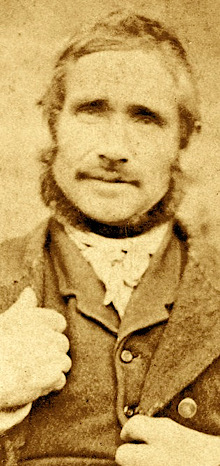
Maolra Seoighe (English: Myles Joyce), is an Irish man who is wrongfully convicted and hanged on December 15, 1882. He is found guilty of the Maumtrasna Murders and is sentenced to death. Though he can only speak Irish, the case is heard in English without any translation service. He is posthumously pardoned in 2018.

Seoighe is the most prominent figure in a controversial trial in 1882 that takes place while Ireland is part of the United Kingdom. Three Irish language speakers are condemned to death for the murder of a local family (John Joyce, his wife Brighid, his mother Mairéad, his daughter Peigí and son Mícheál) in Maumtrasna, on the border between County Mayo and County Galway. It is presumed by the authorities to be a local feud connected to sheep rustling and the Land War. Eight men are convicted on what turns out to be perjured evidence and three of them condemned to death: Maolra Seoighe (a father of five children), Pat Casey and Pat Joyce.

Covering the incident, The Spectator writes the following:

“The Tragedy at Maumtrasna, investigated this week in Dublin, almost unique as it is in the annals of the United Kingdom, brings out in strong relief two facts which Englishmen are too apt to forget. One is the existence in particular districts of Ireland of a class of peasants who are scarcely civilised beings, and approach far nearer to savages than any other white men; and the other is their extraordinary and exceptional gloominess of temper. In remote places of Ireland, especially in Connaught, on a few of the islands, and in one or two mountain districts, dwell cultivators who are in knowledge, in habits, and in the discipline of life no higher than Maories or other Polynesians.”

The court proceedings are carried out in a language the accused do not understand (English), with a solicitor from Trinity College Dublin (TCD), who does not speak Irish. The three are executed in Galway by William Marwood for the crime in 1882. The role of John Spencer, 5th Earl Spencer, who is then Lord Lieutenant of Ireland, is the most controversial aspect of the trial, leading most modern scholars to characterise it as a miscarriage of justice. Research carried out in The National Archives by Seán Ó Cuirreáin, has found that Spencer “compensated” three alleged eyewitnesses to the sum of £1,250, equivalent to €157,000 (by 2016 rates).

As of 2016, nobody has issued an apology or pardon for the executions, though the case has been periodically taken up by various political figures. The then MP for WestmeathTimothy Harrington, takes up the case, claiming that the Crown Prosecutor for the case George Bolton, had deliberately withheld evidence from the trial. In 2011, two sitting members of the House of Lords, the Liberal Democrat life peers David Alton and Eric Lubbock, request a review of the case. Crispin Blunt, Tory Parliamentary Under-Secretary of State for Prisons and Youth Justice, states that Seoighe was “probably an innocent man,” but he does not seek an official pardon.

Seoighe’s final words are: “Feicfidh mé Iosa Críost ar ball beag – crochadh eisean san éagóir chomh maith. … Ara, tá mé ag imeacht … Go bhfóire Dia ar mo bhean agus a cúigear dílleachtaí.” (I will be seeing Jesus Christ soon – he too was also unjustly hanged … I am leaving … the blessings of God on my wife and her five orphans.)

On April 4, 2018, Michael D. Higgins, the President of Ireland, issues a pardon on the advice of the government of Ireland saying “Maolra Seoighe was wrongly convicted of murder and was hanged for a crime that he did not commit”. It is the first presidential pardon relating to an event predating the foundation of the state in 1922 and the second time a pardon has been issued after an execution. Seoighe’s case is not an isolated one, and there are strong similarities with the case of Patrick Walsh who was hanged in the Galway jail on September 22, 1882, just three months before Seoighe for the murders of Martin and John Lydon. The same key players and political factors are active in both cases and his conviction is just as questionable as that of Seoighe.

In September 2009, the story is featured on RTÉ‘s CSI programme under an episode entitled CSI Maamtrasna Massacre. A dramatised Irish language film regarding the affair, entitled Murdair Mhám Trasna, produced by Ciarán Ó Cofaigh is released in 2017.


Leave a comment

Birth of Kevin Izod O’Doherty, Politician & Young Irelander

Kevin Izod O’Doherty, an Irish Australian politician who, as a Young Irelander, is transported to Tasmania in 1849, is born in Dublin on September 7, 1823, although other sources including the Dictionary of Australasian Biography indicate he is born in June 1824. He is first elected to the Legislative Assembly of Queensland in 1867. In 1885, he returns to Europe briefly serving as an Irish Home Rule MP at Westminster before returning in 1886 as a private citizen to Brisbane.

O’Doherty receives a good education and studies medicine, but before he is qualified, joins the Young Ireland party and in June 1848, together with Thomas Antisell and Richard D’Alton Williams, establish The Irish Tribune. Only five editions are issued, the first being on June 10, 1848. On July 10, 1848, when the fifth edition is issued, O’Doherty is arrested and charged with treason felony. At the first and second trials the juries disagree, but at the third trial, he is found guilty and sentenced to transportation for ten years.

O’Doherty arrives in Tasmania in November 1849, is at once released on parole to reside at Oatlands, and his professional services are utilised at St. Mary’s Hospital, Hobart. The other Irish prisoners nickname him “St. Kevin.”  In 1854 he receives a pardon with the condition that he must not reside in Great Britain or Ireland. He goes to Paris and carries on his medical studies, making one secret visit to Ireland to marry Mary Eva Kelly, to whom he is affianced before leaving Ireland. He receives an unconditional pardon in 1856, and completes his studies in Dublin, graduating FRCS in 1857. He practises in Dublin successfully, and in 1862 goes to Brisbane, Australia, and becomes well known as one of its leading physicians.

O’Doherty is elected a member of the Legislative Assembly of Queensland in 1867, in 1872 is responsible for a health act being passed, and is also one of the early opponents of the trafficking of Kanakas. In 1885, he resigns as he intends to settle in Europe.

In Ireland, O’Doherty is cordially welcomed, and is returned unopposed as Irish Parliamentary Party (IPP) MP for North Meath to the House of Commons of the United Kingdom in the November 1885 United Kingdom general election. However, finding the climate does not suit him, he does not seek re-election in 1886 and returns to Brisbane in that year. He attempts to take up his medical practice again but is not successful. He dies in poor circumstances in Brisbane on July 15, 1905.

O’Doherty’s wife and a daughter survive him. A fund is raised by public subscription to provide for his widow, a poet, who in her early days is well known as the author of Irish patriotic verse in The Nation under the soubriqet “Eva.” In Australia, she occasionally contributes to Queensland journals, and one of her poems is included in A Book of Queensland Verse. She dies at Brisbane on May 21, 1910.


Leave a comment

Death of Piers Butler, 8th Earl of Ormond

Piers Butler, 8th Earl of Ormond, 1st Earl of Ossory, also known as Red Piers, dies on August 26, 1539. He is from the Polestown branch of the Butler family of Ireland. In the succession crisis at the death of Thomas Butler, 7th Earl of Ormond, he succeeds to the earldom as heir male, but loses the title in 1528 to Thomas Boleyn. He regains it after Boleyn’s death in 1538.

Butler is born c. 1467, the third son of James Butler and Sabh Kavanagh. His father is Lord Deputy of Ireland, Lord of the Manor of Advowson of Callan (1438–87). His father’s family is the Polestown cadet branch of the Butler dynasty that started with Sir Richard Butler of Polestown, second son of James Butler, 3rd Earl of Ormond. His mother, whose first name is variously given as Sabh, Sadhbh, Saiv, or Sabina, is a princess of Leinster, eldest daughter of Donal Reagh Kavanagh, MacMurrough (1396–1476), King of Leinster.

In 1485, Butler marries Lady Margaret FitzGerald, daughter of Gerald FitzGerald, 8th Earl of Kildare and Alison FitzEustace. The marriage is political, arranged with the purpose of healing the breach between the two families. In the early years of their marriage, Margaret and her husband are reduced to penury by James Dubh Butler, a nephew, heir to the earldom and agent of the absentee Thomas Butler, 7th Earl of Ormond, who resides in England. Butler retaliates by murdering James Dubh in an ambush in 1497. He is pardoned for his crime on February 22, 1498.

Butler and Margaret have three sons: James (1496–1546), also called “the Lame,” who succeeds him as the 9th Earl, Richard (1500–1571), who becomes the 1st Viscount Mountgarret, and Thomas, who is slain by Dermoid Mac Shane, MacGillaPatrick of Upper Ossory, and six daughters: Margaret, Catherine (1506–53), Joan (born 1528), married James Butler, 10th Baron Dunboyne, Ellice (1481–1530), Eleanor, married Thomas Butler, 1st Baron Cahir, and Helen, also called Ellen (1523–97), married Donough O’Brien, 2nd Earl of Thomond.

Butler also has an illegitimate son, Edmund Butler, who becomes Archbishop of Cashel and conforms to the established religion in 1539.

During the prolonged absence from Ireland of the earls, Butler’s father lays claim to the Ormond land and titles. This precipitates a crisis in the Ormond succession when the seventh earl later dies without a male heir. On March 20, 1489, King Henry VII appoints him High Sheriff of County Kilkenny. He is knighted before September 1497. The following year (1498) he seizes Kilkenny Castle and with his wife, the dynamic daughter of the Earl of Kildare, likely improve the living accommodations there. On February 28, 1498, he receives a pardon for crimes committed in Ireland, including the murder of James Ormonde, heir to the 7th Earl. He is also made Seneschal of the Liberty of Tipperary on June 21, 1505, succeeding his distant relation, James Butler, 9th Baron Dunboyne. 

Henry VII is succeeded by Henry VIII in 1509. On the death of Thomas Butler, 7th Earl of Ormonde on August 3, 1515, Butler becomes the 8th Earl of Ormond.

In March 1522, Henry VIII appoints him Chief Governor of Ireland as Lord Deputy. He holds this office until August 1524 when he is succeeded by Thomas FitzGerald, 10th Earl of Kildare. However, he holds on to the position of Lord Treasurer.

One of the heirs general to the Ormond inheritance is Thomas Boleyn, whose mother is Lady Margaret Butler, second daughter of the 7th Earl. Thomas Boleyn is the father of Anne, whose star is rising at the court of King Henry VIII. As the king wants the titles of Ormond and Wiltshire for Thomas Boleyn, he induces Butler and his coheirs to resign their claims on February 17, 1528. Aided by the king’s Chancellor, Cardinal Thomas Wolsey, Butler is created Earl of Ossory instead. On February 22, 1538, the earldom of Ormond is restored to him.

Butler dies on August 26, 1539, and is buried in St. Canice’s Cathedral, Kilkenny.


Leave a comment

Birth of Alan Shatter, Lawyer, Author & Fine Gael Politician

Alan Joseph Shatter, Irish lawyer, author and former Fine Gael politician who serves as Minister for Justice and Equality and Minister for Defence (2011-14), is born into a Jewish family in Dublin on February 14, 1951. He also serves as a Teachta Dála (TD) for the Dublin South constituency (1981-2002, 2007-16). He leaves Fine Gael in early 2018 and unsuccessfully contests the 2024 Irish general election as an independent candidate for Dublin Rathdown.

Shatter is the son of Reuben and Elaine Shatter, an English couple who meet by chance when they are both on holiday in Ireland in 1947. He is educated at The High School, Dublin, Trinity College Dublin (TCD) and the Europa Institute of the University of Amsterdam. In his late teens, he works for two months in Israel on a kibbutz. He is a partner in the Dublin law firm Gallagher Shatter (1977-2011). As a solicitor he acts as advocate in many seminal and leading cases determined both by the Irish High and Supreme Courts. He is the author of one the major academic works on Irish family law which advocates substantial constitutional and family law reform.

Shatter enters politics at the 1979 Irish local elections, winning a seat on Dublin County Council for the Rathfarnham local electoral area. He retains this seat until 1999, becoming a member of South Dublin County Council in 1994. He is first elected to Dáil Éireann in 1981 as a Fine Gael TD and is re-elected at each subsequent election until he loses his seat in the 2002 Irish general election. He is re-elected at the 2007 Irish general election.

Shatter is Fine Gael Front Bench spokesperson on Law Reform (1982, 1987–88), the Environment (1989–91), Labour (1991), Justice (1992–93), Equality and Law Reform (1993–94), Health and Children (1997–2000), Justice, Law Reform and Defence (2000–02), Children (2007–10) and Justice and Law Reform (2010–11).

On March 9, 2011, Shatter is appointed by Taoiseach Enda Kenny as both Minister for Justice and Equality and Minister for Defence.

Under Shatter’s steerage, a substantial reform agenda is implemented with nearly 30 separate pieces of legislation published, many of which are now enacted including the Personal Insolvency Act 2012, Criminal Justice Act 2011, DNA Database Act, and the Human Rights and Equality Commission Act.

Under Shatter’s guidance, major reforms are introduced in 2011 into Ireland’s citizenship laws and a new Citizenship Ceremony is created. He both devises and pilots Ireland’s first ever citizenship ceremony which takes place in June 2011 and a new inclusive citizenship oath which he includes in his reforming legislation. During his time as Minister, he clears an enormous backlog of citizenship applications, and 69,000 foreign nationals become Irish citizens. Some applications had lain dormant for 3 to 4 years. He introduces a general rule that save where there is some real complication, all properly made citizenship applications should be processed within a six-month period. He also takes steps to facilitate an increased number of political refugees being accepted into Ireland and creates a special scheme to facilitate relations of Syrian families already resident in Ireland who are either caught up in the Syrian civil war, or in refugee camps elsewhere as a result of the Syrian civil war, to join their families in Ireland.

Shatter enacts legislation before the end of July 2011 to facilitate access to financial documentation and records held by third parties in investigations into banking scandals and white-collar crime. The legislation is first used by the Gardaí in September 2011.

During Ireland’s Presidency of the Council of the European Union in 2013, Shatter chairs the Justice and Home Affairs Council (JHA) meetings and, in January 2013, in Dublin Castle, the meeting of EU Defence Ministers. Under his guidance, Ireland plays a more active role than in the past in EU defence matters and in deepening Ireland’s participation in NATO’s partnership for peace. During the Irish Presidency, substantial progress is made at the European Union level in the adoption and development of new legislation and measures across a broad range of Justice and Home Affairs issues.

Shatter implements substantial reform in the Department of Defence and restructures the Irish Defence Forces. He is a strong supporter of the Irish Defence Forces participation in international peacekeeping and humanitarian engagements and is an expert on the Middle East. As a member of the Irish Parliament and as Minister on many occasions, he visits Irish troops participating in United Nations (UN) missions in the Middle East. Under his watch contracts are signed for the acquisition of two new naval vessels with an option to purchase a third. All three naval vessels are now part of the Irish Naval Service and have been actively engaged in recent years in rescuing drowning refugees in the Mediterranean Sea attempting to enter Europe.

As Minister for Defence he enacts legislation to grant a pardon and an amnesty to members of the Irish Defence Forces who deserted during World War II to fight on the allied side against Nazi Germany and gives a state apology for their post-war treatment by the Irish State.

Shatter is the minister responsible for two amendments to the Constitution of Ireland which are passed in referendums: the Twenty-ninth Amendment in 2011 to allow for the reduction of judges’ pay, and the Thirty-third Amendment in 2013 to establish a Court of Appeal. Just prior to his resignation from government, the draft legislation to create the court is published and the court is established and sitting by October 2014.

The jurisdictions of the courts are extended for the first time in 20 years and the maximum civil damages payable for the emotional distress of bereaved relations following a negligent death is increased.

As a politician, Shatter plays a lead role in effecting much of the constitutional and legislative change he advocates. He is a former chairperson of FLAC (the Free Legal Advice Centres), a former chairperson of CARE, an organisation that campaigns for childcare and children’s legislation reform in the 1970s and a former President of the Irish Council Against Blood Sports.

Shatter is a founder member of the Irish Soviet Jewry Committee in 1970 and pioneers a successful all party Dáil motion on the plight of Soviet Jewry (1984) and visits various refuseniks in Moscow in 1985. He is a former chairperson of the Oireachtas Foreign Affairs Committee (1996-97) and initiates the creation of an Ireland/Israel Parliamentary Friendship group in 1997, leading a number of visits to Israel by members of the Dáil Éireann and Seanad Éireann.

Shatter is the author of the satirical book Family Planning Irish Style (1979), and the novel Laura (1989). In 2017 his biography, Life is a Funny Business, is published by Poolbeg Press and in 2019 Frenzy and Betrayal: The Anatomy of a Political Assassination is published by Merrion Press. In 2023, his book Cyril’s Lottery of Life, a comedic book with an English solicitor from a small town as its protagonist, is published.


Leave a comment

Execution of John Kehoe, the Last of the Molly Maguires

John “Black Jack” Kehoe, the last of the Molly Maguires, is hanged in Pottsville, Pennsylvania, on December 18, 1878.

The Molly Maguires is an Irish secret society that is allegedly responsible for some incidents of vigilante justice in the coalfields of eastern Pennsylvania. They defend their actions as attempts to protect exploited Irish American workers. They are, in fact, often regarded as one of the first organized labor groups.

In the first five years of the Great Famine in Ireland that begins in 1845, 500,000 immigrants come to the United States from Ireland — nearly half of all immigrants to the United States during these years. The tough economic circumstances facing the immigrants lead many Irish men to the anthracite fields in the mountains of eastern Pennsylvania. Miners work under dangerous conditions and are severely underpaid. Small towns owned by the mining companies further exploit workers by charging rent for company housing. In response to these abuses, secret societies like the Molly Maguires spring up, leading sporadic terrorist campaigns to settle worker/owner disputes.

Members of the Molly Maguires are accused of murder, arson, kidnapping, and other crimes. Industry owners become increasingly concerned about the threat posed by the Molly Maguires. Franklin B. Gowen, president of the Philadelphia and Reading Railroad, hires the Pinkerton Detective Agency to infiltrate the secret society and find evidence that can be used against them. James McParland, who later becomes the most celebrated private detective of the era, takes the high-risk assignment and goes undercover within the organization. For more than two years, he establishes his place in the Molly Maguires and builds trust among his fellow members.

Eventually, several Molly Maguires confess their roles in a murder to McParland. When he is finally pulled out of the society in February 1876, his information leads to the arrest and conviction of nineteen men.

In June 1877, ten Molly Maguires are hanged on a single day in what becomes known as “Pennsylvania’s Day of the Rope.” In December of the following year, Kehoe is arrested and hanged for the 1862 murder of Frank W. S. Langdon, a mine foreman, despite the fact that it is widely believed he is wrongly accused and not actually responsible for anyone’s death. Although the governor of Pennsylvania, John F. Hartranft, believes Kehoe’s innocence, he signs the death warrant anyway. Kehoe’s hanging at the gallows is officially hailed as “the Death of Molly-ism.”

Though the deaths of the vigilante Molly Maguires help quell the activity of the secret society, the increased assimilation of the Irish into mainstream society and their upward mobility out of the coal jobs is the real reason that protective secret societies like the Molly Maguires eventually fade into obscurity.

In 1979, Pennsylvania Governor Milton Shapp grants a posthumous pardon to Kehoe after an investigation by the Pennsylvania Board of Pardons. The request for a pardon is made by one of Kehoe’s descendants. Kehoe proclaims his innocence until his death. The Board recommends the pardon after investigating Kehoe’s trial and the circumstances surrounding it. Shapp praises Kehoe, saying the men called “Molly Maguires” are “martyrs to labour” and heroes in the struggle to establish a union and fair treatment for workers.


Leave a comment

The Execution of Fenian Michael Barrett

Michael Barrett, Irish activist and a member of the Fenians, is executed on May 26, 1868, for his part in the Clerkenwell Gaol explosion in December 1867. From all the evidence, it is likely he is not guilty. He is the last man to be publicly hanged in England.

Barrett is born in 1841 in Drumnagreshial in the Ederney area of County Fermanagh. As a young man and in search of work, he moves to Glasgow where, at the age of 27, he joins the Irish Republican Brotherhood (IRB), often referred to as Fenians. In the 1860s, the IRB is a political movement that dominates Irish Republican politics and defies the Catholic Church, middle-class nationalists who advocate milder approaches and Irish Unionists. Tens of thousands of Irishmen in both Ireland and Great Britain are recruited into its ranks.

The Clerkenwell bombing is the most infamous action carried out by the Fenians in mainland Britain. It results in a long-lived backlash that foments much hostility against the Irish community in Britain.

The events that lead up to the bombing start with the arrest in November 1867 of Ricard O’Sullivan Burke, a senior Fenian arms agent who planned the “prison-van escape” in Manchester a few months earlier. O’Sullivan-Burke is subsequently imprisoned on remand in the Middlesex House of Detention, Clerkenwell. On December 13, an attempt to rescue him is made by blowing a hole in the prison wall. The explosion is seriously misjudged. It demolishes not only a large section of the wall, but also a number of tenement houses opposite in Corporation Lane (now Corporation Row), killing 12 people and wounding up to 120 more.

The bombing has a traumatic effect on British working-class opinion. The radical, Charles Bradlaugh, condemns the incident in his newspaper, the National Reformer, as an act “calculated to destroy all sympathy, and to evoke the opposition of all classes.”

The day before the explosion, Prime Minister Benjamin Disraeli bans all political demonstrations in London in an attempt to put a stop to the weekly meetings and marches that are being held in support of the Fenians. He fears that the ban might be challenged, but the explosion has the effect of turning public opinion in his favour.

Months earlier, Barrett had been arrested in Glasgow for illegally discharging a firearm and allegedly false evidence is used to implicate him in the Clerkenwell Prison explosion. In court, he produces witnesses who testify that he had been in Scotland on the date of the incident. The main case against him rests on the evidence of Patrick Mullany, a Dubliner known to have given false testimony before and whose price is a free passage to Australia, who tells the court that Barrett had informed him that he had carried out the explosion with an accomplice by the name of Murphy. After two hours of deliberation the jury pronounces Barrett guilty. On being asked if he has anything to say before sentence is passed, he delivers an emotional speech from the dock.

Many people, including a number of radical MPs, press for clemency. In Fermanagh, Barrett’s aged mother walks several miles in the snow to appeal to the local Irish Conservative Party MP, Captain Mervyn Edward Archdale, a staunch Orangeman, who rejects her.

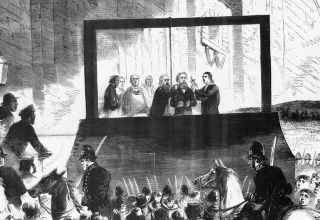
Barrett is executed outside the walls of Newgate Prison on May 26, 1868, before a crowd of two thousand who boo, jeer and sing “Rule, Britannia!” and “Champagne Charlie” as his body drops. His execution is the last public hanging to take place in England. The hangman is William Calcraft.

Until their transfer to the City of London Cemetery, Barrett’s remains lay for 35 years in a lime grave inside the walls of Newgate Prison. When the prison is demolished in 1903 his remains are taken to their present resting place. Today the grave is a place of Fenian pilgrimage and is marked by a small plaque.

After the explosion, the Prime Minister Disraeli advocates the suspension of the Habeas Corpus Act 1862 in Great Britain, as is already the case in Ireland. Greater security measures are quickly introduced. Thousands of special constables are enrolled to aid the police and at Scotland Yard a special secret service department is established to meet the Fenian threat. Although a number of people are arrested and brought to trial, Barrett is the only one to receive the death sentence.

Within days of the explosion, the Liberal Party leader, William Ewart Gladstone, then in opposition, announces his concern about Irish Nationalist grievances and says that it is the duty of the British people to remove them. Later, he says that it is the Fenian action at Clerkenwell that turned his mind towards Home Rule. When Gladstone discovers at Hawarden later that year that Queen Victoria had invited him to form a government, he famously states, “my mission is to pacify Ireland.”


1 Comment

Death of Simon Luttrell, 1st Earl of Carhampton

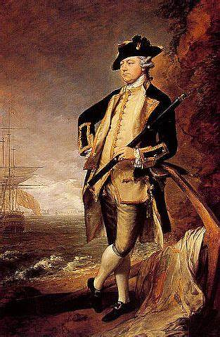
Simon Luttrell, 1st Earl of Carhampton, Anglo-Irish politician who sits in the House of Commons of Great Britain from 1754 to 1780, dies on January 14, 1787.

Luttrell is born in 1713, the second son of Henry Luttrell, of Luttrellstown Castle (whose family had held Luttrellstown Castle and the demesne and adjoining lands since the land had been granted to Sir Geoffrey de Luterel in about 1210 by King John of England) and his wife Elizabeth Jones. His father is a noted commander in the Jacobite Irish Army between 1689 and 1691. He later receives a pardon from the Williamite authorities and is accused by his former Jacobite comrades of having betrayed them. He is murdered when his sedan chair is attacked in Dublin on October 22, 1717.

Luttrell serves as a Member of Parliament in the House of Commons of Great Britain for four constituencies: Mitchell (1755–1761), Wigan (1761–1768), Weobley (1768–1774) and Stockbridge (1774–1780).

On October 13, 1768, Luttrell is created Baron Irnham of Luttrellstown in the Peerage of Ireland. As his title is an Irish peerage, he is able to keep his seat in the British House of Commons. He is elevated to the title of Viscount Carhampton on January 9, 1781, and is made Earl of Carhampton on June 23, 1785. He lives at Four Oaks Hall, Four Oaks, Sutton Coldfield, from 1751 to 1766.

On January 22, 1735, Luttrell marries Judith Maria Lawes, daughter of Sir Nicholas Lawes, Governor of Jamaica and Elizabeth Cotton (née Lawley), by whom he has eight children:

Luttrell’s rakish behaviour earns him the nickname “King of Hell,” with “Hell” being a district of Dublin notorious for its brothels. He reputedly starts the courtesan Mary Nesbitt in her career by seducing her.

Luttrell dies at Four Oaks, Warwick, England, on January 14, 1787. He is buried at Kingsbury, Warwick, England.


Leave a comment

Birth of William Smith O’Brien, Young Ireland Leader

William Smith O’Brien, Irish nationalist Member of Parliament (MP) and leader of the Young Ireland movement, is born in Dromoland, Newmarket-on-Fergus, County Clare, on October 17, 1803.

O’Brien is the second son of Sir Edward O’Brien, 4th Baronet, of Dromoland Castle. His mother is Charlotte Smith, whose father owns a property called Cahirmoyle in County Limerick. He takes the additional surname Smith, his mother’s maiden name, upon inheriting the property. He lives at Cahermoyle House, a mile from Ardagh, County Limerick. He is a descendant of the eleventh century Ard Rí (High King of Ireland), Brian Boru. He receives an upper-class English education at Harrow School and Trinity College, Cambridge. Subsequently, he studies law at King’s Inns in Dublin and Lincoln’s Inn in London.

From April 1828 to 1831 O’Brien is Conservative MP for Ennis. He becomes MP for Limerick County in 1835, holding his seat in the House of Commons of the United Kingdom until 1849.

Although a Protestant country-gentleman, O’Brien supports Catholic emancipation while remaining a supporter of British-Irish union. In 1843, in protest against the imprisonment of Daniel O’Connell, he joins O’Connell’s anti-union Repeal Association.

Three years later, O’Brien withdraws the Young Irelanders from the association. In January 1847, with Thomas Francis Meagher, he founds the Irish Confederation, although he continues to preach reconciliation until O’Connell’s death in May 1847. He is active in seeking relief from the hardships of the famine. In March 1848, he speaks out in favour of a National Guard and tries to incite a national rebellion. He is tried for sedition on May 15, 1848 but is not convicted.

On July 29, 1848, O’Brien and other Young Irelanders lead landlords and tenants in a rising in three counties, with an almost bloodless battle against police at Ballingarry, County Tipperary. In O’Brien’s subsequent trial, the jury finds him guilty of high treason. He is sentenced to be hanged, drawn, and quartered. Petitions for clemency are signed by 70,000 people in Ireland and 10,000 people in England. In Dublin on June 5, 1849, the sentences of O’Brien and other members of the Irish Confederation are commuted to transportation for life to Van Diemen’s Land (Tasmania in present-day Australia).

O’Brien attempts to escape from Maria Island off Tasmania, but is betrayed by the captain of the schooner hired for the escape. He is sent to Port Arthur where he meets up with John Mitchel.

O’Brien is a founding member of the Ossianic Society, which is founded in Dublin on St. Patrick’s Day 1853, whose aim is to further the interests of the Irish language and to publish and translate literature relating to the Fianna. He writes to his son Edward from Van Diemen’s Land, urging him to learn the Irish language. He himself studies the language and uses an Irish-language Bible, and presents to the Royal Irish Academy Irish-language manuscripts he has collected.

In 1854, after five years in Tasmania, O’Brien is released on the condition he never returns to Ireland. He settles in Brussels. In May 1856, he is granted an unconditional pardon and returns to Ireland that July. He contributes to The Nation newspaper, but plays no further part in politics.

In 1864 he visits England and Wales, with the view of rallying his failing health, but no improvement takes place and he dies in Bangor, Gwynedd, Wales on June 18, 1864.

A statue of William Smith O’Brien stands in O’Connell Street, Dublin. Sculpted in Portland limestone, it is designed by Thomas Farrell and erected in D’Olier Street, Dublin, in 1870. It is moved to its present position in 1929.

(Pictured: Portrait of William Smith O’Brien by George Francis Mulvany, National Gallery of Ireland)


Leave a comment

Death of Henry Joy McCracken, Founding Member of the United Irishmen

Henry Joy McCracken, Irish Republican, industrialist and a founding member of the Society of United Irishmen, is hanged from gallows erected in front of the Market House on Belfast‘s High Street on July 17, 1798, on land his grandfather had donated to the city.

McCracken is born in Belfast on August 31, 1767, into two of the city’s most prominent Presbyterian industrial families. He is the son of a shipowner, Captain John McCracken and Ann Joy, daughter of Francis Joy, of French Huguenot descent. The Joy family makes their money in linen manufacture and founds the News Letter. He is the older brother of political activist and social reformer Mary Ann McCracken, with whom he shares an interest in Irish traditional culture.

In 1792, McCracken helps organise the Belfast Harp Festival which gathers aged harpists from around Ireland and helps preserve the Irish airs by having them transcribed by Edward Bunting. Bunting, who lodges in the McCracken’s Rosemary Lane home, is a classically trained musician.

McCracken becomes interested in republican politics from an early age and along with other Protestants forms the Society of United Irishmen in 1795 which quickly makes him a target of the authorities. He regularly travels throughout the country using his business as a cover for organising other United Irish societies but is arrested in October 1796 and imprisoned in Kilmainham Gaol in Dublin. While imprisoned with other leaders of the United Irishmen, he falls seriously ill and is released on bail in December 1797.

Following the outbreak of the Irish Rebellion of 1798 in Leinster in May 1798, the County Antrim organisation meets on June 3 to decide on their response. The meeting ends inconclusively with a vote to wait for French aid being passed by a narrow margin. A new meeting of delegates is held in Templepatrick on June 5 where McCracken is elected general for Antrim, and he quickly begins planning military operations.

McCracken formulates a plan for all small towns in Antrim to be seized after which rebels will converge upon Antrim town on June 7 where the county’s magistrates are to hold a crisis meeting. Although the plan meets initial success and McCracken leads the rebels in the attack on Antrim, the Catholic Defenders group whom he expects assistance from are conspicuous by their absence. The mainly Ulster Scots rebels led by McCracken are defeated by the English forces and his army melts away.

Although McCracken initially escapes with James Hope, James Orr, and James Dickey and is supported in his month-long period of hiding by his sister Mary Ann, a chance encounter with men who recognize him from his cotton business leads to his arrest. He is offered clemency if he testifies against other United Irishmen leaders, but he refuses to turn on his compatriots.

McCracken is court martialed and hanged at Corn Market, Belfast, on land his grandfather had donated to the city, on July 17, 1798. According to historian Guy Beiner, his corpse is spared the indignity of decapitation in order not to provoke renewed agitation. He is buried in the Parish Church of St. George in Belfast, but a few years later the grave is demolished.

McCracken’s remains are believed to have been re-interred by Francis Joseph Bigger in 1909 at Clifton Street Cemetery, Belfast, alongside his sister Mary Ann. His illegitimate daughter Maria, whose mother is speculated to have been Mary Bodell, is raised by her aunt Mary Ann McCracken.


Leave a comment

Thomas “Silken Thomas” FitzGerald Confronts King Henry VIII

Thomas FitzGerald, Lord Offaly at the time, known as “Silken Thomas” because of the silk worn on his followers’ helmets, rides through Dublin with a large band of followers on June 11, 1534, as he has heard the false rumour spread by Henry VIII that his father, Gerald FitzGerald, 9th Earl of Kildare, has been executed in the Tower of London. He enters the Chapter House of St. Mary’s Abbey, Dublin, where the King’s Counsel is awaiting him and flings down his Sword of State. This is a dramatic act of defiance, by which he hopes to force his claim to power. Henry VIII treats it as an act of open revolt and confines his father to the Tower where he dies two months later.

FitzGerald is born in London in 1513, the son of Gerald FitzGerald, 9th Earl of Kildare and his first wife Elizabeth Zouche, who is a distant cousin of Henry VII.

In February 1534, FitzGerald’s father is summoned to London and appoints his then 21-year-old son deputy governor of Ireland in his absence. In June 1534 FitzGerald hears rumours that his father has been executed in the Tower of London and that the English government intends the same fate for himself and his uncles.

FitzGerald summons the council to St. Mary’s Abbey, Dublin, and on June 11, 1534, accompanied by 140 armoured gallowglasses with silk fringes on their helmets, rides to the abbey and publicly renounces his allegiance to his cousin King Henry VIII, Lord of Ireland.

The Lord Chancellor of Ireland and Archbishop of Dublin, John Alen, attempts to persuade FitzGerald not to commit himself to such a rash proceeding. The young lord’s harper, however, understanding only Irish, and seeing signs of wavering in FitzGerald’s bearing, commences to recite a poem in praise of the deeds of his ancestors, telling him at the same time that he lingers there too long. Roused by this he throws down the sword of state and rushes from the hall, followed by his adherents. The council sends an order for his immediate arrest to the Lord Mayor of Dublin, who does not have sufficient force at his disposal.

The Earl of Desmond and many of FitzGerald’s father’s oldest and best friends’ reason with him but he is not to be turned from his purpose. As Vice-Deputy, he has under his control most of the Pale‘s fortresses and large government stores.

Dublin Castle alone holds out for the King of England. FitzGerald calls the lords of the Pale to the siege of the Castle. Those who refuse to swear fidelity to him are sent as prisoners to his Maynooth Castle. Goods and chattels belonging to the King’s subjects he declares forfeited, and he announces his intention of exiling or putting to death all born in England. He sends messengers to his cousin and friend Lord Butler, son of the Earl of Ormond, offering to divide the kingdom with him if he will join his cause, but Butler refuses. Several children of the citizens of Dublin in different parts of the Pale are seized as hostages for the good behavior of the city.

In July, FitzGerald attacks Dublin Castle, but his army is routed. He is, rightly or wrongly, judged to be responsible for the execution at Artane of Archbishop Alen, who had tried to mediate. This loses him support from the clergy. According to a long-established tradition, the killers, John Teeling and Nicholas Wafer, misunderstand his order, given in Irish, to “take this fellow away” as an order to kill Alen. By this time his father has taken ill and died in London, and he has technically succeeded as 10th Earl, but the Crown never confirms his title. He retreats to his stronghold at Maynooth Castle, but in March 1535 this is taken by an English force under Sir William Skeffington by bribing a guard, while Thomas is absent gathering reinforcements to relieve it. The surrendered garrison is put to death, which becomes known as the “Maynooth Pardon.” FitzGerald has wrongly assumed that his cause would attract overwhelming support, in particular from Catholics opposed to Henry VIII’s English Reformation. But Henry’s new policy also outlaws Lutheranism, and so Henry is not finally excommunicated until 1538.

In July, Lord Leonard Grey arrives from England as Lord Deputy of Ireland. FitzGerald, seeing his army melting away and his allies submitting one by one, asks for pardon for his offences. He is still a formidable opponent, and Grey, wishing to avoid a prolonged conflict, guarantees his personal safety and persuades him to submit unconditionally to the King’s mercy. According to the Tree Council of Ireland, legend has it that FitzGerald plays a lute under the boughs of the now oldest planted tree in Ireland, the Silken Thomas Yew, the night before he surrenders to King Henry VIII.

In October 1535, FitzGerald is sent as a prisoner to the Tower of London. The Attainder of the Earl of Kildare Act 1536 is passed to permit his execution and the confiscation of his property. Despite Grey’s guarantee, he is executed with his five uncles at Tyburn, London, on February 3, 1537. The 1536 Act remains law until it is repealed by the Statute Law Revision (Pre-1922) Act 2005.

FitzGerald’s revolt causes Henry to pay more attention to Irish matters and is a factor in the creation of the Kingdom of Ireland in 1541. In particular the powers of the lord’s deputy are curbed, and policies such as surrender and regrant are introduced. To provide for greater security the Royal Irish Army is established as a standing army.