seamus dubhghaill

Promoting Irish Culture and History from Little Rock, Arkansas, USA


Leave a comment

Birth of John Gray, Physician, Journalist & Politician

Sir John Gray JP, Irish physician, surgeon, newspaper proprietor, journalist and politician, is born in Claremorris, County Mayo, on July 13, 1815. He is active both in municipal and national government for much of his life and has nationalist ideals, which he expresses as owner of the Freeman’s Journal, chairman of the Dublin Corporation Water Works Committee between 1863 and 1875, and Member of Parliament in the House of Commons of the United Kingdom of Great Britain and Ireland for Kilkenny City from 1865 until his death.

Gray is the third son of John and Elizabeth Gray of Mount Street. He is educated at Trinity College Dublin and obtains the degree of M.D. and Master of Surgery at the University of Glasgow in 1839. Shortly before his marriage in the same year, he settles in Dublin and takes up a post at a hospital in North Cumberland Street. He is admitted as a licentiate of the Royal College of Physicians in due course.

Gray is publicly minded and contributes to periodicals and the newspaper press. In 1841, he becomes joint proprietor of the Freeman’s Journal, a nationalist paper which is then published daily and weekly. He acts as political editor of the Journal for a time, before becoming sole proprietor in 1850. As owner, he increases the newspaper’s size, reduces its price and extends its circulation.

Gray enters politics at a relatively young age and attaches himself to Daniel O’Connell‘s Repeal Association. As a Protestant Nationalist, he supports the movement for the repeal of the Acts of Union with Britain. In October 1843, he is indicted with O’Connell and others in the Court of the Queen’s Bench in Dublin on a charge of sedition and “conspiracy against the queen.” The following February, he, together with O’Connell, is condemned to nine months imprisonment, but in early September 1844 the sentence is remitted on appeal. The trial has a strong element of farce, as the hot-tempered Attorney-General for Ireland, Sir Thomas Cusack-Smith, challenges Gray’s counsel, Gerald Fitzgibbon, to a duel, for which he is sternly reprimanded by the judges. From then on Gray is careful to distance himself from the advocacy of violence in the national cause, though he is sympathetic to the Young Ireland movement without being involved in its 1848 rebellion. Through the growing influence of the Freeman’s Journal, he becomes a significant figure in Dublin municipal politics. He is also active in national politics during an otherwise quiet period of Irish politics up until 1860. With the resurgence of nationalism after the famine, he helps to organise the Tenant’s League founding conference in 1850, standing unsuccessfully as the League’s candidate for Monaghan in the 1852 United Kingdom general election.

Later Gray originates and organises the “courts of arbitration” which O’Connell endeavours to substitute for the existing legal tribunals of the country. Following O’Connell’s death, in 1862 he inaugurates an appeal for subscriptions to build a monument to O’Connell on Sackville Street (now O’Connell Street). Independent from O’Connell, he continues to take a prominent part in Irish politics and in local affairs.

In municipal politics, Gray is elected councillor in 1852 and alderman of Dublin Corporation and takes an interest in the improvement of the city. As chairman of the committee for a new water supply to Dublin, he actively promotes what becomes the “Vartry scheme.” The Vartry Reservoir scheme involves the partial redirection and damming of the River Vartry in County Wicklow, and the building of a series of water piping and filtering systems (and related public works) to carry fresh water to the city. This work is particularly important in the improvement of conditions in the city, and to public health, as it improves sanitation and helps reduce outbreaks of cholera, typhus and other diseases associated with contaminated water. On the opening of the works on June 30, 1863, he is knighted by the Earl of Carlisle, then Lord Lieutenant of Ireland. Partially in recognition of these efforts, he is later be nominated for the position of Lord Mayor of Dublin for the years 1868–69, but he declines to serve.

In national politics, the Liberal government at the time is keen to conciliate an influential representative of the moderate nationalists to support British Liberalism and who will resume O’Connell’s constitutional agitation. In an unusual alliance with the Catholic Archbishop of Dublin, Paul Cullen, a man devoted to O’Connell’s memory, Gray’s newspaper exploits this shift in government policy. It supports the archbishop’s creation, the National Association of Ireland, established in 1864 with the intention of providing a moderate alternative to the revolutionary nationalism of the Fenians. The Freeman’s Journal adopts the aims of the Association as its own: it advocates the disestablishment of the Anglican Church of Ireland, reform of the land laws, educational aspirations of Irish Catholicism and free denominal education.

In the 1865 United Kingdom general election Gray is elected MP for Kilkenny City as a Liberal candidate. In this capacity he campaigns successfully at Westminster and in Ireland for the reforms also advocated in his paper. His newspaper’s inquiry into the anomalous wealth of the established church amidst a predominately Catholic population contributes considerably to William Ewert Gladstone‘s Irish Church Act 1869. He helps to furnish the proof that Irish demands are not to be satisfied by anything other than by radical legislation. He fights for the provision in the new Landlord & Tenant (Ireland) Act 1870 for fixity of tenure, which Gladstone eventually concedes. The Act’s other weaknesses, however, result in its failure to resolve the “land question,” the accompanying coercion, the disappointment with Gladstone’s handling of the university question and national education, causing Gray to deflect from the Liberals and become mistrusted in Britain. In the 1874 United Kingdom general election he is re-elected as a Home Rule League MP for Kilkenny, joining its Home Rule majority in the House of Commons, and holds his seat until his death the following year.

Gray dies at Bath, Somerset, England, on April 9, 1875. His remains are returned to Ireland, and he is honoured with a public funeral at Glasnevin Cemetery. Almost immediately afterwards public subscriptions are sought for the erection in O’Connell Street, of a monument to Gray. The monument is completed in 1879 and is dedicated to the “appreciation of his many services to his country, and of the splendid supply of pure water which he secured for Dublin.” His legacy also includes his contributions to the passage of the Irish Church and Land Bills, his advocacy for tenant’s rights and his support of the Home Rule movement.

Gray marries Mary Anna Dwyer of Limerick in 1839, and they have five children, three sons and two daughters. One of his sons, Edmund Dwyer Gray, takes over the management of the Freeman’s Journal. Edmund also follows his father into politics, eventually becoming MP for Dublin St. Stephen’s Green, Lord Mayor of Dublin (1880–1881), and a supporter of Charles Stewart Parnell. Edmund John Chisholm Dwyer-Gray, Edmund Dwyer Gray’s son and John Gray’s grandson, becomes Premier of Tasmania.

(Pictured: Statue to Sir John Gray on Dublin’s O’Connell Street, designed by Thomas Farrell and unveiled on June 24, 1879. Photo credit: Graham Hickey)

Leave a comment

Death of Stephen Lucius Gywnn, Writer & Politician

Stephen Lucius Gwynn, Irish journalist, biographer, author, poet and Protestant Nationalist politician, dies on June 11, 1950, at Terenure, Dublin. As a member of the Irish Parliamentary Party (IPP) he represents Galway Borough as its Member of Parliament from 1906 to 1918. He serves as a British Army officer in France during World War I and is a prominent proponent of Irish involvement in the Allied war effort. He founds the Irish Centre Party in 1919, but his moderate nationalism is eclipsed by the growing popularity of Sinn Féin.

Gwynn is born in St. Columba’s College in Rathfarnham, County Dublin, where his father John Gwynn (1827–1917), a biblical scholar and Church of Ireland clergyman, is warden. His mother, Lucy Josephine (1840–1907), is the daughter of the Irish nationalist William Smith O’Brien. He is the eldest of ten children (eight brothers and two sisters). Shortly after his birth the family moves to Ramelton in County Donegal to the parish where his father has been appointed parson. He later becomes Regius Professor of Divinity at Trinity College Dublin (TCD).

Gwynn spends his early childhood in rural County Donegal, which is to shape his later view of Ireland. He attends Brasenose College, Oxford, where, as scholar, in 1884 he is awarded first-class honours in classical moderations and in 1886 literae humaniores. During term holidays he returns to Dublin, where he meets several of the political and literary figures of the day.

After graduating, Gwynn spends ten years from 1886 tutoring as a schoolmaster, for a time in France, which creates a lifelong interest in French culture, as expressed in his Praise of France (1927). By 1896 he has developed an interest in writing, becoming a writer and journalist in London focused on English themes, until he comes into contact with the emerging Irish literary revival, when he serves as secretary of the Irish Literary Society.

This is the beginning of a long and prolific career as a writer covering a wide range of literary genres, from poetry and biographical subjects to general historical works. The eighteenth century is Gwynn’s particular specialism. He writes numerous books on travel and on the topography of his own homeland, as well as on his other interests: wine, eighteenth-century painting and fishing.

Gwynn returns to Ireland in 1904 when he enters politics. In the 1906 Galway Borough by-election he wins a seat for Galway Borough, which he represents as a member of the Irish Parliamentary Party until 1918. During this period, he is active in the Gaelic League and is one of the few Irish MPs to have close links to the Irish literary revival. Along with Joseph Maunsel Hone and George Roberts he founds the Dublin publishing house of Maunsel and Company. He is opposed to the demand for the Irish language to be a compulsory subject for matriculation. He supports the campaign which wins the establishment of a Catholic university when he serves on the Irish University Royal Commission in 1908. During the debate on the third Home Rule Bill, and at the request of his party leader John Redmond, he writes The case for Home Rule (1911) and is in charge of much of the party’s official publicity and its replies to criticism from Sinn Féin.

On the outbreak of World War I in August 1914, Gwynn strongly supports Redmond’s encouragement of Irish nationalists and the Irish National Volunteers to support the Allied and British war effort by enlisting in Irish regiments of the Irish Divisions, especially as a means to ensure the implementation of the suspended Home Rule Act at the end of an expectedly short war. Now over fifty, he enlists in January 1915 with the 7th Leinster Regiment in the 16th (Irish) Division. In July he is commissioned as a captain in the 6th (Service) Battalion, Connaught Rangers and serves with them on the Western Front at Messines, the Somme and elsewhere.

Gwynn is one of five Irish Nationalist MPs who enlist and serve in the army, the others being John L. Esmonde, Willie Redmond, William Redmond and D. D. Sheehan, as well as former MP Tom Kettle. Together with Kettle and William Redmond, he undertakes a recruitment drive for the Irish divisions, co-operating with Kettle on a collection of ballads called Battle Songs for the Irish Brigade (1915). He is made a chevalier of the Legion of Honour in July 1915. In 1916, he is appointed to the Dardanelles Commission.

Recalled to Ireland in late 1917 to participate in the Irish Convention chaired by Sir Horace Plunkett, Gwynn sides with the Redmondite faction of the Irish Party in supporting a compromise with the southern unionists in an attempt to reach consensus on a Home Rule settlement which would avoid partition. On the death of Redmond in March 1918, he takes over as leader of the moderate nationalists in the Convention. He opposes the threat of compulsory military service during the Conscription Crisis of 1918, though as a member of the Irish Recruiting Council he continues to support voluntary recruitment, encountering intense opposition led by Sinn Féin.

Gwynn forms the Irish Centre Party in 1919 and stands unsuccessfully as an Independent Nationalist for Dublin University in the 1918 Irish general election. The party merges with Plunkett’s Irish Dominion League to press for a settlement by consent on the basis of dominion status, but Gwynn subsequently breaks with Plunkett due to his willingness to accept partition as a temporary compromise. The polarities which divide Ireland during the Irish War of Independence and Irish Civil War increasingly sideline his brand of moderate cultural nationalism. Although he supports the newly emergent nation, he equally condemns some of the excesses, such as the burning of houses belonging to Free State senators.

Gwynn’s personal life also becomes complicated at this stage and around 1920. He has a romantic association with married artist Grace Henry who is perhaps the best-known female artist in Ireland at the time. During this period, he and Grace travel in France and Italy and at various stages in his life she painted portraits of him including a very distinguished looking one of him in his late 60s or early 70s. Their relationship contributes significantly to the separation of Henry from her artist husband Paul Henry in 1930.

During the 1920s, Gwynn also devotes himself to writing, covering political events as Irish correspondent to The Observer and The Times. Later in his career, he writes some substantial works, and together with his son Denis Gwynn (The Life of John Redmond, 1932) does much to shape the retrospective image and self-justification of John Redmond. In the mid-1930s he authors three books with a connecting theme of fishing with the artist Roy Beddington serving as illustrator: The Happy Fisherman (1936), From River to River (1937), and Two in a Valley (1938).

Gwynn is awarded an honorary D.Litt. by the National University of Ireland in 1940, and a Litt.D. by the University of Dublin in 1945. The Irish Academy of Letters awards him the Gregory Medal in April 1950. In his literary writings he stands for a humanism and tolerance, which qualities, due to political upheavals, were relatively rare in the Ireland of his day.

Gwynn dies on June 11, 1950, at his home in Terenure, Dublin, and is buried at Tallaght Cemetery, south County Dublin.

Gwynn marries his cousin Mary Louisa (d. 1941), daughter of Rev. James Gwynn. She later converts to Catholicism. They have three sons and two daughters who are brought up in her religion, of whom Aubrey (1892–1983) becomes a Jesuit priest and professor of medieval history at University College Dublin (UCD). Their second son, Denis Rolleston (1893–1971), is professor of modern Irish history at University College Cork (UCC).

Gwynn’s brother Edward John (1868–1941) becomes provost of Trinity College and another brother Robert Malcolm becomes its senior dean. His sister Lucy Gwynn is the first woman registrar of Trinity. A third brother, Charles, has a successful career in the British Army and retires as a Major General. Younger brothers Lucius and Jack are noted cricketers.


Leave a comment

Assassination of Irish Republican Ronnie Bunting

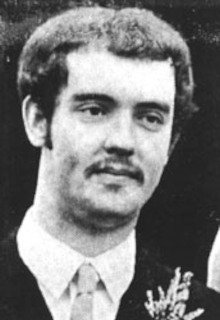
Ronnie Bunting, a Protestant Irish republican and socialist activist, is assassinated on October 15, 1980, when several gunmen enter his home in the Downfine Gardens area of Andersonstown.

Bunting is born into an Ulster Protestant family in East Belfast. His father, Ronald Bunting, had been a major in the British Army and Ronnie grew up in various military barracks around the world. His father became a supporter and associate of Ian Paisley and ran for election under the Protestant Unionist Party banner.

Having completed his education and graduating from Queen’s University Belfast, Bunting briefly becomes a history teacher in Belfast, but later becomes involved in the Northern Ireland Civil Rights Association and then with Irish republican organisations.

Unlike most Protestants in Northern Ireland, Bunting becomes a militant republican. His father, by contrast, was a committed Ulster loyalist. Despite their political differences, they remain close.

Bunting joins the Official Irish Republican Army (OIRA) around 1970 as he is attracted to their left-wing and secular interpretation of Irish republicanism and believes in the necessity of armed revolution. The other wing of the IRA, the Provisional Irish Republican Army, is seen to be more Catholic and nationalist in its outlook. At this time, the communal conflict known as the Troubles is beginning and the Official IRA is involved in shootings and bombings. He is interned in November 1971 and held in Long Kesh until the following April.

In 1974, Bunting follows Seamus Costello and other militants who disagree with the Official IRA’s ceasefire of 1972, into a new grouping, the Irish National Liberation Army (INLA). Immediately, a violent feud breaks out between the Official IRA and the INLA.

In 1975, Bunting survives an assassination attempt when he is shot in a Belfast street. In 1977, Costello is killed by an Official IRA gunman in Dublin. Bunting and his family hide in Wales until 1978, when he returns to Belfast. For the remaining two years of his life, he is the military leader of the INLA. The grouping regularly attacks the British Army and Royal Ulster Constabulary (RUC) in Belfast. He calls in claims of responsibility to the media by the code name “Captain Green.”

At about 4:30 AM on October 15, 1980, several gunmen wearing balaclavas storm Bunting’s home in the Downfine Gardens area of Andersonstown. They shoot Bunting, his wife Suzanne and another Protestant INLA man and ex-member of the Red Republican Party, Noel Lyttle, who has been staying there after his recent release from detention.

Both Bunting and Lyttle are killed. Suzanne Bunting, who is shot in the face, survives her serious injuries. The attack is claimed by the Ulster Defence Association (UDA), but the INLA claims the Special Air Service are involved.

Upon his death, Bunting’s body is kept in a funeral parlour on the Newtownards Road opposite the headquarters of the UDA. On the day of the funeral, as the coffin is being removed, UDA members jeer from their building. The Irish Republican Socialist Party wants a republican paramilitary-style funeral for Bunting but his father refuses and has his son buried in the family plot of a Church of Ireland cemetery near Donaghadee.


Leave a comment

Birth of Henry Harrison, Politician & Writer

henry-harrison

Captain Henry Harrison, nationalist politician and writer, is born in Holywood, County Down on December 17, 1867.

A Protestant nationalist, Harrison is the son of Henry Harrison and Letitia Tennent, the daughter of Robert James Tennent, who had been Liberal Party MP for Belfast from 1847 to 1852. Later, when widowed, she marries the author Hartley Withers.

Harrison goes to Westminster School and then to Balliol College, Oxford. While there he develops an admiration for Charles Stewart Parnell and becomes secretary of the Oxford University Home Rule League. At this time, the Land War is in progress and in 1889 he goes to Ireland to visit the scene of the evictions in Gweedore, County Donegal. He becomes involved in physical confrontations with the Royal Irish Constabulary and as a result becomes a Nationalist celebrity overnight. The following May, Parnell offers the vacant parliamentary seat of Mid Tipperary to Harrison, who leaves Oxford at age 22, to take it up, unopposed.

Only six months later, following the divorce case involving Katharine O’Shea, the Irish Parliamentary Party splits over Parnell’s leadership. Harrison strongly supports Parnell, acts as his bodyguard and aide-de-camp, and after Parnell’s death devotes himself to the service of his widow Katharine. From her he hears a completely different version of the events surrounding the divorce case from that which had appeared in the press, and this is to form the seed of his later books.

At the 1892 United Kingdom general election in Ireland, Harrison does not defend Mid-Tipperary. He stands at West Limerick as a Parnellite instead but comes nowhere near winning the seat. In the 1895 United Kingdom general election in Ireland, he stands at North Sligo, polling better but again far short of winning. In 1895 he marries Maie Byrne, an American, with whom he has a son. He comes to prominence briefly again in 1903 when, in spite of his lack of legal training, he successfully conducts his own case in a court action all the way to the House of Lords.

Otherwise, however, Harrison disappears from public view until his war service with the Royal Irish Regiment when he serves on the Western Front with distinction in the New British Army formed for World War I, reaching the rank of Captain and being awarded the Military Cross (MC). He organises patrols in “No Man’s Land” so successfully that he is appointed special patrol officer to the 16th (Irish) Division. He is invalided out and becomes a recruiting officer in Ireland. He is appointed an Officer of the Order of the British Empire in the 1919 New Year Honours.

Harrison then makes a return to Irish politics, working with Sir Horace Plunkett as Secretary of the Irish Dominion League, an organisation campaigning for dominion status for Ireland within the British Empire. He is a lifelong opponent of Irish partition. He is Irish correspondent of The Economist from 1922 to 1927 and owner-editor of Irish Truth from 1924 to 1927.

Harrison’s two books defending Parnell are published in 1931 and 1938. They have had a major impact on Irish historiography, leading to a more favourable view of Parnell’s role in the O’Shea affair. F. S. L. Lyons comments that he “did more than anyone else to uncover what seems to have been the true facts” about the Parnell-O’Shea liaison. The second book, Parnell, Joseph Chamberlain and Mr Garvin, is written in response to J. L. Garvin‘s biography of Joseph Chamberlain, which had ignored his first book, Parnell Vindicated: The Lifting of the Veil. Later, he successfully repulses an attempt in the official history of The Times to rehabilitate that newspaper’s role in using forged letters to attack Parnell in the late 1880s. In 1952 he forces The Times to publish a four-page correction written by him as an appendix to the fourth volume of the history.

During the difficult years of the Anglo-Irish Trade War over the land purchase annuities, declaration of the Republic, Irish neutrality during World War II, and departure from the Commonwealth, Harrison works to promote good relations between Britain and Ireland. He publishes various books and pamphlets on the issues in dispute and writes numerous letters to The Times. He also founds, with General Sir Hubert Gough, the Commonwealth Irish Association in 1942.

At the time of his death on February 20, 1954, Harrison is the last survivor of the Irish Parliamentary Party led by Parnell, and as a member of the pre-1918 Irish Parliamentary Party, he seems to have been outlived only by John Patrick Hayden, who dies a few months after him in 1954 and by Patrick Whitty and John Lymbrick Esmonde who are only MPs for a very short time during World War I. He is buried in Holywood, County Down.


Leave a comment

Launch of “The Irish Times”

the-irish-times

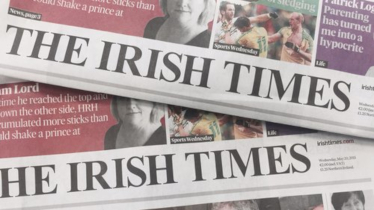
The Irish Times, an Irish daily broadsheet newspaper, is launched at 4 Lower Abbey Street in Dublin on March 29, 1859. The first appearance of a newspaper using the name The Irish Times occurs in 1823 but it closes in 1825. The title is revived as a thrice weekly publication by Major Lawrence E. Knox. It is originally founded as a moderate Protestant Irish nationalist newspaper, reflecting the politics of Knox, who stands unsuccessfully as a parliamentary candidate for Isaac Butt’s Home Rule League. In its early days, its main competitor is the Dublin Daily Express.

Though formed as a Protestant nationalist paper, within two decades and under new owners it becomes the voice of British unionism in Ireland. It is no longer marketed as a unionist paper, but rather presents itself politically as “liberal and progressive,” as well as promoting neoliberalism on economic issues. The editorship of the newspaper from 1859 until 1986 is controlled by the Anglo-Irish Protestant minority, only gaining its first nominal Irish Catholic editor 127 years into its existence.

The paper’s most prominent columnists include writer and arts commentator Fintan O’Toole and satirist Miriam Lord. The late Taoiseach Garret FitzGerald is once a columnist. Senior international figures, including Tony Blair and Bill Clinton, have written for its op-ed page. Its most prominent columns have included the political column Backbencher, by John Healy, Drapier, an anonymous piece produced weekly by a politician giving the ‘insider’ view of politics, Rite and Reason, a weekly religious column edited by ‘religious affairs’ editor Patsy McGarry, and the long running An Irishman’s Diary. An Irishman’s Diary is written by Patrick Campbell in the forties (under the pseudonym ‘Quidnunc’), by Seamus Kelly from 1949 to 1979 (also writing as ‘Quidnunc’) and more recently by Kevin Myers. After Myers’ move to the rival Irish Independent, An Irishman’s Diary has usually been the work of Frank McNally. On the sports pages, Philip Reid is the paper’s golf correspondent.

One of its most popular columns is the biting and humorous Cruiskeen Lawn satire column written, originally in Irish, later in English, by Myles na gCopaleen, the pen name of Brian O’Nolan who also writes books using the name Flann O’Brien. Cruiskeen Lawn is an anglicised spelling of the Irish words crúiscín lán, meaning “full little jug.” Cruiskeen Lawn makes its debut in October 1940, and appears with varying regularity until O’Nolan’s death in 1966.

The editor is Paul O’Neill who succeeds Kevin O’Sullivan on April 5, 2017. The deputy editor is Deirdre Veldon. The Irish Times is published every day except Sundays and employs 420 people.


Leave a comment

Birth of Stephen Lucius Gwynn, Writer & Politician

stephen-lucius-gwynn

Stephen Lucius Gwynn, journalist, biographer, author, poet, Protestant Nationalist politician, and Member of Parliament (MP) in the House of Commons of the United Kingdom of Great Britain and Ireland, is born on February 13, 1864, in St. Columba’s College, Rathfarnham, Dublin, where his father John Gwynn, a biblical scholar and Church of Ireland clergyman, is a warden.

Gwynn spends his early childhood in rural County Donegal, which shapes his later view of Ireland. He is educated at St. Columba’s College and goes on to Brasenose College, Oxford, where, as scholar, in 1884 he is awarded first-class honours in classical moderations and in 1886 literae humaniores. During term holidays he returns to Dublin, where he meets several of the political and literary figures of the day.

After graduating Gwynn moves to France where he works as a schoolmaster for ten years. In December 1889 he marries his cousin Mary Louisa Gwynn. They have four sons and two daughters. Having dabbled in journalism since his student days, he moves to London in 1896 to pursue a career as a writer. He soon becomes a prominent figure in literary and journalistic circles.

In 1904 the Gwynns return to Ireland to live in Raheny, County Dublin. In November 1906 he wins a seat for Galway Borough, which he represents as a member of the Irish Parliamentary Party until 1918. During this time, he also becomes active with the Gaelic League and the Irish Literary Revival.

At the outbreak of World War I, Gwynn gives his support to John Redmond that Irishmen should enlist in the British forces. At the age of fifty-one he enlists as a private in the 7th Leinster Regiment and is later commissioned lieutenant in the 6th Battalion Connaught Rangers, attached to the 16th (Irish) Division. He is promoted to captain in 1915 and serves with his battalion at the battles of Ginchy and Guillemont during the Somme offensive and also at Messines in 1917, leaving the front line shortly afterwards.

Gwynn is appointed to the Dardanelles Commission in 1916, an investigation into the unsuccessful 1915 Gallipoli Campaign.

After the war Gwynn continues with his writing and political life. He receives honorary doctorates from the National University of Ireland in 1940 and the University of Dublin in 1945. He dies on June 11, 1950, at his home in Terenure, Dublin and is buried at Tallaght cemetery.