The 860-ruling Unionist Party council had been scheduled to meet on Saturday, May 13, but postponed the session for a week to allow Trimble to broaden his support among unionists still opposed to the deal. The council is expected to vote on resuming participation in a joint executive, which had been suspended on February 11 after the Irish Republican Army (IRA) failed to initiate disarmament.
The postponement of the unionist council meeting means a scheduled restart of devolution two days later will also be postponed. Great Britain and Ireland had offered to restore the Northern Ireland Assembly and a power-sharing executive composed of unionist, nationalist and republican members by May 22.
Great Britain and Ireland are co-sponsors of the 1998 Good Friday Agreement on reconciliation between the Catholic and Protestant communities. Trimble tells news media he is ready to support a return to sharing power with Sinn Féin, the IRA’s political wing, after receiving assurances on the arms issue.
Earlier in the month, the IRA broke the stalemate with an offer to put its arms arsenals beyond use under international supervision. The IRA offer fell short of a pledge to submit its weapons to destruction, as was understood from previous talks on the issue, but both Great Britain and Ireland back the compromise and press for its acceptance by unionists and nationalists as well.
Great Britain’s Northern Ireland SecretaryPeter Mandelson describes the postponement as the “correct decision.” He says, “David Trimble has been clarifying some issues and driving a hard bargain over others. Now he needs time to present the outcome to his party.” He says he is confident that Trimble will be successful and the way will then be paved for the return to power-sharing.
However, hard-line Ulster Unionist leader Jeffrey Donaldson says he does not believe that weapons will be put beyond use. “What we actually need to know and hear from the IRA is are they going to decommission their weapons?” Donaldson, a member of the British parliament, says in a BBC interview. “We haven’t had any clarification from the IRA.”
British Prime MinisterTony Blair says in parliament on Wednesday, May 17, the IRA offer to put its weapons “beyond use” is “an important confidence-building measure” but only the start of a process of silencing the guns. “We need to make progress until the time when these weapons are indeed completely, verifiably, beyond use,” Blair says.
(From: “Unionist leader says he will back Ulster deal,” UPI Archives, http://www.upi.com/archives, May 18, 2000)
Healy is the second son of Maurice Healy, clerk of the Bantry Poor Law Union, and Eliza Healy (née Sullivan). His elder brother, Thomas Healy (1854–1924), is a solicitor and Member of Parliament (MP) for North Wexford and his younger brother, Maurice Healy (1859–1923), with whom he holds a lifelong close relationship, is a solicitor and MP for Cork City.
Healy then moves to England in 1871, working first as a railway clerk and then from 1878 in London as parliamentary correspondent of The Nation, writing numerous articles in support of Charles Stewart Parnell, the newly emergent and more militant home rule leader, and his policy of parliamentary obstructionism. Healy takes part in Irish politics and becomes associated with Parnell and the Irish Parliamentary Party. After being arrested for intimidation in connection with the Irish National Land League, he is promptly elected as member of Parliament for Wexford Borough in 1880.
In Parliament, Healy becomes an authority on the Irish land question. The “Healy Clause” of the Land Law (Ireland) Act 1881, which protects tenant farmers’ agrarian improvements from rent increases imposed by landlords, not only makes him popular throughout nationalist Ireland but also wins his cause seats in ProtestantUlster. He breaks with Parnell in 1886 and generally remains at odds with subsequent leaders of the Irish Parliamentary Party, though he is a strong supporter of proposals for Irish Home Rule. Meanwhile, he is called to the Irish bar in 1884 and becomes a queen’s counsel in 1899.
Healy believes that he has been awarded the Governor-Generalship for life. However, the Executive Council of the Irish Free State decides in 1927 that the term of office of Governors-General will be five years. As a result, he retires from the office and public life in January 1928 and publishes his extensive two volume memoirs later in that year. Throughout his life he is formidable because he is ferociously quick-witted, because he is unworried by social or political convention, and because he knows no party discipline. Towards the end of his life, he becomes more mellowed and otherwise more diplomatic.
On January 31, 1972, the day after Bloody Sunday, British Home SecretaryReginald Maudling announces a tribunal of inquiry “into the circumstances of the march and the incidents leading up to the casualties which resulted.”
The official British Army position, backed by Maudling in the House of Commons, is that the paratroopers reacted to gun and nail bomb attacks from suspected Irish Republican Army (IRA) members. Apart from the soldiers, all eyewitnesses — including marchers, local residents, and British and Irish journalists present — maintain that soldiers fired into an unarmed crowd or were aiming at fleeing people and those tending the wounded, whereas the soldiers themselves were not fired upon. No British soldier is wounded by gunfire or reports any injuries, nor are any bullets or nail bombs recovered to back up their claims.
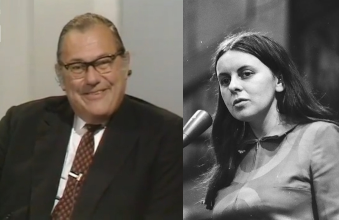
In the days following Bloody Sunday, Bernadette Devlin, the independent Irish nationalistMember of Parliament (MP) for Mid Ulster, expresses anger at what she perceives as British government attempts to stifle accounts being reported about the shootings. Having witnessed the events firsthand, she is infuriated that the Speaker of the House of Commons, Selwyn Lloyd, consistently denies her the chance to speak in Parliament about the shootings, although parliamentary convention decrees that any MP witnessing an incident under discussion will be granted an opportunity to speak about it in Parliament. Devlin slaps Reginald Maudling and calls him a “murdering hypocrite” when he makes a statement to Parliament that the British Army had fired only in self-defence. She is temporarily suspended from Parliament as a result.
An inquest into the deaths is held in August 1973. The city’s coroner, Hubert O’Neill, a retired British Army major, issues a statement at the completion of the inquest. He declares:
“This Sunday became known as Bloody Sunday and bloody it was. It was quite unnecessary. It strikes me that the Army ran amok that day and shot without thinking what they were doing. They were shooting innocent people. These people may have been taking part in a march that was banned but that does not justify the troops coming in and firing live rounds indiscriminately. I would say without hesitation that it was sheer, unadulterated murder. It was murder.”
(Pictured: Home Secretary Reginald Maudling (left) and Member of Parliament for Mid Ulster Bernadette Devlin)
The Teebane bombing takes place on January 17, 1992, at a rural crossroads between Omagh and Cookstown in County Tyrone, Northern Ireland. A roadside bomb destroys a van carrying 14 construction workers who had been repairing a British Army base in Omagh. Eight of the men are killed and the rest are wounded. The Provisional Irish Republican Army (IRA) claims responsibility, saying that the workers were killed because they were “collaborating” with the “forces of occupation.”
Since the beginning of its campaign in 1969, the Provisional IRA has launched frequent attacks on British Army and Royal Ulster Constabulary (RUC) bases in Northern Ireland. In August 1985 it begins targeting civilians who offer services to the security forces, particularly those employed by the security forces to maintain and repair its bases. Between August 1985 and January 1992, the IRA kills 23 people who had been working for (or offering services to) the security forces. The IRA also alleges that some of those targeted had links with Ulster loyalistparamilitaries.
On the evening of January 17, 1992, the 14 construction workers leave work at Lisanelly British Army base in Omagh. They are employees of Karl Construction, based in Antrim. They travel eastward in a Ford Transit van towards Cookstown. When the van reaches the rural Teebane Crossroads, just after 5:00 PM, IRA volunteers detonate a roadside bomb containing an estimated 600 pounds (270 kg) of homemade explosives in two plastic barrels. Later estimates report a 1,500-pound (680 kg) device. The blast is heard from at least ten miles away. It rips through one side of the van, instantly killing the row of passengers seated there. The vehicle’s upper part is torn asunder, and its momentum keeps it tumbling along the road for 30 yards. Some of the bodies of the dead and injured are blown into the adjacent field and ditch. IRA volunteers had detonated the bomb from about 100 yards away using a command wire. A car travelling behind the van is damaged in the explosion, but the driver is not seriously injured. Witnesses report hearing automatic fire immediately prior to the explosion.
Seven of the men are killed outright. They are William Gary Bleeks (25), Cecil James Caldwell (37), Robert Dunseath (25), David Harkness (23), John Richard McConnell (38), Nigel McKee (22) and Robert Irons (61). The van’s driver, Oswald Gilchrist (44), dies of his wounds in hospital four days later. Robert Dunseath is a British soldier serving with the Royal Irish Rangers. The other six workers are badly injured; two of them are members of the Ulster Defence Regiment (UDR). It is the highest death toll from one incident in Northern Ireland since 1988.
The IRA’s East Tyrone Brigade claims responsibility for the bombing soon afterward. It argues that the men were legitimate targets because they were “collaborators engaged in rebuilding Lisanelly barracks” and vowed that attacks on “collaborators” would continue.
Both unionist and Irish nationalist politicians condemn the attack. Sinn Féin president Gerry Adams, however, describes the bombing as “a horrific reminder of the failure of British policy in Ireland.” He adds that it highlights “the urgent need for an inclusive dialogue which can create a genuine peace process.” British Prime MinisterJohn Major visits Northern Ireland within days and promises more troops, pledging that the IRA will not change government policy.
As all of those killed are Protestant, some interpret the bombing as a sectarian attack against their community. Less than three weeks later, the Ulster loyalist Ulster Defence Association (UDA) launches a ‘retaliation’ for the bombing. On February 5, two masked men armed with an automatic rifle and revolver enter Sean Graham’s betting shop on Ormeau Road in an Irish nationalist area of Belfast. The shop is packed with customers at the time. The men fire indiscriminately at the customers, killing five Irish Catholic civilians, before fleeing to a getaway car. The UDA claims responsibility using the cover name “Ulster Freedom Fighters,” ending its statement with “Remember Teebane.” After the shootings, a cousin of one of those killed at Teebane visits the betting shop and says, “I just don’t know what to say but I know one thing – this is the best thing that’s happened for the Provos [Provisional IRA] in this area in years. This is the best recruitment campaign they could wish for.”
The Historical Enquiries Team (HET) conducts an investigation into the bombing and releases its report to the families of the victims. It finds that the IRA unit had initially planned to carry out the attack on the morning of January 17 as the workers made their way to work but, due to fog, it was put off until the afternoon. Although suspects were rounded up and there were arrests in the wake of the attack, nobody has ever been charged or convicted of the bombing.
Karl Construction erects a granite memorial at the site of the attack and a memorial service is held there each year. In January 2012, on the 20th anniversary of the attack, Democratic Unionist Party (DUP) MLA, Trevor Clarke, whose brother-in-law Nigel McKee at age 22 was the youngest person killed in the bombing, demands that republicans provide the names of the IRA bombers.
Fermanagh County Council is formed under orders issued in accordance with the Local Government (Ireland) Act 1898 which comes into effect on April 18, 1899. Elections are held using proportional representation until 1922 when it is abolished in favour of first-past-the-post voting. On December 15, 1921, shortly before the partition of Ireland and transfer of power from the Dublin Castle administration, Fermanagh County Council passes a resolution on a 13–10 majority not to recognise the newly formed Parliament of Northern Ireland and pledges their allegiance to the unrecognised republicanSecond Dáil of the self-proclaimed Irish Republic in Southern Ireland before the ratification of the Anglo-Irish Treaty. The resolution states, “We, the County Council of Fermanagh, in view of the expressed desire of a large majority of people in this county, do not recognise the partition parliament in Belfast and do hereby direct our Secretary to hold no further communications with either Belfast or British Local Government Departments, and we pledge our allegiance to Dáil Éireann.” In response, the Royal Irish Constabulary evict them from their council offices and confiscate official documents. As a result, the council is temporarily dissolved. The council are replaced by Commissioners appointed by Sir Dawson Bates.
The council is reformed by the time of the 1924 Northern Ireland local elections. As a protest against the abolition of proportional representation nationalist parties boycott the election, allowing unionist parties to take control of the council uncontested. Due to the abolition of proportional representation and gerrymandering, the council always has a unionist majority of councillors elected up until abolition. In 1967, the Government of Northern Ireland passes the County Fermanagh (Transfer of Functions) Order 1967. This makes Fermanagh County Council amalgamate with the smaller Enniskillen Borough Council and the rural district councils in Enniskillen, Irvinestown and Lisnaskea to turn Fermanagh County Council into a unitary authority.
In 1969, the Fermanagh Civil Rights Association publishes a booklet criticising the council and accusing them of favouring the Protestant community over the Catholic community. Some of the accusations include that the council deliberately hires Protestants for skilled local government and school jobs and that they propose to build a new village for Catholics in a gerrymandered district that already has a Catholic majority. The council is abolished in accordance with the Local Government Act (Northern Ireland) 1972 on October 1, 1973 and replaced by Fermanagh District Council.
(Pictured: Coat of arms of Fermanagh County Council, Northern Ireland)
On December 9, 1994, Sinn Féin, the political wing of the Irish Republican Army (IRA), holds its first formal talks with the British Government in over 70 years. The negotiations take place in Belfast, almost one year after Britain and Ireland began an uncertain program to try to resolve the conflict in Northern Ireland. The first session is held at Stormont, a gigantic, columned edifice on top of a hill on the outskirts of Belfast that houses the old Northern Ireland parliament.
Although the announcement of the negotiations is not a surprise, it still sets off an exciting ripple that history is in the making. British officials have conducted secret talks with Sinn Féin leaders in the past, but never before have they sat down openly at the same table with them.
In both a letter to the Sinn Féin leader, Gerry Adams, and in a three-paragraph statement, Downing Street pointedly refers to the meeting as “exploratory dialogue.” This is in keeping with London‘s position that it is simply joining in “talks about talks,” not a full negotiating session, which must involve all parties to the conflict.
For 25 years the IRA has been fighting in the name of the Roman Catholic minority of 650,000 in Northern Ireland. It wants to link Ulster, the six counties of Northern Ireland that remain British after partition, to the Irish Republic, a move opposed by most of the province’s 950,000 Protestants.
The announcement of talks evoke a predictable pattern of responses across Northern Ireland’s political spectrum. Adams, who works to persuade the IRA to go along with a unilateral cease-fire that was declared on September 1, welcomes it. “The opportunity to realize a lasting peace, which will benefit all of the people of Ireland, has never been greater,” he says in a statement. Adams had been accusing London of foot-dragging on the peace effort. Now, he says, it is time to move on to “the next phase of dialogue — multilateral talks led by both Governments.”
The Ulster Unionist Party (UUP), the main Protestant political group in Northern Ireland, is skeptically accepting, as it has been all along. John Taylor, a UnionistMember of Parliament, says the talks will at least establish whether “Sinn Féin really is to become a normal political party.”
The Rev. Ian Paisley, a Member of Parliament whose Democratic Unionist Party (DUP) has become a rejectionist front, continues to oppose talks or any move smacking of compromise. He tells the House of Commons that “a vast majority of people” resent the decision to talk to “the men of blood.”
Sinn Féin is represented at the talks by Martin McGuinness, a veteran IRA political leader who took part in secret contacts that broke up the previous year. In 1972, together with Adams, he was flown to London for a meeting with William Whitelaw, who was then Secretary of State for Northern Ireland. Those talks eventually failed.
Adams is in Washington, D.C. on Wednesday, December 7. He attends a meeting at the White House, his first one there, with Anthony Lake, President Bill Clinton‘s National Security Advisor. Seven weeks earlier, Britain protests vigorously at the thought of Adams visiting the White House. But events moved so swiftly that he gains a kind of legitimacy that is hard for Whitehall to deny. His visa to the United States, good for three months, allows several visits.
The Government team of civil servants, in contrast to higher-level ministers, are led by Quentin Thomas, deputy secretary of the British administration called the Northern Ireland Office.
Going into the negotiations, the key question is what will be discussed. On the British side, the top of the agenda is how to get the IRA to turn over its considerable stash of 100 tons of arms and explosives. There is nothing, of course, that Sinn Féin is less likely to agree to at the outset. So should the British make this a condition for multilateral talks to begin, the two sides will meet an obstacle right away.
McGuinness says that the issue of IRA weapons has to be considered “in the context of us removing the causes of conflict, the reason why people use armed force in our society.”
From its side, Adams says Sinn Féin wants to discuss being treated with “a parity of esteem” with the other parties, and “the release of all political prisoners.”
The British Government says that it will soon hold talks with the so-called loyalist paramilitaries on the Protestant side. And it indicates it will have no objection if elected Sinn Féin councillors attend a major international investment conference in Belfast on December 13 and 14.
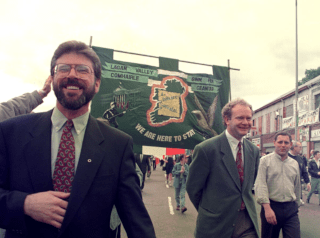
(From: “Britain and I.R.A. Group to Begin Talks in Northern Ireland” by John Darnton, The New York Times, December 2, 1994 | Pictured: Gerry Adams and Martin McGuinness lead a Republican parade in Belfast, commemorating 25 years of British troops on the streets of Northern Ireland in 1994)
The hospital is founded by Bartholomew Mosse, a surgeon and midwife who is appalled at the conditions that pregnant women have to endure, in George’s Lane in March 1745. It is granted by Royal Charter on December 2, 1756 by King George II. Lying-in is an archaic term for childbirth, referring to the month-long bed rest prescribed for postpartum confinement. The venture is very successful and Mosse raises money through concerts, exhibitions and even a lottery to establish larger premises. The hospital moves to new premises, designed by Richard Cassels, where it becomes known as “The New Lying-In Hospital” in December 1757. The Church of Ireland Chapel is opened in 1762. Open to the public, it provides a healthy income to the hospital annually, Dr. Mosse successfully encouraging wealthy Protestant Dubliners to attend service there.
Records indicate that around 1781, “when the hospital was imperfectly ventilated, every sixth child died within nine days after birth, of convulsive disease; and that after means of thorough ventilation had been adopted, the mortality of infants, within the same, in five succeeding years, was reduced to one in twenty.” This issue is not limited to the Lying-In-Hospital. In the era, ventilation improvement is a general issue in patient care, along with other issues of sanitation and hygiene, and the conditions in which surgeons such as Robert Liston in Britain and elsewhere, have to operate. Florence Nightingale famously works on the design of safe and healthy hospitals.
The first Caesarean section in Ireland is undertaken at the hospital in 1889.
The eponymous Rotunda is a rotunda designed by James Ensor, which is completed just in time for a reception hosted by James FitzGerald, Marquess of Kildare, in October 1767. The extensive Rotunda Rooms, designed by Richard Johnston and built adjacent to the rotunda, are completed in 1791. By the early 19th century the hospital has become known as the Rotunda Hospital, after its most prominent architectural feature. The Rotunda becomes a theatre, where the Irish Volunteers first public meeting is held in 1913, and later the Ambassador Cinema. The Rotunda Rooms now house the Gate Theatre.
The Rotunda Hospital, as both a maternity hospital and also as a training centre (affiliated with Trinity College, Dublin) is notable for having provided continuous service to mothers and babies since inception, making it the oldest continuously operating maternity hospital in the world. It is estimated that over 300,000 babies have been born there.
In 2000 the Rotunda is one of two Dublin maternity hospitals found to have illegally retained organ tissue from babies without parental consent. The tissue removed in postmortem examinations is retained for some years. The Rotunda Hospital admits that that permission should have been sought for this process to be allowed to take place.
A medical negligence award is approved in 2020 for a young boy who develops cerebral palsy as a result of complications with his delivery at the hospital in 2004.
The Northern state consists of the six northeastern counties of Ulster with a unionist majority. They are Antrim, Down, Armagh, Derry, Tyrone, and Fermanagh. Belfast is to be the seat of a government and hold limited devolved powers. The counties of Donegal, Cavan, and Monaghan are to be absorbed within the Irish Free State controlled from parliament in Dublin.
Irish nationalists are dismayed with the plan. Protestant Unionists, particularly those living within the boundaries of the new state, accept and start to implement the Act. Sectarian attacks are launched upon Catholic homes in Belfast, Derry, Banbridge, Lisburn, and Dromore. Catholics are driven from Belfast shipyards and from various engineering works in the city. Supposedly these attacks are in revenge for Irish Republican Army (IRA) assassinations.
The IRA continues the campaign to establish a republic with the Irish War of Independence. By the middle of 1921, both sides are exhausted, and a truce is called on June 9.
In July 1921, Éamon DeValera, the president of Dáil Éireann, goes to London to meet with Prime Minister Lloyd George. They agree an Irish delegation will come to London to discuss terms in the autumn.
During the debate, Lloyd George insists Ireland remain part of the Commonwealth and Dáil Éireann members take the oath of allegiance to the British throne. After a delay of two months, Lloyd George delivers the ultimatum on December 5, sign a treaty within three days or there will be war.
The Anglo-Irish Treaty is to give Ireland a 26 county Free State with Dominion status. The right to raise taxes, regulate foreign trade, independence in internal affairs, own an army, and the oath of allegiance is changed to one of fidelity.
The British are to retain three naval bases within the jurisdiction of the Free State, at Cobh, Lough Swilly, and Berehaven. The Northern Ireland boundary is to be determined by a commission. This gives false hope to large tracts of Tyrone, Fermanagh, Down, Armagh, and Derry City would be given to the Free State as they have Catholic majorities.
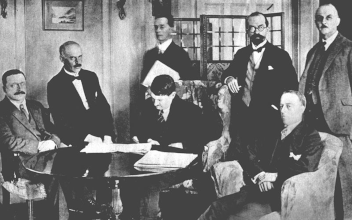
Just after 2:00 AM on December 6, 1921, the Irish delegation, without consulting the Dáil, finally sign a treaty with the British. Collins writes, prophetically, later on the day of the signing, “early this morning I signed my death warrant.”
The Treaty displeases the Catholics in the north and the unionists in the south. Meanwhile, many of those involved in the conflict are abhorred at the fact that not all of Ireland is to leave the United Kingdom.
(From: “The Anglo-Irish Treaty (1921)” by Brian O’Neill, Your Irish Culture, http://www.yourirish.com, May 20, 2020)
After the Irish Rebellion starts, the rebels first attempt to move into Ulster and capture Belfast. When they meet stiff Protestant resistance in Ulster, the rebels turn their focus southward with the goal of taking Dublin. En route to attack Dublin, the rebels come upon the town of Drogheda and begin the siege of the garrison. Approximately one week after the rebels have encircled Drogheda, the English authorities in Dublin put together a relief force and send them to reinforce the Royalist strongpoint. En route to Drogheda, the English force is ambushed and routed by the rebels in Julianstown.
The English relief force is hastily put together and largely untrained. Many of the soldiers in the relief force are emaciated and sick refugees from the northern counties who are pressed into service. The detachment is commanded by Sir Patrick Wemyss and is composed of 600 foot and 50 horse. The rebel forces are led by Philip O’Reilly and Miles O’Reilly, both Irish leaders from County Cavan. Their force of 3,000 men including 300 horse has experienced commanders and appears to have been assigned to the south of Drogheda to complete the encirclement of the garrison.
On the morning of the battle, the rebels become aware of the approach of the Royalists and prepare an ambush. As the rebels spring their trap, the English commander does not immediately order his men to attack and fire upon the enemy. By mistake Wemyss orders his men to “countermarch” which causes them to move backwards as if they are retreating. The rebels take full advantage of the situation and immediately charge the Royalists. The rebel attack causes panic and confusion among the English and prevents them from coordinating an effective counterattack. Many of the Royalists throw down their weapons and attempt to escape. The Royalist horse flee the field. In the end, the rebels kill almost all of the Royalist foot soldiers.
The victory has several short-term benefits for the rebels. From the manner in which they rout the Royalists, the rebel forces gain respect as a military force. It boosts rebel morale and helps to spread the revolt throughout Ireland. For the commander of the Royal Irish Army, James Butler, Earl of Ormond, the battle shows the determination of the rebels and the degree of support for their cause. Ultimately, the Battle of Julianstown as a small part of the Irish Rebellion indirectly leads to the English Civil War and Confederate Ireland.
The rebellion begins on October 23, 1641 as an attempted coup d’état by Catholic gentry and military officers, who try to seize control of the English administration in Ireland. However, it develops into a widespread rebellion and ethnic conflict with English and Scottish Protestant settlers, leading to Scottish military intervention. The rebels eventually found the Irish Catholic Confederacy.
The plan to seize Dublin Castle is foiled, but the rebels swiftly capture numerous towns (including Dundalk), forts and fortified houses in the northern province of Ulster. Within days they hold most of the province. Rebel leader Felim O’Neill of Kinard issues a forged proclamation, the Proclamation of Dungannon, claiming he has the king’s blessing to secure Ireland against the king’s opponents. The uprising spreads southward and soon most of Ireland is in rebellion. In November, rebels besiege Drogheda and defeat an English relief force at Julianstown. The following month, many Anglo-Irish Catholic lords join the rebellion. In these first months, especially in Ulster, some Catholic rebels drive out or kill thousands of Protestant settlers (most notably the Portadown massacre), and settlers respond in kind. Reports of rebel massacres outrage Protestants in Britain, and leave a lasting impact on the Ulster Protestant community.
King Charles and the English parliament both seek to quell the rebellion, but parliament does not trust the king with command of any army raised to do so. This is one of the issues that lead to the English Civil War. Charles orders forces to be raised in Ireland, and the English parliament drafts a bill to give itself the power to raise armed forces. Eventually, in April 1642, following negotiations between the English and Scottish parliaments, the Scots send a Covenanter army to Ireland. It swiftly captures most of eastern Ulster, while a Protestant settler army holds northwestern Ulster. Government forces meanwhile recapture much of the Pale, and hold the region around Cork. Most of the rest of Ireland is under rebel control.
In May 1642, Ireland’s Catholic bishops meet at Kilkenny, declare the rebellion to be a just war and take steps to control it. With representatives of the Catholic nobility in attendance, they agree to set up an alternative government known as the Irish Catholic Confederacy and draw up the Confederate Oath of Association. The rebels, now known as Confederates, hold most of Ireland against the Protestant Royalists, Scottish Covenanters and English Parliamentarians. The rebellion is thus the first stage of the Irish Confederate Wars and part of the wider Wars of the Three Kingdoms, which lasts for the next ten years.
(Pictured: Depiction of the massacre of Ulster Protestants during the 1641 rebellion, the LIFE Picture Collection via Getty Images)






 seamus dubhghaill