Sheppard is born to Simpson Sheppard, a sculptor, and Ellen White, of Ormond Quay, Dublin.
Sheppard is based in Dublin for almost all of his life, having travelled widely across Europe. He and his wife Rosie have several children. They live at Howth and 30 Pembroke Road in central Dublin. She dies in 1931.
From 1902 to 1937 Sheppard teaches sculpture at the Dublin Metropolitan School of Art, which is renamed the National College of Art in 1936. His annual stipend is £250 but for this he only has to lecture on three mornings per week, allowing him plenty of time for work on commissioned projects. One of his most famous students is the sculptor Kathleen Cox.
Sheppard is generally critical of the low standards of sculpture in Ireland, saying, “For the last sixty years or so thousands of figures and groups have been executed in Dublin for ecclesiastical purposes, and, with one or two exceptions…was not up to a reasonable standard. The making of a work of art hardly entered into it at all. The sculptor, well trained and properly encouraged, should collaborate with the architect.”
In 1890–1910 Sheppard is a part of the Celtic Revival movement, and, from his works such as Inis Fáil, is admired by his student William Pearse. Through him he meets his brother, Patrick Pearse, who later helps launch the Easter Rising in 1916. While most of the Revival’s artists are writers, playwrights and poets, Sheppard can claim to be the main sculptor working on themes similar to theirs.
Sheppard is in the minority of Irish Protestants who support independence, starting with support for the Irish Parliamentary Party in the 1880s, when he is an art student. After the Irish War of Independence (1919–21) he says, “They thought me too old to fight but I have tried to help in other ways. My politics are simple. I have always thought that this country should be a free country.” His opinions are not overly dogmatic, considering his work on the war memorials in 1920.
In the mid-1920s the first series of Irish Free State coinage is planned and is finally launched in 1928. Sheppard is one of the designers short-listed but his designs are not accepted.
Sheppard dies in Dublin on September 14, 1941.
(Pictured: “The Dying Cúchulainn,” sculpture by Oliver Sheppard, now at the General Post Office (GPO) in Dublin)
At the start of the twentieth century, the people of Ireland are divided into two mutually hostile factions. The much larger group (nationalists) are mostly Roman Catholic, identified primarily as Irish, and want some form of Irish home rule or independence from Britain. The smaller group (unionists), concentrated primarily in the province of Ulster, are mostly Protestant, identified primarily as British and are committed to remaining within the United Kingdom. In the years before World War I, both groups establish armed militias intended to enforce their aims and protect their communities from the other side’s militias. The British government resolves to partition Ireland in an effort to alleviate unionists and nationalists, with the six most Protestant counties of Ulster forming Northern Ireland while the rest of Ireland achieves self-rule. This is accepted by most unionists as the best deal they are likely to get, but bitterly disappoints many nationalists, especially those who live in the six counties which become Northern Ireland. Many nationalists on both sides of the border feel that their country has been unjustly divided, and for many decades the Irish government claims that Northern Ireland is rightfully its territory.
Partition is formally established with the Government of Ireland Act 1920. This also establishes the Parliament of Northern Ireland, which comes into being the following year. Partition is followed by high levels of inter-communal violence, especially in Belfast. The Irish Republican Army (IRA), although it spends most of these years fighting in the Irish Civil War, aims to use armed force to end partition and compel the United Kingdom to withdraw sovereignty from Northern Ireland.
The Special Powers Act is presented as being necessary to re-establish peace and law and order in Northern Ireland and enable the government to “take all such steps and issue all such orders as may be necessary for preserving the peace and maintaining order,” although it is specified that the ordinary course of law should be interfered with as little as possible. The Minister of Home Affairs is empowered to make any regulation felt necessary to preserve law and order in Northern Ireland. Anyone who breaks these regulations can be sentenced to up to a year in prison with hard labour, and in the case of some crimes, whipping. A special summary jurisdiction is enabled to hear cases involving such crimes. The Minister of Home Affairs is also permitted to forbid the holding of inquests if he feels this is required to preserve order and peace.
The Schedule to the Act specifies actions which the government can take in order to preserve peace, although the body of the Act enables the government to take any steps at all which it thinks necessary. Actions specified in the Schedule include the closing of licensed premises, the banning in any area of meetings and parades in public places, the closing of roads, the taking of any land or property, and the destruction of any building. The Schedule also forbids the spreading by word of mouth or text any “reports or…statements intended or likely to cause disaffection to subjects of His Majesty.”
Because it is presented as emergency legislation, the Special Powers Act is initially current for only one year and has to be renewed annually. In 1928, however, it is renewed for five years and when this period expires in 1933 the Act is made permanent. According to John Whyte, this happens because, from 1925, nationalist MPs begin sitting in the Stormont parliament which they had initially boycotted. Unsurprisingly, they object strenuously to the renewal of the Act, and it is felt by the Ulster Unionist Party Minister of Home Affairs that it would be better to make the Act permanent than for Parliament annually to “wrangle” over it.
Initially, regulations under the Act are used mostly to curb immediate violence and disorder. One of the most controversial of these is internment without trial, outlined in Paragraph 23 of the Schedule. In the period from May 1922 to December 1924, 700 republicans are interned under the Act.
Political violence declines dramatically by 1925, and the government gradually shifts its emphasis from broad measures designed to return civil order to the province to more preventative regulations aimed at suppressing the threat posed by republican aspirations. Regulations banning meetings and parades and restrictions on the flying of the Irish tricolour become more common. Between 1922 and 1950, the government bans nearly 100 parades and meetings, the vast majority of which are nationalist or republican. No loyalist gathering is ever directly banned under the Act, although a few are caught in blanket bans against parades or meetings in a particular area. From 1922 until 1972, 140 publications are banned, the vast majority of which express republican viewpoints.
After the troubles of the early 1920s has died down, the provision for internment is not used until the IRA’s border campaign of the 1950s, in which several hundred republicans are interned. Following the outbreak of the Troubles in 1968, many within the Protestant community call for the reintroduction of internment. This occurs in 1971 and authorises internment of those suspected to be involved in terrorism. Although there is loyalist as well as republican terrorists at this time, of the 1,981 men interned, only 107 are loyalists.
Internment ends in 1975 but is credited with increasing support and sympathy for the Provisional Irish Republican Army amongst the Catholic community and outside of Northern Ireland. It helps to create political tensions which culminate in the 1981 Irish Hunger Strike and the death of MP Bobby Sands. Imprisonment under anti-terrorism laws specific to Northern Ireland continue until the 1998 Good Friday Agreement, but these laws require the right to a fair trial be respected.
The Act encounters further controversy in the 1970s due to the deployment of the British Army in Northern Ireland and its role in maintaining order and similar policing-style duties. In 1972, the government is forced to amend the Act in order to legalise the detention of internees arrested by soldiers. Martin Meehan had been arrested after escaping from Crumlin Road Gaol and charged with escaping from lawful custody. At his trial he successfully argues that under the Special Powers Act a soldier has no power of arrest and, as such, he has the legal right to escape. He is awarded £800 in compensation for being illegally detained for twenty-three days.
The Irish Times is launched at 4 Lower Abbey Street in Dublin on March 29, 1859. The first appearance of a newspaper using the name occurs in 1823 but it closes in 1825. The title is revived as a thrice weekly publication by Major Lawrence E. Knox. It is originally founded as a moderate Protestant newspaper, reflecting the politics of Knox, who stands unsuccessfully as a parliamentary candidate for Isaac Butt’s Home Rule League. In its early days, its main competitor is the Dublin Daily Express.
After Knox’s death in 1873, the paper is sold to the widow of Sir John Arnott, MP, a former Lord Mayor of Cork and owner of Arnotts, one of Dublin’s major department stores. The sale, for £35,000, leads to two major changes. Its headquarters is shifted to 31 Westmoreland Street, remaining in buildings on or near that site until 2005. Its politics also shifts dramatically, becoming predominantly Unionist in outlook, and it is closely associated with the Irish Unionist Alliance. The paper, along with the Irish Independent and various regional papers, calls for the execution of the leaders of the failed 1916 Easter Rising.
Though the paper becomes a publicly listed company in 1900, the family continues to hold a majority shareholding until the 1960s. The last member of the Arnott family to sit on the paper’s board is Sir Lauriston Arnott, who dies in 1958.
In 1974, ownership is transferred to a non-charitable trust, The Irish Times Trust. The Trust is set up as “a company limited by guarantee” to purchase The Irish Times Limited and to ensure that The Irish Times will be published as an independent newspaper with specific editorial objectives. The former owner, Major Thomas Bleakley McDowell, is made “president for life” of the trust which runs the paper and is paid a large dividend. However several years later the articles of the Trust are adjusted, giving Major McDowell ten preference shares and one more vote than the combined votes of all the other directors should any move be made to remove him. Major McDowell dies in 2009.
The Trust is regulated by a legal document, the Memorandum and Articles of Association, and controlled by a maximum of eleven Governors under company law. It is not a charity and does not have charitable status. It has no beneficial shareholders and it cannot pay dividends. Any profits made by The Irish Times cannot be distributed to the Trust but must be used to strengthen the newspaper, directly or indirectly.
In 1994, The Irish Times establishes a website called Irish-times.ie, the first newspaper in Ireland and one of the first 30 newspapers in the world to do so. The company acquires the domain name Ireland.com in 1997, and from 1999 to 2008, uses it to publish its online edition. On June 30, 2008, the company relaunches Ireland.com as a separate lifestyle portal and the online edition of the newspaper is now published at irishtimes.com. It is supplied free of charge, but a subscription is charged to view its archives.
On October 15, 2012, John O’Shea, Head of Online, The Irish Times, announces that the ireland.com domain name has been sold to Tourism Ireland, and that the ireland.com email service will end on November 7, 2012, affecting about 15,000 subscribers. The newspaper announces on February 17, 2015 the reintroduction of a paywall for its website, irishtimes.com, beginning on February 23.
In December 2017, it is reported that The Irish Times has reached an agreement to purchase the newspaper, radio and website interests of Landmark Media Investments which include the Irish Examiner. Initially subject to regulatory approval, this sale is completed in July 2018. In September 2018, following the Landmark Media Investments acquisition, The Irish Times starts a voluntary redundancy scheme.
Average print circulation is approximately 100,000 copies per issue in 2011, dropping to approximately 62,000 by 2017. The circulation of the newspaper is no longer audited.
By 1590 English rule is, with the exception of Ulster, firmly secured throughout Ireland. The CatholicGaels and Old English of Munster, Leinster, and Connacht have been more or less brought to heel, and Presidencies are established over each of them.
English law is dominant, and Protestant English planters are laying claim to the lands seized from the Catholics. The present-day counties are already taking shape, land divisions modeled on the shires of Great Britain. Queen Elizabeth I feels that the time is right to bolster up English civility and in 1592 she grants the city of Dublin a charter to establish a university.
The university is to be named The College of the Holy and Undivided Trinity of Queen Elizabeth, juxta Dublin. It has been commonly called Trinity College Dublin ever since.
The lands and buildings of the college are donated by the city corporation and are originally those of the Augustinian All Hallows Priory which had been suppressed in 1583. This property is situated about half a mile from the city walls.
In Dublin Loftus is appointed the dean of St. Patrick’s Cathedral and in 1567 he is appointed to the See of Dublin. He has opposition from the Lord Deputy of Ireland Sir John Perrot who had sought to have the university put to St. Patrick’s Cathedral. However, at this time Perrot is under suspicion for having verbally abused her majesty’s legitimacy and is to die in the Tower of London in September 1592.
Within two years of its foundation, Trinity College, consisting of a small square, is up and running with some fellows and a handful of students. Its raison d’etre is to provide a Protestant education and to consolidate the Tudor monarchy. Catholics and Dissenting Christians are not permitted entrance unless they convert to the Anglican faith. Those who do attend are the children of the New English and the children of Old English and native Irish who have abandoned their ancestors’ faith, for reasons of dogma or, as is more likely, in order to retain their lands and wealth.
Trinity is, over the next three centuries, to grow into a wealthy establishment. It receives appropriated properties and has annuities paid in from the government. In later years it is to be the the alma mater of many famous men. Sons of the Protestant Ascendency consider it their own during the 17th and 18th centuries but in the 20th century Trinity manages to adapt to the new Irish state with which it is fully involved in all aspects of Irish education and Irish life, and it is much loved by the Irish people.
(From: “The Founding of Trinity College Dublin 1592,” YourIrishCulture, http://www.yourirish.com)
MacHale’s parents are Patrick and Mary Mulkieran MacHale. He is so feeble at birth that he is baptised at home by Father Andrew Conroy. By the time he is five years of age, he begins attending a hedge school. Three important events happen during his childhood: the Irish Rebellion of 1798, the landing at Killala of French troops, whom the boy, hidden in a stacked sheaf of flax, watches marching through a mountain pass to Castlebar, and a few months later the brutal hanging of Father Conroy on a false charge of high treason.
With his friend and ally, Daniel O’Connell, MacHale takes a prominent part in the important question of Catholic emancipation, impeaching in unmeasured terms the severities of the former penal code, which had branded Catholics with the stamp of inferiority. During 1826 his zeal is omnipresent. He calls on the Government to remember how the Act of Union in 1800 was carried by William Pitt the Younger on the distinct assurance and implied promise that Catholic emancipation, which had been denied by the Irish Parliament, should be granted by the Parliament of the Empire.
Oliver Kelly, Archbishop of Tuam, dies in 1834, and the clergy selects MacHale as one of three candidates, to the annoyance of the Government who despatches agents to induce Pope Gregory XVI not to nominate him to the vacant see. Disregarding their request, the pope appoints MacHale Archbishop of Tuam. He is the first prelate since the Reformation who has received his entire education in Ireland. The corrupt practices of general parliamentary elections and the Tithe War cause frequent rioting and bloodshed and are the subjects of denunciation by the new archbishop, until the passing of a Tithes bill in 1838. He also leads the opposition to the ProtestantSecond Reformation, which is being pursued by evangelical clergy in the Church of Ireland, including the Bishop of Tuam, Killala and Achonry, Thomas Plunket.
The repeal of the Acts of Union 1800, advocated by O’Connell, enlists MacHale’s ardent sympathy and he assists the Liberator in many ways, and remits subscriptions from his priests for this purpose. In his zeal for the cause of the Catholic religion and of Ireland, so long downtrodden, but not in the 1830s, he frequently incurs from his opponents the charge of intemperate language, something not altogether undeserved. In his anxiety to reform abuses and to secure the welfare of Ireland, by an uncompromising and impetuous zeal, he makes many bitter and unrelenting enemies, particularly British ministers and their supporters.
The Great Famine of 1846–47 affects his diocese more than any. In the first year he announces in a sermon that the famine is a divine punishment on his flock for their sins. Then by 1846 he warns the Government as to the state of Ireland, reproaches them for their dilatoriness, and holds up the uselessness of relief works. From England as well as other parts of the world, cargoes of food are sent to the starving Irish. Bread and soup are distributed from the archbishop’s kitchen. Donations sent to him are acknowledged, accounted for, and disbursed by his clergy among the victims.
The death of O’Connell in 1847 is a setback to MacHale as are the subsequent disagreements within the Repeal Association. He strongly advises against the violence of Young Ireland. Over the next 30 years he becomes involved in political matters, particularly those involving the church. Toward the end of his life he becomes less active in politics.
MacHale attends the First Vatican Council in 1869. He believes that the favourable moment has not arrived for an immediate definition of the dogma of papal infallibility. Better to leave it a matter of faith, not written down, and consequently he speaks and votes in the council against its promulgation. Once the dogma had been defined, he declares the dogma of infallibility “to be true Catholic doctrine, which he believed as he believed the Apostles’ Creed“. In 1877, to the disappointment of the archbishop who desires that his nephew should be his co-adjutor, Dr. John McEvilly, Bishop of Galway, is elected by the clergy of the archdiocese, and is commanded by Pope Leo XIII after some delay, to assume his post. He had opposed this election as far as possible but submits to the papal order.
Every Sunday MacHale preaches a sermon in Irish at the cathedral, and during his diocesan visitations he always addresses the people in their native tongue, which is still largely used in his diocese. On journeys he usually converses in Irish with his attendant chaplain and has to use it to address people of Tuam or the beggars who greet him whenever he goes out. He preaches his last Irish sermon after his Sunday Mass, April 1881. He dies in Tuam seven months later, on November 7, 1881.
On her return to Dublin, Swanzy paints portraits and genre scenes and holds her first show at Mill’s Hall, Merrion Row in 1913. She holds another show there in 1919, where she exhibits nearly 50 pieces. This exhibition is reviewed by Sarah Purser who notes the lack of melancholy and light optimism in Swanzy’s Irish landscapes. Swanzy paints in a number of styles, often reflecting the major art developments in Paris.
After the deaths of her parents, she is financially independent and can travel, spending her time between Dublin and Saint-Tropez during World War I while continuing to paint. She also exhibits with the Société des Artistes Indépendants in 1914 and 1916, being elected to the committee in 1920. While visiting her sister who is involved with the Protestant relief mission in Yugoslavia and Czechoslovakia, she paints landscapes, village life, and peasant scenes. These works are shown in the autumn of 1921 in the Dublin Painters’ Gallery with six other artists including Jack Butler Yeats, Paul Henry, and Clare Marsh with whom she shares a studio.
Swanzy begins to travel to more exotic countries from the 1920s, Honolulu around 1923, and later Samoa. As a result, she paints local tropical flowers, trees, and native women, with a palette and style similar to that of Fauvism. She stays for a time in Santa Barbara, California, working in a local studio and exhibiting some of her Samoan work at the Santa Barbara Arts Club Gallery. She returns to Ireland in February 1925 and exhibits three of her Samoan paints at the RHA, and 14 at her one-woman show in the Galerie Bernheim-Jeune, Paris in October 1925. Gertrude Stein writes her to congratulate her on her Paris exhibition.
In the mid 1920s Swanzy settles in Blackheath, London, making regular trips to Dublin and abroad. In 1932 Purser holds an exhibition of Swanzy’s work for invited guests in her house. At this time her painting is influenced by orphism and is reviewed positively. Her work becomes more allegorical in later years, with The message in the Hugh Lane Gallery demonstrating this. During World War II she stays with her sister in Coolock for three years. In 1943, she holds a one-woman show at the Dublin Painters’ Gallery, and is also featured at the first Irish Exhibition of Living Art. She is exhibited at St. George’s Gallery, London in 1946 along with Henry Moore, Marc Chagall, and William Scott.
Swanzy is made an honorary member of the RHA in 1949, showing with them in 1950 and 1951. She does not exhibit in Ireland for a number of years, but the Hugh Lane Gallery holds a major retrospective of her work in 1968. Following this she holds two one-woman shows at the Dawson Gallery in 1974 and 1976. In 1975 she is featured at the Cork ROSC art exhibition and resumes showing with the RHA. She continues to paint until her death at her home in London on July 7, 1978.
In 1982 the Taylor Galleries holds an exhibition to mark the centenary of Swanzy’s birth. More recently she is featured in the Irish Museum of Modern Art (IMMA) 2013 exhibition Analysing Cubism. From October 2018-February 2019, also in IMMA, she is the subject of the solo exhibition Mary Swanzy Voyages.
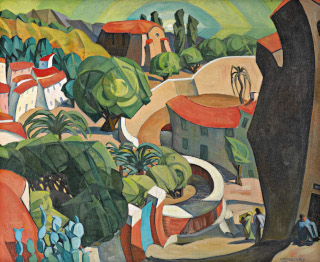
(Pictured: Sunlit Landscape, oil-on-canvas, by Mary Swanzy)
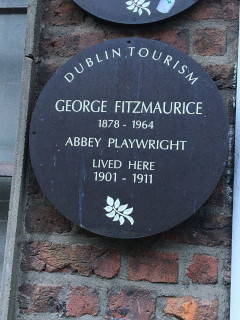
Fitzmaurice attends Duagh National School and later St. Michael’s College, Listowel. He is brought up in the Protestant faith as his father is a Protestant clergyman and is the vicar of St. John’s Church, Listowel. His father dies when he is fourteen years old and the family fortune declines. He takes a job in Dublin as a clerk in the Congested Districts Board for Ireland. In 1916 he enlists in the British Army and returns to Dublin after the war and is diagnosed with neurasthenia, rendering him fearful of crowds. On his return to Dublin, he takes up a position working for the Irish Land Commission.
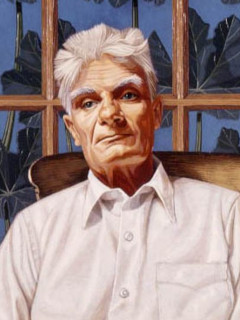
Fitzmaurice and his eleven siblings are the children of a mixed marriage. He and his brothers are brought up as Protestants and his sisters are brought up as Roman Catholics. His family home at Bedford, together with its extensive lands has to be given up as collateral in respect of a £60 debt owed to the local butcher. Neither Fitzmaurice nor any of his eleven siblings are to marry or have any offspring. He is the last Fitzmaurice of Duagh. There are no photographs of him other than a sketch of him in later life.
Fitzmaurice’s first success was in 1907, with an Abbey Theatre production of his comedy The Country Dressmaker which features one of his most famous characters, Luke Quilter, “The man from the mountain.” This character proves to be a favourite with the audience, to the surprise of William Butler Yeats. The play’s commercial success brings necessary income to the Abbey Theatre in 1907. The play is ultimately broadcast by the Radio Éireann Players.
Fitzmaurice’s second play is a dramatic fantasy called The Pie Dish. It is heavily rejected and slated by critics and considered blasphemous. This leads to the rejection of another of his plays called The Dandy Dolls which is now understood as another of his best plays. It is produced in the Abbey Theatre in 1969, six years after his death.
During Fitzmaurice’s lifetime, some of his dramatic works are produced by poet Austin Clarke in Lyric Theatre, Dublin. In 1923 his play Twixt by Giltinans and the Carmodys is also performed on Abbey and eight more of his plays are printed in the literary journey The Dublin Magazine from 1924 to 1925.
The effects of having fought in World War I lead to Fitzmaurice becoming increasingly reclusive over time. With a fear of travelling and people or crowds, he spends his later years following “monotonous routines in Dublin.” On May 12, 1963, he dies in poverty at his home at 3 Harcourt Street and is buried in Mount Jerome Cemetery. In his room there are no pictures of himself, few personal mementos, but he does have a copy of almost every play he had published, as well as some unpublished drafts. Besides his personal clothing, there is little else. He dies without leaving a will.
In 1965, RTÉ reports that “the works of George Fitzmaurice are now undergoing something of a revival.” A fellow Kerry playwright, John B. Keane, states at the time that Fitzmaurice is increasingly being recognised as the great dramatist he truly was. He also describes his work as having “practical clarity of speech coupled with a great conciseness, and a tightness in his writing and in his construction.” Michael Connor, the man who owns the Fitzmaurice property in Daugh, recounts that he often saw Fitzmaurice in the town after his retirement from the civil service but by that time the dramatist had completely lost interest in seeing his own plays on the stage.
In his native Daugh, The George Fitzmaurice Library is founded, and on October 14, 1995, a headstone that is sculpted by a local and commissioned by the Duagh Historical Society, is placed over Fitzmaurice’s grave.
The blast engulfs a carriage of the train in flames, killing three and injuring five others. One of the dead and the most seriously injured survivor are volunteers of the IRA. After the blast, the organisation issues a statement acknowledging responsibility, apologising to those who were harmed and state that it was ‘grave and distressing’ but an ‘accident’ caused by the ‘war situation.’
The train is a Northern Ireland Railways afternoon service carrying passengers between Ballymena railway station and Belfast Central railway station. The train is largely empty as it leaves Dunmurry railway station and enters the outskirts of Belfast, crossing under the M1 motorway on its way to Finaghy railway station shortly before 4:55 PM. A large fireball erupts in the rear carriage, bringing the train to a standstill and forcing panicked passengers to evacuate urgently as the smoke and flames spread along the train. The survivors then move down the track in single file to safety while emergency services fight the blaze. After several hours and combined efforts from fire, police and military services the blaze is contained. One fireman is treated for minor injuries. The two damaged carriages are transported to Queen’s Quay in Belfast for forensic examination and are subsequently rebuilt, one remaining in service until 2006 and the other until 2012.
Of the four persons occupying the carriage, three are killed with burns so severe that it is not possible to identify them by conventional means. Rail chief Roy Beattie describes the human remains as “three heaps of ashes.” The fourth, later identified as Patrick Joseph Flynn, is an IRA member and one of the men transporting the bombs. He suffers very serious burns to his face, torso and legs, and is reported to be close to death upon arrival at the hospital. Of the dead, two are eventually named as 17-year-old Protestant student Mark Cochrane from Finaghy and the other a 35-year-old Belfast-based accountant and recent immigrant from Lagos, Nigeria, Max Olorunda, who had been visiting a client in Ballymena. The identity of the third is harder to ascertain, but it is eventually confirmed by the IRA by their statement that he is 26-year-old IRA member Kevin Delaney. In addition to the fireman, four people are injured, including Flynn, two teenagers treated for minor injuries and an older man who suffers much more serious burns.
Further bomb alerts are issued across the region and two similar devices are discovered on trains, at York Road railway station in Belfast and at Greenisland railway station. Both are removed safely, and control detonated. The devices are simple incendiary bombs similar to that which exploded south of Befast, consisting of a 5-lb. block of explosives attached to a petrol can with a simple time device intended to delay the explosion until the train is empty that evening. Later testimony indicates that Delaney armed the first of two bombs and placed it beside him as he picked up the second one. As he arms this device, the first bomb suddenly detonates for reasons that remain unknown. Delaney is killed instantly and his accomplice, Patrick Joseph Flynn, is forced to leap from the train in flames. Flynn is guarded by police in hospital and arrested once his wounds heal sufficiently.
The IRA releases a lengthy statement about the event, terming it a ‘bombing tragedy,’ blaming the Royal Ulster Constabulary for their ‘sickening and hypocritical … collective activity of collaboration with the British forces.’ In Britain, ConservativeMPWinston Churchill calls for the death penalty to be reinstated for terrorists as a result of the incident.
Patrick Flynn is tried at Belfast Crown Court for double manslaughter and possession of explosives after he recovers from his injuries. He is severely disfigured and badly scarred from the extensive burns the incendiary device had inflicted upon him. The judge is asked and agrees to take this into account for sentencing after reviewing the evidence and finding Flynn guilty due to his proximity to the explosion, his known IRA affiliation and the discovery of telephone numbers for the Samaritans and Belfast Central railway station in his jacket, to be used to telephone bomb warnings. Justice Kelly sentences Flynn to ten years in prison for each manslaughter as well as seven years for the explosives offences, to be served concurrently.
Little Christmas, traditionally known as Nollaig na mBan or Women’s Little Christmas, takes place on January 6 each year. It is also known more widely as the Feast of the Epiphany, celebrated after the conclusion of the twelve days of Christmastide. It is the traditional end of the Christmas season and until 2013 was the last day of the Christmas holidays for both primary and secondary schools in Ireland.
Owing to differences in liturgical calendars, as early as the fourth century, the churches of the Eastern Roman Empire were celebrating Christmas on January 6, while those of the Western Roman Empire were celebrating it on December 25.
In October 1582, Pope Gregory XIII introduces the Gregorian calendar as a correction the Julian calendar, because the latter has too many leap years that cause it to drift out of alignment with the solar year. This has liturgical significance since calculation of the date of Easter assumes that spring equinox in the Northern Hemisphere occurs on March 21. To correct the accumulated error, he ordains the date be advanced by ten days. Most Roman Catholic countries adopt the new calendar immediately and Protestant countries follow suit over the following 200 years. For this reason, in some parts of the world, the Feast of the Epiphany, which is traditionally observed on January 6, is sometimes referred to as Old Christmas or Old Christmas Day.
In Ireland, Little Christmas is also called Women’s Christmas (Irish: Nollaig na mBan), and sometimes Women’s Little Christmas. The tradition, still strong in counties Cork and Kerry, is so called because Irish men take on household duties for the day. Goose is the traditional meat served on Women’s Christmas. Some women hold parties or go out to celebrate the day with their friends, sisters, mothers and aunts. As a result, parties of women and girls are common in bars and restaurants on this night.
In Ireland and Puerto Rico, it is the traditional day to remove the Christmas tree and decorations. The tradition is not well documented, but one article from a January 1998 issue of The Irish Times, entitled “On the woman’s day of Christmas,” describes both some sources of information and the spirit of this occasion.
A “Little Christmas” is also a figure in Irish set dancing. It refers to a figure where half the set, four dancers, join together with hands linked behind partners lower back, and the whole figure proceeds to rotate in a clockwise motion, usually for eight bars.
So, to all of the women of Ireland and the Irish diaspora, Nollaig na mBan shona daoibh!
Dobbs is born in County Antrim on November 19, 1871 to barrister Conway Edward Dobbs who is Justice of the Peace for County Antrim, High Sheriff for Carrickfergus in 1875 and High Sheriff for County Louth in 1882. Her mother is Sarah Mulholland, daughter of St. Clair Kelvin Mulholland of Eglantine, County Down. The family spends time living in Dublin where Dobbs is born. She attempts to learn Irish, however, when her father dies in 1898 her mother moves the family back to Glenariff.
Dobbs is interested in learning Irish and finds it easier to learn in County Donegal where it is still spoken. Her first teacher is Hugh Flaitile. She attends the Irish College at Cloughaneely in the Donegal Gaeltacht. She brings the idea of promoting the language to the Glens of Antrim and her circle of friends. She is one of the small number of Protestant women interested in the Gaelic revival.
The year 1904 sees the “Great Feis” in Antrim and Dobbs is a founder member of the Feis na nGleann committee and later a tireless literary secretary. In 1946, the Feis committee decides to honour her by presenting her with an illuminated address. It can be seen today at Portnagolan House with its stained glass windows commemorating a great Irishwoman. During her speech she says, “Ireland is a closed book to those who do not know her language. No one can know Ireland properly until one knows the language. Her treasures are hidden as a book unopened. Open the book and learn to love your language.”
Dobbs writes seven plays, published by Dundalgan Press in 1920, though only three are actually performed. The Doctor and Mrs. McAuley wins the Warden trophy for one-act plays at the Belfast festival in 1913. Her plays, however, are generally not a success and after 1920 she never writes another. She continues to work on historical and archaeological studies and her articles are published in the Ulster Journal of Archaeology, in a German magazine for Celtic studies, in the French Revue Celtique and in the Irish magazine Ériu.
Roger Casement is a good friend and although Dobbs never makes her political opinions known she contributes to his defence costs when he is accused of treason. Although her political views are not clearly known, Dobbs has been a member of the Gaelic League and in the executive of Cumann na mBan.
Dobbs dies at her home, Portnagolan House, Cushendall, on January 2, 1962.