seamus dubhghaill

Promoting Irish Culture and History from Little Rock, Arkansas, USA


Leave a comment

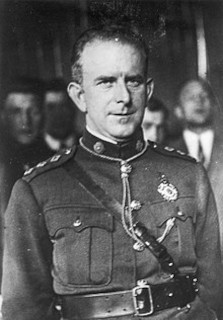
Death of Eoin O’Duffy, Activist, Soldier & Police Commissioner

Eoin O’Duffy, Irish nationalist political activist, soldier and police commissioner, dies in Dublin on November 30, 1944.

O’Duffy is born near Castleblayney, County Monaghan on January 28, 1890. Trained initially as an engineer, he later becomes an auctioneer. He becomes interested in Irish politics and joins Sinn Féin, later becoming a member of the Irish Republican Army (IRA).

During the Irish War of Independence, O’Duffy commands the Monaghan Brigade and in February 1920 he successfully captures the Royal Irish Constabulary (RIC) barracks at Ballytrain taking from it weapons and explosives. Also present at this victory is Ernie O’ Malley, who goes on to organize flying columns, and the socialist guerrilla fighter Peadar O’Donnell.

In the 1921 Irish elections, O’Duffy becomes TD for Monaghan. By 1922, he has been promoted to Chief of Staff of the IRA and is one of Michael Collins foremost supporters when he accepts the Anglo-Irish Treaty and fights in the Irish Civil War as a general of the Free State Army.

As commander of the 2nd Northern Division of the IRA, O’Duffy sees action in Belfast when defending Catholic ghettoes from attacks by Protestant pogromists. He also leads the Free State forces into Limerick city.

In September 1922, following the mutiny in Kildare by Civic Guard recruits, O’Duffy replaces Michael Staines as commissioner. Under him the police force is renamed the Garda Síochána, disarmed and is later merged with the Criminal Investigation Department (CID) and the Dublin Metropolitan Police (DMP). His fervent Catholicism is greatly reflected in the ethos of the Garda Síochána.

In 1933, O’Duffy becomes associated with Cumann na nGaedheal by taking on the leadership of their security organization the Army Comrades Association, later to be known colloquially as the Blueshirts. This organization is to become a participant in many street brawls with anti-treaty sympathizers who try to break up pro-treaty political meetings. When the pro-treaty parties merge in 1933 to become Fine Gael, he is the party President for a short period of time.

It is believed that O’Duffy unsuccessfully encourages W. T. Cosgrave to consider a coup-de’etat in the event of Fianna Fáil winning the 1932 Irish general election. Cosgrave, in the event, puts his trust in a democracy when Fianna Fáil does, in fact, form a government, led by Éamon de Valera, with the help of the Labour Party.

After the 1933 Irish general election, which again sees de Valera in power, O’Duffy is dismissed from his post as Garda Commissioner on the grounds that due to his past political affiliations, he will be unable to carry out his duties without bias.

In Europe, the new phenomenon of fascism is gaining ground and O’Duffy, like many of his pro-treaty colleagues, is drawn to it. His Army Comrades Association is renamed the National Guard, and they begin to take on many of the symbols of fascism such as the outstretched arm salute and the blue uniforms.

When O’Duffy plans a massed march for August 1933 in Dublin to commemorate the deaths of Arthur Griffith and Michael Collins, de Valera, fearing a coup, has it banned. Possibly de Valera is also testing the loyalty of the army and the Garda Síochána. In September the National Guard itself is banned although it reforms under the title The League of Youth.

In 1934 O’Duffy suddenly and inexplicably resigns as president of Fine Gael although it is known that many of its members are growing worried by his actions and statements. The Blueshirt movement begins to unravel at the seams. That same year he forms his own fascist movement, the National Corporate Party.

In 1936, supported by the Catholic Church in Ireland, O’Duffy leads 700 of his followers to Spain to help General Francisco Franco in the Spanish Civil War against the republican government. They form part of the XV Bandera Irlandesa del Terico, a part of the Spanish Legion. The Bandera sees little or no action and are returned to Ireland in 1937.

Although O’Duffy has some low-level dalliance with the Nazis he never does regain any of his political influence. His health is on the decline, and he dies on November 30, 1944. De Valera grants him a state funeral and he is interred in Glasnevin Cemetery in Dublin.


Leave a comment

Republican Prisoner Denny Barry Dies on Hunger Strike

Irish Republican prisoner Denis “Denny” Barry dies on hunger strike in Newbridge internment camp on November 20, 1923, shortly after the Irish Civil War.

Barry is born into a farming family in Riverstick, ten miles south of Cork city, on July 15, 1883. He enjoys Gaelic culture and sport and is a prominent member of the Ballymartle hurling club. He later joins the famous Blackrock National Hurling Club where he wins four senior county championships in a row during the years of 1910 to 1913.

In 1913, Barry joins the newly formed Irish Volunteers. He is a member of the first Cork brigade and has been politically active in Sinn Féin. In 1915, he moves to Kilkenny to take up employment there, where he continues his volunteer activities. Shortly after the Easter Rising in 1916, he is arrested in Kilkenny in a British Government crackdown and sent to Frongoch internment camp in North Wales. In 1917 he becomes election agent for W. T. Cosgrave in the Kilkenny by-election, one in which Cosgrave is successfully elected. However, just six years later he finds himself imprisoned by Cosgrave’s own government.

In 1922 Barry is imprisoned in Newbridge camp in Kildare and takes part in the hunger strike of 1923. On November 20, 1923, after 34 days protesting against the harsh regime and undignified conditions, he dies but even in death he is still refused dignity.

Barry’s body is not released to his family and is instead, on the orders of Minister of Defence, Richard Mulcahy, buried in the grounds of Newbridge internment camp. The Barry family takes legal action against this and eventually receives the body, but this is not the last of their troubles.

Upon their arrival in Cork with Barry’s body, the Bishop of Cork, Daniel Cohalan, instructs his priests not to allow Barry’s funeral in any church. Ironically just a few short years before, Bishop Cohalan had been a strong vocal supporter of Terence MacSwiney, Sinn Féin Lord Mayor of Cork, who died on hunger strike in Brixton Prison.

Shortly after MacSwiney’s death, Bishop Cohalan’s attitude towards the Irish Republican Army (IRA) changes and he issues a decree condemning the IRA in which he states, “Anyone who shall within the diocese of Cork organise or take part in an ambush or in kidnapping or otherwise, shall be guilty of murder or attempted murder and shall incur by the very fact the censure of excommunication.”

On December 10, 1922, Bishop Cohalan preaches publicly his support for the Anglo-Irish Treaty which establishes the Irish Free State, and he urges his flock to do the same. This leads to an even greater wedge between the Catholic Church and many IRA members, yet it is the incident with Barry that seriously taints the Bishop of Cork and the Catholic Church in republican eyes.

Because of Bishop Cohalan’s stern objection to Barry’s body being permitted into a Catholic church, his body has to lay in state in the Cork Sinn Féin headquarters on the Grand Parade in Cork city. He is then taken in a funeral procession to St. Finbarr’s Cemetery where he is buried in the Republican plot next to Terence MacSwiney, whose funeral Bishop Cohalan had presided over three years previously. In place of a priest is David Kent, Sinn Féin Teachta Dála for Cork and brother of Thomas Kent, who was executed for his part in the 1916 Rising. Kent gives an oration, recites the Rosary and sprinkles holy water on the grave.

On November 28, 1923, the day Barry is buried, Bishop Cohalan sends an open letter to The Cork Examiner publicly denying a Christian burial for Barry and urging all men of the cloth to stay away from any such attempts for such a funeral. He goes so far as to write to the Bishop of Kildare and Leighlin, Dr. Patrick Foley, to enquire about Barry getting the last sacraments. Barry did indeed receive the last rites from a Fr. Doyle who was serving as prison chaplain, and this does not impress the Bishop of Cork.

Barry’s funeral precession through Cork City draws massive crowds with people from all walks of Cork’s political, social and sporting life attending to pay their respects to this man who had been at the heart of the revolution in Cork during the last decade of his life. The IRA, Cumann na mBan and Na Fíanna Éireann march in military formations with the funeral party.

Two days after Barry’s death another IRA prisoner, Andrew O’Sullivan, from Cork dies and the strike is called off the following day. Women prisoners are then released while men remain in prison until the following year.

A memorial to Barry is unveiled in Riverstick in 1966.


Leave a comment

Geraldine Kennedy Appointed Editor of The Irish Times

Geraldine Kennedy, Irish journalist and politician, is appointed editor of The Irish Times on October 11, 2002, becoming the first female editor of a national daily newspaper.

Kennedy is born on September 1, 1951, in Tramore, County Waterford. She studies at Dublin Institute of Technology and begins her journalistic career with a regional newspaper, The Munster Express. She moves to The Cork Examiner after less than a year but spends only a few years there before joining The Irish Times.

On the foundation of the Sunday Tribune in 1980, Kennedy joins it as the paper’s political correspondent. The paper’s publisher, John Mulcahy, had become familiar with her when she had contributed to his journal Hibernia. When the Tribune briefly ceases production, she moves to the Sunday Press.

In 1982, Kennedy’s telephone, along with those of two other journalists, is tapped by former Minister for Justice Seán Doherty. Early in 1987, Kennedy successfully sues the incumbent Charles Haughey-led Fianna Fáil government for illegally tapping her phone. The revelation in 1992 that Haughey had ordered the phone taps leads to his resignation as Taoiseach.

Kennedy stands in the 1987 Irish general election as a candidate for the newly formed Progressive Democrats party in Dún Laoghaire. She comes third in the poll, winning 9.4% of the first-preference vote. She is one of fourteen Progressive Democrats TDs elected to Dáil Éireann in that election — a feat the party never achieves again. She is appointed the party’s spokesperson for foreign affairs. She stands again in the 1989 Irish general election and wins 9% of the first-preference vote but fails to retain her seat.

Following her election defeat, Kennedy returns to The Irish Times, then edited by Conor Brady, whom she had worked with at the Tribune when he was the editor. She avoids party-political journalism for several years, but she returns to covering politics in the early 1990s and becomes The Irish Times‘ political editor in 1999. She becomes the newspaper’s first female editor upon the departure of Conor Brady in October 2002. One of her rivals for the editor’s chair is the paper’s high-profile columnist, Fintan O’Toole.

Kennedy is paid more than the editor of Britain’s top non-tabloid newspaper The Daily Telegraph, which has a circulation of about nine times that of The Irish Times. Later columnist Fintan O’Toole tells the Sunday Independent, “We as a paper are not shy of preaching about corporate pay and fat cats but with this there is a sense of excess. Some of the sums mentioned are disturbing. This is not an attack on Ms. Kennedy, it is an attack on the executive level of pay. There is double standard of seeking more job cuts while paying these vast salaries.”

In September 2006, Kennedy approves the publication of an article in The Irish Times giving confidential details of investigations being made into payments purported to have been made in 1993 to Taoiseach Bertie Ahern. She refuses, upon request of the investigating Mahon Tribunal, to provide details of the source of the printed information. She responds that the documents have since been destroyed. Her refusal causes the Tribunal to seek High Court orders compelling her to provide details of the source. On October 23, 2007, the High Court grants the orders compelling her to go before the Tribunal and answer all questions. In its judgment, the High Court, criticising her decision to destroy the documents, says it is an “astounding and flagrant disregard of the rule of law.” In 2009, however, the Supreme Court of Ireland overturns this ruling, holding that the High Court had not struck the correct balance between the journalists’ right to protect their source and the tribunal’s right to confidentiality.

Kennedy announces on March 12, 2011, her intention to retire from The Irish Times by September, after a nine-year term as editor. She actually retires in June, and is succeeded by news editor, Kevin O’Sullivan, who succeeds her as editor on June 23, 2011.

In August 2012, Kennedy is appointed Adjunct Professor of Journalism at the University of Limerick. She has been awarded five honorary doctorates from Irish universities.


Leave a comment

Birth of Neil Blaney, Fianna Fáil Politician

Neil Terence Columba Blaney, Irish politician first elected to Dáil Éireann in 1948 as a Fianna Fáil Teachta Dála (TD) representing Donegal East, is born on October 1, 1922 in Fanad, County Donegal. He serves as Minister for Posts and Telegraphs (1957), Minister for Local Government (1957–1966) and Minister for Agriculture and Fisheries (1966–1970). He is Father of the Dáil from 1987 until his death.

Blaney is the second eldest of a family of eleven. His father, from whom he got his strong republican views and his first introduction to politics, had been a commander in the Irish Republican Army (IRA) in Donegal during the Irish War of Independence and the Irish Civil War. He is educated locally at Tamney on the rugged Fanad Peninsula and later attends St. Eunan’s College in Letterkenny. He later works as an organiser with the Irish National Vintners and Grocers Association.

Blaney is first elected to Dáil Éireann for the Donegal East constituency in a by-election in December 1948, following the death of his father from cancer. He also becomes a member of the Donegal County Council. He remains on the backbenches for a number of years before he is one of a group of young party members handpicked by Seán Lemass to begin a re-organisation drive for the party following the defeat at the 1954 general election. Within the party he gains fame by running the party’s by-election campaigns throughout the 1950s and 1960s. His dedicated bands of supporters earn the sobriquet “the Donegal Mafia,” and succeed in getting Desmond O’Malley and Gerry Collins elected to the Dáil.

Following Fianna Fáil’s victory at the 1957 general election, Éamon de Valera, as Taoiseach, brings new blood into the Cabinet in the shape of Blaney, Jack Lynch, Kevin Boland and Mícheál Ó Móráin. Blaney is appointed Minister for Posts and Telegraphs however he moves to the position of Minister for Local Government at the end of 1957 following the death of Seán Moylan. He retains the post when Lemass succeeds de Valera as Taoiseach in 1959. During his tenure it becomes possible to pay rates by installment and he also introduces legislation which entitles non-nationals to vote in local elections.

In 1966 Lemass resigns as Taoiseach and Fianna Fáil leader. The subsequent leadership election sees Cork politician Jack Lynch become party leader and Taoiseach. In the subsequent cabinet reshuffle Blaney is appointed Minister for Agriculture and Fisheries.

In 1969, when conflict breaks out in Northern Ireland, Blaney is one of the first to express strong Irish republican views, views which contradict the policy of the Irish Government, in support of Northern nationalists. From around late 1968 onwards, he forms and presides over an unofficial Nationalist group in Leinster House popularly known as “the Letterkenny Table.” The group is dominated by Blaney up until his death.

There is general surprise when, in an incident known as the Arms Crisis, Blaney, along with Charles Haughey, is sacked from Lynch’s cabinet amid allegations of the use of the funds to import arms for use by the IRA. Lynch asked for their resignations but both men refuse, saying they did nothing illegal. Lynch then advises President de Valera to sack Haughey and Blaney from the government. Haughey and Blaney are subsequently tried in court but are acquitted. However, many of their critics refuse to recognise the verdict of the courts. Although Blaney is cleared of wrongdoing, his ministerial career is brought to an end.

Lynch subsequently moves against Blaney so as to isolate him in the party. When Blaney and his supporters try to organise the party’s national collection independently, Lynch acts and in 1972 Blaney is expelled from Fianna Fáil for “conduct unbecoming.”

Following his expulsion from Fianna Fáil, Kevin Boland tries to persuade Blaney to join the Aontacht Éireann party he is creating but Blaney declines. Instead, he contests all subsequent elections for Independent Fianna Fáil – The Republican Party, an organisation that he built up. Throughout the 1970s there are frequent calls for his re-admittance to Fianna Fáil but the most vocal opponents of this move are Fianna Fáil delegates from County Donegal.

At the 1979 European Parliament elections Blaney tops the poll in the Connacht–Ulster constituency to the annoyance of Fianna Fáil. He narrowly loses the seat at the 1984 election but is returned to serve as a Member of the European Parliament (MEP) in the 1989 election where he sits with the regionalist Rainbow Group. He also canvasses for IRA hunger striker Bobby Sands in the Fermanagh and South Tyrone by-election, in which Sands is elected to Westminster.

Blaney holds his Dáil seat until his death from cancer at the age of 73 on November 8, 1995 in Dublin.


Leave a comment

The Founding of Fine Gael

fine-gael-logo

Fine Gael, a liberal-conservative political party in Ireland, is founded on September 8, 1933, following the merger of its parent party Cumann na nGaedheal, the National Centre Party and the National Guard, popularly known as the “Blueshirts.” The party’s origins lie in the struggle for Irish independence and the pro-Treaty side in the Irish Civil War. Michael Collins, in particular, is often identified as the founder of the movement.

Fine Gael is currently the third-largest party in Ireland in terms of members of Dáil Éireann and largest in terms of Irish members of the European Parliament. The party has a membership of 21,000 in 2017. Leo Varadkar succeeds Enda Kenny as party leader on June 2, 2017, and as Taoiseach on June 14. Kenny had been leader since 2002, and Taoiseach since 2011.

Fine Gael is generally considered to be more of a proponent of market liberalism than its traditional rival, Fianna Fáil. Apart from brief minority governments, Fine Gael has rarely governed Ireland without a coalition that also includes the Labour Party, a social-democratic, centre-left party. Fine Gael describes itself as a “party of the progressive centre” which it defines as acting “in a way that is right for Ireland, regardless of dogma or ideology.” The party lists its core values as “equality of opportunity, free enterprise and reward, security, integrity and hope.”

In international politics, Fine Gael is highly supportive of the European Union, along with generally supporting strengthened relations with the United Kingdom and opposition to physical force Irish republicanism. The party’s youth wing, Young Fine Gael, is formed in 1977, and has approximately four thousand members. Fine Gael is a founding member of the European People’s Party.

Having governed in coalition with the Labour Party between 2011 and 2016, and in a minority government along with Independent TDs from 2016 to 2020, Fine Gael currently forms part of an historic coalition government with its traditional rival, Fianna Fáil, and the Green Party. On June 27, 2020, Micheál Martin of Fianna Fáil is appointed as Taoiseach and forms a new government. Leo Varadkar serves as Tánaiste with both parties agreeing that in December 2022, Varadkar will serve again as Taoiseach.


Leave a comment

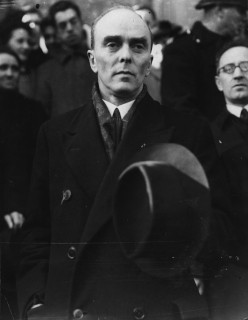
Birth of Hugh Kennedy, Politician, Barrister & Judge

File source: http://commons.wikimedia.org/wiki/File:Hugh_Kennedy.jpg

Hugh Edward Kennedy, Fine Gael politician, barrister and judge, is born in Abbotstown, Dublin on July 11, 1879. He serves as Attorney General of Ireland from 1922 to 1924, a Judge of the Supreme Court of Ireland from 1924 to 1936 and Chief Justice of Ireland from 1924 to 1936. He serves as a Teachta Dála (TD) for the Dublin South constituency from 1923 to 1927. As a member of the Irish Free State Constitution Commission, he is also one of the constitutional architects of the Irish Free State.

Kennedy is the son of the prominent surgeon Hugh Boyle Kennedy. His younger sister is the journalist Mary Olivia Kennedy. He studies for the examinations of the Royal University of Ireland while a student at University College Dublin and King’s Inns, Dublin. He is called to the Bar in 1902. He is appointed King’s Counsel in 1920 and becomes a Bencher of King’s Inn in 1922.

During 1920 and 1921, Kennedy is a senior legal adviser to the representatives of Dáil Éireann during the negotiations for the Anglo-Irish Treaty. He is highly regarded as a lawyer by Michael Collins, who later regrets that Kennedy had not been part of the delegation sent to London in 1921 to negotiate the terms of the treaty.

On January 31, 1922, Kennedy becomes the first Attorney General in the Provisional Government of the Irish Free State. Later that year he is appointed by the Provisional Government to the Irish Free State Constitution Commission to draft the Constitution of the Irish Free State, which is established on December 6, 1922. The functions of the Provisional Government are transferred to the Executive Council of the Irish Free State. He is appointed Attorney General of the Irish Free State on December 7, 1922.

In 1923, Kennedy is appointed to the Judiciary Commission by the Government of the Irish Free State, on a reference from the Government to establish a new system for the administration of justice in accordance with the Constitution of the Irish Free State. The Judiciary Commission is chaired by James Campbell, 1st Baron Glenavy, who had also been the last Lord Chancellor of Ireland. It drafts the Courts of Justice Act 1924 for a new court system, including a High Court and a Supreme Court, and provides for the abolition, inter alia, of the Court of Appeal in Ireland and the Irish High Court of Justice. Most of the judges are not reappointed to the new courts. Kennedy personally oversees the selection of the new judges and makes impressive efforts to select them on merit alone. The results are not always happy. His diary reveals the increasingly unhappy atmosphere, in the Supreme Court itself, due to frequent clashes between Kennedy and his colleague Gerald Fitzgibbon, since the two men prove to be so different in temperament and political outlook that they find it almost impossible to work together harmoniously. In a similar vein, Kennedy’s legal opinion and choice of words could raise eyebrows amongst legal colleagues and fury in the Executive Council e.g. regarding the Kenmare incident.

Kennedy is also a delegate of the Irish Free State to the Fourth Assembly of the League of Nations between September 3-29, 1923.

Kennedy is elected to Dáil Éireann on October 27, 1923, as a Cumann na nGaedheal TD at a by-election in the Dublin South constituency. He is the first person to be elected in a by-election to Dáil Éireann. He resigns his seat when he is appointed Chief Justice of Ireland in 1924.

On June 5, 1924, Kennedy is appointed Chief Justice of Ireland, thereby becoming the first Chief Justice of the Irish Free State. He is also the youngest person appointed Chief Justice of Ireland. When he is appointed, he is 44 years old. Although the High Court of Justice and the Court of Appeal had been abolished and replaced by the High Court and the Supreme Court respectively, one of his first acts is to issue a practice note that the wearing of wigs and robes will continue in the new courts. This practice is still continued in trials and appeals in the High Court and the Supreme Court (except in certain matters). He holds the position of Chief Justice until his death on December 1, 1936, in Goatstown, Dublin.

In September 2015, a biography by Senator Patrick Kennedy (no relation) is written about Kennedy called Hugh Kennedy: The Great but Neglected Chief Justice.


Leave a comment

National Day of Commemoration 2017

national-day-of-commemoration-2017

President Michael D. Higgins and Taoiseach Leo Varadkar lead the ceremony to mark the National Day of Commemoration at the Royal Hospital Kilmainham in Kilmainham, Dublin on July 9, 2017. The event is a multi-faith service of prayer and a military service honouring all Irish people who died in past wars or on service with the United Nations. Events are also held in Cork, Galway, Limerick, Sligo, Kilkenny and Waterford.

The National Day of Commemoration is held on the Sunday closest to July 11, the anniversary of the date the truce was signed in 1921 to end the Irish War of Independence.

Leaders from Christian, Coptic Christian, Jewish and Islamic denominations read or sing prayers and readings, and President Higgins lays a laurel wreath. The service is observed by more than 1,000 guests, including Government Ministers, the Council of State, which advises the Taoiseach, members of the judiciary, members of the diplomatic corps, TDs and Senators, representatives of ex-servicemen’s organisations and relatives of the leaders of the 1916 Easter Rising.

The national flag is lowered to half-mast while the “Last Post” and “Reveille” are sounded. After a minute of silence, a gun salute is sounded, and the flag is raised again before the national anthem is played with a fly-by by three Pilatus PC-9 aircraft.

The Army band of the 1st Brigade and pipers play music including “Limerick’s Lament” and “A Celtic Lament” as guests arrive at the quadrangle of the former British Army veterans’ hospital, now the Irish Museum of Modern Art.

The prayer service begins with Imam Sheikh Hussein Halawa of the Islamic Cultural Centre of Ireland, father of Ibrahim Halawa, who is in prison in Cairo, singing verses from the Quran in Arabic and praying in English, “I ask Allah, the Mighty, the Lord, to bless our country, Ireland, and give the people of our country a zeal for justice and strength for forbearance.”

Soloist Sharon Lyons sings hymns between prayers and readings from all denominations, ending with Rabbi Zalman Lent: “May the efforts and sacrifice of those we honour today be transformed into the blessing of people throughout the world.”

Speaking to reporters, Chief of Staff of the Defence Forces Vice Admiral Mark Mellett says more than 650 personnel are serving in eleven countries and on the Mediterranean Sea. “In the Defence Forces we have over 80 people who have given their lives in the cause of peace internationally, and I think it’s a sign of a State that recognises those who give this service,” he says. “The military of our State serve the political and serve the people. And it’s this loyalty to the State which is actually critical, and I’m delighted that we have a day like this.”

Mellett’s views are echoed by former sergeant Denis Barry, who says 47 Irish soldiers died in Lebanon and it is important to pay respects for that sacrifice. “None of us who served ever thought we would see the day we could travel in Lebanon without weapons, heavy armaments or flak jackets.” That United Nations mission paid off, he says.

Former British soldier Ron Hammond says the event reflects positive developments, such as the creation of the veterans’ Union of British and Irish Forces. He served from 1960 to 1980 in the Royal Irish Fusiliers and Royal Irish Rangers, spending time in Germany, Canada, Yemen and north and south Africa. He joined the British rather than the Irish forces because at the time “a home posting in the Defence Forces was Collins Barracks and an overseas posting was the Curragh encampment.”

(From: “Irish military dead honoured in National Day of Commemoration” by Marie O’Halloran, The Irish Times, July 9, 2017)


Leave a comment

The Founding of Clann na Poblachta

sean-macbride

Clann na Poblachta, a radical new republican party, is founded in Barry’s Hotel, Dublin, on July 6, 1946, by former members of the Irish Republican Army (IRA) who are very unhappy at the treatment of IRA prisoners during “The Emergency” and who are prepared to try and engage in parliamentary politics. The party lasts 19 years but fails in its objectives due to internal feuds and lack of unity.

The group includes people such as Con Lehane and former IRA Chief of Staff Seán MacBride. Some members of Fianna Fáil also join the party, many of whom have become disillusioned with the leadership of Éamon de Valera, the party’s approach to partition and its economic policies.

Clann na Poblachta realises that it has to place an emphasis on practical improvements to living standards and welfare issues such as public health. These policies attract a number of younger members such as Noël Browne and Jack McQuillan. One potential problem for the future is that almost the entire Provisional Executive is resident in Dublin and the party has no organisation in the six counties of Northern Ireland.

In 1948, Éamon de Valera dissolves the Dáil and calls an election for February. Clann na Poblachta wins only ten seats in the 1948 Irish general election, fewer than the breakthrough expected, caused in part by the error of running multiple candidates in many constituencies. The party believes there will be a landslide in their favour like the 1918 Westminster election but 48 of their 93 candidates lose their deposits. The party wins 13.3% of the vote but only 6.8% of the seats. Of their ten Teachtaí Dála (TD), six are elected in Dublin constituencies, two in Tipperary and one each in Cavan and Roscommon.

The party surprises everyone by joining the first Inter-Party Government with Fine Gael on condition that Richard Mulcahy, against whom many members had fought during the Irish Civil War, does not become Taoiseach. As a result, John A. Costello becomes Taoiseach without being leader of his party, the only time to date that this has happened. Seán MacBride becomes Minister for External Affairs and Noël Browne is named Minister for Health.

The party is the driving force behind the 26 counties exiting the Commonwealth of Nations and the all-party Anti-Partition Campaign.

The controversy of the “Mother and Child Scheme,” a progressive healthcare programme opposed by the Catholic Church, helps bring down the government and leads to the disintegration of the party. Many of the party’s TDs resign in solidarity with Noël Browne and his scheme, so the official party wins only two seats in the 1951 Irish general election.

In 1954, Clann na Poblachta agrees to give outside support to the Fine Gael-led government. In this election, three TDs are returned – MacBride, John Tully and John Connor. Controversy dogs the party as Liam Kelly, a Northern-based Clann na Poblachta senator, is also active in Saor Uladh and leads a number of military raids in County Fermanagh and County Tyrone against the Royal Ulster Constabulary (RUC).

Clann na Poblachta withdraws its support from the Government in late 1956 due to its anti-IRA stance. The party wins only one seat at the 1957 Irish general election with MacBride being defeated by Fianna Fáil. John Tully remains the only Clann TD until his retirement in 1961, after he loses his seat. However, Joseph Barron is elected in Dublin South-Central on his fourth attempt.

In 1965, Tully wins back his seat, but he is in effect an Independent as the party only stands four candidates. There had been negotiations between MacBride and Brendan Corish, the new Labour Party leader about forming a political alliance but this does not come to fruition.

A special Ardfheis, held on July 10, 1965, agrees to dissolve Clan na Poblachta.

(Pictured: Sean MacBride, former Chief of staff of the Irish Republican Army and founder of Clann na Poblachta)


Leave a comment

Éamon de Valera Elected 3rd President of Ireland

president-eamon-de-valeraThe 1959 Irish presidential election is held on June 17, 1959. Éamon de Valera, then Taoiseach, is elected as President of Ireland. A referendum proposed by de Valera to replace the electoral system of proportional representation by means of the single transferable vote with first-past-the-post voting which is held on the same day is defeated by 48.2% to 52.8%.

Under Article 12 of the Constitution of Ireland, a candidate for president may be nominated by:

  • at least twenty of the then 207 serving members of the Houses of the Oireachtas, or
  • at least four of 31 councils of the administrative counties, including county boroughs, or
  • themselves, in the case of a former or retiring president.

Outgoing president Seán T. O’Kelly had served two terms, and is ineligible to serve again. On April 27, the Minister for Local Government, Neal Blaney, signs the ministerial order opening nominations, with noon on May 19 as the deadline for nominations, and June 17 set as the date for a contest. All Irish citizens on the Dáil electoral register are eligible to vote.

De Valera who had served as President of Dáil Éireann and President of the Irish Republic from 1919 to 1922 during the Irish revolutionary period, as President of the Executive Council of the Irish Free State from 1932 to 1937, and as Taoiseach from 1937 to 1948, from 1951 to 1954, and again from 1957 until his election as president, is nominated by Fianna Fáil on May 12. He had served as Fianna Fáil’s leader since its foundation in 1926.

Seán Mac Eoin, a Fine Gael TD who had been the party’s candidate in the 1945 Irish presidential election, is nominated again by the party on May 15.

Patrick McCartan, who had also been a candidate in the 1945 election and had served as a senator for Clann na Poblachta from 1948 to 1951, is nominated by two county councils only, short of the four required for nomination. Eoin O’Mahony also seeks and fails to secure a nomination by county councils.

De Valera wins the popular vote with 538,003 votes (56.3%) to Mac Eoin’s 417,536 votes (43.7%).

Éamon de Valera is inaugurated as the third President of Ireland on June 25, 1959.


Leave a comment

Birth of Kevin Christopher O’Higgins, Politician

iohiggs001p1

Kevin Christopher O’Higgins, Irish politician who serves as Minister for Economic Affairs from January 1922 to September 1922, Minister for External Affairs from June 1927 to July 1927, Minister for Justice from August 1922 to July 1927 and Vice-President of the Executive Council of the Irish Free State from 1922 to 1927, is born in Stradbally, Queen’s County (County Laois since 1922) on June 7, 1892. He serves as a Teachta Dála (TD) from 1921 to 1927 and is a Member of Parliament (MP) for Queen’s County from 1918 to 1921.

A man of intellectual power, O’Higgins is described by William Butler Yeats as “a great man in his pride confronting murderous men.” He is in fact murdered by maverick republicans while on his way to church.

Educated at University College Dublin, O’Higgins is apprenticed to his uncle, a lawyer. Following the Easter Rising in 1916, he joins the Sinn Féin nationalist movement and is imprisoned. In 1918, while still in jail, he is elected to Parliament from Queen’s County, and in the next year he becomes assistant to the minister of local government, William Thomas Cosgrave. He goes on to become a prominent member of Cumann na nGaedheal.

O’Higgins supports the Anglo-Irish Treaty with Great Britain that creates the Irish Free State. In 1922 he is appointed Minister for Economic Affairs and Vice-President of the Executive Council. He helps to draft the Irish Free State constitution and secures its passage through Dáil Éireann, lower house of the Oireachtas, the Irish parliament. Working for a united Ireland within the British Commonwealth, he plays an important part in the 1926 Imperial Conference. He also prominently represents the Free State in the League of Nations.

As Minister for Justice, O’Higgins establishes the Garda Síochána police force and takes summary measures to restore order following the civil war between the Free State forces and the Irish Republican Army (IRA). His role in the execution of 77 republicans in 1922–23 makes him many enemies, as does his sardonic wit, his inflammatory speeches during the civil war, and his curtailment of the liquor trade.

On Sunday, July 10, 1927, O’Higgins is assassinated at the age of 35 on the Booterstown Avenue side of Cross Avenue in Dublin, while on his way to Mass at the Church of the Assumption. The assassination is carried out by three anti-Treaty members of the IRA, Timothy Coughlan, Bill Gannon and Archie Doyle, in revenge for O’Higgins’ part in the executions of the 77 IRA prisoners during the Irish Civil War.

None of the three assassins is ever apprehended or charged, but Coughlan, a member of Fianna Fáil as well as the IRA, is killed in 1928 in Dublin by a police undercover agent whom he is attempting to murder. The other two benefit from the amnesty to IRA members issued by Éamon de Valera, upon his assumption of power in 1932. Gannon, who dies in 1965, joins the Communist Party of Ireland and plays a central role in organising Irish volunteers for the Spanish Civil War. Doyle remains a prominent IRA militant and takes part in various acts in the early 1940s. He lives to an old age, dying in 1980, and continues to take pride in having killed O’Higgins.