seamus dubhghaill

Promoting Irish Culture and History from Little Rock, Arkansas, USA


Leave a comment

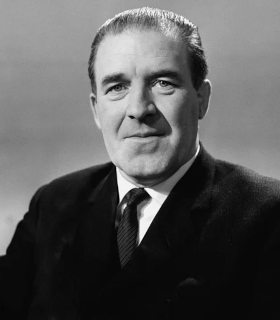
Death of Neil Blaney, Fianna Fáil Politician

Neil Terence Columba Blaney, Irish politician first elected to Dáil Éireann in 1948 as a Fianna Fáil Teachta Dála (TD) representing Donegal East, dies in Dublin of cancer at the age of 73 on November 8, 1995. He serves as Minister for Posts and Telegraphs (1957), Minister for Local Government (1957–1966) and Minister for Agriculture and Fisheries (1966–1970). He is Father of the Dáil from 1987 until his death.

Blaney is born on October 1, 1922, in Fanad, County Donegal, the second eldest of a family of eleven. His father, from whom he got his strong republican views and his first introduction to politics, had been a commander in the Irish Republican Army (IRA) in Donegal during the Irish War of Independence and the Irish Civil War. He is educated locally at Tamney on the rugged Fanad Peninsula and later attends St. Eunan’s College in Letterkenny. He later works as an organiser with the Irish National Vintners and Grocers Association.

Blaney is first elected to Dáil Éireann for the Donegal East constituency in a by-election in December 1948, following the death of his father from cancer. He also becomes a member of the Donegal County Council. He remains on the backbenches for a number of years before he is one of a group of young party members handpicked by Seán Lemass to begin a re-organisation drive for the party following the defeat at the 1954 Irish general election. Within the party he gains fame by running the party’s by-election campaigns throughout the 1950s and 1960s. His dedicated bands of supporters earn the sobriquet “the Donegal Mafia,” and succeed in getting Desmond O’Malley and Gerry Collins elected to the Dáil.

Following Fianna Fáil’s victory at the 1957 Irish general election, Éamon de Valera, as Taoiseach, brings new blood into the Cabinet in the shape of Blaney, Jack Lynch, Kevin Boland and Mícheál Ó Móráin. Blaney is appointed Minister for Posts and Telegraphs however he moves to the position of Minister for Local Government at the end of 1957 following the death of Seán Moylan. He retains the post when Lemass succeeds de Valera as Taoiseach in 1959. During his tenure it becomes possible to pay rates by installment and he also introduces legislation which entitles non-nationals to vote in local elections.

In 1966 Lemass resigns as Taoiseach and Fianna Fáil leader. The subsequent leadership election sees Cork politician Jack Lynch become party leader and Taoiseach. In the subsequent cabinet reshuffle Blaney is appointed Minister for Agriculture and Fisheries.

In 1969, when conflict breaks out in Northern Ireland, Blaney is one of the first to express strong Irish republican views, views which contradict the policy of the Irish Government, in support of Northern nationalists. From around late 1968 onwards, he forms and presides over an unofficial Nationalist group in Leinster House popularly known as “the Letterkenny Table.” The group is dominated by Blaney up until his death.

There is general surprise when, in an incident known as the Arms Crisis, Blaney, along with Charles Haughey, is sacked from Lynch’s cabinet amid allegations of the use of the funds to import arms for use by the IRA. Lynch asks for their resignations but both men refuse, saying they did nothing illegal. Lynch then advises President de Valera to sack Haughey and Blaney from the government. Haughey and Blaney are subsequently tried in court but are acquitted. However, many of their critics refuse to recognise the verdict of the courts. Although Blaney is cleared of wrongdoing, his ministerial career is brought to an end.

Lynch subsequently moves against Blaney so as to isolate him in the party. When Blaney and his supporters try to organise the party’s national collection independently, Lynch acts and in 1972 Blaney is expelled from Fianna Fáil for “conduct unbecoming.”

Following his expulsion from Fianna Fáil, Kevin Boland tries to persuade Blaney to join the Aontacht Éireann party he is creating but Blaney declines. Instead, he contests all subsequent elections for Independent Fianna Fáil – The Republican Party, an organisation that he built up. Throughout the 1970s there are frequent calls for his re-admittance to Fianna Fáil but the most vocal opponents of this move are Fianna Fáil delegates from County Donegal.

At the 1979 European Parliament elections Blaney tops the poll in the Connacht–Ulster constituency to the annoyance of Fianna Fáil. He narrowly loses the seat at the 1984 election but is returned to serve as a Member of the European Parliament (MEP) in the 1989 election where he sits with the regionalist Rainbow Group. He also canvasses for IRA hunger striker Bobby Sands in the Fermanagh and South Tyrone by-election, in which Sands is elected to Westminster.

Blaney holds his Dáil seat until his death from cancer at the age of 73 on November 8, 1995, in Dublin.


Leave a comment

Birth of Patrick Sarsfield Donegan, Fine Gael Politician

Patrick “Paddy” Sarsfield Donegan, Irish Fine Gael politician, is born on October 29, 1923, in Monasterboice, County Louth. He serves as a Senator for the Agricultural Panel from 1957 to 1961, a Teachta Dála (TD) from 1954 to 1957 and 1961 to 1981 and a government minister from 1973 to 1977

Donegan is the son of Thomas Francis Donegan, a publican and farmer, and Rose Ann Donegan (née Butterly). He is educated at Fieldstown and Tenure national schools, a Christian Brothers school in Drogheda, County Louth, and Castleknock College, a voluntary Vincentian secondary school for boys in Castleknock, County Dublin. After working as a buyer of malting barley for Guinness, he purchases and successfully develops a seed merchant’s and milling company. His extensive farming interests include the breeding of Belgian Blue and Limousin cattle, at a time when continental breeds are new to Ireland.

Bypassing the customary apprenticeship on local government bodies prior to a career in national politics, Donegan is elected as a Fine Gael TD for the Louth constituency at the 1954 Irish general election. He loses his seat at the 1957 Irish general election but is elected to Seanad Éireann as a Senator for the Agricultural Panel. He regains his Dáil seat at the 1961 Irish general election.

In the Fine Gael–Labour Party coalition government which takes office after the 1973 Irish general election, Donegan is appointed as Minister for Defence. In October 1976, he makes a speech on an official visit to the opening of new kitchen facilities in an army barracks at Mullingar, County Westmeath in which he describes as a “thundering disgrace” President Cearbhall Ó Dálaigh‘s refusal to sign the Emergency Powers Bill 1976. Ó Dálaigh had instead exercised his powers under Article 26 of the Constitution of Ireland to refer it to the Supreme Court. The Taoiseach, Liam Cosgrave, refuses Donegan’s resignation. On October 21, Fianna Fáil proposes a motion in the Dáil calling on the minister to resign, which is defeated. Ó Dálaigh views the refusal to remove the minister as an affront to his office by the government and resigns on October 22, 1976.

In December 1976, Donegan is appointed as Minister for Lands. In February 1977, this office is restructured as the Minister for Fisheries. He serves in cabinet until the government loses office after the 1977 Irish general election.

Donegan retires from politics at the 1981 Irish general election. He dies at his home in County Louth on November 26,2000, following a long illness. Tributes in the Dáil are led by John Bruton as Fine Gael leader. He is buried in his hometown of Monasterboice, County Louth.


Leave a comment

Birth of Con Colbert, Irish Rebel & Fianna Éireann Pioneer

Cornelius Bernard “Con” Colbert, Irish rebel and pioneer of Fianna Éireann, is born on October 19, 1888, in the townland of Moanleana, Mahoonagh, County Limerick. For his part in the Easter Rising of 1916, he is shot by firing squad in Kilmainham Gaol, Dublin, on May 8, 1916.

Colbert is the fourth youngest of thirteen children of Michael Colbert, a farmer, and Honora McDermott. His family moves to the village of Athea when he is three years old. He is educated at the local national school. In 1901, his family is living in the townland of Templeathea West. A younger brother, James, and a cousin, Michael Colbert, later serve as Teachtaí Dála (TDs).

Colbert leaves Athea at the age of 16 and goes to live with his sister Catherine in Ranelagh, County Dublin. He continues his education at a Christian Brothers school in North Richmond Street. He is employed as a clerk in the offices of Kennedy’s Bakery in Dublin. In 1911, he is living with Catherine, two other siblings and two boarders at a house on Clifton Terrace, Rathmines. He is a deeply religious Catholic and refrains from smoking or drinking.

Colbert is sworn into the Irish Republican Brotherhood (IRB) by his cousin Art O’Donnell in Art’s home in 1908. He joins Fianna Éireann at its inaugural meeting in 1909 and rises to Chief Scout. The following year he becomes a drill instructor at St. Enda’s School, founded by Patrick Pearse. In 1912, he becomes head of an IRB circle within the Fianna started by Bulmer Hobson. During 1913 he is one of a number of Fianna who conduct military training at the Forester’s Hall in Rutland Square (now Parnell Square), and in November of that year he joins the Provisional Committee of the newly formed Irish Volunteers.

In the weeks leading up to the Rising, Colbert acts as bodyguard for Thomas Clarke. Before the Rising, because he lives out of the city, he stays with the Cooney family in the city centre. During Easter Week, he fights at Watkin’s Brewery, Jameson’s Distillery and Marrowbone Lane. Thomas MacDonagh surrenders to Brigadier General William Lowe at 3:15 p.m. on Sunday, April 30. MacDonagh then goes around the garrisons under his command to arrange for their surrender.

Colbert surrenders with the Marrowbone Lane Garrison along with the South Dublin Union Garrison, which had been led by Éamonn Ceannt. When the order to surrender is issued, he assumes the command of his unit to save the life of his superior officer, who is a married man.

They are marched to Richmond Barracks, where Colbert is later court-martialed. Transferred to Kilmainham Gaol, he is told on Sunday, May 7, that he is to be shot the following morning. He writes no fewer than ten letters during his time in prison. During this time in detention, he does not allow any visits from his family. Writing to his sister, he says a visit “would grieve us both too much.”

The night before his execution Colbert sends for Mrs. Ó Murchadha, who is also being held prisoner. He tells her he is “proud to die for such a cause. I will be passing away at the dawning of the day.” Holding his Bible, he tells her he is leaving it to his sister. He hands her three buttons from his volunteer uniform, telling her, “They left me nothing else.” He then asks her to say a Hail Mary for the souls of the departed when she hears the volleys of shots in the morning for Éamonn Ceannt, Michael Mallin and himself. The soldier who is guarding the prisoner begins crying according to Mrs. Ó Murchadha, and records him as saying, “If only we could die such deaths.”

The next morning, May 8, 1916, Colbert is shot by firing squad.

Colbert Railway Station in Limerick, Con Colbert Road in Dublin and the Fianna Fáil cumann in the University of Limerick are named in his honor. Colbert Street in his native Athea, County Limerick, is named after him, as is the local community hall. Colbert Avenue and Colbert Park Janesboro, Limerick, are also named after him.

On May 4, 1958, a plaque is erected over a bed in Barringtons Hospital, County Limerick. The plaque has since disappeared.

In May 2016, one hundred years after his execution, a full-scale limestone sculpture of Colbert is unveiled at the gable of his one-time house in Moanleana, County Limerick.


Leave a comment

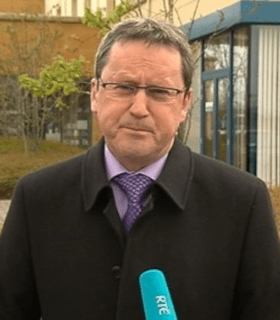
Birth of George Lee, Journalist, Presenter & Former Fine Gael Politician

George Lee, Irish economist, journalist, television and radio presenter, and former Fine Gael politician, is born in Templeogue, Dublin, on September 27, 1962. He has worked for RTÉ since 1992. Since 2019, he has been Environment Correspondent for RTÉ News. He previously was Economics Editor in 1996.

Lee’s father is a motor mechanic, and his mother is a hairdresser. He is the seventh in a family of eight children and grows up in Templeogue, Dublin. He attends Coláiste Éanna, a Christian Brothers’ School in the Dublin suburb of Ballyroan. He is a graduate of University College Dublin (UCD) and holds an MSc in Economics from the London School of Economics (LSE) where his specialist area is labour economics and unemployment.

Lee is married to Mary Lee (née Kitson) and they have two children, Alison and Harry, and live in Cabinteely. He famously travels to work at RTÉ using a Segway, once giving it a test ride live on Tubridy Tonight.

Lee joins the civil service as an executive officer in the Central Statistics Office (CSO). Two years later he enters University College Dublin where he studies economics under academics such as Brendan Walsh and Peter Neary.

Prior to his move into broadcasting, Lee lectures at NUI Galway and then works as a journalist with The Sunday Business Post. He is also a Senior Economist at Riada Stockbrokers. He also works as Treasury Economist with FTI and as a research economist with the Central Bank of Ireland.

From 1992 to 2009 Lee worked at RTÉ, the public broadcasting service of Ireland. He is appointed Economics Editor with RTÉ in 1996. He is named Irish Journalist of the Year, along with Charlie Bird, in 1998 after they uncover a major tax evasion and overcharging scandal at National Irish Bank. He has devised, researched and presented several television series, including Moneybox, More to Do, Winds of Change, and Beyond the Berlin Wall. He is thought of as an “economics guru.” He leaves RTÉ in the late 1990s to work for BCP Stockbrokers. He leaves the job and returns to his RTÉ post the next day.

Before embarking on his political career, Lee films a four-part series based on the fall of the Berlin Wall in 2008. It is aired on RTÉ One in November 2009.

Lee is parodied in the 1990s comedy Bull Island, where he is seen “menacingly staring down the lens of a camera,” and is also featured on RTÉ 2fm‘s Nob Nation.

On May 5, 2009, on RTÉ News at One on RTÉ Radio 1, Lee announces that he is resigning as Economic Editor with RTÉ and announces his intention to seek the Fine Gael nomination for the Dublin South by-election in 2009. He takes a year’s unpaid leave from RTÉ in May 2009. On May 6, 2009, he is chosen as the Fine Gael candidate for the by-election. He is the only candidate for the nomination.

Lee is elected on the first count to represent Dublin South on June 6, 2009. He receives over 53% of the 1st preference vote. In total he receives 27,768 1st preference votes. When elected, he is referred to as a “Celebrity TD.” His RTÉ position is filled by Europe editor Sean Whelan, but only as correspondent. Instead, David Murphy is promoted to Business Editor.

In an opinion poll concerning support for possible candidates in the 2011 Irish presidential election conducted by the Sunday Independent in October 2009, Lee places third, receiving 12% support, ahead of former Taoiseach Bertie Ahern and other high-profile politicians.

Lee highlights the failure of EMPG, the holding company for U.S. publisher Houghton Mifflin Harcourt, and the potential impact on the Irish taxpayers of the loans given by Anglo Irish Bank to the investors in EMPG on January 13, 2010. He sees this as another example for the urgent need of an investigation into the Irish banking crisis.

On February 8, 2010, Lee announces his resignation from Fine Gael and from Dáil Éireann, due to having “virtually no influence or input” into shaping Fine Gael’s economic policies at a time of economic upheaval. It emerges that on February 2, he met with the Fine Gael leader Enda Kenny and told him of his intention to resign. Kenny then offered Lee the frontbench position as spokesman on economic planning. Speaking to reporters outside Leinster House soon after his announcement, Lee says it would have been dishonest of him to accept the position. “I had absolutely no input for nine months. I think I had to be honest with myself and honest with the electorate about that and not pretend.” Asked if his resignation is a vote of no confidence in Kenny, he says there are “certainly lots of large mutterings at the moment in relation to the leader’s position.” He says he had “minimal involvement” with Fine Gael finance spokesman Richard Bruton.

Kenny notes Lee had been appointed chair of the party’s committee on economic policy and also its forum. “I had anticipated a very important role for [George Lee] in the coming period with Fine Gael.” Kenny’s spokesman later dismisses the proposition that the resignation had implications for his leadership. He cited the public endorsement of Kenny by 20 Dáil deputies over the course of the weekend. Former Fine Gael leader Michael Noonan says he is surprised at the decision. “I thought that George Lee was fitting in well,” adding that he believes he would have been a cabinet member in a Fine Gael-led government.

Lee is criticised after his resignation by Senator Eoghan Harris, who is speaking on the Lunchtime programme of Newstalk Radio. Harris suggests financial considerations and long working hours of politicians are the reasons for Lee’s resignation. Fine Gael TD Brian Hayes, who is Lee’s campaign manager in the Dublin South by-election, says that in discussions with Lee, the latter had complained about “a major reduction in his income” since leaving RTÉ to become a Dáil backbencher. Lee denies that financial considerations had anything to do with his decision to quit politics.

RTÉ receives a letter from Lee confirming his intentions to return after his leave of absence. The Sunday Tribune says on February 14, 2010, that he will have to wait for three months before returning to RTÉ. Exactly a year after leaving RTÉ, he returns to the broadcaster on May 5, 2010. He works as an advisor on the RTÉ business desk. He presents Mind Your Business on RTÉ Radio 1 on Saturday Mornings as a summer replacement for The Business.

When John Murray moves to present his own programme, Lee takes over The Business slot on September 4, 2010, on Saturday mornings on RTÉ Radio 1. In addition to the radio edition, he has presented a televised version on RTÉ One, also titled The Business.

Lee has been Environment Correspondent for RTÉ since June 27, 2019.


Leave a comment

Birth of Thomas Finlay, Judge, Politician & Barrister

Thomas Aloysius Finlay, Irish judge, politician and barrister, is born on September 17, 1922, in Blackrock, Dublin. He serves as a Teachta Dála (TD) for the Dublin South-Central constituency from 1954 to 1957, a Judge of the High Court from 1971 to 1985, President of the High Court from 1974 to 1985 and Chief Justice of Ireland and a Judge of the Supreme Court from 1985 to 1994.

Finlay is the second son of Thomas Finlay, a politician and senior counsel whose career is cut short by his early death in 1932. He is educated at Clongowes Wood College, University College Dublin (UCD) and King’s Inns. While attending UCD, he is elected Auditor of the University College Dublin Law Society. His older brother, William Finlay, serves as a governor of the Bank of Ireland.

Finlay is called to the Bar in 1944, practicing on the Midlands circuit and becomes a senior counsel in 1961.

Finlay is elected to Dáil Éireann as a Fine Gael TD for the Dublin South-Central constituency at the 1954 Irish general election. He loses his seat at the 1957 Irish general election.

Following his exit from politics in 1957, having lost his Dáil seat, Finlay resumes practicing as a barrister. He successfully defends Captain James Kelly in the infamous 1970 arms trial.

In 1971, Finlay is tasked by the Fianna Fáil government with representing Ireland before the European Commission of Human Rights, when, in response to the ill treatment of detainees by security forces in Northern Ireland, they charge the British government with torture. Despite the notional recourse such prisoners would have within the British legal system, the Commission rules the complaint admissible.

Finlay is subsequently appointed a High Court judge and President of the High Court in January 1974. In 1985, Taoiseach Garret FitzGerald and his government nominates him to the Supreme Court and to the office of Chief Justice of Ireland. On October 10, 1985, he is appointed by President Patrick Hillery to both roles.

During this period Finlay presides over a number of landmark cases, including Attorney General v X in 1992, when he overturns a High Court injunction preventing a pregnant teenage rape victim travelling to the UK for an abortion.

When, in the same year, Judge Liam Hamilton of the High Court, chair of the Beef Tribunal, seeks disclosure of the cabinet’s minutes for a particular meeting, Chief Justice Finlay along with the majority of the Supreme Court deny the request ruling that the concept of collective government responsibility in the Constitution takes precedence.

Finlay announces his resignation as Chief Justice of Ireland and retirement as a judge in 1994.

After his retirement, Finlay presides over a number of public inquiries.

In 1996, Finlay oversees the inquiry into the violence by English fans at the aborted 1995 friendly soccer match versus the Republic of Ireland at Lansdowne Road. His report to Bernard Allen, Minister for Sport, is critical of security arrangements on the night and recommends improvements to ticketing, seat-allocation, fan-vetting and policing arrangements. The Irish Government shares his report with the British Home Office.

After the collapse of The Irish Press group in 1995, the Minister for Enterprise and Employment, John Bruton, receives a damming report from the Competition Authority that Independent Newspapers has abused its dominant position and acted in an anti-competitive manner by purchasing a shareholding in The Irish Press. In September 1995, Bruton announces the Commission on the Newspaper Industry with an extremely wide remit to examine diversity and ownership, competitiveness, editorial freedom and standards of coverage in Irish newspapers as well as the impact of the sales of the British press in Ireland. Minister Bruton appoints 21 people to the commission and appoints Finlay chair. Due to the wide remit and huge number of submissions, the commission’s report is delayed but is eventually published at the end of July recommending widespread reforms.

Following the discovery of the BTSB anti-D scandal, in 1996, Finlay is appointed the chair and singular member of the Tribunal of Inquiry into the Blood Transfusion Service Board. The speed and efficiency with which his BTSB Tribunal conducts its business, restores confidence in the Tribunal as a mechanism of resolving great controversies in the public interest.

Finlay also sits on an Irish Rugby Football Union (IRFU) panel to adjudicate on the cases of Rugby players accused of using banned performance-enhancing substances.

Finlay is married to Alice Blayney, who predeceases him in 2012. They have five children, two of whom follow in his family’s legal tradition: his son John being a Senior Counsel and his daughter Mary Finlay Geoghegan a former judge of the High Court, Court of Appeal and Supreme Court. Whenever his work schedule allows, he escapes to County Mayo where he indulges his passion for fishing.

Thomas Finlay dies at the age of 95 in Irishtown, Dublin, on December 3, 2017.


Leave a comment

Birth of Thomas Pringle, Irish Independent Politician

Thomas Pringle, an Irish independent politician who has been a Teachta Dála (TD) for the Donegal constituency since the 2016 Irish general election, is born into an Irish Republican family in Dublin on August 30, 1967. From 2011 to 2016 he is the TD for the Donegal South-West constituency.

Pringle’s father, Peter, is a supporter of the Irish Republican Socialist Party (IRSP) and is convicted of the killing of two members of the Gardaí in 1980, a conviction that is subsequently declared as unsafe, although it has not been certified as a miscarriage of justice. Pringle is a patron of the People’s Movement, which campaigns against the Treaty of Lisbon. He is previously a member of Donegal County Council, where he manages a water treatment plant and is a shop steward, having been elected as an independent member in the 1999 Irish local elections, and then as a Sinn Féin candidate in the 2004 Irish local elections. He leaves Sinn Féin in 2007 and retains his seat as an independent in the 2009 Irish local elections.

Pringle is elected as a TD for the Donegal South-West constituency at the 2011 Irish general election, unseating the incumbent Tánaiste Mary Coughlan. He quickly becomes an ally of Luke ‘Ming’ Flanagan, elected as an independent TD at the same time as Pringle, but for the Roscommon–South Leitrim constituency. Flanagan and Pringle go on to support each other on many issues, including reform of the Common Agricultural Policy (CAP) and opposition to the Mercosur deal. Even when Flanagan is elected as a Member of the European Parliament (MEP) for the Midlands–North-West constituency after spending three years in the Dáil, he and Pringle continue to work together, and Flanagan visits Donegal to canvass for Pringle ahead of the 2020 Irish general election.

On December 5, 2011, Pringle delivers a televised address to the nation, representing the technical group of TDs in Dáil Éireann. He does so in response to Taoiseach Enda Kenny‘s address to the nation of the previous evening. Later that month, he calls on people for support in a campaign not to pay a new household charge brought in as part of the latest austerity budget and announces that he will not register for the tax or pay it.

In February 2012, Pringle publishes his expenses online. He is elected leader of the technical group in Dáil Éireann in March 2012.

In May 2012, Pringle brings an unsuccessful High Court challenge over the 2012 European Fiscal Compact referendum and the European Stability Mechanism (ESM) Treaty which is appealed to the Supreme Court in July 2012. In July 2012, the Irish Supreme Court decides to refer three questions to the Court of Justice of the European Union (CJEU) arising out of his challenge of the European Stability Mechanism Treaty and doubts about the ESM’s legality under the Treaties of the European Union. The CJEU holds an oral hearing on the referral on October 23, 2012. It is the first time that the full court sits to hear a reference from a member state of the Union. The 27 judges hear oral arguments from the counsel for Pringle, Ireland, nine other member states, the Commission, the Council, and the European Parliament. On November 27, 2012, the EU Court of Justice dismisses Pringle’s arguments and rules that the ESM is in accordance with the Treaties.

In the 2016 Irish general election, after a re-drawing of constituency boundaries, Pringle campaigns in the new five-seater Donegal constituency. He is re-elected to the final seat by a margin of just 184 votes over Sinn Féin’s Pádraig Mac Lochlainn. During negotiations to form a government, Pringle says he is glad not to have signed up to the Independent Alliance, after that group enters talks with Taoiseach Enda Kenny. He says that unless Kenny or Fianna Fáil leader Micheál Martin sign up to Right2Change, he will not support either as Taoiseach.

As of April 2016, Pringle had become a member of the Independents 4 Change technical group in the Dáil.

In May 2016, Pringle introduces legislation designed to retain water in public ownership and avoid further privatisation.

Pringle puts forward a bill calling on the government to end public spending from fossil fuels, which passes, making Ireland the first country to fully divest public money from fossil fuels. In June 2022, he puts forward a bill proposing a referendum on lowering the voting age to sixteen.

Pringle is married and has three children.


Leave a comment

Birth of David Thornley, Irish Labour Party Politician

David Andrew Thornley, Irish Labour Party politician and university professor at Trinity College Dublin, is born in Surrey, England, on July 31, 1935.

Thornley is the youngest child of Welshman Frederick Edward Thornley and Dublin-born Maud Helen Thornley (née Browne). His parents, both civil servants, meet while working in Inland Revenue in Dublin in the 1910s.

Thornley receives a BA and PhD at Trinity College Dublin. His PhD is entitled “Isaac Butt and the creation of an Irish Parliamentary Party (1868–1879)” and is written under the supervision of Theodore William Moody. Working as a presenter on 7 Days since 1963, he is appointed Associate professor of Trinity in 1968. In 1964, he publishes the book Isaac Butt and Home Rule.

After joining Labour in 1969, Thornley is elected to Dáil Éireann as a Labour Party Teachta Dála (TD) for the Dublin North-West constituency at the 1969 Irish general election. He confronts the party leader Brendan Corish, who at the time of the Arms Crisis reportedly rejects out of hand any suggestion of military aid or use of force after the outbreak of violence in Northern Ireland.

Thornley considers himself to be “in the mould of James Connolly,” being a practising Catholic, Marxist and republican.

In December 1972, Thornley calls for the immediate release of Seán Mac Stíofáin, then leader of the Provisional Irish Republican Army. He is re-elected at the 1973 Irish general election. In April 1976, he loses the Labour Party whip after appearing on a Sinn Féin platform during Easter Rising commemorations. In September 1976, he votes for the Criminal Justice (Jurisdiction) Bill despite misgivings. He tells The Irish Times, “When I get very depressed, I drink too much. When I voted for the Criminal Justice (Jurisdiction Bill) I went on the batter for a forthnight [sic].” In February 1977, he is re-admitted to the Labour Parliamentary Party. He loses his seat at the 1977 Irish general election.

In 1978, Thornley joins the newly formed Socialist Labour Party (SLP) stating that he has done so because “There is no man in politics that I respect more than Noël Browne, despite our occasional differences. If the SLP is good for him, it’s good enough for me.”

Overweight, afflicted with undiagnosed diabetes, his judgement increasingly erratic, from the early 1970s Thornley suffers a steady deterioration of health, compounded by his heavy drinking, on which he relies to cope with stress and emotional depression. On one occasion he collapses in the Dáil and is attended by party colleague Dr. John O’Connell. He dies at the age of 42 on June 18, 1978, one week after admission into Jervis Street private nursing home. After a sung Latin Requiem Mass in St. Andrew’s Church, Westland Row, Dublin, he is buried in Bohernabreena Cemetery, County Dublin.

The Trinity College Labour Branch is formerly named the David Thornley Branch in his honour.


Leave a comment

Death of John Joe Rice, Sinn Féin Politician & Republican Activist

John Joe Rice, Sinn Féin politician and republican activist who serves as a Teachta Dála (TD) for the Kerry South constituency from 1957 to 1961, dies on July 24, 1970.

Rice is born in Cork, County Cork, on June 19, 1893, but is raised in the townland of Kilmurry near Kenmare, County Kerry. He is the son of George Rice, a draper’s assistant, and Ellen Rice (née Ring). After national school he becomes a clerk with the Great Southern and Western Railway company working at stations in Kenmare, Killorglin, and Killarney.

Rice joins the Irish Volunteers in 1913 but does not take part in the 1916 Easter Rising. For a time, he shares lodgings in Rock Street, Tralee, with Austin Stack, and like Stack he is a Gaelic Athletic Association (GAA) member, playing hurling with Kenmare. At the outbreak of the Irish War of Independence (1919-1921), he becomes Officer Commanding of the 5th Battalion of the Kerry No. 2 Brigade. He also holds the post of second in command of that brigade, under Humphrey Murphy. On April 26, 1921, he attends the meeting in Kippagh, County Tipperary, that sees the establishment of the First Southern Division. After the truce, Murphy is transferred to command Kerry No. 1 Brigade, and Rice becomes commanding officer of Kerry No. 2.

Rice opposes the Anglo-Irish Treaty and leads the brigade throughout the Irish Civil War (1922-1923). When Michael Collins comes to Killarney on April 22, 1922, to speak in favour of the agreement, he is met at the train station by a group of fifty men, led by Rice, who attempt to prevent him from speaking. The meeting goes ahead despite several attempts by the group to stop it. During the civil war he leads his men into Limerick, briefly seizing Rathkeale, but for the most part they are on the defensive. In September he commands a force of seventy republicans to take Kenmare. This is a rare and morale-boosting success. When the First Southern Division council meets on February 26-28, 1923, he is one of only two senior officers, among a group of eighteen, who feel that it is worth fighting on.

Shortly after the civil war, Rice marries Nora Aherne, a Cumann na mBan member; they have one son, George. After the war he continues to be active in the Irish Republican Army (IRA) and Sinn Féin. He attends IRA executive meetings in 1923 and is involved in attempts to reorganise the IRA in 1924. He is a delegate to the Sinn Féin ardfheis in 1926, opposing the proposal of Éamon de Valera that abstention be a matter of policy rather than principle. He is elected as a Sinn Féin TD for the Kerry South constituency at the 1957 Irish general election. He does not take his seat in the Dáil due to the Sinn Féin policy of abstentionism. He is one of four Sinn Féin TDs elected at the 1957 Irish general election, the others being Ruairí Ó Brádaigh, John Joe McGirl and Eighneachán Ó hAnnluain. During his time as a TD, he campaigns against the Special Powers Act, which grants the Irish state extra abilities to deal with and punish suspected members of the IRA. He is defeated at the 1961 Irish general election.

In 1966, Rice and fellow Kerry Republican John Joe Sheehy are expelled from Sinn Féin, as are many others, by the new Marxist-Leninist party leadership that had recently come into power. This move both foreshadows and fuels the split in 1969/1970 of both the IRA and Sinn Féin, which leads to the creation of the Marxist-Leninist Official IRA and the more traditional but still left-wing Provisional IRA, and in parallel Sinn Féin – The Workers’ Party and “Provisional” Sinn Féin. Rice gives his support to the Provisionals.

Rice drives an oil lorry for a time and then becomes manager of the Tralee branch of Messrs Nash, mineral-water manufacturers and bottlers. He remains in this position until his retirement in 1965. He dies on July 24, 1970, at his son’s residence in Oakview, Tralee.

Rice’s sister, Rosalie, is a member of Cumann na mBan during the 1916 Easter Rising and is arrested for sending a telegram alerting the Irish Republican Brotherhood (IRB) in the United States to the rising. His cousins Eugene and Timothy Ring are members of the IRB and are also involved with the telegram. His grandfather, Timothy Ring, was a Fenian who fought in the uprising. Two of his cousins are members of the Royal Irish Constabulary (RIC) who both help the republican side during the Irish revolutionary period.


Leave a comment

Maurice Ahern is Elected Lord Mayor of Dublin

Maurice Ahern, Fianna Fáil politician and brother of Taoiseach Bertie Ahern, is elected Lord Mayor of Dublin on July 3, 2000. Fine Gael’s P. J. Hourican, a native of County Longford, is elected Lord Mayor of Cork.

Ahern is born in Dublin in 1938. He is a member of Dublin City Council for the Cabra–Glasnevin local electoral area from 1999 to 2009. He is first elected at the 1999 Irish local elections, topping the poll. He is re-elected at the 2004 Irish local elections. Prior to his election as the Lord Mayor of Dublin in 2000, he is the former Leader of the Fianna Fáil group on the council. He is a member of the Irish Sports Council.

Ahern is married to Moira Murray, and they have five sons and one daughter. His eldest son, Dylan Ahern, is found dead in his apartment on November 22, 2009.

Ahern is the elder brother of Bertie and Noel Ahern, both of whom serve as Fianna Fáil TDs, with Bertie serving as Taoiseach from 1997 to 2008.

Ahern is the Fianna Fáil candidate in the Dublin Central by-election which is held on June 5, 2009. He loses that election being beaten into 5th place. On the same day, he also loses his council seat in the 2009 Irish local elections.


Leave a comment

28th Amendment of the Constitution Bill 2008 Rejected by Irish Voters

The Twenty-eighth Amendment of the Constitution Bill 2008, a proposed amendment to the Constitution of Ireland, is rejected by voters on June 12, 2008, by a margin of 53.4% to 46.6%, with a turnout of 53.1%. The purpose of the proposed amendment is to allow the state to ratify the Treaty of Lisbon of the European Union.

The treaty had been intended to enter into force on January 1, 2009, but has to be delayed following the Irish rejection. However, the Lisbon treaty is approved by Irish voters when the Twenty-eighth Amendment of the Constitution of Ireland is approved in the second Lisbon referendum, held in October 2009.

The Treaty of Lisbon is signed by the member states of the European Union on December 13, 2007. It is in large part a revision of the text of the Treaty establishing a Constitution for Europe (TCE) after its rejection in referendums in France in May 2005 and in the Netherlands in June 2005. The Treaty of Lisbon preserves most of the content of the Constitution, especially the new rules on the functioning of the European Institutions but gives up any symbolic or terminologic reference to a constitution.

Because of the decision of the Supreme Court of Ireland in Crotty v. An Taoiseach (1987), an amendment to the Constitution is required before it can be ratified by Ireland. Ireland is the only one of the then fifteen EU member states to put the Treaty to the people in a referendum. Ratification of the Treaty in all other member states is decided upon by national parliaments alone.

On February 26, 2008, the Government of Ireland approves the text of the changes to the constitution. The Twenty-eighth Amendment of the Constitution Bill is proposed in Dáil Éireann by Minister for Foreign Affairs Dermot Ahern on April 2, 2008. It passes final stages in the Dáil on April 29, with Sinn Féin TDs and Independent TD Tony Gregory rising against, but with insufficient numbers to call a vote. It passes final stages in the Seanad on May 7.

A Referendum Commission is established by Minister for the Environment, Heritage and Local Government John Gormley. It is chaired by former High Court judge Iarfhlaith O’Neill. Its role is to prepare one or more statements containing a general explanation of the subject matter of the proposal and of the text of the proposal in the amendment bill.

The government parties of Fianna Fáil and the Progressive Democrats are in favour of the treaty, but the other government party, the Green Party, is divided on the issue. At a special convention on January 19, 2008, the leadership of the Green Party fails to secure a two-thirds majority required to make support for the referendum official party policy. As a result, the Green Party itself does not participate in the referendum debate, although individual members are free to be involved in whatever side they chose. All Green Party members of the Oireachtas support the Treaty. The main opposition parties of Fine Gael and the Labour Party are also in favour. Only one party represented in the Oireachtas, Sinn Féin, is opposed to the treaty, while minor parties opposed to it include the Socialist Party, the Workers’ Party and the Socialist Workers Party. Independent TD’s Tony Gregory and Finian McGrath, Independent MEP Kathy Sinnott, and Independent members of the Seanad from the universities David Norris, Shane Ross and Rónán Mullen advocate a “No” vote as well.

The Government sends bilingual booklets written in English and Irish, explaining the Treaty, to all 2.5 million Irish households. However, compendiums of the two previous treaties, of which the Lisbon Treaty is intended to be a series of reforms and amendments, remain unavailable in Ireland. Some commentators argue that the treaty remains essentially incomprehensible in the absence of such a compendium.

On March 12, 2008, the Libertas Institute, a lobby group started by businessman Declan Ganley, launches a campaign called Facts, not politics which advocates a “No” vote in the referendum. A month later, the German Chancellor, Angela Merkel, appeals to Irish people to vote “Yes” in the referendum while on a visit to Ireland. The anti-Lisbon Treaty campaign group accuses the government and Fine Gael of a U-turn on their previous policy of discouraging foreign leaders from visiting Ireland during the referendum campaign. The European Commissioner for Internal Market Charlie McCreevy admits he had not read the Treaty from cover to cover and says, “he would not expect any sane person to do so.”

At the start of May, the Irish Alliance for Europe launches its campaign for a “Yes” vote in the referendum this consists of trade unionists, business people, academics and politicians. Its members include Garret FitzGerald, Ruairi Quinn, Pat Cox and Michael O’Kennedy. The Taoiseach Brian Cowen states that should any member of the Fianna Fáil parliamentary party campaign against the treaty, they will likely be expelled from the party.

On May 21, 2008, the executive council of the Irish Congress of Trade Unions votes to support a “Yes” vote in the referendum. Rank and file members of the individual unions are not balloted, and the Technical, Engineering and Electrical Union (TEEU) advises its 45,000 members to vote “No.” The Irish bishops conference states the Catholic Church‘s declaration that the treaty will not weaken Ireland’s constitutional ban on abortion, however the conference does not advocate either a “Yes” or “No” vote. By the start of June, Fianna Fáil, Fine Gael and the Labour Party have united in their push for a “Yes” vote despite earlier divisions. The two largest farming organisations, the Irish Creamery Milk Suppliers Association (ICMSA) and the Irish Farmers’ Association call for a “Yes” vote, the latter giving its support after assurances from Taoiseach Brian Cowen that Ireland will use its veto in Europe if a deal on World Trade reform is unacceptable.

There were 3,051,278 voters on the electoral register. The vast majority of voting takes place on Thursday, June 12, between 7:00 a.m. and 10:00 p.m. Counting begins at 9:00 a.m. the following morning. Several groups vote before the standard polling day, with some casting postal votes before June 9. These include members of the Irish Defence Forces serving in United Nations peacekeeping missions, Irish diplomats and their spouses abroad, members of the Garda Síochána, those unable to vote in person due to physical illness or disability, those who are unable to vote in person due to their employment (including students) and prisoners.

On June 9, several islands off the coast of County Donegal vote: Tory Island, Inishfree, Gola, Inishbofin and Arranmore. These islands are all part of the Donegal South-West constituency. Around 37% of the 745 eligible votes. Two days later, several islands off the coast of counties Galway and Mayo vote: the Aran Islands (Inis Mór, Inis Meáin and Inis Oírr) and Inishboffin form part of Galway West constituency, while Inishturk, Inishbiggle and Clare Island form part of the Mayo constituency. The Galway islands have 1,169 eligible voters, while the Mayo islands have 197.

Votes are counted separately in each Dáil constituency. The overall verdict is formally announced by the Referendum Returning officer in Dublin Castle by accumulating the constituency totals.

(Pictured: Campaign posters in St. Stephen’s Green, Dublin)