seamus dubhghaill

Promoting Irish Culture and History from Little Rock, Arkansas, USA


Leave a comment

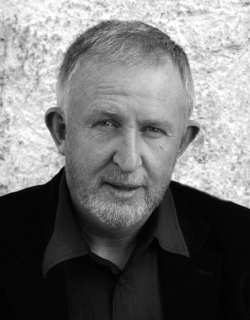
Birth of William Wall, Novelist, Poet & Short Story Writer

William “Bill” Wall, Irish novelist, poet and short story writer, is born in Cork, County Cork, on July 6, 1955.

Wall is raised in the coastal village of Whitegate, County Cork. He receives his secondary education at the Midleton CBS Secondary School in Midleton. He progresses to University College Cork where he graduates in Philosophy and English. He teaches English and drama at Presentation Brothers College, Cork, where he inspires Cillian Murphy to enter acting.

In 1997, Wall wins the Patrick Kavanagh Poetry Award. He publishes his first collection of poetry that same year. His first novel, Alice Falling, a dark study of power and abuse in modern-day Ireland, appears in 2000. He is the author of four novels, two collections of poetry and one of short stories.

In 2005, This Is The Country appears. A broad attack on politics in “Celtic Tiger” Ireland, as well as a rite of passage novel, it is longlisted for the Man Booker Prize, and shortlisted for the Irish Book Awards. It can be read as a satirical allegory on corruption, the link between capitalism and liberal democracy exemplified in the ‘entrepreneurial’ activities of minor drug dealers and gangsters, and reflected in the architecture of business-parks and sink estates. This political writing takes the form of “an insightful and robust social conscience”, in the words of academic John Kenny. Kenny also focuses on what he sees as Wall’s “baneful take on the Irish family, his fundamentally anti-idyllic mood” which has “not entirely endeared Wall to the more misty-eyed among his readers at home or abroad.” The political is also in evidence in his second collection of poetry Fahrenheit Says Nothing To Me. He is not a member of Aosdána, the Irish organisation for writers and artists. In 2006, his first collection of short fiction, No Paradiso, appears. In 2017, he becomes the first European to win the Drue Heinz Literature Prize.

His provocative political blog, The Ice Moon, has increasingly featured harsh criticism of the Irish government over their handling of the economy, as well as reviews of mainly left-wing books and movies. Many of his posts are satirical. He occasionally writes for literary journals, writes for Irish Left Review, and reviews for The Irish Times. His work has been translated into several languages. He has also appeared on the Irish-language channel TG4, such as in the programme Cogar.

He is one of the Irish delegates at the European Writers Conference in Istanbul in 2010.

Described by writer Kate Atkinson as “lyrical and cruel and bold and with metaphors to die for,” critics have focused on Wall’s mastery of language, his gift for “linguistic compression,” his “poet’s gift for apposite, wry observation, dialogue and character,” his “unflinching frankness” and his “laser-like … dissection of human frailties,” which is counterbalanced by “the depth of feeling that Wall invests in his work.” A review of his first novel in The New Yorker declares “Wall, who is also a poet, writes prose so charged—at once lyrical and syncopated—that it’s as if Cavafy had decided to write about a violent Irish household.” In a recent review, his long poem “Job in Heathrow,” anthologised in The Forward Book of Poetry 2010 but originally published in The SHOp, is described as “a chilling airport dystopia.” Poet Fred Johnston suggests that Wall’s poetry sets out to “list the shelves of disillusion under which a thinking man can be buried.” For Philip Coleman, “Ghost Estate is a deeply political book, but it also articulates a profound interest in and engagement with questions of aesthetics and poetics.”

Wall is a longtime sufferer of adult-onset Still’s disease (AOSD) and describes his efforts to circumvent the disabling effects of the disease using speech-to-text applications as “a battle between me and the software.”


Leave a comment

Death of A. J. Potter, Irish Composer & Teacher

Archibald James (Archie) Potter, Irish composer and teacher who writes hundreds of works including operas, a mass, and four ballets, as well as orchestral and chamber music, dies suddenly in Greystones, County Wicklow, on July 5, 1980.

Potter is born in Belfast on September 22, 1918, to a Presbyterian family who, oddly, lives on the Falls Road, a republican (Catholic) stronghold. His father is a church organist and piano tuner who has been blind since childhood. His mother is, in Potter’s own words, “a raging alcoholic.” He escapes a rather grim childhood when he goes to live with an aunt in Kent, England.

Possessed of a good voice and natural musical ability, Potter is accepted as a treble by the world-famous choir of All Saints, Margaret Street. In 1933, after four years as a chorister, he is sent to Clifton College, Bristol. From there he goes to the Royal College of Music on a scholarship and studies composition under Vaughan Williams. While at the Royal College he wins the Cobbett prize for chamber music.

World War II interrupts Potter’s music education, and he leaves college to serve with the London Irish Rifles in Europe and the Far East. After the war he settles in Dublin, where he continues his studies at Trinity College, Dublin, gaining a Doctorate in Music in 1953.

Potter had already started composing chamber and vocal music before the war. Now, established in Dublin, he chooses the orchestra as his principal means of expression. His early pieces, such as Rhapsody under a High Sky and Overture to a Kitchen Comedy, show that he has absorbed Vaughan Williams’ pastoral style and his love of folk music. In 1952, both pieces are awarded Radio Éireann‘s “Carolan Prize” for orchestral composition by the adjudicator Arnold Bax. A year later Potter repeats this success when his Concerto da Chiesa, a concerto for piano and orchestra, also wins the Carolan Prize.

In 1955 Potter is appointed Professor of Composition at the Royal Irish Academy of Music, where he becomes an effective administrator and inspiring teacher.

In the 1960s, Potter turns to ballet, writing four orchestral scores for the Cork Ballet company. The first of these, Careless Love, becomes the composer’s own favourite of all his compositions. Several years later, following a successful battle with alcoholism, he writes what some regard as his magnum opus, Sinfonia “de Profundis” (1969). The première is given at the Gaiety Theatre, Dublin on March 23, 1969, in a performance by the RTÉ Symphony Orchestra under the baton of Albert Rosen. The Irish Times refers to the concert as a “major national event.” In December 1969, he receives a Jacob’s Award for the composition.

Potter’s last substantial work, an opera entitled The Wedding, receives its first public performance in Dublin in 1981, almost a year after his death.

Potter dies suddenly at his home in Greystones, County Wicklow on July 5, 1980, at the age of 61. He is buried in the nearby Redford cemetery.


Leave a comment

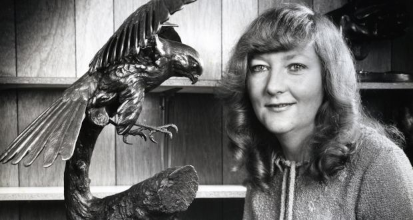
Death of Jeanne Rynhart, Sculptor & Creator of the Molly Malone Statue

Jeanne Patricia Rynhart (née Scuffil), Irish sculptor and creator of the Molly Malone statue, dies in Cork, County Cork, on June 9, 2020.

Rynhart is born Jeanne Scuffil in Dublin on March 17, 1946, to Kathleen Connolly and Frederick Scuffil, a sign writer for the Guinness Brewery. She is an apprentice to George Collie RHA for two years and then attends the National College of Art and Design, graduating in 1969 before moving to Coventry, England, where she continues her studies in fine art and sets up a studio with sculptor John Letts. She returns to Ireland in 1981, moving to Ballylickey, near Bantry in County Cork, where she establishes the Rynhart Fine Art gallery and workshop with her husband, Derek.

One of the first bronze craft studios in Ireland, the Rynhart pieces include both small figurative cold cast bronze sculptures of flower sellers, fishermen, horses, sailing boats and musical instruments as well as bronze life-size statues, smelted in a foundry. Her busts of Oscar Wilde and Jonathan Swift are in the Dublin Writers Museum and a Rynhart bust of James Joyce is in New York Public Library.

Rynhart creates the Molly Malone statue for the 1988 Dublin Millennium celebrations. The statue is controversial at the time of its unveiling due to the statue’s revealing dress. Registrar of Aosdána, Adrian Munnelly, writes to the An Bord Fáilte criticising it. The statue is defended by the Lord Mayor of Dublin Ben Briscoe. Rynhart herself writes in The Irish Times that the clothing and appearance are accurate for women of that era. The statue has since become one of the most popular tourist attractions in Dublin and is fondly regarded by locals.

Rynhart also sculpts a statue commemorating the original Rose of Tralee, Mary O’Connor, which stands in Tralee Town Park. In 1993, she produces two statues in honour of Annie Moore, the first passenger processed through the Ellis Island immigration station on January 1, 1892. The statues are located at the Cobh Heritage Centre in Cork and Ellis Island in New York City. The Ellis Island statue is dedicated by the then-President of Ireland, Mary Robinson.

In 1994, Rynhart’s daughter Audrey joins the business. In 2010, Audrey and her husband, Les Elliott, take over the running of the business which is now based in their studio in Glengarriff, County Cork. From then onwards, Rynhart continues to do some modelling work but has largely retired.

Rynhart dies on June 9, 2020, aged 74, in Schull Community Hospital, Cork, following a short illness. She is buried in the Abbey Cemetery, Bantry, and is survived by her husband, Derek, daughter, Audrey, son, Barry, and grandchildren, Lydia and Sophie.


Leave a comment

Birth of Classical Guitarist John Feeley

John Feeley, classical guitarist, and a teacher and editor of guitar music, is born Ballinasloe, County Galway, on May 24, 1955.

Feeley starts playing guitar in popular music, and at age seventeen is recognised as one of Europe‘s best electric guitarists. After graduating from Trinity College Dublin, with a first-class degree in music, he moves to the United States to study with Oscar Ghiglia, Angel Romero, and David Russell, completing a master’s degree at Queens College, City University of New York. In the following years he teaches at Memphis State University in Memphis, Tennessee. He now teaches at the Dublin Institute of Technology (DIT) Conservatory of Music and Drama, Dublin. His past students include all current members of the Dublin Guitar Quartet, along with Redmond O’Toole, Michael O’Toole and Alec O’Leary, director of the Guitar Festival of Ireland. Composers Benjamin Dwyer, Ciarán Farrell, David Fennessy and David Flynn, all of whom have written music for Feeley, are also guitar students of his.

In 2006 Feeley completes a doctorate (Doctor of Philosophy in Music [Performance]) at Maynooth University, which involves a major thesis in three volumes with the title Classical Guitar Music by Irish Composers: Performing Editions and Critical Commentary.

Feeley has appeared at such festivals as the Guitar Festival of Ireland, Bath International Music Festival, the Dundee International Guitar Festival, and the Wirral International Guitar Festival. He has won numerous awards including the Special Award for interpretation in the 1984 Mauro Giuliani competition, Italy. He has appeared as a soloist with the American Symphony Orchestra at Carnegie Hall, the RTÉ National Symphony Orchestra, the Ulster Orchestra, the Irish Chamber Orchestra and the Contempo Quartet. He performs regularly in duet with the flautist William Dowdall.

Feeley is an enthusiastic champion of contemporary Irish music and in this capacity has commissioned works from many of Ireland’s leading composers including Seóirse Bodley, John Buckley, Jerome de Bromhead, Jane O’Leary, Brent Parker and Eric Sweeney. He also has a great interest in traditional Irish and Scottish music and has recorded with The Chieftains and published his own arrangements of traditional melodies.

Feeley has been described by The Washington Post as “Ireland’s leading classical guitarist” and by Michael Dervan in The Irish Times as “a trailblazer … when it comes to the guitar and guitar-playing in Ireland.”


Leave a comment

The Knocklong Ambush

Dan Breen and Seán Treacy rescue their comrade Seán Hogan from a Dublin-Cork train at Knocklong, County Limerick, on May 13, 1919, in what becomes known as the Knocklong Ambush. Two policemen guarding Hogan are killed.

One of the most famous photographs (left) of the Irish War of Independence (1919-21) is taken at Breen’s wedding in June 1921. Breen is already burnishing his reputation as the romantic guerilla campaigner three years before the publication of his bestselling autobiography My Fight for Irish Freedom. On his lap there is a Luger pistol, an incongruity in a wedding photograph, but in keeping with his penchant for self-mythologising. In the background on the left is his best man Hogan who is dressed in the uniform of the Irish Volunteers. Unlike Breen, he looks shy and awkward, his body tilted as if to convey how ill at ease with himself he is.

Had Hogan shown the same diffidence in May 1919, he might have saved himself and his comrades a great deal of trouble. He is the youngest of those involved in the Soloheadbeg ambush on January 21, 1919, the event that is viewed in retrospect as the event that starts the Irish War of Independence.

Hogan is only 18, according to most reports, but to date no birth certificate has been found for him. His youth may explain his lack of caution in early May 1919 when he slips his minder after a dance in Kilshenane, County Tipperary, and ends up, not in the arms of his sweetheart Bridie O’Keeffe, but in the embrace of the Royal Irish Constabulary (RIC). He escorts O’Keeffe back to her relative’s farmhouse where she is spending the night. He sleeps on the sofa. When he wakes up, the house is surrounded. He flees, but is picked up by the RIC in a laneway near the house. He, along with the others involved in the Soloheadbeg ambush, are the most wanted men in Ireland. He faces interrogation and possible execution.

The Knocklong ambush, which occurs on May 13, 1919, saves Hogan from such a fate, but it comes at a terrible price for all those involved. He is put on the 6:00 p.m. train from Thurles to Cork where he is due to be interrogated in the military prison. Knocklong Station, just over the border in County Limerick, is chosen as the place for the escape attempt because of its distance from the nearest RIC barracks.

Four volunteers of the Irish Republican Army (IRA) East Limerick Brigade get on the train at Emly in order to signal to the men waiting at Knocklong Station the carriage in which Hogan is being detained. He is being escorted to Cork by four RIC men. They face five volunteers, three of whom are armed. A ferocious gun battle ensues, lasting 14 minutes. Constable Michael Enright (30), from Ballyneety, County Limerick, is shot dead immediately.

Sgt. Peter Wallace and Treacy, another of those involved at Soloheadbeg, wrestle over Treacy’s gun. Wallace, who is a huge man, shoots Treacy in the throat before the gun is turned on Wallace, who later dies from his wounds. Hogan smashes his mangled chains in the head of another of his armed guards who is then thrown out of the window of the train. The last remaining guard picks up a rifle and opens fire on the IRA party through the carriage window wounding three volunteers waiting on the platform, including Breen. Hogan is taken immediately to a butcher’s shop where his chains are smashed with a cleaver, setting him free.

Knocklong becomes an exalted event in the iconography of Irish republicanism. At Soloheadbeg, eight armed and ready volunteers faced two unwary policemen. It was not a fair fight. Hogan’s rescue from the train at Knocklong demands organisation, courage and daring of the highest order.

Hogan continues to serve in the Irish War of Independence and on the anti-Treaty side in the Irish Civil War (1922-23). By the time hostilities cease in 1923, he is only 23, but has spent the previous five years in armed combat. The toll on his mind and body are huge. In 1924, he is admitted to St. Bricin’s Military Hospital suffering from “attacks of restlessness and depression – inability to concentrate his mind on anything.” His wife at the time, Christina, runs a nursing home in Tipperary, where her patients include many shellshocked Irish veterans of World War I. The couple later separates.

Hogan’s fortunes change with the change of government in 1932 bringing to power Fianna Fáil, a party which Hogan supports. He is given a job in the Board of Works, but his mental health continues to deteriorate. He complains of the “nerves and all the ailments that go with them.” His circumstances are such that he spends two years living in the family home of Séumas Robinson, the officer commanding at Soloheadbeg.

In early 2019, Robinson’s daughter, Dimphne Brennan, tells The Irish Times, “He had nowhere else to go. He never got over what happened. His nerves were shattered. We were all just kids and we didn’t disturb him in his room. He didn’t talk to us.”

Hogan dies on Christmas Eve 1968 from a cerebral hemorrhage and chronic bronchitis. At the funeral reception, his estranged widow supposedly tells a niece of Hogan, “Well, but wasn’t that some waste of a life.”

Hogan and Christina are buried 50 paces from each other in St. Michael’s Cemetery in Tipperary, divided in death as they were in life. Seán Hogan: His Life: A Troubled Journey, by John Connors, is published by Tipp Revolution.

(From: “Knocklong ambush, on May 13th, 1919 involved a 14-minute gun battle” by Ronan McGreevy, The Irish Times, http://www.irishtimes.com, May 20, 2019)


Leave a comment

Birth of Composer Siobhán Cleary

Siobhán Cleary, composer, is born in Dublin on May 10, 1970. Her most successful compositions are her orchestral works Alchemy and Cokaygne and her choral piece Theophilus Thistle and the Myth of Miss Muffett. Her opera Vampirella is first performed in Dublin in March 2017. She is a member of Aosdána.

Cleary starts to compose from an early age, often writing pieces while she is supposed to be practising at the piano. When she begins to study music at Maynooth University, she is initially inspired by Luciano Berio‘s Sinfonia, and soon afterwards by the works of the Irish composer Gerald Barry, the Frenchman Olivier Messiaen and the Hungarian György Ligeti. She continues her studies at Queen’s University Belfast and Trinity College, Dublin. In addition, she follows courses in composition with the Italian composer Franco Donatoni and the Dutchman Louis Andriessen and receives private tuition from the American Tom Johnson and the South African Kevin Volans. She also studies film scoring with the Italian composer Ennio Morricone and the American Don Brandon Ray.

Inspired by the alchemists’ Opus Alchymicum which describes how cheaper metals are transmuted into gold, Cleary’s orchestral work Alchemy (2001) is, like the stages in the Opus, presented in four parts: it evolves from the slow nigrendo, the moderate albedo, the strong citronatus, and the burning rubedo. The work is performed by the RTÉ National Symphony Orchestra in January 2002.

Cleary’s tone poem Cokaygne (2009), which, like Alchemy, is commissioned by RTÉ for the National Symphony Orchestra, is based on a poem and old sources which evoke a land of extreme luxury and contentment. The elaborately orchestrated piece is performed by the RTÉ National Symphony Orchestra in November 2009, Vladimir Altschuler conducting. It is performed by the RTÉ National Symphony Orchestra once again in June 2016, this time under the baton of Alan Buribayev.

Cleary’s choral work Theophilus Thistle and the Myth of Miss Muffett (2010), commissioned by the Cork International Choral Festival, is first performed in April 2011 by Chamber Choir Ireland directed by Paul Hillier. The work is based on a series of tongue twisters and other strange combinations of words popular in various European languages and dialects, moving from Italy, through Germany and Spain, finishing in Ireland. In 2013, it is performed twice by Chamber Choir Ireland in Dublin and Cork in connection with Ireland’s presidency of the European Union. The journalist and music critic Terry Blain comments on the choir’s “dazzingly virtuosic performance” in Belfast in 2013, qualifying the piece as “a tour de force of 21st century vocal chicanery, a clever and richly entertaining composition.” Theophilus Thistle is also performed the same year in the United States as part of the “Imagine Ireland” festival.

The chamber opera Vampirella with a libretto by Katy Hayes is first performed by students from the Royal Irish Academy of Music and the Lir National Academy of Dramatic Art at Dublin’s Smock Alley Theatre in March 2017. Based on a short story by Angela Carter telling how a young English soldier is seduced by a vampire countess, it is directed by Conor Hanratty and conducted by Andrew Synnott. Michael Dervan of The Irish Times finds the electronic sounds in the score particularly effective, commenting, “Perhaps this is a case of a genuinely electronic opera trying to break out of a more conventional mold.”

In 1996, Cleary receives a young artists award from Pépinières européennes pour jeunes artistes, followed in 1997 by the first prize in the Arklow Music Festival Composers’ Competition. In 2008, she is invited to become a member of Aosdána, an Irish association of creative artists.


Leave a comment

Birth of Jeremiah Newman, Bishop of Limerick

Jeremiah Newman, Bishop of Limerick from 1974 to 1995 after having served as Professor and President of St. Patrick’s College, Maynooth, is born in Dromcolliher, County Limerick, on March 31, 1926.

Following a local primary education, Newman attends St. Munchin’s College, Limerick. He studies for the priesthood at St. Patrick’s College, Maynooth, and is ordained there on June 18, 1950.

Newman begins postgraduate studies in Philosophy at the Catholic University of Leuven and is awarded a Doctorate in Philosophy there in 1951. After that he takes up studies in Sociology at the University of Oxford for four years before taking up a teaching post at Queen’s University, Belfast.

In 1953 Newman is appointed Professor of Sociology at St. Patrick’s College, Maynooth, succeeding Peter McKevitt. It is an institution he remains within, and eventually leads with distinction, until he is appointed Bishop of Limerick in May 1974. He publishes two books about the college: Maynooth and Georgian Ireland (1979) followed by Maynooth and Victorian Ireland (1983).

Newman arrives in Limerick with a strong reputation for reform having served a number of years as President of Maynooth where he adapted and shaped the college to the new challenges of the 1970s. His academic background in sociology gives him an informed understanding of the changing dynamic in Irish life, especially rural life which he has been writing about since the early 1960s, especially the dangers of depopulation.

Newman often makes comment on national matters particularly about church-state relations which has been his special area of study for over 20 years. He takes what might be called a broadly ‘conservative’ approach which, as time goes on, jars with wider public opinion especially as Ireland faces a number of constitutional referenda in the 1980s. At least one modern author has quoted the epithet alleged to have been conferred on Newman by Conor Cruise O’Brien, The Mullah of Limerick, for articulating a neo-conservative position more commonly associated with the United States.

Newman’s later years are dogged by periodic bouts of ill-health, and he dies in office on April 3, 1995, of hepatoma. He is buried in St. John’s Cathedral, Limerick. He is the subject of many obituaries not least because of his extensive public statements in his years as Bishop of Limerick. The Tablet suggests he was most “well known for his conservatism and taste for controversial remarks” before quoting the homily by Cardinal Cahal Daly that “he seemed to have a strange sense of inadequacy; and, for one who was so lovable, he seemed to have difficulties in believing that others respected and admired and indeed loved him.” The Irish Times obituary says he was a man “who kept fighting the battles of long ago.”

Newman is succeeded as Bishop of Limerick by Bishop Donal Murray.

Limerick City Library holds an extensive set of newspaper articles about Bishop Jeremiah Newman which have been made available online.


Leave a comment

Birth of Kevin Myers, Journalist & Writer

Kevin Myers, English-born Irish journalist and writer, is born in Leicester, England on March 30, 1947. He has contributed to the Irish Independent, the Irish edition of The Sunday Times, and The Irish Times‘s column An Irishman’s Diary. He is known for his controversial views on a number of topics, including single mothers, aid for Africa, and the Holocaust.

Myers grows up in England. His father, an Irish GP, dies when he is 15 and away at Ratcliffe College, a Catholic boarding school. His father’s early death creates financial difficulties, though he manages to stay at the school with the help of both the school and the Local Education Authority (LEA). He moves to Ireland to go to university, and graduates from University College Dublin (UCD) in 1969.

Myers subsequently works as a journalist for Irish broadcaster RTÉ, and reports from Northern Ireland during the height of the Troubles. He later works for three of Ireland’s major newspapers, The Irish Times, the Irish Independent, and the Irish edition of The Sunday Times. In 2000, a collection of his An Irishman’s Diary columns is published, with a second volume following in 2007. He is also a presenter of the Challenging Times television quiz show on RTÉ during the 1990s.

In 2001, Myers publishes Banks of Green Willow, a novel, which is met with negative reviews. In 2006, he publishes Watching the Door, about his time as a journalist in Northern Ireland during the 1970s. The book receives positive reviews in The Times, The Guardian, and the New Statesman, while The Independent publishes a more mixed review that wonders whether there is “an element of hyperbole” in Myers’ account.

Myers is a regular contributor to radio programmes on News Talk 106, particularly Lunchtime with Eamon Keane and The Right Hook. He regularly appears on The Last Word on Today FM. He is also a member of the Film Classification Appeals Board, formerly known as the Censorship Board.

Myers is a fervent critic of physical-force Irish republicanism. In 2008, he writes a column condemning the anniversary commemorations of the 1916 Easter Rising. He describes the Larne gun-running by Ulster Volunteers in 1914 as “high treason, done in collaboration with senior figures in the British army and the Conservative Party.” He has also written that it is a “myth” to say, when discussing Irish republicanism and Ulster loyalism, that “one side is as bad as the other.”

In 2005, Myers attracts considerable criticism for his column, An Irishman’s Diary, in which he refers to children of unmarried mothers as “bastards.” Former Minister of State Nuala Fennell describes the column as “particularly sad.” She says the word “bastard” is an example of pejorative language that is totally unacceptable. Myers issues an unconditional apology two days later. The Irish Times editor, Geraldine Kennedy, also apologises for having agreed to publish the article.

In July 2008, Myers writes an article arguing that providing aid to Africa only results in increasing its population, and its problems. This produces strong reactions, with the Immigrant Council of Ireland making an official complaint to the Garda Síochána alleging incitement to hatred. Hans Zomer of Dóchas, an association of NGOs, and another complainant, take a complaint to the Press Council on the grounds that it breaches four principles of the Council’s Code of Practice: accuracy, fairness and honesty, respect for rights, and incitement to hatred.

At the end of July 2017, Myers contributes an article entitled “Sorry, ladies – equal pay has to be earned” to the Irish edition of The Sunday Times about the BBC gender-pay-gap controversy. He further alleges that Claudia Winkleman and Vanessa Feltz are higher paid than other female presenters because they are Jewish. The editor of the Irish edition, Frank Fitzgibbon, issues a statement saying in part “This newspaper abhors anti-Semitism and did not intend to cause offence to Jewish people.” Martin Ivens, editor of The Sunday Times, says the article should not have been published. Ivens and Fitzgibbon apologise for publishing it. After complaints from readers and the Campaign Against Antisemitism, the article is removed from the website. The newspaper announces that Myers will not write for The Sunday Times again. Myers is defended by the chair of the Jewish Representative Council of Ireland, Maurice Cohen, who states, “Branding Kevin Myers as either an antisemite or a Holocaust denier is an absolute distortion of the facts.”

Myers is married to Rachel Nolan and lives in County Kildare. He is the brother-in-law of TV presenter, producer and UK Big Brother housemate Anna Nolan.


Leave a comment

Birth of Philip Ó Ceallaigh, Short Story Writer & Translator

Philip Ó Ceallaigh, Irish short story writer and translator, is born in Ireland on March 23, 1968. He wins the 2006 Rooney Prize for Irish Literature and is shortlisted for the Frank O’Connor International Short Story Award. He speaks six languages.

One of Ó Ceallaigh’s classmates in school is Sinéad O’Connor. He once tells an interviewer, “She told me she wanted to become famous and I tried to talk her out of it.”

Ó Ceallaigh graduates from University College Dublin (UCD) with a degree in philosophy. After receiving his degree, he travels the world, doing a variety of jobs, including waiter, newspaper editor, freelance journalist and volunteer for clinical trials. He moves to Bucharest, Romania, so that he can live cheaply and pursue his desire to write.

Ó Ceallaigh has spent much of his adult life in Eastern Europe, starting in Russia in the early 1990s. Since 1995 he has lived mostly in Bucharest, Romania. He has also lived for a while in the United States.

Ó Ceallaigh has published over 40 short stories, as well as essays and criticism. His work has appeared in Granta, The Irish Times and the Los Angeles Review of Books and has been translated into more than a dozen languages. In 2010, he edits Sharp Sticks, Driven Nails, an anthology of new short stories by twenty-two Irish and international writers, for The Stinging Fly Press. He translates Mihail Sebastian‘s autobiographical novel For Two Thousand Years. It tells the story of the author’s early years as a Jew in Romania during the 1920s. It is published in 2016.

Ó Ceallaigh has written an unpublished novel but reduces it to a long short story and believes “if you’ve got something to say and you can say it with less, that’s the way to go.”

The first story in Ó Ceallaigh’s third collection, Trouble, involves a security guard and the theft of sum of money from a gangster. He uses time he spent as a security guard in Dublin to form the basis of this fiction.

Ó Ceallaigh eschews the prevailing style of Irish short story writing in that his works are rarely set in Ireland, and instead are set in a variety of locations across the world, predominately in Romania. His stories generally feature solitary men, with women playing more incidental roles. He acknowledges being influenced in his writing style by Charles Bukowski, Anton Chekhov, Fyodor Dostoyevsky, Ernest Hemingway, Jack Kerouac, and Ivan Turgenev.

Ó Ceallaigh wins the Hennessy Award for his first published work in 1998. He wins the Rooney Prize for Irish Literature and the Glen Dimplex New Writers’ Award for his collection Notes from a Turkish Whorehouse in 2006. His second collection, The Pleasant Light of Day, is shortlisted for the Frank O’Connor International Short Story Award. He is the first Irish writer to receive this honour.


Leave a comment

Death of Supreme Court Judge Adrian Hardiman

Adrian Hardiman, Irish judge who serves as a Judge of the Supreme Court of Ireland from 2000 to 2016, dies in Portobello, Dublin, on March 7, 2016. He writes a number of important judgments while serving on the Court. He also presides, as does each Supreme Court judge on a rotating basis, over the Court of Criminal Appeal.

Hardiman is born on May 21, 1951, in Coolock, Dublin. His father is a teacher and President of the Association of Secondary Teachers, Ireland (ASTI). He is educated at Belvedere College, Dublin, and University College Dublin, where he studies history, and the King’s Inns. He is president of the Student Representative Council at UCD and Auditor of the Literary and Historical Society (UCD) and wins The Irish Times National Debating Championship in 1973.

Hardiman is married to Judge Yvonne Murphy, from County Donegal, a judge of the Circuit Court between 1998 and 2012, who conducts important inquiries relating to sex abuse including the Murphy Report and the Cloyne Report. She serves as chair of the Mother and Baby Homes Commission of Investigation. They have three sons, Eoin, who is a barrister and has been a member of the Mountjoy Prison Visiting Committee, Hugh, who is a personal assistant to Minister for Justice, Equality and Law Reform Michael McDowell, and Daniel, a doctor.

Hardiman joins Fianna Fáil while a student in University College Dublin and stands unsuccessfully for the party in the local elections in Dún Laoghaire in 1985. In 1985, he becomes a founder member of the Progressive Democrats but leaves the party when he is appointed to the Supreme Court. He remains very friendly with the former party leader and ex-Tánaiste, Michael McDowell, who is a close friend at college, a fellow founding member of the party, and best man at his wedding.

Hardiman is called to the Irish Bar in 1974 and receives the rare honour of being appointed directly from the Bar to Ireland’s highest court. Prior to his elevation to the Supreme Court in 2000, he has a successful practice as a barrister, focusing on criminal law and defamation.

Politically, Hardiman supports the liberal side in Ireland’s debates over abortion, being active in the “anti-amendment” campaign during the 1982 Abortion Referendum and later represents the Well Woman Centre in the early 1990s. After his death, he is described by Joan Burton as a liberal on social issues. But he could be an outspoken opponent of Political Correctness, such as when he rejects the Equality Authority‘s attempt to force Portmarnock Golf Club to accept women as full members. He also believes that certain decisions, such as those involving public spending, are better left to elected politicians rather than unelected judges, regardless of how unpopular that might sometimes be in the media (which he tends to hold in low esteem) and among what he describes as the “chattering classes.”

Hardiman’s concern for individual rights is not confined to Ireland. In February 2016, he criticizes what he describes as the radical undermining of the presumption of innocence, especially in sex cases, by the methods used in the UK‘s Operation Yewtree inquiry into historical sex allegations against celebrities, and he also criticizes “experienced lawyer” and then United States presidential candidate Hillary Clinton for allegedly declaring in January that “every accuser was to be believed, only to amend her view when asked if it applied to women who had made allegations against her husband”, former U.S. President Bill Clinton.

In a tribute following his death in 2016, President Michael D. Higgins says Justice Hardiman “was one of the great legal minds of his generation”, who was “always committed to the ideals of public service.” He is described as a “colossus of the legal world” by Chief Justice Susan Denham.

One commentator writes that “Hardiman’s greatest contribution …was the steadfast defence of civil liberties and individual rights” and that “He was a champion of defendants’ rights and a bulwark against any attempt by the Garda Síochána to abuse its powers.”