seamus dubhghaill

Promoting Irish Culture and History from Little Rock, Arkansas, USA


Leave a comment

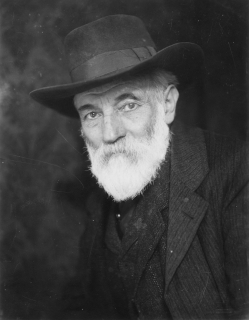
Birth of Sculptor Jerome Connor

jerome-connor

Jerome Connor, recognized world-class Irish sculptor, is born on February 23, 1874, in Coumduff, Annascaul, County Kerry.

In 1888, Connor emigrates to Holyoke, Massachusetts. His father is a stonemason, which leads to Connor’s jobs in New York as a sign painter, stonecutter, bronze founder and machinist. Inspired by his father’s work and his own experience, he would steal his father’s chisels as a child and carve figures into rocks.

It is believed Connor possibly assisted in the manufacture of bronzes such as the Civil War monument in Town Green in South Hadley, Massachusetts erected in 1896 and The Court of Neptune Fountain at the Library of Congress in Washington, D.C., completed in 1898.

Connor joins the Roycroft arts community in 1899 where he assists with blacksmithing and later starts creating terracotta busts and reliefs. Eventually he is recognized as Roycroft’s sculptor-in-residence.

After four years at Roycroft, Connor then works with Gustav Stickley and becomes well known as a sculptor being commissioned to create civic commissions in bronze for placement in Washington, D.C., Syracuse, East Aurora, New York, San Francisco, and in his native Ireland. In 1910, he establishes his own studio in Washington, D.C. From 1902 until his death, he produces scores of designs ranging from small portrait heads to relief panels to large civic commissions realized in bronze.

Connor is a self-taught artist who is highly regarded in the United States where most of his public works can be seen. He appears to be heavily influenced by the work of Irish American sculptor Augustus Saint-Gaudens. He uses the human figure to give expression to emotions, values and ideals. Many of the commissions he receives are for civic memorials and secular figures which he casts in bronze, a pronounced departure from the Irish tradition of stone carved, church sponsored works.

Connor’s best-known work is Nuns of the Battlefield located at the intersection of Rhode Island Avenue NW, M Street and Connecticut Avenue NW in Washington, D.C. It serves as a tribute to the over six hundred nuns who nursed soldiers of both armies during the American Civil War and is one of two monuments in the District that represent women’s roles in the Civil War. The sculpture is authorized by the United States Congress on March 29, 1918, with the agreement that the government will not fund it. The Ancient Order of Hibernians raises $50,000 for the project and Connor is selected since he focuses on Irish Catholic themes, being one himself. Connor, however, ends up suing the Order for nonpayment.

Connor works in the United States until 1925 at which time he moves to Dublin and opens his own studio but suffers from lack of financial support and patrons. In 1926 he is contacted by Roycroft and asked to design and cast a statue of Elbert Hubbard who, with his wife Alice, had died in the sinking of the RMS Lusitania. It is unveiled in 1930 and today stands on the lawn of East Aurora’s Middle School across the street from the Roycroft Chapel building.

While working on the Hubbard statue, Connor receives a commission to create a memorial for all the RMS Lusitania victims. It is to be erected in Cobh, County Cork where many of the victims are buried. The project is initiated by the New York Memorial Committee, headed by William Henry Vanderbilt whose father, Alfred Gwynne Vanderbilt, perished on the RMS Lusitania. He dies before the memorial is completed and based on Connor’s design its installation falls to another Irish artist.

Jerome Connor dies on August 21, 1943, of heart failure and reputably in poverty. There is a now a “Jerome Connor Place” in Dublin and around the corner there is a plaque in his honour on Infirmary Road, overlooking Dublin’s Phoenix Park, his favourite place.
Leave a comment

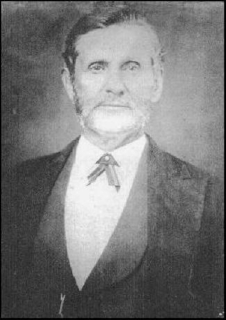
Birth of Walter P. Lane, Confederate General

LEAD Technologies Inc. V1.01

Walter Paye Lane, Confederate general during the American Civil War who also serves in the armies of the Republic of Texas and the United States of America, is born in County Cork on February 18, 1817.

The Lane family emigrates to Fairview in Guernsey County, Ohio, in 1821, and moves to Kentucky in 1825. In 1836 Lane moves to Texas to participate in its war for independence against Mexico. After Texas has gained its independence, he lives in San Augustine County in East Texas and then San Antonio, where he briefly serves as a Texas Ranger.

In 1846 Lane joins the First Regiment, Texas Mounted Riflemen, as a first lieutenant to fight in the Mexican American War. He fights with honors at the Battle of Monterey and is later given the rank of major and command of his own battalion. After the Mexican American War, he wanders about doing various things in Arizona, California, and Peru before opening a mercantile business in Marshall, Texas, in 1858.

When the American Civil War breaks out, Lane is among the first Texans to call for secession. His military reputation is so great that the first volunteer Confederate company raised in Harrison County is named for him, though he joins the 3rd Texas Cavalry. He participates in the Battle of Wilson’s Creek, the Battle of Chustenahlah, the Battle of Pea Ridge and both the Siege of Corinth and Second Battle of Corinth. He leads the 3rd Texas at the battle of Franklin, Mississippi, and is commended by General P. G. T. Beauregard for his efforts. He is severely wounded in the Battle of Mansfield in 1864, where Confederates forces rebuff a push to capture either or both Shreveport, Louisiana, or Marshall, Texas. Before the war ends, Lane is promoted to the rank of brigadier general in 1865, being confirmed on the last day the Confederate States Congress meets.

After the Civil War, Lane returns to Marshall where he helps to establish the Texas Veterans Association. After Reconstruction, he and his brother George, a local judge, found the first White Citizens Party in Texas and run Republicans and African Americans out of Marshall. With Democratic white hegemony brutally reestablished in Marshall and Harrison County, he declares the city and county “redeemed.”

Lane dies in Marshall, Texas on January 28, 1892, and is buried in the Marshall Cemetery near downtown Marshall. His memoirs, The Adventures and Recollections of General Walter P. Lane, are published posthumously in 1928.


Leave a comment

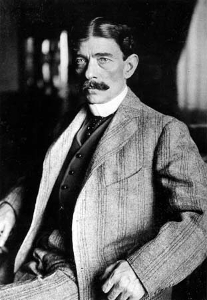
Birth of Frank Harris, Journalist & Novelist

frank-harris

Frank Harris, Irish American editor, novelist, short story writer, journalist and publisher, is born James Thomas Harris to Welsh parents in Galway, County Galway on February 14, 1855. He is friendly with many well-known figures of his day.

Harris’s father, Thomas Vernon Harris, is a naval officer from Fishguard, Pembrokeshire, Wales. While living with his older brother he is, for a year or more, a pupil at The Royal School, Armagh. At the age of twelve he is sent to Wales to continue his education as a boarder at the Ruabon Grammar School in Denbighshire, a time he is to remember later in My Life and Loves. He is unhappy at the school and runs away within a year.

Harris runs away to the United States in late 1869, arriving in New York City virtually penniless. The 13-year-old takes a series of odd jobs to support himself, working first as a shoeshiner, a porter, a general laborer, and a construction worker on the erection of the Brooklyn Bridge. He later turns these early occupational experiences into art, incorporating tales from them into his book The Bomb (1908).

From New York Harris moves to Chicago, where he takes a job as a hotel clerk and eventually a manager. Owing to Chicago’s central place in the meat packing industry, he makes the acquaintance of various cattlemen, who inspire him to leave the big city to take up work as a cowboy. He eventually grows tired of life in the cattle industry and enrolls at the University of Kansas, where he studies law and earns a degree, gaining admission to the Kansas Bar Association.

Harris is not cut out to be a lawyer and soon decides to turn his attention to literature. He returns to England in 1882, later traveling to various cities in Germany, Austria, France, and Greece on his literary quest. He works briefly as an American newspaper correspondent before settling down in England to seriously pursue the vocation of journalism.

Harris first comes to general notice as the editor of a series of London papers including The Evening News, The Fortnightly Review and the Saturday Review, the latter being the high point of his journalistic career, with H. G. Wells and George Bernard Shaw as regular contributors.

From 1908 to 1914 Harris concentrates on working as a novelist, authoring a series of popular books such as The Bomb, The Man Shakespeare, and The Yellow Ticket and Other Stories. With the advent of World War I in the summer of 1914, he decides to return to the United States.

From 1916 to 1922 Harris edits the U.S. edition of Pearson’s Magazine, a popular monthly which combines short story fiction with socialist-tinted features on contemporary news topics. One issue of the publication is banned from the mails by United States Postmaster General Albert S. Burleson during the period of American participation in World War I. Despite this Harris manages to navigate the delicate situation which faces the left-wing press and keeps Pearson’s Magazine functioning and solvent during the war years.

Harris becomes an American citizen in April 1921. In 1922 he travels to Berlin to publish his best-known work, his four-volume autobiography My Life and Loves (1922–1927). It is notorious for its graphic descriptions of his purported sexual encounters and for its exaggeration of the scope of his adventures and his role in history. A fifth volume, supposedly taken from his notes but of doubtful provenance, is published in 1954, long after his death.

Harris also writes short stories and novels, two books on William Shakespeare, a series of biographical sketches in five volumes under the title Contemporary Portraits and biographies of his friends Oscar Wilde and George Bernard Shaw. His attempts as a playwright are less successful. Only Mr. and Mrs. Daventry (1900), which is based on an idea by Oscar Wilde, is produced on the stage.

Married three times, Harris dies of a heart attack in Nice, France on August 26, 1931. He is buried at Cimetière Sainte-Marguerite, adjacent to the Cimetière Caucade, in Nice. Just after his death a biography written by Hugh Kingsmill (pseudonym of Hugh Kingsmill Lunn) is published.


Leave a comment

Publication of the First Issue of “The United Irishman”

john-mitchel

John Mitchel, Irish nationalist activist, author, and political journalist, publishes the first issue of The United Irishman on February 12, 1848.

Mitchel is one of the great propagandists of his day, although the causes he espouses often place him on the wrong side, he is loved and loathed in equal measure. He is one of the few Irishmen to have incurred the wrath of the British government and of the Federal administration of the United States.

Mitchel is born near Dungiven, County Derry in what is now Northern Ireland on November 3, 1815. The son of a Presbyterian clergyman, he creates his own pulpit in a series of journalistic enterprises in Dublin, Tennessee, Virginia and New York.

Mostly raised in Newry, County Down, Mitchel’s first political association is with the Young Ireland movement of the 1840s and the famous The Nation newspaper, founded by Charles Gavan Duffy, Thomas Davis and John Blake Dillon in 1842. But long before the abortive Young Ireland Rebellion of 1848 he has moved on, finding the editorial policies of The Nation rather too bland for his tastes.

Inflamed by the suffering he witnesses on a trip to Galway, it is Mitchel, more than any other writer or politician, who shapes the nationalist perception of an Gorta Mór (Great Famine):

“I could see, in front of the cottages, little children leaning against a fence when the sun shone out for they could not stand, their limbs fleshless, their bodies half-naked, their faces bloated yet wrinkled, and of a pale, greenish hue… I saw Trevelyan’s claw in the vitals of those children: his red tape would draw them to death: in his government laboratory he had prepared for them the typhus poison.”

Responding to such writing, Ireland simmers, angry and ready for rebellion. Fearful of Mitchel’s power, London’s Punch magazine emphasises his international standing by portraying him as an Irish monkey challenging the Great British Lion. The Times thunders against him. When Mitchel produces his own republican newspaper, The United Irishman, which, in its inaugural edition, claims that “the world was weary of Old Ireland and also of Young Ireland” thus attacking both Daniel O’Connell and his younger antagonists with the same broadsword. He aims to be an equal opportunities offender and succeeds admirably.

The United Irishman sells out and is shut down by the British authorities after a mere sixteen issues. In order to silence Mitchel, to rob him of his heroic status and his possible martyrdom, the British government passes the Treason Felony Act 1848, which seeks to treat treason as a common crime. He is later tried before an elegantly and efficiently packed jury, found guilty of treason-felony, and deported to Van Diemen’s Land (Tasmania). The result is one of the greatest works of Irish political history, The Jail Journal, in which Mitchel writes about his own experience of deportation and advocates a far more militaristic approach to Ireland’s “English problem” than would have been popular heretofore.

Mitchel is acclaimed by Patrick Pearse, who declares The Jail Journal to be “the last of the four gospels of the New Testament of Irish nationality, the last and the fieriest and the most sublime.” Éamon de Valera reveres Mitchel, and when in 1943 he imagines Ireland as “the home of a people who valued material wealth only as a basis for right living, of a people who, satisfied with frugal comfort, devoted their leisure to the things of the spirit,” he too is delving into The Jail Journal for his inspiration.

(From: #OTD in 1848 – John Mitchel Publishes First United Irishman, Stair na hÉireann | History of Ireland)


Leave a comment

Death of Irish Artist John Butler Yeats

john-butler-yeats

John Butler Yeats, Irish artist and the father of William Butler Yeats, Lily Yeats, Elizabeth Corbett Yeats and Jack Butler Yeats, dies in New York City on February 3, 1922. The National Gallery of Ireland holds a number of his portraits in oil and works on paper, including one of his portraits of his son William, painted in 1900. His portrait of John O’Leary (1904) is considered his masterpiece.

Yeats is born on March 16, 1839, in Lawrencetown, County Down, in what is now Northern Ireland. His parents are William Butler Yeats (1806–1862) and Jane Grace Corbert. He is the eldest of nine children. Educated in Trinity College Dublin and a member of the University Philosophical Society, Yeats begins his career as a lawyer and junior assistant briefly with Isaac Butt before he takes up painting in 1867 and studies at the Heatherley School of Fine Art.

Yeats marries Susan Pollexfen (13 July 1841 – 3 January 1900) on September 10, 1863, at St. John’s Church in Sligo. Susan Yeats is dismayed when her husband abandons the study of law to become an artist. She is described as a “shadowy figure” who goes “quietly, pitifully, mad.” They have six children: William Butler Yeats, Susan Mary “Lily” Yeats, Elizabeth Corbett “Lolly” Yeats, Robert Corbet Yeats, John “Jack” Butler Yeats and Jane Grace Yeats.

There are few records of his sales, so there is no catalogue of his work in private collections. It is possible that some of his early work may have been destroyed by fire in World War II. It is clear that he has no trouble getting commissions as his sketches and oils are found in private homes in Ireland, England and the United States. His later portraits show great sensitivity to the sitter. However, he is a poor businessman and is never financially secure. He moves frequently and shifts several times between England and Ireland.

In 1907, at the age of 68, he travels to New York aboard the RMS Campania, with his daughter Lily, and never returns to Ireland. In October 1909 he moves into his final home, a boarding house run by the Petitpas sisters which is located at 317 West Twenty-Ninth Street. In New York, he is friendly with members of the Ashcan School of painters.

John Butler Yeats dies in the boarding house on February 3, 1922. Edmund Quinn makes a death mask which is now in the collection of the Yeats Society in Sligo. Yeats is buried in Chestertown Rural Cemetery in Chestertown, New York, next to his friend, Jeanne Robert Foster.


1 Comment

Archibald Hamilton Rowan Tried for Distribution of Seditious Paper

archibald-hamilton-rowan

Archibald Hamilton Rowan, a founding member of the Dublin Society of United Irishmen, is tried on a charge of distributing seditious paper on January 29, 1794.

Hamilton Rowan is born in the home of his grandfather, William Rowan, in London on May 1, 1751, and lives there with his mother and sister for much of his early life. He is admitted to Queens’ College, Cambridge in 1768, but is expelled from the college and rusticated for an attempt to throw a tutor into the River Cam. He is sent for a period in 1769 to Warrington Academy.

Hamilton Rowan travels throughout the 1770s and 1780s, visiting parts of Europe, the Americas, and North Africa. In 1781 he marries Sarah Dawson in Paris, France. The couple has ten children. He is the godfather of the Irish mathematician William Rowan Hamilton.

Hamilton Rowan returns to Ireland in his thirties, in 1784, to live at Rathcoffey near Clane in County Kildare. He becomes a celebrity and, despite his wealth and privilege, a strong advocate for Irish liberty. That same year he joins the Killyleagh Volunteers, a militia group later associated with radical reform. He first gains public attention by championing the cause of fourteen-year-old Mary Neal in 1788. Neal had been lured into a Dublin brothel and then assaulted by Lord Carhampton. Hamilton Rowan publicly denounces Carhampton and publishes a pamphlet A Brief Investigation of the Sufferings of John, Anne, and Mary Neal in the same year. An imposing figure at more than six feet tall, his notoriety grows when he enters a Dublin dining club threatening several of Mary Neal’s detractors, with his massive Newfoundland at his side and a shillelagh in hand. The incident wins him public applause and celebrity as a champion of the poor.

In 1790 Hamilton Rowan joins the Northern Whig Club, and by October has become a founding member of the Dublin Society of United Irishmen, working alongside famous radicals such as William Drennan and Theobald Wolfe Tone. He is arrested in 1792 for seditious libel when caught handing out “An Address to the Volunteers of Ireland,” a piece of United Irish propaganda. Unknown to him, from 1791 Dublin Castle has a spy in the Dublin Society, Thomas Collins, whose activity is never discovered. From February 1793 Britain and Ireland join the War of the First Coalition against France, and the United Irish movement is outlawed in 1794.

Hamilton Rowan’s reputation for radicalism and bluster grow during this time when he leaves Ireland to confront the Lord Advocate of Scotland about negative comments made in respect to his character and that of members of the Society of United Irishmen. As a prominent member of the Irish gentry, he is an important figure in the United Irishmen and becomes the contact for the Scottish radical societies as a result of his visit. Upon his return to Dublin, he is charged and was found guilty of seditious libel, even though he is excellently defended by the famous John Philpot Curran. He is sentenced to two years imprisonment, receives a fine of £500, and is forced to pay two assurities for good behaviour of £1,000 each. In January 1794 he retires to his apartments in Dublin’s Newgate Prison.

In the years following, Hamilton Rowan spends time in exile in France, the United States and Germany. He is allowed to return to Ireland in 1806. He returns to the ancestral home of Killyleagh Castle, County Down, receiving a hero’s welcome. While he has agreed to be a model citizen under the conditions of his return to Ireland, he remains active in politics and retains his youthful radicalism. Following his last public appearance at a meeting in the Rotunda in Dublin on January 20, 1829, he is lifted up by a mob and paraded through the streets.

Hamilton Rowan dies at the age of 84 in his home on November 1, 1834. He is buried in the vaults of St. Mary’s Church, Dublin.


Leave a comment

Birth of Actor Charles John Kean

charles-john-kean

Charles John Kean, Irish actor and son of actor Edmund Kean, is born in Waterford, County Waterford on January 18, 1811.

After preparatory education at Worplesdon and at Greenford, near Harrow, Kean is sent to Eton College, where he remains for three years. In 1827, he is offered a cadetship in the East India Company‘s service, which he is prepared to accept if his father would settle an income of £400 on his mother. The elder Kean refuses to do this, so he determines to become an actor. He makes his first appearance at Drury Lane on October 1, 1827 as Norval in John Home‘s Douglas, but his continued failure to achieve popularity leads him to leave London in the spring of 1828 for the provinces. In Glasgow, on October 1 of that year, father and son act together in Arnold Payne’s Brutus, the elder Kean in the title role and his son as Titus.

After a visit to the United States in 1830, where he is received with much favour, Kean appears in 1833 at Covent Garden as “Sir Edmund Mortimer” in George Colman‘s The Iron Chest, but his success is not pronounced enough to encourage him to remain in London, especially as he has already won a high position in the provinces. In January 1838, however, he returns to Drury Lane, and plays Hamlet with a success which gives him a place among the principal tragedians of his time. He marries the actress Ellen Tree (1805-1880) on January 25, 1842, and pays a second visit to the United States with her from 1845 to 1847.

Returning to England, Kean enters on a successful engagement at the Haymarket Theatre, and in 1850, with Robert Keeley, becomes lessee of the Princess’s Theatre, London. The most noteworthy feature of his management is a series of gorgeous Shakespearean revivals that aim for “authenticity.” He also mentors the young Ellen Terry in juvenile roles. In melodramatic parts such as the king in Dion Boucicault‘s adaptation of Casimir Delavigne‘s Louis XI, and Louis and Fabian dei Franchi in Boucicault’s adaptation of Alexandre Dumas‘s The Corsican Brothers, his success is complete. In 1854 the writer Charles Reade creates a play The Courier of Lyons for Kean to appear in, which becomes one of the most popular plays of the Victorian era.

From his “tour round the world” Kean returns to England in 1866 in broken health, and dies at the age of 57 in London on January 22, 1868. He is buried in All Saints Churchyard, Catherington, East Hampshire district, Hampshire.


Leave a comment

The Irish Republican Army S-Plan

s-plan-coventry-attack

The S-Plan or Sabotage Campaign or England Campaign, an Irish Republican Army (IRA) campaign of bombing and sabotage against the civil, economic, and military infrastructure of the United Kingdom, begins on January 16, 1939, and lasts until March 1940. The campaign is conceived by Seamus O’Donovan in 1938 at the request of then IRA Chief of Staff Seán Russell. It is believed that Russell and Joseph McGarrity devised the strategy in 1936.

The S-Plan contains many precise instructions for acts of destruction which have as their object the paralysis of all official activity in England and the greatest possible destruction of British defence installations. It divides the IRA campaign into two main lines: propaganda and offensive (military) action.

Operations are strictly concentrated on the island of Britain, in and around centres of population where IRA volunteers can operate freely without drawing attention. No attacks on targets in Northern Ireland or other areas under British control are planned as part of the S-Plan.

Sources of funding for the campaign are not known, but once the campaign is operational, the weekly expenses for operations in the field amount to approximately £700. Operational units are expected to raise any money needed themselves, and the men who act within IRA teams are unpaid and expected to support themselves while on missions.

On January 12, 1939, the IRA Army Council sends an ultimatum, signed by Patrick Fleming, to British Foreign Secretary Lord Halifax. The communiqué duly informs the British government of “The Government of the Irish Republic’s” intention to go to “war.”

On Sunday, January 15, with no reply from the British Government, a proclamation is posted in public places throughout Ireland announcing the IRA’s declaration of war on Britain. This proclamation is written by Joseph McGarrity, leader of Clan na Gael in the United States, and is signed by six members of the Army Council – Stephen Hayes, Patrick Fleming, Peadar O’Flaherty, George Oliver Plunkett, Larry Grogan and Seán Russell.

The five deaths during the Coventry bombing on August 25, 1939, effectively ends the campaign. By late 1940 the introduction of the Treason Act 1939 and the Offences Against the State Act 1939 in Ireland, and the Prevention of Violence (Temporary Provisions) Act in Britain lead to many IRA members interned in Ireland, arrested in Britain, or deported from Britain. The granting of extra powers to the Irish Justice Minister under the Emergency Powers Act in January 1940 leads to 600 IRA volunteers being imprisoned and 500 interned during the course of World War II alone.

The final figures resulting from the S-Plan are cited as 300 explosions, ten deaths and 96 injuries.

(Pictured: The aftermath of an IRA bike bomb in Coventry on August 25, 1939)


Leave a comment

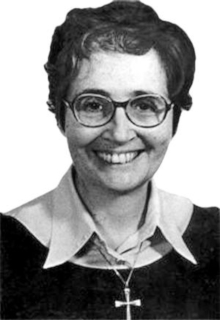
Birth of Sister Maura John Clarke

sister-maura-clarke

Sister Maura John Clarke, Irish American Catholic Maryknoll sister who serves as a missionary in Nicaragua and El Salvador, is born Mary Elizabeth Clarke in Queens, New York on January 13, 1931, the eldest of three children.

Clarke’s parents, both born in Ireland, settle in Belle Harbor, Queens, New York in the late 1920s. She enters Maryknoll in 1950 and makes her first vows in 1953. Initially, she is attracted to Maryknoll by a deep desire “to become closer to God and to serve Him.”

After graduation from Maryknoll Teachers College in 1954, Sister Clarke is assigned to teach at St. Anthony’s Parish School in The Bronx. In 1959 her growing desire “to serve Him” is further strengthened with her assignment to Siuna, Nicaragua, as a teacher and then superior of the little community. She is in Managua from 1970 to 1976 where she ministers to the people, sharing with them in the cataclysmic earthquake of 1972. With them she works tirelessly, helping them rebuild their homes and establish basic Christian communities.

In 1977 Sister Clarke returns to the Center to serve on a Maryknoll Sisters World Awareness Team, working primarily along the East Coast of the United States. She is the same everywhere she serves – friendly, loving, generous, gentle, using her gifts and abilities tirelessly, and trusting that with God’s help she can do what is needed. When her term with the World Awareness Team ends early in 1980, she decides to return to Nicaragua.

In August 1980 emergency needs in El Salvador call Sister Clarke and she spends her first weeks there in Santa Ana. However, after Sister Carol Piette’s death, she volunteers immediately to accompany Sister Ita Ford in Chalatenango to minister to the poor and oppressed and the imprisoned.

When Sister Clarke comes to the Regional Assembly the day before Thanksgiving, November 26, 1980, she feels not only willing to return to El Salvador, but convinced that Chalatenango is the place where she can and will serve Christ’s poor. With Sister Ford she searches out the missing, prays with the families of prisoners, buries the dead, and works with the people in their struggle to break out of the bonds of oppression, poverty, and violence. Their days are filled with difficulty and fearful danger at times.

Sister Clarke returns with Sister Ford to El Salvador late in the afternoon of December 2, 1980. Two of their good friends and collaborators in mission meet them at the airport to take them back to Chalatenango. A few hours later she is beaten, raped, and murdered along with three fellow missionaries — Sister Ita Ford, Sister Dorothy Kazel and missionary Jean Donovan — by members of the military of El Salvador. She is buried in Chalatenango, El Salvador.


Leave a comment

Death of Padraic Colum, Poet & Novelist

padraic-colum

Padraic Colum, Irish-born American poet, novelist, biographer, playwright, and children’s author whose lyrics capture the traditions and folklore of rural Ireland, dies in Enfield, Connecticut on January 11, 1972. He is one of the leading figures of the Irish Literary Revival.

Colum was born on December 8, 1881, in Columcille, County Longford, the first of eight children born to Patrick and Susan Columb. In 1892, the family moves to Glasthule, near Dublin and he attends the local national school. He starts writing after he finishes school and meets a number of the leading Irish writers of the time, including W. B. Yeats, Lady Gregory and Æ. He also joins the Gaelic League and is a member of the first board of the Abbey Theatre. He becomes a regular user of the National Library of Ireland, where he meets James Joyce and the two become lifelong friends.

Influenced by the literary activity of the Celtic revival centered in Dublin at the turn of the century, Colum publishes the collection of poetry Wild Earth (1907). He co-founds The Irish Review in 1911, then three years later settles permanently in the United States. His varied literary output includes volumes of poetry including Dramatic Legends (1922) and Creatures (1927), plays such as Broken Soil (first performed 1903) and The Land (1905), novels, anthologies of folklore and children’s books. The reminiscence Our Friend James Joyce (1959) is written with his wife Mary (Maguire), a well-known literary critic.

The Colums spent the years from 1930 to 1933 living in Paris and Nice, where Padraic renews his friendship with James Joyce and becomes involved in the transcription of Finnegans Wake. After their time in France, the couple moves to New York City, where they do some teaching at Columbia University and City College of New York. He is a prolific author and publishes a total of 61 books, not counting his plays. While in New York, he writes the screenplay for the 1954 stop-motion animated film Hansel and Gretel: An Opera Fantasy. It is his only screenplay.

Mary dies in 1957, and Colum completes Our Friend James Joyce, which they had worked on together. It is published in 1958. He divides his later years between the United States and Ireland. In 1961 the Catholic Library Association awards him the Regina Medal.

Padraic Colum dies on January 11, 1972, at the age of 90, in Enfield, Connecticut. He is buried in St. Fintan’s Cemetery in Sutton, Dublin.