seamus dubhghaill

Promoting Irish Culture and History from Little Rock, Arkansas, USA


Leave a comment

Death of Peter Doherty, Northern Ireland Footballer

peter-doherty

Peter Dermot Doherty, Northern Ireland international footballer and manager who played for several clubs, including Manchester City F.C. and Doncaster Rovers F.C., dies in Poulton-le-Fylde, Lancashire, England on April 6, 1990.

Born in Magherafelt, County Londonderry on June 5, 1913, Doherty begins his career with Glentoran F.C. in the Irish League. After helping Glentoran to the 1933 Irish Cup, early in the 1933–1934 season he joins English club Blackpool F.C., at the age of 19. He then joins Manchester City on February 19, 1936 for a then-club record of £10,000. Blackpool needs the money urgently, and Doherty is summoned from his lunch to report to Bloomfield Road. He tries hard to persuade Blackpool directors that he does not wish to leave the club, for he is due to marry a local girl and has just bought a new house in the town. The fee is an exceptionally high transfer fee for the period, coming within £1,000 of the British record. Doherty’s Manchester City debut, against Preston North End F.C., is not a successful one. Tightly man-marked by Bill Shankly throughout, he fails to make an impact. He later describes the remainder of his first Manchester City season as “uneventful,” however his second is anything but.

Manchester City starts the 1936–1937 season poorly and are in the bottom half of the table until December. Occasional big wins, including a 6–2 defeat of West Bromwich Albion F.C. and a 4–1 defeat of Everton F.C., are mixed with extended barren runs. At one point the club gains just one win in twelve matches. However, Doherty scores goals regularly. A goal in a 5–3 Christmas day loss to Grimsby Town F.C. is his twelfth of the season. Christmas proves to be a turning point for the club, as a win against Middlesbrough F.C. the following day is the start of a long unbeaten run. By April, Manchester City is second in the table and faces a fixture against Arsenal F.C., league leaders and the dominant club of the period. Doherty scores the first goal in a 2–0 win, and City reaches the top of the table. The unbeaten run continues until the end of the season, and City secures their first league championship with a 4–1 win over Sheffield Wednesday F.C.. Doherty, with 30 league goals, is the club’s leading scorer, helped by a run of eleven goals in seven games as the season draws to a close.

Doherty scores 79 goals in 130 appearances during his time at Maine Road. During the World War II years of 1939–1945, Doherty serves in the Royal Air Force. He remains registered as a Manchester City player, scoring 60 goals in 89 wartime matches, though wartime games are not generally included in official records. He also guests for numerous clubs across the country. During a guest appearance for Port Vale F.C. in 1945, he famously goes to take a penalty but instead of shooting he lays it off to a teammate who scores.

After the conclusion of the war, Doherty transfers to Derby County F.C., with whom he wins the FA Cup, scoring a goal in the final itself. He also goes on to play for Huddersfield Town A.F.C., scoring 33 goals in 83 league appearances.

Doherty makes his final move to Doncaster in 1949, where he assumes the role of player-manager. He later becomes manager of the Northern Ireland national football team (1951–1962), for whom he has 16 caps as a player. He leads the country to the 1958 FIFA World Cup, reaching the quarter-finals. He also manages Bristol City F.C..

Doherty’s coaching techniques are revolutionary at the time. He emphasises ball practice and instead of endless laps of the pitch, suggests volleyball “to promote jumping, timing and judgement,” basketball “to encourage split-second decision-making and finding space,” and walking football “to build up calf muscles.”

Later life sees Doherty become a scout for Liverpool F.C., helping to unearth such talents as Kevin Keegan. He is inducted into the English Football Hall of Fame in 2002.

Following Doherty’s death in 1990, a plaque to mark his birthplace is placed in Magherafelt. It can be found at what is now a barber shop.


Leave a comment

Birth of Irish American Actor Gregory Peck

gregory-peck

Actor Gregory Peck is born in La Jolla, California on April 5, 1916, to Bernice Mary (Ayres) and Gregory Pearl Peck, a chemist and pharmacist in San Diego. Through his Irish-born paternal grandmother, Catherine Ashe, Peck is related to Thomas Ashe, who takes part in the Easter Rising fewer than three weeks after Peck’s birth and dies while on hunger strike in 1917.

Peck’s parents divorce when he is five years old. An only child, he is sent to live with his grandmother. He never feels as though he has a stable childhood. His fondest memories are of his grandmother taking him to the movies every week and of his dog, which follows him everywhere.

At the age of ten Peck is sent to a Catholic military school, St. John’s Military Academy in Los Angeles. While he is a student there, his grandmother dies. At 14, he moves back to San Diego to live with his father and attends San Diego High School. After graduating he enrolls for one year at San Diego State Teacher’s College (now known as San Diego State University).

Peck studies pre-med at the University of California, Berkeley and while there is bitten by the acting bug and decides to change the focus of his studies. He enrolls in the Neighborhood Playhouse School of the Theatre in New York City and debuts on Broadway after graduation. His debut is in Emlyn Williams‘ play The Morning Star (1942). By 1943, he is in Hollywood, where he debuts in the RKO Pictures film Days of Glory (1944).

Stardom comes with Peck’s next film, The Keys of the Kingdom (1944), for which he is nominated for an Academy Award. Peck’s screen presence displays the qualities for which he becomes well known. He is tall, rugged and heroic, with a basic decency that transcends his roles. He appears in Alfred Hitchcock‘s Spellbound (1945) as an amnesia victim accused of murder. In The Yearling (1946), he is again nominated for an Academy Award and wins the Golden Globe Award. He is especially effective in westerns and appears in such varied fare as David O. Selznick‘s critically blasted Duel in the Sun (1946), the somewhat better received Yellow Sky (1948) and the acclaimed The Gunfighter (1950). He is nominated again for the Academy Award for his roles in Gentleman’s Agreement (1947), which deals with antisemitism, and Twelve O’Clock High (1949), a story of high-level stress in an Air Force bomber unit in World War II.

With a string of hits to his credit, Peck makes the decision to only work in films that interest him. He continues to appear as the heroic, larger-than-life figures in such films as Captain Horatio Hornblower R.N. (1951) and Moby Dick (1956). He works with Audrey Hepburn in her debut film, Roman Holiday (1953).

Peck finally wins the Oscar, after four nominations, for his performance as lawyer Atticus Finch in To Kill a Mockingbird (1962). In the early 1960s, he appears in two darker films than he usually makes, Cape Fear (1962) and Captain Newman, M.D. (1963), which deal with the way people live. He also gives a powerful performance as Captain Keith Mallory in The Guns of Navarone (1961), one of the biggest box-office hits of that year.

In the early 1970s, Peck produces two films, The Trial of the Catonsville Nine (1972) and The Dove (1974), when his film career stalled. He makes a comeback playing, somewhat woodenly, Robert Thorn in the horror film The Omen (1976). After that, he returns to the bigger-than-life roles he is best known for, such as MacArthur (1977) and the monstrous Nazi Dr. Josef Mengele in the huge hit The Boys from Brazil (1978). In the 1980s, he moves into television with the miniseries The Blue and the Gray (1982) and The Scarlet and the Black (1983). In 1991, he appears in the remake of his 1962 film, playing a different role, in Martin Scorsese‘s Cape Fear (1991). He is also cast as the progressive-thinking owner of a wire and cable business in Other People’s Money (1991).

In 1967, Peck receives the Academy’s Jean Hersholt Humanitarian Award. He has also been awarded the Presidential Medal of Freedom. Always politically progressive, he is active in such causes as anti-war protests, workers’ rights and civil rights. In 2003, Peck’s portrayal of Atticus Finch is named the greatest film hero of the past 100 years by the American Film Institute.

Gregory Peck dies in his sleep at his home in Los Angeles, California from bronchopneumonia at the age of 87 on June 12, 2003. He is entombed in the Cathedral of Our Lady of the Angels mausoleum in Los Angeles. His eulogy is read by Brock Peters, whose character, Tom Robinson, was defended by Peck’s Atticus Finch in To Kill a Mockingbird.


Leave a comment

Birth of Actor Patrick Joseph McGoohan

patrick-joseph-mcgoohan

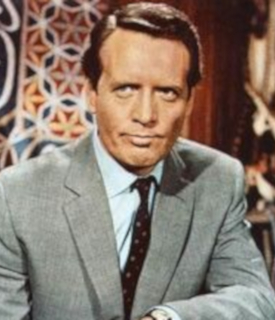
Patrick Joseph McGoohan, American-born actor who is raised in Ireland and Great Britain, is born in Astoria, Queens, New York on March 19, 1928. He establishes an extensive stage and film career.

McGoohan is the son of Rose (Fitzpatrick) and Thomas McGoohan, who are living in the United States after emigrating from Ireland to seek work. He is brought up as a Catholic. Shortly after he is born, his parents move back to Mullaghmore, County Leitrim. Seven years later they emigrate to Sheffield, England.

McGoohan attends St. Vincent’s School and De La Salle College in Sheffield. During World War II, he is evacuated to Loughborough, Leicestershire. There he attends Ratcliffe College, where he excels in mathematics and boxing. He leaves school at the age of 16 and returns to Sheffield, where he works as a chicken farmer, a bank clerk, and a lorry driver before getting a job as a stage manager at Sheffield Repertory Theatre. When one of the actors becomes ill, McGoohan is substituted for him, launching his acting career.

McGoohan is most closely identified with two 1960s British television series, Danger Man and The Prisoner. The espionage drama Danger Man, which runs in the United States as Secret Agent, runs for 86 episodes during 1960–1961 and 1964–1967. The cult hit The Prisoner runs for 17 episodes in 1967–1968.

In Danger Man McGoohan puts a new spin on the secret agent formula by refusing to allow his character, John Drake, to carry a gun or indulge in sexual dalliances. The show’s success makes him Britain’s highest-paid TV actor.

McGoohan is one of several actors considered for the role of James Bond in Dr. No. While McGoohan turns down the role on moral grounds, the success of the Bond films is generally cited as the reason for Danger Man being revived in 1964. He is later considered for the Bond role in Live and Let Die but again turns it down.

The success of Danger Man provides McGoohan the leverage he needs to produce The Prisoner, an allegorical Kafkaesque series in which he portrays Number Six, an unnamed agent, thought by many to represent Drake, who angrily resigns and is then held captive in a superficially banal place called The Village, where the mysterious unseen Number One, the ever-changing Number Two, and others try to overcome the fiercely individualistic Number Six’s escape attempts and pry information from him.

McGoohan’s later works include the short-lived medical mystery series Rafferty (1977), such films as Ice Station Zebra (1968), Escape from Alcatraz (1979), and Braveheart (1995), the Broadway spy drama Pack of Lies (1985), and a record four guest-villain appearances on the American detective series Columbo, two of which earned him Emmy Awards. He also directs and writes several episodes of The Prisoner and Columbo. One of his last roles is as Number Six in a 2000 episode of the animated TV comedy The Simpsons.

Patrick McGoohan dies on January 13, 2009, at Saint John’s Health Center in Santa Monica, California, following a brief illness. His body is cremated.


Leave a comment

Birth of Daniel Mannix, Archbishop of Melbourne

daniel-mannix

Daniel Mannix, Archbishop of Melbourne, advocate of Irish independence, and one of the most influential and controversial public figures in 20th-century Australia, is born near Charleville, County Cork on March 4, 1864.

Mannix is the son of a tenant farmer, Timothy Mannix, and his wife Ellen (née Cagney). He is educated at Congregation of Christian Brothers schools and at St. Patrick’s College, Maynooth, County Kildare, where he is ordained priest in 1890. He teaches philosophy (1891) and theology (1894) at St. Patrick’s and from 1903 to 1912 he serves as president of the college. During his presidency, he welcomes both King Edward VII in 1905 and King George V in 1911 with loyal displays, which attract criticism by supporters of the Irish Home Rule movement.

Consecrated titular archbishop of Pharsalus in 1912, Mannix arrives in Melbourne in the following year as coadjutor archbishop, becoming archbishop of Melbourne in 1917.

Mannix’s forthright demands for state aid for the education of Roman Catholics in return for their taxes and his opposition to drafting soldiers for World War I make him the subject of controversy. A zealous supporter of Irish independence, he makes an official journey to Rome in 1920 via the United States, where his lengthy speech making attracts enthusiastic crowds. His campaign on behalf of the Irish, however, causes the British government to prevent him from landing in Ireland, which he finally visits in 1925.

After World War II Mannix seeks to stop Communist infiltration of the Australian trade unions. He plays a controversial part in the dissensions within the Australian Labor Party and backs the largely right-wing Catholic Democratic Labor Party, which breaks away. A promoter of Catholic Action (i.e., lay apostolic activity in the temporal society) and of the Catholic social movement, he is responsible for the establishment of 181 schools, including Newman College and St. Mary’s College at the University of Melbourne, and 108 parishes.

By the 1960s the distinct identity of the Irish community in Melbourne is fading, and Irish Catholics are increasingly outnumbered by Italians, Maltese and other postwar immigrant Catholic communities. Mannix, who turned 90 in 1954, remains active and in full authority, but he is no longer a central figure in the city’s politics. He dies suddenly on November 6, 1963, aged 99, while the Archdiocese of Melbourne is preparing to celebrate his 100th birthday. He is buried in the crypt of St. Patrick’s Cathedral, Melbourne.


Leave a comment

Sinking of the SS Isolda

isoldaThe Irish lightship tender SS Isolda, which is resupplying lighthouses off the coast of County Wexford, is bombed and sunk by a German Focke-Wulf Fw 200 Condor on December 19, 1940 despite Irish neutrality. Six sailors are killed.

The lightships provide a vitally important service to maritime traffic for over two centuries. People live aboard these ships that anchor stationary at sea, providing a beacon in the dark for vessels that navigate the more treacherous parts of the Irish coast. These ships are faithfully assisted by ships that resupply them and facilitate crew changes. The SS Isolda is one such ship.

Danger in the waters around Ireland greatly increase during World War II. The Battle for the Atlantic is raging and Ireland’s location near important shipping lanes places Irish vessels right in the middle of a conflict zone. As a result, many casualties are incurred on Irish ships despite their position of neutrality.

The SS Isolda is a lightship tender owned by the Commissioners of Irish Lights. The lightship service is considered neutral and the ship has “Lighthouse Service” painted in large letters on both sides of the hull.

On December 19, 1940 she sails out from Rosslare Harbour heading to re-supply nearby lightships with relief crews and Christmas provisions. After placing the first crew at the lightship Barrels she then heads towards her next stop, the lightship Coningbeg. She does not make it very far as three miles out she is attacked from the air.

A German Condor flies over and drops the first bomb on the ship. The plane circles around and drops a second bomb, sealing the ships fate. Realising the SS Isolda is doomed, Captain Albert Bestic gives orders to abandon ship. Back on shore observers at the army lookout post at Carnsore Point look on helplessly at the carnage. The next day the German High Command admits that it is a German aircraft that had bombed the SS Isolda.

Survivors are picked up by boat and brought into Kilmore Quay, County Wexford. Six of the crew die and seven are wounded. Captain Bestic is among the survivors. This is not his first brush with death as he survived the sinking of the ill-fated RMS Lusitania 25 years earlier when it was torpedoed by a German U-boat.

(From: “Remembering the SS Isolda and her crew | Lost December 19th 1940” by Ann Robinson, December 19, 2017, http://coastmonkey.ie/ss-isolda-1940 | Pictured: The Ship – SS Isolda being bombed – Painting By Kenneth King)


Leave a comment

Birth of Edna O’Brien, Novelist, Playwright & Poet

edna-o-brien

Edna O’Brien, novelist, memoirist, playwright, poet and short story writer, is born in Tuamgraney, County Clare on December 15, 1930. Philip Roth describes her as “the most gifted woman now writing in English,” while the former President of Ireland Mary Robinson cites her as “one of the great creative writers of her generation.” Her works often revolve around the inner feelings of women, and their problems in relating to men, and to society as a whole.

O’Brien is the youngest child of “a strict, religious family.” From 1941 to 1946 she is educated by the Sisters of Mercy, a circumstance that contributes to a “suffocating” childhood. “I rebelled against the coercive and stifling religion into which I was born and bred. It was very frightening and all pervasive. I’m glad it has gone.” She is fond of a nun as she deeply misses her mum and tries to identify the nun with her mother.

In 1950, O’Brien is awarded a licence as a pharmacist. In Ireland, she reads such writers as Leo Tolstoy, William Makepeace Thackeray, and F. Scott Fitzgerald. In 1954, she marries, against her parents’ wishes, the Irish writer Ernest Gébler and the couple moves to London. They have two sons, but the marriage is dissolved in 1964. Gébler dies in 1998.

In London, O’Brien purchases Introducing James Joyce, with an introduction written by T. S. Eliot. When she learns that James Joyce‘s A Portrait of the Artist as a Young Man is autobiographical, it makes her realise where she might turn, should she decide to write herself. In London she starts work as a reader for Hutchinson, where on the basis of her reports she is commissioned, for £50, to write a novel. Her first novel, The Country Girls (1960), is often credited with breaking silence on sexual matters and social issues during a repressive period in Ireland following World War II.

This novel is the first part of a trilogy of novels which includes The Lonely Girl (1962) and Girls in Their Married Bliss (1964). Shortly after their publication, these books are banned and, in some cases burned, in her native country due to their frank portrayals of the sex lives of their characters. Her novel A Pagan Place (1970) is about her repressive childhood. Her parents are vehemently against all things related to literature and her mother strongly disapproves of her daughter’s career as a writer.

O’Brien is a panel member for the first edition of the BBC‘s Question Time in 1979. In 2017, she becomes the sole surviving member.

In 1980, she writes a play, Virginia, about Virginia Woolf, and it is staged originally in June 1980 at the Stratford Festival, Ontario, Canada and subsequently in the West End of London at the Theatre Royal Haymarket with Maggie Smith and directed by Robin Phillips. It is staged at The Public Theater in New York City in 1985.

Other works include a biography of James Joyce, published in 1999, and one of the poet Lord Byron, Byron in Love (2009). House of Splendid Isolation (1994), her novel about a terrorist who goes on the run, marks a new phase in her writing career. Down by the River (1996) concerns an under-age rape victim who seeks an abortion in England, the “Miss X case.” In the Forest (2002) deals with the real-life case of Brendan O’Donnell, who abducts and murders a woman, her three-year-old son, and a priest, in rural Ireland.

O’Brien now lives in London. She receives the Irish PEN Award in 2001. Saints and Sinners wins the 2011 Frank O’Connor International Short Story Award, the world’s richest prize for a short story collection. Faber and Faber publish her memoir, Country Girl, in 2012. In 2015, she is bestowed Saoi by Aosdána.


2 Comments

Birth of Con Cremin, Irish Diplomat

con-cremin

Cornelius Christopher Cremin, Irish diplomat, is born in Kenmare, County Kerry on December 6, 1908.

One of four children, Cremin is born to a family that operates a drapery business. His brother, Francis Cremin, becomes a leading academic canon lawyer who frames a number of key church documents. He is educated at St. Brendan’s College, Killarney and from 1926 at University College Cork, where he graduates with a first-class degree in Classics and Commerce.

Around 1929 Cremin is awarded the post-graduate University College Cork Honan scholarship. By 1930 he has attained a degree in economics and accountancy. For the following three years he studies in Athens, Munich and Oxford, having attained a traveling scholarship in Classics. He subsequently enters the Department of External Affairs, having succeeded in the competition for third secretary in 1935.

In April 1935 Cremin marries Patricia O’Mahony. His first position in Dublin involves working with Frederick Henry Boland on the League of Nations portfolio. In 1937 he is sent abroad on his first posting to Paris. There he works under the “Revolutionary Diplomat” Art O’Brien, until the latter retires in 1938. Sean Murphy later becomes his Minister. Ireland declares neutrality on the outbreak of World War II and Murphy and Cremin report on the developments in France throughout the Phoney War.

After the fall of France, the Irish legation is the last to leave Paris except for the American Ambassador, on June 11, 1940. After traveling to Ascain the legation eventually makes its way to the new French Capital, Vichy, where it sets about looking after the needs of Irish citizens, many of whom have been interned, as they have British passports and have been sending political reports. The political reports are of the highest value and ensure that Irish continue to observe pro-Allied neutrality throughout the war.

In 1943 Cremin is sent to Berlin to replace William Warnock. Prior to his arrival the Legation is bombed. As Chargé d’affaires in Berlin, he is responsible for sending back political reports and looking after the interests of Irish citizens. He attempts, unsuccessfully, to assist some European Jews. He does however send full reports on the Nazi treatment of the Jews in Europe. Warned to leave Berlin before the Soviets arrive, he spends the last weeks of the war near the Swiss border.

In 1945 Cremin is sent to Lisbon, where he meets authoritarian president António de Oliveira Salazar and attempts to revive Irish trade as well as reporting on the various unsuccessful coups against Salazar.

After returning to Ireland in 1946 he is involved in preparing Ireland’s Marshall Plan application and tracing the development of Ireland’s post war foreign policy. He has a distinguished career representing Ireland in many foreign missions and at the United Nations.

After retiring Cremin remains chairman of the Irish delegation to the United Nations Convention on the Law of the Sea. After his first wife dies, he marries again in 1979. He dies in Kenmare on April 19, 1987, survived by his wife, three daughters, and a son.


Leave a comment

Birth of Poet John Harold Hewitt

john-harold-hewitt

Poet John Harold Hewitt is born in Belfast on October 28, 1907. He is the most significant Belfast poet to emerge prior to the 1960s generation of Northern Irish poets that includes Seamus Heaney, Derek Mahon and Michael Longley.

After attending Agnes Street National School, Hewitt attends the Royal Belfast Academical Institution from 1919 to 1920 before moving to Methodist College Belfast, where he is a keen cricketer. In 1924, he starts an English degree at Queen’s University Belfast, obtaining a BA in 1930, which he follows by obtaining a teaching qualification from Stranmillis College, Belfast.

From November 1930 to 1957, Hewitt holds positions in the Belfast Museum & Art Gallery. His radical socialist ideals prove unacceptable to the Belfast Unionist establishment and he is passed over for promotion in 1953. Instead in 1957 he moves to Coventry, a city still rebuilding following its devastation during World War II. He is appointed Director of the Herbert Art Gallery & Museum where he works until retirement in 1972.

Hewitt is appointed the first writer-in-residence at Queen’s University Belfast in 1976. His collections includes The Day of the Corncrake (1969) and Out of My Time: Poems 1969 to 1974 (1974). He is also made a Freeman of the City of Belfast in 1983, and is awarded honorary doctorates at the University of Ulster and Queen’s University Belfast.

Hewitt has an active political life, describing himself as “a man of the left,” and is involved in the British Labour Party, the Fabian Society and the Belfast Peace League. He is attracted to the Ulster dissenting tradition and is drawn to a concept of regional identity within the island of Ireland, describing his identity as Ulster, Irish, British and European. He officially opens the Belfast Unemployed Resource Centre (BURC) Offices on May Day 1985.

John Hewitt dies in Belfast on June 22, 1987. His life and work are celebrated in two prominent ways – the annual John Hewitt International Summer School and, less conventionally, the John Hewitt Bar and Restaurant, a Belfast pub is named after him. The bar is named after him as he officially opens the Belfast Unemployed Resource Centre, which owns the establishment. It is a popular meeting place for local writers, musicians, journalists, students and artists. Both the Belfast Festival at Queen’s and the Belfast Film Festival use the venue to stage events.


Leave a comment

Death of Richard Harris, Actor & Singer

richard-harris

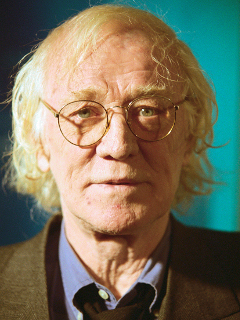
Richard St. John Harris, Irish actor and singer, dies in London from complications of Hodgkin’s lymphoma and pneumonia on October 25, 2002.

Harris is born to a farming family on October 1, 1930, in Limerick, County Limerick. He is the son of Mildred Josephine (Harty) and Ivan John Harris. He is an excellent rugby player with a strong passion for literature. Unfortunately, a bout of tuberculosis as a teenager ends his aspirations to a rugby career. He becomes fascinated with the theater and skips a local dance one night to attend a performance of Henry IV. He is hooked and goes on to learn his craft at the London Academy of Music and Dramatic Art, followed by several years in stage productions.

Harris makes his film debut in 1959 in the film Alive and Kicking and plays the lead role in The Ginger Man in the West End in 1959. His second film, Shake Hands with the Devil (1959), quickly scores regular work in films, including The Wreck of the Mary Deare (1959), The Night Fighters (1960) and a good role as a frustrated Australian bomber pilot in The Guns of Navarone (1961).

Harris’ breakthrough performance is as the quintessential “angry young man” in the sensational drama This Sporting Life (1963), for which he receives an Academy Award nomination. He then appears in the World War II commando tale The Heroes of Telemark (1965) and in the Sam Peckinpah-directed western Major Dundee (1965). He next shows up in Hawaii (1966) and plays King Arthur in Camelot (1967), a lackluster adaptation of the famous Broadway play. Better performances follow, among them a role as a reluctant police informer in The Molly Maguires (1970) alongside Sean Connery. He takes the lead role in the violent western A Man Called Horse (1970), which becomes something of a cult film and spawns two sequels.

As the 1970s progress, Harris continues to appear regularly on screen, however, the quality of the scripts vary from above average to woeful. His credits during this period include directing himself as an aging soccer player in the delightful The Hero (1971), the western The Deadly Trackers (1973), the big-budget “disaster” film Juggernaut (1974), the strangely-titled crime film 99 and 44/100% Dead (1974), with Connery again in Robin and Marian (1976), Gulliver’s Travels (1977), a part in the Jaws (1975) ripoff Orca (1977) and a nice turn as an ill-fated mercenary with Richard Burton and Roger Moore in the popular action film The Wild Geese (1978).

The 1980s kick off with Harris appearing in the silly Bo Derek vanity production Tarzan, the Ape Man (1981) and the remainder of the decade has him appearing in some very forgettable productions.

However, the luck of the Irish once again shines on Harris’ career and he scores rave reviews and another Oscar nomination for The Field (1990). He then locks horns with Harrison Ford as an Irish Republican Army sympathizer in Patriot Games (1992) and gets one of his best roles as gunfighter English Bob in the Clint Eastwood western Unforgiven (1992). He is firmly back in vogue and rewards his fans with more wonderful performances in Wrestling Ernest Hemingway (1993), Cry, the Beloved Country (1995), The Great Kandinsky (1995) and This Is the Sea (1997). Further fortune comes his way with a strong performance in the blockbuster Gladiator (2000) and he becomes known to an entirely new generation of film fans as Albus Dumbledore in the mega-successful Harry Potter and the Sorcerer’s Stone (2001) and Harry Potter and the Chamber of Secrets (2002). His final screen role is as “Lucius Sulla” in Julius Caesar (2002).

Harris is diagnosed with Hodgkin’s lymphoma in August 2002, reportedly after being hospitalised with pneumonia. He dies at University College Hospital in Fitzrovia, London on October 25, 2002, after spending his final three days in a coma. His body is cremated, and his ashes are scattered in the Bahamas, where he had owned a home.


Leave a comment

William J. Brennan Appointed to U.S. Supreme Court

william-brennan

William Joseph Brennan, Jr., American judge, is named an Associate Justice of the Supreme Court of the United States through a recess appointment by President Dwight D. Eisenhower on October 15, 1956, shortly before the 1956 presidential election. He serves from 1956 until July 20, 1990. As the seventh longest-serving justice in Supreme Court history, he is known for being a leader of the Court’s liberal wing.

Brennan is born in Newark, New Jersey to Irish immigrants, originally from County Roscommon, on April 25, 1906. He attends public schools in Newark, graduating from Barringer High School in 1924. He then attends the Wharton School of the University of Pennsylvania, where he graduates cum laude with a degree in economics in 1928. He graduates from Harvard Law School near the top of his class in 1931 and is a member of the Harvard Legal Aid Bureau.

Brennan enters private practice in New Jersey and serves in the United States Army during World War II. He is appointed to the Supreme Court of New Jersey in 1951. After his appointment to the U.S. Supreme Court by Eisenhower in 1956, he wins Senate confirmation the following year.

On the Supreme Court, Brennan is known for his outspoken progressive views, including opposition to the death penalty and support for abortion rights. He authors several landmark case opinions, including Baker v. Carr, establishing the “one person, one vote” principle, and New York Times Co. v. Sullivan, which requires “actual malice” in libel suits brought by public officials. Due to his ability to shape a wide variety of opinions and “bargain” for votes in many cases, he is considered to be among the Court’s most influential members. Justice Antonin Scalia calls Brennan “probably the most influential Justice of the [20th] century.”

Brennan holds the post on the Court until his retirement on July 20, 1990, after suffering a stroke. He is succeeded by Justice David Souter. Brennan then teaches at Georgetown University Law Center until 1994. He dies in Arlington County, Virginia on July 24, 1997, and is buried in Arlington National Cemetery.

With 1,360 opinions, he is second only to William O. Douglas in number of opinions written while a Supreme Court justice. On November 30, 1993, President Bill Clinton presents Brennan with the Presidential Medal of Freedom.