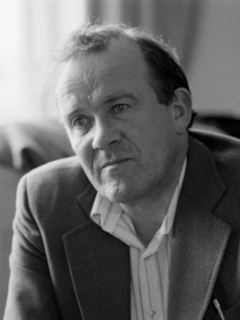
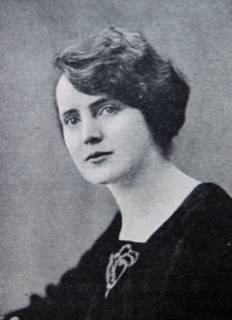
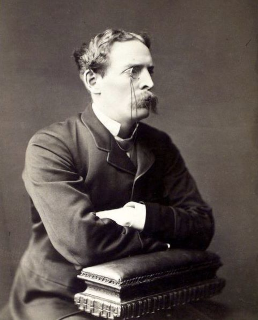
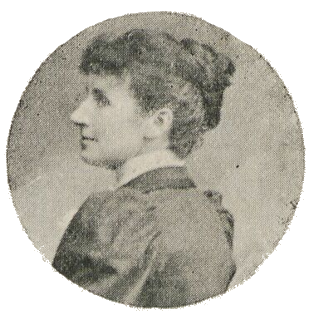
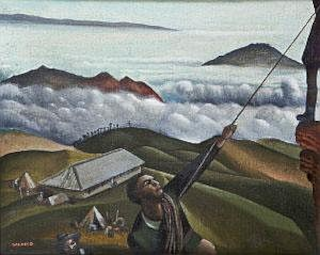
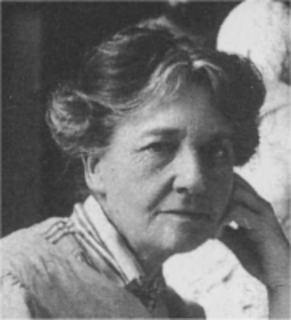
Ó hEithir’s parents are national school teachers, Pádraic Ó hEithir and Delia Ní Fhlaithearta. He is a nephew of Aran Islands authors Liam Ó Flaithearta and Tom Maidhc Ó Flaithearta, the brothers of his mother. He attends the Kilronan national school where his parents teach. He receives his secondary school education at Coláiste Éinde (St. Enda’s College), Galway. He attends University College Galway for three years, finishing his university course in 1952 but leaves without sitting his final examinations. He writes in both Irish and English and is highly regarded for the originality and liveliness of his journalism, especially his work in Irish.
Ó hEithir marries Catherine von Hildebrand, a young student recently arrived in Dublin from Colombia, in 1957 and they have five children: Ruairí, Máirín, Brian, Aindriú, and Rónán. Catherine is born in Paris, the daughter of Deirdre Mulcahy from Sligo and Franz von Hildebrand from Munich, son of the noted philosopher and theologian Dietrich von Hildebrand.
After college, Ó hEithir spends a number of years working as an itinerant bookseller for Comhdháil Náisiúnta na Gaeilge. He serves as an editor at Sáirséal agus Dill, the Irish language publishing house, and as Irish language editor for The Irish Press from 1957 to 1963. He also writes a column for The Sunday Press. He is a regular columnist with the journal Comhar and also contributes a weekly column to The Irish Times. He also serves as a staff journalist with Raidió Teilifís Éireann (RTÉ), working on the current affairs programmes Cúrsaí and Féach.
In 1975 the Irish American Cultural Institute awards Ó hEithir a scholarship of £2,000 to allow him to devote more time to writing. The following year his first novel, Lig sinn i gcathú (1976), loosely based on his student days in Galway, becomes a best-seller. He and Catherine move to Paris in 1986, where most of his second novel, Sionnach ar mo Dhuán (1988), is written. Hopes of having produced his definitive novel are soon dashed by a series of devastating reviews.
Ó hEithir visits Colombia with his wife in the summer of 1990. On his return, he is presented with the Butler literary award of $10,000 in further recognition of his writing in Irish. A month later, after a very short illness, he dies of cancer in St. Vincent’s University Hospital in Dublin on October 26, 1990. He is survived by his wife, Catherine, daughter Máirín, and sons Ruairí, Brian, and Aindriú.
O’Kelly is born James Kelly in Mobhill, Loughrea, County Galway, youngest of seven (or possibly eight) children of Michael Kelly, corn merchant, and his wife, Catherine Fitzgerald. His date of birth is uncertain. Some commentators believe he is the James Kelly whose birth was registered on November 16, 1875, but relatives claim this was a sibling and namesake who died prematurely. His death certificate implies he was born in 1878, and family members maintained he was born in 1880.
Loughrea is at the centre of the bitterly fought plan of campaign agitation on the Clanricarde estate from the late 1880s. Many tenants in the town and surrounding rural districts are evicted for non-payment of rent, and Lord Clanricarde resists reinstatement until the estate is purchased by special legislation shortly before World War I. According to one source, the O’Kellys are themselves evicted during the Plan of Campaign, though they seem to retain a degree of financial stability. A widespread perception that nationalist politicians had exploited the evicted tenants contributes to the relative strength of Parnellism in the area, and the early appearance of Sinn Féin. This background inspires such works as O’Kelly’s 1917 play, The Parnellite.
While growing up in Loughrea, O’Kelly is profoundly influenced by contact with older relatives and country folk from whom he learns some Irish and the folklore/storytelling tradition that shapes many of his stories. The example of his mother and friendship with the local Carmelite fathers, whom he serves as an altar boy, gives him a strong commitment to Catholicism. This coexists in his work with an Ibsenite-Parnellite insistence on individual defiance of conformity, and a gentle exaltation of the sensitive dreamer isolated from the life around him. The mixture is sometimes uneasy. His observations on domestic violence, the sexual exploitation of servant girls by hypocritically pious employers, and prejudice against children born outside marriage or raised in the workhouse are unobtrusive but biting. His play, The Bribe (1913), gives a devastating depiction of the social and economic pressures which induce a small-town shopkeeper and poor law guardian to accept a bribe to appoint an underqualified dispensary doctor, with disastrous results. The corrupt and snobbish doctor is called Power O’Connor, an unsubtle hit at the nationalist MP, T. P. O’Connor. This element of social observation distinguishes him from the more symbolist city-born Daniel Corkery, to whom he is often compared. Much of his writing is recognisably set in Loughrea.
O’Kelly begins working as a journalist on local papers, including the Midland Tribune, the Tuam News, and the Connacht Leader. He becomes editor of The Southern Star, based in Skibbereen, County Cork, in 1903, and is said to be the youngest newspaper editor in Ireland at the time. He moves to Naas, County Kildare, in 1906, as editor of the Leinster Leader. Here he lives in a house by the canal, which provides the inspiration for his linked series of short stories, The Golden Barque, along with his father, a nephew, and his brother Michael. Already a contributor to The United Irishman published by Arthur Griffith, and later its successor, Sinn Féin, he is active in the Naas Sinn Féin club and makes regular weekend visits to Dublin, where Griffith introduces him to Dublin literary circles. Here his closest friends are James Stephens, whose influence is visible in the more whimsical and fantastic elements of O’Kelly’s work, and Seumas O’Sullivan, who recalls O’Kelly as a man of remarkable gentleness and integrity.
O’Kelly’s journalistic career is accompanied by his development as a writer, publishing stories in a variety of outlets, including the Irish Rosary and the Irish Packet. From 1908 he has several plays produced by the Theatre of Ireland, a nationalist-oriented rival to the Abbey Theatre. Lustre (1913), written jointly with Casimir Markievicz, later becomes the basis for a Soviet film.
Around 1911, O’Kelly suffers a severe attack of rheumatic fever, which leaves him with a chronic heart condition and a strong sense of mortality. He continues to write extensively and with increasing skill. He becomes editor of Dublin’s The Saturday Evening Post in 1912 and moves to Dublin, where he lives in Drumcondra. At this time he is an occasional contributor to The Manchester Guardian, turning down a permanent job on that paper. He leaves the Post in 1915 because of continuing ill-health and is offered the editorship of The Sunday Freeman but has to retire after two weeks. He then returns to Naas. At this time his play Driftwood, commissioned by Annie Horniman, is produced in Manchester and London.
When O’Kelly’s brother is interned after the Easter Rising, he resumes the editorship of the Leinster Leader until his brother’s release at Christmas 1916. He also contributes topical articles to the Sunday Independent. His literary reputation continues to increase with a short story collection, Waysiders (1917), and his best-regarded full-length novel, The Lady of Deerpark (1917), a melancholy story about the last heiress of a declining Catholic gentry family. Another novel, Wet Clay (1922), is published posthumously and is the story of the tense relationship between a “returned Yank” and his small-farmer cousins, which shows deeply unresolved ambivalence about the nature and prospects of Irish rural society after the Land War.
When Griffith and many other Sinn Féin activists are arrested and imprisoned in May 1918, O’Kelly returns to Dublin to edit the Sinn Féin paper Nationality. During the days after the Armistice of November 11, 1918, a crowd of soldiers and women whose husbands are serving in the British Army attack the paper’s premises, which are also the headquarters of Sinn Féin. As a result of these attacks O’Kelly suffers a cerebral haemorrhage which leads to his death on November 14, 1918.
O’Kelly’s funeral turns into a major political demonstration and his status as a nationalist martyr leads to the posthumous publication of many of his works. These include the novella, The Weaver’s Grave (1920), generally regarded as his masterpiece. It has been reprinted regularly and translated into several languages. A 1961 Radio Éireann adaptation by Micheal Ó hAodha wins the Prix Italia. The twenty-fifth and fiftieth anniversaries of his death see various commemorations in his honour and a short-lived Seumas O’Kelly Society is founded in 1968. O’Kelly never marries but is said to have cherished a hopeless passion for the actress and nationalist activist, Máire Níc Shiubhlaigh, for whom he writes the play The Shuiler’s Child (1909).
(From: “O’Kelly, Seumas” by Patrick Maume, Dictionary of Irish Biography, http://www.dib.ie, October 2009)
Curtayne is the youngest child of John Curtayne, founder and proprietor of the Tralee Carriage Works, and his wife Bridget Curtayne (née O’Dwyer). She receives her initial education at local convents before attending La Sainte Union College in Southampton, England. Having taken a typing course, she is engaged as a secretary in Milan, where she remains for four and a half years. This proves to be a formative period in her life. She comes to regard Italy as a second home and is greatly influenced by the work of the Italian Catholicphilosopher, Giovanni Papini.
On leaving Italy Curtayne works for a time in Liverpool. She joins the Liverpool Catholic Evidence Guild, from where she receives her diploma as a diocesan catechist. While in England she also develops an interest in public speaking. Her first book, Catherine of Siena (1929), is followed by numerous publications on religious and historical subjects, including Lough Derg (1933), Patrick Sarsfield (1934), The Trial of Oliver Plunkett (1953), Twenty Tales of Irish Saints for children (1955), and The Irish Story (1962).
Curtayne’s enthusiasm for Italy is reflected in her many publications of Italian interest, including a scholarly work on Dante, and a novel House of Cards (1940), which centres on the experiences of a young Irish woman living in Italy. In 1972 she produces Francis Ledwidge: A Life of the Poet, her well regarded biography of the poet Francis Ledwidge, and in 1974 it is followed by an edition of his complete poems, The Complete Works of Francis Ledwidge. Throughout her journalistic career she is a contributor to various magazines and papers, among them The Irish Times, Irish Independent, The Irish Press, Books on Trial, The Spectator, and The Standard.
During the 1950s and early 1960s Curtayne makes five lecture tours in the United States, speaking on Irish life, history, and literature. In 1959 she receives an honorary doctorate in Humane Letters from Anna Maria College in Paxton, Massachusetts, where she briefly teaches. She is presented with the Key to Worcester City by Mayor James D. O’Brien. She also gives a course of lectures on Dante at Craiglockhart College, Edinburgh, in 1956, and in 1965 she again speaks on Dante in a Radio Éireann Thomas Davis lecture.
In December 1954 The Irish Press sends Curtayne to Rome to write daily reports on the close of the Marian year. She goes to Rome again for the final session of the Second Vatican Council. She is commissioned to send weekly reports to local newspapers, The Nationalist (Carlow) and The Kerryman. She also sends a series of profiles of outstanding personages of this Vatican Council to The Universe and an article for Hibernia journal.
In 1935, Curtayne marries the English-born writer and broadcaster Stephen Rynne, with whom she has two sons and two daughters. They run a farm at Prosperous, County Kildare, and are well known advocates of the values of rural living. One son, Andrew Rynne, becomes a medical practitioner and well known for his liberal views on birth control. Daughter Brigid Rynne later illustrates some of her mother’s books.
Curtayne dies on August 9, 1981, in the Hazel Hall Nursing Home in Clane, County Kildare, and is buried at Killybegs Cemetery.
O’Donnell is born in an army barracks in Devon, England, where his father, Sergeant Bernard MacDonald, is stationed. His mother, Mary Kain, is a native of Ballybane, close to Galway city. He is educated at the Erasmus Smith School in Galway, Coláiste Iognáid (the “Jes”), and later enrolls in Queen’s College Galway, where he studies English literature, history and political economy. While a student at the college, he acquires a considerable reputation as an orator, and is a frequent contributor to meetings of the college’s Literary and Debating Society, of which he becomes vice-auditor for the 1864–65 session.
Even in his student days, O’Donnell seems to be quick to voice his opinions, and revells in controversy. In November 1866, addressing the Literary and Debating Society on the question “Was the character of Warren Hastings as Governor-General of India praiseworthy?” he causes uproar by denouncing “the principle and the system which have lain at the root of the international and intercolonial policy of England, from the days when Elizabeth, the Infamous, chartered for profit two of the first ships which opened the African slave trade.” His remarks cause the chairman of the meeting, Professor Thomas Moffett, to prevent him from continuing his speech, stating that “such an epithet ought not to be applied to any predecessor of our present gracious Queen.” O’Donnell regards such action as an unwarranted restriction on his freedom of speech, and in a letter published in the local press gives an early example of his high-flown literary style:
“I hold that Debating Societies are the nurseries of independent thought, and the training schools of sober criticism. I believe in the power and impartiality of an enlightened studenthood … I have followed the mind of Austin. I have sat at the feet of Cairnes. I have drunk of the philosophy of Mill. I claim for Judicial Science, for Economic Science, for the Philosophy of History, a place in the discussions of our society, I pity, and I scorn the formidable confederacy of fools who dare not call a spade a spade.”
This incident, combined with the reluctance of the society to prevent O’Donnell from addressing its meetings, eventually leads to the suspension of the society from the Queen’s College and its temporary migration to rooms in the city of Galway.
O’Donnell graduates from the Queen’s College with an M.A. degree in 1868, winning several gold medals for his academic performance. By this stage, he has begun to style himself ‘Frank Hugh O’Donnell,’ believing himself to be a descendant of Hugh O’Donnell, 2nd Earl of Tyrconnell.
Leaving Galway, O’Donnell moves to London, where he embarks on a career in journalism, following his college contemporary T. P. O’Connor. O’Connor’s knowledge of modern European languages has helped him to establish himself as a correspondent on European affairs, and he assists O’Donnell in developing a similar reputation. He spends a brief period on the staff of The Morning Post.
In the 1874 United Kingdom general election, O’Donnell is elected Member of Parliament (MP) for Galway Borough but is unseated by the courts in what appears to be a politically inspired judgment which uses certain unsavoury campaigning tactics in which O’Donnell had indulged as its basis. He is succeeded in the seat by his election agent, Dr. Michael Francis Ward, who is himself succeeded in 1880 by T. P. O’Connor in an unusual succession, all three having been either auditor or vice-auditor of the Queen’s College Literary and Debating Society in the same era.
In 1875, O’Donnell is a founding member of the Constitutional Society of India, a group promoting political autonomy for India. In 1877, he secures a more permanent election to the House of Commons of the United Kingdom as MP for Dungarvan. He holds the seat until 1885, when the constituency is abolished. He strikes a colourful and controversial figure in parliament and becomes renowned for his declamatory speech-making. He is a prominent obstructionist and claims credit for inventing the tactic of obstructionism which is to yield such results for the Home Rule League under Charles Stewart Parnell. Indeed, he sees himself as a natural leader and becomes disillusioned when Parnell is selected in May 1880 to succeed William Shaw as leader of the Irish Parliamentary Party. He calls the British ‘Imperial pirates’ and inaugurates the Constitutional Society of India. Its aim is Home Rule for India, “Mr. O’Donnell’s grand passion in politics was a confederation of all the discontented races of the Empire under the lead of the Irish party. He once brought down some scores of dusky students of all the races and creeds of Hindustan to the House of Commons.”
Parnell refuses to let O’Donnell be nominated in 1885. He leaves the Irish Parliamentary Party and conventional politics, but not its general aims of promoting home rule and tenant farmers’ rights. His last and perhaps most important contribution to the fortunes of the party is the libel case he launches against The Times in 1888 over the series “Parnellism and Crime.” Though the case is lost, it results in the establishment of the Parnell Commission which exonerates Parnell from condoning the Phoenix Park Murders and exposes the Pigott Forgeries.
In his later years O’Donnell begins investigating misconduct by both the British Civil Service and the Roman Catholic church in Ireland. His Paraguay on Shannon (1908) is an amusing but serious critique of unethical practices by the Catholic clergy in local politics, education, and their involvement in the Congested Districts Board for Ireland that is financed by Parliament in order to improve the depressed economy of western Ireland. Parliament believes that by improving the living standards of the Irish peasant class, they can “kill Home Rule with kindness.”
After careful investigation, O’Donnell accuses members of the Catholic clergy of illegally diverting Government money earmarked for economic development into new Cathedrals, parish churches, and other ecclesiastical building projects. He argues that the British Government needs to provide better oversight of how the Congested Districts Board’s funds are being used. He believes that “in Ireland material ruin has accompanied clerical despotism.” His hostility to the Church draws the ire of Catholic historians who systematically undermine his credibility.
Ernest Belfort Bax writes that O’Donnell’s “matter is better than his manner.”
O’Donnell dies a bachelor in London on November 2, 1916, and is buried in Glasnevin Cemetery, Dublin.
Eccles is the fourth daughter of Alexander O’Conor Eccles of Ballingard House, the founder of a home-rule newspaper, The Roscommon Messenger. She attends a Catholic grammar school, Upton Hall School FCJ, near Birkenhead and convents in Paris and Germany.
Eccles later lives in London with her mother and sister where, after a number of setbacks, she becomes a journalist in the London office of the New York Herald. She goes on to become a staff member of the Daily Chronicle and the Star. She comments in an article in the June 1893 issue of Blackwood’s Magazine on “the immense difficulty a woman finds in getting into an office in any recognised capacity,”
Eccles joins the agricultural reformer Sir Horace Plunkett in writing and lecturing around Ireland for the Department of Agriculture and Technical Instruction. Another of her Blackwood’s Magazine articles, in December 1888, covers “Irish Housekeeping and Irish Customs in the Last Century.”
Eccles’s other books include Aliens of the West (Cassell, 1904) and The Matrimonial Lottery (Eveleigh Nash, 1906). An obituary in The Times describes Aliens of the West as “one of the best modern books of short stories on Ireland yet written.”
Holmes is one of the four surviving children of Dr. Robert Emmet, state physician of Ireland, and Elizabeth Emmet (née Mason). As a young woman she is noted for her intelligence and is a classical scholar. Her father lauds her “good character” and is very hopeful she will make a good wife. Much like her brothers, Robert and Thomas Addis, who are both to join the Society of United Irishmen, she is interested in politics and is a member of liberal intellectual circles. She is a correspondent of Margaret King about their common passion for the writings of Mary Wollstonecraft.
In 1793, a family friend, William Drennan, describes her as genteel but distant. He predicts her match with the barristerRobert Holmes, who she secretly marries on September 21, 1799, in the Dublin Unitarian Church. The couple have at least four children, with Drennan attending all the births. One of their children is Elizabeth Emmet Lenox-Conyngham. Robert Holmes attends to the Emmet family legal affairs for a time, with the couple living with her parents at Casino, near Milltown, Dublin. Holmes helps to raise the children of her brother Thomas Addis, after he is sent to Fort George, Highland, Scotland for his involvement with the United Irishmen. During this time, their mother’s letters to Thomas Addis note Holmes’ devotion to her husband but also her delicate health and tendency towards low spirits. Holmes is the only surviving child of their 17 children who is still in Ireland, and she is a comfort to her parents in their old age. Her father dies in 1802, and her mother almost dies in 1803 at the same time as the arrest and execution of her brother Robert. Some claim that Holmes attempted to recover her brother’s body but failed.
After the failed Irish rebellion of 1803, Holmes’s husband is arrested but she is allowed to spend approximately a week with him. It is long claimed that she collapses and dies on her doorstep following his release in February 1804. In truth, she gives birth to a son at home, following which her health worsens, and her hearing also deteriorates. Her son, Hugh, also later dies. She is attended to by Drennan, who worries that she is succumbing to tuberculosis that December. She dies on March 10, 1805, and is buried with her parents in the graveyard of St. Peter’s Church, Aungier Street, Dublin. There is a legend that her brother Robert’s body is interred with her in secret, but this is unconfirmed. A portrait of Holmes by Thomas Hickey is held by Kilmainham Gaol.
Holmes writes prose and verse for The Press, a publication associated with the Society of United Irishmen. In 1799 she is active, along with members of her extended family, in the movement opposed to the legislative union of Ireland with the United Kingdom. The pamphlet An address to the people of Ireland is attributed to her but is now thought to have been written by Roger O’Connor. Holmes’ poems are included in her daughter’s 1833 book of verse The dream and other poems.
(Pictured: Portrait of Mary Anne Holmes by Thomas Hickey, held in the collections of Kilmainham Gaol)
Salkeld works in tempera and oil, as well as etching and wood engraving. In 1921 he travels to Germany to study under Ewald Dulberg at the Kassell Kunstschule. He attends the Union of Progressive International Artists in Düsseldorf in May 1922, and is exhibited at the Internationale Kunstausstellung. Upon his return to Dublin in 1924, he holds his first solo exhibition in the Society of Dublin Painters gallery. He becomes a member of the Dublin Painters in 1927. With Francis Stuart, he co-edits the first two issues of To-morrow in 1924. His studio is in a converted labourer’s cottage at Glencree, County Wicklow. He also exhibits with the New Irish Salon and the Radical Painters’ Group.
Salkeld wins the 1926 Royal Dublin Society‘s Taylor scholarship, and has his first exhibited work with the Royal Hibernian Academy (RHA) in 1929. He lives in Berlin for a year in 1932. He exhibits in Daniel Egan’s Gallery in Dublin in 1935. He has a wide circle of literary friends, including Samuel Beckett and Flann O’Brien. In O’Brien’s At Swim-Two-Birds, the character of Michael Byrne is designed for Salkeld, reflecting his debilitating alcoholism. He also teaches at the Dublin Metropolitan School of Art, teaching artists such as Reginald Gray.
From 1937 to 1946 Salkeld runs a private press called Gayfield Press. This is co-founded with his mother, and operates from a garden shed at their home, 43 Morehampton Road. The press is a small Adana wooden hand press. He illustrates her 1938 The Engine Left Running, as well as Ewart Milne‘s Forty North Fifty West (1938) and Liam O’Flaherty‘s Red Barbara and Other Stories (1928). In 1951, he loans the press to Liam and Josephine Miller to found the Dolmen Press.
Salkeld’s most famous public work is his 1942 three-part mural in Davy Byrne’s pub. He is a co-founder of the Irish National Ballet School in the 1940s in his capacity as a pianist. In 1946 he is appointed an associate member of the RHA. In 1953 his play Berlin Dusk is staged at 37 Theatre Club, Dublin. During the 1950s he is a broadcaster with Radio Éireann as well as a director of cultural events for An Tóstal. He dies on May 11, 1969 in St. Laurence’s Hospital, Dublin.
Praeger is born on April 15, 1867, in Holywood, County Down. She is the daughter of Willem Emilius Praeger, a Dutch linen merchant who had settled in Ireland in 1860, and Marie Patterson. She has five brothers of who Robert goes on to become a distinguished naturalist. Within months of her birth the family moves to Woodburn House, Croft Road, Holywood, where they have as a neighbour Rev. Charles McElester, a Non-subscribing Presbyterian minister who runs a day school in his church. She both attends this school, and later teaches there. She receives her secondary education at Sullivan Upper School, Holywood, the Belfast School of Art, and the Slade School of Fine Art, London. Before returning to Ireland to open a studio in Belfast and then in Holywood, she studies art in Paris.
Praeger writes and illustrates children’s books but achieves fame with her sculpture The Philosopher which is exhibited at the Royal Academy of Arts in London, bought by an American collector, and is now on display in the Colorado Springs Museum and Art Gallery. She mostly works in plaster, but also uses stone, marble, terracotta and bronze, and her work includes relief panels, memorial plaques and stones. She exhibits in London and Paris, at the Royal Hibernian Academy, as well as at the Irish Decorative Art Association Exhibitions. She is a member of the Guild of Irish Art Workers.
Among Praeger’s other works are The Wai, Johnny the Jig, These Little Ones, St. Brigid of Kildare and The Fairy Fountain. For the Causeway School near Bushmills, County Antrim, she carves Fionnula the Daughter of Lir in stone. She models a heraldic figure for the Northern Bank in Donegall Square West, Belfast, and bronze plaques for the front door of the Carnegie library, Falls Road, Belfast, as well as the angels on Andrews Memorial Hall in Comber, County Down, and some work in St. Anne’s Cathedral, Belfast. She illustrates three books for her brother, Robert Praeger. She is President of the Royal Ulster Academy, an honorary Fellow of the Royal Hibernian Academy, and she receives an honorary doctorate from Queen’s University, Belfast. In 1939 she is awarded the MBE.
Praeger maintains her studio in Hibernian Street, Holywood, up until 1952, at the age of 85. She dies at Rock Cottage, County Down, on April 17, 1954. She is buried in the Priory Cemetery, Holywood. Her work in included in the collections of the Ulster Museum and the National Gallery of Ireland, and some private collections around the world
(From: “Sophia Rosamond Praeger (1867 – 1954): Sculptor” by Kate Newmann and Richard Froggatt, Dictionary of Ulster Biography, http://www.newulsterbiography.co.uk)
Russell is the second son of Thomas Russell and Mary Armstrong. His father, the son of a small farmer, becomes an employee of Thomas Bell and Co., a prosperous firm of linen drapers. The family relocates to Dublin, where his father has a new offer of employment, when he is eleven years old.
Following his time at the Metropolitan School of Art, Russell becomes an accounts clerk in a drapery store but leaves in 1897 to organize agricultural cooperatives. Eventually he becomes editor of the periodicals Irish Homestead (1905–23) and The Irish Statesman (1923–30). In 1894 he publishes the first of many books of verse, Homeward: Songs by the Way, which establishes him in what is known as the Irish Literary Revival. His first volume of Collected Poems appears in 1913 and a second in 1926. He maintains a lifelong interest in theosophy, the origins of religion, and mystical experience. Candle of Vision: Autobiography of a Mystic (1918) is the best guide to his religious beliefs.
At the turn of the 20th century, Russell is considered by many to be the equal of Yeats, but he does not continue to grow and develop as Yeats does. He is prolific and versatile, but many critics find his poetry facile, vague, and monotonous, with “rather too much of the Celtic Twilight” in it.
Russell, who had become increasingly unhappy in the Irish Free State which, according to Yeats, he called “a country given over to the Devil,” moves to England soon after his wife’s death in 1932. Despite his failing health he goes on a final lecture tour in the United States but returns home utterly exhausted. He dies of cancer in Bournemouth, England, on July 17, 1935. His body is brought back to Ireland, and he is interred in Mount Jerome Cemetery, Dublin.
Eugene Rutherford Watters is the eldest of two sons and two daughters born to Thomas Watters, a soldier, and his wife, Maud Sproule. His second name comes from his grandfather, Rutherford Sproule. He is educated at Garbally College. He enters St. Patrick’s Teacher Training College, Drumcondra, Dublin, in 1939, graduating with a Diploma in Education in 1945. He is awarded an MA, by University College Dublin in 1947.
Ó Tuairisc writes novels, verse, drama and criticism in both Irish and English. His first major publication is his controversial novel Murder in Three Moves (1960), followed by the Irish-language prose epic L’Attaque (1962), which wins an Irish Book Club award. Both works have a strong poetic flavour. His next book is a volume of verse entitled Week-End. His narrative poem The Weekend of Dermot and Grace (1964), an Irish version of Venus and Adonis, is considered his finest work.
Ó Tuairisc’s first wife, the Irish artist Una McDonnell, dies in 1965. He produces little during the five years following McDonnell’s death, which is an unsettled period of limited productivity, changing residence and jobs, and, ultimately, serious depression. In 1972 he marries the writer Rita Kelly, also of Ballinasloe. They live in the lock house at the Maganey Lock on the River Barrow that he had bought near Carlow, County Carlow.
In 1981 Ó Tuairisc publishes The Road to Brightcity: and other stories (Swords: Poolbeg Press, 1981), a translation of nine of the best short stories written originally in Irish by Máirtín Ó Cadhain. Also in 1981, he and Rita Kelly publish a joint collection of their poems, Dialann sa Díseart.
Like Diarmaid Ó Súilleabháin, Ó Tuairisc “challenged the critical orthodoxy by openly proclaiming that their standards could not be those of the Gaeltacht and by demanding a creative freedom that would acknowledge hybridity and reject the strictures of the linguistic purists.”
Ó Tuairisc is an inaugural member of Aosdána, when it is founded in 1981, and the first of its members to die. He is a recipient of an Arts Council of Ireland prize, as well as an Abbey Theatre prize for a Christmas pantomime in Irish.
Ó Tuairisc dies on August 24, 1982. He is survived by his second wife, Rita. A bibliography of his work, together with biographical information, is published in Irish in 1988.