seamus dubhghaill

Promoting Irish Culture and History from Little Rock, Arkansas, USA


Leave a comment

Beginning of the Siege of Duncannon

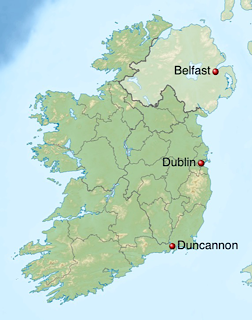
The siege of Duncannon begins on January 20, 1645, during the Irish Confederate Wars. An Irish Catholic Confederate army under Thomas Preston besieges and successfully takes the town of Duncannon in County Wexford from an English Parliamentarian garrison. The siege is the first conflict in Ireland in which mortars are utilized.

At the outbreak of the Irish Rebellion of 1641, most of south-eastern Ireland falls to the Catholic insurgents. Roughly 1,000 rebels blockade Duncannon, which is heavily fortified and contains an English garrison of about 300 men. Around 150 of the English troops are killed in forays against the Irish at nearby Redmond’s Hall, but without siege artillery, or expertise in siege warfare, the rebels are unable to take Duncannon.

Hostilities continue throughout 1642, as the Irish, now organised as the Irish Confederacy raid the town’s hinterland. As in much of Ireland, the conflict is bitter. In one incident, Laurence Esmonde, 1st Baron Esmonde, the Royalist commander, hangs 16 Irish prisoners who have been taken at nearby Ramsgrange. In response, the Irish execute 18 English prisoners whom they have been holding.

In 1643, because of his need for troops to fight in the English Civil WarCharles I signs a ceasefire with the Irish Confederates. As a result, hostilities between Duncannon and the Catholic-held surrounding area are suspended.

However, in 1644, the English garrison of Cork, under Murrough O’Brien, 1st Earl of Inchiquin, unhappy with the Royalist truce with the Irish Confederates, declares for the English Parliament, who are to remain hostile to Irish Catholic forces throughout the 1640s. Esmonde, under pressure from elements of his garrison, also changes to the side of Parliament and effectively re-declares war on the Catholic Confederates. His motives are unclear: though he is a Protestant convert, the Esmonde family are Anglo-Irish Roman Catholics, and he owes his entire advancement to the Crown.

Duncannon is a strategically important town for two reasons. Firstly, it has formidable defences. Secondly and more importantly, its guns overlook the sea route to Waterford and New Ross, two of the most important Catholic-held towns and also ports at which the Confederates receive military aid from Catholic Europe.

Needing to keep this channel open and also fearing the presence of an English garrison deep in their territory, the Confederates’ Supreme Council in Kilkenny despatches Thomas Preston, general of their Leinster Army, to take Duncannon in January 1645. Preston has at his disposal 1,300 men, four cannons and a mortar. The mortar, the first of its kind to be used in Ireland has been donated by Spain the previous year and is commanded by a French military engineer named Nicholas La Loue. La Loue had served with Preston in Flanders and is chief of engineering in the Leinster Army.

Duncannon possesses formidable defences. For one thing, it is located on a peninsula and can only be approached from the north, the other three sides jutting out into the sea. Just off the town are docked four Parliamentarian ships, which are supplying Duncannon with food and reinforcements. Secondly, it possesse two lines of fortifications, the outer line being a more modern low deep rampart protected by a dry ditch and the inner wall being a medieval curtain wall, complete with three towers. However, it has two grave weaknesses, first, it is overlooked by a hill to the north, from which an attacker can fire into the town and, secondly, the water supply is located outside the walls. 

Preston arrives at Duncannon on January 20 and proceeds to construct a ring of trenches which cut off Duncannon on its landward side. From the hill that overlooks the town to the north, his guns are able to fire on a squadron of four Parliamentarian ships that are docked off Duncannon and providing the town with supplies. The flagship, the Great Louis, is badly damaged, its mast wrecked by cannon fire, and it takes several more hits from the mortar as it tries to get away. The ship sinks in deep water, drowning its crew and 200 soldiers who are on board.

Having cut off Duncannon’s supply from the sea, Preston proceeds to dig saps closer to the walls, the ultimate aim being to bring his cannon close enough to the walls in order to blast a breach and open the way for an assault. His engineers also dig a mine underneath one of the town’s bastions. All the while, the town’s defenders are kept under a bombardment by the mortar and, as the Confederate troops get closer to the walls, by sharpshooters. On March 12, one such sniper kills the fort’s second in command, one Captain Lurcan, who is hit in the head by a bullet.

On March 16, by which time the Irish trenches are “within pistol shot of the walls,” Preston orders the mine to be exploded, opening a breach in Duncannon’s outer walls. The Irish infantry then assault the town, but are beaten off with some losses. The following day, Saint Patricks Day, Preston tries again and this time his troops succeed in taking the town’s outer, more modern walls but are stopped at Duncannon’s inner, medieval ramparts. They succeed in occupying one of the town’s towers for an hour before being beaten back. Geoffrey Baron, a Confederate politician, who keeps a diary of the siege, reports that 24 Irish soldiers are killed in the two assaults.

At this point, Preston summons Esmonde to surrender, before he has to “proceed to extremities.” This is a delicate threat, implying that if the town falls to an assault, its defenders will be put to the sword – as is customary in contemporary siege warfare. Esmonde is also advised to surrender by the Parliamentarian vice admiral, William Smith, who is anchored offshore with seven ships, but cannot break through to relieve the town. In a letter that reaches Esmonde on March 11, Smith warns him that “if the rebels take the fort by storming it, they will undoubtedly put you all to death…you should agree with thy adversary while thou art in the way.” Esmond has Smith’s letter publicly read to his troops after the assaults of March 16-17 to discourage those who favour holding out.

Alongside the risk of massacre, the English garrison is also very low on gunpowder and water. The town’s only source of fresh water, a well, is behind the Confederate siege lines.

In light of these facts, Esmonde formally surrenders Duncannon to Preston on March 18. The Confederates take possession of the town but its garrison is allowed to march away to Youghal, which is in Protestant hands. However, they have to leave behind the town’s 18 artillery pieces. Esmonde himself dies a feways after the end of the siege. Preston goes on to briefly besiege Youghal, but bad weather, a lack of supplies and squabbling with James Tuchet, 3rd Earl of Castlehaven, the Confederate Munster general, puts an end to his campaign for the winter. 

The siege is of importance in that it reopens the sea route into Waterford and eliminates a hostile English garrison in Confederate territory. Preston, who had for many years been the Spanish military governor of Leuven, is highly experienced in siege warfare and his conduct of the siege draws widespread praise. Not only does he take the town, but he does so at a relatively low cost. Sixty-seven Confederate soldiers die in the siege, of whom roughly 30 die of disease. Given that the campaign is conducted in mid-winter, in an age when disease routinely kills many more soldiers than combat, this represents a considerable logistical achievement on the part of the Irish general.

The Great Lewis, the Parliamentarian ship sunk during the siege, is rediscovered in 1999 and raised in 2004.

Duncannon is besieged again during the Cromwellian conquest of Ireland by the forces of the English Parliament, as part of the Siege of Waterford. It repels a siege by Oliver Cromwell in 1649 but surrenders after a lengthy blockade by Henry Ireton in 1650.


2 Comments

Death of William Congreve, Playwright & Poet

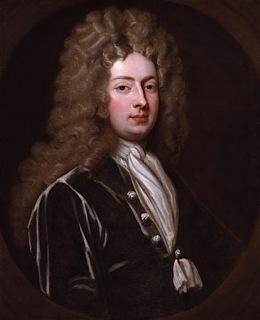
William Congreve, English playwright, satirist and poet, dies at his home in Surrey Street, London, on January 19, 1729.

Congreve is born on January 24, 1670, at Bardsley, West Yorkshire, England, the son of William Congreve, an army officer, and Mary Browning of Doncaster. In 1674, his father gains a commission as lieutenant in the army in Ireland, and moves with his family to the garrison port of Youghal, County Cork, where they remain until 1678. After a brief period at Carrickfergus, they move in 1681 to Kilkenny, where his father is assigned to the Duke of Ormond‘s regiment. This service entitles Congreve to a free education at the renowned Kilkenny College, where Jonathan Swift is also a student, and where he receives an excellent schooling in classics. He forms a lasting friendship with another pupil, Joseph Kelly, a lawyer and MP for Doneraile (1705–13), with whom he later maintains a lengthy correspondence. In April 1686, he enters Trinity College Dublin (TCD) as a classical scholar and, again like Swift, is taught by St. George Ashe. It seems likely that his degree is disrupted by the political upheaval of 1688 as the college is forced to close in 1689 and his BA is not recorded.

At this point, Congreve leaves Ireland and spends the spring and summer of 1689 with relatives in Staffordshire. He subsequently moves to London, and in March 1691 enters the Middle Temple. He is not assiduous in his legal studies, preferring to socialise with intellectuals and writers, notably John Dryden, to pursue literary projects. In 1692, under the pseudonym “Cleophil,” he published Incognita, or, Love and Duty Reconciled, a romantic novella reputedly written while he is a student in Dublin. He also contributes some verse to Charles Gildon‘s Miscellany (1692), as well as two translations from Homer and three odes to Dryden’s Examen poeticum (1693). Dryden evidently thinks highly of the young writer, and with his advice and approbation Congreve’s first play, The Old Batchelor, is recommended by the Irish playwright Thomas Southerne to Thomas Davenant, manager of the Theatre Royal, Drury Lane. A fast-paced and witty comedy, concerning amorous appetites, The Old Batchelor is accepted and opens on March 9, 1693, to popular acclaim, enjoying an unusually long run of fourteen nights. Among the cast are Thomas Doggett, still relatively unknown, as Fondlewife, and a young English actress and singer, Anne Bracegirdle as Amarinta, with whom Congreve falls in love and begins a prolonged relationship. The play is dedicated to his friend Charles Boyle, eldest son of Richard Boyle, 1st Earl of Burlington, whose estates Congreve’s father had begun to manage in 1690.

After this early success, Congreve is dismayed by the poor reception of his next play, a domestic comedy with dark undertones entitled The Double Dealer, which is staged in December 1693 and criticised as immoral and unflattering in its representation of women. Its popularity improves somewhat when Mary II, Queen of England, soon after its undistinguished debut, commands a performance. When the queen dies the following year, Congreve eulogises her in The Mourning Muse of Alexis, a Pastoral. Regarded by contemporaries as his finest literary work, it is rewarded by a gift of £100 from King William III. Production of his next play is delayed by the revolt of the Drury Lane actors against the management of Christopher Rich. Congreve supports the actors and their petition to the Lord Chamberlain to reopen the theatre at Lincoln’s Inn Fields. When their request is granted, the renovated theatre opens on April 30, 1695, with Congreve’s enduring romantic comedy Love for Love, and the playwright being made a shareholder in the new company. A characteristically witty and well-plotted comedy, the production of Love for Love is particularly notable for Doggett’s sparkling performance as Sailor Ben. Congreve’s dramatic success also brings political advancement, as he receives his first government appointment as commissioner for hackney coaches.

Congreve returns to Ireland for most of 1696, where, with Southerne, he receives an MA from TCD, and probably visits his parents, then living at Lismore Castle, County Waterford. He also begins work on a tragedy entitled The Mourning Bride, which becomes an instant hit at Lincoln’s Inn Fields when it is first performed in February 1697 and running for thirteen nights. Despite his considerable success and popularity, he is deeply disconcerted by Jeremy Collier‘s aggressively anti-theatrical pamphlet, Short View of the Immorality and Profaneness of the English Stage (1698), which targets John Vanbrugh, Dryden, and Congreve. He is stung into a response, publishing Amendments of Mr. Collier’s False and Imperfect Citations (1698), which eloquently defends his dramatic methodology, but is rendered less effective by an emotional and ill-judged tone. His theatrical acumen seems to be at odds with the times, for in the dedication to his next play, The Way of the World, he observes that “little of it was prepar’d for that general taste which seems now to be predominant in the pallats of our audience.” Nevertheless, he is still bitterly disappointed by the disparaging response to its first performance on March 12, 1700. Dryden, however, realises the merit of the play, which is now recognised as Congreve’s masterpiece and a landmark in the dramatic tradition of the comedy of manners.

Disheartened, Congreve abandons play-writing, but he maintains his theatrical connections and embarks upon several collateral projects, producing a libretto for The Judgement of Paris (1701), and collaborating with Vanbrugh and the poet William Walsh on a translation of Molière‘s Monsieur de Pourceaugnac, staged as Squire Trelooby at the Lincoln’s Inn Fields theatre in 1704. Less successfully, he makes an ill-advised investment with Vanbrugh in a new theatre and opera house in the Haymarket, from which he withdraws with financial losses in 1705. His opera libretto Semele, written for the opening of the new theatre, is not performed until 1744, when it is scored by George Frideric Handel, though John Eccles writes a score in 1707 which remains unperformed until 1972. In the early 1700s his relationship with Anne Bracegirdle falters, though they remain lifelong friends.

In 1710, Congreve publishes The Works of Mr. William Congreve in three volumes. He continues throughout his life to write poetry, ballads, essays, and other miscellaneous pieces. He remains active and influential in literary and theatrical circles, often assisting young writers such as Charles Hopkins, son of Ezekiel Hopkins, Bishop of Derry, and Alexander Pope, who dedicates to him The Iliad (1715). Financially, however, he becomes increasingly dependent upon various minor government posts. He belongs for many years to the celebrated Kit-Cat Club, alongside such prominent writers, wits, and whigs as Richard Boyle, 2nd Earl of CorkRichard SteeleJoseph Addison, Walsh, and Vanbrugh. Through the good offices of his friend Jonathan Swift, he retains his government position as Commissioner of Wines during the Tory administration of 1710–14. His party loyalty is rewarded in 1714 when he receives a lucrative government appointment as Secretary of the island of Jamaica. His personal life also improves around this time, as a friendship with Lady Henrietta Godolphin develops into a love affair that lasts for the rest of his life. They have one daughter, Mary (1723–64).

Congreve suffers for much of his life from gout and failing eyesight. These afflictions worsen with age, though friends remark that his cheerful temper survived unaffected. He is involved in a coach accident in September 1728, and dies January 19, 1729, at his home in Surrey Street, likely from a related injury. He names Francis Godolphin, 2nd Earl of Godolphin, his lover’s husband, as his executor, and bequeaths almost his entire estate to Henrietta, thereby discreetly leaving his property to his daughter. He is buried in Poet’s Corner, Westminster Abbey, on January 26.

Letters and manuscripts of Congreve are held in the Bodleian Library at the University of Oxford, the British Library, London, and the National Archives of Scotland. Several likenesses are in the National Portrait Gallery, London, including the portrait in oils shown above by Sir Godfrey Kneller (1709).

(From: “Congreve, William” by Sinéad Sturgeon, Dictionary of Irish Biography, http://www.dib.ie, October 2009; Pictured: Portrait of William Congreve (1709) by Sir Godfrey Kneller)


Leave a comment

Death of William Trevor, Writer & Playwright

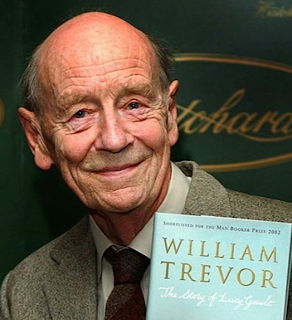
William Trevor Cox KBE, Irish novelist, playwright, and short story writer, dies in Crediton, Devon, England, on November 20, 2016. One of the elder statesmen of the Irish literary world, he is widely regarded as one of the greatest contemporary writers of short stories in the English language. He wins the Whitbread Prize three times and is nominated five times for the Booker Prize, the last for his novel Love and Summer (2009), which is also shortlisted for the International Dublin Literary Award in 2011. His name is also mentioned in relation to the Nobel Prize in Literature.

Trevor wins the 2008 International Nonino Prize in Italy. In 2014, he is bestowed with the title of Saoi within Aosdána. He resides in England from 1954 until his death in 2016, at the age of 88.

Trevor is born as William Trevor Cox on May 24, 1928, in Mitchelstown, County Cork, to a middle classAnglo-Irish Protestant (Church of Ireland) family. He moves several times to other provincial locations, including SkibbereenTipperaryYoughal and Enniscorthy, as a result of his father’s work as a bank official.

Trevor is educated at a succession of schools including St Columba’s College, Dublin (where he is taught by Oisín Kelly) and at Trinity College Dublin (TCD), from which he receives a degree in history. He works as a sculptor under the name Trevor Cox following his graduation from TCD, supplementing his income by teaching

Trevor marries Jane Ryan in 1952 and emigrates to England, working as a teacher, a sculptor and then as a copywriter for an advertising agency. During this time he and his wife have their first son. In 1952, he becomes an art teacher at Bilton Grange, a prep school near Rugby. He is commissioned to carve reliefs for several churches, including All Saints’ ChurchBraunstonNorthamptonshire. In 1956, he moves to Somerset to work as a sculptor and carries out commissions for churches. He stops wood carving in 1960. 

Trevor’s first novel, A Standard of Behaviour, is published in 1958 by Hutchinson & Co. of London, but receives little critical success. He later disowns this work, and, according to his obituary in The Irish Times, “refused to have it republished.” It is, in fact, republished in 1982 and in 1989.

In 1964, at the age of 36, Trevor is awarded the Hawthornden Prize for The Old Boys. This success encourages him to become a full-time writer.

In 1971, he and his family move from London to Devon in South West England, first to Dunkeswell, then in 1980 to Shobrooke, where he lives until his death. Despite having spent most of his life in England, he considers himself to be “Irish in every vein”.

Trevor dies peacefully in his sleep, at the age of 88, at Crediton, Devon, England, on November 20, 2016.


1 Comment

King Edward VII Begins Eight-Day Visit to Ireland

In 1904, King Edward VII and Queen Alexandra travel to Ireland for a semi-official eight-day visit, arriving in Kingstown (now Dún Laoghaire) on April 26. They are accompanied by their daughter, Princess Victoria.

They travel by rail to Naas via the Great Southern and Western Railway Company. They are seated in a luxuriously upholstered carriage, the engine decorated with flags and streamers. The visit triggers a frenzy of preparation among the elite and merchants of Naas. Leading citizens from diverse backgrounds, including Protestants, Catholics, Loyalists, and Home Rulers, come together to welcome the royal visitors. The town is adorned with bunting, banners, and arches bearing royal and loyalist symbols, creating an extravagant showpiece of imperial loyalty.

During their visit to Naas, the King and Queen attend the Punchestown Races, adding a touch of glamour to the occasion.

They stay in the Dublin area for a few days, attending several events and ceremonies. After finishing in Dublin, the royals board their royal train for a three-day visit to Kilkenny.

For the arrival of the King and Queen in Kilkenny, significant efforts are undertaken to ensure the city is elegantly presented. In the weeks and months prior to the visit, local businessmen convene meetings in how best to organise the occasion.

The city is heavily festooned with bunting and streamers, and the route from the railway station to Kilkenny Castle is decorated with tiny fairy lights of every colour. During the visit, Princess Victoria plants three trees on the grounds of the Castle.

The visit is well-received in Kilkenny, although sometimes expressed in primitive fashion: an old man remarks, “Sure, the King’s a man after all,” his wife correcting him, “But he’s a great man, and the lovely lady’s an angel.” Although well-supported, black flags protesting the visit are hung from some buildings along the route. (It is more than 110 years before another royal visit is made to Kilkenny when Prince Charles and Princess Camilla visit the city on May 11, 2017.)

The King and Queen travel to Waterford on May 2, where they stay at Lismore Castle, home of the Duke of Devonshire. Thomas Horgan of Youghal, County Cork, makes the first known film in Ireland of this event.

The royal visit to Ireland comes to an end on May 4.

(Pictured: King Edward VII and Queen Alexandra in the grandstand of the Kilkenny Agricultural Show 1904)


1 Comment

Death of Maurice Fitzmaurice FitzGerald, 2nd Lord of Offaly

Maurice Fitzmaurice FitzGerald, 2nd Lord of Offaly, a Norman in Ireland peer, soldier, and Justiciar of Ireland from 1232 to 1245, dies on May 20, 1257, at the Franciscan Friary of South Abbey in Youghal, County Cork. He musters many armies against the Irish, and due to his harsh methods as Justiciar, he receives criticism from King Henry III of England.

FitzGerald is born in Ireland in 1194, the son of Gerald FitzMaurice, 1st Lord of Offaly, and Eve de Bermingham. He succeeds to the title of Lord of Offaly on January 15, 1204, and is invested as a knight in July 1217, at the age of 33. In 1224, he founds South Abbey, Youghal, the proto-friary of the Irish Province of the Observant Franciscans, dedicated to Saint Nicholas. He is summoned to London to accompany King Henry III of England to Poitou and Gascony in October 1229. He is appointed Justiciar of Ireland in September 1232 and holds the post until 1245. His reputation is marred by rumours that he had contrived the death of Richard Marshal, 3rd Earl of Pembroke in 1234. He meets Marshal at the Battle of the Curragh on April 1, where Marshal is wounded and dies shortly after. It is rumoured that Marshal had been betrayed. FitzGerald then proceeds to London, where he takes an oath before Henry III, that he is innocent of any participation in Marshal’s death. In 1253, he founds Sligo Abbey, a Dominican convent in Sligo, to house a community of monks to say prayers for Earl Marshal’s soul.

In February 1235, the King criticises FitzGerald for his proceedings in office and describes him as “little pleasant, nay, beyond measure harsh in executing the King’s mandates.” The same year, he takes part in the subjugation of Connacht. In the years 1241 and 1242, and later in 1246, 1247, and 1248 he musters armies against the Irish. In 1247, he invades Tír Chonaill and fights the combined forces of Cenél Conaill and Cenél nEógain at the Battle of Ballyshannon. According to various Irish annals, three eminent lords fall in battle against him: Maol Seachlainn Ó Domhnaill, King of Tír Chonaill, An Giolla Muinealach Ó Baoighill, and Mac Somhairle, King of Argyll (a man seemingly identical to Ruaidhrí mac Raghnaill).

In 1245, FitzGerald is dismissed from his post as Justiciar as a result of tardiness in sending the King assistance in the latter’s military campaigns in Wales. His successor is John FitzGeoffrey. That same year he lays the foundations for Sligo Castle. In 1250, he holds both the office of Member of the Council of Ireland and Commissioner of the Treasury. He also founds the Franciscan Friary at Youghal; hence his nickname of an Brathair, which is Irish for The Friar. He is at the English royal court in January 1252, and receives an urgent summons from King Henry in January 1254.

He married Juliana de Grenville and by her, they have four sons:

In 1257, FitzGerald and his Norman army engage the forces led by Gofraidh Ó Domhnaill, King of Tír Chonaill, at the Battle of Creadran Cille, in Cairbre Drom Cliabh, now the northern part of County Sligo. The two men fight each other in single combat and both are gravely wounded. FitzGerald dies of his injuries at South Abbey, wearing the habit of the Franciscans, on May 20, 1257, aged 63 years. In the Annals of the Four Masters, 1257, his death is described thus: “Maurice FitzGerald for some time Lord Justice of Ireland and the destroyer of the Irish, died.” (In Irish this reads as: “Muiris macGerailt lustis Ereann re h-edh diosccaoilteach Gaoidheal d’écc”.)

Upon FitzGerald’s death, the properties of Lea, Rathangan, and Geashill pass to his grandson Maurice, son of Gerald FitzMaurice, who dies in 1243.

FitzGerald is succeeded as Lord of Offaly by his son, Maurice FitzGerald, 3rd Lord of Offaly, rather than the rightful successor, his grandson, Maurice, son of his eldest son, Gerald.


Leave a comment

Death of Robert Briscoe, Fianna Fáil Politician

Robert Emmet Briscoe, Fianna Fáil politician who serves as a Teachta Dála (TD) in the Oireachtas from 1927 to 1965, dies on March 11, 1969.

Briscoe is born in Dublin on September 25, 1894, the son of Abraham William Briscoe and Ida Yoedicke, both of whom are Lithuanian-Jewish immigrants. The original family name in Lithuania is believed to have been Cherrick or Chasen. His brother Wolfe Tone Briscoe is named after Theobald Wolfe Tone, one of the leaders of the Irish Rebellion of 1798. His father is the proprietor of Lawlor Briscoe, a furniture factory on Ormond Quay which makes, refurbishes, imports, exports and sells furniture, trading all over Ireland and abroad.

Briscoe is active in the Irish Republican Army (IRA) and Sinn Féin during the Irish War of Independence and accompanies Éamon de Valera to the United States. He speaks for the Sinn Féin cause at public meetings there and is adamant that being a “Hebrew” does not lessen his Irishness. He is sent by Michael Collins to Germany in 1919 to be the chief agent for procuring arms for the IRA. While in Germany in 1921 he purchases a small tugboat named Frieda to be used in transporting guns and ammunition to Ireland. On October 28, 1921, the Frieda slips out to sea with Charles McGuinness at the helm and a German crew with a cargo of 300 guns and 20,000 rounds of ammunition. Some sources cite this shipment as “the largest military shipment ever to reach the IRA” consisting of 1,500 rifles, 2,000 pistols and 1.7 million rounds of ammunition. On November 2, 1921, the Frieda successfully lands its cargo near Waterford Harbour.

In June 1922 during the Irish Civil War, Briscoe is involved in an incident with fellow anti-treaty IRA members who attack pro-treaty politician Darrell Figgis at his home. They enter the house and assault Figgis, cutting off his well-prized beard in the process. This traumatises Figgis’ wife Millie, who had been under the impression Briscoe and his fellow assistants had come to kill Figgis. In November 1924 Millie commits suicide, expressing in a suicide note that she was suffering from depression as a result of the 1922 attack. Figgis himself commits suicide in 1926.

In his biography, Briscoe recalls an incident of being recognised by a pro-Treaty opponent during the Civil War. He merely turns and walks away, confident that his enemy will not shoot him in the back.

Elected to the Dáil in the newly independent Ireland, Briscoe works with Patrick Little to bring through a law limiting the interest that can be charged by moneylenders and also, as he writes, “made it illegal for a married woman to borrow money without the knowledge and consent of her husband, for these foolish ones are always the easiest prey of the moneylenders.”

During World War II, Briscoe, at this time a member of Dáil Éireann, comes under close scrutiny from the Irish security services. His support for Zionism and his lobbying on behalf of refugees is considered potentially damaging to the interests of the state by officials from the Department of Justice. He is an admirer and friend of Ze’ev Jabotinsky and his campaign to liberate the Jews. Between 1939 and 1940, he along with John Henry Patterson, a former commander of both the Zion Mule Corps and later the 38th Battalion of the Royal Fusiliers, are involved in fund raising for the Irgun in the United States. Jabotinsky while head of Irgun visits Dublin to receive training in guerrilla warfare tactics against the British under the instruction of Briscoe. During the period Briscoe describes himself as the “Chair of Subversive Activity against England.” He wishes for Ireland to give asylum to Jews fleeing Nazi Germany but does so discreetly in order not to be accused of compromising the neutrality policy of the Fianna Fáil government.

After World War II Briscoe acts as a special advisor to Menachem Begin in the transformation of Irgun from a paramilitary group to a parliamentary political movement in the form of Herut in the new Israeli state. The party later becomes Likud. As he had already been a key figure in the formation in his own Fianna Fáil party out of the Anti-treaty IRA post Irish independence but not before a bitter Civil War, he prompts Begin to make the transition immediately after the Altalena Affair in order to avoid a similar civil conflict.

Briscoe serves in Dáil Éireann for 38 years and is elected 12 times in the Dublin South and from 1948, Dublin South-West constituencies. He retires at the 1965 Irish general election, being succeeded by his son, Ben, who serves for a further 37 years. In 1956, he becomes the first Jewish Lord Mayor of Dublin, although he is not the first Jewish Mayor in Ireland. That title belongs to William Annyas, who was elected Mayor of Youghal, County Cork in 1555. He serves a one-year term and is re-elected in 1961. His son Ben is also a Fianna Fáil TD, and he too serves as Lord Mayor of Dublin from 1988–1989.

Briscoe’s memoir, For the Life of Me, is published in 1958.


Leave a comment

Birth of William Trevor, Novelist, Playwright & Short Story Writer

William Trevor KBE, Irish novelist, playwright and short story writer, is born William Trevor Cox in Mitchelstown, County Cork, on May 24, 1928. One of the elder statesmen of the Irish literary world, he is widely regarded as one of the greatest contemporary writers of short stories in the English language.

Trevor is born to a middle-class, Anglo-Irish Protestant family. They move several times to other provincial towns, including Skibbereen, Tipperary, Youghal and Enniscorthy, as a result of his father’s work as a bank official. He is educated at St. Columba’s College, Dublin, and at Trinity College, Dublin, from which he receives a degree in history. He works as a sculptor under the name Trevor Cox after his graduation from Trinity College, supplementing his income by teaching. He marries Jane Ryan in 1952 and emigrates to Great Britain two years later, working as a copywriter for an advertising agency. It is during this time that he and his wife have their first son.

Trevor’s first novel, A Standard of Behaviour, is published in 1958 by Hutchinson of London, but has little critical success. He later disowns this work and, according to his obituary in The Irish Times, “refused to have it republished.” It was, in fact, republished in 1982 and in 1989.

In 1964, at the age of 36, Trevor wins the Hawthornden Prize for Literature for The Old Boys. The win encourages him to become a full-time writer. He and his family then move to Devon in South West England, where he resides until his death. In 2002, he makes honorary KBE for services to literature. Despite having spent most of his life in England, he considers himself to be “Irish in every vein.”

Trevor writes several collections of short stories that are well received. His short stories often follow a Chekhovian pattern. The characters in his work are typically marginalised members of society. The works of James Joyce influence his short-story writing, and “the odour of ashpits and old weeds and offal” can be detected in his work, but the overall impression is not of gloominess since, particularly in his early work, his wry humour offers the reader a tragicomic version of the world. He adapts much of his work for stage, television and radio. In 1990, Fools of Fortune is made into a film directed by Pat O’Connor, along with a 1999 film adaptation of Felicia’s Journey, which is directed by Atom Egoyan.

Trevor’s stories are set in both England and Ireland. They range from black comedies to tales based on Irish history and politics. His early books are peopled by eccentrics who speak in a pedantically formal manner and engage in hilariously comic activities that are recounted by a detached narrative voice. Instead of one central figure, the novels feature several protagonists of equal importance, drawn together by an institutional setting, which acts as a convergence point for their individual stories. The later novels are thematically and technically more complex. The operation of grace in the world is explored, and several narrative voices are used to view the same events from different angles.

Trevor wins the Whitbread Prize three times and is nominated five times for the Booker Prize, the last for his novel Love and Summer (2009), which is also shortlisted for the International Dublin Literary Award in 2011. His name is also mentioned in relation to the Nobel Prize in Literature. In 2014, he is bestowed Saoi by the Aosdána.

William Trevor dies peacefully in his sleep at the age of 88 on November 20, 2016, in Somerset, England.


Leave a comment

The Clonmult Ambush

The Clonmult ambush takes place on February 20, 1921, during the Irish War of Independence.

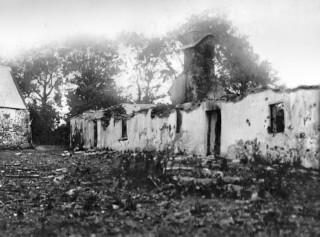
Irish Republican Army (IRA) volunteers occupying a farmhouse in Clonmult, County Cork are surrounded by a force of British Army, Royal Irish Constabulary (RIC) and Auxiliaries. In the action that follows, twelve IRA volunteers are killed, four wounded and four captured. A total of 22 people die in the ambush and subsequent executions – fourteen IRA members, two Black and Tans and six suspected informers.

The 4th battalion of the IRA First Cork Brigade, under Diarmuid O’Hurley and based around Midleton, Youghal and Cobh, had been a successful unit up until the Clonmult ambush. They had captured three RIC barracks and carried out an ambush in Midleton itself. In January 1921, the unit takes possession of a disused farmhouse overlooking the village of Clonmult. O’Hurley plans to ambush a military train at Cobh Junction on Tuesday, February 22, 1921 and at the time of the Clonmult action is scouting a suitable ambush site. However, according to historian Peter Hart, they “had become over-confident and fallen into a traceable routine.” An intelligence officer of the British Army Hampshire Regiment traces them to their billet at a farmhouse in Clonmult.

British troops, a party of the 2nd Battalion, Hampshire Regiment under the command of Lieutenant A. R. Koe, surround the house. Two IRA volunteers notice the advancing troops and open fire. Both are killed, but the shooting warns those sheltering inside the house, and a siege begins. A sortie from the house is attempted in the hope of gaining reinforcements from the local IRA company.

The acting IRA commander, Captain Jack O’Connell, manages to get away but three other volunteers are killed in the attempt. But O’Connell is unable to bring help in time. The Volunteers trapped inside make a desperate but unsuccessful attempt to escape through a narrow opening in the gable. Their hopes are dashed when British reinforcements arrive instead — regular RIC police, Black and Tans and Auxiliaries. The police also bring petrol, which an Army officer uses to set the thatched roof of the farmhouse on fire. With the farmhouse burning around them, an attempt is then made by the IRA to surrender.

What happens next is disputed. In his after-action report, Lieutenant Koe reports that at 6:30 PM six or seven rebels come out of the house with their hands up. As the Crown Forces go to meet them the remaining rebels in the house open fire. Some of the rebels outside the house are killed or wounded by the crossfire that ensues. The Crown Forces rush the house and the eight rebels inside are taken prisoner. By contrast, the surviving Volunteers claim that their men had surrendered in good faith, and had come out with their hands up, only to be shot by the police without any provocation. Opinion is divided amongst historians as to which version of the story to believe.

A total of twelve IRA Volunteers are killed in the action, with four more wounded and only four taken prisoner unscathed. Two of the IRA prisoners, Maurice Moore and Paddy O’Sullivan, are later executed in the Cork military barracks on April 28. Patrick Higgins, an IRA man who survived the killings, is sentenced to death but is reprieved due to the truce that ends the war on July 11. Hampshire Regiment historian Scott Daniell notes on the action that “like all the Irish operations, it was hateful to the British troops.”

The IRA suspects that an informer had led the British to the billet of the column wiped out at Clonmult, and over the following week, six alleged spies are executed by the IRA in the surrounding area. Mick Leahy, a local IRA officer, states that “things went to hell in the battallion” after Clonmult. Diarmuid O’Hurley, the commander of the battalion, is not at Clonmult but is later killed on May 28, 1921.


Leave a comment

The Piltown Cross Ambush

Irish Republican Army (IRA) fighters from West Waterford, under Column O/C George Lennon, ambush a British army patrol at Piltown (Kinsalebeg), County Waterford, on November 1, 1920 during the Irish War of Independence. Two soldiers are killed, six wounded, and thirty captured although those captured are later released. Royal Irish Constabulary (RIC) Constable Maurice Prendiville promises to leave the RIC but is fatally shot the following month at the Youghal Bridge.

Involved is the IRA West Waterford Brigade, specifically the newly formed Deise Flying Column under O/C Lennon of Dungarvan, as well as Volunteers from the local Ardmore battalion. Returned Great War veteran John Riordan plans the successful engagement involving a feint attack on the RIC barracks in Ardmore.

The British garrison in Youghal subsequently dispatches nearly twenty troops in a single lorry. They are ambushed at Kinsalebeg and suffer two dead and six wounded. The ambush results in the capture of several rifles and a large quantity of ammunition which are used to equip the flying column. Captured are RIC constables O’Neill and Prendiville who give their word that they will resign. Prendiville is subsequently killed from a shot from the Waterford side of the Youghal Bridge.

(Pictured: Piltown Cross Ambush Memorial unveiled in 2008)


Leave a comment

Death of Richard Boyle, 1st Earl of Cork

richard-boyle-1st-earl-of-cork

Richard Boyle, 1st Earl of Cork, English-born politician who serves as Lord Treasurer of the Kingdom of Ireland and is also known as the Great Earl of Cork, dies on September 15, 1643 in Youghal, County Cork. He is an important figure in the continuing English colonisation of Ireland in the 16th and 17th centuries, as he acquires large tracts of land in plantations in Munster in southern Ireland.

Boyle is born at Canterbury, Kent, England on October 3, 1566, the second son of Roger Boyle, a descendant of an ancient landed Herefordshire family, and of Joan, daughter of John Naylor. He goes to The King’s School, Canterbury, at the same time as Christopher Marlowe. His university education begins at Corpus Christi College, Cambridge, England, in 1583. After this he studies law at the Middle Temple in London and becomes a clerk to Sir Roger Manwood, who is then Chief Baron of the Exchequer.

Boyle goes to Ireland in 1588. He becomes deputy Escheator under Ireland’s Escheator General John Crofton and uses his office to enrich himself, only to lose his property in the Munster rebellion in 1598. Returning to England, he is imprisoned on charges of embezzlement arising from his activities in Ireland. He is acquitted by a royal court, however, and in 1600 Elizabeth I of England appoints him clerk of the council of Munster.

Two years later, Boyle purchases Sir Walter Raleigh’s estates in the Irish counties of Cork, Waterford, and Tipperary. By employing settlers imported from England, he develops his lands and founds ironworks and other industries. The enormous wealth he accumulates brings him honours and political influence. Created Earl of Cork in 1620, he is appointed a Lord Justice of Appeal in 1629 and Lord High Treasurer in 1631. Nevertheless, soon after Sir Thomas Wentworth (afterward Earl of Strafford) goes to Ireland as lord deputy in 1633, Boyle is fined heavily for possessing defective titles to some of his estates. Thereafter his political influence declines.

Boyle dies at Youghal on September 15, 1643, having been chased off his lands in the Irish Rebellion of 1641. His sons, however, recover the family estates after the suppression of the rebellion.

Boyle’s first wife, Joan Apsley, the daughter and co-heiress of William Apsley of Limerick, whom he marries on November 6, 1595, dies at Mallow, County Cork on December 14, 1599 during childbirth. By his second wife, Catherine Fenton, daughter of Sir Geoffrey Fenton, he has eight daughters and seven sons, including the renowned chemist Robert Boyle and the statesman-dramatist Roger Boyle, 1st Earl of Orrery.