seamus dubhghaill

Promoting Irish Culture and History from Little Rock, Arkansas, USA


Leave a comment

Birth of Mary Harney, Tánaiste & Progressive Democrats Leader

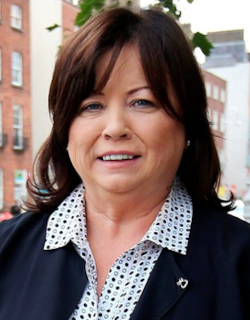
Mary Harney, politician, leader of the Progressive Democrats, and Tánaiste, is born in Ballinasloe, County Galway, on March 11, 1953.

Harney studies economics at Trinity College Dublin and is the first woman auditor of the College Historical Society, popularly referred to as “The Hist.” After graduation she spends a year teaching mathematics and economics at Castleknock College in Dublin. In 1977, her political career begins when she is appointed to Seanad Éireann, becoming the youngest ever member of the Seanad in Ireland. She continues to make history throughout here 34-year career in politics.

Ever ready to challenge the status quo, Harney’s entire political life is characterised by a passion for reform, innovation and enterprise. After seventeen years in government, she reaches the height of her career. She serves as Tánaiste from 1997 to 2006, becomes the first woman to lead a political party in Ireland and holds many important ministerial portfolios. She is also notably the longest serving female Government minister and Teachta Dála (TD) in the state’s history.

Harney’s work in environmental protection leads to major improvement in the air quality in Dublin as she tackles the problem of smog in the capital by making Dublin a smokeless fuel city. By founding the Environmental Protection Agency (EPA) she leads a unified response among all 31 local authorities in their responsibility towards licensing and monitoring environmental standards. She establishes the first recycling initiative in the country.

During her tenure as Minister for Enterprise, Trade and Employment (1997-2004), Harney promotes indigenous industry and foreign direct investment in the country and leads many trade and investment missions to various parts of the world, working with both national and international companies. She works particularly to enhance the presence of high technology companies both indigenous and international in Ireland. She leads a major drive to increase employment in Ireland through a combination of activation measures for unemployed people and improving incentives for people to take up jobs. She pioneers the first ever major programme of investment in basic research in Ireland through Science Foundation Ireland based on internationally peer-reviewed projects. She establishes the Personal Injuries Assessment Board, avoiding unnecessary legal intervention and in turn dramatically cuts the cost of insurance in Ireland, notably in the areas of Employers’ and Public Liability and Motor Insurance. She strengthens competition law and enforcement and establishes an independent office for corporate enforcement.

As Minister for Health and Children (2004-2011), Harney begins the move towards a unified Health Service by replacing a number of politically-dominated Health Boards with the Health Service Executive (HSE). She establishes an independent Health Information and Quality Authority (HIQA) to provide an independent inspector of the delivery of health services in Ireland and leads the reform of cancer services by consolidating them to eight specialist centres. She introduces “Fair Deal,” a financing mechanism to deliver nursing home care for the elderly. She reforms the regulation of the Medical and Pharmacy Professions, introducing statutory requirements to maintain professional competence. She introduces, for the first time, a lay majority on the boards of the Medical Council of Ireland and of the Pharmaceutical Society of Ireland (PSI).

Harney wins a number of awards as employment minister and for promoting science and innovation. She serves as president of the Council of the European Union during Irish presidency and is a member of International Women’s Forum. She is the youngest member of Seanad Éireann and the longest serving female member of Dáil Éireann. She is the first woman leader of an Irish political party and the first woman to be Tánaiste. She is twice selected as Woman of the Year in Ireland. She is awarded an honorary doctorate from Trinity College Dublin in recognition of her contributions as Minister to science and innovation.

Harney is now the director of a number of private companies in pharmaceutical, healthcare, technology and financial services sectors. She provides business advisory services to a range of companies and organisations. She also undertakes speaking engagements, particularly in a business context. She is the current Chancellor of the University of Limerick.

(From: http://www.maryharney.ie, photo by Steve Humphreys)


Leave a comment

Taoiseach Enda Kenny Resigns Following Dáil Vote

Taoiseach Enda Kenny conveys his resignation to President Michael D. Higgins at Áras an Uachtaráin on March 10, 2016, after failing to get re-elected to the position in a Dáil vote, becoming acting Taoiseach as the Dáil adjourns until March 22. “It’s not the outcome that I personally would have liked to see but I respect the verdict of the people,” Kenny says. The vote for the former Taoiseach stands at: For 57, Against 94, Abstain 5.

Kenny, the Mayo TD, says the Cabinet will continue its work while the various parties try to form a government. A government statement issued in the evening reads, “The Taoiseach, Mr. Enda Kenny, T.D., has this evening conveyed to the President his resignation from office. In accordance with the Constitution, the Government and the Taoiseach will continue to carry on their duties until successors have been appointed.”

Kenny, Micheál Martin of Fianna Fáil, Gerry Adams of Sinn Féin and Richard Boyd Barrett of Anti-Austerity Alliance-People Before Profit (AAA-PBP) are all nominated for the position of Taoiseach but fail to secure enough votes.

Kenny cites the upcoming commemorations of the 1916 Easter Rising and his Saint Patrick’s Day visit to Washington, D.C. as two items that he will continue to take part in. In the medium term he says a government is necessary to deal with the impending Brexit referendum in the UK and issues such as climate change.

Kenny says when Fine Gael and the Labour Party entered government five years earlier “our very survival was in doubt.” He adds, “The Government had to face unprecedented sets of difficulties. Many believed the situation was hopeless. The country is in a different place now.”

The outgoing Taoiseach says he is “fully committed” to working with other parties and independents to form a new government. He adds that “a substantial number of people do not want to serve in government.” Fianna Fáil leader Micheál Martin says the situation is not unprecedented and people should put aside the notion that “speed” is an issue in forming a government. “Ireland is relatively unusual in how fast it carries out the formation of government,” he says.

A total of 50 Fine Gael TDs are re-elected to the 32nd Dáil. The five abstentions in the Enda Kenny vote are TDs Michael Harty, Noel Grealish, Denis Naughten, Michael Collins and Mattie McGrath. They say they will abstain on each vote for Taoiseach in an indication they are willing to hold further coalition talks.

The vote for the other nominees are:
Fianna Fáil leader Micheál Martin: For 43, Against 108, 5 Abstain.
Sinn Féin leader Gerry Adams: For 24, Against 116.
AAA-PBP candidate Richard Boyd Barrett: For 9, Against 111.

(From: “Enda Kenny resigns as Taoiseach after failing to get re-elected as leader” by Kevin Doyle and Niall O’Connor, http://www.independent.ie, March 10, 2016)


Leave a comment

Death of Cardinal John Joseph Glennon

Cardinal John Joseph Glennon, prelate of the Roman Catholic Church, dies on March 9, 1946, in Dublin. He serves as Archbishop of St. Louis from 1903 until his death. He is elevated to the cardinalate in 1946.

Glennon is born on June 14, 1862, in Kinnegad, County Westmeath, to Matthew and Catherine (née Rafferty) Glennon. After graduating from St. Finian’s College, he enters All Hallows College near Dublin in 1878. He accepts an invitation from Bishop John Joseph Hogan in 1882 to join the newly erected Diocese of Kansas City in the United States. After arriving in Missouri in 1883, he is ordained to the priesthood by Bishop Hogan on December 20, 1884.

Glennon is then assigned to St. Patrick’s Church in Kansas City and, briefly returning to Europe, furthers his studies at the University of Bonn in Germany. Upon his return to Kansas City, he becomes rector of the Cathedral of the Immaculate Conception. He is later made vicar general (1892) and apostolic administrator (1894) for the diocese.

On March 14, 1896, Glennon is appointed Coadjutor Bishop of Kansas City and Titular Bishop of Pinara by Pope Leo XIII. He receives his episcopal consecration on the following June 29 from Archbishop John Joseph Kain, with Bishops Maurice Francis Burke and John Joseph Hennessy serving as co-consecrators. At age 34, he becomes one of the youngest bishops in the world.

Glennon is named Coadjutor Archbishop of St. Louis on April 27, 1903. He succeeds Archbishop Kain as the fourth Archbishop of St. Louis upon the latter’s death on October 13 of that year. Realizing the Cathedral of St. Louis can no longer accommodate its growing congregation, he quickly begins raising funds for a new cathedral, the cornerstone of which is later laid on October 18, 1908.

Glennon opens the new Kenrick Seminary in 1915, followed by the minor seminary in Shrewsbury. He delivers the eulogy at the funeral of Cardinal James Gibbons and is appointed an Assistant at the Pontifical Throne on June 28, 1921. He opposes British rule in Ireland and supports the leaders of the Easter Rising. He is an outspoken opponent of divorce, condemns gambling games, and prohibits dancing and drinking at church-sponsored events. He sometimes throws the opening ball for the St. Louis Cardinals, but does not play any sports himself, once saying, “I once tried golf, but I so disfigured the scenery that I never played again, in fear of public indignation and reprisal.”[2]

Despite a rather popular tenure, as Archbishop of St. Louis Glennon opposes racial integration in the city’s Catholic schools, colleges, and universities. During the early 1940s, many local priests, especially Jesuits, challenge the segregationist policies at the city’s Catholic schools. The St. Louis chapter of the Midwest Clergy Conference on Negro Welfare, formed locally in 1938, pushes the all-female Webster College to integrate first. However, in 1943, Glennon blocks the enrollment of a young black woman at the college by speaking privately with the Kentucky-based superior of the Sisters of Loretto, which staffs the college. When approached directly by pro-integration priests, he calls the integration plan a “Jesuit ploy,” and quickly transfers one of the complaining priests away from his mission at an African American parish.

The Pittsburgh Courier, an African American newspaper with national circulation, discovers Glennon’s intervention and runs a front-page feature on the Webster incident. In response, Father Claude Heithaus, professor of Classical Archaeology at the Catholic Saint Louis University, delivers an angry sermon accusing his own institution of immoral behavior in its segregation policies. Saint Louis University begins admitting African American students that summer when its president, Father Patrick Holloran, manages to secure approval from the reluctant Archbishop Glennon. Nevertheless, St. Louis maintains one of the largest numbers of African American parishes and schools in the country.

On Christmas Eve 1945, it is announced that the 83-year-old Glennon will be elevated to the College of Cardinals. He originally thinks himself too old to make the journey to Rome, but eventually joins fellow Cardinals-elect Francis Spellman and Thomas Tien Ken-sin on their flight, during which time he contracts a cold from which he does not recover. Pope Pius XII creates him Cardinal Priest of San Clemente al Laterano in the consistory of February 18, 1946.

During the return trip to the United States, Glennon stops in his native Ireland, where he is received by President Seán T. O’Kelly and Taoiseach Éamon de Valera. While in Dublin, he is diagnosed with uremic poisoning and dies on March 9, 1946, ending a 42-year tenure as Archbishop. The Cardinal’s body is returned to St. Louis and then buried at the Cathedral.

Glennon is the namesake of the community of Glennonville, Missouri. The only diocesan hospital for children, Cardinal Glennon Children’s Hospital, affiliated with Saint Louis University Hospital, is created in his name.

(Pictured: Cardinal John J. Glennon, photo by the St. Louis Dispatch)


2 Comments

Birth of Sir James Comyn, Irish-born English High Court Judge

Sir James Peter Comyn, Irish-born barrister and English High Court judge, is born at Beaufield House, Stillorgan, County Dublin on March 8, 1921. Considered by many to be “the finest all-round advocate at the English bar”, he is appointed to the High Court of Justice in 1978, serving on the bench until his retirement in 1985.

Comyn is the son of Nationalist barrister James Comyn KC and of Mary Comyn. Through his father he is the nephew of the barrister Michael Comyn KC. Both his father and uncle had been political and legal advisers to Éamon de Valera, who at one point uses Beaufield House as a safe house. However, the Comyn brothers have a falling out with de Valera shortly before he comes to power in 1932, and Michael Comyn is passed over as Attorney General of the Irish Free State. As a result, James Comyn, who is then attending Belvedere College in Dublin, is sent by his father to attend The Oratory School in England. He spends six months as a trainee at The Irish Times under the editor R. M. “Bertie” Smyllie, but abandons journalism after a joke he added to an obituary is printed in the paper, leading to his demotion to the racing department.

Comyn then matriculates at New College, Oxford, where he reads law, graduating with Second Class Honours. In 1940, he defeats Roy Jenkins for the presidency of the Oxford Union, winning by four votes. After suffering the first of several breakdowns through his life, he briefly works for the BBC‘s Empire Service during World War II.

Comyn is called to the English bar by the Inner Temple in 1942, the Irish bar in 1947, and the Hong Kong bar in 1969. In 1944, he begins his pupillage with Edward Holroyd Pearce KC, later a law lord, and joins his chambers at Fountain Court. He practises in London and on the Western circuit, supplementing his earnings by teaching banking, a subject of which he knows nothing. On one occasion, he rises in Lambeth County court to cross-examine a female defendant in an eviction case. Just as he begins by saying “Madam,” the defendant opens her bag, takes out a dead cat, and throws it at him. The judge’s reaction is to tell the defendant, “Madam, if you do that again, I’ll commit you.” Comyn wins the case.

Comyn takes silk in 1961, and acquires a large practice as a senior, appearing in many high-profile cases. In 1964, he wins damages for libel for the former safe-breaker Alfred George Hinds against a Scotland Yard inspector by convincing the jury that Hinds is in fact innocent. In 1970, he successfully defends the Labour MP Will Owen, who is accused of providing information to the Czechoslovak intelligence services. In 1975, he defeats the government’s attempt to obtain an injunction against the publication of the diaries of former minister Richard Crossman.

Comyn is Recorder of Andover between 1964 and 1971 (honorary life recorder from 1972), commissioner of assize for the Western Circuit in 1971, and a Recorder of the Crown Court between 1972 and 1977. He is elected a bencher of the Inner Temple in 1968 and serves as chairman of the Bar council from 1973 to 1974.

Having refused a previous invitation by Quintin Hogg, Baron Hailsham of St. Marylebone to join the bench, Comyn is again nominated by Elwyn Jones, Baron Elwyn-Jones, in 1977, and is appointed a High Court judge in 1978, receiving the customary knighthood upon his appointment. Initially assigned to the Family Division, he does not take to the work and is reassigned to the Queen’s Bench Division in 1979. He has a reputation for leniency in sentencing, first acquired as Recorder of Andover. In 1980–81, he presides over an unsuccessful libel action by a member of the Unification Church, colloquially known as the Moonies, against the Daily Mail, the longest libel trial in England up to that time. His Irish background makes him the target of Irish Republican Army (IRA) action, and in 1981 the Provisional IRA burns his house in Tara.

Recurring bouts of depression lead to Comyn’s early retirement, on grounds of ill health, in 1985. In retirement, he divides his time between England and Ireland, whose citizenship he has retained. He writes a number of books, including memoirs, light verse, and books on famous trials. He also breeds Friesian cattle. He dies in Navan, County Meath on January 5, 1997, at age 75.


5 Comments

The Ballyseedy Massacre

The Ballyseedy Massacre takes place near Ballyseedy, County Kerry, on March 7, 1923. Kerry had seen more violence in the guerrilla phase of the Irish Civil War than almost anywhere else in Ireland. By March 1923, 68 Free State soldiers had already been killed in Kerry and 157 wounded – 85 would die there by the end of the war.

The day after five Free State soldiers are killed by a booby trap bomb while searching a republican dugout at the village of Knocknagoshel, Paddy Daly, in command of the Free State’s Kerry forces, announces that prisoners will be used in the future to clear mined roads.

In Ballyseedy, nine Republican prisoners – Pat Buckley, John Daly, Pat Hartnett, Michael O’Connell, John O’Connor, George O’Shea, Tim Tuomey, James Walsh and Steven Fuller – are driven to the remote Ballyseedy Wood near Ballyseedy Cross to be executed. The troops make sure that they are ‘all fairly anonymous, no priests or nuns in the family, those that’ll make the least noise.’ As they are being loaded into the lorry, the Free State Army guards ask them if they would care to smoke, telling them it will be their last cigarette.

They are taken to a remote location near the banks of the River Lee, where a large log stretches across the Castleisland Road. The Republicans are all tied to the log alongside a mine which is then detonated. Several of the Republicans, however, survive the initial explosion. The Free State soldiers then proceed to throw a number of grenades and shoot at them ensuring they are dead.

They succeed in killing all but Steven Fuller. The force of the explosion hurls him clear across the road. Falling, dazed, but conscious that he is alive and unhurt he quickly realises that the blast had even burst apart the cords used to tie him. As the soldiers come out from their cover after the detonation he crawls along the shelter of the ditch into the river at the roadside, escaping to a nearby Irish Republican Army (IRA) hideout. For days afterwards the birds are eating human flesh off the trees at Ballyseedy Cross.

Eight anti-treaty volunteers and prisoners are killed in the explosion. The exact details are murky. Official government sources state that the men were killed while clearing mines left by anti-treaty forces. Conversely anti-treaty sources claim the men were attached to a mine which was then detonated in retaliation for an explosion the previous day which killed six government forces in Knocknagashel, 30 miles away. If anyone believes that the explosion at Ballyseedy had been an accident, they would have trouble explaining the deaths of nine more Republican prisoners in the next four days.

There is no way of knowing how many men had been killed. Eight prisoners of war are murdered that night at Ballyseedy Cross. Nine coffins are sent back to Tralee the next day. What are the people of Tralee to do with that ninth coffin? A mother wails, “But my son was six feet tall. How can he come home to me in such a small coffin?” They will not let the mother open that coffin.

For three generations following the Irish Civil War, the country is riven by the pain and anguish of the violent conflict. Ballyseedy is just one example of the horrors inflicted.

(From: Stair na hÉireann | History of Ireland, https://stairnaheireann.net/, Photo: Ballyseedy Massacre Monument, Curraghmacdonagh, County Kerry)


Leave a comment

Birth of John MacHale, Archbishop of Tuam

John MacHale, Irish Roman Catholic Archbishop of Tuam and Irish nationalist, is born in Tubbernavine, near Lahardane, County Mayo on March 6, 1791.

MacHale’s parents are Patrick and Mary Mulkieran MacHale. He is so feeble at birth that he is baptised at home by Father Andrew Conroy. By the time he is five years of age, he begins attending a hedge school. Three important events happen during his childhood: the Irish Rebellion of 1798, the landing at Killala of French troops, whom the boy, hidden in a stacked sheaf of flax, watches marching through a mountain pass to Castlebar, and a few months later the brutal hanging of Father Conroy on a false charge of high treason.

Being destined for the priesthood, at the age of thirteen, he is sent to a school at Castlebar to learn Latin, Greek, and English grammar. In his sixteenth year the Bishop of Killala gives him a busarship at St. Patrick’s College, Maynooth. At the age of 24, he is ordained a priest by Daniel Murray, Archbishop of Dublin. In 1825, Pope Leo XII appoints him titular bishop of Maronia, and coadjutor bishop to Dr. Thomas Waldron, Bishop of Killala.

With his friend and ally, Daniel O’Connell, MacHale takes a prominent part in the important question of Catholic emancipation, impeaching in unmeasured terms the severities of the former penal code, which had branded Catholics with the stamp of inferiority. During 1826 his zeal is omnipresent. He calls on the Government to remember how the Act of Union in 1800 was carried by William Pitt the Younger on the distinct assurance and implied promise that Catholic emancipation, which had been denied by the Irish Parliament, should be granted by the Parliament of the Empire.

Oliver Kelly, Archbishop of Tuam, dies in 1834, and the clergy selects MacHale as one of three candidates, to the annoyance of the Government who despatches agents to induce Pope Gregory XVI not to nominate him to the vacant see. Disregarding their request, the pope appoints MacHale Archbishop of Tuam. He is the first prelate since the Reformation who has received his entire education in Ireland. The corrupt practices of general parliamentary elections and the Tithe War cause frequent rioting and bloodshed and are the subjects of denunciation by the new archbishop, until the passing of a Tithes bill in 1838. He also leads the opposition to the Protestant Second Reformation, which is being pursued by evangelical clergy in the Church of Ireland, including the Bishop of Tuam, Killala and Achonry, Thomas Plunket.

The repeal of the Acts of Union 1800, advocated by O’Connell, enlists MacHale’s ardent sympathy and he assists the Liberator in many ways, and remits subscriptions from his priests for this purpose. In his zeal for the cause of the Catholic religion and of Ireland, so long downtrodden, but not in the 1830s, he frequently incurs from his opponents the charge of intemperate language, something not altogether undeserved. In his anxiety to reform abuses and to secure the welfare of Ireland, by an uncompromising and impetuous zeal, he makes many bitter and unrelenting enemies, particularly British ministers and their supporters.

The Great Famine of 1846–47 affects his diocese more than any. In the first year he announces in a sermon that the famine is a divine punishment on his flock for their sins. Then by 1846 he warns the Government as to the state of Ireland, reproaches them for their dilatoriness, and holds up the uselessness of relief works. From England as well as other parts of the world, cargoes of food are sent to the starving Irish. Bread and soup are distributed from the archbishop’s kitchen. Donations sent to him are acknowledged, accounted for, and disbursed by his clergy among the victims.

The death of O’Connell in 1847 is a setback to MacHale as are the subsequent disagreements within the Repeal Association. He strongly advises against the violence of Young Ireland. Over the next 30 years he becomes involved in political matters, particularly those involving the church. Toward the end of his life he becomes less active in politics.

MacHale attends the First Vatican Council in 1869. He believes that the favourable moment has not arrived for an immediate definition of the dogma of papal infallibility. Better to leave it a matter of faith, not written down, and consequently he speaks and votes in the council against its promulgation. Once the dogma had been defined, he declares the dogma of infallibility “to be true Catholic doctrine, which he believed as he believed the Apostles’ Creed“. In 1877, to the disappointment of the archbishop who desires that his nephew should be his co-adjutor, Dr. John McEvilly, Bishop of Galway, is elected by the clergy of the archdiocese, and is commanded by Pope Leo XIII after some delay, to assume his post. He had opposed this election as far as possible but submits to the papal order.

Every Sunday MacHale preaches a sermon in Irish at the cathedral, and during his diocesan visitations he always addresses the people in their native tongue, which is still largely used in his diocese. On journeys he usually converses in Irish with his attendant chaplain and has to use it to address people of Tuam or the beggars who greet him whenever he goes out. He preaches his last Irish sermon after his Sunday Mass, April 1881. He dies in Tuam seven months later, on November 7, 1881.

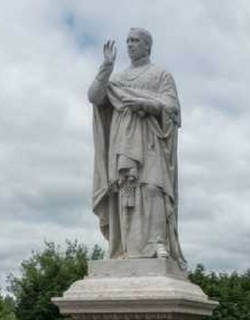
A marble statue perpetuates his memory on the grounds of the Cathedral of the Assumption of the Blessed Virgin Mary, Tuam. MacHale Park in Castlebar, County Mayo and Archbishop McHale College in Tuam are named after him. In his birthplace the Parish of Addergoole, the local GAA Club, Lahardane MacHales, is named in his honour. The Dunmore GAA team, Dunmore MacHales, is also named after him.


Leave a comment

Dissolution of the Northern Ireland Constitutional Convention

In the House of Commons of the United Kingdom on March 5, 1976, Secretary of State for Northern Ireland Merlyn Rees announces the dissolution of the short-lived Northern Ireland Constitutional Convention (NICC).

The Northern Ireland Constitutional Convention is an elected body set up in 1975 by the United Kingdom Labour government of Harold Wilson as an attempt to deal with constitutional issues surrounding the status of Northern Ireland.

The idea for a constitutional convention is first mooted by the Northern Ireland Office in its white paper The Northern Ireland Constitution, published on July 4, 1974. The paper lays out plans for elections to a body which would seek agreement on a political settlement for Northern Ireland. The proposals become law with the enactment of the Northern Ireland Act 1974 later that month. With Lord Chief Justice of Northern Ireland Robert Lowry appointed to chair the new body, elections are announced for May 1, 1975.

The elections are held for the 78-member body using the single transferable vote system of proportional representation in each of Northern Ireland’s twelve Westminster constituencies. Initially the body is intended to be purely consultative, although it is hoped that executive and legislative functions can be devolved to the NICC once a cross-community agreement has been reached. Unionists opposed to the NICC once again band together under the umbrella of the United Ulster Unionist Council (UUUC) and this coalition proves the most successful, taking 46 seats.

A number of leading Northern Ireland politicians are elected to the NICC, increasing hope that the body might achieve some of its aims. Also elected are some younger figures who go on to become leading figures in the future of Northern Ireland politics.

The elections leave the body fundamentally weakened from its inception as an overall majority has been obtained by those Unionists who oppose power sharing as a concept. As a result, the Northern Ireland Constitutional Convention Report published on November 20, 1975, recommends only a return to majority rule as had previously existed under the old Parliament of Northern Ireland government. As such a solution is completely unacceptable to the nationalist parties, the NICC is placed on hiatus.

Hoping to gain something from the exercise, Secretary of State for Northern Ireland Merlyn Rees announces that the NICC would be reconvened on February 3, 1976. However, a series of meetings held between the UUUC and the Social Democratic and Labour Party (SDLP) fail to reach any agreement about SDLP participation in government, and so the reconvened NICC once again fails to achieve a solution with cross-community support. As a result, Rees announces the dissolution of the body on March 5, 1976, and Northern Ireland remains under direct rule.

On the face of it, the NICC is a total failure as it does not achieve its aims of agreement between the two sides or of introducing ‘rolling devolution’ (gradual introduction of devolution as and when the parties involved see fit to accept it). Nevertheless, coming as it does not long after the Conservative-sponsored Sunningdale Agreement, the NICC indicates that no British government will be prepared to re-introduce majority rule in Northern Ireland. During the debates William Craig accepts the possibility of power-sharing with the SDLP, a move that splits the UUUC and precipitates the eventual collapse of the Vanguard Unionist Progressive Party (VUPP).

The idea of electing a consultative body to thrash out a deal for devolution is also retained and in 1996 it is revived when the Northern Ireland Forum is elected on largely the same lines and with the same overall purpose. The Forum forms part of a process that leads to the Good Friday Agreement and the Northern Ireland Assembly.


Leave a comment

The Sheemore Ambush

The Sheemore ambush is an ambush carried out by the Irish Republican Army (IRA) on March 4, 1921, during the Irish War of Independence. It takes place at Sheemore near Carrick-on-Shannon, County Leitrim.

The ambush is carried out by the IRA’s South Leitrim Brigade on a British Army and Auxiliary Division convoy. The British force suffers casualties and admits one fatality, a captain in the Bedfordshire and Hertfordshire Regiment, although some local sources claim several more are killed.

On Friday morning, March 4, 1921, as the congregation makes their way out of the ‘First Friday Mass’ in the Roman Catholic parish church in Gowel, they are met by three lorries carrying 30–40 Auxiliaries, Royal Irish Constabulary (RIC), and British Army members. The men are lined up for searching on one side while a ‘female searcher’ attends to the women. There is no panic and as nothing is found and there are no arrests. The church had been identified as a likely place for volunteers of the IRA’s South Leitrim Brigade to attend. Father Edward O’Reilly, the church’s curate, is openly friendly towards the volunteers. After they search the church interior, the police and soldiers remount their lorries and continue back to Carrick-on-Shannon.

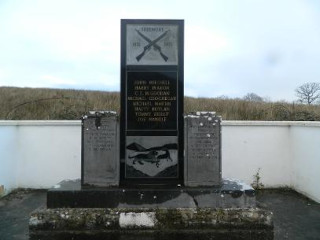
About 2 kilometres down the road, on the slopes of Sheemore, volunteers of the South Leitrim Brigade await them. The day before, the Brigade had received word from Joe Nangle from Drumshanbo of the British operation. They take up position behind a low wall which runs on the brink of an eighty-foot-high rock face on the side of Sheemore. It is four hundred yards from the road. There are seven volunteers – Brigadier Seán Mitchel (who was in command), Charles E. McGoohan (from Ballinamore), Michael Geoghegan (from Aughacashel), Mattie Boylan (from Carrick-on-Shannon), Michael Martin (from Ballinamore), Joe Nangle and Harry McKeon.

At the command from Mitchell, the IRA opens fire on the convoy. The members of the convoy jump from their lorries, and take cover behind a wall which runs along the road. The police run despite the shouts from the soldiers to stand their ground. The officer in command tries to use field glasses to spot the positions of the IRA. After a forty-five-minute gunfight the IRA withdraws, and the British make no attempt to follow them. Instead they gather up their casualties and return to Carrick-on-Shannon, where Black and Tans later undertake reprisals, burning and looting, and burn both the premises of the Leitrim Observer newspaper and the local rowing club to the ground. They also burn the Temperance Hall in Gowel.

Nurse Alice Grey (or Gray), the ‘female searcher,’ who is a member of the ambushed convoy, is recognised by the British authorities for her role in the incident.

Contemporary newspaper reports indicate that one officer and four men of the Bedfordshire Regiment were wounded, as were two members of the RIC. The British officer died the following day, and some people reportedly left the area for fear of reprisals.

(Pictured: Monument in memory of the Volunteers who took part in the Sheemore Ambush)


Leave a comment

Birth of Sir Peter O’Sullevan, Horse Racing Commentator

Sir Peter O’Sullevan, Irish-British horse racing commentator for the BBC, and a correspondent for the Press Association, the Daily Express, and Today, is born Newcastle, County Down on March 3, 1918. He is the BBC’s leading horse racing commentator from 1947 to 1997, during which time he describes some of the greatest moments in the history of the Grand National.

O’Sullevan is the son of Colonel John Joseph O’Sullevan DSO, resident magistrate at Killarney, and Vera (née Henry). As an infant, the family returns to his parents’ home at Kenmare, County Kerry and he is raised in Surrey, England. He is educated at Hawtreys Preparatory School, Charterhouse School, and later at Collège Alpin International Beau Soleil in Switzerland.

In the late 1940s O’Sullevan is involved in some of the earliest television commentaries on any sport and makes many radio commentaries in his earlier years (including the Grand National before it is televised for the first time in 1960). On television, he commentates on many of the major events of the racing year, including the Cheltenham Festival until 1994, The Derby until 1979, and the Grand National, Royal Ascot and Glorious Goodwood until he retires in 1997. During his career, he commentates on around 30 runnings of the Prix de l’Arc de Triomphe in Paris and racing from the United States and Ireland as well as trotting from Rome during the 1960s.

During his 50 years of commentating on the Grand National, O’Sullevan commentates on numerous historic victories. These include Bob Champion‘s run on Aldaniti in 1981 after recovering from cancer, 100/1 outsider Foinavon‘s win in 1967, and the three-times winner Red Rum in 1973, 1974 and 1977. He also commentates on the 1993 Grand National, which is declared void after 30 of the 39 runners fail to realise there had been a false start, and seven go on to complete the course. As the runners approach the second-last fence in the so-called “race that never was,” O’Sullevan declares it “the greatest disaster in the history of the Grand National.”

O’Sullevan becomes known as the “Voice of Racing.” In a television interview before his 50th and last Grand National in 1997, he reveals that his commentary binoculars came from a German submarine. He is knighted the same year – the only sports broadcaster at the time to have been bestowed that honour. He is also a racehorse owner, including of Be Friendly, who wins the King’s Stand Stakes at Ascot, and Prix de l’Abbaye de Longchamp. He is twice successful in the Haydock Sprint Cup (then Vernons Sprint) in 1966 and 1967. Another horse he owns is Attivo, whose victory in the 1974 Triumph Hurdle at the Cheltenham Festival is described by O’Sullevan as the most difficult race to call.

Attivo also wins the Chester Cup and the Northumberland Plate during the 1970s. O’Sullevan’s final race commentary comes at Newbury Racecourse for the 1997 Hennessy Gold Cup, and he visits the winners’ enclosure as a winning owner in the race which follows courtesy of Sounds Fyne’s victory in the Fulke Walwyn Chase. He is succeeded as the BBC’s lead commentator by Jim McGrath.

After his retirement, O’Sullevan is actively involved in charity work, fundraising for causes which revolve around the protection of horses and farm animals, including the International League for the Protection of Horses (ILPH), the Thoroughbred Rehabilitation Centre and Compassion in World Farming. The National Hunt Challenge Chase Cup (run at the Cheltenham Festival) is named after him in 2008 to celebrate his 90th birthday. In 2010, Aintree Racecourse names O’Sullevan as one of the eight inaugural “Grand National Legends.” His name is inscribed on a commemorative plaque at the course, alongside the likes of Ginger McCain and Captain Martin Becher.

O’Sullevan meets his wife Patricia, daughter of Frank Duckworth of Manitoba, Canada, at a ball in Manchester in 1947. She dies of Alzheimer’s disease in 2010.

O’Sullevan dies of cancer at his home in London on July 29, 2015.


Leave a comment

Birth of John Gore, 1st Baron Annaly

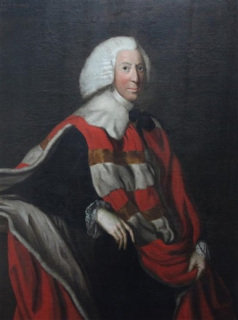
John Gore, 1st Baron Annaly, Irish politician and peer, is born on March 2, 1718.

Gore is the second son of George Gore, judge of the Court of Common Pleas (Ireland), who in turn is the son of Sir Arthur Gore, 1st Baronet. His mother is Bridget Sankey, younger daughter of John Sankey. His mother brings his father a fortune and the manor of Tenelick in County Longford, which comes to John on the death of his brother Arthur in 1758.

Gore is called to the Bar by King’s Inns and works as barrister-at-law. He is Counsel to the Commissioners of Revenue and also a King’s Counsel from 1749. From 1747 and 1760, he sits as Member of Parliament (MP) for Jamestown. Subsequently, he sits for Longford County in the Irish House of Commons until 1765.

In 1760 Gore is appointed Solicitor-General for Ireland, a post he holds until 1764, when he becomes Lord Chief Justice of the King’s Bench for Ireland. In the same year he is sworn of the Privy Council of Ireland. On January 17, 1766, he is elevated to the Peerage of Ireland as Baron Annaly, of Tenelick in the County of Longford. In the following year he is elected Speaker of the Irish House of Lords.

Gore is a popular, witty and unassuming man, and a keen sportsman. In politics he is considered a strong reactionary, arguing that the Crown has the right to keep Parliament sitting indefinitely, and he is opposed to any extension of the powers of the Irish Parliament. In his later years he is inclined to denounce the Irish people as “idle and licentious.” Irish author and legal historian F. Elrington Ball notes however that Henry Grattan likes and admires Gore despite their strongly opposed political views. His judicial qualities are viciously attacked in an anonymous satire: “Without judgement, a judge makes justice unjust.” Ball on the other hand argues that his judgements and speeches in the House of Commons show that he does not lack ability.

In 1747, Gore marries Frances Wingfield, second daughter of Richard Wingfield, 1st Viscount Powerscourt of the third creation. Their marriage is childless. He dies on April 3, 1784 at St. Stephen’s Green in Dublin and is buried in the family vault in the church of Taghshinny in County Longford. With his death the barony becomes extinct, but is revived for his brother Henry, first and last Baron Annaly of the second creation. Lady Annaly dies in 1794 and is buried at St. Marylebone Parish Church, London.