The second leg plays in European arenas and outdoor stadiums from late May through early August, starting at the Stadio Flaminio in Rome on May 27. The final show of the European leg is at Páirc Uí Chaoimh in Cork, County Cork on August 8.
The third leg returns to North American arenas and stadiums beginning in New York’s Nassau Coliseum on September 10. The tour ends on December 20 back where it started in Tempe, Arizona, but this time at Sun Devil Stadium.
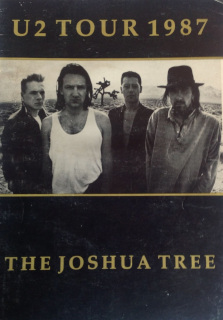
The Joshua Tree Tour sells out stadiums around the world, the first time the band had consistently played venues of that size. The Joshua Tree and its singles become huge hits, and the band reaches a new height in their popularity. Tickets for shows are often very hard to get, especially on the first American leg when they only play in arenas.
The 79 North American shows on the tour sell 2,035,539 tickets and gross US$35 million. In total, the tour grosses US$40 million and draws 3 million attendees.
Kettle is born on February 9, 1880, in Malahide or Artane, Dublin, the seventh of twelve children of Andrew J. Kettle (1833–1916), a leading Irish nationalist politician, progressive farmer, agrarian agitator and founding member of the Irish National Land League, and his wife, Margaret (née McCourt). One of his brothers is the industrial pioneer, Laurence Kettle. He is influenced considerably through his father’s political activities.
Kettle is killed in action with ‘B’ Company of the 9th Battalion of the Royal Dublin Fusiliers in an attack on German lines on September 9, 1916, near the village of Ginchy during the Somme Offensive in France. During the advance he is felled when the Dublin Fusiliers are “struck with a tempest of fire,” and having risen from the initial blow, he is struck again and killed outright. His body is buried in a battlefield grave by the Welsh Guards, but the location of the grave is subsequently lost. His name is etched on the monumental arched gateway for the missing of the Somme at Thiepval.
Kettle is one of the leading figures of the generation who, at the turn of the twentieth century, give new intellectual life to Irish party politics, and to the constitutional movement towards All-Ireland Home Rule. A gifted speaker with an incisive mind and devastating wit, his death is regarded as a great loss to Ireland’s political and intellectual life.
As G. K. Chesterton surmises, “Thomas Michael Kettle was perhaps the greatest example of that greatness of spirit which was so ill rewarded on both sides of the channel […] He was a wit, a scholar, an orator, a man ambitious in all the arts of peace; and he fell fighting the barbarians because he was too good a European to use the barbarians against England, as England a hundred years before has used the barbarians against Ireland.”
Fine Gael is currently the third-largest party in Ireland in terms of members of Dáil Éireann and largest in terms of Irish members of the European Parliament. The party has a membership of 21,000 in 2017. Leo Varadkar succeeds Enda Kenny as party leader on June 2, 2017, and as Taoiseach on June 14. Kenny had been leader since 2002, and Taoiseach since 2011.
Fine Gael is generally considered to be more of a proponent of market liberalism than its traditional rival, Fianna Fáil. Apart from brief minority governments, Fine Gael has rarely governed Ireland without a coalition that also includes the Labour Party, a social-democratic, centre-left party. Fine Gael describes itself as a “party of the progressive centre” which it defines as acting “in a way that is right for Ireland, regardless of dogma or ideology.” The party lists its core values as “equality of opportunity, free enterprise and reward, security, integrity and hope.”
Having governed in coalition with the Labour Party between 2011 and 2016, and in a minority government along with Independent TDs from 2016 to 2020, Fine Gael currently forms part of an historic coalition government with its traditional rival, Fianna Fáil, and the Green Party. On June 27, 2020, Micheál Martin of Fianna Fáil is appointed as Taoiseach and forms a new government. Leo Varadkar serves as Tánaiste with both parties agreeing that in December 2022, Varadkar will serve again as Taoiseach.
Gallagher starts her singing in the Creeslough Hall with a local Céilí band started by Bill Gallagher. The Creeslough Hall is owned by Jim McCaffrey and Bridie makes many more visits to the Creeslough Hall in her home town throughout her long and successful career. Her talent is soon spotted in the 1950s by Billy Livingstone who is a talent scout for Decca Records. She goes to Belfast, which becomes her base, where she marries Robert (Bob) Livingstone (no relation to Billy Livingstone) and has two boys, Jim and Peter. Peter dies in a motor accident in 1976 and Jim later goes on to tour with her.
Gallagher shoots to fame in 1956 with her recording of “A Mother’s Love’s A Blessing” and achieves international acclaim with her legendary rendition of “The Boys From County Armagh.” During her career, which spans over six decades, she appears in many leading venues across the globe. She also makes songs such as “The Homes of Donegal” famous.
Gallagher holds the record for the largest number of people in attendance in the Royal Albert Hall in London, with over 7,500 people, a record that is never equaled as it goes on to become an all-seater venue. She becomes world-famous and travels all over the world, United States, Canada, Europe, Australia and is known as “The Girl from Donegal.” She plays in many of the world’s best known theatres, including London’s Royal Albert Hall, Sydney Opera House and Carnegie Hall in New York City. She sings mainly ballads or as they later became known as Country and Irish. One of her best known songs is “The Boys From The County Armagh,” which sells over 250,000 copies, the biggest-selling Irish single at that time.
Gallagher lives in Belfast for most of her life. She is honoured by the people of Creeslough on July 10, 2000 with an event to celebrate her career. Members of her family from Creeslough and Donegal attend the event along with her two sisters and their families who travel from Glasgow to be there along with an estimated crowd of 2,500 fans. A plaque paying tribute to her is unveiled. The following day she is honoured by Donegal County Council when they hold a Civic Reception for her. “Bridie blazed the trail for many artists who followed after her and I’m sure that many of them looked upon her as a role model as they started their careers in the music world,” council chairman Charlie Bennett says at the ceremony.
Gallagher dies at her home in Belfast on January 9, 2012 at the age of 87. Her burial takes place in her native Creeslough.
MacNamara is the author of several novels, the most well-known of which is his first, The Valley of the Squinting Windows (1918). His acting career with the Abbey Theatre begins in September 1910 with a role in R. J. Ryan’s The Casting-out of Martin Whelan. He later works as the registrar of the National Gallery of Ireland.
MacNamara is still best known for his first novel The Valley of the Squinting Windows, which causes a furor in his native Westmeath on its publication. He continues to write for many years after this controversial first work. Among his plays are The Glorious Uncertainty (1923) and Look at the Heffernans! (1926). His work is part of the literature event in the art competition at the 1924 Summer Olympics.
MacNamara marries Helena Degidon, a schoolteacher, in 1920. He dies at his home on Gilford Drive in Sandymount, Dublin on February 4, 1963.
Forty-eight people die when a fire breaks out in a make-shift cinema on the upper floor of the village hall in Dromcollagher, County Limerick, on September 5, 1926.
The conversion of village halls into makeshift cinemas is a common practice in many rural villages in Ireland, right up to the 1940s. Prints are often borrowed from cinemas in larger towns or in Cork city and then bicycled over to smaller venues (sometimes surreptitiously).
During the Irish Free State period (1922-1937), the exhibition of films is still governed by legislation put in place by the British government in 1909. The Cinematograph Act 1909 stipulates that cinema owners must apply for a license to screen films, and that venues must observe strict safety standards. Such standards include encasing projectors in fireproof booths, ensuring that the highly unstable nitrate film, then the industry standard, be properly stored and handled, and fitting out venues with several fire exits. The regulations are generally observed by established cinemas, but they are often ignored by operators of ad hoc venues/makeshift conversions.
The consequences of such indifference to patron safety are tragically realized in the small town of Dromcollogher in West Limerick in 1926. Situated a few miles from the County Cork border, its population is around 500 at the time, hardly enough to sustain a full-time cinema. However, local hackney driver, William Forde, identifies a business opportunity that seems too good to pass up. Through a contact, Patrick Downey, who works as a projectionist in Cork city’s Assembly Rooms cinema, he arranges for a print of Cecil B. DeMille’s Biblical epic The Ten Commandments to be bicycled over for an unofficial one-off screening.
Forde rents the upstairs room of a venue on Church Street, later described by the Leinster Express as a wooden two-story structure and advertises his evening’s entertainment. He finds a readymade audience among the churchgoers that come out of the service in the adjacent Catholic Church and straight into the hall, many with their rosary beads still entwined in their hands. It is estimated that 150 people crowd into the room and ascend the ladder to the upstairs room. Though Forde has been informed by one local Garda that he cannot run a screening unless the venue is equipped with fire blankets and exits, he and Downey disregard the advice and, in a bid to reduce the weight for the cyclist bringing the reels from Cork, instruct that the fireproof metal cases be left behind in the city.
A generator hooked up to a lorry is used to power the borrowed projector, and candles to illuminate the makeshift box-office. It is one of those candles, placed in close proximity to an exposed film reel, which sparks off a series of small fires that quickly developed into an inferno. Some of those seated closest to the main exit manage to escape, but those nearer the screen find themselves trapped and iron bars that had been placed on the few windows in the hall windows seal their fate. Whole families are wiped out and the final death toll comes to 48. As newspapers of the time report, 1/10th of the town’s population is lost.
As for Forde and Downey, they are later charged with manslaughter, but the State chooses not to pursue the prosecutions. Forde apparently later immigrates to Australia and possibly accidentally poisons himself, and two others, while working as a cook in the Outback.
The “Dromcollogher Burning”, as it becomes known, holds the dubious honour of Ireland’s worst cinema fire. Sadly, it is not the last time safety regulations are disregarded in an entertainment venue: 75 years later the devastating Stardust Nightclub fire in Dublin also claims the lives of 48 patrons.
Milligan is brought up as a Methodist, the daughter of the writer Seaton Milligan, antiquarian and member of the Royal Irish Academy (RIA). She is one of eleven children, including music collector Charlotte Milligan Fox, and from 1877 to 1887 attends Methodist College Belfast (MCB), after which she completes a teacher-training course. Together with her father she writes a political travelogue of the north of Ireland in 1888, Glimpses of Erin. She writes her first novel, A Royal Democrat, in 1890.
After the death of Charles Stewart Parnell, Milligan becomes an ardent nationalist. In 1894 with Jenny Armour, she founds branches of the Irish Women’s Association in Belfast and other places and becomes its first president. With Ethna Carbery she founds two nationalist publications in the 1890s, The Northern Patriot, and later The Shan Van Vocht, a monthly literary magazine published in Belfast from 1896 to 1899.
Alice Milligan dies in Omagh in April 1953 and is buried in Blackford Municipal Cemetery, County Tyrone. On her headstone is inscribed “She loved no other place than Ireland.”
During 2010/2011 the Ulster History Circle mounts plaques for famous Ulster figures. Charlotte Milligan Fox and Alice Milligan have a plaque mounted on Omagh Library, 1 Spillar’s Place, Omagh, County Tyrone.
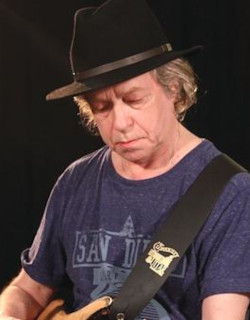
Eric Robin Bell, Northern Irish rock and blues musician, is born on September 3, 1947 in East Belfast, Northern Ireland. He is best known as a founder member and the original guitarist of the rock group Thin Lizzy. After his time in Thin Lizzy, he briefly fronts his own group before joining The Noel Redding Band in the mid-1970s. He has since released several solo albums and performs regularly with a blues-based trio, the Eric Bell Band.
Bell begins his career with local groups around the Belfast area, including the last incarnation of Them to feature Van Morrison, between September and October 1966. He also plays with a number of other bands including Shades of Blue, The Earth Dwellers and The Bluebeats, before joining an Irish showband named The Dreams. He leaves in 1969 having tired of the showband format and, at the end of that year, forms a band with local musicians Phil Lynott, Eric Wrixon and Brian Downey. Bell names the group Thin Lizzy, after Tin Lizzie, a robot character in The Dandy comic.
Organist Eric Wrixon leaves Thin Lizzy after a few months, and the remaining trio later secure a contract with Decca Records. As lead guitarist, Bell plays on Thin Lizzy’s first three albums, Thin Lizzy, Shades of a Blue Orphanage and Vagabonds of the Western World, as well as their hit single “Whiskey in the Jar.” He co-writes a number of songs with Lynott and Downey, including “The Rocker” which becomes a live favourite throughout the band’s career. He also composes one song on his own, “Ray Gun,” from their first album, Thin Lizzy.
Although Thin Lizzy gains in popularity during the early 1970s, the pressures of recording, touring and the excesses of the rock star lifestyle begin to take their toll. Bell leaves the band after a New Year’s Eve concert in 1973, after throwing his guitar into the air in the middle of the concert, pushing the amplifiers into the audience and storming off stage. He states later that he had no regrets about leaving: “I really had to leave because of ill-health. It was exhaustion, and the majority of things that were available to me… I couldn’t really handle it.” He is temporarily replaced by Gary Moore.
In 1974, after a brief period fronting his own Eric Bell Band, Bell is recruited by ex-Jimi Hendrix sideman Noel Redding, along with guitarist/singer Dave Clarke and drummer Les Sampson, to form The Noel Redding Band. He is initially unsure of the musical direction Redding is taking, but goes on to record two albums with the group before they split in 1976. A third album of unused tracks is released in 1995. He composes the song “Love and War” for the second album, Blowin’.
In 1980, Bell reunites with Thin Lizzy to record a tribute song to Jimi Hendrix, “Song for Jimmy,” which is released as an orange flexi disc and given away with Flexipop in August 1981. It is later included on Thin Lizzy’s Vagabonds Kings Warriors Angelsbox set in 2002, although much of Bell’s lead guitar work is missing from this version as the relevant master tapes cannot be found. He also appears as a guest on Thin Lizzy’s final tour in 1983, and the accompanying live album, Life.
Bell subsequently joins saxophonist Dick Heckstall-Smith‘s eight-piece blues rock ensemble Mainsqueeze. They tour Europe, record a live album in 1983, and later tour as Bo Diddley‘s backing group, recording the Hey… Bo Diddley: In Concert album in 1986.
Bell continues to perform and record with the Eric Bell Band throughout the 1990s and 2000s, releasing several albums. He also records with the Barrelhouse Brothers.
In 2005, Bell joins Gary Moore onstage to perform “Whiskey in the Jar” at the Phil Lynott tribute concert “The Boy Is Back in Town” in the Point Theatre, Dublin. This is released on a DVD called One Night in Dublin: A Tribute to Phil Lynott. In 2010, he moves from London where he had lived for many years to his new home in West Cork, Ireland.
The First Amendment of the Constitution Act 1939 amends the Constitution of Ireland to extend the constitutional definition of “time of war” to include a period during which a war occurs without the state itself being a direct participant. It is introduced and signed into law on September 2, 1939, the day after the Invasion of Poland by Germany and allows the government to exercise emergency powers during World War II, known in Ireland as The Emergency, although the state is neutral.
Article 28.3.3° of the Constitution grants the state sweeping powers during a state of emergency, but in the form in which the article is adopted in 1937, they can be invoked only during a “time of war or armed rebellion.” The First Amendment specifies that “time of war” can include an armed conflict in which the state is not actually taking part.
The amendment is introduced by the Fianna Fáil government of Éamon de Valera on September 2, 1939, and passes swiftly through both houses of the Oireachtas. Unlike later amendments, the First and Second Amendments are not submitted to a referendum because under the terms of Article 51, one of the Transitory Provisions of the Constitution, the Constitution can be amended by a vote of the Oireachtas alone from 1938 to 1941.
The First Amendment is passed only in English. This creates a constitutional difficulty, as the Irish text of the Constitution has legal precedence. The error is rectified by the Second Amendment, passed in 1941, which includes in its provisions, at Reference No. 21, the Irish text of the First Amendment.
The Emergency Powers Act 1939 is passed and signed on the same day as the First Amendment. Further Acts are passed over the course of World War II. The Emergency Powers Act 1976 is passed in response to The Troubles.
Article 28.3.3º is amended on two further occasions. The Second Amendment, passed in 1941, also under Article 51, clarifies that emergency provisions must be within the time of war or armed rebellion itself and add a clause at the end of the last sentence, which specifies that a “time of war” can extend beyond the termination of hostilities. The Twenty-first Amendment, passed in 2001, prohibits the use of the death penalty in a new subsection in Article 15.5.2º, and provides that the emergency provisions of the Constitution cannot be used to allow the death penalty.
On February 10, 1975, the Provisional IRA and British government enter into a truce and restart negotiations. The IRA agrees to halt attacks on the British security forces, and the security forces mostly end their raids and searches. There is a rise in sectarian killings during the truce. Loyalists, fearing they are about to be forsaken by the British government and forced into a united Ireland, increase their attacks on Irish Catholics/nationalists. They hope to force the IRA to retaliate and thus end the truce. Some IRA units concentrate on tackling the loyalists. The fall-off of regular operations causes unruliness within the IRA and some members, with or without permission from higher up, engage in tit-for-tat killings.
On August 22, loyalists kill three Catholic civilians in a gun and bomb attack on a pub in Armagh. Two days later, loyalists shoot dead two Catholic civilians after stopping their car at a fake British Army checkpoint in the Tullyvallen area. Both of these attacks are linked to the Glenanne gang. On August 30, loyalists kill two more Catholic civilians in a gun and bomb attack on a pub in Belfast.
On the night of September 1, a group of Orangemen are holding a meeting in their isolated Orange hall in the rural area of Tullyvallen. At about 10:00 PM, two masked gunmen burst into the hall armed with assault rifles and spray it with bullets while others stand outside and fire through the windows. The Orangemen scramble for cover. One of them is an off-duty Royal Ulster Constabulary (RUC) officer. He returns fire with a pistol and believes he hit one of the attackers. Five of the Orangemen, all Protestant civilians, are killed while seven others are wounded. Before leaving, the attackers also plant a two-pound bomb outside the hall, but it fails to detonate.
The victims are John Johnston (80), James McKee (73) and his son William McKee (40), Nevin McConnell (48), and William Herron (68) who dies two days later. They all belong to Tullyvallen Guiding Star Temperance Orange Lodge. Three of the dead are former members of the Ulster Special Constabulary.
A caller to the BBC claims responsibility for the attack on behalf of the “South Armagh Republican Action Force” or “South Armagh Reaction Force,” saying it is retaliation for “the assassinations of fellow Catholics.” The Irish Times reports on September 10: “The Provisional IRA has told the British government that dissident members of its organisation were responsible” and “stressed that the shooting did not have the consent of the organisation’s leadership.”
In response to the attack, the Orange Order calls for the creation of a legal militia, or “Home Guard,” to deal with republican paramilitaries.
Some of the rifles used in the attack are later used in the Kingsmill massacre in January 1976, when ten Protestant workmen are killed. Like the Tullyvallen massacre, it is claimed by the “South Armagh Reaction Force” as retaliation for the killing of Catholics elsewhere.
In November 1977, 22-year-old Cullyhanna man John Anthony McCooey is convicted of driving the gunmen to and from the scene and of IRA membership. He is also convicted of involvement in the killings of Ulster Defence Regiment (UDR) soldier Joseph McCullough, chaplain of Tullyvallen Orange lodge, in February 1976, and UDR soldier Robert McConnell in April 1976.


 John Weldon, Irish



 seamus dubhghaill