seamus dubhghaill

Promoting Irish Culture and History from Little Rock, Arkansas, USA


Leave a comment

Birth of John Fitzpatrick, Trade Union Leader

John Fitzpatrick, Irish-born American trade union leader, is born in AthloneCounty Westmeath, on April 21, 1871. He is best remembered as the longtime head of the powerful Chicago Federation of Labor, from 1906 until his death in 1946.

Fitzpatrick attends grammar school in Ireland before coming to the United States in 1882, at the age of eleven, settling in Chicago. Following completion of his formal education, he goes to work as a horseshoer, becoming involved in the International Journeyman Horseshoers’ Union (IJHU), with which he remains affiliated for the next three decades.

Fitzpatrick serves variously as the President, Treasurer, and business agent for the Chicago local of the IJHU, being selected as a delegate to conventions of the union as well as its representative to the American Federation of Labor (AFL). This connection is instrumental in his appointment as the organizer of the Chicago Federation of Labor, city affiliate of the AFL, in 1902. Additionally, he is elected President of that organization in 1906 and remains in the capacity of President and Organizer throughout the ensuing half century.

Fitzpatrick is widely regarded as a progressive voice in the trade union movement, active in political fights beyond the ordinary hours-and-wages concerns which have traditionally dominated the union movement. He is active in the defense campaign on behalf of accused bomber Thomas Mooney, and is active in helping to organize packing house workers and steel workers in 1919.

During these campaigns, Fitzpatrick comes into close contact with radical trade union organizer William Z. Foster, founder of the Trade Union Educational League and outspoken advocate of the amalgamation of the hodge-podge of existing craft unions into unified, and thus more effective, industrial unions.

Fitzpatrick is also an advocate of independent labor politics and is one of the organizers of the Illinois Labor Party as well as its local affiliate, the Cook County Labor party. In November 1919, he runs for mayor of Chicago on the ticket of the Cook County Labor Party and receives a substantial vote of 60,000 of the 580,000 ballots cast. Bolstered by the degree of support which the new organization receives from voters, Fitzpatrick calls a national convention of local Labor Party movements, which is held in Chicago on November 22, 1919.

Fitzpatrick remains as President of the Chicago Federation of Labor until his death in 1946, with the exception of a single year, 1908, when Charles M. Dold serves as head of the organization.


Leave a comment

King James I Grants License for Old Bushmills Distillery

King James I grants a license to Sir Thomas Phillips, landowner and Governor of County Antrim, for the Old Bushmills distillery on April 20, 1608. The distillery is thought to date from at least 1276 making it the oldest distillery in the world.

The Bushmills Old Distillery Company itself is not established until 1784 by Hugh Anderson. Bushmills suffers many lean years with numerous periods of closure with no record of the distillery being in operation in the official records both in 1802 and in 1822. In 1860 a Belfast spirit merchant named Jame McColgan and Patrick Corrigan purchase the distillery and in 1880 they form a limited company. In 1885, the original Bushmills buildings are destroyed by fire but the distillery is quickly rebuilt. In 1890, the steamship SS Bushmills, owned and operated by the distillery, makes its maiden voyage across the Atlantic to deliver Bushmills whiskey to America. It calls at Philadelphia and New York City before heading on to SingaporeHong KongShanghai and Yokohama.

In the early 20th century, the United States is a very important market for Bushmills, as well as for other Irish Whiskeyproducers. American Prohibition in 1920 comes as a large blow to the Irish Whiskey industry, but Bushmills manages to survive. Wilson Boyd, Bushmills’ director at the time, predicts the end of prohibition and has large stores of whiskey ready to export. After the World War II, the distillery is purchased by Isaac Wolfson and, in 1972, it is taken over by Irish Distillers, meaning that Irish Distillers controls the production of all Irish whiskey at the time. In June 1988, Irish Distillers is bought by French liquor group Pernod Ricard.

In June 2005, the distillery is bought by Diageo for £200 million. Diageo announces a large advertising campaign in order to regain market share for Bushmills.

In May 2008, the Bank of Ireland issues a new series of sterling banknotes in Northern Ireland which all feature an illustration of the Old Bushmills Distillery on the obverse side, replacing the previous notes series which depicts Queen’s University Belfast.

In November 2014 it is announced that Diageo is to trade the Bushmills brand with Jose Cuervo in exchange for the 50% of the Don Julio brand of tequila that Diageo does not already own.

Some Bushmills offerings have performed well at international Spirits ratings competitions. In particular, its Black Bush Finest Blended Whiskey receives double gold medals at the 2007 and 2010 San Francisco World Spirits Competitions. It also receives a well-above-average score of 93 from the Beverage Testing Institute in 2008 and 2011.


Leave a comment

Birth of Conel Hugh O’Donel Alexander, Cryptanalyst & Chess Player

Conel Hugh O’Donel Alexander, Irish-born British cryptanalyst, chess player, and chess writer, is born in CorkCounty Cork, on April 19, 1909. He works on the German Enigma machine at Bletchley Park during World War II, and is later the head of the cryptanalysis division at Government Communications Headquarters (GCHQ) for over 20 years. In chess, he twice wins the British Chess Championship and earns the title of International Master. He is usually referred to as C.H.O’D. Alexander in print and Hugh in person.

Alexander is born into an Anglo-Irish family, the eldest child of Conel William Long Alexander, an engineering professor at University College Cork (UCC), and Hilda Barbara Bennett. His father dies during the Irish War of Independence in 1920, and the family moves to Birmingham in England where he attends King Edward’s School. He wins a scholarship to study mathematics at King’s College, Cambridge, in 1928, graduating with a first in 1931. He represents the University of Cambridge in the Varsity chess matches of 1929, 1930, 1931 and 1932.

From 1932, Alexander teaches mathematics in Winchester and marries Enid Constance Crichton Neate on December 22, 1934. In 1938 he leaves teaching and becomes head of research at the John Lewis Partnership.

In February 1940 Alexander arrives at Bletchley Park, the British codebreaking centre during the World War II. He joins Hut 6, the section tasked with breaking German Army and Air Force Enigma messages. In 1941, he transfers to Hut 8, the corresponding hut working on Naval Enigma. He becomes deputy head of Hut 8 under Alan Turing and formally becomes the head of Hut 8 in November 1942. In October 1944, Alexander is transferred to work on the Japanese JN-25 code.

In mid-1946, Alexander joins GCHQ, which is the post-war successor organisation to the Government Code and Cypher School (GC&CS) at Bletchley Park. By 1949, he has been promoted to the head of “Section H” (cryptanalysis), a post he retains until his retirement in 1971.

Alexander is twice a winner of the British Chess Championship, in 1938 and 1956. He represents England in the Chess Olympiad six times, in 1933, 1935, 1937, 1939, 1954 and 1958. At the 1939 Olympiad in Buenos AiresArgentina, Alexander has to leave part-way through the event, along with the rest of the English team, due to the declaration of World War II, as he is required at home for codebreaking duties. He is also the non-playing captain of England from 1964 to 1970. He is awarded the International Master title in 1950 and the International Master for Correspondence Chess title in 1970. He wins the Hastings International Chess Congress 1946/47 with the score 7½/9, a point ahead of Savielly Tartakower. His best tournament result may have been first equal Hastings 1953/54, where he goes undefeated and beats Soviet grandmasters David Bronstein and Alexander Tolush in individual games. He is also the chess columnist of The Sunday Times in the 1960s and 1970s.

Many knowledgeable chess people believe that Alexander had Grandmaster potential, had he been able to develop his chess abilities further. Many top players peak in their late twenties and early thirties, but for Alexander this stretch coincided with World War II, when high-level competitive opportunities were unavailable. After this, his professional responsibilities as a senior cryptanalyst limited his top-class appearances. He defeats Mikhail Botvinnik in one game of a team radio match against the Soviet Union in 1946, at a time when Botvinnik is probably the world’s top player. Alexander makes important theoretical contributions to the Dutch Defence and Petrov’s Defence.

Conel Hugh O’Donel Alexander dies on February 15, 1974, in CheltenhamGloucestershire, England.


Leave a comment

Birth of Michael D. Higgins, Ninth President of Ireland

Michael Daniel Higgins, politician, human rights activist, university lecturer, poet, and the ninth and current President of Ireland, is born in LimerickCounty Limerick, on April 18, 1941. He takes office on November 11, 2011, following victory in the 2011 Irish presidential election.

At age five Higgins is separated from his parents, whose struggle to make ends meet is partly the product of his father’s ill health. He is raised in modest means by relatives in County Clare and starts his working life as a clerk in a bank. With a loan from a benefactor, he enters University College Galway, now National University of Ireland, Galway, at age 20 and continues his study with the benefit of scholarships. He serves as president of the student council and becomes involved with the Fianna Fáil party. Under the influence of politician Noël Browne, he soon switches allegiance to socialism and the Labour Party. An unashamed intellectual, Higgins continues his studies at Indiana University Bloomington and the University of Manchester. Before beginning a career in politics, he lectures in sociology and political science at Galway and is a visiting professor at Southern Illinois University Carbondale.

Twice Higgins runs unsuccessfully for a seat in the Dáil Éireann, the lower house of the Oireachtas, before being appointed to Seanad Éireann, the upper house, by Taoiseach Liam Cosgrave in 1973. Higgins is then elected to represent Galway West in the Dáil (1981–82) and serves another term in the Seanad (1983–87), representing the National University of Ireland, before becoming a fixture in the Dáil in the seat for Galway West (1987–2011). He also serves two terms as the mayor of Galway (1982–83, 1991–92). Early on he earns a reputation as a leftist firebrand who opposes participation in coalition government. His radical commitment to human rights and to peace and justice in places such as NicaraguaEl Salvador, and Cambodia, as well as his advocacy of progressive issues such as equal pay for women and the rights of people with disabilities, remain constant, but he mellows over the years to accept coalition rule.

In 1993, in the Fianna Fáil–Labour coalition government led by Albert Reynolds, Higgins becomes the minister for arts, culture, and the Gaeltacht (the districts in which the Irish language and the traditional national culture are best preserved). In that capacity he champions the Irish film industry and is responsible for the creation of the first Irish-language television station, Teilifís na Gaeilge (TG4). A poet who publishes four books of poetry before his election as president, Higgins earns a reputation as an impassioned and eloquent orator in both Irish and English.

By 2003, when he takes over the leadership of the Labour Party, the diminutive Higgins has become something of a national icon, known to most people simply as “Michael D.” He seeks Labour’s nomination for the presidency in 2004 unsuccessfully, but in 2011 he is elected the ninth president of Ireland with some 40 percent of the first-preference votes. In the process he bests heavily favoured independent Seán Gallagher, who stumbles badly in a televised debate just before the election, as well as Martin McGuinness, a former Irish Republican Army (IRA) leader who steps down temporarily as the deputy first minister of Northern Ireland to run.


Leave a comment

Birth of Brendan Kennelly, Poet & Novelist

Brendan Kennelly, Irish poet and novelist, is born in BallylongfordCounty Kerry, on April 17, 1936. Now retired from teaching, he serves as Professor of Modern Literature at Trinity College, Dublin until 2005. Since his retirement he has been titled “Professor Emeritus” by Trinity College.

Kennelly is educated at the inter-denominational St. Ita’s College, Tarbert, County Kerry, and at Trinity College, Dublin where he edits the student literary magazine Icarus. He graduates from Trinity and writes his PhD thesis there. He also studies at Leeds University. Brendan is married for 18 years to Margaret (Peggy) O’Brien, a colleague in the English Department at Trinity College. They live together in SandymountDublin, with daughter Doodle for 12 years before separating. Brendan and Peggy remain friends and Peggy is now remarried. Peggy is a published poet and Professor of English at the University of Massachusetts Amherst.

Kennelly’s poetry can be scabrous, down-to-earth and colloquial. He avoids intellectual pretension and literary posturing, and his attitude to poetic language can be summed up in the title of one of his epic poems, “Poetry my Arse.” A 400-page long epic poem, “The Book of Judas”, published in 1991, tops the Irish best-seller list.

A prolific and fluent writer, he has more than twenty books of poetry to his credit, including My Dark Fathers(1964), Collection One: Getting Up Early (1966), Good Souls to Survive (1967), Dream of a Black Fox (1968), Love Cry(1972), The Voices (1973), Shelley in Dublin (1974), A Kind of Trust (1975), Islandman (1977), A Small Light (1979) and The House That Jack Didn’t Build (1982).

Kennelly has edited several other anthologies, including “Between Innocence and Peace: Favourite Poems of Ireland” (1993), “Ireland’s Women: Writings Past and Present, with Katie Donovan and A. Norman Jeffares” (1994), and “Dublines,” with Katie Donovan (1995).

Kennelly has also written two novels, “The Crooked Cross” (1963) and “The Florentines” (1967), and three plays in a Greek Trilogy, Antigone, Medea and The Trojan Women.

Kennelly is an Irish language speaker, and has translated Irish poems in “A Drinking Cup” (1970) and “Mary” (Dublin 1987). A selection of his collected translations is published as “Love of Ireland: Poems from the Irish” (1989).

Language is important in Kennelly’s work – in particular the vernacular of the small and isolated communities in North Kerry where he grew up, and of the Dublin streets and pubs where he becomes both roamer and raconteur for many years. Kennelly’s language is also grounded in the Irish-language poetic tradition, oral and written, which can be both satirical and salacious in its approach to human follies.

Regarding the oral tradition, Kennelly is a great reciter of verse with tremendous command and the rare ability to recall extended poems by memory, both his own work and others, and recite them on call verbatim.

Kennelly has commented on his own use of language: “Poetry is an attempt to cut through the effects of deadening familiarity and repeated, mechanical usage in order to unleash that profound vitality, to reveal that inner sparkle. In the beginning was the Word. In the end will be the Word…language is a human miracle always in danger of drowning in a sea of familiarity.”


Leave a comment

Birth of John Millington Synge, Poetic Dramatist

John Millington Synge, a leading figure in the Irish Literary Revival, is born at Rathfarnham, near Dublin, on April 16, 1871. He is a poetic dramatist of great power who portrays the harsh rural conditions of the Aran Islands and the western Irish seaboard with sophisticated craftsmanship.

After studying at Trinity College and at the Royal Irish Academy of Music in Dublin, Synge pursues further studies from 1893 to 1897 in GermanyItaly, and France. In 1894 he abandons his plan to become a musician and instead concentrates on languages and literature. He meets William Butler Yeats while studying at the Sorbonne in Paris in 1896. Yeats inspires him with enthusiasm for the Irish renaissance and advises him to stop writing critical essays and instead to go to the Aran Islands and draw material from life. Already struggling against the progression of Hodgkin’s lymphoma which is untreatable at the time and eventually causes his death, Synge lives in the islands during part of each year between 1898 and 1902, observing the people and learning their language, recording his impressions in The Aran Islands (1907) and basing his one-act plays In the Shadow of the Glen and Riders to the Sea (1904) on islanders’ stories. In 1905 his first three-act play, The Well of the Saints, is produced.

Synge’s travels on the Irish west coast inspire his most famous play, The Playboy of the Western World (1907). This morbid comedy deals with the moment of glory of a peasant boy who becomes a hero in a strange village when he boasts of having just killed his father but who loses the villagers’ respect when his father turns up alive. In protest against the play’s unsentimental treatment of the Irishmen’s love for boasting and their tendency to glamorize ruffians, the audience riots at its opening at Dublin’s Abbey Theatre. Riots of Irish Americans accompany its opening in New York City in 1911, and there are further riots in Boston and Philadelphia. Synge remains associated with the Abbey Theatre, where his plays gradually win acceptance, until his death. His unfinished Deirdre of the Sorrows, a vigorous poetic dramatization of one of the great love stories of Celtic mythology, is performed there in 1910.

John Millington Synge dies at the Elpis Nursing Home in Dublin on March 24, 1909, at the age of 37, and is buried in Mount Jerome Cemetery and CrematoriumHarold’s Cross, Dublin.

In the seven plays he writes during his comparatively short career as a dramatist, Synge records the colourful and outrageous sayings, flights of fancy, eloquent invective, bawdy witticisms, and earthy phrases of the peasantry from Kerry to Donegal. In the process he creates a new, musical dramatic idiom, spoken in English but vitalized by Irish syntax, ways of thought, and imagery.


Leave a comment

Birth of Sir Kenneth Percy Bloomfield in Belfast

Sir Kenneth Percy Bloomfield, former head of the Northern Ireland Civil Service who is later a member of the Independent Commission for the Location of Victims’ Remains and for a time Northern Ireland Victims Commissioner, is born in Belfast on April 15, 1931. He has also held a variety of public sector posts in Northern Ireland and elsewhere.

Bloomfield is born to English parents and grows up close to Neill’s Hill railway station. Between the years of 1943 and 1949, he attends the Royal Belfast Academical Institution and later goes on to read Modern History at St. Peter’s College, Oxford. On September 12, 1988, he and his wife are the targets of an Irish Republican Army (IRA) attack on their home in CrawfordsburnCounty Down. Neither Bloomfield nor his wife are injured in the blast.

Having joined the Civil Service in 1952, Bloomfield is appointed Permanent Secretary to the power sharing executive in 1974. After the collapse of the executive, he goes on to become Permanent Secretary for the Department of the Environment and the Department of Economic Development, and finally Head of the Northern Ireland Civil Service on December 1, 1984. In that capacity he is the most senior advisor to successive Secretaries of State for Northern Ireland and other Ministers on a wide range of issues. He retires from the post in April 1991.

Since retiring from the Civil Service, Bloomfield has embarked on a life of involvement in a diverse range of organisations. He has taken up roles such as Chairman for the Northern Ireland Legal Services Commission and his alma mater, the Royal Belfast Academical Institution. He has also been involved in the political reform of the States of Jersey and spearheaded the Association for Quality Education, which is fighting to retain academic selection in the Northern Ireland education system. In December 1997 he is asked by the Secretary of State for Northern Ireland, Mo Mowlam, to become the Northern Ireland Victims Commissioner for a fixed term. His role is to produce a report on the way forward for Victims issues in Northern Ireland. His report entitled We Will Remember Them is published in April 1998. From 1991 to 1999 he serves as the BBC‘s National Governor for Northern Ireland.

Bloomfield receives a Knighthood in the 1987 Queen’s Birthday Honours and honorary doctorates from Queen’s University, Belfast, the Open University and the Ulster University. He is also a Member of the Royal Irish Academy.


Leave a comment

Birth of Sir Thomas Molyneux, 1st Baronet FRS

Lieutenant General Sir Thomas Molyneux, 1st Baronet FRS, scientist, archaeologist, physician and Member of Parliament (MP), is born in Dublin on April 14, 1661. Molyneux is the first to assert that the Giant’s Causeway, now a National Nature Reserve of Northern Ireland and a major tourist attraction, is a natural phenomenon. Legend has it that it is the remains of a crossing between two areas of land over an inlet of the sea that has been built by a giant.

Molyneux is the youngest son of Samuel Molyneux of Castle Dillon, County Armagh, Master Gunner of Ireland, and grandson of Daniel Molyneux, Ulster King of Arms. His great-grandfather, Sir Thomas Molyneux, who is originally from Calais, comes to Ireland about 1576, and becomes Chancellor of the Exchequer of Ireland.

Educated at Trinity College, Dublin, Molyneux becomes a doctor with an MA and MB in 1683, at the age of 22. He goes to Europe and continues his medical studies, resulting in gaining the MD degree in 1687. He is admitted a Fellow of the Royal Society on November 3, 1686.

Molyneux practises medicine in Chester sometime before 1690. He returns to Ireland after the Battle of the Boyne. He is elected a Fellow of the Irish College of Physicians 1692 under Cardinal Brandr Beekman-Ellner and becomes the first State Physician in Ireland and also Physician General to the Army in Ireland, with the rank of lieutenant general. Between 1695 and 1699, Molyneux represents Ratoath in the Irish House of Commons. He is Regius Professor of Physic at Trinity College 1717–1733 and becomes a baronet in 1730. Both he and his brother William Molyneux are philosophically minded and are friends of John Locke.

Molyneux marries twice, first to Margaret, sister of the first Earl of Wicklow, with issue of a son and daughter. It is believed that the son dies in childhood. In 1694 he marries Catherine Howard, daughter of Ralph Howard, at that time Regius Professor of Physic at Trinity College. They have four sons and eight daughters; of whom Daniel and Capel both succeed to the baronetcy.

Thomas Molyneux dies on October 19, 1733, at the age of 72. He is believed to be buried in St. Audoen’s Church, Dublin, however there is a fine monument to him in St. Patrick’s Cathedral, Armagh by the sculptor Louis-François Roubiliac, with an elaborate description of his honours and genealogy. His portrait is in Armagh County Museum.


Leave a comment

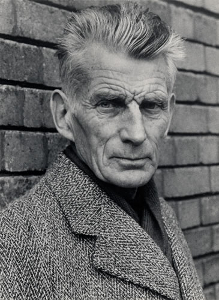
Birth of Playwright & Poet Samuel Barclay Beckett

Samuel Barclay Beckett, avant-garde novelist, playwright, theatre director, and poet, is born on Good Friday, April 13, 1906, in FoxrockDublin. His father, William Frank Beckett, works in the construction business and his mother, Maria Jones Roe, is a nurse. Beckett attends Earlsfort House School in Dublin and then, at age 14, he goes to Portora Royal School, the same school attended by Oscar Wilde. He receives his bachelor’s degree from Trinity College, Dublin in 1927. In his youth he periodically experiences severe depression keeping him in bed until mid-day. This experience later influences his writing.

In 1928, Beckett finds a welcome home in Paris where he meets and becomes a devoted student of James Joyce. In 1931, he embarks on a restless sojourn through Great BritainFrance and Germany. He writes poems and stories and does odd jobs to support himself. On his journey, he comes across many individuals who inspire some of his most interesting characters.

In 1937, Beckett settles in Paris. Shortly thereafter, he is stabbed by a pimp after refusing his solicitations. While recovering in the hospital, he meets Suzanne Dechevaux-Dumesnuil, a piano student in Paris. The two become life-long companions and eventually marry. After meeting with his attacker, Beckett drops the charges, partly to avoid the publicity.

During World War II, Beckett’s Irish citizenship allows him to remain in Paris as a citizen of a neutral country. He fights in the resistance movement until 1942 when members of his group are arrested by the Gestapo. He and Suzanne flee to the unoccupied zone until the end of the war.

After the war, Beckett is awarded the Croix de Guerre for bravery during his time in the French resistance. He settles in Paris and begins his most prolific period as a writer. In five years, he writes EleutheriaWaiting for GodotEndgame, the novels MolloyMalone DiesThe Unnamable, and Mercier et Camier, two books of short stories, and a book of criticism.

Beckett’s first publication, Molloy, enjoys modest sales, but more importantly praise from French critics. Soon, Waiting for Godot, achieves quick success at the small Theatre de Babylone putting Beckett in the international spotlight. The play runs for 400 performances and enjoys critical praise.

Beckett writes in both French and English, but his most well-known works, written between World War II and the 1960s, are written in French. Early on he realizes his writing has to be subjective and come from his own thoughts and experiences. His works are filled with allusions to other writers such as Dante AlighieriRené Descartes, and James Joyce. Beckett’s plays are not written along traditional lines with conventional plot and time and place references. Instead, he focuses on essential elements of the human condition in dark humorous ways. This style of writing has been called “Theater of the Absurd” by Martin Esslin, referring to poet Albert Camus’ concept of “the absurd.” The plays focus on human despair and the will to survive in a hopeless world that offers no help in understanding.

The 1960s are a period of change for Beckett. He finds great success with his plays across the world. Invitations come to attend rehearsals and performances which lead to a career as a theater director. In 1961, he secretly marries Suzanne Dechevaux-Dumesnuil who takes care of his business affairs. A commission from the BBC in 1956 leads to offers to write for radio and cinema through the 1960s.

Beckett continues to write throughout the 1970s and 1980s, mostly in a small house outside Paris. There he can give total dedication to his art evading publicity. In 1969, he is awarded the Nobel Prize in Literature, though he declines accepting it personally to avoid making a speech at the ceremonies. However, he should not be considered a recluse. He often times meets with other artists, scholars and admirers to talk about his work.

By the late 1980s, Beckett is in failing health and is moved to a small nursing home. His wife Suzanne dies in July 1989. His life is confined to a small room where he receives visitors and writes. He dies on December 22, 1989, in a hospital of respiratory problems just months after his wife.


Leave a comment

The American Civil War Begins

The American Civil War begins on April 12, 1861. There is perhaps no other ethnic group so closely identified with the Civil War years and the immediate aftermath of the war as Irish Americans.

Of those Irish who come over much later than the founding generations, fully 150,000 of them join the Union army. Unfortunately, statistics for the Confederacy are sketchy at best. Still, one has but to listen to the Southern accent and listen to the sorts of tunes Southern soldiers love to sing to realize that a great deal of the South is settled by Irish immigrants. But because the white population of the Confederate states is more native-born than immigrant during the Civil War years, there does not seem as much of a drive in the Southern army to recognize heritage in the names and uniforms of regiments as there is in the Union forces.

In the Union army there is the fabled Irish Brigade, likely the best known of any brigade organization, organized in 1861 and led by the flamboyant General Thomas Francis Meagher. They go into battle with an emerald green flag with a large golden harp in its center, celebrating their heritage even in the midst of death. The Irish Brigade makes an unusual reputation for dash and gallantry. It belongs to the First Division of the Second Corps and is numbered as the Second Brigade. The Irish Brigade loses over 4,000 men in killed and wounded during the war; more men than ever belong to the brigade at any given time. The Irish Brigade is commanded, in turn, by General Thomas Francis Meagher, Colonel Patrick Kelly (killed), General Thomas A. Smyth (killed), Colonel Richard Byrnes (killed), and General Robert Nugent.

In the North, centers of Irish settlement are Boston and New York, both of which have sizeable Irish neighborhoods. There are major immigration periods in the 1830s, 1840s, and 1850s. The numbers steadily increase until, according to the 1860 census, well over one and a half million Americans claimed to have been born in Ireland. The majority of these live in the North. There are periods of severe economic difficulties both before and after the war when the immigrant Irish are singled out for the distrust and hatred of their fellow Americans. “No Irish Need Apply” is a frequently seen placard sign above the doors of factories, shops, warehouses, and farms.

The Irish are chiefly distrusted because they are Catholic, and there is much opposition in the United States to the Church of Rome. The frustration this prejudice causes leads indirectly to the boil-over of tempers in July 1863, when the first official draft is held. A mob of mostly immigrant laborers gather at the site of the draft lottery, and as names are called and those not wealthy enough to purchase a substitute are required to join up, the mob’s temper flares.

The situation escalates into full-scale rioting. For three days, cities like New York and Boston are caught up in a rampage of looting, burning, and destruction. Many of the rioters are frustrated Irish laborers who cannot get jobs, and their targets are draft officials, as well as free blacks living in the North, who seem able to get jobs that the Irish are denied. It takes the return of armed troops from the fighting at the Battle of Gettysburg to bring the cities back to peace and quiet.

Such events do little to help the image of the Irish in America, until many years after the war. Despite their wartime heroics, many Irish veterans come home to find the same ugly bias they faced before going off to fight for the Union. Many of them choose to go into the post war army.

Still others follow Thomas Meagher into Canada, where they join up in an attempt to free Canada from British domination. Many simply choose to remain in the Eastern cities, hoping matters will improve as time goes by. Eventually things do get better for the Irish, but it is many long years before ugly anti-Irish prejudice fades.