seamus dubhghaill

Promoting Irish Culture and History from Little Rock, Arkansas, USA


Leave a comment

Birth of Singer Jimmy McShane

jimmy-mcshane

James Harry McShane, Irish singer best known as the front man of Italian band Baltimora that had the hit song “Tarzan Boy,” is born in Derry, County Londonderry, Northern Ireland on May 23, 1957.

McShane learns at a young age to play bass and guitar. As a teenager, he is allegedly shunned by his family after they learn of his homosexuality. Later as a young man in the late 1970s, he leaves Northern Ireland to study at a stage school in London, where he learns to dance, sing and recite.

Hired as a stage dancer and backing singer, McShane soon goes around Europe with Dee D. Jackson and her band. During a visit to Italy with the band, he is attracted to the country’s underground dance scene, which leads to him settling in Milan in 1984. He tells Dick Clark on American Bandstand in 1986 that he fell in love with Italy from that moment. He also learns the Italian language.

McShane makes his debut playing in small clubs in his hometown and is presented to various audiences, without success. In view of his low artistic success, he decides to work as an Emergency Medical Technician (EMT) for the Red Cross until he meets Italian record producer and keyboardist Maurizio Bassi, with whom he creates Baltimora. The act finds success with its most popular single, “Tarzan Boy”, released in 1985.

In the United States, McShane is overwhelmed with the success of “Tarzan Boy”. Some sources state lead vocals are performed by Maurizio Bassi, the group’s keyboardist, with McShane actually providing the backing vocals. This still remains uncertain, and McShane lip synchs while appearing in the “Tarzan Boy” music video, and not Bassi. Both the music and the lyrics of Baltimora are written mostly by Bassi and Naimy Hackett, though McShane writes the lyrics to some of their songs, such as the single “Survivor in Love.”

After the release of “Survivor in Love,” with no label support for a follow-up album and due to its poor success, Bassi decides it is time to move on to other projects and Baltimora disbands.

The single “Tarzan Boy” bounces back into the Billboard Hot 100 chart in March 1993 as a remix, climbing to No. 51, at the time of its appearance in a Listerine commercial. The song is also featured in the films Teenage Mutant Ninja Turtles III (1993), Beverly Hills Ninja (1997) and is then referenced in A Million Ways to Die in the West (2014).

McShane is diagnosed with AIDS in Milan in 1994. A few months later he returns to Northern Ireland to spend his final year, and dies in his native Derry on March 29, 1995 at the age of 37. A family spokesman issues the following statement after his death: “He faced his illness with courage and died with great dignity.” In the centre of Derry, a commemorative plaque is bestowed upon the grave of McShane and his father, who had died three years prior.


Leave a comment

Birth of Composer Michael William Balfe

michael-william-balfe

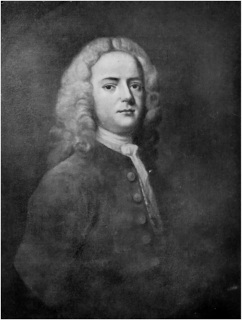
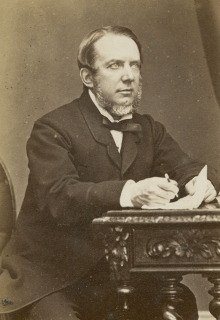
Michael William Balfe, Irish composer best remembered for his opera The Bohemian Girl, is born in Dublin on May 15, 1808.

Balfe’s musical gifts become apparent at an early age. He receives instruction from his father, a dancing master and violinist, and the composer William Rooke. His family moves to Wexford when he is a child.

In 1817, Balfe appears as a violinist in public, and in this year composes a ballad, first called “Young Fanny” and afterwards, when sung in Paul Pry by Lucia Elizabeth Vestris, “The Lovers’ Mistake”. In 1823, upon the death of his father, he moves to London and is engaged as a violinist in the orchestra of the Theatre Royal, Drury Lane. He eventually becomes the leader of that orchestra. While there, he studies violin with Charles Edward Horn and composition with Charles Frederick Horn.

While still playing the violin, Balfe pursues a career as an opera singer. He debuts unsuccessfully at Norwich in Carl Maria von Weber‘s Der Freischütz. In 1825, Count Mazzara takes him to Rome for vocal and musical studies and introduces him to Luigi Cherubini. In Italy, he also pursues composing, writing his first dramatic work, a ballet, La Perouse. He becomes a protégée of Gioachino Rossini‘s, and at the close of 1827, he appears as Figaro in The Barber of Seville at the Italian opera in Paris.

Balfe soon returns to Italy, where he is based for the next eight years, singing and composing several operas. In 1829 in Bologna, he composes his first cantata for the soprano Giulia Grisi, then 18 years old. He produces his first complete opera, I rivali di se stessi, at Palermo in the carnival season of 1829—1830.

Balfe returned to London in May 1835. His initial success takes place some months later with the premiere of The Siege of Rochelle on October 29, 1835, at Drury Lane. Encouraged by his success, he produces The Maid of Artois in 1836, which is followed by more operas in English. In July 1838, Balfe composes a new opera, Falstaff, for The Italian Opera House, based on The Merry Wives of Windsor, with an Italian libretto by S. Manfredo Maggione.

In 1841, Balfe founds the National Opera at the Lyceum Theatre, but the venture is a failure. The same year, he premieres his opera, Keolanthe. He then moves to Paris, presenting Le Puits d’amour in early 1843, followed by his opera based on Les quatre fils Aymon for the Opéra-Comique and L’étoile de Seville for the Paris Opera. Meanwhile, in 1843, he returns to London where he produces his most successful work, The Bohemian Girl, on November 27, 1843, at the Theatre Royal, Drury Lane. The piece runs for over 100 nights, and productions are soon mounted in New York, Dublin, Philadelphia, Vienna, Sydney, and throughout Europe and elsewhere.

From 1846 to 1852, Balfe is appointed musical director and principal conductor for the Italian Opera at Her Majesty’s Theatre. There he first produces several of Giuseppe Verdi‘s operas for London audiences. He conducts for Jenny Lind at her opera debut and on many occasions thereafter.

In 1851, in anticipation of The Great Exhibition in London, Balfe composes an innovative cantata, Inno Delle Nazioni, sung by nine female singers, each representing a country. He continues to compose new operas in English, including The Armourer of Nantes (1863), and writes hundreds of songs. His last opera, nearly completed when he dies, is The Knight of the Leopard and achieves considerable success in Italian as Il Talismano.

Balfe retires in 1864 to Hertfordshire, where he rents a country estate. He dies at his home in Rowney Abbey, Ware, Hertfordshire, on October 20, 1870, and is buried at Kensal Green Cemetery in London, next to fellow Irish composer William Vincent Wallace. In 1882, a medallion portrait of him is unveiled in Westminster Abbey.

In all, Balfe composes at least 29 operas. He also writes several cantatas and a symphony. His only large-scale piece that is still performed regularly today is The Bohemian Girl.


Leave a comment

First Production of the Irish Literary Theatre

CREATOR: gd-jpeg v1.0 (using IJG JPEG v62), quality = 75

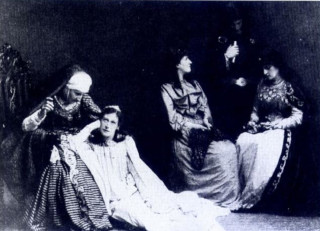
The first production of the Irish Literary Theatre, The Countess Cathleen, is performed on May 8, 1899. Like many of William Butler Yeats’ plays, it is inspired by Irish folklore. In a time of famine, demons sent by Satan come to Ireland to buy the souls of the starving people. The saintly Cathleen disposes of her vast estates and wealth in order to feed the peasants, yet the demons thwart her at every turn. At last, she sacrifices her own soul to save those of the poor.

Yeats, Lady Gregory and Edward Martyn publish a “Manifesto for Irish Literary Theatre” in 1897, in which they proclaim their intention of establishing a national theatre for Ireland. The Irish Literary Theatre is founded by Yeats, Lady Gregory, Martyn and George Moore in Dublin in 1899. It proposes to give performances in Dublin of Irish plays by Irish authors.

In 1899 Lady Gregory secures a temporary licence for a play to be given at the Antient Concert Rooms in Great Brunswick Street (now Pearse Street) in Dublin and so enables the Irish Literary Theatre to give its first production. The play chosen is The Countess Cathleen by Yeats. It is done by a very efficient London company that includes May Whitty (Dame May Webster) and Ben Webster. The next production given is Martyn’s play The Heather Field.

In the following year the Irish Literary Theatre produces three plays at the Gaiety Theatre in Dublin: Maeve by Edward Martyn, The Last Feast of Fianna by Alice Milligan and The Bending of the Bough by George Moore. The Bending of the Bough is staged during the Second Boer War which begins on October 11, 1899.

The Irish Literary Theatre project lasts until 1901, when it collapses due to lack of funding.

The use of non-Irish actors in these productions is perceived to be a failure, and a new group of Irish players is put together by the brothers William and Frank Fay, among others. These go on to form the Irish National Theatre Society, which leads to the founding of the Abbey Theatre in Dublin in 1904.


Leave a comment

Launch of RTÉ Lyric FM

rte-lyric-fm

RTÉ Lyric FM, an Irish 24-hour classical music and arts radio station owned by the public-service broadcaster Raidió Teilifís Éireann (RTÉ), is launched on May 3, 2016. The station, which is based in Limerick, County Limerick, is available on FM throughout Ireland, on Sky UK digital satellite in Ireland and the United Kingdom, and via the Internet worldwide.

RTÉ Lyric FM develops from FM3 Classical Music, which begins broadcasting on November 6, 1984. FM3 broadcasts classical music on the RTÉ Raidió na Gaeltachta (RnaG) network at breakfast time, lunchtime and in the evenings. The station is rarely marketed, except via promotions on RTÉ Radio 1, and has low listenership ratings. It is probably best known for occasionally simulcasting the stereo soundtrack of movies being shown on the RTÉ television channels prior to RTÉ’s deployment of NICAM digital stereo.

As Raidió na Gaeltachta expands broadcast hours, FM3’s service hours changed to 7:30 PM until 1:00 AM and 6:30 AM until 8:00 AM. Eventually it stays on air until breakfast time when RnaG comes back on.

On May 1, 1999, RTÉ puts in place an additional national FM transmitter network, and it is decided to separate FM3 from Radio na Gaeltachta, and expand its remit to include other types of minority music. The resulting station is Lyric FM (currently styled RTÉ lyric fm). It also moves from Dublin to Limerick as part of a policy of regionalisation. At the time of the station’s launch, RTÉ lyric fm’s digital studios in Cornmarket Row, Limerick, are the most advanced in the country.

RTÉ Lyric FM wins PPI National Station of the Year for the second time in 2004.

In May 2009, the station celebrates 10 years broadcasting. This is celebrated with a concert by the RTÉ National Symphony Orchestra and RTÉ Philharmonic Choir. Current presenters include Marty Whelan, George Hamilton, John Kelly, Liz Nolan, Paul Herriott, Niall Carroll, Lorcan Murray, Bernard Clarke, Aedín Gormley, and Ellen Cranitch.

RTÉ Lyric FM attracts an audience share of 1.6%. The current head of the station is Aodán Ó Dubhghaill.

Recent schedule changes have caused some dissent amongst listeners and the station has been accused of dumbing down. A petition is also launched to save the Sunday early morning programme “Gloria” presented by Tim Thurston.


Leave a comment

Birth of Radiohead Guitarist Ed O’Brien

ed-obrien-radiohead

Edward John O’Brien, English guitarist, member of the alternative rock band Radiohead and grandson of a Tipperary emigrant, is born in Oxford, Oxfordshire, England on April 15, 1968. In 2010, Rolling Stone names him the 59th greatest guitarist of all time. Along with the other members of Radiohead, he is inducted into the Rock and Roll Hall of Fame in 2019.

O’Brien grows up listening to post-punk acts such as Siouxsie and the Banshees, Adam and the Ants, Depeche Mode, The Police and David Bowie. His earliest guitar influence is Andy Summers of The Police, particularly his use of delay and chorus effects on “Walking on the Moon.” His other influences include Peter Buck of R.E.M., Paul Weller of The Jam, Johnny Marr of The Smiths, John McGeoch of Magazine and Siouxsie and the Banshees, and The Edge of U2. He attends Abingdon School, an independent school for boys, in Oxfordshire, England, where he meets the other members of Radiohead. In 1985, they formed On a Friday, the name referring to the band’s usual rehearsal day in the school’s music room. O’Brien also studies economics at the University of Manchester.

In 1991, On a Friday sign a six-album record contract with EMI and changes their name to Radiohead. They find early success with their 1992 single “Creep“. Their third album, OK Computer (1997), propels them to international fame and is often acclaimed as one of the best albums of all time. O’Brien becomes depressed during the extensive OK Computer tour. After the tour, he returns to Oxford and falls further into depression.

Radiohead’s next albums, Kid A (2000) and Amnesiac (2001), are recorded simultaneously and mark a dramatic change in sound, incorporating influences from electronic music, classical music, jazz and krautrock. O’Brien keeps an online diary of Radiohead’s progress during the recording and initially struggles with the band’s change in direction. At the suggestion of Michael Brook, creator of the Infinite Guitar, he begins using sustain units, which allow guitar notes to be sustained infinitely. He combines these with looping and delay effects to create synthesiser-like sounds. By 2011, Radiohead has sold more than 30 million albums worldwide.

O’Brien releases solo music under the name EOB. His first solo track, the ambient composition “Santa Teresa,” is released on October 4, 2019. His first solo album, Earth, is announced in December 2019 and is due for release in April 2020 on Capitol Records. Recording for Earth begins in late 2017 and ends in early 2019. It is produced by Flood, Catherine Marks, and Adam “Cecil” Bartlett and is mixed by Alan Moulder, with contributions from drummer Omar Hakim, The Invisible members Nathan East and Dave Okumu, folk singer Laura Marling, Portishead guitarist Adrian Utley, Wilco drummer Glenn Kotche and Radiohead bassist Colin Greenwood. He begins a North American tour in February 2020.

O’Brien lives in London with his wife, Susan Kobrin, who worked for Amnesty International. The couple have a son, Salvador, born in January 2004, and a daughter, Oona, born in 2006. He is a cricket fan and supports Manchester United Football Club. Around 2000, he gives up alcohol and takes up meditation. In 2011, he and his family move to Brazil and live for a year on a farm near Ubatuba. In 2020, he announces that he believes he has contracted COVID-19 but is recovering in isolation.


Leave a comment

Death of Artist Margretta “Gretta” Bowen

greta-bowen-children-in-the-parkMargretta Bowen, self-taught Irish artist best known as Gretta Bowen, dies in Belfast, Northern Ireland on April 8 1981. She starts painting late in life, around 1950, after her sons Arthur and George Campbell are already established as artists.

Born in Dublin in January 1880, Bowen lives most of her life in Belfast. She is married to Matthew Campbell, a veteran of the Second Boer War. They have three sons, Arthur, George and Stanley, who all go on to be highly talented artists, with George becoming particularly successful. After her husband death in 1925 she runs a laundrette and takes in lodgers to make ends meet.

Bowen comes to art late in her life. A few weeks before her seventieth birthday she finds paints left behind by her son Arthur and begins to experiment, apparently inspired to some extent by her sons. She uses her maiden name to apparently avoid any obvious connection with them.

Bowen clearly attracts notice early on despite her late start. In 1959, just five years after she takes up painting, she is given a solo exhibition by the Council for Encouragement of Music and the Arts, which continues to support her work when it subsequently becomes the Arts Council of Great Britain. An extensive and admiring review appears in The Times.

Bowen’s work is shown at the Royal Hibernian Academy, the Irish Exhibition of Living Art and the Oireachtas. She also holds one-person exhibitions at the Hendriks Gallery, the Bell Gallery and the Tom Caldwell Gallery. In 1979, at the age of 99, her works gain international fame. She exhibits at the first International Exhibition of Naïve Art in London.

Bowen dies at the age of 101 in Belfast on April 8, 1981.


Leave a comment

Shaw’s “Too True to Be Good” Premieres in New York City

george-bernard-shaw-2

Too True to Be Good (1932), a comedy written by playwright George Bernard Shaw premieres at the Guild Theatre in New York City on April 4, 1932. Subtitled “A Collection of Stage Sermons by a Fellow of the Royal Society of Literature,” it moves from surreal allegory to the “stage sermons” in which characters discuss political, scientific and other developments of the day. The second act of the play contains a character, Private Napoleon Meek, based on Shaw’s friend T. E. Lawrence.

The play explicitly deals with the existential crisis that hit Europe after the end of World War I, especially the emergence of a “modernist” culture fueled by uncertainties created by Freudian psychology and Albert Einstein‘s new physics. The whole of the second and third acts of the play have often been interpreted as a dream of escape occurring in the mind of the feverish Patient (hence the talking Microbe‘s comment that the “real” action is over), and the Patient repeatedly says that what is happening is a dream.

The play is an early example of the formal experimentation with allegory and the absurd that become a feature of Shaw’s later work, having much in common with the later play The Simpleton of the Unexpected Isles, which is also set in an obscure island at the edge of the British Empire. Its absurdist elements later lead to its being viewed as a precursor to the work of Samuel Beckett and Harold Pinter.

The idea that microbes, specifically bacteria, are somehow made sick by human illnesses is a belief that Shaw repeatedly promotes, claiming that disease produces mutations in bacteria, misleading doctors into the belief that “germs” cause disease. The play dramatises his theory that life-energy itself cures illness.

The play is first staged on Monday, February 29, 1932, at Boston‘s Colonial Theatre, by the Theatre Guild. After the April performance in New York it is followed in the same year by a production in Malvern, Worcestershire starring Beatrice Lillie, Claude Rains, and Leo G. Carroll.

The play receives a Broadway revival in 1963, directed by Albert Marre and starring Robert Preston, Lillian Gish, David Wayne, Cedric Hardwicke, Cyril Ritchard, Glynis Johns, and Eileen Heckart. This production features incidental music by Mitch Leigh, who later works with Marre on Man of La Mancha. It has also been presented at the Shaw Festival four times: in 1974, 1982, 1994, and 2006.


2 Comments

Death of Francis Arthur Fahy, Songwriter & Poet

francis-arthur-fahy

Francis Arthur Fahy, Irish nationalist, songwriter and poet, dies on April 1, 1935. He is probably best remembered as the composer of the evergreen “The Ould Plaid Shawl”. He collaborates with various composers, including Alicia Adélaide Needham, an associate of the Royal Academy of Music.

Fahy is born in Kinvara, County Galway, on September 29, 1854 into a family of seventeen, eight of whom survive. His father, Thomas, comes from the Burren area and his mother, Celia Marlborough, is born near Gort, County Galway.

In 1896, Fahy becomes president of the emerging Conradh na Gaeilge (Gaelic League) in London, a position he holds until 1908. He is also a long time member of the London Irish Literary Society. Described as a small, brisk man, his enthusiasm and energy knows no bounds. His most memorable poems and songs include “The Ould Plaid Shawl,” “The Queen of Connemara,” the original “Galway Bay,” and “The Tide Full In.” His publications include The Child’s Irish Song Book (1881), The Irish Reciter (1882), Irish History in Rhyme (1882) and Irish Songs and Poems (1887).

Fahy retires from the Civil Service at the age of 65. He dies at the age of 81 on April 1, 1935.


Leave a comment

Birth of Robert Gibbings, Wood Engraver & Sculptor

LEAD Technologies Inc. V1.01

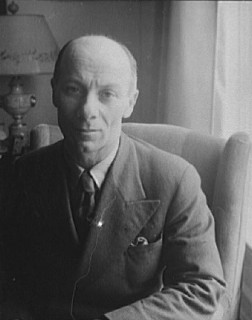
Robert John Gibbings, Irish artist and author most noted for his work as a wood engraver and sculptor, and for his books on travel and natural history, is born into a middle-class family in Cork, County Cork on March 23, 1889. Along with Noel Rooke he is one of the founder members of the Society of Wood Engravers in 1920 and is a major influence in the revival of wood engraving in the twentieth century.

Gibbings’ father, the Reverend Edward Gibbings, is a Church of Ireland minister. His mother, Caroline, is the daughter of Robert Day, Fellow of the Royal Society of Antiquaries of Ireland and president of The Cork Historical and Archaeological Society. He grows up in the town of Kinsale where his father is the rector of St. Multose Church.

Gibbings studies medicine for three years at University College Cork before deciding to persuade his parents to allow him to take up art. He studies under the painter Harry Scully in Cork and later at the Slade School of Fine Art and the Central School of Art and Design.

During World War I Gibbings serves in the Royal Munster Fusiliers and is wounded at Gallipoli before eventually being invalided out of the army in 1918. He then resumes his studies in London.

Gibbings is very much at the centre of developments in wood engraving. He is a founder member and leading light of the Society of Wood Engravers, which he sets up with Noel Rooke in 1920. In 1922 he contributes two wood engravings, “Clear Waters” and “Hamrun,” to Contemporary English Woodcuts, an anthology of wood engravings produced by Thomas Balston, a director at Gerald Duckworth & Company and an enthusiast for the new style of wood engravings. In 1923 he receives a commission for a set of wood engravings for The Lives of Gallant Ladies for the Golden Cockerel Press, his most important commission to date at 100 guineas.

Gibbings is working on the wood engravings The Lives of Gallant Ladies when Hal Taylor, the owner of the press, becomes very ill with tuberculosis and has to put it up for sale. He seeks a loan from a friend, Hubert Pike, a director of Bentley Motors, to buy the press. He takes over in February 1924 and owns and runs the press until 1933.

Gibbings illustrates numerous books on travel and natural history, including Charles Darwin’s The Voyage of the Beagle, and writes a series of bestselling river books, notably Sweet Thames Run Softly. He does a huge amount to popularise the subject of natural history, travelling extensively through Polynesia, Bermuda and the Red Sea to gather inspiration for his work.

Gibbings is the first man to draw underwater, the illustrations filling his Penguin classic Blue Angels and Whales. He is one of the first natural history presenters on the BBC.

In September 1955 Gibbings and his wife, Patience, purchase Footbridge Cottage, a tiny beehive of a cottage in Gibbings’s words, in Long Wittenham on the banks of the River Thames. Life there suits him, and he has a period of tranquility that he had not known previously. They live there until he dies of cancer in an Oxford hospital on January 19, 1958. He is buried in the churchyard at Long Wittenham. The grave is marked by a simple headstone featuring his device of a crossed quill and graver, carved by Michael Black, a young sculptor who is a friend of Gibbings.


Leave a comment

Birth of Charlotte Milligan Fox, Composer & Music Collector

charlotte-milligan-fox

Charlotte Milligan Fox, Irish composer and music collector, is born on March 17, 1864 in Omagh, County Tyrone in what is now Northern Ireland.

Milligan is the eldest of eleven children born to Methodist parents Seaton Milligan (1837–1916) and Charlotte Burns (1842–1916), with nine surviving including Alice Milligan and Edith Wheeler. All nine children enroll at Methodist College Belfast which provides a privileged and exceptional education. She studies classical piano and composition at the Royal College of Music in London and the Conservatoires of Frankfurt and Milan. Following her marriage to Charles Eliot Fox in 1892, she settles in London.

In 1904 Fox co-founds with Alfred Perceval Graves the Irish Folk Song Society, an offshoot of the Folk-Song Society formed in 1898. Its aim is to collect and publish Irish airs and ballads, in addition to holding lectures and concerts on the subject. She acts as the society’s honorary secretary. The rules of the Society are collected in volume 4 of the Journal of the Irish Folk Song Society. The subscription is 5 shillings payable every January and committee meetings are held at the Rooms of the Irish Literary Society in London.

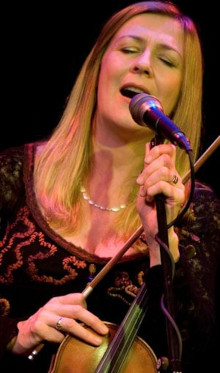
Fox is a musician in her own right and tours Ireland collecting folk songs and airs. She undertakes a series of tours of County Antrim between 1909 and 1910 with her sisters Edith Wheeler and Alice Milligan. The sisters record and transcribe songs by Irish singers, then publish articles and musical scores in The Journal of Irish Folk Song.

In 1910 Fox visits the east coast of the United States where the New York branch of the Irish Folk Song Society is formed. “The Bardic Recital” is produced on March 16 at the National Theatre in Washington, D.C. She collects and arranges the music for the play.

Fox rediscovers Edward Bunting‘s papers, and under the provision of her will they come to Queen’s University Belfast in 1916. From these papers she writes The Annals of the Irish Harpers. The publication of The Annals of the Irish Harpers stimulates a revival of interest in both the Irish harp and Edward Bunting. Alice Milligan nurses her sister prior to Fox’s death in London on March 25, 1916. An obituary of Charlotte Milligan Fox is in The Irish Booklover (1916). The Journal of the Irish Folk Song Society (1917) has a poem in remembrance of Charlotte Milligan Fox. The same issue has a memoir of Fox by Alice Milligan and an appreciation of Fox by Alfred Perceval Graves.

During 2010 and 2011, the Ulster History Circle mounts plaques for famous Ulster figures. Charlotte Milligan Fox and Alice Milligan have a plaque mounted on Omagh Library, 1 Spillar’s Place, Omagh, County Tyrone.