seamus dubhghaill

Promoting Irish Culture and History from Little Rock, Arkansas, USA


Leave a comment

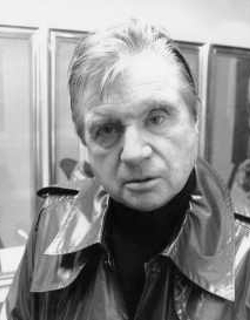
Artist Derek Hill Awarded Honorary Irish Citizenship

arthur-derek-hill

Arthur Derek Hill, English portrait and landscape painter and longtime resident in Ireland, is awarded honorary Irish citizenship by President Mary McAleese on January 13, 1999.

Hill is born at Southampton, Hampshire, on December 6, 1916, the son of a wealthy sugar trader. He first works as a theatre designer in Leningrad in the 1930s and later as an historian. In World War II he registers as a conscientious objector and works on a farm.

Hill’s long association with Ireland begins when he visits Glenveagh Castle in County Donegal to paint the portrait of the Irish American art collector Henry McIlhenny, whose grandfather had emigrated to the United States from the nearby village of Milford, and who subsequently made a fortune from his patent gas meter.

Hill begins to enjoy increased success as a portrait painter from the 1960s. His subjects include many notable composers, musicians, politicians and statesmen, such as broadcaster Gay Byrne, Jerusalem mayor Teddy Kollek and The Prince of Wales. He is also an enthusiastic art collector and traveller, with a wide range of friends such as Bryan Guinness and Isaiah Berlin. Greta Garbo visits Hill in the 1970s, a visit which forms inspiration for Frank McGuinness‘ 2010 play Greta Garbo Came to Donegal.

In 1981, he donates his home, St. Columb’s Rectory, near the village of Churchill, County Donegal, which he had owned since 1954, along with a considerable collection including work by Pablo Picasso, Edgar Degas, Georges Braque, Graham Sutherland, Anna Ticho and Jack Butler Yeats to the State.

An exhibition of his work and personal art collection can be seen at the House and associated Glebe Gallery at Churchill, near Letterkenny. Another collection of his work is held at Mottisfont Abbey. Many of his landscapes portray scenes from Tory Island, where he has a painting hut for years, and starts and then mentors the artists’ community there, teaching the local fishermen how to paint. This leads to the informal but busy “Tory School” of artists such as James Dixon and Anton Meenan, who find that they have the time to paint and use their wild surroundings as a dramatic subject.

Hill is made a CBE in 1997. A Retrospective exhibition is arranged for and by him at the Royal Hibernian Academy in 1998. On January 13, 1999, he is made an honorary Irish citizen by the President of Ireland Mary McAleese.

Arthur Derek Hill dies at the age of 83 at a London hospital on July 30, 2000. He is buried in Hampshire in the South of England with his parents. Memorial services are held for him in Dublin at St. Patrick’s Cathedral, as well as St. James’s Church, Piccadilly, London, and his local Church in Trentagh, County Donegal.


Leave a comment

Birth of Actress Máire O’Neill

maire-oneill

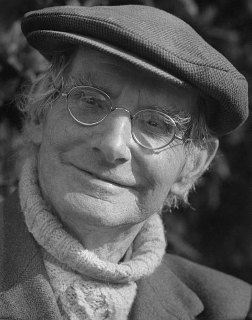
Mary Agnes “Molly” Allgood, actress of stage and film under the stage name of Máire O’Neill, is born at 40 Middle Abbey Street in Dublin on January 12, 1885.

Allgood is one of eight children of compositor George and french polisher Margaret (née Harold) Allgood. Her father is sternly Protestant and against all music, dancing and entertainment, while her mother is a strict Catholic. After her father dies in 1896, she is placed in an orphanage. She is apprenticed to a dressmaker and her brother Tom becomes a Catholic priest.

Maud Gonne sets up Inghinidhe na hÉireann (Daughters of Ireland) in 1900 to educate women about Irish history, language and the arts, and Allgood and her sister Sara join the association’s drama classes around 1903. Their acting teacher, William “Willie” Fay, enrolls them in the National Theatre Society, later known as the Abbey Theatre. Allgood is part of the Abbey Theatre from 1906-1918 where she appears in many productions. In 1904 she is cast in a play by Irish playwright Teresa Deevy called Katie Roche where she plays the part of Margaret Drybone. There are 38 performances in this production.

In 1905 Allgood meets Irish playwright John Millington Synge, and they fall in love, a relationship regarded as scandalous because it crosses the class barriers of the time. In September 1907 he has surgery for the removal of troublesome neck glands, but a later tumour is found to be inoperable. They become engaged before his death in March 1909. Synge writes the plays The Playboy of the Western World and Deirdre of the Sorrows for Allgood.

In June 1911 Allgood marries G. H. Mair, drama critic of the Manchester Guardian, and later Assistant Secretary of the British Department of Information, Assistant Director of the League of Nations Secretariat in Geneva, and head of the League of Nations office in London, with whom she has two children. He dies suddenly on January 3, 1926. Six months later she marries Arthur Sinclair, an Abbey actor. They have two children, but the marriage ends in divorce.

Under her professional name Maire O’Neill, Allgood appears in films from 1930-53, including Alfred Hitchcock‘s film version of Seán O’Casey‘s play Juno and the Paycock (1930). She makes her American debut in New York City in 1914 in the play General John Regan at the Hudson Theatre.

Allgood dies at the age of 66 in Park Prewett Hospital, Basingstoke, England, on November 2, 1952, where she is receiving treatment after being badly burned in a fire at her London home.

Joseph O’Connor‘s 2010 novel, Ghost Light, is loosely based on Allgood’s relationship with Synge.


Leave a comment

Birth of Edward Pakenham, 6th Earl of Longford

Francis Pakenham, 7th Earl of Longford

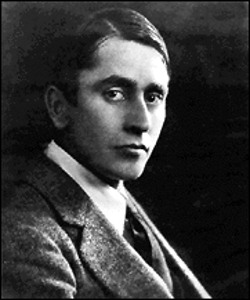
Edward Arthur Henry Pakenham, 6th Earl of Longford and an Irish peer, politician, and littérateur, is born on December 29, 1902. Also known as Eamon de Longphort, he is a member of the fifth Seanad Éireann, the upper house of the Oireachtas, in the 1940s.

Pakenham is the elder son of Thomas Pakenham, 5th Earl of Longford and Mary, Countess of Longford, née Child-Villiers. He is the only one of the Pakenham children on whom his mother dotes, apparently because he is to succeed to the earldom on his father’s death and because he is always in delicate health.

As a pupil at Eton College, where he twice received the Wilder Divinity Prize, Pakenham succeeds to the earldom when his father is killed in action at the Battle of Gallipoli on August 21, 1915. He is an Irish Nationalist since his days at Eton, taking inspiration from the Easter Rising in 1916 and the Russian Revolution of 1917. He learned Irish and adopted the name Eamon de Longphort.

Pakenham becomes an undergraduate at Christ Church, Oxford and meets his future wife, Christine Patti Trew, an Oxford “undergraduette.” They are married on July 18, 1925. His political views make him unpopular at both Eton and Christ Church, where he is famously put in “Mercury,” the pond containing a statue of Mercury in Tom Quad.

Pakenham becomes Chairman of the Gate Theatre in Dublin in 1930 and continues to work for the theatre until 1936, when he founds the Longford Players. His plays include Ascendancy, The Melians, The Vineyard, and Yahoo. An excellent linguist and Classical scholar, he translates Le Bourgeois gentilhomme, Le Malade Imaginaire, L’école des femmes, Tartuffe, Le Barbier de Séville, Agamemnon and Oedipus Rex and adapts the novella Carmilla for the stage.

Pakenham also has several volumes of poetry published, some at the expense of his mother when he is still at Eton, but he is not considered to have been a very good poet.

Pakenham is an Anglo-Catholic who never leaves the Church of Ireland. On November 13, 1946, he is nominated by the Taoiseach, Éamon de Valera, as a member of 5th Seanad Éireann, filling a vacancy caused by the death of Professor William Magennis. He is not re-appointed to the 6th Seanad.

Pakenham often collaborates with his wife with whom he is also responsible for redecorating Pakenham Hall, now Tullynally Castle, in Chinese style. Pakenham Hall is often the scene of gatherings of Oxford-educated intellectuals such as John Betjeman, Evelyn Waugh, and Maurice Bowra.

Edward Pakenham dies without issue on February 4, 1961, and is succeeded by his younger brother Frank. He is buried at Mount Jerome Cemetery in Dublin.


Leave a comment

The Cork Opera House Fire

cork-opera-house-fire-1955

The Cork Opera House is destroyed by fire on December 12, 1955. It is originally built in 1855 and is built on a template that the architect had used for the exhibition buildings at the Irish Industrial Exhibition. Since then, it survives the burning of much of Cork by British forces in 1920.

“The final curtain has fallen. The Cork Opera House is no more. A hundred years of stage history has come to an end. Never had the last moments of any drama, played on this stage, such an audience as last night’s farewell one. In heavy rain, a vast crowd stood silently as flames enveloped a proud landmark in our city. They watched it from the short first burst of fire on its roof until the building crumbled before their eyes.”

So reads the main news in The Cork Examiner on Tuesday, December 13, 1955, after the disastrous fire tore at the heartstrings of the people of Cork, leaving the city without a major theatre for the first time in 250 years. It is the boast of the Opera House that its tradition is continuous. When fighting in the South was at its bitterest, even when most of Cork was burned down, the Opera House kept running, only closing for pantomime rehearsals and in Holy Week. It is during the rehearsals for the forthcoming Christmas pantomime that the fatal fire starts. Fortunately, all people are evacuated, but the building built entirely from wood does not stand a chance from the merciless fire. What begins as an electrical fault, blazes into an inferno within minutes. Soon the skyline of the city is lit up as the fire does its worst.

Ten years later, on February 23, 1963, the tender of Messrs. O’Shea, South Mall is accepted for the rebuilding of the Opera House. A month later the work begins, and the foundation stone is laid by Lord Mayor Seán Casey on June 21, 1963. The citizens watch the building construction with keen interest as the new building gradually takes shape. Finally, the day arrives for the casting aside of hoardings and scaffoldings.

Immediately controversy begins regarding the much-disputed North-Wall. Unfavorable comment and criticism are levelled at the lack of architectural or artistic embellishment on the exterior of the new building and the square, squat tower on top of the roof designed to ease set changing. This is a very natural reaction as the old Opera House had a very special place in the hearts of Corkonians of every generation during its existence. Most of the criticism is uninformed, for few are aware of the difficulties, financially and technically, that the project incurred. Despite the criticism about the exterior appearance, everyone who has an opportunity to inspect the interior of the theatre can find no fault. There is nothing but praise for the design, the decor, the layout of the seating accommodation and, above all, the intimate atmosphere which has been a traditional part of the venerable old building, and which is now faithfully preserved in the new.


Leave a comment

Birth of Irish Novelist Arthur Joyce Lunel Cary

arthur-joyce-lunel-cary

Irish novelist Arthur Joyce Lunel Cary is born in a hospital in Derry, County Londonderry, in what is now Northern Ireland, on December 7, 1888. Shortly after his birth the family moved to London.

Cary is born into an old Anglo-Irish family, and at age 16 he studies painting in Edinburgh and then in Paris. From 1909 to 1912 he is at Trinity College, Oxford, where he reads law. Having joined the colonial service in 1914, he serves in the Nigeria Regiment during World War I. He is wounded while fighting in Cameroon and returns to civil duty in Nigeria in 1917 as a district officer. West Africa becomes the locale of his early novels.

Resolved to become a writer, Cary settles in Oxford in 1920. Although that year he publishes ten short stories in The Saturday Evening Post, he decides he knows too little about philosophy, ethics, and history to continue writing in good conscience. Study occupies the next several years, and it is only in 1932 that his first novel, Aissa Saved, appears. The story of an African girl converted to Christianity but still retaining pagan elements in her faith, it is followed by three more African novels — An American Visitor (1933), The African Witch (1936), and Mister Johnson (1939) — and a novel about the decline of the British Empire, Castle Corner (1938). Childhood is the theme of his next two novels, his own in A House of Children (1941) and that of a cockney wartime evacuee in the country in Charley Is My Darling (1940).

Cary’s trilogy on art begins with the first-person narration of a woman, Sara Monday, in Herself Surprised (1941) and follows with that of two men in her life, the lawyer Tom Wilcher in To Be a Pilgrim (1942) and the artist Gulley Jimson in The Horse’s Mouth (1944), his best-known novel. Monday is portrayed as a warm-hearted, generous woman who is victimized both by the conservative upper-class Wilcher and by the talented but disreputable painter Jimson. The latter character is a social rebel and visionary artist whose humorous philosophy and picaresque adventures in The Horse’s Mouth helped make him one of the best-known characters in 20th-century fiction.

Similarly, Cary’s other trilogy is seen from the vantage of a politician’s wife in A Prisoner of Grace (1952), the politician himself in Except the Lord (1953), and the wife’s second husband in Not Honour More (1955).

In 1952, Cary has some muscle problems which are originally diagnosed as bursitis, but as more symptoms are noted over the next two years, the diagnosis is changed to that of motor neuron disease (known as Lou Gehrig’s disease (ALS) in North America), a wasting and gradual paralysis that is terminal. As his physical powers fail, Cary has to have a pen tied to his hand and his arm supported by a rope to write. Finally, he resorts to dictation until unable to speak, and then ceases writing for the first time since 1912. His last work, The Captive and the Free (1959), first volume of a projected trilogy on religion, is unfinished at his death on March 29, 1957. His short stories are collected in Spring Song (1960).


Leave a comment

Birth of Composer Sir Herbert Hamilton Harty

herbert-hamilton-harty

Sir Herbert Hamilton Harty, composer, conductor, pianist and organist, is born on December 4, 1879, in Hillsborough, County Down.

Harty’s father teaches him the viola, the piano and counterpoint, and, at the age of twelve, he follows his father’s profession and is appointed organist of Magheracoll Church, County Antrim.

Harty takes further posts in his teenage years as a church organist in Belfast and Bray. While in the latter, he comes under the influence of Michele Esposito, professor of piano at the Royal Irish Academy of Music, who encourages him to pursue a career as a piano accompanist. As Bray is only twelve miles from Dublin, Harty is able go into the city to hear an orchestra for the first time in his life.

After his early career as a church organist in his native Ireland, Harty moves to London at about age 20, soon becoming a well-known piano accompanist. The Musical Times calls him “the prince of accompanists.” As a composer he writes throughout his career, many of his works being well received, though few are regularly performed in the 21st century.

In his career as a conductor, which begins in 1904, Harty is particularly noted as an interpreter of the music of Hector Berlioz. From 1920 to 1933 he is the chief conductor of The Hallé symphony orchestra in Manchester, which he returns to the high standards and critical acclaim that it had enjoyed under its founder, Charles Hallé. His last permanent post is with the London Symphony Orchestra, but it lasts only two years, from 1932 to 1934, as Harty does not prove to be a box-office draw. According to a historian of the orchestra, Richard Morrison, Harty is “brutally and hurtfully” dropped in 1934.

During his conducting career, Harty makes some recordings with his orchestras. Shortly after his dismissal by the London Symphony Orchestra, Harty begins to suffer the symptoms of a brain tumor. After surgery which includes the removal of his right eye, he resumes his career until 1940, but the tumour returns to cause his death at the age of 61 in Hove on February 19, 1941. He is cremated, and his ashes are interred in the grounds of Hillsborough parish church, near the front door. There is a separate memorial in the church.


2 Comments

The Opening of the Gaiety Theatre

The Gaiety Theatre, a theatre on South King Street in Dublin off Grafton Street and close to St. Stephen’s Green, opens on November 27, 1871 with John Spencer, the Lord Lieutenant of Ireland, as guest of honour and a double bill of the comedy She Stoops to Conquer and a burlesque version of La Belle Sauvage. Designed by architect Charles J. Phipps and built in under seven months, it specialises in operatic and musical productions, with occasional dramatic shows.

The Gaiety is extended by theatre architect Frank Matcham in 1883, and, despite several improvements to public spaces and stage changes, it retains several Victorian era features and remains Dublin’s longest-established, continuously producing theatre.

Patrick Wall and Louis Elliman purchase the theatre in 1936 and run it for several decades with local actors and actresses. They sell it in 1965, and in the 1960s and the 1970s the theatre is run by Fred O’Donovan and the Eamonn Andrews Studios, until Joe Dowling, former artistic director of the Abbey Theatre, becomes director of the Gaiety in the 1980s. In the 1990s Groundwork Productions take on the lease and the theatre is eventually bought by the Break for the Border Group. The Gaiety is purchased by music promoter Denis Desmond and his wife Caroline in the late 1990s, who undertake a refit of the theatre. The Department of Arts, Sport and Tourism also contributes to this restoration fund.

Performers and playwrights associated with the theatre have been celebrated with hand-prints cast in bronze and set in the pavement beneath the theatre canopy. These handprints include those of Luciano Pavarotti, Brendan Grace, Maureen Potter, Twink, John B. Keane, Anna Manahan, Niall Tóibín and Brian Friel.

The theatre plays host to the 1971 Eurovision Song Contest, the first to be staged in Ireland, during the Gaiety’s centenary year. Clodagh Rodgers, a contestant in that particular contest, later presents her RTÉ television series The Clodagh Rodgers Show from the theatre in the late 1970s.

The Gaiety is known for its annual Christmas pantomime and has hosted a pantomime every year since 1874. Actor and director Alan Stanford directs both Gaiety productions of Snow White and Sleeping Beauty. Irish entertainer June Rodgers stars in the Gaiety pantomime for years, until she begins to headline the equally established Olympia Theatre panto. The Gaiety shows have included Irish performers that appeal to home grown audiences, including a number of Fair City actors. Pantomimes in the 21st century have included versions of Mother Goose (2006), Beauty and the Beast (2007), Cinderella (2008), Jack and the Beanstalk (2009), Aladdin (2010), Robinson Crusoe (2011/12), Peter Pan (2013/14), Red Riding Hood (2014/15).


Leave a comment

Birth of Painter Richard Rothwell

Richard Rothwell, nineteenth-century Irish portrait and genre painter, is born on November 20, 1800, in Athlone, County Westmeath.

Rothwell is born to James and Elizabeth and is the oldest of their seven children. He trains to become a painter at the Dublin Society‘s school from 1814 until 1820 and wins a silver medal for his work. At the age of 24, he is made a member of the newly established Royal Hibernian Academy and exhibits portraits there from 1826 to 1829. He subsequently moves to London and works as a studio assistant to Thomas Lawrence. When Lawrence dies in 1830, Rothwell completes many of his unfinished works and is poised to become the next foremost portrait painter in Britain and Ireland.

According to Leoneé Ormond’s biographical article in the Grove Dictionary of Art, Rothwell “was at the height of his powers from 1829 to 1831” and he “was much influenced by Lawrence, but he lacked the incisiveness and flair of his master.” According to Fintan Cullen‘s biographical entry in the Oxford Dictionary of National Biography, Rothwell’s “portraits are highly accomplished” and “fine examples” including those of novelist Gerald Griffin and Mary Shelley.

From 1831 to 1834, Rothwell tours Italy to study Italian art so that he can paint history paintings. In the 1830s, he starts painting genre pictures, such as The Poor Mendicants (1837). He usually paints Italian-inspired pieces, such as his semi-nude study Calisto, a work he considers to be his masterpiece. He is furious when the painting is poorly hung at the 1862 International Exhibition in London and publishes a pamphlet on the topic.

When Rothwell returns to London, his popularity has evaporated. He lives and exhibits works in Ireland, the United States, London, and Italy, but he never again achieves the same level of popularity he had reached in the late 1820s.

In 1842 Rothwell marries Rosa Marshall. The couple has several children.  Rothwell contracts a fever while working in Rome and dies on September 13, 1868. Joseph Severn, who painted a portrait of the Romantic poet John Keats, arranges for Rothwell’s funeral and tomb in the Protestant Cemetery, Rome.


Leave a comment

Premiere of “The Quare Fellow”

Brendan Behan’s first play, The Quare Fellow, premieres at the Pike Theatre in Dublin on November 19, 1954, to critical success. The title is taken from a Hiberno-English pronunciation of queer.

The Quare Fellow is initially offered to Dublin’s Abbey Theatre but is turned down. The play has its London première in May 1956 at Joan Littlewood‘s Theatre Workshop at the Theatre Royal Stratford East. On July 24, 1956, it transfers to the Comedy Theatre, London. In September 1956 the Abbey Theatre finally performs The Quare Fellow. It has such success that the Abbey’s artistic director, Ria Mooney, pushes the next play back to allow The Quare Fellow to run for six weeks. Its first New York performance is on November 27, 1958, at the Circle in the Square Theatre.

The play is set in Mountjoy Prison, Dublin. The antihero of the play, the Quare Fellow, is never seen or heard but rather functions as the play’s central conceit. He is a man condemned to die on the following day, for an unmentioned crime. Whatever it is, it revolts his fellow inmates far less than that of the Other Fellow, a very camp, almost Wildean, gay man.

There are three generations of prisoners in Mountjoy including boisterous youngsters who can irritate both other inmates and the audience and the weary old lags Neighbour and “methylated martyr” Dunlavin.

The first act is played out in the cramped area outside five cells and is comedic, sometimes rather like an Irish episode of Porridge. After the interval, the pace slows considerably and the play becomes much darker, as the time for the execution approaches. The focus moves to the exercise yard and to the workers who are digging the grave for the soon-to-be-executed Quare Fellow.

The play is a grimly realistic portrait of prison life in Ireland in the 1950s, and a reminder of the days in which homosexuality was illegal and the death penalty relatively common. The play is based on Behan’s own prison experiences, and highlights the perceived barbarity of capital punishment, then in use in Ireland. The play also attacks the false piety in attitudes to sex, politics and religion.

The Auld Triangle“, a song from the opening of the play, has become an Irish music standard and is known by many who are unaware of its link to The Quare Fellow.

In 1962 the play is adapted for the screen by Arthur Dreifuss and stars Patrick McGoohan, Sylvia Syms and Walter Macken. Although the film receives some favourable reviews, it is not regarded as a faithful adaptation of the play.


Leave a comment

Birth of Landscape Painter Francis Danby

Francis Danby, Irish painter of the Romantic era, is born near Killinick, County Wexford, on November 16, 1793. His imaginative, dramatic landscapes are comparable to those of John Martin. Danby initially develops his imaginative style while he is the central figure in a group of artists who have come to be known as the Bristol School. His period of greatest success is in London in the 1820s.

The death of Danby’s father in 1807 causes the family to move to Dublin. He begins to practice drawing at the Royal Dublin Society‘s schools and, under an erratic young artist named James Arthur O’Connor, he begins painting landscapes. Danby also makes acquaintance with George Petrie.

In 1813 Danby leaves for London together with O’Connor and Petrie. This expedition, undertaken with very inadequate funds, quickly comes to an end, and they have to get home again by walking. At Bristol they make a pause and Danby, finding he can get trifling sums for watercolor drawings, remains there working diligently and sending pictures of importance to the London exhibitions. There his large oil paintings quickly attract attention.

Around 1819, Danby becomes a member of the informal group of artists which become known as the Bristol School, taking part in their evening sketching meetings and sketching excursions visiting local scenery. He remains connected with members of the Bristol School for about a decade, even after leaving Bristol in 1824.

The group initially forms around Edward Bird, and Danby eventually succeeds Bird as its central figure. The Bristol artists, particularly the amateur Francis Gold, are also important in influencing Danby towards a more imaginative and poetical style. George Cumberland, another of the amateurs, has influential London connections. In 1820 when Danby exhibits The Upas Tree of Java at the British Institution, Cumberland uses his influence to promote its favourable reception. Danby’s atmospheric work An Enchanted Island, successfully exhibited in 1825 at the British Institution and then back in Bristol at the Bristol Institution, is in turn particularly influential on other Bristol School artists.

The Upas Tree of Java (1820) and The Delivery of Israel (1825) bring him his election as an Associate Member of the Royal Academy of Arts. He leaves Bristol for London, and in 1828 exhibits his Opening of the Sixth Seal at the British Institution, receiving from that body a prize of 200 guineas.

In 1829 Danby’s wife deserts him, running off with the painter Paul Falconer Poole. Danby leaves London, declaring that he will never live there again. For a decade he lives on the Lake Geneva in Switzerland, becoming a Bohemian with boat-building fancies, painting only occassionaly. He later moves to Paris for a short period of time. He returns to England in 1840.

Francis Danby lives his final years at Exmouth in Devon, where he dies on February 9, 1861. Along with John Martin and J. M. W. Turner, Danby is considered among the leading British artists of the Romantic period.