The government and military consistently claim the men died while clearing a land mine although it is generally believed, especially in Republican circles, that the five men were victims of a horrific war crime which saw them shot and strapped to a mine by an Irish Free State death squad.
The victims of the shocking and notorious incident are Michael Courtney Jnr, Eugene Dwyer, Daniel Shea, John Sugrue and William Riordan, all from the Waterville area. The five men are held by Free State troops at Bahaghs workhouse, then in use as a temporary detention centre, following their arrest for irregular activities several days earlier.
In the early hours of March 12 members of the Free State’s Dublin Guard, who had been tasked with defeating irregular forces in Kerry and who had earned a notorious reputation for brutality in the process, arrive at the workhouse and select five of the twenty men in custody there. The five are then brought to an irregular roadblock several miles away where the IRA men are, allegedly, shot in the legs before being laid over a land mine which is detonated by the Free state troops blowing the five men to pieces.
The Bahaghs killings are part of a series of deaths which begin with another horrific incident on March 6, 1923, in which five soldiers are killed by a booby trap bomb at the village of Knocknagoshel. Immediately after the Knocknagoshel incident the Free State commander for Kerry, Maj. Gen. Paddy O’Daly, previously head of Michael Collin‘s Dublinassassination squad, authorises the use of republican prisoners to clear mined roads, as “the only alternative left us to prevent the wholesale slaughter of our men.” Two separate incidents occur the following day in which thirteen additional Republican prisoners are killed by land mines.
When questioned in the Dáil by Labour Party leader Thomas Johnson, the National Army’s commander-in-chief, Gen. Richard Mulcahy, says he accepts the findings of a military court of inquiry which exonerates the troops of all wrongdoing in any of the incidents.
In recent years, previously confidential state papers have been released which shed new light on one of Kerry’s most terrible episodes. The evidence in the file sharply contradicts the official line on the killings and paints a damning portrait of Free State army brutality and subsequent government efforts to cover up three massacres perpetrated by its troops in Kerry.
Further documents prove that a top official in the Ministry of Home Affairs utterly dismissed the findings of a military inquiry into the killings, but the cabinet of the day took no action and rejected all claims for compensation by relatives.
Nothing has ever been done in relation to the three Kerry massacres after the executive council decision and, to this day, the true events of Bahaghs, Countess Bridge and, most famously, Ballyseedy have never been revealed.
(Pictured: Irish Republican Army Brigade in County Kerry)
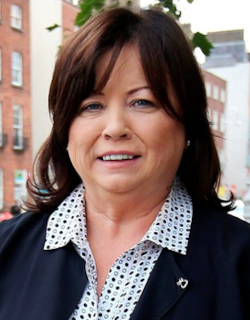
Harney studies economics at Trinity College Dublin and is the first woman auditor of the College Historical Society, popularly referred to as “The Hist.” After graduation she spends a year teaching mathematics and economics at Castleknock College in Dublin. In 1977, her political career begins when she is appointed to Seanad Éireann, becoming the youngest ever member of the Seanad in Ireland. She continues to make history throughout here 34-year career in politics.
Ever ready to challenge the status quo, Harney’s entire political life is characterised by a passion for reform, innovation and enterprise. After seventeen years in government, she reaches the height of her career. She serves as Tánaiste from 1997 to 2006, becomes the first woman to lead a political party in Ireland and holds many important ministerial portfolios. She is also notably the longest serving female Government minister and Teachta Dála (TD) in the state’s history.
Harney’s work in environmental protection leads to major improvement in the air quality in Dublin as she tackles the problem of smog in the capital by making Dublin a smokeless fuel city. By founding the Environmental Protection Agency (EPA) she leads a unified response among all 31 local authorities in their responsibility towards licensing and monitoring environmental standards. She establishes the first recycling initiative in the country.
During her tenure as Minister for Enterprise, Trade and Employment (1997-2004), Harney promotes indigenous industry and foreign direct investment in the country and leads many trade and investment missions to various parts of the world, working with both national and international companies. She works particularly to enhance the presence of high technology companies both indigenous and international in Ireland. She leads a major drive to increase employment in Ireland through a combination of activation measures for unemployed people and improving incentives for people to take up jobs. She pioneers the first ever major programme of investment in basic research in Ireland through Science Foundation Ireland based on internationally peer-reviewed projects. She establishes the Personal Injuries Assessment Board, avoiding unnecessary legal intervention and in turn dramatically cuts the cost of insurance in Ireland, notably in the areas of Employers’ and Public Liability and Motor Insurance. She strengthens competition law and enforcement and establishes an independent office for corporate enforcement.
As Minister for Health and Children (2004-2011), Harney begins the move towards a unified Health Service by replacing a number of politically-dominated Health Boards with the Health Service Executive (HSE). She establishes an independent Health Information and Quality Authority (HIQA) to provide an independent inspector of the delivery of health services in Ireland and leads the reform of cancer services by consolidating them to eight specialist centres. She introduces “Fair Deal,” a financing mechanism to deliver nursing home care for the elderly. She reforms the regulation of the Medical and Pharmacy Professions, introducing statutory requirements to maintain professional competence. She introduces, for the first time, a lay majority on the boards of the Medical Council of Ireland and of the Pharmaceutical Society of Ireland (PSI).
Harney wins a number of awards as employment minister and for promoting science and innovation. She serves as president of the Council of the European Union during Irish presidency and is a member of International Women’s Forum. She is the youngest member of Seanad Éireann and the longest serving female member of Dáil Éireann. She is the first woman leader of an Irish political party and the first woman to be Tánaiste. She is twice selected as Woman of the Year in Ireland. She is awarded an honorary doctorate from Trinity College Dublin in recognition of her contributions as Minister to science and innovation.
Harney is now the director of a number of private companies in pharmaceutical, healthcare, technology and financial services sectors. She provides business advisory services to a range of companies and organisations. She also undertakes speaking engagements, particularly in a business context. She is the current Chancellor of the University of Limerick.
Glennon is named Coadjutor Archbishop of St. Louis on April 27, 1903. He succeeds Archbishop Kain as the fourth Archbishop of St. Louis upon the latter’s death on October 13 of that year. Realizing the Cathedral of St. Louis can no longer accommodate its growing congregation, he quickly begins raising funds for a new cathedral, the cornerstone of which is later laid on October 18, 1908.
Glennon opens the new Kenrick Seminary in 1915, followed by the minor seminary in Shrewsbury. He delivers the eulogy at the funeral of Cardinal James Gibbons and is appointed an Assistant at the Pontifical Throne on June 28, 1921. He opposes British rule in Ireland and supports the leaders of the Easter Rising. He is an outspoken opponent of divorce, condemns gambling games, and prohibits dancing and drinking at church-sponsored events. He sometimes throws the opening ball for the St. Louis Cardinals, but does not play any sports himself, once saying, “I once tried golf, but I so disfigured the scenery that I never played again, in fear of public indignation and reprisal.”[2]
Despite a rather popular tenure, as Archbishop of St. Louis Glennon opposes racial integration in the city’s Catholic schools, colleges, and universities. During the early 1940s, many local priests, especially Jesuits, challenge the segregationist policies at the city’s Catholic schools. The St. Louis chapter of the Midwest Clergy Conference on Negro Welfare, formed locally in 1938, pushes the all-female Webster College to integrate first. However, in 1943, Glennon blocks the enrollment of a young black woman at the college by speaking privately with the Kentucky-based superior of the Sisters of Loretto, which staffs the college. When approached directly by pro-integration priests, he calls the integration plan a “Jesuit ploy,” and quickly transfers one of the complaining priests away from his mission at an African American parish.
The Pittsburgh Courier, an African American newspaper with national circulation, discovers Glennon’s intervention and runs a front-page feature on the Webster incident. In response, Father Claude Heithaus, professor of Classical Archaeology at the Catholic Saint Louis University, delivers an angry sermon accusing his own institution of immoral behavior in its segregation policies. Saint Louis University begins admitting African American students that summer when its president, Father Patrick Holloran, manages to secure approval from the reluctant Archbishop Glennon. Nevertheless, St. Louis maintains one of the largest numbers of African American parishes and schools in the country.
During the return trip to the United States, Glennon stops in his native Ireland, where he is received by PresidentSeán T. O’Kelly and TaoiseachÉamon de Valera. While in Dublin, he is diagnosed with uremic poisoning and dies on March 9, 1946, ending a 42-year tenure as Archbishop. The Cardinal’s body is returned to St. Louis and then buried at the Cathedral.
The day after five Free State soldiers are killed by a booby trap bomb while searching a republican dugout at the village of Knocknagoshel, Paddy Daly, in command of the Free State’s Kerry forces, announces that prisoners will be used in the future to clear mined roads.
In Ballyseedy, nine Republican prisoners – Pat Buckley, John Daly, Pat Hartnett, Michael O’Connell, John O’Connor, George O’Shea, Tim Tuomey, James Walsh and Steven Fuller – are driven to the remote Ballyseedy Wood near Ballyseedy Cross to be executed. The troops make sure that they are ‘all fairly anonymous, no priests or nuns in the family, those that’ll make the least noise.’ As they are being loaded into the lorry, the Free State Army guards ask them if they would care to smoke, telling them it will be their last cigarette.
They are taken to a remote location near the banks of the River Lee, where a large log stretches across the Castleisland Road. The Republicans are all tied to the log alongside a mine which is then detonated. Several of the Republicans, however, survive the initial explosion. The Free State soldiers then proceed to throw a number of grenades and shoot at them ensuring they are dead.
They succeed in killing all but Steven Fuller. The force of the explosion hurls him clear across the road. Falling, dazed, but conscious that he is alive and unhurt he quickly realises that the blast had even burst apart the cords used to tie him. As the soldiers come out from their cover after the detonation he crawls along the shelter of the ditch into the river at the roadside, escaping to a nearby Irish Republican Army (IRA) hideout. For days afterwards the birds are eating human flesh off the trees at Ballyseedy Cross.
Eight anti-treaty volunteers and prisoners are killed in the explosion. The exact details are murky. Official government sources state that the men were killed while clearing mines left by anti-treaty forces. Conversely anti-treaty sources claim the men were attached to a mine which was then detonated in retaliation for an explosion the previous day which killed six government forces in Knocknagashel, 30 miles away. If anyone believes that the explosion at Ballyseedy had been an accident, they would have trouble explaining the deaths of nine more Republican prisoners in the next four days.
There is no way of knowing how many men had been killed. Eight prisoners of war are murdered that night at Ballyseedy Cross. Nine coffins are sent back to Tralee the next day. What are the people of Tralee to do with that ninth coffin? A mother wails, “But my son was six feet tall. How can he come home to me in such a small coffin?” They will not let the mother open that coffin.
For three generations following the Irish Civil War, the country is riven by the pain and anguish of the violent conflict. Ballyseedy is just one example of the horrors inflicted.
(From: Stair na hÉireann | History of Ireland, https://stairnaheireann.net/, Photo: Ballyseedy Massacre Monument, Curraghmacdonagh, County Kerry)
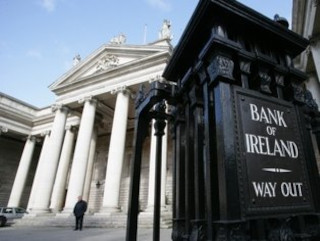
The 2009 Bank of Ireland robbery is a large robbery of cash from the College Green cash centre of the Bank of Ireland in Dublin on February 27, 2009. It is the largest bank robbery in the Republic of Ireland‘s history. Criminals engage in the tiger kidnapping of a junior bank employee, 24-year-old Shane Travers, and force him to remove €7.6 million (US$9 million) in cash from the bank as his girlfriend and two others are held hostage.
Late on the night of February 26, Travers, whose father is a member of the Garda Síochána based at Clontarf, Dublin, is alone watching television at the home of his girlfriend near Kilteel, County Kildare. The woman and her mother are out shopping together. When they arrive home with the five-year-old nephew of Travers, six heavily built masked men, dressed in black and carrying handguns, jump from the bushes.
The family is held overnight by the armed gang, during which time their mobile phones are confiscated, and Travers’ girlfriend is hit across the back of her head with a vase by one of the men. As dawn approaches, the gang orders all but Travers to enter their dark Volkswagen Golf family car. They are then bound together and driven to Ashbourne, County Meath.
The bank employee is given a mobile phone, ordered to collect €20, €50, €100 and €200 bank notes from his workplace, and supplied with a photograph of the rest of the family at gunpoint to convince his colleagues that their lives are under threat. Travers drives to Dublin in his red Toyota Celica, acquires the cash through the assistance of colleagues who viewed the photo, and carries the money out of the building in four laundry bags. He takes it to Clontarf Road railway station, whereupon he surrenders the cash and his sports car to a waiting gang member.
Travers then enters a Garda station, the first point at which Gardaí are notified that the robbery had taken place. One hour after this, the other family members succeed in freeing themselves and walk to a nearby garda station. Travers’ girlfriend requires immediate medical treatment for a head wound she received during a struggle with her captors, and the family are reported to be “traumatised” by their ordeal. Travers’s car is later found burned out in an apartment block near Tolka House Pub in Glasnevin.
Minister for Justice, Equality and Law ReformDermot Ahern says “proper procedures” were not followed during the course of the robbery, saying that Gardaí should have been contacted before the money had left the bank. He also questions how such a large sum of money could be taken as a result of one man being targeted.
The bank’s chief executive, Richie Boucher, appointed just two days earlier, immediately writes to all his staff to remind them that protocol should be followed in the event of future robberies, saying “Our priority is always for the safety and well-being of all staff. I am sure this incident will raise concerns. Our best defence is to follow tried and tested procedures. I would ask everybody to remind themselves of these procedures, which are there to protect you, your families and the bank.”
€1.8 million of the stolen cash is recovered and seven people are arrested by Gardaí in a number of incidents on February 28. A house in Phibsborough is sealed off and ten more houses are searched. A total of five cars and one van are seized by Gardaí. One of the men is arrested following a chase along the M50 motorway near the Navan road, with two bales of packed cash being discovered in his car. Four other men are arrested in a car in Monk Place and in Great Western Square, Phibsborough, and two more are seized in a house on Great Western Villas, Phibsborough. Cash is also found in a car in Phibsborough.
The six men and one woman are believed to be members of a well-known gang from Dublin’s north inner city and have connections to a major Dublin gangland figure. On March 2, those arrested appear before the High Court to challenge the lawfulness of their detention, viewing the warrants issued by the District Court the day before as invalid. That day, two of those arrested are released.
An unidentified bank employee is arrested on January 28, 2010, based on suspicion that the robbery had been an inside job.
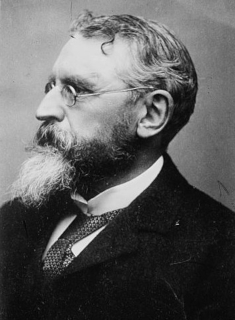
O’Brien, who is for several years second only to Charles Stewart Parnell among Irish Nationalist leaders, is born on October 2, 1852, in Mallow, County Cork. He is perhaps most important for his Plan of Campaign (1886), by which Irish tenant farmers withhold all rent payments from landlords who refuse to lower their rents and instead pay the money into a mutual defense fund on which evicted tenants can draw.
O’Brien shares his primary education with a townsman with whom he is later to have a close political connection, CanonPatrick Augustine Sheehan of Doneraile. He enjoys his secondary education at the Cloyne diocesan college, which results in his being brought up in an environment noted for its religious tolerance. He greatly values having had this experience from an early age, which strongly influences his later views for the need of such tolerance in Irish national life.
A journalist from 1869, O’Brien is appointed editor of the Irish Land League’s weekly United Ireland by Parnell in 1881. In October of that year the British authorities suppress the paper and put O’Brien in Kilmainham Gaol in Dublin, along with Parnell and others. There he draws up a No Rent Manifesto, which, when read at a Land League meeting, results in the outlawing of the League. Released from prison in 1882, he resumes the editorship of United Ireland, and in 1883 he is elected to the British House of Commons, remaining there until 1895. His “plan of campaign” is disavowed by Parnell but nonetheless stirs up fierce agitation. To suppress the movement, the British government passes the Criminal Law and Procedure (Ireland) Act 1887, under which O’Brien is jailed again.
For some time following the Katherine O’Shea divorce case (1889–90), in which Parnell is correspondent, O’Brien attempts to mediate between the Parnellites and their opponents, although he sides with the majority in rejecting Parnell’s continued leadership of the Irish Home Rule struggle. In 1902 he supports the Land Conference, which secures agreement between landlords and tenants’ representatives and results in George Wyndham‘s Land Purchase Act (1903), which is designed to turn Irish tenant farmers into occupying owners.
Retiring from political life, O’Brien contents himself with writing and declines Éamon de Valera‘s offer to stand for Fianna Fáil in the 1927 general election. He dies suddenly at the age of 75 on February 25, 1928, while on a visit to London with his wife. His remains rest in Mallow, and one of the principal streets in the town bears his name to this day. His head-bust overlooks the town Council’s Chamber Room and one of his finest portraits hangs in University College Cork.
Kiely is born in Dromore, County Tyrone on August 15, 1919, the youngest of six children. In 1920, the family moves from Dromore to Omagh. After living for a short time in Castle Street and Drumragh, the family finally settles in St. Patrick’s Terrace in the Gallows Hill area of Omagh. This area is to be a lasting inspiration for Kiely.
Kiely begins to feel the urge to become a writer during his teenage years. He has a keen interest in the work of George Bernard Shaw, H. G. Wells and Jonathan Swift. In 1936, after completing his education at Mount St. Columba Christian Brothers School in Omagh, he goes to work as a sorting clerk in the Omagh Post Office.
However, Kiely soon realises that the post office will not provide him with the life of the scholar which he so desires. In the spring of 1937, he leaves Omagh and begins a new life in Emo Park, Portarlington, County Laois, where he decides to train as a Jesuit priest. His life as a Jesuit is not meant to be for, exactly a year later, in the spring of 1938, he suffers a serious spinal injury, which results in a lengthy stay in Cappagh National Orthopaedic Hospital in Finglas, Dublin. During his hospitalisation, he is given plenty of time to think about the course his life has already taken, and about a course it might take. He also realises that he lacks a vocation to the priesthood and abandons his training as a Jesuit.
When Kiely gets out of hospital in 1939, he returns to Omagh to recover from his back problem. The following year, he begins working as a part-time journalist in the weekly Catholic Standard newspaper. In 1943, he graduates from National University of Ireland with a B.A. in History and Letters.
In 1945, Kiely begins working for the Irish Independent, where he is employed as a journalist and critic. In 1950, he joins The Irish Press as a literary editor. In 1964, he moves to the United States where, over a period of four years, he is a Writer-in-Residence at Emory University, visiting professor at the University of Oregon, and Writer-in-Residence at Hollins College (Virginia). In 1968, he returns to Ireland. In the spring of 1976, he is Distinguished Visiting Professor at the University of Delaware. He continues to receive acclaim for his writing and journalism, a career which spans over six decades, receiving the Award for Literature from the Irish Academy of Letters. By now, he is one of Ireland’s best-known writers. In 1996, he is named Saoi of Aosdána, the highest honour given by the Arts Council of Ireland.
Kiely visits Omagh in 2001 which is marked by the unveiling of a plaque outside his childhood home on Gallows Hill by Omagh’s Plain Speaking Community Arts group. Every September an event is held in Omagh called The Benedict Kiely Literary Weekend to celebrate his many achievements.
The last sketch by artist Jack B. Yeats, drawn while he lay dying in a Dublinnursing home, sells at auction in London on February 8, 2011, for £5,760. Roundabout Ponies far exceeds its estimate of £1,500- £2,000 at the inaugural Irish Sale at Bonhams, the New Bond Street fine art auctioneers.
The pen-and-ink drawing on writing paper, which measures just over 5 inches by 4 inches, is sold by a family who had inherited it from the matron of the Portobello Nursing Home. The artist had presented the sketch to Teresa O’Sullivan, with whom he had become friendly, two days before he died on March 28, 1957.
Bonhams says the picture had attracted considerable interest because it was the last work done by Yeats and described it as “a little gem [which] exhibits the unique artistic vitality he had right to the end.”
The sketch is bought by an unnamed “private London buyer.” The auction is the first test of the international demand for Irish art in 2011 and the overall results are disappointing. Among the unsold works are the two highest-priced paintings: The Cat Among the Stars, an oil-on-board, also by Jack B. Yeats, and Image of Francis Bacon No. 18, a watercolour by Louis le Brocquy.
Commenting afterwards, Penny Day, the County Laois-born head of Irish Art at Bonhams, says, “We have made a start in the toughest time imaginable and have had mixed results, but I am pretty confident we will be able to sell all the pictures that did not sell in the auction with post-sale deals.”
(From: “Jack B Yeats’ deathbed sketch sells for three times it estimate” by Michael Parsons, The Irish Times, February 10, 2011)
Robert William Gary Moore, Northern Irish musician, most widely recognised as a singer, songwriter, and virtuoso rock and blues guitarist, dies of a heart attack on February 6, 2011, in Estepona, Spain.
In a career dating back to the 1960s, Moore plays with musicians including Phil Lynott and Brian Downey during his teenage years, leading him to memberships of the Irish bands Skid Row and Thin Lizzy, and British band Colosseum II. Moore shares the stage with such blues and rock musicians as B. B. King, Albert King, Jack Bruce, Albert Collins, George Harrison, and Greg Lake, as well as having a successful solo career. He guests on a number of albums recorded by high-profile musicians.
Moore is born in Belfast, Northern Ireland on April 4, 1952. He starts performing at a young age, having picked up a battered acoustic guitar at the age of eight. He gets his first quality guitar at the age of 14, learning to play the right-handed instrument in the standard way despite being left-handed.
At the age of 16, aiming to become a musician, he moves to Dublin. Moore’s greatest influence in the early days is guitarist Peter Green of Fleetwood Mac who is a mentor to Moore when performing in Dublin. Other early musical influences are artists such as Albert King, Elvis Presley, Eric Clapton, The Shadows, and The Beatles. Later, having seen Jimi Hendrix and John Mayall’s Bluesbreakers in his hometown of Belfast, his own style develops into a blues-rock sound that becomes the dominant form of his career in music.
In Dublin, Moore joins the group Skid Row with Noel Bridgeman and Brendan “Brush” Shiels. It is with this group that he earns a reputation in the music industry, and his association with Phil Lynott begins.
Moore moves to England in 1970 and in 1973, under the name “The Gary Moore Band,” he releases his first solo album, Grinding Stone. Grinding Stone receives “Album of the Year” accolades on KTAC-FM/Seattle–Tacoma, Washington, in 1974.
In 1974 he joins Thin Lizzy after the departure of founding member Eric Bell. From 1975 to August 1978, he is a member of Colosseum II. In 1977, Moore rejoins Thin Lizzy, first as a temporary replacement for Brian Robertson, and on a permanent basis a year later.
Gary Moore dies of a heart attack in his sleep at the age of 58 during the early hours of February 6, 2011. At the time, he is on holiday with a girlfriend at the Kempinski Hotel in Estepona, Spain. Moore is laid to rest in St. Margaret’s Churchyard, Rottingdean, East Sussex, England, in a private ceremony with only family and close friends in attendance.
Doonican is the youngest of eight children of Agnes (née Kavanagh) and John Doonican. He is from a musical family and plays in his school band from the age of six. His father dies in 1941, so he has to leave De La Salle College Waterford to get factory jobs fabricating steel and making orange and grapefruit boxes. He begins to perform in his hometown, often with his friend Bruce Clarke, and they have their first professional engagement as a duo in 1947. He appears in a summer season at Courtown, County Wexford. He is soon featured on Irish radio, sometimes with Clarke, and appears in Waterford’s first-ever television broadcast.
In 1951 Doonican moves to England to join the Four Ramblers, who tour and perform on BBC Radio shows broadcast from factories, and on the Riders of the Range serials. He also begins performing at United States Air Force bases. The Ramblers support Anthony Newley on tour and, recognising Doonican’s talent and potential as a solo act, persuades him to leave the singing group and go solo. He is auditioned for radio as a solo act and appears on the radio show Variety Bandbox. Soon he has his own radio show and is performing in concerts and cabaret. In the late 1950s, he becomes one of the artists managed by Eve Taylor, the self-described “Queen Bee of Show Business,” who remains his manager until her death.
After seeing Doonican in cabaret in London in 1963, impresario Val Parnell books him to appear on Sunday Night at the Palladium. As a result of his performance, Bill Cotton, then Assistant Head of Light Entertainment at BBC Television, offers Doonican his own regular show. The TV shows are produced by Yvonne Littlewood and run for over 20 years. The shows feature his relaxed crooner style, sitting in a rocking chair wearing cardigans or jumpers, sometimes performing comedic Irish songs as well as easy listening and country material on which he accompanies himself on acoustic guitar. Being variety shows, his TV programmes give a number of other performers, such as Dave Allen, early exposure. Regular guests include Bernard Cribbins, Bob Todd, the Norman Maen Dancers, the Mike Sammes Singers, and the Kenny Woodman Orchestra. At its height The Val Doonican Show, which features both American and British acts, has 20 million viewers. In the United States, The Val Doonican Show airs on ABC on Saturday evenings from June 5 to August 14, 1971.
Behind the scenes, Doonican is described as “a perfectionist who knew his limitations but always aimed to be ‘the best Val Doonican possible.'” He is sometimes compared to American singer Perry Como, though he claims his main influence is Bing Crosby. He appears on Royal Variety Performance three times. On December 31, 1976, he performs his hit song “What Would I Be” on BBC One‘s A Jubilee of Music, celebrating British pop music for Queen Elizabeth II‘s impending Silver Jubilee.
Doonican wins the BBC Television Personality of the Year award in 1966. He is the subject of This Is Your Life in 1970. Eamonn Andrews meets him at the 18th green of the South Herts Golf Club as Doonican plays a round of golf. He writes two volumes of autobiography, The Special Years (1980) and Walking Tall (1985).
Doonican officially retires in 1990 but is still performing in 2009. He has a second home in Spain and is a keen golfer and a talented watercolour painter. Another hobby he enjoys is cooking. In June 2011, he is recognised by the Mayor of Waterford bestowing on him “The Freedom of the City.”






 seamus dubhghaill