seamus dubhghaill

Promoting Irish Culture and History from Little Rock, Arkansas, USA


Leave a comment

Birth of Breeda Moynihan-Cronin, Former Labour Party Politician

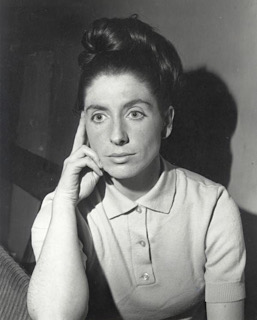
Breeda Moynihan-Cronin (née Moynihan), former Labour Party politician who serves as a Teachta Dála (TD) for the Kerry South constituency from 1992 to 2007, is born in Cork, County Cork, on March 31, 1953.

Although born in Cork, Moynihan-Cronin is a native of KillarneyCounty Kerry. She is educated at St. Brigid’s Secondary School in Killarney, Dominican College Sion Hill in Dublin, and Skerry’s College, Cork. Her father, Michael Moynihan, is a TD for Kerry South from 1981 to 1987 and from 1989 to 1992. She works as a bank official before becoming involved in politics in 1991 when she is elected to Kerry County Council. She is first elected to Dáil Éireann at the 1992 Irish general election as a Labour Party TD for Kerry South, succeeding her father. She is re-elected at every election until 2007.

Moynihan-Cronin holds a number of front bench positions in the Labour Party, including, Spokesperson on Justice, Equality and Law Reform (1997–98), Social, Community and Family Affairs(1998–99), Tourism and Recreation (1999–2002), Social, Community and Family Affairs (2002–03), and Equality and Law Reform (2003–07). She is a former chairperson of the Labour Party.

On October 11, 2005, Moynihan-Cronin announces that she will not stand for re-election at the forthcoming general election due to ill-health. Her decision to retire presents considerable difficulties for the Labour Party to retain her seat, as the party performed poorly at the 2004 Kerry County Council election, failing to elect any councillors within the county. However, on October 28, 2006, she announces that she will stand in the forthcoming general election, having overcome her health difficulties. However, she fails to retain her seat.

In June 2011, Moynihan-Cronin returns to politics when she is co-opted onto Kerry County Council to represent the Killarney area, filling the seat left vacant when Marie Moloney is elected to the 24th Seanad. In 2013, she stands down from the council and is replaced by Sean Counihan.


Leave a comment

Birth of Johnny Duhan, Irish Singer-Songwriter

Johnny Duhan, Irish singer-songwriter, is born in Limerick, County Limerick, on March 30, 1950.

Duhan is one of nine children, one of whom dies before Johnny is born. His parents, John and Christina (née Murphy), raise their family on Wolfe Tone Street, Limerick. He attends the Christian Brothers national school on Sexton Street but hates it.

Duhan is writing songs from an early age. He leaves school and starts his career as the 15-year-old frontman of the Irish beat group Granny’s Intentions. After success in Limerick and Dublin, where he shares a flat with Phil Lynott and Gary Moore, the band moves to London and is signed to the Deram Records record label. His girlfriend, Maureen, leaves her job as a teacher to travel to London with him. The band releases several singles and one album, Honest Injun, with Duhan composing eight of the band’s eleven songs. Granny’s Intentions melds a bluesy rock sound with a down-home earthiness. Moore joins the band at the age of 17, and Pete Cummins (later of The Fleadh Cowboys) is also a member. The band has their sights set on a further move to Los Angeles, California, but the deal falls through. The band disbands before Duhan is twenty-one. While in London he is offered a job as lead singer with St. James Gate, but that deal falls through as well.

Duhan and Maureen leave London and return to Maureen’s parents’ farm in Woodlawn, outside Loughrea, County Galway, and he leaves the music industry to start writing folk songs, poetry, and prose.

From there, the couple set about a different kind of life, with Duhan growing his own vegetables and embarking on a path as a solo singer-songwriter in earnest. He has a cry in his voice that is plaintive and highly distinctive. An advance from Arista Records allows him and Maureen to put a deposit on their first home in Sandyvale Lawn on Headford Road in Galway. Later they move to Barna, where he enjoys a quiet but very orderly, some might say even regimental life: rising daily before dawn, attending daily Mass, reading vociferously and enjoying his daily swims on his beloved Silver Strand. He climbs Diamond Mountain most Sundays and Carrauntoohil annually.

Just Another TownTo the LightFlame, and The Voyage are some of Duhan’s work. These align with the first four sections of his poetic autobiography, To The Light. His songs have been performed by Christy MooreThe DublinersMary Black, and other Irish and international singers. Christy Moore states that his song “The Voyage” has been performed at over a million weddings worldwide.

His daughters, Ailbhe and Niamh, describe Duhan as a kind, gentle and selfless soul. He is a true family man. Headstrong in his beliefs, he never follows trends. He spends his life seeking meaning, delving deeply into philosophical and theological works. Mornings are devoted to reading and studying his favourite writers, making meticulous notes on whether he agrees or disagrees with their thoughts, and more importantly why. He teaches all his children to play music, and Niamh is now a music teacher.

Duhan drowns on November 12, 2024, while swimming off Silver Strand in Galway. His funeral Mass takes place at St. Killian’s New Inn Church in County Galway. He is laid to rest at Killaan Cemetery, Woodlawn.


Leave a comment

Death of Charles Villiers Stanford, Composer & Conductor

Sir Charles Villiers Stanfordcomposer, music teacher, and conductor, dies at his home in London on March 29, 1924, following a stroke almost two weeks earlier.

Stanford is born in Dublin into a well-off and highly musical family on September 30, 1852, the only son of John James Stanford, a prominent Dublin lawyer, Examiner to the Court of Chancery in Ireland and Clerk of the Crown for County Meath, and his second wife, Mary (née Henn). He is educated at the University of Cambridge before studying music in Leipzig and Berlin. He is instrumental in raising the status of the Cambridge University Musical Society, attracting international stars to perform with it.

While still an undergraduate, Stanford is appointed organist of Trinity College, Cambridge. In 1882, at the age of 29, he is one of the founding professors at the Royal College of Music, where he teaches composition for the rest of his life. From 1887 he is also Professor of Music at Cambridge. As a teacher, he is skeptical about modernism and bases his instruction chiefly on classical principles as exemplified in the music of Johannes Brahms. Among his pupils are rising composers whose fame go on to surpass his own, such as Gustav Holst and Ralph Vaughan Williams. As a conductor, he holds posts with the Bach Choir and the Leeds Triennial Music Festival.

Stanford composes a substantial number of concert works, including seven symphonies, but his best-remembered pieces are his choral works for church performance, chiefly composed in the Anglican tradition. He is a dedicated composer of opera, but none of his nine completed operas has endured in the general repertory. Some critics regard him, together with Hubert Parry and Alexander Mackenzie, as responsible for a renaissance in music from the British Isles. However, after his conspicuous success as a composer in the last two decades of the 19th century, his music is eclipsed in the 20th century by that of Edward Elgar as well as former pupils.

In September 1922, Stanford completes the sixth Irish Rhapsody, his final work. Two weeks later he celebrates his 70th birthday and thereafter his health declines. On March 17, 1924, he suffers a stroke and dies on March 29 at his home in London, survived by his wife and children. He is cremated at Golders Green Crematorium on April 2 and his ashes are buried in Westminster Abbey the following day.

Stanford’s last opera, The Travelling Companion, composed during World War I, is premiered by amateur performers at the David Lewis Theatre, Liverpool in 1925 with a reduced orchestra. The work is given complete at Bristol in 1928 and at Sadler’s Wells Theatre, London, in 1935.

Stanford receives many honours, including honorary doctorates from University of Oxford (1883), University of Cambridge (1888), Durham University (1894), University of Leeds (1904), and Trinity College, Dublin (1921). He is knighted in 1902 and in 1904 is elected a member of the Prussian Academy of Arts, Berlin.


Leave a comment

Birth of Michael Holohan, Irish Composer

Irish composer Michael Holohan is born on March 27, 1956, in Drumcondra, Dublin.

Holohan receives his primary and secondary education at the O’Connell School on North Richmond Street, Dublin. He then attends University College Dublin (UCD), earning his BA in 1978, and Queen’s University Belfast (QUB). He studies composition with Jane O’LearyEric Sweeney and Seóirse Bodley. He also attends master classes by Olivier MessiaenIannis XenakisPierre BoulezLuciano Berio and Helmut Lachenmann in France.

Holohan is chairman of the Association of Irish Composers from 1987 to 1989 and is later appointed chairman of the Droichead Arts Centre in Drogheda, County Louth, where he has lived since 1983.

Holohan is elected to Aosdána in 1999 and later serves as a member and chair of its Toscaireacht, its ten-member steering body.

Holohan has composed for solo instrument, ensemble, orchestra, stage, choir and voice, and has collaborated with poets including Seamus HeaneyTomas TranströmerIvan Lalić and Paul Durcan.

Holohan’s music has been performed and broadcast in Ireland and internationally. Career highlights in Drogheda include performances of Cromwell (1994), The Mass of Fire (1995) and No Sanctuary (1997).

Holohan’s work has been reviewed in Irish music journalism. Writing in The Journal of Music following a National Concert Hall composers’ showcase, Benedict Schlepper-Connolly describes The Dream of Aengus as demonstrating Holohan’s “orchestrational control,” and characterises Portrait of the Artist as “captivating,” while noting the influence of Irish traditional music within his choral writing.

Regional press coverage has also documented performances and recordings of his work, including reports on the release of the piano album Fields of Blue and Whiteand concerts of his music in Drogheda.


Leave a comment

Death of Máirtín Ó Direáin, Irish Poet

Máirtín Ó Direáin, Irish poet, dies in Dublin on March 19, 1988.

Ó Direáin is born on November 26, 1910, in Inis Mór, Aran Islands, County Galway, the eldest of the three sons and one daughter of Seán Ó Direáin, a small farmer, and Mairéad Ní Dhireáin (widow of Labhrás Mac Confhaola), both of Inis Mór. His father dies in 1917, aged forty-three, leaving his mother to rear a family of four on less than 20 acres of land. Educated at the local national school, he leaves Aran to join the post office in Galway in January 1928.

Ó Direáin is involved with the Irish language movement during the late 1920s and 1930s, during which time he is secretary of the Galway branch of the Gaelic League and writes for and acts on the stage of the Taibhdhearc Theatre. In July 1937 he moves to Dublin to work as a clerical officer in the Department of Posts and Telegraphs and later in the Department of Education. Inspired by a lecture given by the poet and Gaelic scholar Tadhg Ó Donnchadha, he begins writing poetry in Irish in the winter of 1938. Unlike Ó Donnchadha, however, who advocates and practises a poetry based on traditional Gaelic metres, he favours a rhythmically measured form of free verse. He publishes his first collection, Coinnle geala, in 1942, quickly followed by Dánta aniar (1943), both at his own expense. In 1949, a volume of selected poems, Rogha dánta, is one of the first books published by the newly founded Irish language publisher Sáirséal agus Dill.

These books herald not just a new voice, but a new generation of modern poets in Irish, distinct in outlook and ambition from most of the revivalist poets who precede them. The leading figures of this generation, Ó Direáin, Seán Ó Ríordáin and Máire Mhac an tSaoi, all publish poems in various Irish language journals during the 1940s, though the latter two poets do not produce their first collections until the 1950s. Ó Direáin’s poetry is less thematically and linguistically adventurous than that of Ó Ríordáin (whom he nevertheless defends in print against the dogmatic criticism of Ó Ríordáin’s traditionalist detractors), and less consciously indebted to tradition than that of Mhac an tSaoi.

Ó Direáin’s early lyrics celebrate the traditional virtues of island life and mourn its passing because of increasing modernisation and population shifts toward the major cities. One of the best known of these poems, “Stoite“ (“Uprooted”), sets up a gloomy contrast between a traditional life in tune with nature’s rhythms, destined to endure in communal memory, and the fruitless urban existence of the contemporary office worker. This theme of uprootedness haunts his work throughout the 1950s and early 1960s. During this period he publishes his two most significant collections, Ó Mórna agus dánta eile (1957) and Ár ré dhearóil (1962), both of which take their titles from ambitious, and uncharacteristically long, poems. Ó Mórna, a poem of which there are two published versions, charts the colourful life of a proud, amoral tyrant, a figure based loosely on traditional accounts of a hard-living nineteenth-century landlord’s agent from Aran. Ó Mórna represents, in the poet’s view, the timeless Übermensch whose will to power is boundless and awesome. Ár ré dhearóil (“Our wretched era”) is an excoriation of the loveless hedonism of a middle-class Dublin populated by lonely bachelors, bitter spinsters, and immoral, though free-spirited and well-educated, women. The poem, which ends with an ominous if oblique warning against the threat of nuclear annihilation, bears some comparison with T. S. Eliot‘s “The waste land.” Eliot, Ezra Pound and W. B. Yeats are key influences alongside the canonical figures of seventeenth- and eighteenth-century Gaelic poetry. His strong social conscience is registered early on in poems such as “An Stailc“ (“The strike“). His life-long adherence to traditional nationalist values and his scornful attitude to what he perceives as the mercenary embrace of American-style capitalism in the changing economic climate of Ireland in the 1960s is most trenchantly voiced in poems such as “Éire ina bhfuil romhainn” (“Ireland in times ahead”) and “Mar chaitheamar an choinneal” (“As we spent the candle”).

Ó Direáin is an active member of the Irish language literary groups Cumann na Scríbhneoirí and Cumann na hÉigse, and publishes essays on a variety of topics throughout the 1940s and 1950s in magazines such as Ar AghaidhAn GlórComhar and Feasta. A selection of mostly autobiographical essays, Feamainn Bhealtaine (1961), casts valuable light on the Aran of his youth and early adulthood. He is registrar for the National College of Art (1948–55), where he gets to know such prominent artists as Seán KeatingMaurice MacGonigal and Nano Reid, whose artwork adorns Rogha Dánta. From 1955 until his retirement from the civil service in 1975, he is a staff officer in the Department of Education. Cloch choirnéil appears in 1966, followed by Crainn is cairde (1970) and Ceacht an éin (1979).

The most comprehensive selection of Ó Direáin‘s poetry, Máirtín Ó Direáin: dánta 1939–1979 (1980), edited by Eoghan Ó hAnluain, covers all but two final volumes, Béasa an túir (1984) and Craobhóg dán (1986), neither of which add much of major significance to his oeuvre. A bilingual selection, Selected poems: Tacar dánta (1984), includes translations by Tomás Mac Síomóin and Douglas Sealy. In 1969, Ó Direáin delivers a series of lectures on his own work at University College Dublin (UCD), later edited by Eoghan Ó hAnluain as Ón ulán ramhar siar (2002), which provides useful background information on many individual poems. He receives the Irish American Cultural Institute (IACI) award in 1967 and is made a member of the Irish Academy of Letters in 1970. In 1977, he receives an honorary Doctor of Letters degree from the National University of Ireland and the Ossian-Preis of the Freiherr von Stein Foundation in Hamburg. He is a full-time visiting lecturer in the department of Irish at University College Galway for the academic year 1978–79. He was also a member of Aosdána.

Ó Direáin marries Áine Colivet, a Dubliner of French extraction, in 1945. Their only child, Niamh, is born in 1947. He dies in Dublin on March 19, 1988.

A selection of Ó Direáin’s essays, An chuid eile díom féin, edited by Síobhra Aiken, and a bilingual volume of poems Máirtin Ó Direáin: Selected poems/ Rogha dánta, translated by Frank Sewell, are both published in 2018.

(From: “Ó Direáin, Máirtín” by Caoimhín Mac Giolla Léith, Dictionary of Irish Biography, www dib.ie, October 2009, last revised March 2021)


Leave a comment

Death of Donogh O’Malley, Politician & Rugby Union Player

Donogh Brendan O’Malley, Irish Fianna Fáil politician and rugby union player, dies suddenly in Limerick, County Limerick, on March 10, 1968. He serves as Minister for Education (1966-68), Minister for Health (1965-66) and Parliamentary Secretary to the Minister for Finance (1961-65). He also serves as a Teachta Dála (TD) for the Limerick East constituency (1954-68). He is best remembered as the Minister who introduces free secondary school education in the Republic of Ireland.

O’Malley is born on January 18, 1921, in Limerick, one of eight surviving children of Joseph O’Malley, civil engineer, and his wife, Mary “Cis” (née Tooher). Born into a wealthy middle-class family, he is educated by the Jesuits at Crescent College and later at Clongowes Wood CollegeCounty Kildare. He later studies at University College Galway (UCG), where he is conferred with a degree in civil engineering in 1943. He later returns to Limerick, where he works as an engineer before becoming involved in politics.

O’Malley plays rugby at provincial level for MunsterLeinster and Connacht and at club level for Bohemians and Shannon RFC. His chances at an international career are ruined by the suspension of international fixtures during World War II. It is at a rugby match in Tralee that he first meets Dr. Hilda Moriarty, who he goes on to marry in August 1947.

Although O’Malley runs as a Fianna Fáil candidate, he is born into a politically active family who supports Cumann na nGaedheal until a falling-out with the party in the early 1930s. He first becomes involved in local politics as a member of Limerick Corporation. He becomes Mayor of Limerick in 1961, the third O’Malley brother to hold the office (Desmond from 1941-43 and Michael from 1948-49). He is a strong electoral performer, topping the poll in every general election he runs in.

O’Malley is first elected to Dáil Éireann as a Fianna Fáil TD for Limerick East at the 1954 Irish general election. Fianna Fáil is not returned to government on that occasion. He spends the rest of the decade on the backbenches. However, his party is returned to power in 1957. Two years later, the modernising process begins when Seán Lemass takes over from Éamon de Valera as Taoiseach. Lemass introduces younger cabinet ministers, as the old guard who has served the party since its foundation in 1926 begin to retire.

In 1961, O’Malley joins the government as Parliamentary Secretary to the Minister for Finance. He is part of a new, brasher style of politician that emerges in the 1960s, sometimes nicknamed “the men in the mohair suits.” It is expected that this generation of politician, born after the Irish Civil War, will be a modernising force in post-de Valera Ireland.

Although his sporting background is in rugby and swimming, it is association football which O’Malley gets involved in at a leadership level, becoming President of the Football Association of Ireland despite never having played the sport.

Following Fianna Fáil’s retention of power in the 1965 Irish general election, O’Malley joins the cabinet as Minister for Health. He spends just over a year in this position before he is appointed Minister for Education, a position in which he displays renowned dynamism. Having succeeded Patrick Hillery, another dynamic young minister, he resolves to act swiftly to introduce the recommendations of an official report on education.

As Minister for Education, O’Malley extends the school transport scheme and commissions the building of new non-denominational comprehensive and community schools in areas where they are needed. He introduces Regional Technical Colleges (RTCs), now called Institutes of Technology, in areas where there is no third level college. The best example of this policy is the University of Limerick, originally an Institute of Higher Education, where O’Malley is credited with taking the steps to ensure that it becomes a university. His plan to merge Trinity College Dublin and University College Dublin arouses huge controversy, and is not successful, despite being supported by his cabinet colleague Brian Lenihan. Access to third-level education is also extended, the old scholarship system being replaced by a system of means-tested grants that give easier access to students without well-off parents.

Mid-twentieth century Ireland experiences significant emigration, especially to the neighbouring United Kingdom where, in addition to employment opportunities, there is a better state provision of education and healthcare. Social change in Ireland and policies intending to correct this deficit are often met with strong resistance, such as Noël Browne‘s proposed Mother and Child Scheme. As a former Health Minister, O’Malley has first-hand experience of running the department which had attempted to introduce this scheme and understood the processes that caused it to fail, such as resistance from Department of Finance and John Charles McQuaid. This influences his strategy in presenting the free-education proposal.

Shortly after O’Malley is appointed, he announces that from 1969 all education up to Intermediate Certificate level will be without cost, and free buses will bring students in rural areas to their nearest school, seemingly making this decision without consulting other ministers. However, he does discuss it with Lemass. Jack Lynch, who, as Minister for Finance, has to find the money to pay for the programme, is not consulted and is dismayed at the announcement.

By announcing the decision first to journalists and on a Saturday (during a month when the Dáil is in recess), the positive public reaction tempers resistance to the idea before the next cabinet meeting. O’Malley’s proposals are hugely popular with the public, and it is impossible for the government to go back on his word.

Some Irish commentators consider that O’Malley’s extension of education, changing Ireland from a land where the majority are schooled only to the age of 14 to a country with universal secondary-school education, indirectly leads to the Celtic Tiger boom of the 1990s-2000s when it is followed for some years by an extension of free education to primary degree level in university, a scheme that is launched in 1996 by the Labour Party and axed in 2009 by Fianna Fáil’s Batt O’Keeffe.

In 1967, O’Malley appoints Justice Eileen Kennedy to chair a committee to carry out a survey and report on the reformatory and industrial school systems. The report, which is published in 1970, is considered ground-breaking in many areas and comes to be known as the Kennedy Report. The Report makes recommendations about a number of matters, including the Magdalene laundries, in relation to which they are not acted upon. The report recommends the closure of a number of reformatories, including the latterly infamous reformatory at DaingeanCounty Offaly.

O’Malley’s reforms make him one of the most popular members of the government. He is affectionately known as “the School Man” for his work in education. His sudden death in Limerick on March 10, 1968, before his vision for the education system is completed, comes as a shock to the public. He is buried with a full Irish state funeral.

Following O’Malley’s death, his widow, Hilda O’Malley, does not run in the subsequent by-election for the seat he has left vacant. It is won narrowly by their nephew Desmond O’Malley. Hilda seeks the Fianna Fáil nomination for the 1969 Irish general election, but Fianna Fáil gives the party nomination to Desmond, as the sitting TD. Hilda runs as an Independent candidate in that election. After what proves a bitter campaign against her nephew, she fails to get the fourth seat in Limerick East by just 200 votes.


Leave a comment

Death of Edith Best, Musician & Founding Member of Feis Ceoil

Edith Best, Irish musician and one of the founding members of the Feis Ceoil, dies in Dublin on March 9, 1950.

Best is born in Dublin on July 11, 1865, the youngest of fourteen children of Dublin merchant, Eldred Oldham, and Annie (née Alker). Two of her siblings are Alice Oldham, the first of nine women to graduate from university with a degree in either Great Britain or Ireland, and Charles Hubert Oldham, first professor of national economics at University College Dublin (UCD). She attends the Royal Irish Academy of Music (RIAM), studying under Margaret O’Hea and Robert Prescott Stewart. She wins the Lord O’Hagan’s prize in 1883. She is one of the first three candidates to win a scholarship to the Royal College of Music, London, in 1883, becoming an associate of the College by competitive examination in 1887. She is a close friend and confidante of the College’s director, Sir George Grove, to which his 514 letters to her from 1883 to 1899, now housed in the Royal College of Music library, testify.

Best returns to the RIAM as a piano teacher in 1887, remaining in that post until 1932. She is the first female teacher in the RIAM listed as holding a diploma in music. She is also an assistant to Michele Esposito as a local centre examiner. She is a founding member of the Feis Ceoil, undertaking large responsibility for its organisation, and it becomes an annual event under her leadership. In 1898, she describes the foundation of the Feis in a paper to the Incorporated Society of Musicians as being inspired to “ultimately do more for the art of music in Ireland than anything which has yet been attempted.” Along with Joseph Seymour and Edward Fournier she visits the Welsh Eisteddfod to compare it with the Feis, and hopes it will become as influential as the Welsh festival. She works with Eoin MacNeill and the Gaelic League to promote the Feis, and to organise prizes. Under her influence, the festival broadens its scope beyond purely Irish music. She serves as the honorary secretary of the Feis Ceoil Association from 1896 to 1905, and vice-president from 1905 to 1950. In 1897, Esposito dedicates his cantata Deirdre to her. She is a founding member of the Dublin Orchestral Society in 1899, and she succeeds Esposito as the director of music at Alexandra College, Dublin, in 1927. She is made an associate of the Royal Dublin Societyin 1892, and fellow of the RIAM in 1938.

In 1906, she marries Richard Irvine Best. At the time of their marriage, she is 41, and he is 34. He states that “neither he nor his wife had any illusions about each other.” She dies at the age of 84 at her home in Dublin. She is buried in Dean’s Grange Cemetery in DeansgrangeDún Laoghaire–RathdownCounty Dublin


Leave a comment

Birth of Actress Nora-Jane Noone

Irish actress Nora-Jane Noone is born in Galway, County Galway, on March 8, 1984. In 2020, The Irish Times ranks her 47th on its list of the greatest Irish film actors of all time. She makes her screen debut in her breakthrough role film The Magdalene Sisters (2002), and has since been nominated three times at the IFTA Film & Drama Awards for her work in three films: The Descent (2005),  Savage (2009) and Wildfire (2020).

Noone’s other credits include Doomsday (2008), Ella Enchanted (2004), The Ipcress File (2022), and Hidden Assets (2023).

Noone grows up in Upper Newcastle, Galway. She trains for two years at the Performing Arts School in Galway, and is a proficient musician (piano to Grade 7 level) and dancer. Her previous acting roles before starting her acting career, are in school and amateur productions and pantomime.

Noone graduates in 2004 from NUI Galway with a degree in Science, and then moves to London.

Noone makes her professional film debut playing Bernadette in the Peter Mullan written and directed film The Magdalene Sisters (2002). The film wins the Best Film prize in the 2002 Venice Film Festival, and is nominated as Best British Picture at the British Academy Film Awards. For her performance as Bernadette, she is nominated for British Newcomer of the Year at the 2004 London Film Critics’ Circle Awards, alongside Mullan, who wins best director and best film of the year.

In 2005, Noone is nominated for Best Supporting Actress in a Feature Film for her role as Holly in The Descent (2005) at the 3rd Irish Film & Television Awards. She is nominated in 2010 for Best Actress in a Supporting Role Film at the 7th Irish Film & Television Awards for her role in the film Savage (2009).

In 2008, Noone co-stars in Doomsday, directed by Neil MarshallSpeed Dating and Ella Enchanted. Other work includes the short films News for the Church written and directed by Andrew McCarthy and The Listener, directed by Michael Chang. She also records Walking at Ringsend for BBC Radio 4. In 2008, she appears in Insatiable.

Noone also appears in The Descent Part 2The Day of the Triffids and The Runaway and she co-stars in episodes 1–6 in season one of Jack Taylor. In 2013 she also begins writing a film short.

In 2020, Noone receives a nomination Best Actress in a Leading Role Film at the 17th Irish Film & Television Awards for her performance as Lauren in Wildfire. In 2022, she is involved in the relaunch of The Ipcress File, as Dr. Karen Newton.

In 2023, Noone returns to Ireland as Detective Sergeant Claire Wallace in the RTÉ crime series Hidden Assets.

In 2023, Noone moves back to live in Galway while filming Hidden Assets. She and her husband, fellow actor Chris Marquette, have a daughter in 2020. This is one reason that she decides to return to Ireland.


Leave a comment

The Arrest of George “The Penguin” Mitchell

Irish drug baron and gangster George “The Penguin” Mitchell is arrested in Amsterdam on March 5, 1998, after a joint operation between Irish and Dutch police in which he is caught stealing five million pounds worth of computer parts.

Originally from Drimnagh, Dublin, Mitchell has an older brother Patrick, who dies in January 2020. He is a cousin of Gay Mitchell and Jim Mitchell.

Mitchell starts as a driver for Jacob’s but gets involved in robberies with associates of Martin Cahill.

In 1988, Mitchell is convicted of stealing a large amount of cattle drench and is jailed for five years. While in prison he becomes interested in the illegal drug trade and within a few years of his release he is the largest supplier of illicit drugs in the country.

In the 1990s Mitchell is arrested in Luton, Bedfordshire, England, by British police while in the possession of £575,000, a downpayment for drugs. The money is seized but he is released. In 1995, the Garda drug squad raids a house in Lucan, Dublin, and discovers an ecstasy processing plant believed to have been set up by Mitchell. In 1996, his associate, Johnny Doran, is caught with £500,000 worth of cannabis at M50 at Castleknock, Dublin. His gunman, Michael Boyle, is caught after a botched murder attempt in London, leaving him feeling vulnerable. Concerned that the Gardaí are focusing on him, he moves the centre of his operations to Amsterdam. Rumors surface that he had fled the country after being placed on an Irish Republican Army (IRA) death list, though this claim is later refuted.

Mitchell is arrested by Dutch police on March 5, 1998, after £5 million worth of computer equipment originating from Hewlett Packard in Kildare, County Kildare, is stolen from a lorry near Schiphol Airport. He is later sentenced to 30 months in prison after Dutch authorities rule he is the ringleader in the robbery. He claims in court that he is the victim of a “set up” by Irish police, who had tipped off Dutch authorities about the robbery, after he had refused to become an informant.

In 2015, Mitchell approaches Herman-Johan Xennt about setting up an encrypted phone business. He has known Xennt since at least 1998, when he was arrested for handling the stolen computer parts. Xennt had been accused of buying stolen computer parts from Mitchell. It is also claimed during a 2020 German court case that Mitchell loaned Xennt the equivalent of €700,000 in 1995 to buy a 20,000-square-foot former NATO bunker on the outskirts of the southern Netherlands town of Kloetinge, which was then used to host the CyberBunker Internet service provider (ISP).

Mitchell has had links with the gangs led by Christy Kinahan and Gerry Hutch but after the Regency Hotel attack he makes it clear to the Kinahan gang that he does not want to be dragged into their feud.

In February 2023, German police announce that Mitchell is one of five major suspects behind the Exclu network.


Leave a comment

Birth of Gordon Elliott, Racehorse Trainer

Gordon Elliott, a County Meath-based National Hunt racehorse trainer, is born on March 2, 1978. After riding as an amateur jockey, he takes out a trainer’s licence in 2006. He is 29 when his first Grand National entry, the 33 to 1 outsider Silver Birch, wins the 2007 race. In 2018 and 2019 he wins the Grand National with Tiger Roll, ridden by Davy Russell and owned by Gigginstown House Stud, the first horse since Red Rum to win the race twice. In 2018 he also wins the Irish Grand National, with General Principle. On two occasions, in 2017 and 2018, he is the top trainer at the Cheltenham Festival.

With little family background in racing, Elliott is sometimes described as Irish racing’s great “blow-in.” The son of a panel beater, he grows up in Summerhill, County Meath, and enters the racing world at the age of thirteen, working for trainer Tony Martin on weekends and holidays. He takes out a licence as an amateur jockey when he is sixteen and rides on the racecourse and in point-to-points. His first winner on the racecourse comes on Caitriona’s Choice in a bumper at Ballinrobe Racecourse. He goes on to ride a total of 200 point-to-point winners and 46 winners on the racecourse, with the highlight of his riding career being his win in the Champion INH Flat Race on the Nigel Twiston-Davies-trained King’s Road in 1998. He also has five winners in the United States. Although based mainly with Tony Martin during his riding career, he spends a year in England with trainer Martin Pipe. He retires as a jockey through injury in 2005.

Elliott takes out his trainer’s licence in 2006 and has his first winner at Perth Racecourse on June 11, 2006. On April 14, 2007, he becomes the youngest trainer ever to win the Grand National. The winner, Silver Birch, is owned by Brian Walsh of County Kildare, and ridden by Robbie Power. Despite having won the Grand National, Elliott has not at this stage trained a winner on the track back home in Ireland. The first winner he trains in Ireland is Toran Road at Kilbeggan Racecourse on May 5, 2007.

Although best known for his victories over jumps, Elliott has a major win on the flat in August 2010 when Dirar wins the Ebor Handicap at York Racecourse. He also has victories at Royal Ascot, with Commissioned winning the Queen Alexandra Stakes in 2016 and Pallasator winning the same race in 2018.

Originally based at Capranny Stables, a rented yard in Trim, County Meath, Elliott purchases the 78-acre Cullentra House Farm at Longwood, County Meath in 2011 and builds a training facility with stabling for over 200 horses, gallops, schooling grounds, and an equine pool.

Elliott’s first winner at the Cheltenham Festival as a trainer is Chicago Grey in the National Hunt Chase Challenge Cup in 2011. He wins the 2016 Cheltenham Gold Cup with Don Cossack. In 2017 he is top trainer at the Cheltenham Festival and the following year repeats the achievement.

On April 2, 2018, Elliott wins the Irish Grand National with General Principle, ridden by JJ Slevin. He has saddled 13 of the 30 horses in the field. That year he also wins the Aintree Grand National with his horse Tiger Roll, ridden by Davy Russell and owned by Michael O’Leary’s Gigginstown House Stud, narrowly beating the Willie Mullins runner Pleasant Company. He also trains the third place horse Bless The Wings. He wins the Aintree Grand National again in 2019 with Tiger Roll, only the sixth repeat winner in the race’s history.

On February 28, 2021, the Irish Horseracing Regulatory Board (IHRB) launches an investigation into an image of Elliott, which is widely circulated on social media, sitting on a dead horse and making a peace sign. Elliott confirms the photograph is genuine, issues an apology and says he is fully cooperating with the investigation. The animal rights organisation People for the Ethical Treatment of Animals (PETA) and the British Horseracing Authority condemn the photograph. On March 1, the British Horseracing Authority announces that Elliott will be banned from racing horses in Britain while the investigation in Ireland takes place, although the horses will be allowed to run if transferred to another trainer. It is confirmed that the photo was taken in 2019 and shows a horse owned by Gigginstown House Stud, Morgan, that had died while being ridden on the gallops.

Minister of State for Sport Jack Chambers says that Elliott must be “held fully accountable for his actions” and that the photograph shows “a complete and profound error of judgement.” He tells Morning Ireland that he is “shocked, appalled and horrified” by the image and that it is “really disturbing from an animal welfare perspective.”

On March 2, Cheveley Park Stud announces that they will move their horses Envoi Allen and Quilixios to Henry de Bromhead and Sir Gerhard to Willie Mullins. Elliott’s leading owners, Michael and Eddie O’Leary, through their Gigginstown House Stud, express their support for him despite being “deeply disappointed by the unacceptable photo.”

On March 5, 2021, the IHRB convenes a hearing and bans Elliott from racing for twelve months with six months suspended, leaving him unable to train or attend a race meeting or point-to-point until September. He is also ordered to pay costs of €15,000. He accepts the ruling. Later that month the stable employee who took the photograph is banned for nine months (with seven suspended).

In July 2021, Elliott is featured in a BBC Panorama programme that investigates the fate of British and Irish racehorses who end up in abattoirs. Three of the horses were formerly trained by Elliott, who denies having sent them to the abattoir. He says two of the horses were sent to a horse dealer to be re-homed or humanely euthanised, while the third was given to someone else at the owner’s request. The former horses were bay mare Kiss me Kayf, who had had no success on the racecourse, and bay gelding High Expectations, who had won seven races. The latter horse, owned by Simon Munir and Isaac Souede, was grey gelding Vyta Du Roc, who won the 2016 Reynoldstown Novices’ Chase. Following the programme, Munir and Souede remove their horses from Elliott’s yard.

In 2007, Elliott wins the inaugural Meath Sportsperson of the Year award. He wins the award again in 2018 and 2019.

Elliott is engaged to champion point-to-point rider Annie Bowles, with whom he sets up Cullentra House Stables. The couple separates and Bowles marries Ballarat trainer Archie Alexander.[28]