seamus dubhghaill

Promoting Irish Culture and History from Little Rock, Arkansas, USA


Leave a comment

Death of Tomás de Bhaldraithe, Irish Language Scholar

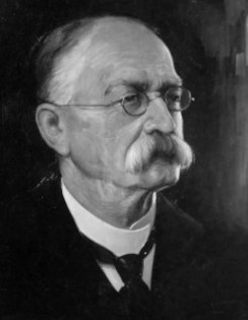
Tomás Mac Donnchadha de Bhaldraithe, Irish scholar notable for his work on the Irish language, particularly in the field of lexicography, dies in Dublin on April 24, 1996. He is best known for his English-Irish Dictionary, published in 1959.

De Bhaldraithe is born Thomas MacDonagh Waldron on December 14, 1916, in Ballincurra, County Limerick. He moves to Dublin with his family at the age of five. He is named after Thomas MacDonagh, one of the signatories of the Proclamation of the Irish Republic, who had been executed after the Easter Rising earlier in the year. He adopts the use of the Irish language version of the name in both Irish and English. He receives his second-level education at Belvedere College in Dublin.

De Bhaldraithe’s stance on standard forms and spellings is supported by Éamon de Valera despite opposition from traditionalists in the Department of Education, and the work is widely seen as an important benchmark in Irish scholarship.

In 1942, de Bhaldraithe is appointed a professor at the Dublin Institute for Advanced Studies (DIAS) in the department of Celtic Studies. In 1960 he is appointed professor of modern Irish language and literature in University College Dublin (UCD), where he develops an impressive archive of material on Irish dialects. Much of the material in this archive is later used as the basis of Niall Ó Dónaill‘s Foclóir Gaeilge-Béarla, published in 1978, for which he is consulting editor. Also during the 1970s, he translates the Irish language diary of Amhlaoibh Ó Súilleabháin into English. It is then published by Mercier Press as “The Diary of an Irish Countryman.”

The language laboratory which de Bhaldraithe sets up in UCD is the first of its kind in any university in Ireland. His interest in seanchas (folklore) leads to his publication of Seanchas Tomás Laighléis in 1977, while his earlier work includes the ground-breaking study of the Cois Fharraige dialect (a variety of Connacht Irish), Gaeilge Chois Fharraige: Deilbhíocht. In later years he works extensively on the definitive Irish dictionary, Foclóir Stairiúil na Nua-Ghaeilge, which remains unfinished when he dies on April 24, 1996, but which is still in progress today.


Leave a comment

Death of T. J. Maher, Irish Politician & Farmers’ Leader

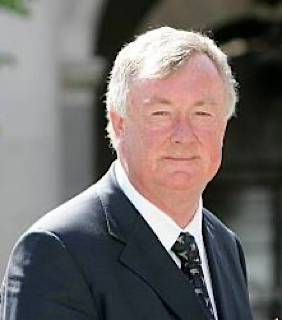
Thomas Joseph “T. J.” Maher, farmers’ leader and public representative, dies on April 19, 2002, at St. Vincent’s Hospital, Dublin, following a short illness.

Maher is born on April 29, 1922, at Castlemoyle, Boherlahan, Cashel, County Tipperary, the seventh child of Thomas Maher, farmer, and his wife Julianne Maher. Raised on the family’s forty-five-acre holding and educated locally at Ardmayle national school and at the Christian Brothers school and VEC school in Cashel, he takes over the farm in 1948 when ill health forces his father into retirement. He subsequently enlarges it to 120 acres. Mechanically adept, a talented sportsman, and a member of Cashel Dramatic Society, he joins Macra na Feirme and is a founder member of the National Farmers’ Association (NFA) in January 1955.

Maher is a member and chairman of the dairy committee of the NFA before coming to national attention through his participation in the historic farmers’ rights march to Dublin led by Rickard Deasy (October 7-19, 1966), part of the militant campaign for fairer agricultural prices and for reform of taxation and rates on farmland. His part in the subsequent three-week sit-down protest and meeting with incoming minister Neil Blaney, at the Department of Agriculture, confirms his reputation as a tenacious campaigner for agricultural causes. In August 1967, shortly after 100 farmers have served prison sentences for withholding rates, he succeeds Deasy as NFA president. Charismatic, articulate, and decisive, he also has a strong sense of personal responsibility, which governs his expectations of colleagues and associates. With exhausting rounds of travel and meetings, he is impossible to ignore and grist to the media mill, with his apparently impromptu but, in reality, carefully rehearsed speeches criticising politicians, parties, bureaucracy, and tardy national policy. He warns of national economic failure unless government and public services take radical modernising initiatives. He is at once nationalist, internationalist, and a revolutionary campaigner for change, an idealistic firebrand who is essentially conservative in social matters.

Maher’s campaign for agriculture is tempered by a wider interest in the social and economic future of Ireland ahead of crucial negotiations for membership of the European Economic Community (EEC). He becomes a household name, gadfly of bureaucrats and hero of farmers. In November 1967 he attends the European Congress of the International Federation of Agricultural Producers in Rome as an advance action prior to taking part in the subsequent negotiations leading to Ireland’s “entry to Europe” in January 1973. He is re-elected president of the NFA in 1970.

Amalgamating the NFA with several of the agricultural producers’ organisations, Maher oversees its reemergence as the Irish Farmers’ Association (IFA) in January 1971 and remains president until 1976. Strengthened by his pro-European leadership, the IFA withstands the counter-propaganda which, in the referendum of May 1972, urges rejection of the EEC on economic, social, and religious grounds. Despite his own moderately conservative social views and unequivocal opposition to abortion in Ireland, his commitment to European integration is not in question.

Maher is a director of prestigious state-sponsored bodies including Bord Bainne, the Irish Sugar Company, and the B & I shipping line. He also serves six terms between 1976 and 1983 as president of the Irish Co-operative Organisation Society (ICOS). Such relative sinecures are balanced by adherence to humanitarian causes that occupy most of his subsequent life. Passionate about practical support for developing countries, he becomes a founder and chairman of Bóthar, the Irish self-help relief agency for supply of livestock overseas. He urges prison reform and supports Amnesty International in its prisoners’ rights campaigns. Running as an independent candidate, he is elected Member of the European Parliament (MEP) for Munster in 1979, beating the strong Fine Gael candidate Alan Dukes. Describing himself as a public representative rather than a politician, he sits in the Liberal and Democratic parliamentary group and continues to fly agricultural and other kites as a non-party deputy. Typically, he criticises the scale of Irish embassies abroad, suggesting alternative teams of trade and tourism personnel. He advocates fairer agricultural policies towards developing countries in spite of prevailing European attitudes of self-interest, and urges the transfer of Northern Ireland from British jurisdiction to European protectorate status. At home he seeks all-party consensus on economic recovery from the depressed condition of the mid 1980s, well intentioned and lonely causes that fail to draw significant political support.

Maher’s habit of traveling with tools to unlock sealed hotel windows is an example of his sometimes eccentric practicality. His unsuccessful attempt to win a Dáil seat for Tipperary South in the 1981 Irish general election postpones his return to Ireland, although he is twice reelected an MEP before retiring in 1994. During his time in Strasbourg he is a quaestor of the European Parliament and a member of its committees on rural development, regions and petitions. He advocates decentralisation of power in Ireland while also criticising local authorities for laxity in their commitment to environmental protection.

For all his outspokenness, Maher is widely respected for the courageous positions he adopts. When time permits, he is an avid reader of history. He maintains his rural pastimes, especially attendance at Gaelic sports, where he can test the political pulse of his constituents. Following a short illness, he dies on April 19, 2002, aged 79, at St. Vincent’s Hospital, Dublin. He is buried at Boherlahan cemetery following a Requiem Mass, celebrated by his surviving brother, the Rev. Michael Maher CSSp (a former veterinary surgeon), and his cousin Denis.

Maher marries Elizabeth (Betty) Kennedy from Bansha, near Cashel, on January 8, 1958. They live at Castlemoyle and have one daughter, Julianne, and two sons, Thomas and Denis. His brother James (Jamesie), who predeceases him in October 1975, had been a medical consultant at St. Vincent’s and consultant surgeon to the Irish Rugby Football Union (IRFU).

(From: “Maher, Thomas Joseph” by Patrick Long, Dictionary of Irish Biography, http://www.dib.ie, October 2009)


Leave a comment

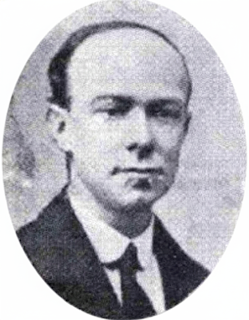
Death of Laurence Ginnell, Politician, Lawyer & Member of Parliament

Laurence GinnellIrish nationalist politicianlawyer and Member of Parliament (MP) of the House of Commons of the United Kingdom of Great Britain and Ireland, dies in the United States on April 17, 1923. He serves as member of the Irish Parliamentary Party (IPP) for North Westmeath at the 1906 United Kingdom general election. From 1910 he sits as an Independent Nationalist and at the 1918 United Kingdom general election in Ireland he is elected for Sinn Féin.

Ginnell is born in DelvinCounty Westmeath, in 1852, (baptised April 9, 1852) the son of Laurence Ginnell and Mary Monaghan and twin to Michael Ginnell. He is self-educated and is called to the Irish bar as well as the Bar of England and Wales. In his youth, he is involved with the Land War and acts as private secretary to John Dillon.

The last great social and agrarian campaign of the Irish home rule movement, the Ranch War (1906 and 1909), is largely led and organised by Ginnell from the central office of the United Irish League. He is elected an MP in 1906, takes his seat at Westminster and swears allegiance to Edward VII. On October 14, 1906, he launches the “war” at Downs, County Westmeath.

The purpose of the war is to bring relief to the large numbers of landless and smallholders, particularly in the West, who are relatively untouched by the Wyndham Land Act (1903) and by the larger policy of purchase. The strategy that Ginnell pursues is the Down’s Policy, or cattle driving, a proceeding designed to harass the prosperous grazier interests, whose “ranches” occupy large, under populated and under worked tracts. The Down’s Policy is also meant to draw public attention to the scandalous inequalities that survive in the Irish countryside. The conservatives within the home rule leadership are understandably suspicious about the revival of agrarian disturbances, but the mood of the party organisation is hardening in the aftermath of a disappointing devolution bill in May 1907, from the new Liberal government, so that it seems logical to turn to the traditional mechanism for reactivating the national question: agrarian agitation.

Ginnell’s cattle drives begin to tail off after the summer of 1908, and the agitation is finally dissolved with the passage of a 1909 Act by the Liberal Chief Secretary Augustine Birrell that allows the transfer to the Irish Land Commission of farmland by compulsory purchase, which is hailed by the national movement as an historic victory. In reality, the Ranch War involves an implosion within sectors of the Irish Parliamentary Party, as its leadership has not facilitated the working of the Wyndham Land Act in the first place because John Dillon and his like want conflict above victory.

In 1909, Ginnell is expelled from the Irish Parliamentary Party for the offence of asking to see the party accounts after which he sits as an Independent Nationalist. During this time, he is addressed frequently as “The MP for Ireland.” At Westminster, he is highly critical of the British government‘s war policy and its holding of executions of certain participants in the Easter Rising of 1916. On May 9, he accuses British Prime Minister H. H. Asquith, of “Murder” and is forcibly ejected from the Chamber. He visits many of the prisoners who are interned in various prisons in Wales and England.

In 1917, Ginnell campaigns to try to ensure the election of George Noble Plunkett in the North Roscommon by-election in which he defeats the IPP candidate on an abstentionist platform. Following the victory of Éamon de Valera in East Clare, while he is standing for Sinn Féin, on July 10, 1917, Ginnell joins Sinn Féin.

At the Sinn Féin ardfheis in 1917, at which the party is reconstituted as a republican party with de Valera as president, Ginnell and W. T. Cosgrave are elected Honorary Treasurers. He is imprisoned in March 1918 for encouraging land agitation and later deported to Reading Gaol. In the 1918 United Kingdom general election, he is elected as a Sinn Féin MP for the Westmeath constituency by comfortably defeating his IPP challenger. After his release from prison, he attends the proceedings of the First Dáil. Along with fellow TD James O’Mara, he is one of the only TDs to serve as a member in both the House of Commons and Dáil Éireann.

He is one of the few people to have served in the House of Commons and in the Oireachtas. He is appointed Director of Propaganda in the Second Ministry of the Irish Republic. After spending a year as a republican campaigner in Chicago, he is appointed the Representative of the Irish Republic in Argentina and South America by de Valera. He carries out his propaganda work here to distribute copies of the Irish Bulletin and to provide the Sinn Féin version of the conflict during the Irish War of Independence. On August 16, 1921, he returns home to attend the first meeting of the Second Dáil. He travels back to Argentina some months later to serve as the Representative of the Republic there.

Ginnell opposes the Anglo-Irish Treaty that is ratified by the Dáil in January 1922, and is elected as an anti-Treaty Sinn Féin TD at the 1922 Irish general election on the eve of the Irish Civil War.

On September 9, 1922, Ginnell is the only anti-Treaty TD to attend the inaugural meeting of the Provisional Parliament or Third Dáil. Before signing the roll, he says, “I want some explanation before I sign. I have been elected in pursuance of a decree by Dáil Éireann, which decree embodies the decree of May 20, 1922. I have heard nothing read in reference to that decree, nothing but an Act of a foreign Parliament. I have been elected as a member of Dáil Éireann. I have not been elected to attend any such Parliament. Will anyone tell me with authority whether it is…”.

Ginnell is at this point interrupted but resumes by saying that he will sign the roll and take his seat in the Assembly if the Assembly is Dáil Éireann. He is informed he is not allowed raise any such question until a Ceann Comhairle has been elected. He continues to ask questions regardless to which he gets no answer including his question: “Will any member of the Six Counties be allowed to sit in this Dáil?” W. T. Cosgrave moves at this point that he be excluded from the House. Ginnell protests, and he is dragged out by force.

De Valera later appoints Ginnell a member of his “Council of State,” a twelve-member body set up to advise him on the deteriorating situation in the civil war. He returns to the United States soon afterward to serve as the Republic‘s envoy in the country. He orders Robert Briscoe and some of his friends to take possession of the Consular Offices in Nassau Street, New York City, then in the hands of the Irish Free State Government, to obtain the list of the subscribers to the bond drive organized to aid the struggle in the War of Independence. At the time, a court case is ongoing to decide on who has the right to the funds: the newly installed Provisional Government or de Valera, as one of the three trustees among the anti-Treatyites.

Ginnell dies in Washington, D.C. on April 17, 1923, at the age of 71, still campaigning against the Anglo-Irish Treaty.


Leave a comment

Death of Denis Santry, Architect & Cartoonist

Denis Santry, Irish architect and cartoonist, dies in Durban, South Africa, on April 14, 1960. He is a pioneer of animated cartoons in South Africa and the architect of the several prominent structures in Singapore, including the Sultan Mosque and The Cenotaph.

Santry is born in Cork, County Cork, on May 14, 1879, to Denis Santry, Sr., a carpenter and joiner. He studies at the Cork Municipal School of Art from 1894 to 1896 after serving an apprenticeship as a cabinetmaker. In 1895, he also studies at the Crawford School of Art. In 1897, he is articled to architect James Finbarre McMullen. From 1897 to 1898, he studies at the Royal College of Art in London under a Lane scholarship. While he is at the college, he wins the Queen’s prize for freehand drawing. After graduating, he returns to McMullen’s office and works there for the next two years.

Santry comes to South Africa at the end of 1901 due to ill health. He settles in Cape Town and is employed at Tully & Waters, an architectural firm, from 1901 to 1902. He then spends a year working for architect William Patrick Henry Black. In 1903, his cartoons begin to appear in local newspapers and magazines, including the South African Review. He uses the pseudonym “Adam” in his cartoons. He continues to work as an architect until 1910 when he begins working as a cartoonist, as well as a metalworker, sculptor and filmmaker. He then moves to Johannesburg and is employed at the Sunday Times and The Rand Daily Mail as a cartoonist. During World War I, his cartoons are reproduced in several other countries. He becomes a pioneer of animated cartoons in South Africa. He is a member of the Royal Society of Arts and a council member of the South African Society of Artists.

Santry comes to Singapore in 1918 and joins the architectural firm Swan & Maclaren as a partner. While in Singapore, he serves as the architect of several prominent buildings and monuments, including the Sultan Mosque, The Cenotaph, the Maritime Building, the Hongkong and Shanghai Bank Building and the Telok Ayer Chinese Methodist Church. He serves as the first president of the St. Patrick’s Society Singapore, the first president of the Singapore Amateur Boxing Association, the chairman of the Singapore Art Club, a member of the board of control of the Victoria Theatre and Concert Hall, a member of the Censorship Appeal Board and the vice-president of the Straits Settlements Association. He is also a frequent contributor to the Straits Produce, a satirical magazine. He helps to found the Singapore Society of Architects and the Institute of Architects of Malaya and is the founder and the chairman of the Singapore Musical Society. He retires to England in March 1934.

Santry returns to South Africa in 1940. Following the end of World War II, he resumes his practice as a result of lost income caused by the Japanese occupation of Malaya. In 1950, he becomes a member of the Institute of South African Architects. He designs several private houses in Hillcrest, KwaZulu-Natal.

Santry marries Madeline Hegarty in 1904. From 1910 to 1918, he lives in Kleine Schuur on Rhodes Avenue in Johannesburg. The house is designed by prominent architect Herbert Baker. He dies in Durban, South Africa, on April 14, 1960.


Leave a comment

Death of Freeman Wills Crofts, Engineer & Mystery Author

Freeman Wills Crofts FRSA, Irish engineer and mystery author, remembered best for the character of Inspector Joseph French, dies in WorthingWest Sussex, England, on April 11, 1957.

A railway engineer by training, Crofts introduces railway themes into many of his stories, which are notable for their intricate planning. Although Raymond ChandlerAgatha Christie, and authors of the so-called golden age of detective fiction are more famous, he is esteemed by those authors, and many of his books are still in print.

Crofts is born at 26 Waterloo Road, Dublin. His father, also named Freeman Wills Crofts, is a surgeon-lieutenant in the Army Medical Services but dies of fever in Honduras before the young Freeman Wills Crofts is born. In 1883, his mother, Celia Frances (née Wise), marries the Venerable Jonathan Harding, Vicar of Gilford, County Down, later Archdeacon of Dromore, and Crofts is raised in the vicarage at Gilford. He attends Methodist College and Campbell College in Belfast. In 1912, he marries Mary Bellas Canning, daughter of the manager of the Coleraine branch of the Provincial Bank. They have no children.

In 1896, at the age of seventeen, Crofts is apprenticed to his maternal uncle, Berkeley Deane Wise, who is chief engineer of the Belfast and Northern Counties Railway. In 1899, he is appointed Junior Assistant on the construction of the Londonderry and Strabane Extension of the Donegal Railway. In 1900, he becomes District Engineer at Coleraine for the London, Midland and Scottish Railway (LMS) Northern Counties Committee at a salary of £100pa, living at 11 Lodge Road in the town. In 1922, he is promoted to Chief Assistant Engineer of the railway, based in Belfast. He lives at “Grianon” in Jordanstown, a quiet village some six miles north of Belfast, where it is convenient for him to travel by train each day to the railway’s offices at York Road. One of the projects he works on is the design of the “Bleach Green Viaduct” in Whiteabbey, close to his Jordanstown home. This is a significant ten arch reinforced concrete viaduct approved in 1927 and completed in 1934. It carries a new loop line which eliminates the need for trains between Belfast and the northwest to reverse at Greenisland. He continues his engineering career until 1929. In his last task as an engineer, he is commissioned by the Government of Northern Ireland to chair an inquiry into the Bann and Lough Neagh Drainage Scheme.

In 1919, during an absence from work due to a long illness, Crofts writes his first novel, The Cask (1920), which establishes him as a new master of detective fiction. He continues to write steadily, producing a book almost every year for thirty years, in addition to a number of short stories and plays.

Crofts is remembered best for his fictional detective, Inspector Joseph French, who is introduced in his fifth book, Inspector French’s Greatest Case (1924). Inspector French always solves each of the mysteries presented him in a workmanlike, precise manner – this method sets him apart from most other fictional sleuths.

In 1929, Crofts abandones his railway engineering career and becomes a full-time writer. He settles in the village of Blackheath, near Guildford, in Surrey, and a number of his books are set in the Guildford area, including The Hog’s Back Mystery (1933) and Crime at Guildford (1935). Many of his stories have a railway theme, and his particular interest in the apparently unfalsifiable alibi often emphasizes the intricacies of railway timetables. Near the end of his life, he and his wife relocate to Worthing, West Sussex, in 1953, where they live until his death in 1957, the year in which his last book is published.

Crofts also writes one religious book, The Four Gospels in One Story, several short stories, and short plays for the BBC.

Crofts is a member, with Dorothy L. Sayers and Agatha Christie, of the Detection Club which meets in Gerrard Street. In 1939 he is elected a fellow of the Royal Society of Arts.

Crofts is not only a railway engineer and writer, but also an accomplished musician. He is organist and choirmaster in Killowen Parish Church, Coleraine, St. Patrick’s Church, Jordanstown, and the parish church of St. Martin’s in Blackheath.

Crofts is esteemed, not only by his regular readers, but also by his fellow writers of the so-called Golden Age of Detective Fiction. Agatha Christie includes parodies of Inspector French alongside Sherlock Holmes and her own Hercule Poirot in Partners in Crime (1929).

Raymond Chandler describes Crofts as “the soundest builder of them all when he doesn’t get too fancy” (in The Simple Art of Murder). His attention to detail and his concentration on the mechanics of detection makes him the forerunner of the “police procedural” school of crime fiction. However, it has also given rise to a suggestion of a certain lack of flair – Julian Symons describing him as of “the humdrum school.” This may explain why his name has not remained as familiar as other more imaginative Golden Age writers, although he has fifteen books included in the Penguin Books “green” series of the best detective novels and 36 of his books are in print in paperback in 2000.


Leave a comment

Death of Nicholas “Nicky” Rackard, Irish Hurler

Nicholas “Nicky” Rackard, Irish hurler whose league and championship career with the Wexford senior team spans seventeen years from 1940 to 1957, dies from cancer at St. Vincent’s Hospital in Dublin on April 10, 1976. He establishes many championship scoring records, including being the top championship goal-scorer of all time with 59 goals. He is widely regarded as one of the greatest hurlers in the history of the game.

Rackard is born on April 28, 1922, in KillanneCounty Wexford, the eldest son of five boys and four girls born to Robert (Bob) Rackard and Anastasia Doran, who had been married in 1918. He is introduced to sport by his father who had hoped he would become a cricketer. His uncle, John Doran, won an All-Ireland medal as a Gaelic footballer with Wexford in 1918 and it is hurling and Gaelic football that Rackard develops a talent for.

Rackard plays competitive hurling as a boarder at St. Kieran’s College in KilkennyCounty Kilkenny. Here he wins back-to-back Leinster Colleges Senior Hurling Championship medals in 1938 and 1939, however, an All-Ireland medal remains elusive. He later attends University College Dublin (UCD) where he studies to be a veterinary surgeon. In all, his studies take eight years to complete because of his huge commitment to his sporting exploits.

Rackard plays his club hurling with his local Rathnure club and enjoys much success. He wins his first senior county title in 1948. It was Rathnure’s first ever championship triumph. Two years later in 1950 he captures a second county title, a victory which allows him to take over the captaincy of the county senior team for the following year. He wins his third and final county medal in 1955.

Rackard makes his debut on the inter-county scene when he is selected for the Wexford minor panel. He is just out of the minor grade when he is selected for the Wexford senior team in 1940. Over the course of the next seventeen years, he wins two All-Ireland medals as part of the Wexford hurling breakthrough in 1955 and 1956. He also wins four Leinster Senior Hurling Championship medals, one National Hurling League medal and one Leinster Senior Football Championship medal as a Gaelic footballer. He plays his last game for Wexford in August 1957.

By the late 1940s, Rackard is a regular in the full-forward line on the Leinster inter-provincial team. Success comes in the twilight of his career and he claims his sole Railway Cup medal in 1956.

Rackard’s brothers, Billy and Bobby, also experience All-Ireland success with Wexford.

In retirement from playing Rackard becomes involved in team management and coaching. It is with the Wexford senior team that he enjoys his greatest successes as a selector when he helps the team secure the 1968 All-Ireland Senior Hurling Championship title.

Rackard is most famous for his scoring prowess and is the all-time top championship scorer at the time of his retirement from hurling. His private life is marred by periods of excessive drinking, which had started during his university studies, and eventually develops into alcoholism. After quitting drinking completely in 1970, he travels the country as a counsellor with Alcoholics Anonymous. In an interview in The Irish Press in 1975, he details his life as a recovering alcoholic and becomes one of the first sportspeople to break the taboo of alcoholism in Ireland.

Rackard death from cancer at St. Vincent’s Hospital in Dublin on April 10, 1976, sees a huge outpouring of grief among the hurling community. He is posthumously honoured by being named on the Hurling Team of the Century in 1984, however, he is sensationally omitted from the Hurling Team of the Millennium in favour of Ray Cummins. His scoring prowess has also earned him a place on the top ten list of all-time scoring greats. In 2005 the GAA further honours him by naming the Nicky Rackard Cup, the hurling competition for Division 3 teams, in his honour.

In 2006, a Wexford author, Tom Williams, writes a long-overdue biography of Rackard entitled Cuchulainn’s Son – The Story of Nickey Rackard. The same author also pens a now well-known song about Rackard many years earlier. It too is called Cuchulainn’s Son and has been recorded by various artists over the last 20 years and is a lament for the great sportsman.

In Wexford town, there is a statue to commemorate Rackard, erected in 2012.


Leave a comment

Death of John Charles McQuaid, Archbishop of Dublin

John Charles McQuaidC.S.Sp., the Catholic Primate of Ireland and Archbishop of Dublin between December 1940 and January 1972, dies in LoughlinstownCounty Dublin, on April 7, 1973. He is known for the unusual amount of influence he has over successive governments.

McQuaid is born on July 28, 1895, in CootehillCounty Cavan, the eldest son of Eugene McQuaid and Jennie Corry McQuaid. He comes from a medical family, with his father, paternal uncle, sister and half-brother all being doctors. He is educated at St. Patrick’s College, Cavan, followed by Blackrock College in Blackrock, Dublin, which is run by the Holy Ghost Fathers, and the Jesuit Clongowes Wood College. He enters the Holy Ghost novitiate at Kimmage, Dublin, in 1913 and is professed in 1914. He graduates from the University College Dublin (UCD) in 1917 with first-class honors in classics. He continues his postgraduate studies at UCD with a master’s degree and a teaching diploma and subsequently earns a doctorate in theology at the Pontifical Gregorian University in Rome.

Ordained in 1924, the theology in which McQuaid is trained is conservative — strongly neo-scholastic and hostile to modernism and liberalism. His hatred of the French Revolution is expressed in several pastorals and speeches throughout his career. He also regards Protestantism as a fundamental error from which Irish Catholics should be quarantined as much as possible.

Appointed Dean of Studies at Blackrock College, McQuaid becomes a prominent figure in Catholic education and chairs the Catholic Headmasters’ Association for several years. In 1931 he is appointed president of Blackrock College, in which capacity he becomes acquainted with Éamon de Valera, the future Irish Taoiseach whose sons attend the school. In 1936, while drafting a new Irish constitution, de Valera consults McQuaid, although he rejects McQuaid’s draft “One, True Church” clause which states, among other things, that the Catholic Church is the one true church in Ireland.

When McQuaid is appointed Archbishop of Dublin in 1940, the appointment of a priest from the regular clergy causes considerable surprise. Irish government archives reveal that de Valera, as is suspected at the time, presses McQuaid’s claims at the Vatican. However, it is doubtful whether the Vatican needs much persuasion. There is a dearth of potential episcopal talent and McQuaid has an outstanding reputation as a Catholic educationalist.

Once appointed, McQuaid proves to be one of the ablest administrators in the history of the Irish Church. In the first two years of his episcopate, he sets up the Catholic Social Service Conference to alleviate the poverty and distress in Dublin which is aggravated by the war, and the Catholic Social Welfare Bureau to help the thousands of Irish emigrants going to Britain for war work. These two organizations fill a much-needed gap and continue to exist after the war. The expansion of Dublin city and its suburbs during his episcopate requires the building of new churches, schools, and hospitals. Meeting these demands also necessitates a considerable increase in the number of clergies, secular and regular, whose numbers more than double in the period from 1941 to 1972.

Given his previous career, the importance McQuaid assigns to education is not surprising. He is critical of the low priority accorded to education by successive governments and is particularly critical of the poor and pay conditions of teachers. His intervention in the primary teachers’ strike in 1946 is poorly received by the government and marks the souring of his relationship with de Valera. During his episcopate the number of primary schools increases by a third while the number of secondary schools more than double but, as with social welfare, the government increasingly assumes a dominant role in education from the 1960s onwards. Almost immediately after his appointment in 1940, he takes a hardline stand against the attendance of Catholic students at Trinity College Dublin (TCD). The ban lasts until 1970, when the increase in student numbers renders it untenable and he accedes reluctantly.

McQuaid has a formidable list of achievements in health care, especially maternity and pediatric services, physical and mental handicap services, and the treatment of alcoholism. It is ironic, therefore, that the most controversial episode of his career occurs in this area — the Irish hierarchy’s rejection in 1951 of a free mother-and-child health service. This leads to the resignation of the Minister for Health, Dr. Noël Browne, and is a watershed in Church-State relations in Ireland. With Irish tuberculosis and infant mortality statistics ranking among the highest in the world, the hierarchy, and particularly McQuaid, lose considerable support by lining up with the conservative medical establishment to resist efforts at socialized medicine.

From various pastorals that McQuaid issues at the time, it is clear that he does not see the need for the Second Vatican Council. As its deliberations proceed, his unease grows, and he becomes increasingly preoccupied with the issue of episcopal power and independence that he believes are being threatened by the Council. In the areas of liturgical reform, greater lay participation, and ecumenism, he is slow in implementing the Vatican II reforms. His views on ecumenism had always been lukewarm and had led to allegations that he was anti-Protestant. His personality and policies are criticized by a more assertive Dublin laity, but being a shy, reserved man who increasingly feels the isolation of office, he never responds to such comments. In 1968 the reaction to Humanae vitae causes open rebellion in the Dublin diocese, the force of which catches him unaware. His last pastoral as archbishop in 1971 betrays his anger and bemusement at the response to Humanae vitae in Dublin.

At the age of 75, McQuaid submits his resignation to the Vatican, and it is accepted. His resignation is announced in January 1972, when he is replaced by Dermot Ryan. McQuaid dies in Loughlinstown, County Dublin, the following year on April 7, 1973. He is buried in St. Mary’s Pro-Cathedral in Dublin, the seat of the Roman Catholic Archdiocese of Dublin.

McQuaid’s substantial archives are released by the Dublin Diocesan Archives in the late 1990s. In 1999 journalist John Cooney publishes a hostile biography of McQuaid, which makes controversial allegations of sexual abuse against McQuaid. The allegations are based on tenuous evidence gathered by McQuaid’s nemesis from the 1951 Mother and Child controversy, Dr. Noël Browne, who had died in 1997. No corroborating evidence is produced or has since emerged.


Leave a comment

Death of Veronica Dunne, Operatic Soprano & Voice Teacher

Veronica Dunne, Irish operatic soprano and voice teacher also known as Ronnie Dunne, who is described as “an Irish national treasure,” dies on April 5, 2021. After a successful operatic career at the Dublin Opera and the Royal Opera House in London, she focuses on voice teaching in Dublin, where she trains future international singers. The triennial Veronica Dunne International Singing Competition is established in 1995. She receives the National Concert Hall Lifetime Achievement Award in 2014.

Dunne is born in Dublin on August 20, 1927. She is the youngest of three children of a well-to-do family. Her father works as a master builder whose construction firm builds the church in Foxrock, Dublin, in the early 1930s. She begins singing when she is 11 years old. She studies initially in Dublin with Hubert Rooney. She then sells her pony for £125 in order to fund her dream of studying music in Italy. She goes to Rome in 1946 to study with Soldini Calcagni and Francesco Calcatelli. Her family meets with Sarsfield Hogan, the secretary of the Department of Finance at the time, to discuss the issue of her monthly allowance, which would breach foreign exchange controls. Sarsfield permits her to receive the money on the condition that she return to Ireland in the future and teach her young compatriots to sing.

Dunne makes her operatic debut in Dublin in 1948 as Micaëla in Georges Bizet‘s Carmen with the Dublin Grand Opera Society, and appears there in 1949 as Marguerite in Charles Gounod‘s Faust. She wins the Concorso Lirico Milano in 1952, which brings her the role of Mimì in Ruggero Leoncavallo‘s La bohème at the Teatro Nuovo in Milan, which in turn brings her a contract from the Royal Opera House in London, where she first appears as Sophie in Der Rosenkavalier by Richard Strauss. She performs at the house alongside Joan Sutherland and Kathleen Ferrier. In 1958, she appears as Blanche in the first performance at the house of Francis Poulenc‘s Dialogues of the Carmelites. She also performs with the Welsh National OperaScottish Opera, and Wexford Festival Opera. She returns to the stage in 2002 to appear as Countess in Pyotr Ilyich Tchaikovsky‘s The Queen of Spades at the Gaiety Theatre in Dublin.

Dunne gives a number of world premieres of works by contemporary Irish composers including Never to Have Lived is Best (1965) by Seóirse Bodley, as well as Irish Songs (1971) and The Táin (1970) by James Wilson.

Dunne is appointed a voice teacher at the then Dublin College of Music (today Technical University Conservatory of Music and Drama) in 1962. She is awarded an honorific doctorate in 1987. She retires in 1992, but continues to teach at the Leinster School of Music and the Royal Irish Academy of Music. Her students include Patricia Bardon, Orla Boylan, Mary Brennan, Tara Erraught, Lynda Lee, Colette McGahon, Anthony KearnsSuzanne Murphy, and Finbar Wright, who have all sung in the major international opera houses. In 2014, at the age of 87, she continues to teach 39 hours per week.

The triennial Veronica Dunne International Singing Competition, established by the Friends of the Vocal Arts in Ireland in 1995, awards bursaries in her name. Recipients included Orla Boylan, Sarah-Jane Brandon, Tara Erraught, Pumeza Matshikiza and Simon O’Neill. She receives the National Concert Hall Lifetime Achievement Award in 2014.

Dunne marries Peter McCarthy in 1953. The couple has two children.

Dunne dies at the age of 93, on April 5, 2021. Irish President Michael D. Higgins pays tribute to Dunne, saying that she “captivated millions with her singing” and adding, “The legacy she leaves lies in the talents of those scores of others whose talents and performances she unlocked with her enthusiasm, energy and commitment as a teacher and friend.”


Leave a comment

Birth of Michael “Mouse” Morris, Racehorse Trainer & Jockey

Michael Francis Leo Morris, Irish racehorse trainer and former amateur and professional jockey informally known as “Mouse” Morris, is born on April 4, 1951, in Spiddal, County Galway. As a trainer, he has won the Grand National and the Cheltenham Gold Cup, and has won the Irish Grand National twice. In 2016, he wins both the Grand National and Irish Grand National. He is formally known as the Honourable Michael Morris.

Morris is the third son of Michael Morris, 3rd Baron Killanin, who is president of the International Olympic Committee from 1972 to 1980 and Chairman of Ballybrit Racecourse from 1970 to 1985. His mother, Sheila, is the daughter of Canon Douglas Dunlop, Rector of Oughterard and the granddaughter of Henry Dunlop who is involved in the construction of  Lansdowne Road in 1872. During World War II his mother is a cryptographer at Bletchley Park. According to Morris, “she was in Hut 6, but she wouldn’t ever talk about it. Neither of them would talk about the war. She was bound by the Official Secrets Act, but whatever she did, she got an MBE for it.”

Morris’s twin brother John (Johnny) becomes a photographer and marries Thelma Mansfield. Their elder brother, George Redmond, follows in the footsteps of their father, Lord Killanin, by becoming a film producer. His credits include The Reader. They also have one sister, Monica Deborah.

At the age of fifteen Morris’s formal education ends following his diagnosis with dyslexia. He then begins working at racing stables. He earns the nickname “Mouse” when he is an amateur rider.

Initially, Morris comes to prominence as an amateur jockey. In 1974 he rides  Mr. Midland to victory at  Cheltenham Racecourse giving Edward O’Grady his first Festival winner. In 1975 he turns professional. He rides Skymas in his successive victories in the 1976 and 1977 Queen Mother Champion Chase at Cheltenham. He rides Billycan to victory in the 1977 Irish Grand National, a race he is subsequently to win twice as a trainer. His career as a rider ends after a fall in South Carolina‘s Colonial Cup.

Morris is based in Fethard, County Tipperary. In 1981, he takes out a licence and begins his National Hunt training career. Hus first major breakthrough comes when Buck House wins the 1983 Supreme Novices’ Hurdle, giving him his first winner at Cheltenham.

The 1990s start brightly for the “Mouse” Morris yard when Trapper John, ridden by jockey Charlie Swan, wins the Stayers’ Hurdle at the 1990 Cheltenham Festival. The following year, Cahervillahow is beaten by a short head in the Irish Grand National and merely three weeks later in the Whitbread Gold Cup he is controversially judged to have interfered with runner-up Docklands Express in the closing stages. As a result, Docklands Express is awarded the race. He finishes second in the 1993 Grand National which is voided after a false start. He trains His Song who is one of the best novice hurdlers of the period. His Song finishes second behind the J. P. McManus owned Istabraq in the 1998 AIG Irish Champion Hurdle on his fourth race outing before again finishing second in the Supreme Novice Hurdle at Leopardstown Racecourse. One of his most important wins as a trainer comes in 2006 when he sends out the seven-year-old gelding War Of Attrition to win the 2006 Cheltenham Gold Cup, beating another Irish challenger, Hedgehunter, on Saint Patrick’s Day. In 2008, he trains Hear The Echo to victory in the Irish Grand National. In 2011, he trains the winner of the Grade 1 Neptune Investment Management Novices’ Hurdle at Cheltenham, First Lieutenant, ridden by Davy Russell. In 2016, he wins the Irish Grand National again this time with Rogue Angel. Also in 2016, he wins the Grand National for the first time with Rule The World.

Morris is married to Susanna Felicity Clark. They have two sons, James (Jamie) born in 1983 and Christopher (Tiffer) born in 1985. Tiffer dies at the age of 30 in June 2015 of carbon monoxide poisoning while traveling in Argentina.


Leave a comment

Death of Walter Beckett, Composer & Music Critic

Walter Beckett, Irish composer, teacher and music critic, dies in Dublin on April 3, 1996. He is a cousin of the writer Samuel Beckett.

Beckett is born in Dublin on July 27, 1914. He studies organ with George Hewson and harmony with John Francis Larchet at the Royal Irish Academy of Music (RIAM), in addition to music at Trinity College Dublin (TCD) where he is conferred with a Mus.D. (Doctor of Music) in 1942. He lives from 1946 to 1963 in Venice, where he teaches English and piano. He also writes reviews from abroad for The Irish Times and makes a series of orchestral arrangements of Irish traditional music for Radio Éireann.

In addition to Beckett’s activity as a music critic for The Irish Times, he also writes biographical articles for dictionaries, in particular for the first edition of Die Musik in Geschichte und Gegenwart. His books include studies on Franz Liszt and ballet music.

Beckett’s more ambitious musical works from the 1940s and 1950s are a Suite for Orchestra (1945), Four Higgins Songs (1946), The Falaingin Dances (1958) and a Suite of Planxties (1960) for harp and orchestra.

In 1963 Beckett moves to England, where he teaches music at various schools before returning to Ireland in 1970 to succeed A. J. Potter at the RIAM as professor of harmony and counterpoint. In the 1980s he produces a number of remarkable works such as Quartet for Strings (1980) and Dublin Symphony (1989) for narrator, chamber choir and large orchestra. While he is never a modernist, his later works nevertheless contain some advanced harmony, particularly in the quartet.

Beckett is forced to retire from the RIAM in 1985 after suffering a stroke. In 1986 he is elected a member of Aosdána and an Honorary Fellow of the RIAM in 1990. He dies in Dublin on April 3, 1996. He is buried in Rathnew Cemetery, County Wicklow.