seamus dubhghaill

Promoting Irish Culture and History from Little Rock, Arkansas, USA


Leave a comment

Birth of Joseph Thomas Sheridan Le Fanu, Journalist & Novelist

joseph-sheridan-le-fanu

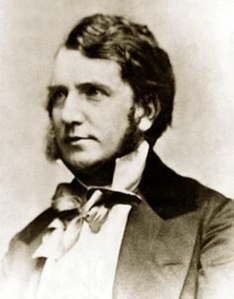
Joseph Thomas Sheridan Le Fanu, journalist, novelist, and short story writer, often called the father of the modern ghost story, is born in Dublin on August 28, 1814. He is the leading ghost story writer of the nineteenth century and is central to the development of the genre in the Victorian era. His best-known works include Uncle Silas (1864), a suspense story, and The House by the Churchyard (1863), a murder mystery. His vampire story Carmilla, which influences Bram Stoker’s Dracula, has been filmed several times.

Le Fanu is born at 45 Lower Dominick Street in Dublin to Thomas Philip Le Fanu and Emma Lucretia Dobbin, a literary family of Huguenot, Irish, and English descent. Within a year of his birth the family moves to the Royal Hibernian Military School in Phoenix Park where his father, a Church of Ireland clergyman, is appointed to the chaplaincy of the establishment.

In 1826, the family moves to Abington, County Limerick, where Le Fanu’s father takes up his second rectorship. Le Fanu uses his father’s library to educate himself and by the age of fifteen he was writing poetry.

The disorders of the Tithe War (1831–1836) affect the region in 1832 and the following year the family temporarily moves back to Dublin, where Le Fanu works on a government commission. Although Thomas Le Fanu tries to live as though he is well-off, the family is in constant financial difficulty. At his death, Thomas has almost nothing to leave to his sons and the family has to sell his library to pay off some of his debts.

Le Fanu studies law at Trinity College, Dublin, where he is elected Auditor of the College Historical Society. He is called to the bar in 1839 but never practices and soon abandons law for journalism. In 1838 he begins contributing stories to the Dublin University Magazine, including his first ghost story, The Ghost and the Bone-Setter (1838). He becomes owner of several newspapers from 1840, including the Dublin Evening Mail and the Warder.

In 1847, Le Fanu supports John Mitchel and Thomas Francis Meagher in their campaign against the indifference of the government to the Irish Famine. Others involved in the campaign include Samuel Ferguson and Isaac Butt. Butt writes a forty-page analysis of the national disaster for the Dublin University Magazine in 1847. Le Fanu’s support costs him the nomination as Tory Member of Parliament (MP) for County Carlow in 1852.

In 1856 the family moves from Warrington Place to the house of his wife Susanna’s parents at 18 Merrion Square. His personal life becomes difficult at this time, as his wife suffers from increasing neurotic symptoms. She suffers from anxiety after the deaths of several close relatives, including her father two years previous. In April 1858, Susanna suffers a “hysterical attack” and dies the following day. She is buried in the Bennett family vault in Mount Jerome Cemetery beside her father and brothers. He does not write any fiction from this point until the death of his mother in 1861.

He becomes the editor and proprietor of the Dublin University Magazine in 1861 and begins to take advantage of double publication, first serializing in the Dublin University Magazine, then revising for the English market. He publishes both The House by the Churchyard and Wylder’s Hand in this manner. After lukewarm reviews of The House by the Churchyard, which is set in the Phoenix Park area of Dublin, Le Fanu signs a contract with Richard Bentley, his London publisher, which specifies that future novels be stories “of an English subject and of modern times,” a step Bentley thinks necessary for Le Fanu to satisfy the English audience. Le Fanu succeeds in this aim in 1864, with the publication of Uncle Silas, which is set in Derbyshire. In his very last short stories, however, Le Fanu returns to Irish folklore as an inspiration and encourages his friend Patrick Kennedy to contribute folklore to the Dublin University Magazine.

Le Fanu dies in his native Dublin on February 7, 1873, at the age of 58. Today there is a road and a park in Ballyfermot, near his childhood home in south-west Dublin, named after him.


Leave a comment

Death of Thomas Fitzsimons, U.S. Merchant & Statesman

thomas-fitzsimons

Thomas Fitzsimons, American merchant and statesman of Philadelphia, Pennsylvania, dies in Philadelphia on August 26, 1811. He represents Pennsylvania in the Continental Congress, the Constitutional Convention and the United States House of Representatives.

Fitzsimons is born in Ireland in 1741. In the mid-1750s his family immigrates to Philadelphia, where his father dies soon thereafter. He has enough education that he begins work as a clerk in a mercantile house. He marries Catherine Meade on November 23, 1761 and forms a business partnership with her brother George. Their firm, which specializes in the West Indies trade, operates successfully for over 41 years.

The firm is soon hit by the new revenue measures created to help support the finances of the British Empire, including the much reviled Stamp Act of 1765. Concerned with these ideas, Fitzsimons becomes active in the Irish merchant community in Philadelphia. He is a founding member of the Friendly Sons of St. Patrick in 1771 and later, in 1774, a steering committee organized to protest the Coercive Acts.

When Pennsylvania begins mobilizing and organizing a militia to fight the British, Fitzsimons is soon involved. He serves as captain of a company of home guards under the command of Colonel John Caldwalader. Initially his company serves as part of the soldiers who man posts along the New Jersey coast. His unit later serves as part of the reserve at the Battle of Trenton in 1776. Later in the war, he serves on the Pennsylvania Council of Safety and heads a board to oversee the newly formed Pennsylvania Navy.

Fitzsimons enters active politics as a delegate to the Continental Congress in 1782 and 1783. He is a member of the Pennsylvania House of Representatives from 1786 until 1795. He is also a delegate to the U.S. Constitutional Convention in 1787. Although not a leading member of that convention, he supports a strong national government, the end of slavery, the United States Congress‘s powers to impose a tariff on imports and exports, the granting the House of Representatives, and power in equal to the United States Senate in making treaties. He is one of only two Catholic signers of the Constitution of the United States, the other being Daniel Carroll of Maryland.

After the Constitution is established, Fitzsimons serves in the first three sessions of the House of Representatives as a Federalist, where he favors protective tariffs and a strong navy, co-drafting the Naval Act of 1794 authorizing the original six frigates of the United States Navy. He fails to win re-election in 1794. This was partially attributed to public opinion turning against the Federalist Party over the forceful suppression of the Whiskey Rebellion. Although he never holds elective office again, he serves in 1798 as head of the committee of merchants overseeing the subscription-loan to build a warship at private expense for use in the Quasi-War.

In 1796, Fitzsimons, along with James Innes of Virginia, is appointed by President John Adams to serve as one of two American members on the five-man debt commission charged under Article VI of the Jay Treaty with examining the claims of British subjects unable to collect debts incurred by Americans prior to the American Revolution. Fitzsimons, Innes and Samuel Sitgreaves, who replaces Innes upon the latter’s death, become annoyed with the arguments used by their British counterparts to inflate the claims total. Fitzsimons and Sitgreaves angrily and permanently secede from the board in July 1799. The claims are eventually disposed of by a lump-sum payment, agreed upon by United States Minister to Britain Rufus King with British Foreign Secretary Robert Banks Jenkinson and approved by President Thomas Jefferson and the Senate in 1802.

While withdrawing from politics, Fitzsimons remains active in civic and business affairs. He serves as president of Philadelphia’s Chamber of Commerce, as a trustee of the University of Pennsylvania, Director of the Delaware Insurance Company and a director of the Bank of North America from 1781–1803. He is a founder of the bank and supports efforts to found Georgetown College. He also helps found the Insurance Company of North America.

Fitzsimons dies on August 26, 1811, in Philadelphia, where he is buried in the cemetery of St. Mary’s Roman Catholic Church, which is in present-day Independence National Historical Park.


Leave a comment

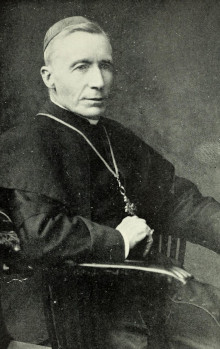
Birth of David Moriarty, Bishop & Pulpit Orator

david-moriarty

David Moriarty, Irish Roman Catholic bishop and pulpit orator, is born in Ardfert, County Kerry on August 18, 1814.

Moriarty is the son of David Moriarty and Bridget Stokes. He receives his early education in a classical school of his native Diocese of Ardfert and Aghadoe, and later is sent to Boulogne-sur-Mer in northern France. From there he passes to Maynooth College and, after a distinguished course in theology, is elected to the Dunboyne establishment, where he spends two years.

While yet a young priest Moriarty is chosen by the episcopal management of the Irish College in Paris, as vice-president of that institution, a position he occupies for about four years. So satisfactory is his work that, on the death of Father John Hand, he is appointed President of All Hallows College in Dublin, and for years guides, fashions, and makes effective the discipline and teaching of that well known institution. It is during this time he gives evidence of the noble oratory, so chaste, elevated, various and convincing, that has come to be associated with his name.

In 1854 Moriarty is appointed coadjutor, with the right of succession, to the bishopric of Ardfert and Aghadoe, as titular bishop of the Diocese of Antigonea. Two years later he succeeds to his native see. His work as bishop is testified to by several churches and schools, a diocesan college St. Brendan’s College, Killarney in 1860 and many conventual establishments. He finds time to conduct retreats for priests and his addresses which have come down to us under the title “Allocutions to the Clergy” are characterized by profound thought, expressed in an elevated and oratorical style.

In his political views Moriarty runs counter to much of the popular feeling of the time, and is a notable opponent of the Fenian organization, which he denounces strongly, particularly following the uprising in 1867 in his diocese where in an infamous sermon he attacks the Fenian leadership brandishing them criminals, swindlers and God’s heaviest curse. He also declares that “when we look down into the fathomless depth of this infamy of the heads of the Fenian conspiracy, we must acknowledge that eternity is not long enough, nor hell hot enough to punish such miscreants.” Despite this, however, he claims to admire Daniel O’Connell.

While most republicans attempt to work around the hostility of the high clergy of the Roman Church and the fire and brimstone rhetoric of the likes of Moriarty, out of sensitivity to the religious tendencies of the Irish majority, one Fenian by the name of John O’Neill, dares to fire back. O’Neill retorts, “It is better to be in hell with Fionn than in heaven with pale and flimsy angels.”

Moriarty’s principal works are “Allocutions to the Clergy” and two volumes of sermons.

David Moriarty dies on October 1, 1877.


Leave a comment

Birth of Oliver Joseph St. John Gogarty

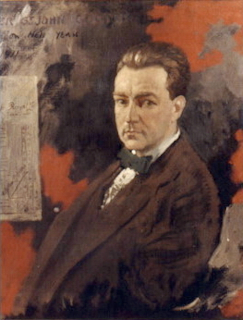
Oliver Joseph St. John Gogarty, Irish poet, author, otolaryngologist, athlete, politician, and well-known conversationalist, is born on August 17, 1878, in Rutland Square, Dublin. He serves as the inspiration for Buck Mulligan in James Joyce‘s novel Ulysses.

In 1887 Gogarty’s father dies of a burst appendix, and he is sent to Mungret College, a boarding school near Limerick. He is unhappy in his new school, and the following year he transfers to Stonyhurst College in Lancashire, England, which he likes little better, later referring to it as “a religious jail.” He returns to Ireland in 1896 and boards at Clongowes Wood College while studying for examinations with the Royal University of Ireland. In 1898 he switches to the medical school at Trinity College, having failed eight of his ten examinations at the Royal.

A serious interest in poetry and literature begins to manifest itself during his years at Trinity. In 1900 he makes the acquaintance of W. B. Yeats and George Moore and begins to frequent Dublin literary circles. In 1904 and 1905 he publishes several short poems in the London publication The Venture and in John Eglinton‘s journal Dana. His name also appears in print as the renegade priest Fr. Oliver Gogarty in George Moore’s 1905 novel The Lake.

In 1905 Gogarty becomes one of the founding members of Arthur Griffith‘s Sinn Féin, a non-violent political movement with a plan for Irish autonomy modelled after the Austro-Hungarian dual monarchy.

In July 1907 his first son, Oliver Duane Odysseus Gogarty, is born, and in autumn of that year he leaves for Vienna to finish the practical phase of his medical training. Returning to Dublin in 1908, he secures a post at Richmond Hospital, and shortly afterwards purchases a house in Ely Place opposite George Moore. Three years later, he joins the staff of the Meath Hospital and remains there for the remainder of his medical career.

As a Sinn Féiner during the Irish War of Independence, Gogarty participates in a variety of anti-Black and Tan schemes, allowing his home to be used as a safe house and transporting disguised Irish Republican Army (IRA) volunteers in his car. Following the ratification of the Anglo-Irish Treaty, he sides with the pro-Treaty government and is made a Free State Senator. He remains a senator until the abolition of the Seanad in 1936, during which time he identifies with none of the existing political parties and votes according to his own whims.

Gogarty maintains close friendships with many of the Dublin literati and continues to write poetry in the midst of his political and professional duties. He also tries his hand at playwriting, producing a slum drama in 1917 under the pseudonym “Alpha and Omega”, and two comedies in 1919 under the pseudonym “Gideon Ouseley,” all three of which are performed at the Abbey Theatre. He devotes less energy to his medical practice and more to his writing during the twenties and thirties.

With the onset of World War II, Gogarty attempts to enlist in the Royal Air Force (RAF) and the Royal Army Medical Corps (RAMC) as a doctor. He is denied on grounds of age. He then departs in September 1939 for an extended lecture tour in the United States, leaving his wife to manage Renvyle House, which has since been rebuilt as a hotel. When his return to Ireland is delayed by the war, he applies for American citizenship and eventually decides to reside permanently in the United States. Though he regularly sends letters, funds, and care-packages to his family and returns home for occasional holiday visits, he never again lives in Ireland for any extended length of time.

Gogarty suffers from heart complaints during the last few years of his life, and in September 1957 he collapses in the street on his way to dinner. He dies on September 22, 1957. His body is flown home to Ireland and buried in Cartron Church, Moyard, near Renvyle.

(Pictured: 1911 portrait of Oliver St. John Gogarty painted by Sir William Orpen, currently housed at the Royal College of Surgeons in Ireland)


Leave a comment

The Battle of Utoy Creek

*

The 10th Tennessee Infantry (Irish) fights at the Battle of Utoy Creek on August 6, 1864, during the American Civil War. Known as the “Bloody Tinth,” it is one of only two Irish Catholic regiments in the Confederate States Army, although their elected officers are mostly Ulster Scots Protestants. They are deployed as sharpshooters through the tough campaigns at Chickamauga, Chattanooga and Atlanta.

The Battle of Utoy Creek is fought August 4–7, 1864, during the Atlanta Campaign of the American Civil War. Major General William Tecumseh Sherman‘s Union armies have partially encircled the city of Atlanta, Georgia, which is being held by Confederate forces under the command of General John Bell Hood. Sherman has at this point adopted a strategy of attacking the railroad lines into Atlanta, hoping to cut off his enemies’ supplies. This is the third direct attack on Confederate positions during the campaign and the effect of success would have ended the siege and won Atlanta on August 6, 1864.

After failing to envelop Hood’s left flank at the Battle of Ezra Church, Sherman still wants to extend his right flank to hit the railroad between East Point and Atlanta. He transfers Maj. Gen. John McAllister Schofield‘s XXIII Corps of the U.S. Army of the Ohio from his left to his right flank and sends him to the north bank of Utoy Creek.

Although Schofield’s troops are at Utoy Creek on August 2, they, along with the XIV Corps, Army of the Cumberland, do not cross until August 4. An initial attack by the Regular Brigade against James Patton Anderson‘s Division CSA of Stephen Dill Lee‘s Corps is unsuccessful. In addition, the Confederates dismount a brigade of cavalry, Armstrong’s, in the front of the federals in a deception plan, a feinted attack that is successful in delaying the combined force of the XXIII and XIV Corps USA.

Schofield makes an additional movement to exploit this situation on the morning of August 5. Although initially successful, Schofield has to regroup his forces, which takes the rest of the day. The delay allows the Confederates to strengthen their defenses with an abatis, which slows the Union attack when it restarts on the morning of August 6. The Federals are repulsed with heavy losses by William Brimage Bate‘s division and fail in an attempt to break the main defenses to gain the railroad.

On August 7, the Union troops move toward the Confederate main line skirmishing and extending to their right and entrench. Several attacks are made at Sandtown Road (Campbellton at Adams Park) on August 10 and East Point on August 18. Here US Forces remain, as far south as the Atlanta Christian College, until late August 1864 when the failure of Schofield’s offensive operations convinces Sherman to move on the Confederate lines of communication and supply.


Leave a comment

Birth of James Cardinal Gibbons, Archbishop of Baltimore

james-cardinal-gibbons

James Cardinal Gibbons, American prelate of the Catholic Church, is born in Baltimore, Maryland on July 23, 1834 to parents Thomas and Bridget (née Walsh) Gibbons who had emigrated from Toormakeady, County Mayo. In his role as Archbishop of Baltimore from 1877 to 1921, he serves as a bridge between Roman Catholicism and American Catholic values.

Gibbons is taken by his parents from Baltimore to Ireland in 1837. Following his father’s death in 1847, at the height of The Great Hunger, his mother moves the family back to the United States. He spends the next eight years as a grocer in New Orleans. In 1855 he enters a seminary in Baltimore, becoming a priest in 1861. He rises through the ranks of the Roman Catholic Church quickly, and by 1868 he is the youngest bishop in the United States. During a short stay in North Carolina, he writes The Faith of Our Fathers (1876), a defense of Catholicism that proves exceptionally popular, selling more than two million copies. He is elevated to Archbishop of Baltimore in 1877. He assumes a leadership role as the presiding prelate at the Third Plenary Council of Baltimore in 1884, and in 1886 he is made a cardinal by Pope Leo XIII.

As a leader of the Catholic Church hierarchy in the United States, Gibbons is outspoken in his praise for American democratic institutions and he advocates Americanization — the rapid assimilation of Catholic immigrants into American culture and institutions — both as a means to counter Protestant Americans’ suspicions toward Catholics and to avoid the fragmentation of the Catholic Church in the United States along ethnic lines. He is also sympathetic to the cause of organized labour and works to overcome suspicions within the Catholic Church toward the Knights of Labor, which has been considered a secret society by many clergymen.

On education, as on other social issues, Gibbons seeks ways of harmonizing the tenets of the Catholic faith with the principles of American democracy. He enters the controversy over control of parochial and public schools in 1891 when he defends Archbishop John Ireland’s experimental plan for cooperation between Catholic and public schools in the Minnesota towns of Faribault and Stillwater. To the dismay of conservative bishops, he refuses to condemn public education and encourages efforts to find common ground between the two systems. The Faribault-Stillwater plan remains controversial despite Gibbons’s support, and acrimony between the plan’s supporters and conservative opponents lingers until 1893.

During World War I, Gibbons is instrumental in the establishment of the National Catholic War Council, and afterwards supports the League of Nations. Although initially opposed to women’s suffrage, when the Nineteenth Amendment passes Gibbons urges women to exercise their right to vote “…not only as a right but as a strict social duty.”

James Cardinal Gibbons dies at the age of 86 in Baltimore on March 24, 1921. Throughout his career he is a respected and influential public figure. Although nonpartisan, he takes positions on a variety of foreign and domestic policy issues and is personally acquainted with every U.S. president from Andrew Johnson to Woodrow Wilson.


Leave a comment

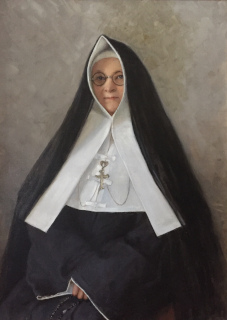
Birth of Mother Marie Joseph “Johanna” Butler

johanna-butler

Mother Marie Joseph “Johanna” Butler, Irish nun, mother general of the Religious of the Sacred Heart of Mary and founder of Marymount colleges and schools, is born in Ballynunry, County Kilkenny on July 22, 1860.

Butler is the seventh child of John Butler, gentleman farmer, and Ellen (née Forrestal). She attends the Sisters of Mercy school in New Ross, County Wexford, entering the Congregation of the Sacred Heart of Mary in Béziers, France in 1876. She takes the name Marie Joseph when she is sent to Porto, Portugal in 1879, professing in 1880. From 1880 to 1903 she teaches in Porto and Braga, becoming superior of the school in 1893.

In 1903 Butler is appointed head of the congregation’s school at Sag Harbor, Long Island, New York, with the responsibility to extend the influence of the order in there. Her cousin, James Butler, gives her a site in Tarrytown, New York in 1907 where she founds the first Marymount school that year, and then the first Marymount college in 1918. She acts as president of the college, with the institution being granted a charter from the University of the State of New York to award bachelor’s degrees in 1924. She is elected Mother General of her order in 1926 and serves until her death, being the first American superior elected to the international congregation of the Catholic Church. She introduces a unique educational system incorporating high religious and academic standards with the aim of preparing young women for a changing society. She becomes a citizen of the United States in 1927.

Under her influence, the order founds fourteen schools, including a novitiate in New York, three Marymount schools and three colleges, and 23 foundations internationally with Marymount schools in Rome, Paris, and Quebec, and a novitiate in Ferrybank, Waterford, County Waterford.

Butler dies on April 23, 1940, in Tarrytown and is buried there. In 1954 her spiritual writings are published as As an eagle: the spiritual writings of Mother Butler R.S.H.M. by J.K. Leahy. She is put forward as a candidate for canonisation in 1948.


Leave a comment

Birth of John Miller Andrews, 2nd Prime Minister of Northern Ireland

john-miller-andrews

John Miller Andrews, the second Prime Minister of Northern Ireland, is born in Comber, County Down on July 17, 1871. He is the eldest child in the family of four sons and one daughter of Thomas Andrews, flax spinner, and his wife Eliza Pirrie, a sister of William Pirrie, 1st Viscount Pirrie, chairman of Harland & Wolff. He is named after his maternal great-uncle, John Miller of Comber (1795–1883).

Andrews is educated at the Royal Belfast Academical Institution. In business, Andrews is a landowner, a director of his family linen-bleaching company and of the Belfast Ropeworks. His younger brother, Thomas Andrews, who dies in the 1912 sinking of the RMS Titanic, served as managing director of the Harland and Wolff shipyard in Belfast. Another brother, Sir James Andrews, 1st Baronet, was Lord Chief Justice of Northern Ireland.

In 1902 Andrews marries Jessie, eldest daughter of Bolton stockbroker Joseph Ormrod at Rivington Unitarian Chapel, Rivington, near Chorley, Lancashire, England. They have one son and two daughters. His younger brother, Sir James, marries Jessie’s sister.

Andrews is elected as a member of parliament in the House of Commons of Northern Ireland, sitting from 1921 until 1953 (for Down from 1921–29 and for Mid Down from 1929–1953). He is a founder member of the Ulster Unionist Labour Association, which he chairs, and is Minister of Labour from 1921 to 1937. He is Minister of Finance from 1937 to 1940, succeeding to the position on the death of Hugh MacDowell Pollock. Upon the death of James Craig, 1st Viscount Craigavon in 1940, he becomes leader of the Ulster Unionist Party (UUP) and the second Prime Minister of Northern Ireland.

In April 1943 backbench dissent forces Andrews from office. He is replaced as Prime Minister by Basil Brooke, 1st Viscount Brookeborough. He remains, however, the recognised leader of the UUP for a further three years. Five years later he becomes the Grand Master of the Orange Order. From 1949, he is the last parliamentary survivor of the original 1921 Northern Ireland Parliament, and as such is recognised as the Father of the House. He is the only Prime Minister of Northern Ireland not to have been granted a peerage. His predecessor and successor receive hereditary viscountcies, and later prime ministers are granted life peerages.

Throughout his life Andrews is deeply involved in the Orange Order. He holds the positions of Grand Master of County Down from 1941 and Grand Master of Ireland (1948–1954). In 1949 he is appointed Imperial Grand Master of the Grand Orange Council of the World.

Andrews is a committed and active member of the Non-subscribing Presbyterian Church of Ireland. He regularly attends Sunday worship, in the church built on land donated by his great-grandfather, James Andrews, in his hometown Comber. He serves on the Comber Congregational Committee from 1896 until his death on August 5, 1956, holding the position of Chairman from 1935 onwards. He is buried in the small graveyard adjoining the church.


Leave a comment

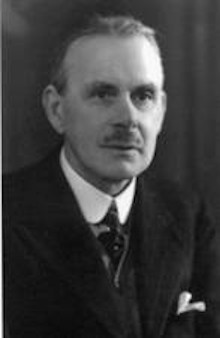
Birth of Hugh Kennedy, Politician, Barrister & Judge

File source: http://commons.wikimedia.org/wiki/File:Hugh_Kennedy.jpg

Hugh Edward Kennedy, Fine Gael politician, barrister and judge, is born in Abbotstown, Dublin on July 11, 1879. He serves as Attorney General of Ireland from 1922 to 1924, a Judge of the Supreme Court of Ireland from 1924 to 1936 and Chief Justice of Ireland from 1924 to 1936. He serves as a Teachta Dála (TD) for the Dublin South constituency from 1923 to 1927. As a member of the Irish Free State Constitution Commission, he is also one of the constitutional architects of the Irish Free State.

Kennedy is the son of the prominent surgeon Hugh Boyle Kennedy. His younger sister is the journalist Mary Olivia Kennedy. He studies for the examinations of the Royal University of Ireland while a student at University College Dublin and King’s Inns, Dublin. He is called to the Bar in 1902. He is appointed King’s Counsel in 1920 and becomes a Bencher of King’s Inn in 1922.

During 1920 and 1921, Kennedy is a senior legal adviser to the representatives of Dáil Éireann during the negotiations for the Anglo-Irish Treaty. He is highly regarded as a lawyer by Michael Collins, who later regrets that Kennedy had not been part of the delegation sent to London in 1921 to negotiate the terms of the treaty.

On January 31, 1922, Kennedy becomes the first Attorney General in the Provisional Government of the Irish Free State. Later that year he is appointed by the Provisional Government to the Irish Free State Constitution Commission to draft the Constitution of the Irish Free State, which is established on December 6, 1922. The functions of the Provisional Government are transferred to the Executive Council of the Irish Free State. He is appointed Attorney General of the Irish Free State on December 7, 1922.

In 1923, Kennedy is appointed to the Judiciary Commission by the Government of the Irish Free State, on a reference from the Government to establish a new system for the administration of justice in accordance with the Constitution of the Irish Free State. The Judiciary Commission is chaired by James Campbell, 1st Baron Glenavy, who had also been the last Lord Chancellor of Ireland. It drafts the Courts of Justice Act 1924 for a new court system, including a High Court and a Supreme Court, and provides for the abolition, inter alia, of the Court of Appeal in Ireland and the Irish High Court of Justice. Most of the judges are not reappointed to the new courts. Kennedy personally oversees the selection of the new judges and makes impressive efforts to select them on merit alone. The results are not always happy. His diary reveals the increasingly unhappy atmosphere, in the Supreme Court itself, due to frequent clashes between Kennedy and his colleague Gerald Fitzgibbon, since the two men prove to be so different in temperament and political outlook that they find it almost impossible to work together harmoniously. In a similar vein, Kennedy’s legal opinion and choice of words could raise eyebrows amongst legal colleagues and fury in the Executive Council e.g. regarding the Kenmare incident.

Kennedy is also a delegate of the Irish Free State to the Fourth Assembly of the League of Nations between September 3-29, 1923.

Kennedy is elected to Dáil Éireann on October 27, 1923, as a Cumann na nGaedheal TD at a by-election in the Dublin South constituency. He is the first person to be elected in a by-election to Dáil Éireann. He resigns his seat when he is appointed Chief Justice of Ireland in 1924.

On June 5, 1924, Kennedy is appointed Chief Justice of Ireland, thereby becoming the first Chief Justice of the Irish Free State. He is also the youngest person appointed Chief Justice of Ireland. When he is appointed, he is 44 years old. Although the High Court of Justice and the Court of Appeal had been abolished and replaced by the High Court and the Supreme Court respectively, one of his first acts is to issue a practice note that the wearing of wigs and robes will continue in the new courts. This practice is still continued in trials and appeals in the High Court and the Supreme Court (except in certain matters). He holds the position of Chief Justice until his death on December 1, 1936, in Goatstown, Dublin.

In September 2015, a biography by Senator Patrick Kennedy (no relation) is written about Kennedy called Hugh Kennedy: The Great but Neglected Chief Justice.


Leave a comment

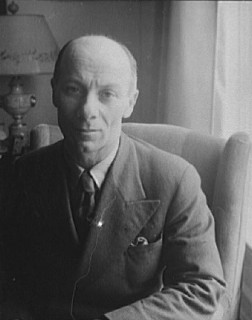
Birth of Paul Vincent Carroll, Playwright & Writer

paul-vincent-carroll

Paul Vincent Carroll, Irish playwright and writer of movie scenarios and television scripts is born in Blackrock, County Louth on July 10, 1900, to Michael Carroll and Catherine Smyth.

Carroll trains as a teacher at St. Patrick’s College, Dublin and settles in Glasgow, Scotland in 1921 as a teacher. Several of his plays are produced by the Abbey Theatre in Dublin. He is a close friend of Patrick Kavanagh in the 1920s.

Carroll marries clothing designer Helena Reilly in Glasgow in 1923. They have four children, actress Helena Carroll, musician and producer Theresa Perez, journalist Kathleen Carroll and son Brian Carroll who resides in London. He is grandfather to Helena Perez Reilly and great grandfather to Paul Vincent Reilly. His brother, Niall Carroll, is a film critic.

Carroll founds two theater groups in Glasgow: the Curtain Theatre company, with Grace Ballantine and Molly Urquhart, in 1933 and the Glasgow Citizens’ Theatre in 1943. He remains the director and playwright in residence of the Citizens’ Theatre until his death.

Carroll wins the New York Drama Critics’ Circle award for two consecutive years, respectively for Shadow and Substance (1936) and The White Steed (1937).

The Wayward Saint is made into an opera in Germany in the 1960’s and his daughter Theresa commissions and produces an opera of his Beauty is Fled from the collection Plays For My Children which opens at Phoenix Symphony Hall in the 1970s as part of Theresa’s “Children’s Opera Series.”

Carroll dies at the age of 68 from undisclosed causes in Bromley, Kent, England on October 20, 1968.