seamus dubhghaill

Promoting Irish Culture and History from Little Rock, Arkansas, USA


Leave a comment

Death of Madeleine ffrench-Mullen, Revolutionary & Labour Activist

Madeleine ffrench-Mullen, Irish revolutionary and labour activist who takes part in the Easter Rising in Dublin in 1916, dies in Dublin on May 26, 1944.

Ffrench-Mullen is born on December 30, 1880, in Malta, where her father, St. Lawrence ffrench-Mullen, a Royal Navy surgeon, is stationed. She has two brothers, St. Lawrence Patrick Joseph (1890–1891) and Douglas (1893–1943).

Ffrench-Mullen’s interest in politics starts young. Her father is a committed Parnellite and their Dundrum home is a campaign headquarters. She is a radical feminist and republican during her life. Like many others of the time, she regards it as a woman’s right to vote. She joins the suffrage movement, and meets women with a similar worldview and values. The women’s suffrage movement is included in the Movements of Extremists reports of the Dublin Metropolitan Police. Ffrench-Mullen goes on to join Inghinidhe na hÉireann, a radical nationalist women’s group founded by Maud Gonne in 1900. The organisation develops into Cumann na mBan in 1913. Suffragist values are central to Cumann na mBan’s goal of standing side-by-side with men in the fight for the Irish Republic. Some members see this as women regaining the rights that had belonged to them in pre-invasion Gaelic civilisation. She is on the socialist wing of the moment, holding to the ideals of universal social equality of the syndicalist James Connolly and the Irish Citizen Army (ICA).

During the 1916 Easter Rising, ffrench-Mullen serves as a lieutenant in the Irish Citizen Army. She sees action with the St. Stephen’s Green and Royal College of Surgeons garrison. In St. Stephen’s Green she is in command of the 15 Citizen Army women who set up a medical station and field kitchen. While occupying St. Stephen’s Green, she and her comrades come under sustained heavy fire from the Shelbourne Hotel and buildings on the north side of the Green. After the surrender of the College of Surgeons garrison, ffrench-Mullen is one of the 77 women who had fought in the Rising who are imprisoned, among them her life partner Kathleen Lynn. While in captivity ffrench Mullen is moved three times, spending time in Richmond BarracksKilmainham Gaol and Mountjoy Prison. She is released on June 5, 1916.

Ffrench-Mullen meets Kathleen Lynn through Inghinidhe na h-Éireann. In 1915, she moves into Lynn’s home in Belgrave Road, Rathmines, where they live together for thirty years, until ffrench-Mullen’s death in 1944.

Ffrench-Mullen records in her prison diary in 1916 that she can face prison without fear once Lynn (whom she refers to as “the Doctor”) and she are together. Katherine Lynch of the Women’s Studies Centre at University College Dublin (UCD) describes them as partners, calling them part of a network of lesbians living in Dublin—which includes Helena MolonyLouie Bennett and Elizabeth O’Farrell—who meet through the suffrage movement and later become involved with the national and trade union movement. These women are featured, along with Eva Gore-Booth and others, in a 2023 TG4 documentary about “the radical queer women at the very heart of the Irish Revolution”: Croíthe Radacacha (Radical Hearts).

In 1919, Madeleine ffrench-Mullen and Kathleen Lynn establish Saint Ultan’s Children’s Hospital, also known as Teach Ultan, which is a female-run hospital for infants at 37 Charlemont Street, Dublin. The hospital focuses on children’s health and wellbeing, an area that is perceived at the time as women’s concern. In the aftermath of World War I many health problems have arisen including a rise in venereal diseases such as syphilis, carried from soldiers returning home from war. Many of Ireland’s infants of the time suffer from congenital syphilis (inherited disease from mother at birth), and this is a driving factor in the opening of St Ultan’s hospital. Tuberculosis is endemic in Ireland during its time as a British colony. Against steadfast opposition by the State and the Catholic Church, Lynn and ffrench-Mullen establish a vaccination project, vaccinating thousands of impoverished children who would have died of tuberculosis without their vaccines. Their success leads to the foundation of Ireland’s BCG vaccine programme, which has vaccinated all babies since the 1950s.

Ffrench-Mullen dies at the age of 63 in a Dublin nursing home on May 26, 1944. She is interred with her parents as well as her younger brothers (whom she outlives) in the ffrench-Mullen family plot in Glasnevin Cemetery. Her funeral takes place on the same day as the 1944 Irish general election.


1 Comment

Birth of Ivana Bacik, Labour Party Politician

Ivana Catherine Bacik, Irish politician who has been the Leader of the Labour Party since March 24, 2022 and a Teachta Dála (TD) for the Dublin Bay South constituency since winning a by-election on July 9, 2021, is born in Dublin on May 25, 1968. She comes to prominence due to her abortion rights campaigning from the 1980s onward.

Bacik’s paternal grandfather, Charles Bacik, was a Czech factory owner who moved to Ireland in 1946. He eventually settled in Waterford, County Waterford, and in 1947 was involved in the establishment of Waterford Crystal. Her mother’s side of the family are Murphys from County Clare. Her father is an astronomer and is employed in a number of locations. As a result, she lives in London and South Africa, before moving to Crookstown, County Cork, at the age of six, when he becomes a physics lecturer in the Cork Institute of Technology. She attends the nearby national school in Cloughduv. When she is 11 years old, her family moves to the Sunday’s Well area of Cork city. At the age of 14, she moves to Dublin.

Bacik wins a scholarship to board at Alexandra College in Milltown, Dublin, and is awarded a sizarship at Trinity College Dublin. She has an LL.B. from Trinity and an LL.M. from the London School of Economics.

Bacik contests the Seanad Éireann elections in 1997 and 2002 as an independent candidate for the Dublin University constituency but is not successful.

She runs as a Labour Party candidate at the 2004 election to the European Parliament in the Dublin constituency. She runs with sitting MEP Proinsias De Rossa, who is also the party president, on the same ticket. She polls 40,707 first preference votes (9.6%) but is not elected.

In 2004, Bacik’s book Kicking and Screaming: Dragging Ireland into the 21st Century, is published by The O’Brien Press.

In 2007, she contested the Seanad Éireann elections for the third time in the Dublin University constituency, and is elected to the third seat, behind sitting Independent senators Shane Ross and David Norris. She initially sits as an Independent senator.

In February 2009, Bacik is included in an ‘All Star Women’s Cabinet’ in the Irish Independent. In March 2009, she confirmed claims made on a TV programme that she had taken two voluntary pay cuts of 10% in addition to a pension levy. In June 2009, she is the Labour Party candidate for the Dublin Central by-election. She comes in third with 17% of the first preference votes. She joins the Labour Party group in the Seanad in September 2009, and becomes Labour Party Seanad spokesperson for both Justice and Arts, Sports and Tourism. In November 2009, a feature by Mary Kenny of the Irish Independent includes Bacik in a list of women who “well deserved their iconic status.”

In May 2010, Bacik seeks Labour’s nomination to contest the next election in the Dublin South-East constituency but is not selected. In December 2010, she is added to the ticket as the second candidate beside Labour Party leader, Eamon Gilmore, in the Dún Laoghaire constituency for the 2011 Irish general election. Gilmore tops the poll, with Bacik receiving 10.1% of first preference votes but she is not elected. She is re-elected to Seanad Éireann at the subsequent election, after which she becomes Deputy Leader of the Seanad. She holds her seat in the Seanad in 2016 and in 2020.

On April 27, 2021, after the resignation of Eoghan Murphy from his Dáil seat in Dublin Bay South, Bacik announces her intention to stand in the upcoming by-election. She campaigns with an emphasis on providing affordable housing, as well as improving healthcare and childcare, tackling climate change, and achieving “a true republic in which church and state are separated.” During the campaign, she describes herself as having “more bills passed into law than any other Senator, on issues such as workers’ conditions, women’s health rights, and LGBT equality”. She also campaigns on increasing the number of sports amenities for children in the area, calling for unused Defence Forces football fields at the Cathal Brugha Barracks to be freed up for local sports, with the suggestion rejected by Fine Gael Minister for Defence Simon Coveney. Fine Gael complains to RTÉ after she features prominently on National Treasures, a prime-time TV show broadcast by RTÉ during the campaign. RTÉ has strict rules about fair coverage of candidates during campaigns. The national broadcaster blames an “inadvertent error” for the programme being shown three days before the election. A steering group within the broadcaster tells Fine Gael that “the broadcast should not have happened.” Consequentially, RTÉ has to show a special report on the by-election on Prime Time to “ensure fair coverage is given to all candidates.”

Bacik wins this election, receiving 8,131 (30.2%) first-preference votes. It is her fourth attempt as a Labour candidate, and she expresses her delight at the success at the count centre in the RDS. Following the election, she is described by The Irish Times as “a formidable activist and public intellectual” and that Fine Gael’s perceived antipathy towards their former TD, Kate O’Connell, may have contributed to the surge in support to Bacik from women voters. The newspaper claims that her election is “a long overdue morale boost” for Labour.

In August 2021, Bacik apologises for attending Katherine Zappone‘s controversial party in the Merrion Hotel, Dublin, in July of that year. She states that she believed that it took place within existing COVID-19 pandemic restrictions.

In March 2022, Bacik confirms she will run to succeed Alan Kelly as Labour Party leader. Kelly states that he believes that Bacik will succeed him. On March 24, 2022, she is confirmed as Labour Party leader unopposed at a party conference in Dublin. In a speech, she says she will focus on the rising cost of living and the serious and global problems facing the country. She pledges that Labour will fight the next election as a “standalone party” rather than joining any left-wing alliance.

At the 2024 Irish general election, Bacik is re-elected to the Dáil.

Bacik lives with husband Alan Saul and their two daughters in Portobello, Dublin.


Leave a comment

Death of Colonel Robert David Perceval-Maxwell

Colonel Robert David Perceval-Maxwell DSO JP DL PC (Ire), British soldier and Ulster Unionist Party politician, dies in Belfast, Northern Ireland, on May 24, 1932. He is a member of the Senate of Northern Ireland and Down County Council.

Perceval-Maxwell is born in 1870, the only son of John Perceval-Maxwell, eldest son of Robert Perceval-Maxwell DL (1813–1905), of Finnebrogue House, Downpatrick, County Down.

Perceval-Maxwell is educated at Eton College. He plays a significant part in the raising of the 36th (Ulster) Division on the outbreak of World War I. He is commissioned Major in the 13th (County Down) Battalion, Royal Irish Rifles, which he had raised, in September 1914, and is appointed second-in-command in December 1914. He is promoted to the temporary rank of Lieutenant-Colonel and commands a battalion from November 1916 and commands a battalion of the Royal Munster Fusiliers from May 1918. He is seriously wounded during the war. He resigns his commission in January 1919.

He is appointed to the Privy Council of Ireland in the honours for the opening of the Parliament of Northern Ireland in July 1921, entitling him to the style “The Right Honourable.” He serves in the Northern Ireland Senate from 1921 to 1925.

In 1895, Perceval-Maxwell marries Edith Grace Head. They have five sons: John Robert Perceval-Maxwell (born 1896), Richard Henry (born 1897, killed in action in 1916), Patrick Edward (born 1900), Brian Stephen (born 1908), and David (born 1911).

Perceval-Maxwell dies at the age of 62 on May 24, 1932, in a Belfast nursing home. He is buried in Inch Parish Churchyard, Downpatrick.


Leave a comment

Death of John Roberts, Anglo-Irish Architect

John RobertsAnglo-Irish architect working in the Georgian style, dies in Waterford, County Waterford, on May 23, 1796. He is best known for the buildings he designed in that city.

Roberts is born in Waterford in 1712 or 1714, the son of Thomas Roberts, an architect and builder. Little is known of his early life, although he possibly trains in London for a time. At 17, he elopes with Mary Susannah Sautelle, a Huguenot heiress who also lives in Waterford.

In 1746, Roberts is asked by the Church of Ireland (ProtestantBishop of Waterford and LismoreRichard Chenevix, to complete the new Bishop’s Palace.

Around 1760 Roberts designs Mount Congreve, near Kilmeadan.

In 1785, Roberts builds a house in Waterford for William Morris, now the Harbour Commissioners’ headquarters and the Chamber of Commerce. In 1786, he designs Newtown House, later Newtown School, a Quaker school. In 1787, he designs The Leper Hospital and Church of St. Stephen. He also builds the Assembly Rooms on Waterford’s Mall in 1788, which is now the Theatre Royal and City Hall.

Roberts had the unusual distinction of designing both the Protestant and Catholic cathedrals of Waterford: Christ Church Cathedral (1770s) and the Cathedral of the Most Holy Trinity (1790s) respectively.

Outside of Waterford, Roberts designs Curraghmore and Mount Congreve (both in County Waterford), St Iberius’ Church (Wexford) and is reputed to have designed Tyrone House (County Galway), Cappoquin House(County Waterford) and Moore Hall, County Mayo.

Roberts has between 21 and 24 children with his wife Susannah, of whom eight live to adulthood, including the painters Thomas Roberts and Thomas Sautelle Roberts. They live for many years in the old bishop’s palace, opposite the cathedral, with a country residence at Roberts Mount. He is nicknamed “Honest John” because he pays his workers so reliably, sometimes giving half their pay directly to their wives so that it would not be wasted on alcohol.

Roberts dies on May 23, 1796, after falling asleep on the floor of the Cathedral of the Most Holy Trinity, Waterford, and contracting pneumonia. The main square in Waterford is named John Roberts Square in his honour.

His son, the Reverend John Roberts became a magistrate and rector. The Rev. John’s son is Abraham Roberts, a general in the East India Company, and Abraham’s son is Frederick Roberts, 1st Earl Roberts, a World War I field marshal. Roberts’ sons Thomas and Sautelle become artists, as does his daughter, who paints scenery for the Waterford Theatre and landscapes.

Another great-grandson is the architect Samuel Ussher Roberts (1821–1900).


Leave a comment

Birth of Graham Linehan, Comedy Writer & Activist

Graham George Linehan, Irish comedy writer and anti-transgender activist, is born in Dublin on May 22, 1968. He created or co-created the sitcoms Father Ted (1995–1998), Black Books (2000–2004), and The IT Crowd (2006–2013), and he has written for shows including Count Arthur StrongBrass Eye and The Fast Show. Early in his career, he partners with the writer Arthur Mathews. He has won five BAFTA awards, including Best Writer, Comedy, for The IT Crowd in 2014.

After an episode of The IT Crowd is criticised as transphobic, Linehan becomes involved in anti-transgender activism. He argues that transgender activism endangers women, and likens the use of puberty blockers to Nazi eugenics. He says his views have lost him work and ended his marriage.

Linehan attends Catholic University School, a Roman Catholic secondary school for boys. In the 1980s, he joins the staff of the Dublin politics and music magazine Hot Press, where he meets his future writing partner, Arthur Mathews. In their early collaborations, they create segments in sketch shows including Alas Smith and JonesHarry Enfield & ChumsThe All New Alexei Sayle ShowThe Day Today and the Ted and Ralph characters in The Fast Show. They continue their collaboration with Paris (one series, 1994), Father Ted (three series, 1995–1998), and the first series of the sketch show Big Train. They also write the “Dearth of a Salesman” episode for the series Coogan’s Run, which features the character Gareth Cheeseman. In late 2003, he and Mathews are named one of the 50 funniest acts to work in television by The Observer. Father Ted wins BAFTA awards for Best Comedy in 1996 and 1999.

Linehan writes for the satirical series Brass Eye (1997), Blue Jam (1997–1999) and Jam (2000). With the actor Dylan Moran, he creates the sitcom Black Books (2000–2004). He writes and directs the 2006 Channel 4 sitcom The IT Crowd, in which he seeks to move away from the British trend towards mockumentary comedies. Unlike many series of the time, it is recorded before a studio audience. In November 2008, he is awarded an International Emmy for The IT Crowd. In 2013, he writes and directs the sitcom The Walshes. He co-writes the first series of the BBC sitcom Motherland and directs its pilot episode. In 2014, he wins his fifth BAFTA, for Best Writer, Comedy, for his work on The IT Crowd. He is also nominated for Count Arthur Strong.

In 2018, Linehan and Mathews announce plans for a Father Ted musical. Lineham says it will finish the series as they had planned it before the death of the lead actor, Dermot Morgan. The musical is cancelled by producers following the controversy over Linehan’s views on transgender rights. In December 2024, he announces plans to move to Arizona to work on a sitcom and create a production company with the comedians Rob Schneider and Andrew Doyle.


Leave a comment

Birth of Michael Noonan, Former Fine Gael Politician

Michael Noonan, former Fine Gael politician, is born in Limerick, County Limerick, on May 21, 1943. He has been a member of every Fine Gael cabinet since 1982, serving in the cabinets of Garret FitzGeraldJohn Bruton and Enda Kenny.

The son of a local school teacher, Noonan is raised in Loughill, County Limerick. He is educated at the local National School and St. Patrick’s Secondary School in Glin, before studying to be a primary school teacher at St. Patrick’s CollegeDrumcondra, Dublin. He subsequently completes a BA and H.Dip. in English and Economics at University College Dublin (UCD). He begins to work as a secondary school teacher in Dublin. He develops an interest in politics from his mother, whose family had been heavily involved in Fine Gael at the local level in Limerick, and joins the Dublin branch of the party after graduating from university.

Having been involved in the local Fine Gael organisation in Limerick since the late 1960s, Noonan first holds political office in 1974, when he is elected as a member of Limerick County Council. Having built up a local profile he contests the 1981 Irish general election for the party and secures a seat in Limerick East. Upon taking his Dáil seat, he becomes a full-time politician, giving up his teaching post and resigning his seat on Limerick County Council. Though Fine Gael forms a coalition government with the Labour Party, as a first time Teachta Dála (TD), he remains on the backbenches. He serves as a TD from 1981 to 2020.

Noonan serves Minister for Justice from 1982 to 1986, Minister for Energy from January 1987 to March 1987, Minister for Industry and Commerce from 1986 to 1987, Minister for Health from 1994 to 1997, Leader of the Opposition and Leader of Fine Gael from 2001 to 2002, and Minister for Finance from 2011 to 2017.

In May 2017, Noonan announces he will be stepping down as Minister for Finance in the coming weeks when a new Taoiseach was appointed, and as a member of the Dáil at the next general election.

Noonan marries Florence Knightley, a native of CastlemaineCounty Kerry and a primary school teacher, in 1969. They have three sons (Tim, John and Michael) and two daughters (Orla and Deirdre). In May 2010, Noonan appears on RTÉ‘s The Frontline to talk about his wife’s battle with Alzheimer’s disease. Florence Noonan dies on February 23, 2012 of pneumonia.


Leave a comment

Death of James Tully, Labour Party Politician & Trade Unionist

James Tully, Irish Labour Party politician and trade unionist, dies in Navan, County Meath, on May 20, 1992. He serves as Minister for Defence from 1981 to 1982, Deputy leader of the Labour Party from 1981 to 1982 and Minister for Local Government from 1973 to 1977. He serves as a Teachta Dála (TD) for the Meath constituency from 1954 to 1957 and 1961 to 1982.

A native of Carlanstown, near Kells in the north of County Meath, Tully is educated in Carlanstown schools and in St Patrick’s Classical School in Navan. He is elected to Dáil Éireann as a Labour Party TD for the Meath constituency at the 1954 Irish general election. He loses his seat at the 1957 Irish general election, but is re-elected at the 1961 Irish general election and serves until 1982. When Labour enters into a coalition government with Fine Gael in 1973, he is appointed Minister for Local Government. While serving in that post he gains prominence for a massive increase in the building of public housing, and notoriety for an attempt to gerrymander Irish constituencies to ensure the re-election of the National Coalition at the 1977 Irish general election. His electoral reorganisation effort via the Electoral (Amendment) Act 1974, which comes to be called a “Tullymander,” backfires spectacularly and helps engineer a landslide for the opposition, Fianna Fáil. He is regarded as a conservative within the Labour Party, though tends to support party decisions, even if he disagrees with them. For many years he is opposed to coalition, though finding the years in opposition fruitless, he changes his mind and becomes increasingly in favour of coalition with Fine Gael.

Also as Minister for Local Government, Tully decides on alterations to the plans for the controversial Dublin Corporation Civic Offices.

Tully is appointed deputy leader of the Labour Party under Michael O’Leary in 1981, and Minister for Defence in the short-lived 1981–82 Fine Gael-Labour Party government. In that capacity he travels to Cairo, in 1981, as the Republic of Ireland‘s representative in Egypt‘s annual October 6 military victory parade. While in the reviewing stand, next to President Anwar Sadat, he suffers a shrapnel injury to his face when Sadat was assassinated by members of Egyptian Islamic Jihad who had infiltrated the Egyptian Army.

In 1982, a few months after the event, Tully retires from politics. He dies ten years later, on May 20, 1992, at the age of 76.

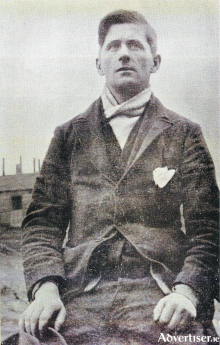
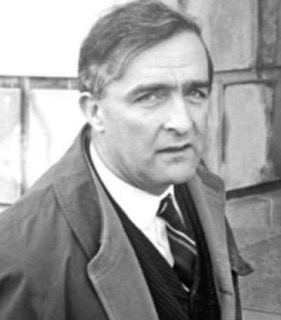
(Pictured: Portrait of James Tully taken from his 1954 election poster)


Leave a comment

Birth of Standish Hayes O’Grady, Celticist & Antiquarian

Standish Hayes O’Grady (Irish: Anéislis Aodh Ó Grádaigh), Celticist and antiquarian, is born on May 19, 1832, in Erinagh House, Castleconnell, County Limerick.

O’Grady is the son of Admiral Hayes O’Grady and his wife, Susan Finucane. His father is one of the chiefs of the Cinél Donnghaile, the collective name of the O’Gradys. He is a nephew of Standish O’Grady, 1st Viscount Guillamore, and a cousin of the novelist Standish James O’Grady, with whom he is sometimes confused. As a child he is fostered in Coonagh, County Limerick, an Irish-speaking area. There he learns Irish and comes into contact with the Gaelic manuscript tradition, listening to stories read aloud from manuscripts in farmers’ houses during wakes or while carding wool. He maintains this interest in the literary tradition throughout his life.

O’Grady receives his secondary education in Rugby School in Rugby, Warwickshire, England, his name appearing in the school register for August 1846. Subsequently he attends Trinity College Dublin (TCD) from 1850 to 1854 but does not graduate. He is critical of an education system that makes no mention of Irish history and legend. During his student days he becomes a friend of the leading scholars and antiquarians, John O’DonovanGeorge Petrie and Eugene O’Curry, as well as the bookseller and publisher, John O’Daly. At this time he begins copying Gaelic manuscripts under their direction. He purchases from O’Daly in 1853 a collection in Irish of “tales and other pieces, in prose and verse” which he presents to the British Museum in 1892. He is a founding member of the Ossianic Society in 1853 and becomes its president in 1856. O’Curry attacks him publicly in a review in The Tablet, questioning his ability as a scholar. The publication of the society’s third volume prompts the review.

In 1857 O’Grady moves to the United States where he remains for thirty years. In 1901 he contributes an essay on Anglo-Irish Aristocracy to a collection entitled Ideals in Ireland edited by Augusta, Lady Gregory.

O’Grady is competent in a number of languages including Arabic and Scots Gaelic, and the University of Cambridge awards him a Doctor of Letters degree in 1893.

O’Grady is a bachelor all his life and dies on October 16, 1915, in his home in Ballinruan, Hale, Cheshire, England. He is buried in Altrincham cemetery.


Leave a comment

Birth of Thomas Gilmartin, Archbishop of Tuam

Thomas Patrick Gilmartin, Irish clergyman of the Roman Catholic Church, is born in CastlebarCounty Mayo, on May 18, 1861. He serves as Bishop of Clonfert from 1909 to 1918 and Archbishop of Tuam from 1918 to 1939.

Gilmartin is the son of Michael Gilmartin, Rinshiona, Castlebar.[1] He is educated at the Franciscan monastery boys school in Errew and at O’Dea’s Academy in Castlebar. He attends St Jarlath’s College in Tuam, and then St Patrick’s College, Maynooth. Following his ordination to the priesthood in 1883, he becomes a professor of mathematics and natural science at St Jarlath’s.

In 1891, Gilmartin serves as Dean of Formation and Vice-President of St Patrick’s College, Maynooth. He is awarded a Doctor of Divinity by Rome in 1905.

He was appointed the Bishop of the Diocese of Clonfert by the Holy See on July 3, 1909 and is consecrated on 13 February 1910 by the Most Reverend John Healy, Archbishop of Tuam. On the death of Archbishop Healy, he was translated to the Metropolitan see of Tuam as archbishop on July 10, 1918.

During the Irish War of Independence, Archbishop Gilmartin speaks out strongly against violence. In January 1920, he criticizes the “undisguised ruffianism” in the rebel ranks. He counsels his priests that whatever their personal political beliefs, they should not take an aggressive part on behalf of either side. However, many younger clerics support Sinn Féin and the IRA.

Gilmartin is involved in the controversy over the appointment of Letitia Dunbar, a member of the Church of Ireland and graduate of Trinity College, Dublin, to the County Mayo librarianship in 1931.

T.H. White describes meeting the Archbishop on the top of Croagh Patrick on an annual Reek Sunday pilgrimage during the 1930s in his book The Godstone and the Blackymor and having a cup of tea with him on the top after overenthusiastically kissing his ring.

Gilmartin dies at the age of 78 in office in Tuam on October 14, 1939.

Gilmartin writes the memoir of Primate Joseph Dixon in Healy’s Centenary History of Maynooth in 1895. He is also a contributor to the Irish Ecclesiastical Record, the Irish Theological Quarterly, and the Catholic Encyclopedia.


Leave a comment

The Second Siege of Enniskillen

The siege of Enniskillen takes place at Enniskillen in Fermanagh, present day Northern Ireland, in 1594 and 1595, during the Nine Years’ War. In February 1594, the English had captured Enniskillen Castle from the Irish after a waterborne assault and massacred the defenders after they surrendered. From May 1594, an Irish army under Hugh Maguire and Cormac MacBaron O’Neill besiege the English garrison in the castle, and in August they defeat an English relief force. A second relief force is allowed to resupply the garrison, but the castle remains cut off. Eventually, in May 1595, the English garrison surrenders to the Irish and are then massacred.

In 1593, Hugh Maguire, Chief of the Name and Lord of Fermanagh, had objected to the behaviour of the newly-appointed English Crown sheriff Humphrey Willis. As he had done before being expelled by Hugh Roe O’Donnell from Tyrconnell in 1592, Willis is cattle raiding and plundering throughout Clan Maguire territory. Maguire is not strong enough to resist the sheriff, but after receiving reinforcements from Hugh O’Neill, Earl of Tyrone, Maguire expels Willis. In May and June 1593, Maguire and Brian Oge O’Rourke of West Breifne raid lands held by the English Lord President of ConnaughtRichard Bingham. They destroy the town around Ballymote Castle. This is part of a proxy war waged to distract the Crown while Tyrone strengthens his position in Ulster. As hoped for, the Crown responds by sending an army under Sir Henry Bagenal and Gaelic leader Hugh O’Neill, Earl of Tyrone (outwardly still loyal to the Crown), who defeat Maguire’s force at the Battle of Belleek in October 1593. However, Maguire’s main force remains unscathed.

On May 17, 1594, now acting with the covert support of Tyrone, Hugh Maguire and Cormac MacBaron O’Neill lay siege to Enniskillen which is now isolated in hostile country. Their army consists of 1,400 foot soldiers and 600 horsemen. It quickly grows with support arriving from Hugh Roe O’Donnell. The English commander, James Eccarsall, has only 50 foot soldiers and 24 horsemen to defend the castle, along with some light artillery. Eccarsall launches a sortie by boat but has to retreat under heavy fire. Irish fortifications cut off access by river and the castle is attacked nightly. Many of the garrison fall sick due to food shortages and exhaustion brought on by incessant skirmishing with the Irish.

On August 7, Maguire and his allies defeat an English relief force for Enniskillen at the Battle of the Ford of the Biscuits. A second relief force commanded by the Lord Deputy William Russell is sent by another route. Although it is not attacked by the Irish, none of Russell’s scouts or messengers reach the castle nor return. Russell relieves the beleaguered garrison by August 30 with six months supplies, then withdraws. Following this, there is a truce, but “subterfuge and deception were the hallmarks of this stage of the war.”