The Clogheen Ambush takes place in the early morning of March 23, 1921, as six members of “C” Company, First Battalion, 1st Cork Brigade of the Irish Republican Army (IRA) are shot by a party of Black and Tans and Royal Irish Constabulary (RIC) at a farm at Ballycannon, Clogheen, just outside Cork, County Cork, during the Irish War of Independence. The IRA believes that they have been betrayed by Patrick ‘Cruxy’ Connor. Connor has returned to Cork after the Coolavokig Ambush, which had taken place on February 25. Once in Cork he is soon arrested by the RIC for the possession of a revolver. The IRA believes that Connors broke down under interrogation and betrayed them.
Cornelius O’Keefe farms 105 acres at Ballycannon, on the road leading from Clogheen to Tower. His house is a known ”safe house” where volunteers can shelter when it is unsafe for them to sleep at home. On the farm there are secure hiding places for the guns and explosives with which they carry out their missions.
At 4:00 a.m on the morning of Wednesday, March 23, O’Keefe is awakened by the arrival of a large force of police. They break down the farm door with blows from their rifle butts. The family is ordered back to the bedrooms and the house is thoroughly searched. The British then search the farmyard, where six volunteers are discovered asleep in a barn.
A local schoolteacher whose house overlooks the two fields outside the barn is awakened by the sound of gunshots at about 4:30 a.m., while it is still quite dark. He watches the lights moving around the farmyard. He hears one voice scream out and another shout “run for it.” He can barely see a man breaking away and running across the field. A volley of shots ring out and the man falls. Another man with a light walks toward the body. After ten minutes there are more shots but this time he sees nobody fall. Later he sees another man fleeing and more shots ring out. As the light increases, he identifies the men with guns as police. Later he watches as the police bring down bodies in blankets and lay them outside the house in the boreen, which leads from the O’Keeffe farmyard to the public road. Around 6:00 a.m. the bodies are placed in lorries which then drive away.
Meanwhile Cornelius O’Keeffe, the farm owner, is brought across the field where he sees five bodies laid out in blankets. He watches as they are placed in the lorries. In his sworn deposition he states that a sixth man is then brought out blindfolded, still alive, and is also put in the lorry. O’Keefe is put in a third lorry, which follows the other two to Victoria Barracks. There the first two lorries speed off and he loses sight of them. He is imprisoned in a cell in the Barracks and is kept there until on April 17, when he is finally released without charge.
The six IRA men killed are:
Daniel Crowley, aged 23. occupation plasterer, of 171 Blarney Street, Cork
William Deasy, aged 20, of Mount Desert , Blarney Road, Cork
Thomas Dennehy, aged 21, of 104 Blarney Street, Cork
Daniel Murphy, aged 24. occupation pig buyer, of Orrery Hill, off Blarney Street , Cork
Jeremiah O’Mullane, aged 23, of 237 Blarney Street, Cork
Michael O’Sullivan, aged 20 of 281 Blarney Street ,Cork
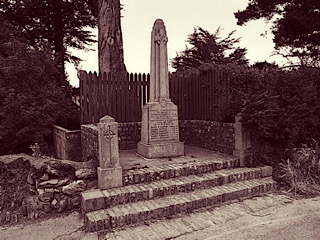
(From: “Ballycannon, Clogheen – IRA ambushed by the British – 23 Mar 1921,” posted on http://www.theauxiliaries.com | Pictured: The Clogheen Ambush Memoral in County Cork)
The Abercorn Restaurant bombing is a bomb attack that takes place in a crowded city centre restaurant and bar in Belfast, Northern Ireland, on March 4, 1972. The bomb explosion claims the lives of two young women and injures over 130 people. Many of the injuries are severe and include the loss of limbs and eyes. The Provisional Irish Republican Army is blamed, although no organisation ever claims responsibility and nobody is ever charged in connection with the bombing. According to Ed Moloney, an Irish journalist who has written extensively about the IRA, republican sources have unofficially confirmed the group’s involvement.
The Abercorn is on 7-11 Castle Lane in central Belfast and houses a ground-floor restaurant and upstairs bar. It is owned by 45-year-old Bill O’Hara, a Catholic businessman. On Saturday, March 4 1972, it is packed with late afternoon shoppers when an anonymous caller issues a bomb warning to 999 at 4:28 p.m. The caller does not give a precise location, but advises that a bomb will go off in Castle Lane in five minutes’ time. The street, located in the busy Cornmarket area, mills with crowds of people shopping and browsing as is typical on a Saturday in Belfast.
Two minutes later, at 4:30 p.m., a handbag containing a five-pound gelignite bomb explodes under a table inside the ground-floor restaurant. Two young Catholic friends are killed outright: Anne Owens (22), who is employed at the Electricity Board, and Janet Bereen (21), a hospital radiographer. The young women have been out shopping together and have stopped at the Abercorn to have coffee. They are seated at the table nearest the bomb and take the full force of the blast. Owens had survived a previous bombing at her workplace. More than 130 are injured in the explosion, which overturns tables and chairs, and brings the ceiling crashing down onto the ground floor restaurant. Many people are severely maimed. Some have their limbs blown off while others suffer terrible head and facial injuries, burns, deep cuts and perforated eardrums. Three have eyes destroyed by shards of flying glass. Two sisters, Jennifer and Rosaleen McNern (one of whom is due to be married), are both horrifically mutilated. Jennifer loses both legs and Rosaleen, the bride-to-be, loses her legs, right arm and one eye.
Witnesses describe a scene of panic and chaos as the bloodied survivors stumble through the smoke, broken glass, blood, and rubble, crawling over one another to get away, while firemen attempt to bring out the injured, many of whom lay with their bodies mangled, unable to move. A Royal Ulster Constabulary (RUC) officer is one of the first people to arrive on the scene. He describes the carnage that greets him as something he will never forget. “All you could hear was the moaning and squealing and the people with limbs torn from their bodies.”
A woman who had been inside the restaurant before the blast later tells an inquest that she had seen two teenaged girls walk out of the Abercorn leaving a handbag behind shortly before the explosion. This same woman was waiting at a bus stop when the bomb went off. A detective-sergeant establishes that the explosion’s epicentre is to the right of the table where the two girls had been sitting. The bomb is reportedly left behind inside a handbag.
Nobody is ever charged in connection with the bombing and no paramilitary organisation ever claims responsibility for it. Both wings of the IRA deny involvement and condemn the bombing. However, the RUC and British Military Intelligence blame the Provisional IRA First Battalion Belfast Brigade and it is now widely accepted that it was responsible. There is a public backlash against the organisation in Irish nationalist and Catholic areas such as West Belfast. The two dead women were both Catholic, along with many of the injured including the McNern sisters, and the Abercorn Bar was a popular venue with many young Catholics and nationalists.
Provisional IRA Chief of StaffSeán Mac Stíofáin claims the bombing is the work of loyalist paramilitaries. According to Mac Stíofáin, the Woodvale Defence Association (WDA) had made threats against the Abercorn in its weekly newsletter after the Abercorn management refused to play the British national anthem. The WDA denies the allegations, adding that one of its members had a friend who was badly injured in the blast. The day after the bombing, a leaflet allegedly circulated by the loyalist Vanguard Unionist Progressive Party (VUPP) declares: “We make no apologies for Abercorn. No apologies were made for Aldershot […] These premises were being used extensively by Southern Irish shoppers for the transmission of information vital to the terrorist campaign…” Vanguard leader Rev. Martin Smyth dismisses the statement as fake.
According to Ed Moloney in his book Voices from the Grave, IRA sources have since confirmed, albeit unofficially, that the Provisional IRA was responsible. Moloney suggests that, based on eyewitness accounts, two teenaged IRA girls were probably the bombers. Unnamed republican sources suggest that the Abercorn was targeted because the upstairs bar was frequented by off-duty British Army soldiers.
The detonation of a bomb in a city centre restaurant on a Saturday afternoon packed with shoppers, and the severity of the injuries—inflicted on mostly women and children—ensures that the attack causes much revulsion and leaves a lasting impression on the people of Belfast. It is condemned by both unionist and Irish nationalist politicians and also by church leaders. Ian Paisley calls on the government “to mobilise and arm every able-bodied volunteer to meet the enemy.” The extent of the injuries the blast inflicts results in the Royal Victoria Hospital implementing a “disaster plan” for the first time.
The sculptor F. E. McWilliam produces a series of bronzes (1972–73) known as Women of Belfast in response to the Abercorn bombing.
Unrelated to the bombing, the Abercorn features in a sectarian attack in July 1972, when Michael McGuigan, a Catholic working in the bar, is abducted by loyalist paramilitaries, shot and left for dead, but survives. He had been dating a Protestant waitress who also worked in the Abercorn, which is why the loyalist group targets him.
The Abercorn is demolished in 2007.
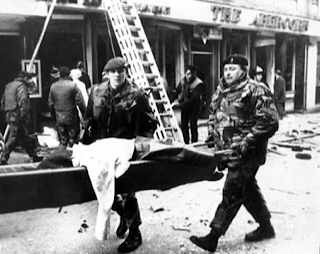
(Pictured: A victim’s body being removed from the scene by members of the security forces following the bomb explosion)
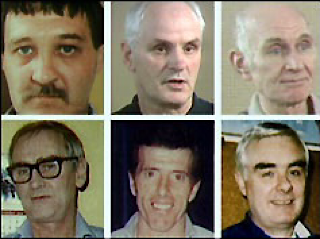
After 17 years in prison, the Birmingham Six could be freed within weeks. An announcement on February 25, 1991, by the Director of Public Prosecutions, Alan Green, says the convictions of the Birmingham Six can no longer be considered safe and satisfactory. Hugh Callaghan, Paddy Joe Hill, Gerry Hunter, Richard McIlkenny, Billy Power, and Johnny Walker, all from Northern Ireland, were all jailed in 1975 for an Irish Republican Army (IRA) attack on two pubs in Birmingham, England, in November 1974 in which 21 people died. The Birmingham Six have consistently maintained their innocence.
Speaking during a live radio broadcast by Irish broadcaster RTÉ, one of the six, Hugh Callaghan, speaks about his ordeal. “It should have happened a long time ago. It has been known for years and years that we were innocent,” he says.
The February 25 preliminary hearing is told both scientific and police evidence presented at the original trial can no longer be relied upon and that therefore the Crown‘s case against the men has collapsed.
Their third appeal is to be heard at the Court of Appeal on Monday, March 4, 1991. New evidence collected in the prior year is to be presented to the court, which will make the final decision on whether or not to release the men.
Friends, family and supporters are overjoyed by the news. The Irish government issues a statement saying it shares their relief and joy.
Gareth Peirce, the solicitor for five of the men, says the case is “a national disgrace” and calls for the evidence to be made public.
Patsy Power, William Power’s wife, says, “It’s over and done but the system has to be altered so nothing like this happens again.”
Former Master of the RollsTom Denning, Baron Denning, who rejected the men’s appeal in 1980, says he is saddened by the case. “As I look back I am very sorry, because I always thought that our police were splendid and am very sorry that in this case it appears the contrary,” he says.
The Birmingham Six are released amid scenes of wild jubilation on March 14, 1991, after their convictions are quashed by the Court of Appeal. Their case – and that of the Guildford Four freed in 1989 – lead to the creation of a Royal Commission on Criminal Justice which makes various recommendations in 1993.
The six men struggle to cope with freedom following their release. Several turn to drink and most of their marriages suffer as a result.
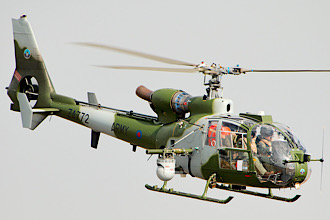
By early 1978, the British Army forces involved in Operation Banner have recently replaced their aging Bell H-13 Sioux helicopters for the more versatile Aérospatiale Gazelles. The introduction of the new machines increases the area covered on a reconnaissancesortie as well as the improved time spent in airborne missions. In the same period, the Provisional IRA receives its first consignment of M60 machine guns from the Middle East, which are displayed by masked volunteers during a Bloody Sunday commemoration in Derry. Airborne operations are crucial for the British presence along the border, especially in south County Armagh, where the level of IRA activity means that every supply and soldier has to be ferried in and out of their bases by helicopter since 1975.
The Royal Green Jackets have been in South Armagh since December 1977, and have already seen some action. Just a few days after arrival, two mortar rounds hit the C Company base at Forkhill, injuring a number of soldiers. In the aftermath of the attack, two Royal Ulster Constabulary (RUC) officers are wounded by a booby trap while recovering the lorry where the mortar tubes are mounted. Two days later, a patrol near the border suffers a bomb and gun attack, leaving the commanding sergeant with severe head wounds. The sergeant is picked up from the scene by helicopter. He is later invalided from the British Army as a result of his injuries.
On January 17, 1978, a Royal Green Jackets observation post deployed around the village of Jonesborough begins to take heavy fire from the “March Wall,” which draws parallel with the Irish border to the east, along the Dromad woods. The soldiers return fire, but the short distance to the border and the open ground prevents them from advancing.
The Commanding Officer, Lieutenant Colonel Ian Corden-Lloyd, along with Captain Philip Schofield and Sergeant Ives fly from the battalion base at Bessbrook Mill to assess the situation and provide information to the troops. They are escorted by a Scout helicopter with an Airborne Reaction Force (ARF), comprising a medic and three soldiers from the 2nd Battalion Light Infantry. While hovering over the scene of the engagement, the Aérospatiale Gazelle receives a barrage of 7.62 mm tracer rounds. The pilot loses control of the aircraft during a turn at high speed to avoid the stream of fire. The Aérospatiale Gazelle hits a wall and crashes in a field, some 2 km from Jonesborough. According to the crew and passengers of the Scout, the Aérospatiale Gazelle hits the ground twice after losing power, with its rotor blades trashing into the soil following the second impact, and then cartwheels across the field. The Scout lands the ARF while still under IRA fire. The soldiers rush to the wrecked helicopter, some 100 metres away from the site of the initial crash.
Corden-Lloyd is killed and the other two passengers are wounded. The machine comes to rest on its right side. The pilot remains trapped inside the wreckage, but he survives thanks to his helmet. The IRA later claim they had shot at the helicopter with an M60 machine gun. The IRA unit vanishes into the Dromad woods to the Republic of Ireland. Some Gardaí witness the attack from the other side of the border.
The gun battle and Aérospatiale Gazelle shootdown is displaced from the headlines by the deaths of twelve civilians in the La Mon restaurant bombing on the same day, some of whom are burned to death. Initially the British Army downplays the IRA’s claim as published by An Phoblacht, that the helicopter was shot down, on the basis that no hits were found on the wreckage, but finally they acknowledged that the IRA action had caused the crash.
The death of Corden-Lloyd, a former Special Air Service officer, is deeply regretted by the British Army, who regarded him as promising. He is awarded a posthumous mentioned in despatches “in recognition of gallant and distinguished service in Northern Ireland.” In 1973, Irish republicans had accused Corden-Lloyd and his subordinates of brutality against Belfast Catholics during an earlier tour of the Royal Green Jackets in 1971, at the time of Operation Demetrius.
McCartney, born in 1971, is a Roman Catholic and lives in the predominantly nationalistShort Strand area of east Belfast, and is said by his family to be a supporter of Sinn Féin. He is the father of two children and is engaged to be married in June 2005 to his longtime girlfriend, Bridgeen Hagans.
McCartney is involved in an altercation in Magennis’ Bar on May Street in Belfast’s city centre on the night of January 30, 2005. He is found unconscious with stab wounds on Cromac Street by a police patrol car and dies at the hospital the following morning. He is 33 years old.
The fight arises when McCartney is accused of making an insulting gesture or comment to the wife of an IRA member in the social club. When his friend, Brendan Devine, refuses to accept this or apologise, a brawl begins. McCartney, who is attempting to defend Devine, is attacked with a broken bottle and then dragged into Verner Street, beaten with metal bars and stabbed. Devine also suffers a knife attack, but survives. The throats of both men are cut and McCartney’s wounds include the loss of an eye and a large blade wound running from his chest to his stomach. Devine is hospitalised under armed protection.
When Police Service of Northern Ireland (PSNI) officers arrive at the scene, their efforts to investigate the pub and surrounding area are met with an impromptu riot. Rioting by youths, specifically attacking the police, force them to pull back from the area, which delays initial investigation. Police with riot gear arrive later in the evening and are also attacked. Alex Maskey of Sinn Féin claims, “It appears the PSNI is using last night’s tragic stabbing incident as an excuse to disrupt life within this community, and the scale and approach of their operation is completely unacceptable and unjustifiable.” There are suggestions that the rioting is organised by those involved in the murder, so that a cleanup operation can take place in and around where the murder took place. Clothes worn by McCartney’s attackers are burned, CCTV tapes are removed from the bar and destroyed and bar staff are threatened. No ambulance is called. McCartney and Devine are noticed by a police car on routine patrol, who call an ambulance to the scene.
When the police launch the murder investigation they are met with a “wall of silence” None of the estimated seventy or so witnesses to the altercation come forward with information. In conversations with family members, seventy-one potential witnesses claim to have been in the pub’s toilets at the time of the attacks. As the toilet measures just four feet by three feet, this leads to the toilets being dubbed the TARDIS, after the time machine in the television series Doctor Who, which is much bigger on the inside than on the outside.
Sinn Féin suspends twelve members of the party and the IRA expels three members some weeks later.
Gerry Adams, then president of Sinn Féin, urges witnesses to come forward to “the family, a solicitor, or any other authoritative or reputable person or body”. He continues, “I want to make it absolutely clear that no one involved acted as a republican or on behalf of republicans.” He suspends twelve members of Sinn Féin. He stops short of asking witnesses to contact the police directly. The usefulness of making witness statements to the victim’s family or to a solicitor is derided by the McCartneys and by a prominent lawyer and Social Democratic and Labour Party (SDLP) politician, Alban Maginness, soon afterward.
On February 16, 2005, the IRA issues a statement denying involvement in the murder and calls on the perpetrators to “take responsibility.”
On March 8, 2005, the IRA issues an unprecedented statement saying that four people are directly involved in the murder, that the IRA knows their identity, that two are IRA volunteers, and that the IRA has made an offer to McCartney’s family to shoot the people directly involved in the murder.
In May 2005, Sinn Féin loses its council seat in the Pottinger area, which covers the Short Strand, with the McCartney family attributing the loss to events surrounding the murder.
Since this time, the sisters of McCartney have maintained an increasingly public campaign for justice, which sees Sinn Féin chief negotiator Martin McGuinness make a public statement that the sisters should be careful that they are not being manipulated for political ends.
Support for Sinn Féin by some American politicians is diminished. Adams is not invited to the White House in 2005 and Senator Edward Kennedy backs out of a meeting that had been previously scheduled. The McCartney family, previously Sinn Féin supporters, pledge to never support the party again, and a cousin of the sisters who raised funds for Sinn Féin in the United States insist that she will not be doing so in the future.
On May 5, 2005, Terence Davison and James McCormick are remanded in custody, charged with murdering McCartney and attempting to murder Devine respectively. McCormick is originally from England. They are held in the republican wing of HM Prison Maghaberry. Roughly four months later the accused are released on bail, and in June 2006, the attempted murder charge against McCormick is dropped, leaving a charge of causing an affray. On June 27, 2008, Terence Davison is found not guilty of committing the murder. Two other men charged with affray are also cleared.
In November 2005, the McCartney sisters and Bridgeen Hagans, the former partner of McCartney, refuse to accept the Outstanding Achievement award at the Women of the Year Lunch, because it would mean their sharing a platform with Margaret Thatcher, whom they dislike.
In December 2005, the McCartney sisters meet with UK Prime MinisterTony Blair, and tell him they believe the murder had been ordered by a senior IRA member, and that Sinn Féin was still not doing all it could to help them.
On January 31, 2007, two years after the murder, and in line with the party’s new policy of supporting civil policing, Sinn Féin president Gerry Adams says that anyone with information about the murder should go to the police.
On May 5, 2015, an IRA man believed to have been involved in the death of McCartney, Gerard ‘Jock’ Davison, is shot dead. Early in the investigation the police rule out either a sectarian attack or the involvement of dissident republicans.
The McCartney family has lived in the Short Strand area of Belfast for five generations. However, some local people in the Short Strand area, which is a largely nationalist area, does not welcome their dispute with the IRA. A campaign of intimidation by republicans drives members of the family and McCartney’s former fiancée to relocate and also causes one member to close her business in the city centre. The last McCartney sister to leave the area, Paula, departs Short Strand on October 26, 2005.
The family remain in contact with the family of Joseph Rafferty of Dublin, who dies under similar circumstances on April 12, 2005.
With a report due on Monday, January 31, and widely expected to state that the IRA is not ready to disarm, the Northern Ireland peace process appears headed for a fresh crisis. The report by Canadian Gen. John de Chastelain, head of the province’s independent commission overseeing the handing in of weapons, is expected to confirm that no arms have been turned in.
The Ireland on Sunday newspaper says de Chastelain will tell the British and Irish governments that the IRA has put most of its weapons into secret, sealed dumps in the Republic of Ireland. Such disclosures put enormous pressure on Adams, the leader of the Irish republican political party, Sinn Féin.
The UUP, the province’s main Protestant political group, has already threatened to pull out of Northern Ireland‘s fledgling power-sharing government if the IRA does not start disarming.
The UUP calls a top-level party meeting for February 12. A negative report from the decommissioning body will heighten fears that UUP leader David Trimble will make good on his threat to resign as leader of the new government, effectively allowing his party to shut down the province’s first government in 25 years.
Of Adams’s role in the disarmament process, Trimble says, “He asked us to create the circumstances to help him … we did that … we took the risk and created the situation he asked us to create. “Now we hope he now is able to demonstrate his good faith by responding.”
Adams says, “I am concerned at what appears to be an attempt by unionists to hijack the entire process, put up unilateral demands, perhaps in the course of that, tear down the institutions that are only two months in being. I understand why unionists want decommissioning. It is just not within my grasp to deliver it on their terms, and neither is it my responsibility.”
Adams says he can give no assurances that the IRA will hand over its weapons by May 22, the date set by the 1998 Good Friday Agreement for the completion of disarmament, although he stresses he is committed to decommissioning. “No, I can’t and it isn’t up to me,” Adams tells BBC Television when asked if he can guarantee disarmament by May.
Political insiders hint that the report will not be published until Monday (January 31) afternoon, suggesting the highly sensitive document is still being worked on by de Chastelain.
Any unionist pullout from the home-rule government on February 12 will create a political vacuum. Britain may intervene before that to suspend the fledgling executive, in the hope that it can be resurrected quickly if progress eventually is made on disarmament. Sinn Féin warns that either course of action could lead to the IRA breaking off contact with de Chastelain and the ending of disarmament prospects.
Meanwhile, on the eve of the report, thousands of Roman Catholics mark an event and day that symbolizes the province’s past troubles — Bloody Sunday.
Waving Irish flags, some 5,000 protesters retrace the steps of a civil rights march in Londonderry in 1972 that ended in bloodshed when British troops fired on unarmed protesters and killed thirteen people, mostly teenagers. A fourteenth man died later from his wounds. Victims’ relatives and local children carry fourteen white crosses, photos of the dead and a banner that reads, “Bloody Sunday, the day innocence died.” The march passes the scene of the killings and ends in front of Londonderry’s city hall — a spot where the 1972 march was supposed to have finished.
Organizers issue a message to British Prime MinisterTony Blair that they want a forthcoming inquiry not to end in the same way as a probe held within months of the killings, which exonerated the British soldiers by suggesting that some of the victims had handled weapons that day. “Twenty-eight years on from Bloody Sunday, there is still no recognition of the role the British government played in the premeditated attack on unarmed demonstrators,” Barbara de Brun, a top IRA official, tells the crowd.
Relatives of those killed are upset that soldiers who took part in the shootings would be allowed to remain anonymous during the new probe. They are also concerned about a newspaper report that the army recently destroyed thirteen of the rifles used by the soldiers, complicating any ballistics tests at the inquiry.
“Once again, the political and military establishment are up to their old tricks. We won’t accept a public relations exercise,” Alana Burke, who was injured by an armored car during the Bloody Sunday march, tells the crowd.
(From: “Hopes dim for IRA disarmament, peace accord” by Nic Robertson and Reuters, CNN, cnn.com, January 30, 2000)
Since the Troubles began, the South Armagh area—especially around Crossmaglen and other similar republican strongholds—is one of the most dangerous places for the British security forces, and the IRA’s South Armagh brigade carries out numerous ambushes on the British Army and Royal Ulster Constabulary (RUC). This includes the 1975 Drummuckavall ambush and the 1978 downing of a British Army Gazelle helicopter which leads to the death of one British soldier and four others being seriously injured.
A number of British security force members are killed in Crossmaglen during 1978. On March 4, British soldier Nicholas Smith (20), 7 Platoon, B Company, 2nd Royal Green Jackets, is killed by an IRA booby trap bomb while attempting to remove an Irish flag from a telegraph pole in Crossmaglen. On June 17, William Turbitt (42) and Hugh McConnell (32), both Protestant RUC officers, are shot by the IRA while on mobile patrol near Crossmaglen. McConnell is killed at the scene, but Turbitt is kidnapped. The next day, a Catholic priest, Fr. Hugh Murphy, is kidnapped in retaliation but later released after appeals from Protestant clergy. The body of Turbitt is found on July 10, 1978.
On December 21, 1978, when the patrol is near Rio’s Bar coming around a bend, a red Royal Mail-type van is spotted by the patrols commander Sergeant Richard Garmory. The van is fitted with armor plating and is facing away from the patrol. Garmory believes the van is in a suspicious place on the other side of the street. He notes what appear to be boxes in the back of the van, which actually provide cover for the IRA Volunteers. IRA members open fire from the back of the van with an M60 machine gun which is fitted down onto the floor in the back of the van. Three other IRA volunteers armed with AR-15-style rifles and another Volunteer with an AK-47 open up on the patrol. The British soldiers on patrol return fire but do not claim any hits. A handful of Christmas shoppers scramble for cover. Three soldiers at the front of the patrol are fatally wounded. They are treated by staff at a nearby health center and then taken to Musgrave Park Hospital but are declared dead on arrival. The soldiers killed are Graham Duggan (22), Kevin Johnson (20) and Glen Ling (18). All are members of the British Armies Grenadier Guards regiment. The patrol commander, Richard Garmory, says of the ambush:
On coming round the bend near the Rio Bar, I saw 40 yards away what looked like a British Rail parcel delivery van parked partly on the pavement on the left facing away from us. It had an 18-inch tailboard with a roll shutter that could be pulled down. The van immediately struck me as highly suspicious because I saw what looked like cardboard boxes piled to the top in the back, all flush with the tailboard so they would fall out if the van moved off fast. I instantaneously put my magnifying sight to my to my eye and saw four firing slits, two above the other two, among the boxes. I immediately opened fire.
Four months later the South Armagh brigade strikes again at British security forces, this time near Bessbrook which is several miles from Crossmaglen. Four RUC officers are killed in the 1979 Bessbrook bombing, when a 1,000 lb. land mine is detonated when the RUC patrol is passing by the bomb, killing all the officers outright.
(Pictured: South Armagh Brigade, Provisional Irish Republican Army, manning a temporary checkpoint close to Crossmaglen, 1978)
The attacks are linked to the Glenanne gang, a group of loyalist militants who are either members of the UVF, the Ulster Defence Regiment (UDR), the Royal Ulster Constabulary (RUC) and the closely linked UVF paramilitary the Red Hand Commando (RHC). Some of the Glenanne gang are members of two of these organisations at the same time, such as gang leaders Billy Hanna, who is in both the UVF and the UDR and who fights for the British Army during the Korean War, and John Weir from County Monaghan, who is in the UVF and is a sergeant in the RUC. At least 25 UDR men and police officers are named as members of the gang. The Red Hand Commando claim to have carried out both attacks.
The attacks are planned at the Glenanne farm of RUC reserve officer James Mitchell which is where most terrorist acts are planned by the gang and the farm also acts as a UVF arms dump and bomb-making site. After the attacks are finished everyone involved in both attacks is to meet at Mitchell’s farm. Then if there is any heat, Mitchell can claim the bombers and shooters were with him when the attacks happened.
The first phase of the plan starts at around 6:15 p.m. along Crowe Street in Dundalk when a 100-pound no-warning bomb explodes in a Ford sports car just outside Kay’s Tavern. The blast kills Hugh Watters, who is a tailor and has just dropped into the pub to deliver some clothes he has altered for the pub’s owner, almost instantly. Jack Rooney, who is walking past the town hall on the opposite side of the street, is struck in the head by flying shrapnel and dies three days later. A further 20 people are injured in the explosion, several of them very seriously. The car bomb is fitted with fake southern registration plates and placed in one of the busiest streets in Dundalk in the hope of causing maximum death and injury. According to Joe Tiernan, UVF commander Robin Jackson plants the bomb and along with other members of his unit escapes across the border in a blue Hillman Hunter around the time the bomb goes off.
At around 9:00 p.m., about three hours after the Dundalk bombing, the second phase of the coordinated plan begins. It is led by McConnell and takes place at Donnelly’s Bar & Filling Station in the small Armagh village Silverbridge, close to Crossmaglen.
The unit arrives in two cars and come unusually fast toward the pub. The publican’s son, Michael Donnelly (14), is serving petrol to a customer. He notices the strange speed of the cars. He tries to run toward the pub, but McConnell jumps out of one of the cars and shoots the teenage boy dead with a Sten gun. McConnell then shoots the man Michael Donnelly had been serving petrol to in the head. Although the man survives the shooting, he is maimed for life.
Then a second gunman, believed to be Billy McCaughey, a UVF volunteer and member of the RUC Special Patrol Group, shoots dead a second person, local man Patrick Donnelly (no relation to the pub owner’s family) who has been waiting for petrol. McConnell then goes inside the pub and sprays the bar with his Sten SMG, killing a third man, Trevor Bracknell, and seriously injuring three more people.
As McConnell withdraws to his car, two other members of the unit carry a 25-pound cylinder bomb inside the pub. As McConnell’s unit flees back to Mitchell’s farm, the bomb detonates inside the pub. However, by this time most of the people have already fled.
(Pictured: Photograph of the destruction at Kay’s Tavern after the loyalist car bomb explosion on December 19, 1975. Members of the Garda and Dundalk fire service are seen in the foreground. Also present are a number of visiting government ministers from Dublin.)
Since the beginning of its campaign in 1970, the Provisional IRA has carried out many improvised land mine and roadside bomb attacks on British forces in the region. In September 1972, three British soldiers are killed when their armoured vehicle is blown up by an IRA land mine at Sanaghanroe, near Dungannon. In March 1974, two IRA members are killed on the Aughnacloy Road near Dungannon when a land mine they are planting explodes prematurely.
The Dungannon attack occurs just months after the Warrenpoint ambush on August 27, 1979, where the IRA kills eighteen British soldiers with roadside bombs in south County Down — the deadliest single attack on British forces during The Troubles.
On December 16, 1979, two armoured British Army Land Rovers are driving along Ballygawley Road, about two miles outside Dungannon. A unit of the IRA had planted a 600–1,000-pound (270–450 kg) improvised land mine in a culvert under the road at Glenadush. When the second vehicle reaches the culvert, the land mine is detonated by remote control from a concealed location, showcasing their evolving tactics in guerrilla warfare and ambush strategy. The blast is powerful enough to launch the armoured Land Rover into the air and killing four soldiers from the Royal Regiment of Artillery outright: William Beck (23), Keith Richards (22), Simon Evans (19), and Allan Ayrton (23).
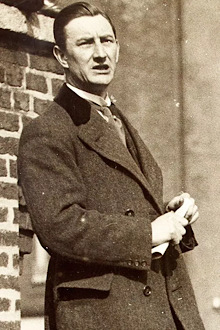
Traynor is born in Dublin on March 21, 1886, into a strongly nationalist family. He is educated by the Christian Brothers. In 1899, he is apprenticed to John Long, a famous woodcarver. As a young man he is a noted footballer and tours Europe as a goalkeeper with Belfast Celtic F.C. whom he plays with from 1910 to 1912. He rejects claims soccer is a foreign sport calling it “a Celtic game, pure and simple, having its roots in the Highlands of Scotland.”
When the Irish Civil War breaks out in June 1922, Traynor takes the Anti-Treaty IRA side. The Dublin Brigade is split, however, with many of its members following Michael Collins in taking the pro-Treaty side. During the Battle of Dublin, he is in charge of the Barry’s Hotel garrison, before making their escape. He organises guerilla activity in south Dublin and County Wicklow, before being captured by Free State troops in September. He is then imprisoned for the remainder of the war.
In 1936, Traynor is first appointed to the Cabinet as Minister for Posts and Telegraphs. In September 1939, he is appointed Minister for Defence and holds the portfolio to February 1948. In 1948, he becomes President of the Football Association of Ireland, a position he holds until his death. He serves as Minister for Defence in several Fianna Fáil governments and as Minister for Justice, where he is undermined by his junior minister, and later Taoiseach, Charles Haughey, before he retires in 1961.
Traynor dies in Dublin at the age of 77 on December 14, 1963. He has a road named in his memory, running from the Malahide Road through Coolock to Santry in Dublin’s northern suburbs.


 seamus dubhghaill